Six on Saturday: First Six of 2026

Even if there were plenty of flowers to take pictures of, I have not been in the landscapes much while it is so rainy. These are from the nursery.

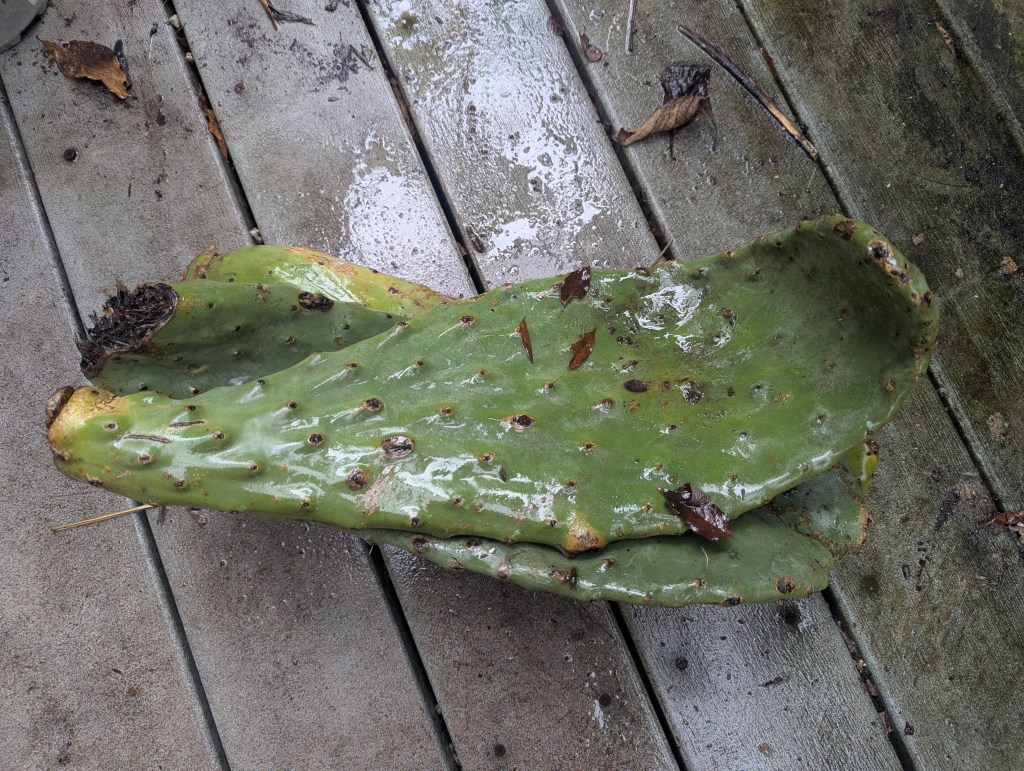
1. Opuntia ficus-indica, prickly pear pads were found at the dump while other landscape debris was being dumped. I was not involved. However, I will be pleased to install them.
2. Buxus japonica, Japanese boxwood turns so yellowish during winter, that it seems to have died this year. We have been trying to find a use for this specimen for quite a while.

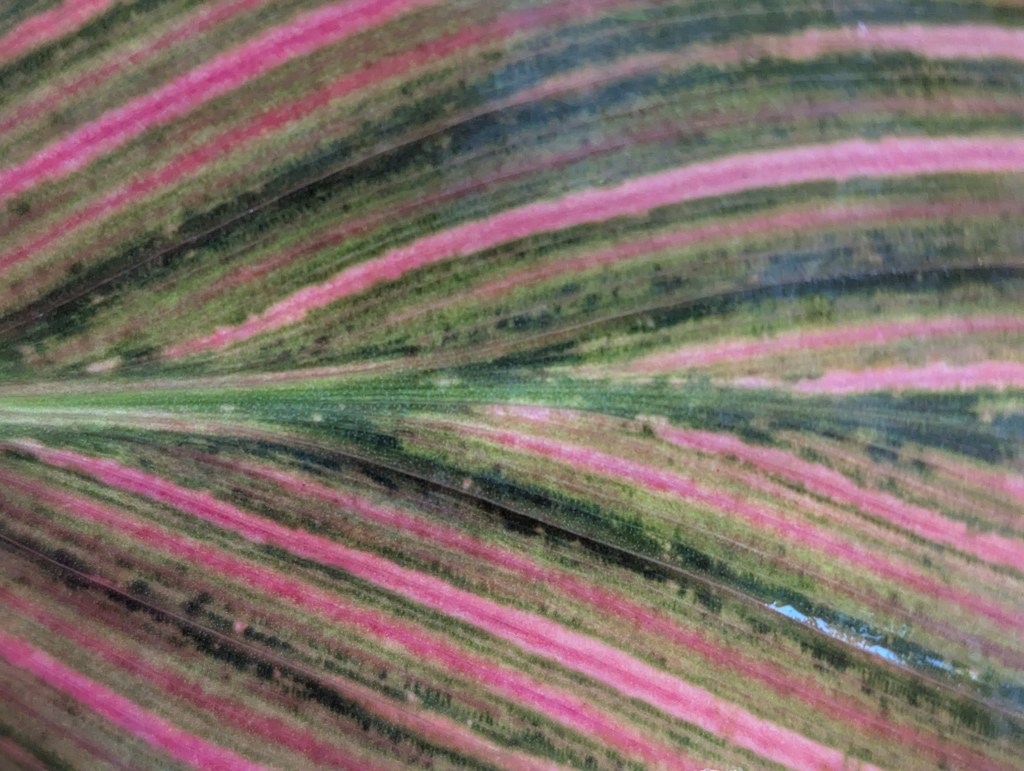
3. Canna indica ‘Alaska’ canna is obviously not ‘Alaska’, which has simple green foliage. I suspect that this is ‘Tropicana’. I hope that its spotty foliar discolorations are not virus.
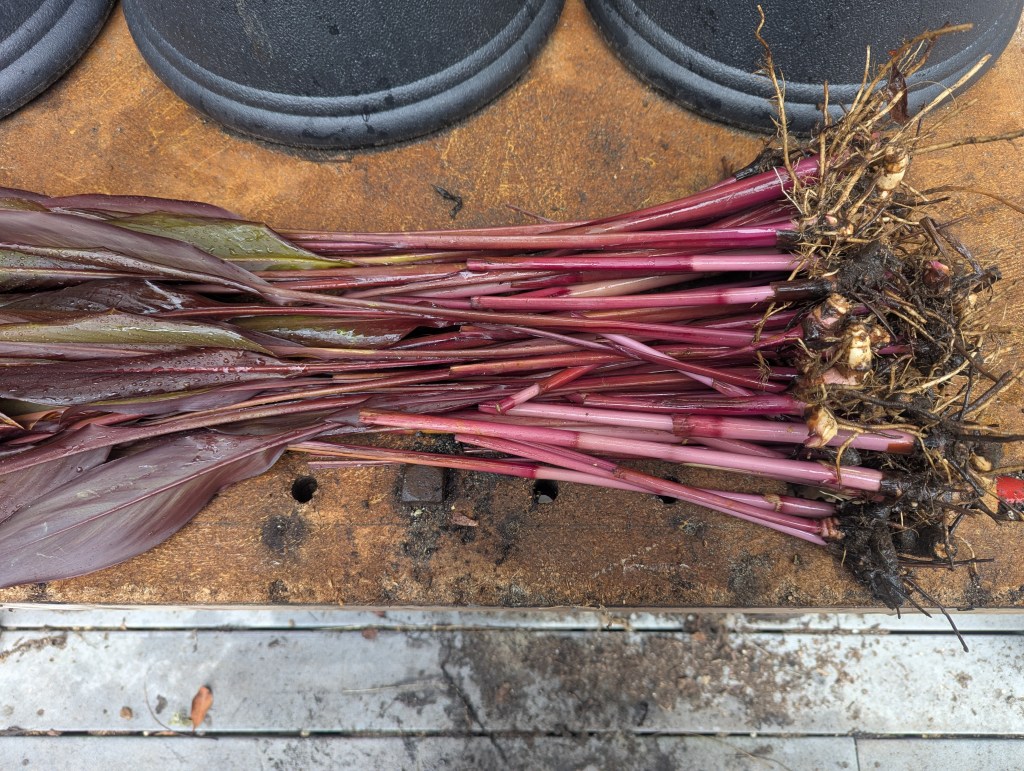
4. Canna indica ‘Australia’ canna got plucked where it migrated a bit too far. These pups will be canned and grown for other landscapes. Surplus might be shared with neighbors.
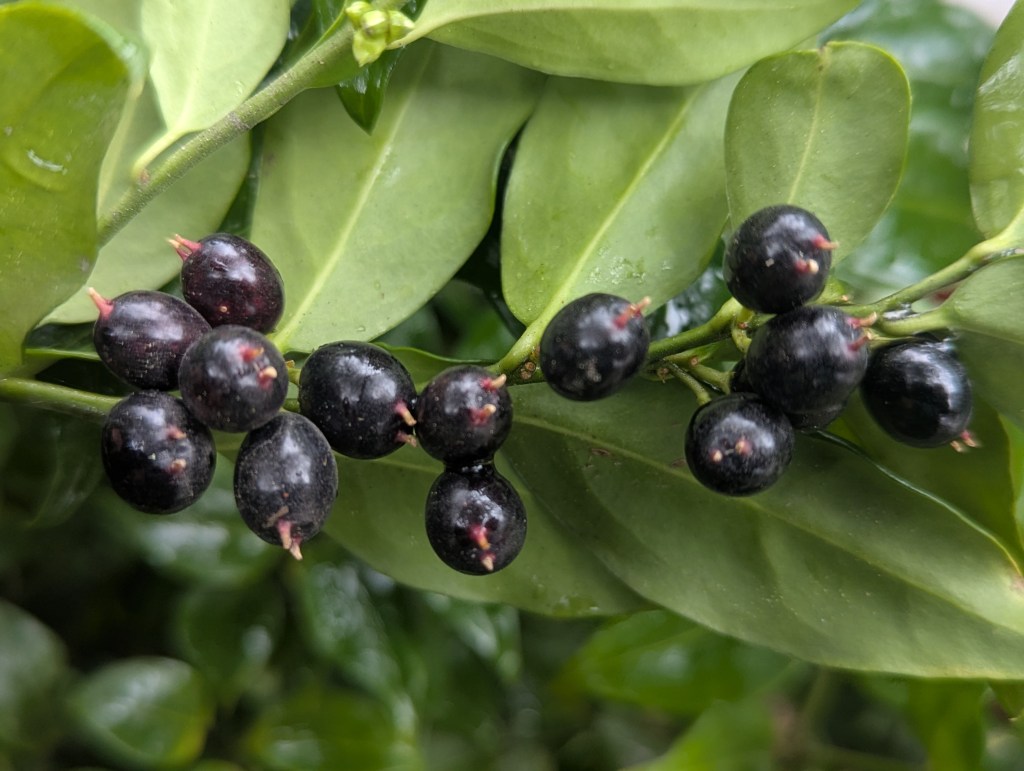
5. Sarcococca ruscifolia, sweet box produces black berries. Apparently, such berries are red before they ripen to black. I was not aware. There are typically not enough to notice.
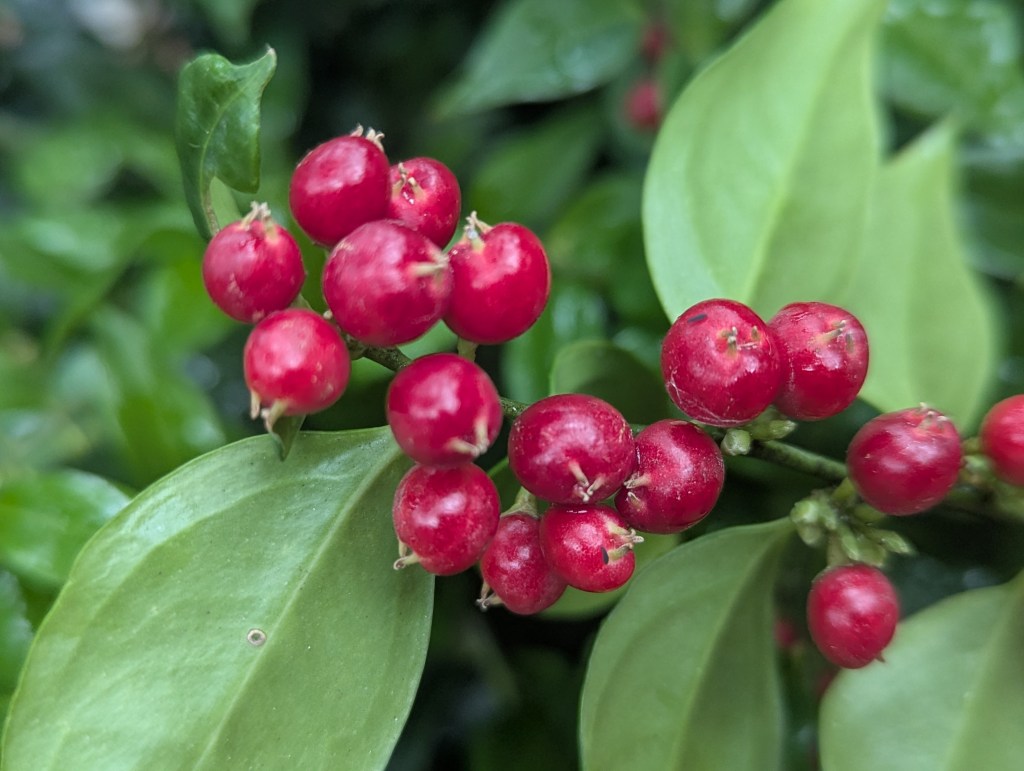
6. Sarcococca ruscifolia, sweet box berries are unfortunately poisonous. Otherwise, they look like they might have culinary application. They are unusually abundant this season.
This is the link for Six on Saturday, for anyone else who would like to participate: https://thepropagatorblog.wordpress.com/2017/09/18/six-on-saturday-a-participant-guide/
Alaska

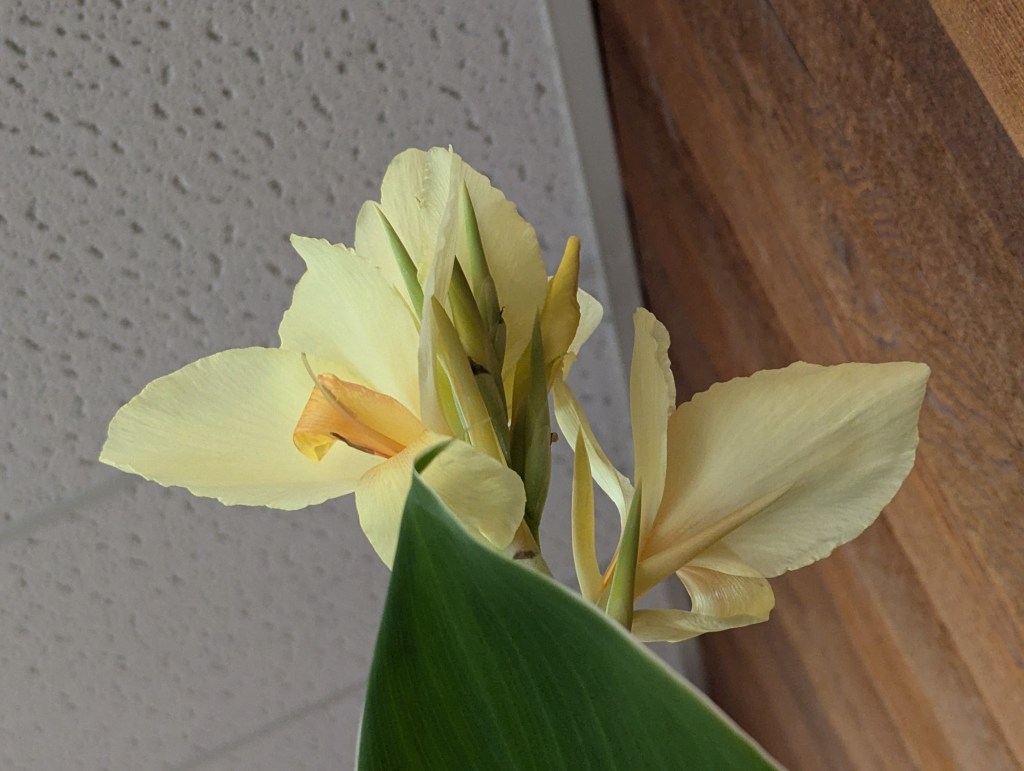
Just about everything in my garden has history in someone else’s garden. Almost nothing came from a nursery. I like to say that purchases are against the rules. However, I did purchase ‘Alaska’ Canna from Horn Canna Farm because I want to grow a white canna. I am over the shame already, and am very fond of this first white canna that I have seen since I was very young. As you can see, it is not very white, and is more of a creamy white or vanilla white. Actually, it is very pale yellow. It is presently growing as a houseplant in one of the buildings at work, which might have enhanced the pale yellow color of its bloom. I believe that it would have been whiter out in the weather. It is already growing quite nicely, so will need to move out into a landscape with all the other Canna for next year. I doubt that it will be as popular as the other brightly colored Canna, but a few who see it in bloom might recognize how rare creamy white Canna are now. I think that ‘Alaska’ would contrast splendidly with the dark bronze foliage of ‘Australia’.

Canna Virus

This is not a new problem, but it is infuriating nonetheless. ‘Cleopatra’ canna expressed symptoms of at least one virus about two years ago. A few other nearby cannas expressed similar symptoms shortly afterward. ‘Australia’ canna is particularly expressive of foliar streaking caused by virus. Isolation and disposal of obviously infected specimens seems to have prevented dispersion of the virus or viruses; but I really am uncertain. Three cultivars of Canna musifolia have suspiciously avoided any infection from adjacent infected cultivars. I can not help but wonder if they are actually infected but merely asymptomatic, and possibly able to transmit viruses to cultivars that are more expressive of symptoms. The canna in this picture is an important cultivar because it is one of only two remaining original cultivars that could have inhabited the landscapes here since about 1968. Because of gophers, very little of it remain, and some of what remains succumbed to virus already. I am quite protective of these few specimens that have not been infected, but would also like them to be able to inhabit the landscapes with the questionable Canna musifolia cultivars. For now, I must wait until they proliferate enough for some to be expendable.