
Before I was in kindergarten, my great grandfather gave me a few seeds from the nasturtiums in his garden in Sunnyvale. I really can not remember ever not growing nasturtiums since then. My first nasturtiums were the basic yellow and orange. In high school, I added some ‘Jewel Mix’ to see what other colors there were. As they too reverted back to the basic yellow and orange, I tried a few other varieties, and eventually realized that nasturtiums really are as excellent as I always thought they were.
‘Amazon Jewel’ is the first climbing nasturtium that I tried in many years. I typically do not like climbing types because they provide so much overwhelming foliage with fewer flowers. Yet this past year, I actually wanted the foliage to frame an exposed picture window through summer. By the middle of summer, the twining (annual) vines had already climbed string to the top of the window, and wanted to climb farther. Their bright yellow through orange, and even reddish orange flowers peeking in the window seemed to violate the privacy within, but were a pleasant bonus nonetheless.
‘Buttercream’ appealed to me because it was the closest to a simple white nasturtium that I had ever seen; and white is my favorite color. As the name implies, it is actually very pale yellow. It is striking because it is not striking. Who would expect such a profusion of pastel from a nasturtium? It means that there is no excuse for those who do not like flashy colors to shun nasturtiums. ‘Creamsicle’ is a bit more colorful with various shades of orange ranging from soft pastel to almost bright orange; another score for those don’t like the colors of a pinata.
‘Copper Sunset’ is as brightly colored as traditional nasturtiums, but only in coppery shades of orange uncluttered with yellow or red. ‘Cherries Jubilee’ is various shades or red and rich reddish pink.
In the past many years, the seeds for all my nasturtiums and almost all of my other flower seeds, as well as many herb and vegetable seeds came from Renee’s Garden at www.reneesgarden.com . Few other seed suppliers market nasturtiums. Those that do have only very basic nasturtium varieties. Renee’s Garden specializes in all sorts of cool heirloom varieties, even those that may be stigmatized as old fashioned. (Aren’t ‘heirloom’ and ‘old fashioned’ the same?)
Of course I tried other flowers besides nasturtiums. Clarkia, feverfew and chamomile have actually naturalized over the past few years in areas of the garden that get a bit of water. The clarkia is almost a native, so is venturing even farther. The ‘Maximilian’ sunflower is perennial, so bloomed more impressively this past summer than it did in the previous summer.
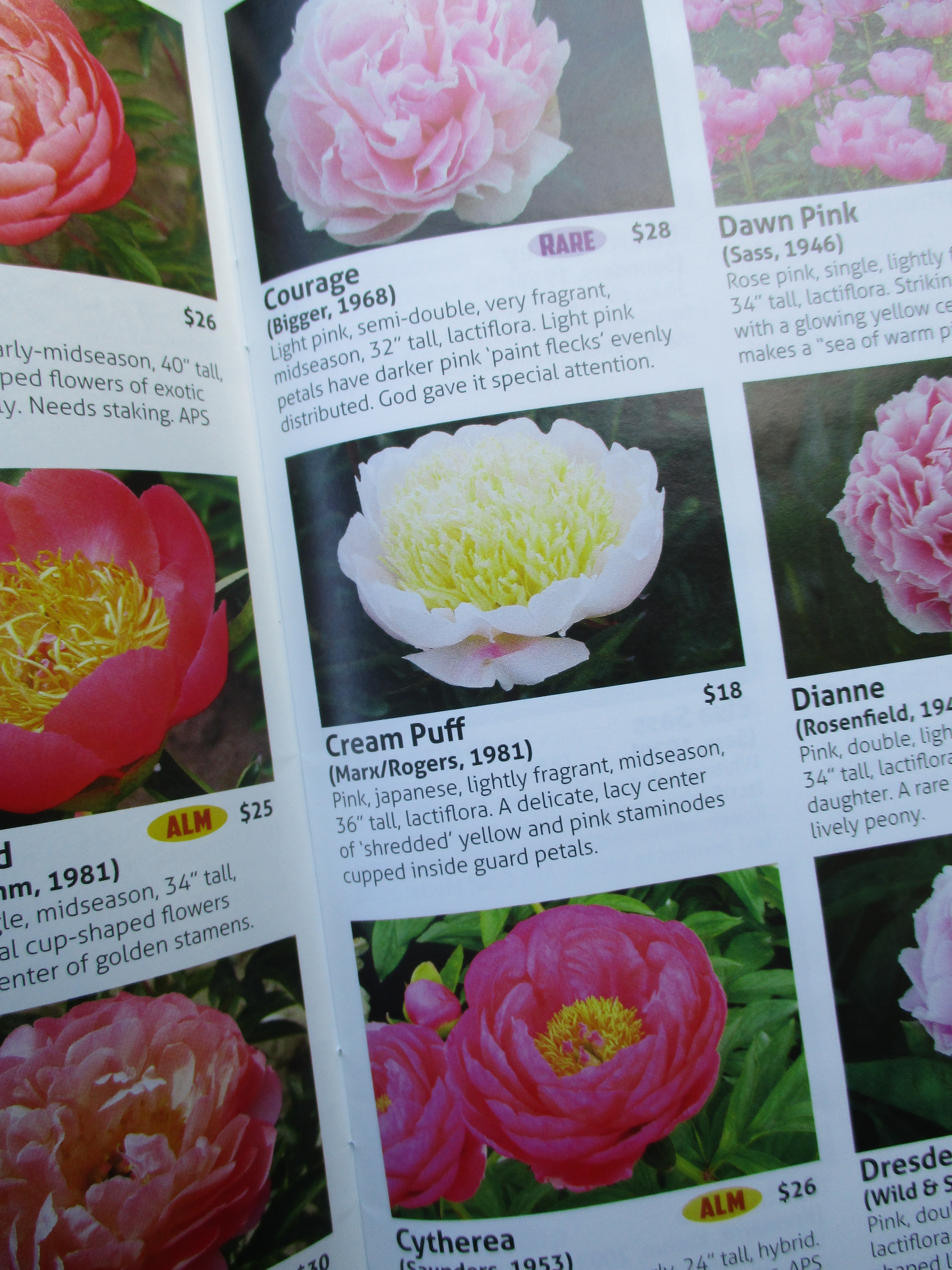 The temptation is unbearable. The catalog of Adelman Peony Gardens, either in print or at
  Tony Tomeo