Heather just became a bit less mysterious. We now know why she came here to work as a mouser, and protect fruits and vegetables from rodents. A neighbor, prior to relocation to Hawaii, left her and a few other kitties with another neighbor who intended to find new homes for them. Another kitty who already lived at the second home was so inhospitable to her that she stayed outside most of the time, and eventually disappeared. She was assumed to have been a victim of coyotes. All but one of the relocated kitties, who happens to be Heather’s mother, were assigned to new homes. Heather’s mother and the original kitty of the household then relocated a few miles away. It is impossible to know where Heather was between leaving her previous temporary home and arriving here. She could have been here longer than anyone was aware of. Because we knew nothing about her when she arrived, she likely got more vaccines than she needed. She was already spayed, although not provided with a chip. Ultimately, she seems to be happy here, and has been very proficient with dissuading rodents. I am pleased that she is happy and decided to stay.
Heather is not related to Calluna vulgaris. She is feline, since she is a kitty, who is employed here as the only mouser within the maintenance shops. We did not hire her as such. She merely assumed the job. At the time, after Darla retired, we were in desperate need of a mouser. We do not know where Heather came from, and she can not tell us. She seems pleased to remain employed here. We are pleased to be without rodents.
Her technique is as mysterious as her origin. No one knows how she prevents rodent infestation. She does not seem to catch any. Instead, she seems to passively repel them, as if rodents vacated and will not return because of here presence. Skunks, opossums and raccoons are also notably absent since her arrival, and the raccoons were vicious.
Heather temporarily lived within the nursery when she first arrived and decided to stay. Shortly afterward, and after being named, she decided that she preferred the automotive shop across the road. If she had settled there originally, she might have gotten a lame name, such as Lexus, Tesla or Mercedes. Now, she is quite established here, and lives in a luxurious penthouse in the automotive shop mezzanine above the locksmith shop. She does not seem to venture away from the safety of the shop buildings or the surrounding fenced yard. She has several friends here, including Rhody.
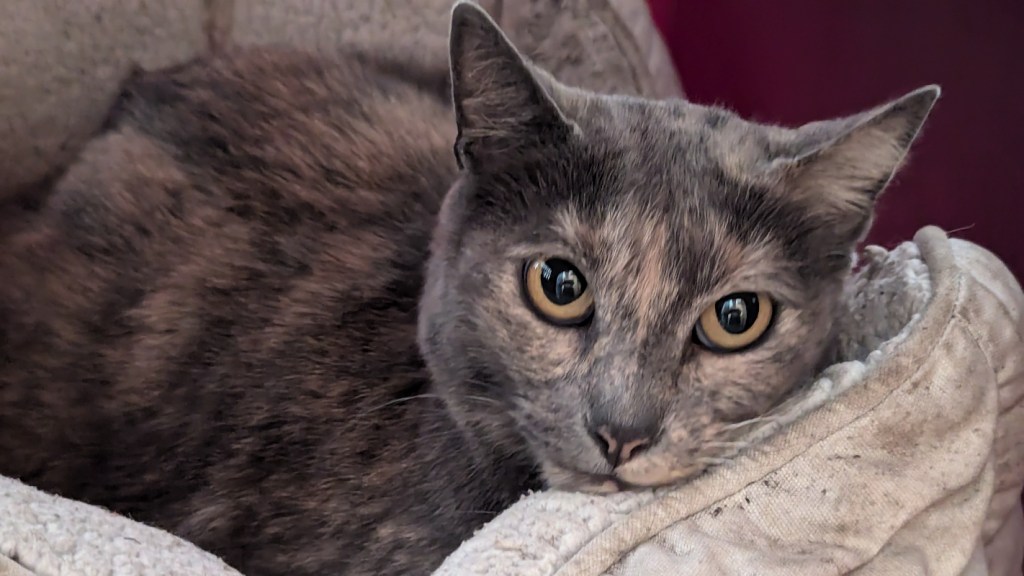
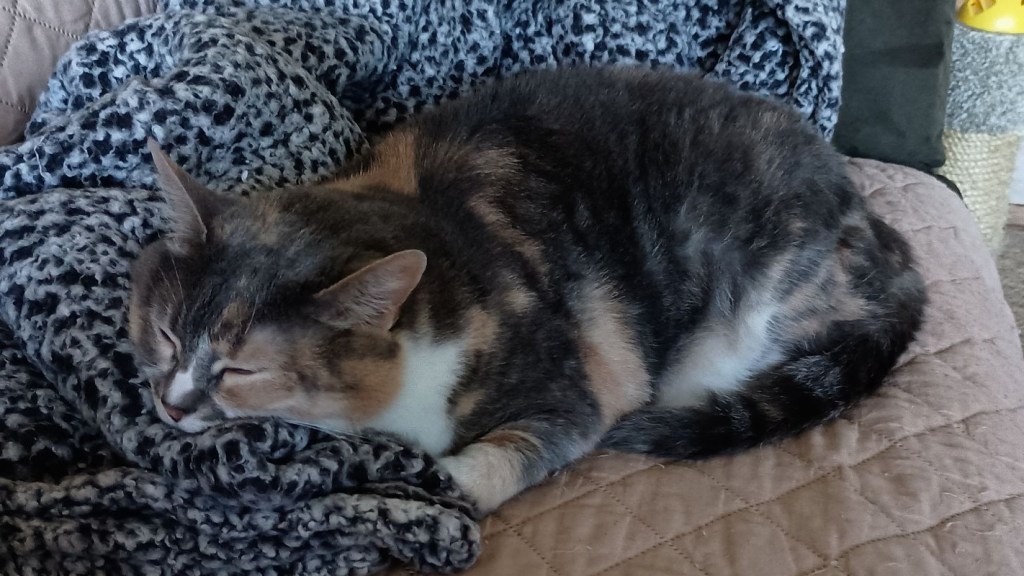
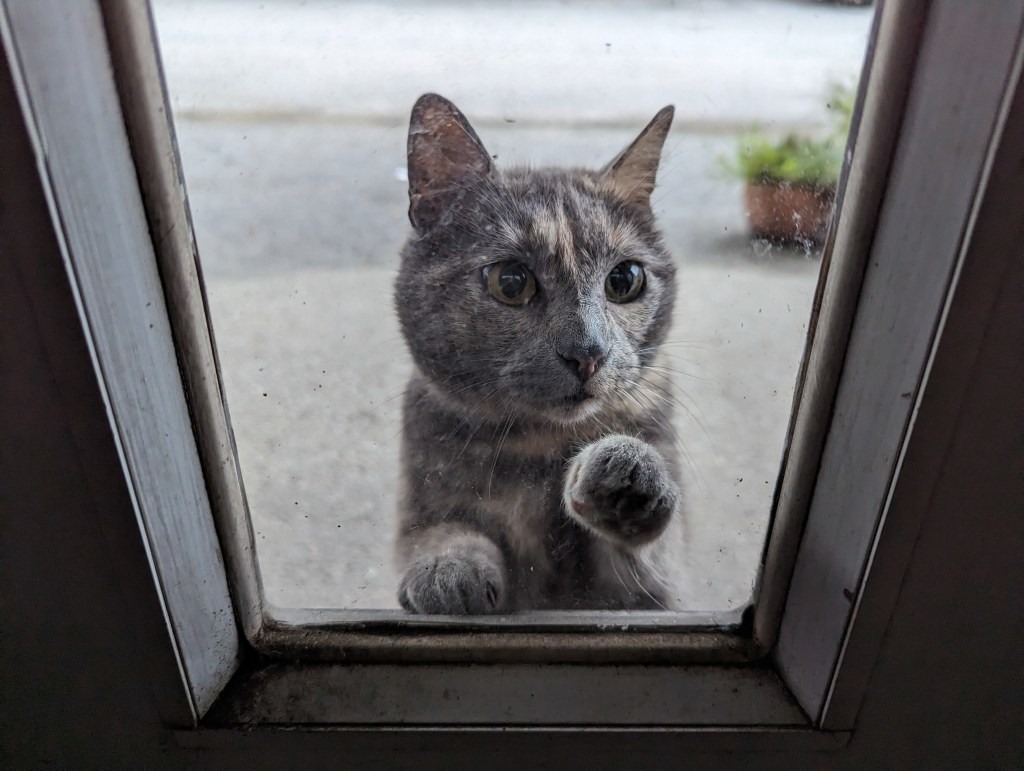
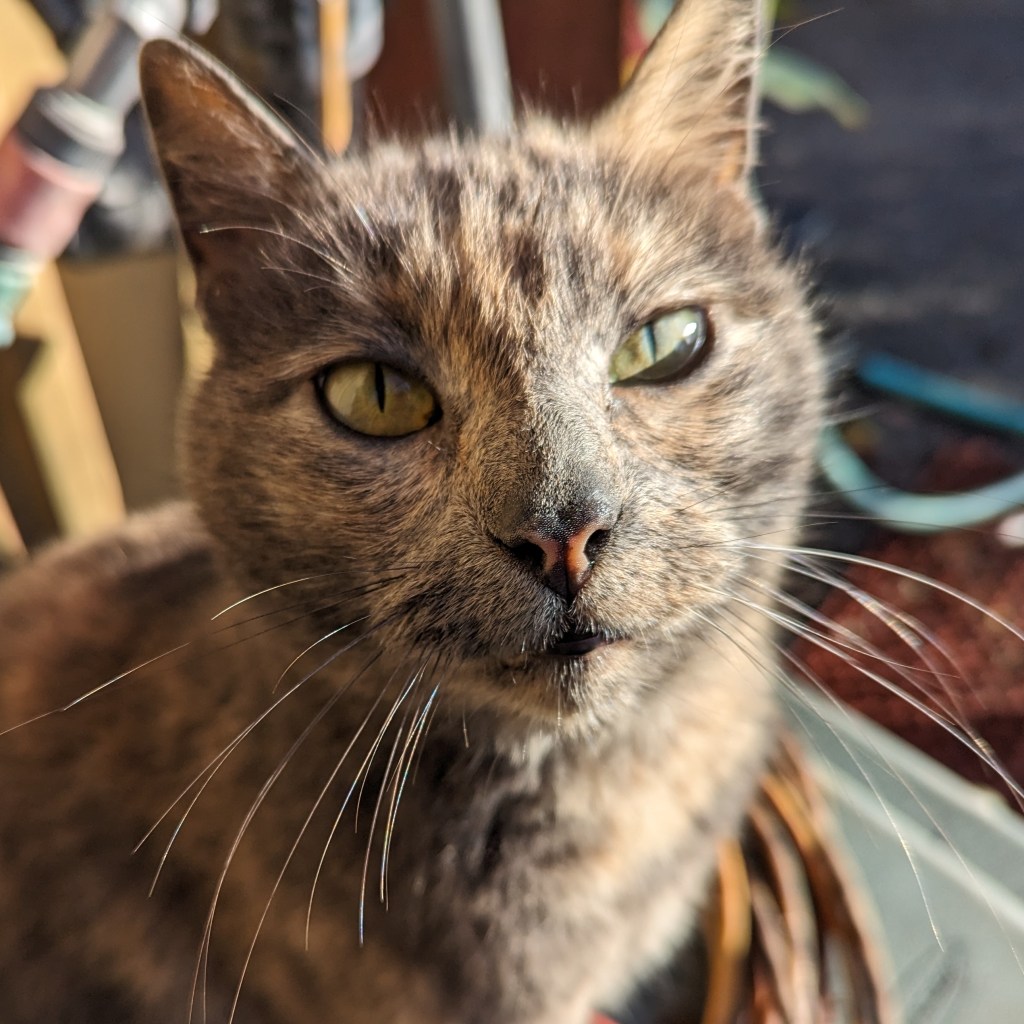
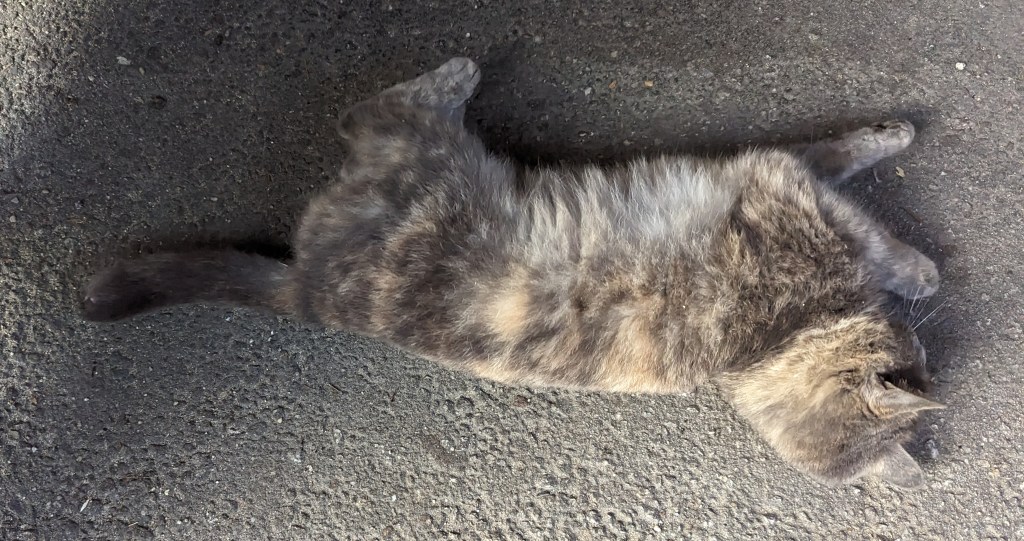
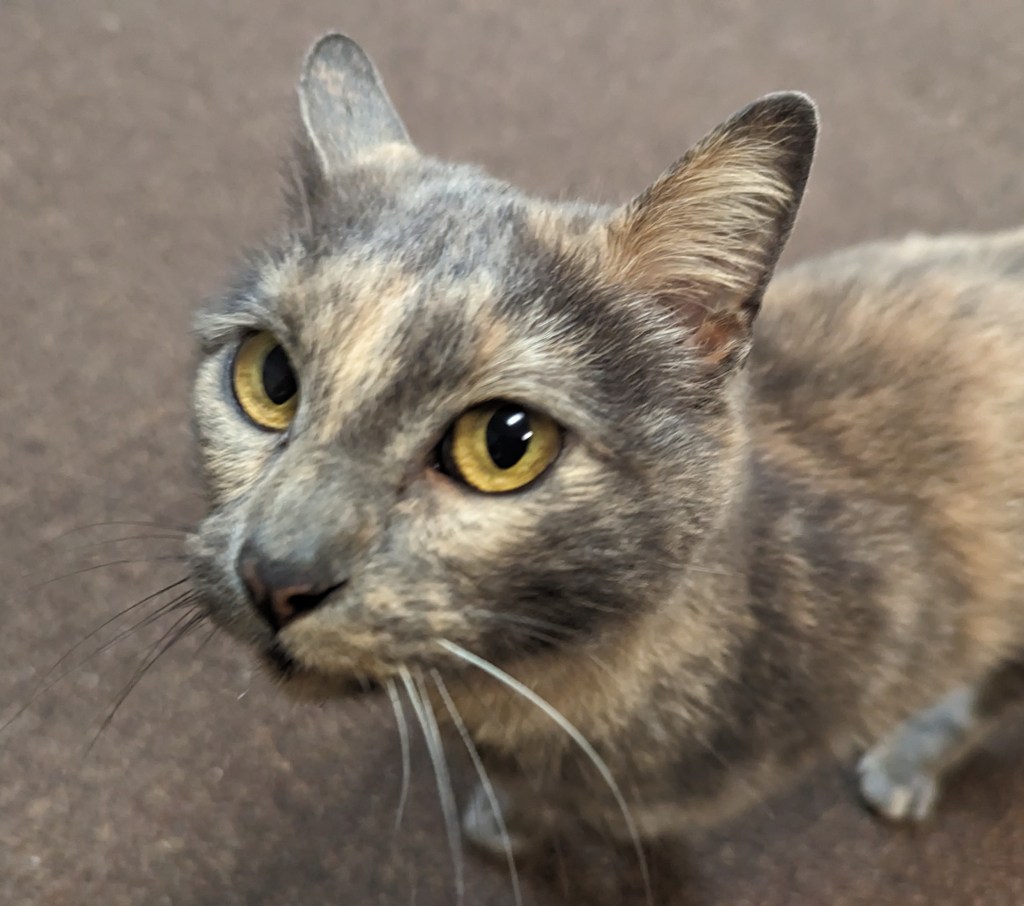
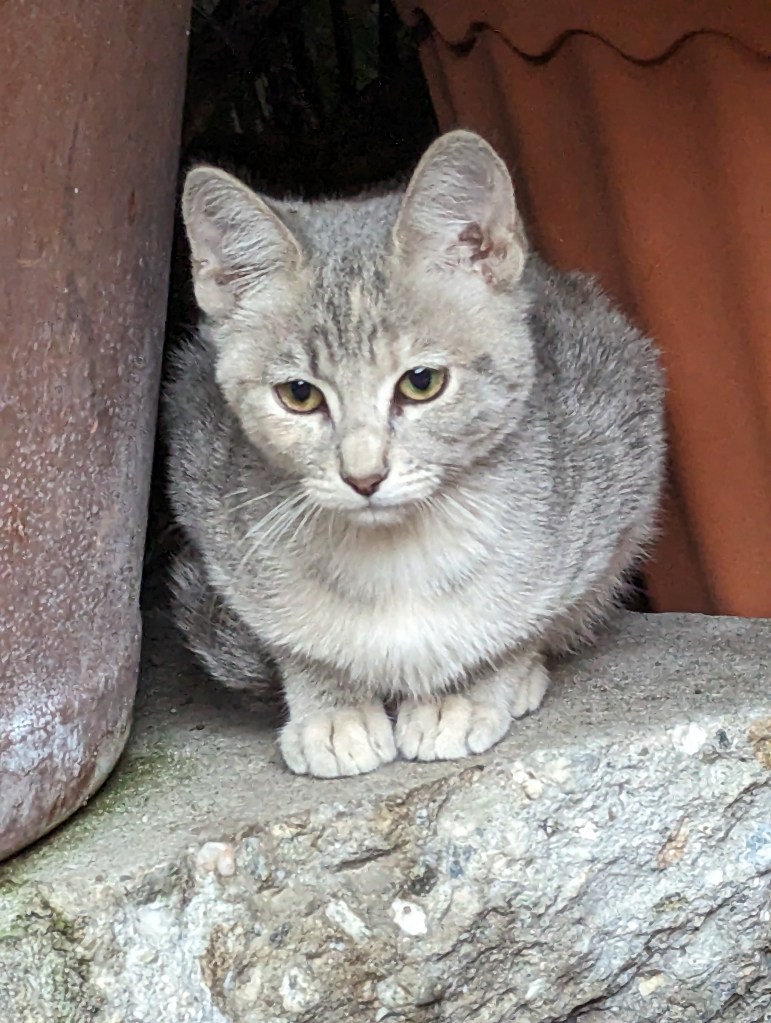
Fortunately, Heather does not seem to need anything more than she can figure out on her own. I know nothing about providing for a kitty. She does not seem to mind at all. Actually, she seems quite happy here, and purrs when petted. She seems to enjoy looking cute for those whom she meets for the first time, and for pictures such as this.
Heather is the new rodent mitigation specialist. She has been here for quite a while. We have been unable to determine where she originated from. Unless or until we do, she can stay here to dissuade rodent incursion. She has been remarkably effective with her expertise. None of the formerly bothersome rodents have been observed since her arrival. The seedlings and small perennials that the rodents had been eating previously have incurred no subsequent damage.
This will take some getting accustomed to. I am not particularly familiar with kitties. I give her a can of food in the evening, with dry food available at other times. She has a sheltered bunk out in the nursery, but might want to come into the foyer when the weather gets frosty or rainy. If so, I may put a warming pad for kitties under her bunk, since it will be close to an electrical outlet. She does not seem to be too demanding yet, but I have no idea how kitties operate. She could get demanding later, and because she is a kitty, I can not argue with her.
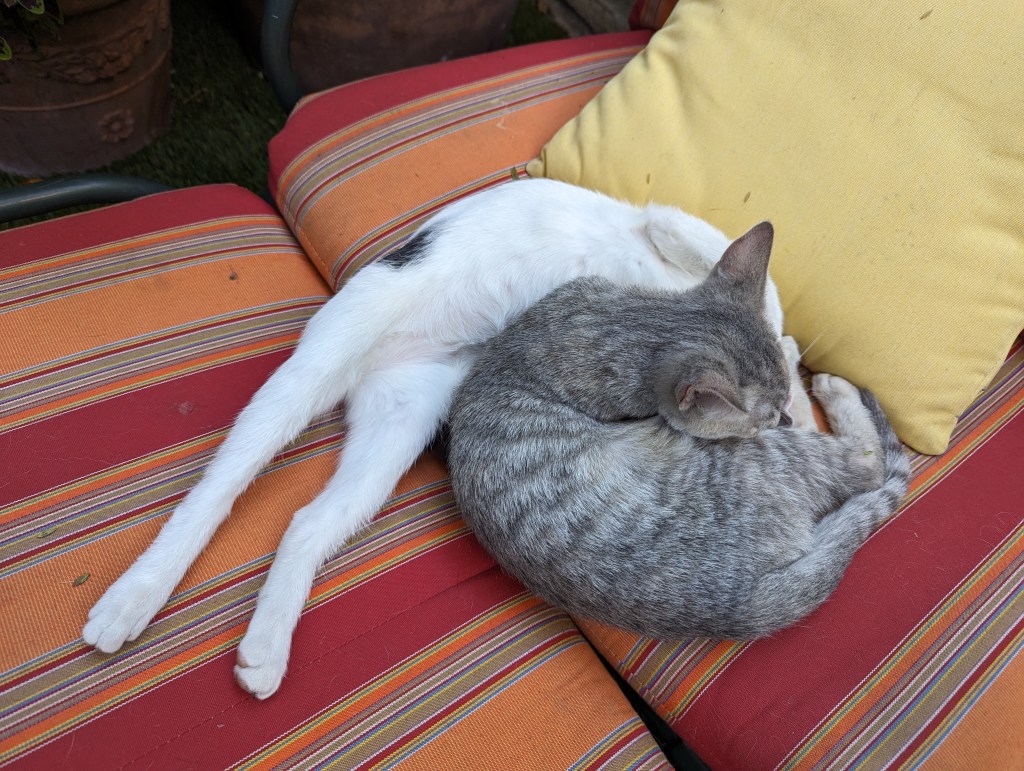
She does not have much to say though. She meows when hungry. When petted, she makes that weirdly distinctive purring sound that kitties make, but mysteriously, without actually speaking. She was quite fond of Rhody before people could get close to her, and seemed to enjoy how he chewed her head, but now that people regularly pet her, she avoids Rhody, and actually hisses at him if he wants to chew her head. She could not tell us what her name is, so, after some minor deliberation, we named her Heather.
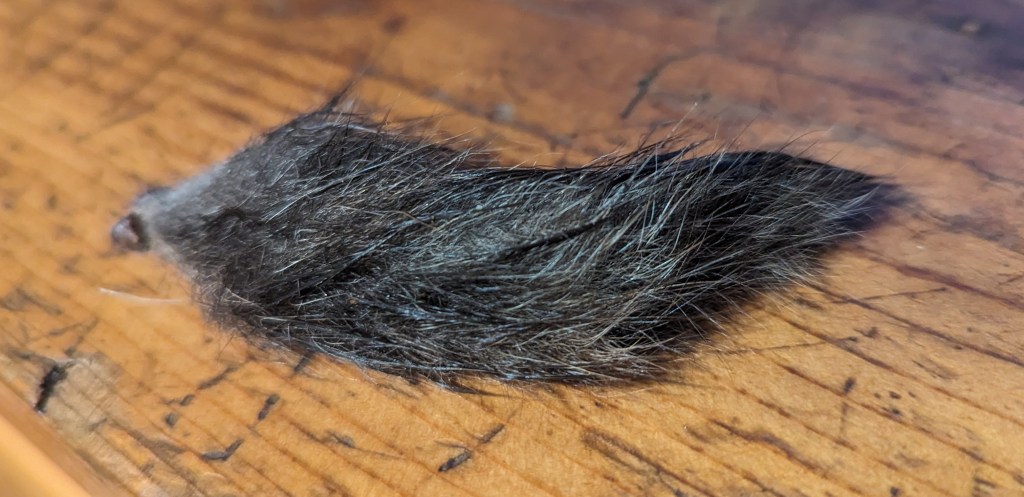
Notice her tail.
We do not know exactly how long Heather has been here, but after her arrival and prior to her socialization, we noticed that the tip of her tail was kinked. As she became socialized and pettable, we noticed that the tip of her tail beyond the kink seemed to be necrotic, and felt like an old fashioned rabbit’s foot keychain. A few days later, the kinked tip was no longer a concern.
The New Mouser seems content to stay with us here. Actually, she seems to be a bit too content. She has been coming inside, where some on staff do not want her to be. Darla, her predecessor, was never so presumptuous.
Now that she is so comfortable with people, I can get here into a kitty transportation device and take her to a veterinary clinic to determine if she has a chip, and to get her inspected. If necessary, and if she stays here, we may need to get her spayed. (We only assumed her gender according to her color pattern. She may need to be neutered.) I suspect that she was dumped here while young and before getting spayed.
If she stays here, she should get a name. The crew has not agreed on one yet, and several options remain. ‘Snickers’ seems to be the favorite option, although I dislike it. I prefer ‘Holly’. ‘Heather’ is not bad, and seems to suit her better. These are some others that I considered, only to determine that I am not so totally keen on them:
Rhoda – This confuses Rhody.
Erica – This is short for Ericaceae, which is the family of Rhododendron. It is not so bad.
Azalea – This is another type of Rhododendron. I dislike it for this particular kitty.
Lyona – This is short for Lyonothamnus floribundus ‘Asplenifolius’. I am unimpressed.
Leona – This is short for Leonotis leonurus. I am still unimpressed.
Typha – This is Latin for cattail, but sounds like punctuation or a fever.
Myrtle – This is a ‘no’.
Lily – This is for a white kitty.
Rose – This is for a prettier kitty
Daisy – This is for some other kitty that is not this one.
Violet – No.
Flower – No.
Blossom – No.
Aster – Jasmine – Ivy – Poppy — No – No – No and No.
Darla, the former mouser here, relocated to a more domestic lifestyle in Santa Clara during the unusually stormy weather and flooding last winter. She is getting rather elderly, and has earned a comfortable retirement. Unfortunately though, rodents of all sorts arrived immediately after her retirement.
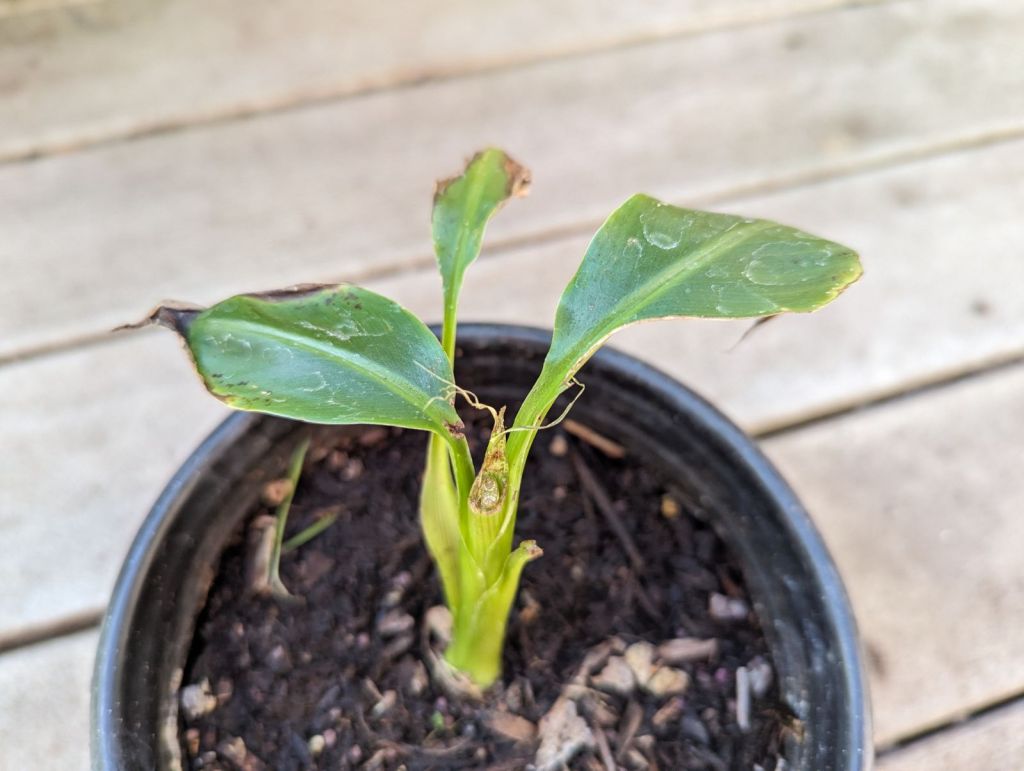
Mice and rats infested the buildings while gophers and ground squirrels infested exposed ground outside, including the recovery nursery. Rodents of some sort ate the tops off a few of my banana plugs, and chewed the base of my cup of gold vine. Another chewed into a bag of seed for mixed erosion control vegetation, and made a mess of it.
Then, the rodents seemed to leave as suddenly as they arrived. Even tree squirrels became scarce. At about that time, we noticed, on rare occasion, what seemed to be a stray kitty. I thought that the kitty must live nearby, and would eventually return home. It avoided us, but never completely left the area for long.
The kitty appears to be rather grungy because of its color pattern. I recently learned that this particular color pattern is known as tortoiseshell, and that almost all kitties with this tortoiseshell color pattern are female. I hope that she is not offended if my assumption of her gender as female is inaccurate. She is quite small and lean, with a thin tail that is kinked at the end. I intend to get a better picture of her to share with neighbors, just in case someone is missing her.
A bit more than a week ago, this kitty seemed to become a bit more interested in human activity here. For the first time, I offered her a bit of something that she might enjoy. Because there was no kitty food here, I gave her a small can of tuna from the galley. She enjoyed it so much that I got her some real kitty food. She now comes for it to the meeting room daily after the crew leaves. I have been able to get a bit closer to her daily, and petted her briefly for the first time a few days ago. She purrs quite loudly when petted, although she also seemed to be rather nervous. She prefers interaction with Rhody, who now chews her ears. I invited her into the hallway because it gets somewhat cool in the evening, but she does not want to come inside.
Because I believe that her presence here convinced the rodents to relocate, I would prefer her to stay if she has no other home to return to. If she only wants a bit of food from me, this could be a mutually beneficial situation. If so, we should determine what her name is.
Is this catnip, Nepeta cataria? Again, I am baffled by something that should be very easy to identify. It certainly resembles catnip visually. It almost smells like catnip. If I did not get it from a small curbside garden that Rhody and others of his species leave messages for each other in, I would have confirmed that it tastes like catnip. Perhaps I should be more than adequately convinced that it actually is as I suspect.
Nonetheless, I am not yet convinced. Catnip is rare here. I know of no one who grows it. Those who have tried ultimately found it destroyed by frolicking cats. It really should be grown in hanging pots that cats can not reach. It seems unlikely that it could survive for long within a curbside garden near where a few cats live. It also seems unlikely that it would spontaneously appear where it had not been planted intentionally. Only small succulents were planted below a large camellia within its particular small garden. All the small weeds that grow nearby are common.
Regardless, I could not ignore a branched stem of this questionably identified species that had broken off and was laying limply over undamaged foliage. Obviously, it needed to be removed. Obviously, I obliged. I brought it back and processed it into several small cuttings. I collected the scraps of leaves and internodes for an associate to take to a feline acquaintance of his for possible confirmation of its slightly questionable identity. I await the assessment, although it will be from someone who can not decide to stay inside or go outside after meowing incessantly for someone to open a door. A second or more opinions may be necessary from other members of this innately indecisive species if the first attempt at confirmation is unsuccessful.
Spring is when most rodents are most active. Although they do not hibernate locally, they are a bit less active through winter. Their activity increases with warming spring weather. Their progeny increases their population. Assorted fresh vegetation that sustains them is most abundant. Their activity decelerates slightly through summer because of predation.
Although they may be no more active now than they had been, their activity is changing. Rodents are aware that it is now autumn, and that they must prepare for winter. They eat seeds and fruits that are naturally available at this time of year. Some rodents store food. It is no coincidence that vegetation naturally provides what they need, when they need it.
For example, oaks exploit the natural activity of squirrels for the dispersion of their seed. Annually, they produce acorns to sustain a particular population of squirrels. Then, every several years, they produce too many for the squirrels to eat. The squirrels naturally bury more acorns than they can retrieve later. The surplus acorns remain buried to germinate.
Similarly, rodents consume autumn fruit, such as apples and pears, and store their seed. They are likely less numerous than they were earlier in the year, but consume more now. They naturally fatten up so they may eat less while food is less abundant through winter. Also, they naturally migrate from gardens into warmer and drier home interiors for winter.
This is one of several reasons why sanitation within the garden is so important. Removal of unharvested fruit makes gardens less attractive to rodents. They may find sustenance on compost piles, but may not dig too deeply into them. Deteriorating pruning scraps can provide them with shelter from weather and predators. Cleanliness is a deterrent to them.
Deterrent is safer than eradication. Traps and poisons are potentially dangerous for pets and people. Poisoned rats and mice may poison predators or scavengers who eat them. Cats are very efficient at both deterrent and eradication of rodents. However, they require major commitment for many years. They can do nothing outside if confined to their home.
Kitties are very proficient with mind control techniques.
Rodents have become a problem at home without Darla the mouser kitty. I do not know if Darla actually caught many rodents, or merely deterred them from inhabiting her territory. It is irrelevant. The absence of rodents was more important. Now that she has gone to live a domestic lifestyle in Santa Clara, rodents of various types are damaging some of the vegetation within the nursery, particularly young perennials.
A pair of feral kitties are supposed to be relocating to our facility. They do not need to stay within the main building, although they will have adjacent shelter. I do not care how they intend to eliminate rodents and prevent them from returning. I only care that they do so. If they are half as effective as Darla was, I will be pleased.
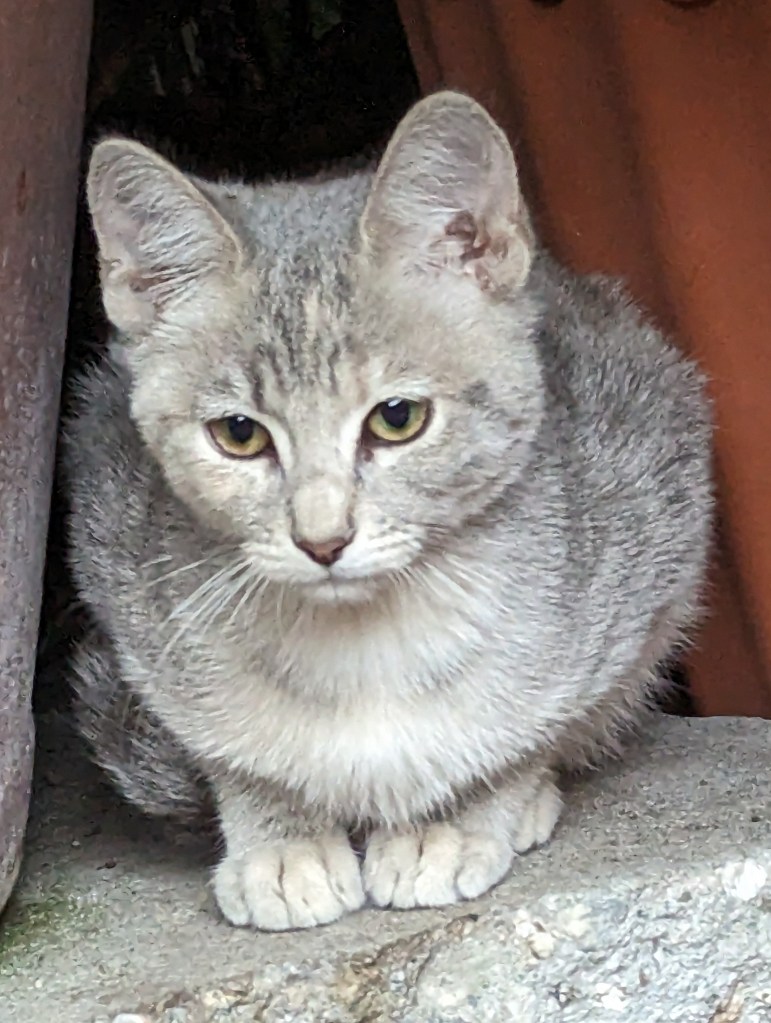
Brent, my colleague down south, recently procured three little kittens, supposedly to work as mousers like Darla did. They seem to be too friendly and playful though. I can not imagine them catching rodents. They certainly do not seem like the sort of kitties who rodents would fear. They are too playful and too nice.
If rodents avoid situations that are occupied by kitties, then any kitty could be effective. If rodents must be exterminated, then more diligent mousers would be necessary. I have no idea how instinctive mousing is for kitties. I suspect that it is different for each kitty, which is why some are better mousers than others.
At least these three little kittens are delightful. I mean, who would not appreciate such cute kitties in the garden? I regularly remind them that I am none too keen on kitties, but like all other kitties whom I have ever met, they do not care. They know how to get me to do whatever they demand.
Regardless of how weird kitties can be, they always seem to be dangerously cute.
Six on Saturday is hasty for me this Saturday. The last few days have been rather hectic. It is now about midnight on Friday. I am presently in Los Angeles, and will be returning to Los Gatos in a few hours. It is a long story. I did not get many pictures.
1. Washingtonia robusta, Mexican fan palm is the most familiar palm of the Los Angeles skyline. This one is very unique though. It grew under the onramp from the northbound Harbor Freeway to the westbound Santa Monica Freeway, on top of an embankment on northbound Toberman Street. It grew vertically until it encountered the underside of the onramp. It then crept along the underside of a merge lane toward the south. It resumed vertical growth after reaching the edge, and escaping from below. Countless commuters who drive past it, and perhaps also over it, are unaware of its extraordinary contortions.
2. Coleus scutellarioides, coleus is still performing nicely within Brent’s garden. Autumn is a bit later and significantly milder within Los Angeles than within Los Gatos or Felton.
3. Coleus scutellarioides, coleus is familiar among my generation because it was popular as a houseplant through the 1970s. It is likely more popular in home gardens nowadays.
4. Nephrolepis exaltata ‘Variegata’, variegated Boston fern or tiger fern is one of several species that I will bring back from Los Angeles because I can not procure it in Los Gatos.
5. Three little kittens are new residents of Brent’s garden. I doubt that they are related to those that Los Gatos is named after. They will eventually help with rodent management.
6. Rhody is normally terrified of kittens. He does not seem to be aware that they are just small cats. Now that we are about to leave, he is much more tolerant of their playfulness.
Darla would be very disappointed. Rodents were not a problem while she was here. Since her retirement, they have proliferated. I do not mind if they get into the compost or even the trash. The problem is that they now inhabit portions of the shop buildings and the nursery where we grow a few items for the landscapes.
They are rudely bold about their infestation too. They know that I can not catch them like Darla would, so they are in no hurry to evade me if I encounter them while working late. They ruined a bag of seed for erosion control vegetation. Although the top of the bag was wide open, they chewed through the bag so that the contents spilled out onto the floor.
Worst of all, they chewed the tops of a few of the more unusual items within the nursery. They ruined a few of the Heliconia that I brought from Brent’s garden, and then chewed the tops off of two young banana trees. All affected specimens should recover, but I am very annoyed by the damage nonetheless. I do not put so much effort into growing such vegetation just to feed rude rodents! Besides, the banana trees are of an uncommon cultivar. I am concerned about others that are quite rare.
Rats would not be such a problem if only they were not so rude. There is plenty of vegetation, including blackberries, for them to eat within surrounding forested areas. They insist on coming inside to damage important vegetation instead. That is why I do not feel at all guilty about putting traps out.
Ultimately, I should be more diligent about hiring a feral kitty to dissuade rodent infestation. I have not yet heard back from the agency that procures employment for such feral kitties.




 Tony Tomeo