Deodar Cedar

Deodar cedar develops casual conical form.

“Cedar” is a common name of a few species of a few genera that are not actually cedars. Western red cedar is an arborvitae. Eastern red cedar is a juniper. Deodar cedar, Cedrus deodara, happens to be one of only three real cedars. Atlas cedar and cedar of Lebanon are the other two. Cultivars of Atlas cedar are uncommon. Cedar of Lebanon is very rare.

Although too big for compact gardens, deodar cedar is one of the more popular conifers. It performs splendidly within local climates and soils, as if it is right at home. Mature trees can survive without irrigation. Roots are generally complaisant, and disperse too deeply to displace pavement. However, deodar cedar can grow fifty feet tall and thirty feet wide.

Deodar cedar mostly develop casually conical form. Some develop multiple trunks or big limbs that eventually curve upward like trunks. Otherwise, limbs tend to droop somewhat at their tips. Glaucous grayish needle leaves are about an inch or two long. Most occur in terminal clusters of short spur stems. Some develop singly on elongated vigorous stems. Foliar debris has an herbicidal effect on the ground below.
Port Orford Cedar

Cultivars are much more compact than the simple species.

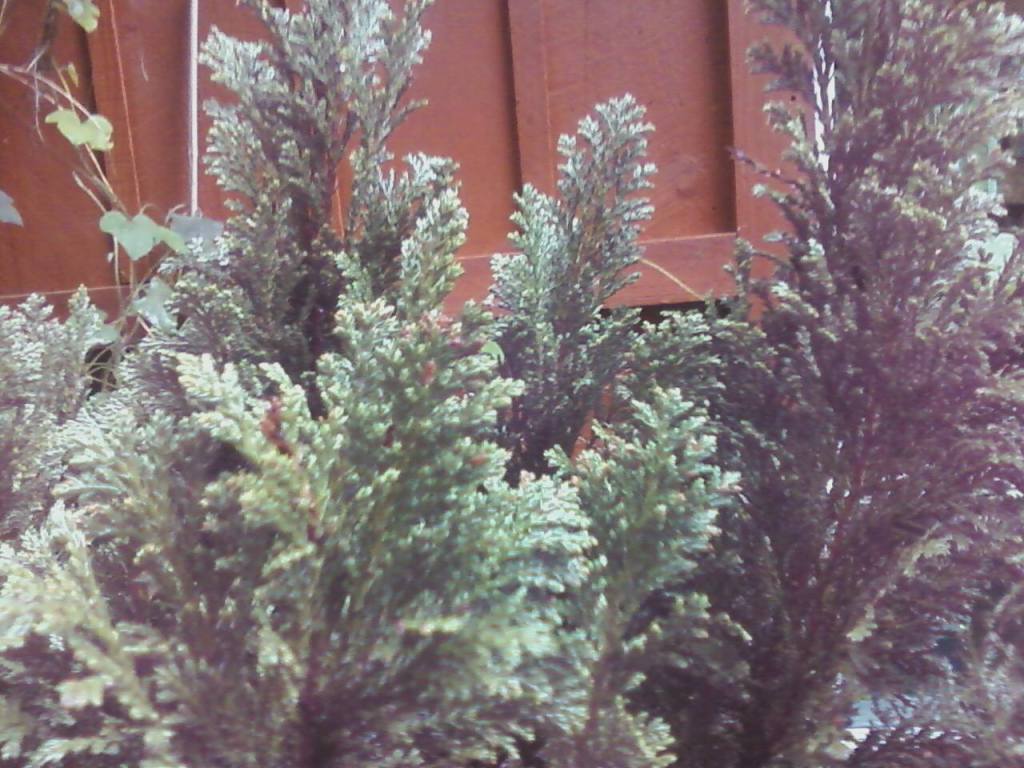
Fifty foot tall Port Orford cedar trees, Chamaecyparis lawsoniana, like those that get harvested for timber from their native range on the south coast of Oregon and the northwest corner of California are almost never found in refined gardens. Their remarkably diverse garden varieties mostly stay less than half as tall, as dense, compact trees or large shrubbery that resembles arborvitaes. Many have bluish or greyish foliage. Some have gold foliage. Finely textured needle-like juvenile foliage that is so prominent among young plants continues to appear sporadically with scale-like adult growth as plants mature. The small round cones are not prominent. Like related arborvitae, Port Orford cedar tolerates a bit of shade.

Merry Christmas!

This was much more awesome than gold, frankincense or myrrh!

Happy Birthday Jesus!

What is a suitable birthday gift for Someone Who has no use for anything worldly, but lived like He did? Gold, frankincense and myrrh seemed like good ideas in the beginning, although they were presented a year prior to His first birthday. Contrary to modern commercialism, a Lexus or Mercedes Benz might not be so appropriate for Someone Who preferred to come into town on a colt, and not the Dodge sort. Perhaps that is why it is customary to present gifts to others instead. Such gifts are Christmas gifts because so few have the same birthday.

Although overly elaborate or abundant gifts are a tradition that I find to be objectionable, I enjoyed many relatively minor gifts when I was a kid. Within my first few years, although I do not remember exactly when, I received my first tree, which was a seedling of Calocedrus decurrens, California incense cedar, from Amador County. A year or two afterward, I received a ‘Meyer’ lemon tree. During the same time, I received seed for many types of vegetables and a few flowers, as well as a set of child-sized gardening tools of premium quality. They lasted long enough for my mother to use the shovel to clean ash from the woodstove long after I graduated to a real shovel.

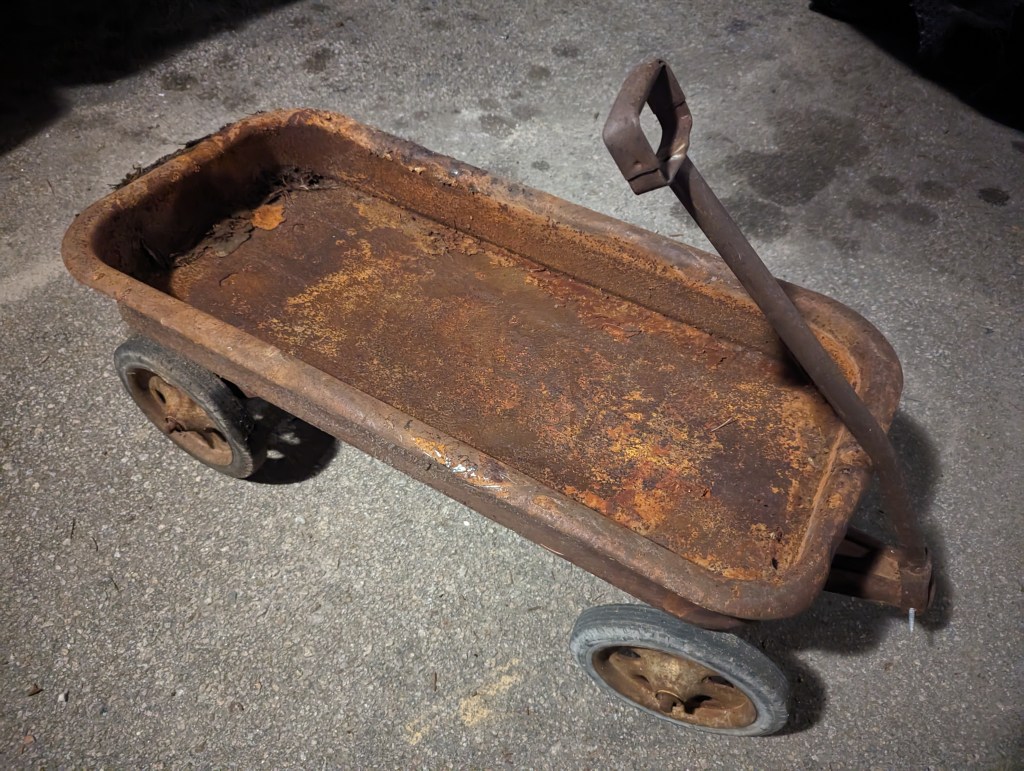
The most awesomely awesome Christmas gift that I received back then was my deluxe Radio Flyer wagon! It was my first luxury sedan that worked like a pickup! It was as durable as the other gardening tools. After I went to college, my mother used it to bring in firewood. It is out back right now, more than half a century after I received it new. It may continue to work in my garden as long as I do.

Merry Christmas!

This was much more awesome than gold, frankincense or myrrh!

Happy Birthday Jesus!

What is a suitable birthday gift for Someone Who has no use for anything worldly, but lived like He did? Gold, frankincense and myrrh seemed like good ideas in the beginning, although they were presented a year prior to His first birthday. Contrary to modern commercialism, a Lexus or Mercedes Benz might not be so appropriate for Someone Who preferred to come into town on a colt, and not the Dodge sort. Perhaps that is why it is customary to present gifts to others instead. Such gifts are Christmas gifts because so few have the same birthday.

Although overly elaborate or abundant gifts are a tradition that I find to be objectionable, I enjoyed many relatively minor gifts when I was a kid. Within my first few years, although I do not remember exactly when, I received my first tree, which was a seedling of Calocedrus decurrens, California incense cedar, from Amador County. A year or two afterward, I received a ‘Meyer’ lemon tree. During the same time, I received seed for many types of vegetables and a few flowers, as well as a set of child-sized gardening tools of premium quality. They lasted long enough for my mother to use the shovel to clean ash from the woodstove long after I graduated to a real shovel.

The most awesomely awesome Christmas gift that I received back then was my deluxe Radio Flyer wagon! It was my first luxury sedan that worked like a pickup! It was as durable as the other gardening tools. After I went to college, my mother used it to bring in firewood. It is out back right now, more than half a century after I received it new. It may continue to work in my garden as long as I do.

Weeping Blue Atlas Cedar

Gray foliage and fluidly pendulous form.

In the wild, Atlas cedar can get almost a hundred feet tall. Bluish gray or rarely yellowish cultivars which are popular for home gardens are generally more compact. Perhaps they could get as grand as wild trees after a few centuries. Weeping blue Atlas cedar, Cedrus atlantica ‘Glauca Pendula’ is an strange one. It can barely stand fifteen feet tall and wide.

The trunks and limbs of weeping blue Atlas cedar are initially so pliant that they sag onto the ground without support. New stems try to grow upward, and may do so for a few feet, or may hang downward after achieving only a few inches of height. Trunks need binding for either straight or serpentine form. They lignify slowly as they mature and gain caliper.

Weeping blue Atlas cedar requires commitment. Indiscriminate pruning or shearing ruins the naturally sculptural form. Such pendulous growth necessitates meticulous grooming, although it may not be necessary very often within spacious situations. Expanding trunks eventually absorb the curves of serpentine form. Low stems can sprawl over the ground.

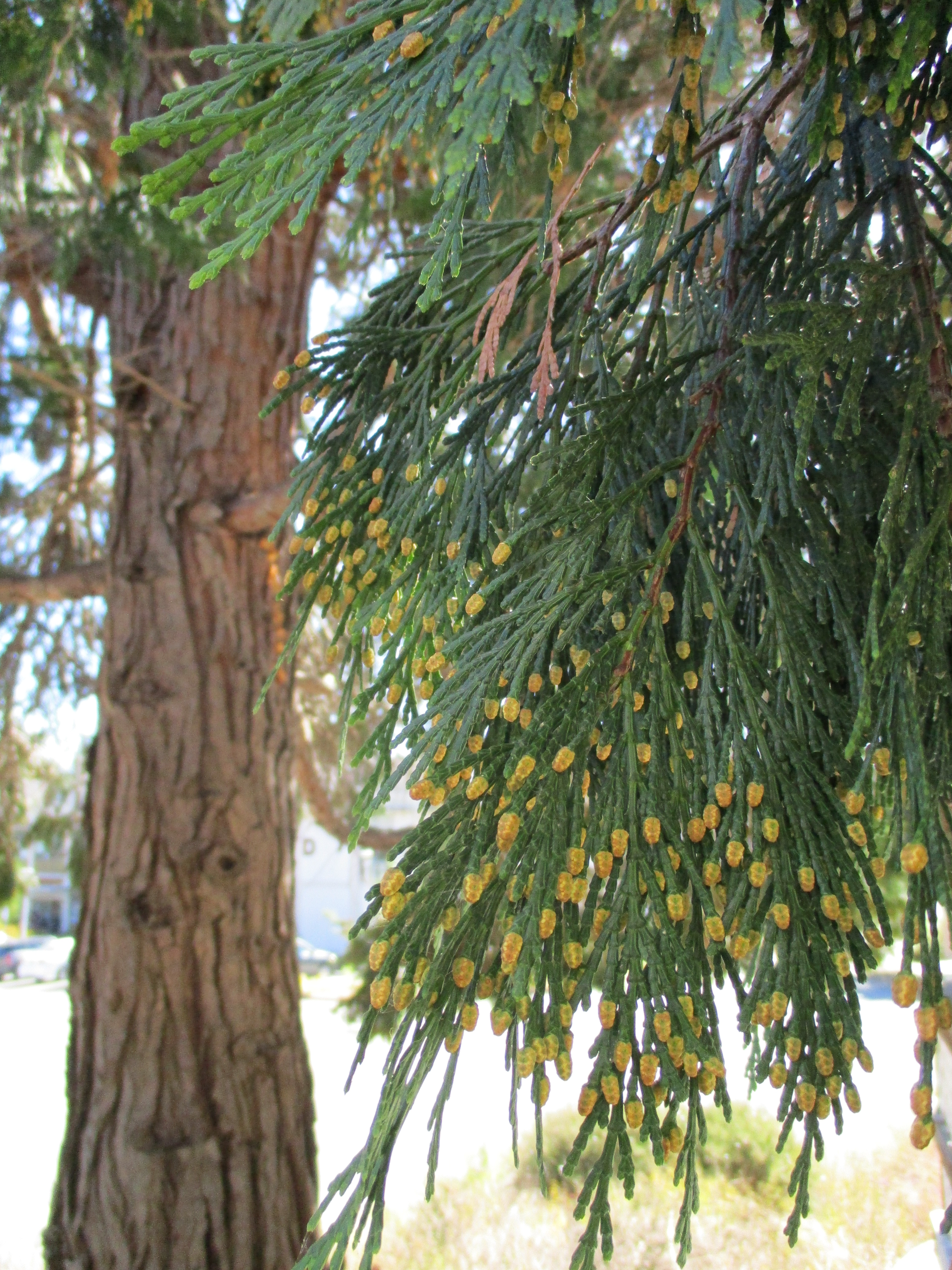
Incense Cedar

71108In the west, the incense cedar, Calocedrus decurrens, was made into cedar chests or paneling for cedar closets as a substitute for the more traditional Eastern redcedar (which is incidentally a big juniper). The wood is supposedly aromatic enough to repel moths from woolens and furs. The evergreen foliage is very aromatic as well, so is sometimes used for garlands at Christmas time.

Old trees in the wild can eventually get nearly two hundred feet tall, with somewhat narrowly conical canopies. Yet, hundred year old trees that were planted in urban gardens during the Victorian period are not half as tall yet. Some are quite narrow. The rusty brown bark is deeply and coarsely furrowed. Branches can sag downward and curve back upward, which looks rather disfigured. Flattened sprays of scale-like leaves resemble those of arborvitae. Incense cedar is native to the Sierra Nevada and Cascade Mountains.