Frost Is Simply Too Chill

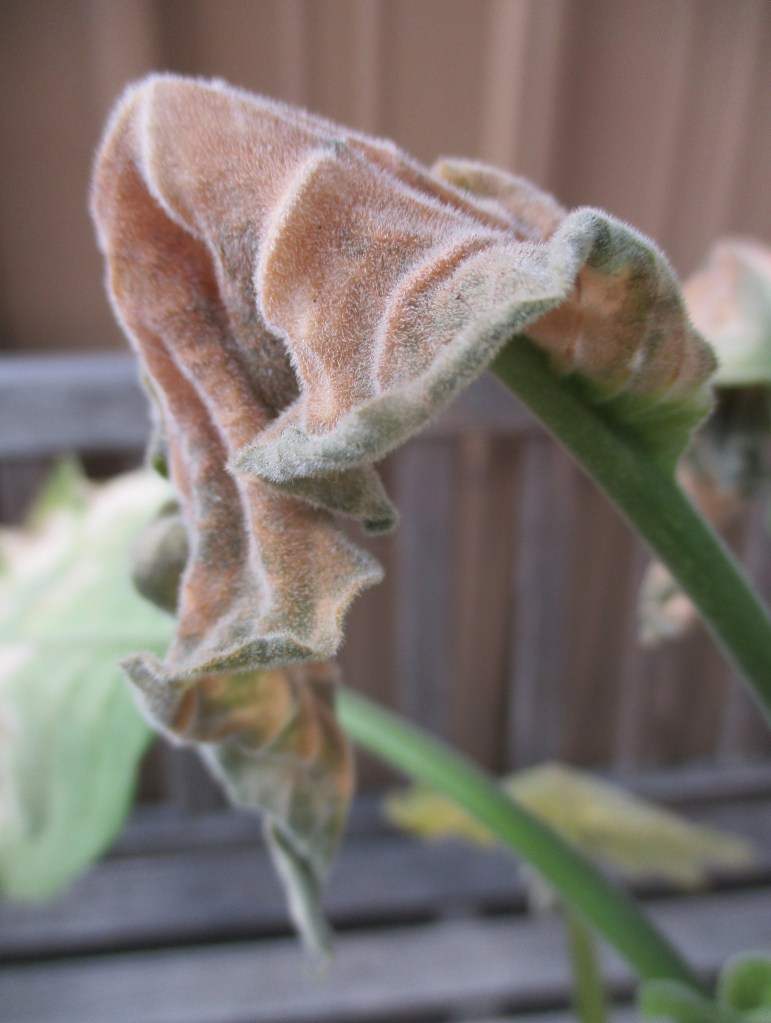
Some minor frost damage is acceptable.

Chill can be good. Frost can be bad. The difference is thirteen degrees Fahrenheit. Chill is at or less than forty-five degrees. Frost is at or less than thirty-two degrees. Chill helps some flora to maintain its seasonal schedule. Frost causes some flora to freeze. Both are limiting factors of home gardening. Both are weather patterns that are limited by climate.

Many species from climates with more pronounced seasons rely on chill. They know that it occurs only during winter, and that they should bloom afterwards. Duration of such chill is more important than temperature. Any temperature at or less than forty-five degrees is equally sufficient. Within that, different species require different durations, or ‘chill hours’.

This limits the selection of many species, like various fruit trees. Citrus orchards formerly grew within the San Fernando Valley. They require no chill. Stone fruit orchards formerly grew within the Santa Clara Valley. They require a bit of chill. Pomme fruit orchards grow in the Willamette Valley. Many cultivars of pomme fruit perform best with significant chill.

Frost also limits the selection of many species. Pomme fruits do not mind it. However, if it happens late, it can ruin stone fruit bloom or developing fruit. It might damage citrus trees whenever it happens. Some climates here experience frost annually. Some experience it only rarely or mildly. Several coastal climates experience merely minor chill without frost.

Many garden enthusiasts grow a few species that are vulnerable to frost. Of course, such species are safe within frostless climates. Elsewhere, they may need shelter during cold weather. Potted vegetation may benefit from seasonal relocation. Temporary tenting can shelter imobile vegetation in the ground. Some vegetation is too large to shelter, though.

Vegetation that sustains frost damage is unsightly. However, it is best to delay pruning or grooming until subsequent frost is unlikely. Damaged outer growth insulates undamaged inner growth. Besides, pruning stimulates new and more vulnerable growth. Some types of vegetation should want only superficial grooming. Others might require major pruning.

Autumn Foliar Color Appreciates Chill

Maples perform better in cooler climates.

Indian Summer complicates autumn. It is an imposition of pleasant weather that delays inevitable chill. Gardening is a bit more enjoyable while the weather remains summery. However, late warmth confuses a few species that should decelerate growth for autumn. Deciduous species delay dormancy. This delays the development of autumn foliar color.

Consequently, autumn foliar color is somewhat late this autumn. It is only beginning to develop. Some species that eventually become spectacularly colorful remain very green. Only the most sensitive species, such as Boston ivy, are beginning to exhibit their color. Unfortunately, because of this delay, some may defoliate unusually soon after coloring.

Autumn foliar color is underrated here, for various reasons. It is less common in the wild than in other regions. The color range of native deciduous species is almost exclusively simple yellow. Orange or red are uncommon. This is not much incentive for incorporation of such species within home gardens. Nor does it promote more colorful exotic species.

Besides, deciduous trees are innately less popular here than within other regions. Local culture seems to promote a preponderance of broadleaf evergreen species. Penetration of warming sunlight through defoliated trees is not such a priority. Winter weather does not get very cold here. Concealment of undesirable suburban scenery is more important.

Also, the misbelief that chill is inadequate here for much autumn foliar color is common. Technically, many of the most colorful species of cooler climates lack such color locally. This unfortunately includes famously colorful North American maples. Several species, however, do not need much chill for spectacular color. They compensate for what lacks.

Sweetgum develops the most vivid autumn foliar color, including yellow, orange and red. It defoliates slowly to retain its color until winter. PIstache is about as colorful, although it defoliates a bit earlier. Flowering pear provides more orange, red and dark burgundy red. Crape myrtle is a smaller tree with comparable foliar color. Ginkgo becomes vivid yellow. Of course, physical traits of each species are also important.

Early Spring Bulbs Start Now

Early spring bulbs appreciate winter chill.

Halloween seems to be an appropriate time to bury early spring bulbs in shallow graves. The season begins about now, and continues until about the end of the year. Installation of new bulbs might initially be ungratifying. There is nothing to show after their interment. Their spectacular bloom during late winter or early spring should more than compensate.

Freesia, narcissus, crocus, hyacinth and tulip are the most popular of early spring bulbs. So are anemone, ranunculus and several iris, although they may also be summer bulbs. Not all of such bulbs are actually bulbs. Several are corms, rhizomes, tubers or tuberous roots. Like bulbs, these store resources through dormancy to grow and bloom in season.

Early spring bulbs, unlike summer bulbs, prefer to be in their garden prior to winter. They enjoy rain and winter chill. Those that originate from nurseries are prechilled so that they bloom well regardless. After their first season though, some might not perform as reliably. Some bulbs can be slightly less than satisfied with winter chill within such mild climates.

However, a few types of early spring bulbs can naturalize. After their primary bloom, they produce new bulbs to replace the originals. Colonies of prolific bulbs eventually become crowded enough to inhibit bloom. Division of superfluous bulbs while dormant alleviates crowding. Also, it relinquishes a few bulbs for relocation. Freesia might be nicely prolific.

Early installation of early spring bulbs promotes early bloom. Obviously, later installation delays bloom. Therefore, installation in phases throughout the planting season prolongs bloom. For example, as one phase of daffodil finishes bloom, the subsequent phase can begin. This is effective only for their first season though. Bloom synchronizes afterwards.

Because winter weather is so mild locally, some early spring bulbs bloom a bit too early. Also because winter weather is so mild, premature bloom may not be a serious problem. Nonetheless, later installation may be preferable for some bulbs. Heavy rain may thrash tulip or freesia. Like phasing though, delaying bloom is only effective for the first season. Naturalized bulbs as they please.

Vernalization Enhances Bloom And Growth

Unusually wintry weather enhances some bloom.

Some gardens continue to recover from the exceptionally wintry weather of last winter. Frost damaged some plants, and killed a few. Wind damaged trees. Excessive rain caused erosion and saturation. This collectively unpleasant weather inhibited some from maintaining their gardens. Yet, some plants that require vernalization are performing splendidly.

It seems like an odd juxtaposition. Bloom of some plants is so unusually robust amongst remaining weather damage. Some bloom is noticeably late while most is precisely on schedule. It is not so odd to the plants who seem to behave so oddly though. Whether they appreciate vernalization or dislike frost, they respond to the weather.

Vernalization is merely attainment of sufficient chill to convince plants that it is winter. Many plants that are endemic to climates with cooler winters appreciate such reminders. It initiates their dormancy and resets their respective schedules. They know that subsequently warmer weather initiates their growing or seed germination season.

Plants that are endemic to climates with mild winters are less reliant on vernalization. Some of such plants are vulnerable to frost. Canna are tropical plants from mountainous regions that sometimes experience frost. They die back harmlessly if frosted, and remain dormant until safely warmer weather. They react to chill, but do not require it seasonally.

Spring bulbs, forsythia and flowering cherries have already bloomed atypically boldly. Later flowering cherries, as well as purple leaf plum, lilac and wisteria continue to do so. Peonies are likely to bloom better than typical a bit later. They are rare locally because of their reliance on typically unreliable vernalization.

Some cultivars of apple and pear are likewise unreliable within locally mild climates. Those that normally perform well here may perform better this year. After early warmth to initiate bloom, stone fruit bloom can succumb to late frost. Last winter though, frost was continuous enough to delay bloom until after the last frost. Extra vernalization may instead enhance production.

Winter Bloom Might Be Scarce

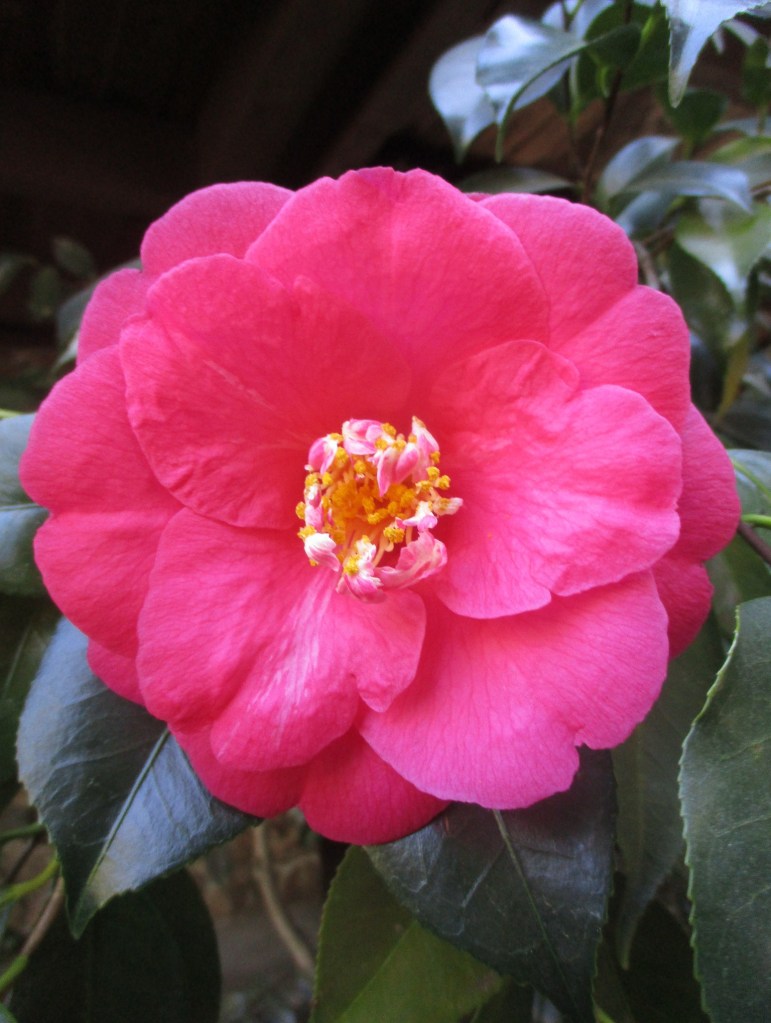
Some camellia bloom sporadically for winter.

Oregon gardens get to display superior peony bloom for spring and summer. That is one of several advantages of winter chill. Some plant species appreciate a bit more chill than they can get here. It enhances their performance. However, chill also limits winter bloom. Not many plants want to bloom while the weather is cool, and pollinators are less active.

That is one of several advantages of mild winter weather. It allows flowers that bloom for autumn to bloom a bit later. It allows a few of the flowers that bloom for spring to bloom a bit earlier. There is not much time between the last flowers of autumn and the first flowers of spring. Winter bloom is not as important here as where winters are longer and chillier.

Even if less important here, reliable winter bloom might be a bit more challenging. Some plants that bloom for winter in other climates might be hesitant to bloom for winter locally. After all, they prefer to bloom while the weather is cool. Mild chill might be unsatisfactory. Cool season annuals are unpredictable, but are likely the most reliable for winter bloom.

Of the popular cool season annuals, cyclamen is actually perennial. If not removed at the end of its season, it goes dormant for summer, and regenerates for subsequent winters. It does not bloom as profusely as it originally did, but adds color to mixed small perennials or ground covers that do not bloom for winter. Some types of primrose are also perennial.

A few perennials bloom sporadically and randomly throughout the year, including winter. African daisy and euryops daisy typically do not bloom as much as they do during warm weather, but can. Euryops daisy may actually bloom best during winter. Bird of Paradise flowers mature so slowly that those that begin during autumn might finish through winter.

Witch hazel, daphne, heather, mahonia and winter jasmine bloom for winter, but perhaps not as impressively as for other climates. Some camellia bloom abundantly while others bloom sporadically. Bergenia may bloom later here than for other climates. Forsythia and some spring bulbs, especially daffodil, bloom so early that they seem to bloom for winter.

Frost Is Different From Chill

Frost has already stricken some regions.

‘Chill’ could almost be a pleasant euphemism for ‘frost’. Both words describe cool or cold weather that occurs during winter. The obvious difference is that one is good, and one is bad. Chill is a minimum duration of cool weather that some plants require through winter to maintain their schedules. Frost is weather that is cool enough to damage some plants. 

This technical difference is that chill is at or below forty-five degrees Fahrenheit (≤45°F), and frost is at or below thirty-two degrees Fahrenheit (≤32°F). That is a difference of only thirteen degrees Fahrenheit (13°F), just above the freezing temperature of water. Climate and weather are simply not cooperative enough to comply to such precise technicalities.

Climates that provide sufficient chill for many plants that require it are also likely to inflict frost on occasion. Where chill is sufficient for most plants that need it, frost is likely much too severe for plants that are sensitive to it. Climates that lack frost are unlikely to provide enough chill for plants that need just a bit. High chill apples and oranges should not mix.

Of course, just as various chill dependent plants require various degrees of chill, various frost sensitive plants tolerate various degrees of frost. Some orange cultivars can survive frost as cold as twenty-five degrees Fahrenheit (25°F) within climates that low chill apple cultivars are happy with. Angel’s trumpet though, succumbs as soon as ice crystals form. 

It is helpful to know which plants are sensitive to frost, even in frostless climates. Tropical plants might get rather pallid when the weather is too cool for too long, even if frost is not a direct threat. Potted plants are more susceptible to frost damage than they would be in the ground, but can migrate to sheltered situations. Some can be temporary houseplants. 

Frost naturally limits the selection of plants. Various tropical plants that are appropriate to frostless climates are not appropriate for climates with harsh winter weather. That can be confusing with so many distinct climates within such minimal proximity. Coastal, inland, mountain, and all climates are so very different from each other.

Chill Helps Plants Distinguish Seasons

Spring bulbs know what chill means.

The Santa Clara Valley was formerly famous for stone fruit orchards. The San Fernando Valley was formerly famous for citrus orchards. The Wenatchee Region of Washington is still famous for apple orchards. Many variables influence which agricultural commodities grow or grew in each region. Of these, one of the more obvious is temperature and ‘chill’. 

Citrus could not be productive in the Wenatchee Region because it could not survive the chill of winter there. Although productive in home gardens of the Santa Clara Valley, it is not quite as productive as it is where winter is warmer in the San Fernando Valley. Citrus appreciates warmth but not chill. Many tropical and subtropical plants feel the same way. 

However, many of the numerous cultivars of apple that are so famously productive in the Wenatchee Region would be unproductive in the Santa Clara Valley. Only a scant few of these might produce relatively meagerly in the San Fernando Valley. Unlike citrus, which dislike chill, apple trees need chill for production. Some cultivars need more than others.

Chill regulates the schedules of many plants that are originally endemic to climates with cool winters. It confirms the occurrence of winter, which is a convenient time to finish one annual cycle and begin another. Some plants require only a minimal chill. Those that are from climates with harsh winters require coercion by more significant and sustained chill.  

One of the primary reasons that spring bulbs are available for planting early in autumn is that some benefit from spending winter in a cool and damp garden. Although, most bulbs are chilled prior to marketing. Some previously chilled spring bulbs bloom splendidly for their first season, but then bloom unsatisfactorily if chill is inadequate for them afterward.

Most plants that need more chill than they can get locally are simply not available locally. Some are available online though. A few locally popular plants that are marginal for mild climates get confused by the seasons. This is why some flowers such as torch lily, bloom randomly or out of season. Daphne and some late winter flowers may be blooming now, and could get damaged by frost later.

Last Frost Dates Help Scheduling

Frost is unlikely until next autumn.

Frost is not as much of a concern here as it is in other climates. It is very rare in some of the coastal climates of Southern California. The potential for frost damage increases farther inland, farther north, and at higher elevations. Regardless, it is generally tolerable locally. Even if it is necessary to protect a few marginal plants prior to frost, the ‘average last frost date’ gets little consideration.

The average last frost date designates the end of the frost season for a particular region. Although a specific date, it is an average of dates of the last frost of previous years. It includes minor frost that caused no major damage. Damaging frost, although possible, is unlikely afterward. It becomes more unlikely as the season advances. The process reverses after the average first frost date.

Obviously, average last frost dates are as variable as climates. They are irrelevant for climates without frost. Climates with cooler winters generally have average last frost dates later than those of milder climates. For most of us on the West Coast of California, the average last frost date happens before we are aware of it. Nonetheless, it is helpful to know the date for our particular regions.

Warm season vegetable and bedding plants should be safe in the garden after the average last frost date. Directly sown seed should get all the warmth it needs to germinate. Young plants will not likely experience damaging frost. The weather will continue to get warmer. The days will continue to get longer. Cool season vegetable and bedding plants will relinquish their space as necessary.

Plants that sustained damage from earlier frost can now be pruned and groomed. Damaged foliage that remained in place to insulate inner stems is no longer necessary. Pruning and removal of ruined vegetation stimulates new growth while it will be safe from frost. Aggressively pruning and grooming damaged plants that are already regenerating fragile new growth may be complicated.

Most local climates are beyond their respective average last frost dates. Soon, the others will be too.

Good Weather Can Be Bad

This should be the rainy season.

As if the lack of rain is not serious enough, the lack of cool winter weather will also cause problems for gardening. Warmth is certainly not as bad as drought, and makes gardening and other outdoor activities more pleasurable, but it interferes with the schedules and cycles that we and the flora in our gardens rely on. Something as natural as the weather should not be so unnatural.

The earlier unseasonably cold weather convinced plants that it really was winter. The problem is that the weather then turned unseasonably warm, and has stayed this warm long enough for plants to believe that it is spring! Some established (not freshly planted) narcissus and daffodils that should bloom as winter ends are already blooming, and some that are naturalized where they get no supplemental watering are already fading from the lack of moisture.

Buds of dormant roses are not staying so dormant, and may soon pop and start to grow. Buds of dormant fruit trees could do the same. When the rain finally starts, it will likely damage and spread disease among freshly exposed rose foliage and newly developing buds. Fungal and bacterial diseases that get an early start will likely proliferate more than they normally do through the following spring. Rain can likewise damage and dislodge fruit blossoms.

The many plants in the garden fortunately have a remarkable capacity for adaptation to weird weather. Bulbs, roses, fruit trees and other plants should eventually recover and get on with life as if nothing happened. The weather is actually more of a problem to those of us who want an early and healthy abundance of roses and an abundance of fruit in summer.

It is still a bit too early to know how the weather will affect what happens in the garden this spring, but fruit production of many types of fruit, as well as bloom of some types of flowers is expected to be inhibited.

Six on Saturday: Frozen II

Contrary to popular belief, there is a bit of chill during winter here. I was surprised by how many were surprised by my pictures of slight frost last week. The stone fruit that used to grow in the Santa Clara Valley could not have produced without adequate chill. Some deciduous trees color well for autumn, and all defoliate. We do not use much firewood, but some of us use some.

It may not look much like autumn to outsiders. Nonetheless, I find the local climate to be more than satisfactory for what I grow. In some regards, I find it to be ideal. Rhody just stays in by the stove.

1. Sycamores are trashy. Because of anthracnose, they dropped leaves in spring. They dropped more after the Fire. Now they are defoliating for winter. A bulldozer is used for all the leaves.

2. Bald cypress colors well by simple local standards, even if it is merely orangy brown. Bald cypress is rare here, perhaps because of the climate, or perhaps because of its buttressing roots.

3. Dogwood fruit is messy through winter. Surprisingly, wildlife is not particularly interested in it. I should make jelly with it for competition at the Harvest Festival next year (if it happens).

4. FreeBay is how we refer to small piles of bay firewood left on roadsides for neighbors to take away. Vegetation management has become a priority, and generates firewood as a byproduct.

5. Canna behave as outsiders expect them to here. They try to continue blooming until they eventually get frosted. The minor frost they experienced so far was insufficient to stop them yet.

6. Minor frost seems to evaporate as readily as it thaws when exposed to sunlight. This sure looks like autumn. I somehow sort of believe that this is what autumn looks like in other regions.

This is the link for Six on Saturday, for anyone else who would like to participate:

https://thepropagatorblog.wordpress.com/2017/09/18/six-on-saturday-a-participant-guide/