 All around town, there are Italian stone pines, Canary Island pines, Monterey pines and Aleppo pines that are much too big for the home gardens that they live in. Some are too close to pavement or foundations. Others are under utility cables. Many are shading or crowding out other more desirable plants. What most have in common is that they started out as living Christmas trees.
Because they seem to be so cute and innocent when they are decorated in a small pot, living Christmas trees very often get planted where they really do not belong. Not much consideration is given to their true potential. Pines are innately difficult to contain, and can not easily be pruned back for confinement once they get growing in a space that is not spacious enough for them.
Living Christmas trees simply are not often the horticulturally responsible option for Christmas trees that we would like to believe that they are. Very few end up in good situations where they have room to grow. Planting them in the wild is not practical, since their roots are too confined to survive without watering. Because they are not native, they should not be planted in the wild anyway.
Contrary to popular belief, the most popular of the living Christmas trees do not do well in containers long enough to function as Christmas trees for more than just a few years. Some spruces and small pines can be happy in containers for many years, but can be demanding. If their roots get too disfigured, they are less likely to adapt to the landscape when they outgrow containment.
Ironically, cut Christmas trees are usually more practical than living Christmas trees. They may seem to be expensive, but they are less expensive than living Christmas trees of good quality (unless a living Christmas tree functions for a few years.) Even though they are bigger, cut Christmas trees are not as heavy and unwieldy as the big tubs of soil needed to sustain living trees.
Cut Christmas trees are not harvested from forests, but are grown on farms like any other horticultural commodity. There should be no guilt associated with bringing one into the home. In the end, they can be composted or otherwise recycled like green-waste. There is no long term commitment, and no need to provide accommodations for an eventually humongous tree in the garden.
Those who insist on procuring a living Christmas tree should choose responsibly, and be ready to accommodate a growing young tree. Although not big enough to be real Christmas trees, dwarf Alberta spruce like those in the picture above are sometimes decorated as a small live Christmas tree. They happen to be conducive to confinement in proportionate pots. One in the ground, they grow like strictly conical shrubs that do not get big enough to cause problems.
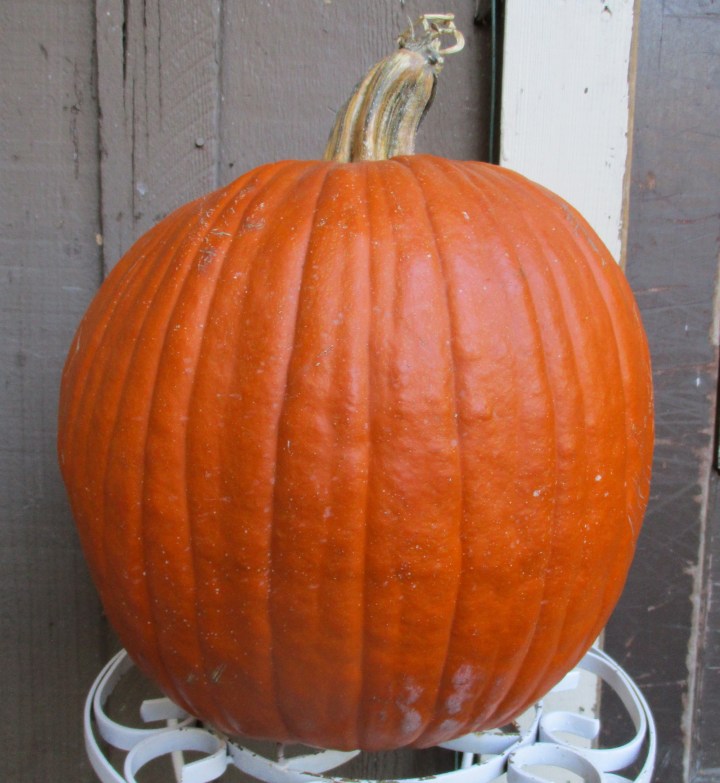 All Saints’ Day is November 1. As the name implies, it is a feast day that honors all Saints. It is one of the most important Holy Days of the Catholic Church. Yet, not many of us know about it.
 There should be no guilt associated with a cut Christmas tree. They were stigmatized many years ago, when some people believed that they were harvested from forests, and more of them likely were back then. However, most of us now know that, except for a few that actually are harvested from the wild, Christmas trees are grown on farms like most other cut foliage or horticultural crops.
 Tony Tomeo