Why Autumn Is Also Fall

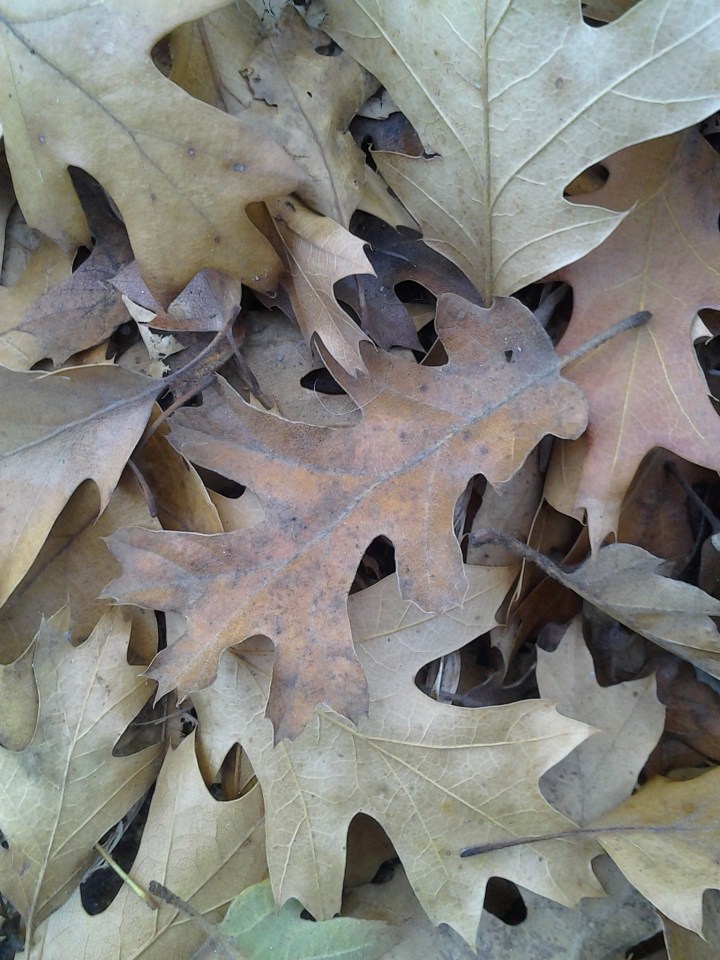
71011thumb.jpgThe calender says that it is now autumn. The weather does not necessarily agree. Some of the trees are dropping their leaves. However, the leaves are not falling because the weather is getting significantly cooler. The leaves got cooked during that weird heat wave a few weeks ago. If the weather can be this confusing here in our very mild climate, it must be really crazy everywhere else.

It is hard to make sense of what trees are dropping leaves in response to the earlier heat. Coast live oak, which normally tolerates heat quite well, was really annoyed by the heat in some areas. Cottonwood and other poplars are expressing their discomfort too, but that is to be expected from them. Sycamores, which are normally sensitive to weather anomalies, are not overly concerned.

All this means to us, the janitors of our trees, is that some of us might be raking leaves earlier than expected. These leaves will not be the nice colorful sort that we like to see in autumn. Those will come later. It is still too early to know how the weather will affect autumn color. All we know so far is that some trees will have less foliage for coloring. Sweetgums are hinting at a colorful autumn.

Leaves should be raked as they fall. However, because no one wants to clean the eave gutters any more than necessary, they can be cleaned only a few times, or maybe only once if trees shed efficiently. They are easiest to clean before the rain starts and the wet leaves start to decay. Unfortunately, most deciduous trees continue to drop their leaves well into the rainiest part of winter.

Lawns and shallow or dense groundcovers really do not like to be shaded by fallen leaves for too long. To perform through winter like we expect them to do here in our mild climate, they want as much sunlight as they can get while the days are shorter and the sun is lower on the horizon. Besides, fungal pathogens like mildew and rot, are more likely to proliferate under damp fallen foliage.

Finely textured leaves under low shrubbery and coarsely textured groundcover that ‘eats’ fallen leaves is a nice mulch, so does not need to be raked. If it can not be seen, and is not too abundant, it is probably not a problem. The exceptions are fallen leaves of roses, grapes, cane berries, deciduous fruit trees, and any plants that are susceptible to diseases that overwinter in fallen leaves.
Change Of Scenery

blog6

Hollywood is the Capital City of the entertainment industry because there is such a variety of scenery within relatively minimal proximity to Southern California. Before Hollywood, silent movies were made mostly in Niles, located about halfway between San Jose and Oakland, for the same reason. Snowy mountains, foggy forests, arid deserts, idyllic beaches, open prairies, placid lakes, and wild rivers can all be found within only a few hundred miles. California really has it all. The Santa Clara Valley alone has more climate zones than the entire state of Kansas.

I have not moved around California much. I spent a few summers in San Bruno and Montara, went to school in San Luis Obispo, and sometimes work in the Los Angeles area, but otherwise lived in the two adjacent counties of Santa Clara and Santa Cruz, just a short distance from the homes of my ancestors. Los Gatos is actually in both counties. Technically, most of my gardening has been within Sunset Zones 15 and 16. However, my garden in the Santa Cruz Mountains gets more than two feet of rain, which is about twice what the western side of the Santa Clara Valley gets, even though it is in the same zone!

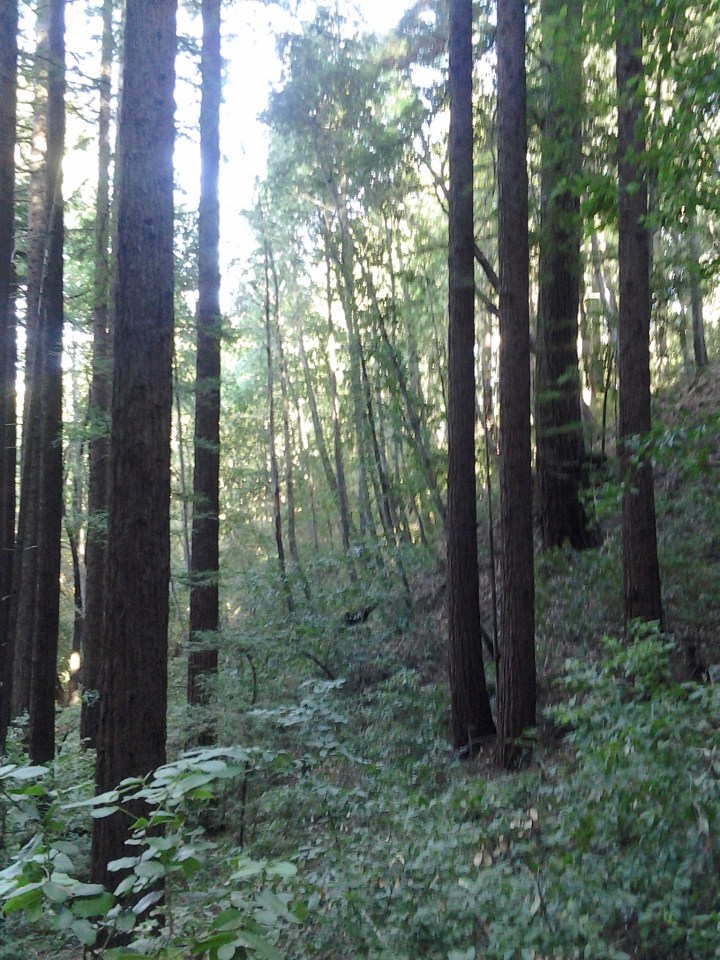
That is not the only difference. Instead of homogeneously rich alluvial Santa Clara Valley soil, I work with a variety of strange soils; sometimes filled with pulverized sandstone, sometimes sand under a thin layer of forest duff. I do not know what I will find until I start to dig. The Santa Cruz Mountains are such that I might have less flat area dispersed over nearly nine mountainside acres than friends in the Valley have on a single flat suburban lot. Much of it is shaded by tall coastal redwoods. The deer in the Mountains eat more than the gardeners in the Valley can steal.

This all makes it very challenging to grow many of the plants that I enjoy so much and acquired from the Santa Clara Valley. Some adapt quite nicely; but many of the most important ones really want to be back in the Valley. The rhubarb from my great grandfather’s garden looks great, but seriously lacks flavor. I just want to keep it going long enough to find a sunnier and warmer spot with richer soil to relocate it to. The two quince trees that were grown from cutting from an old tree in western San Jose seem to be fine, but much of the fruit gets taken away by rodents before it develops.

Then there are the fig trees. There are fourteen of them! About half are copies of the first fig trees I ever met when I was a kid. Some are black figs. Some are white. I think that only one is a honey fig. They are all very important to me. I am very fortunate to be able to grow them. However, like the rhubarb, they need a sunnier and warmer spot. If they make any fruit at all, it is bland and pithy. My objective with them now is to grow them in the cool and partly shaded spot where they are presently located so that they can provide cuttings to plant when a better situations becomes available. In that regard, they are actually doing just fine!

I really wish I could do my gardening in the Santa Clara Valley; but if I had to do it the other way around, it would be just as difficult. I mean that if I had a big garden in the Santa Clara Valley, and had to give up gardening in the Santa Cruz Mountains, many of my favorite plants would not like the transition. The Mountain grown apples that I have always taken for granted would never be as happy in the Valley. Neither would Douglas firs or bigleaf maples. Redwoods are common in the Valley, but are not the same as they are in their natural range. There’s no place like home.