Six on Saturday: Chuck’s Grandparents

‘Charles Grimaldi’ is likely the most popular angel’s trumpet. It is very vigorous and very fragrant, with cheery yellow bloom. I plugged several cuttings last autumn, but then very unfortunately neglected to protect them from our unexpectedly and unusually cold frost. Of only two survivors, one grew so splendidly that it is now prominently displayed in the landscapes, rather than ignored in the nursery. It has an amusing history. (The first two pictures are not mine.)

1. This pair of ‘Charles Grimaldi’ angel’s trumpet might be familiar to those who watched television in the early 2000s. They were prettier while GreenArt managed the landscape back then. They are gone now. This was the best picture that I could find of them online. The third specimen that was omitted after it was delivered now inhabits Brent’s garden.

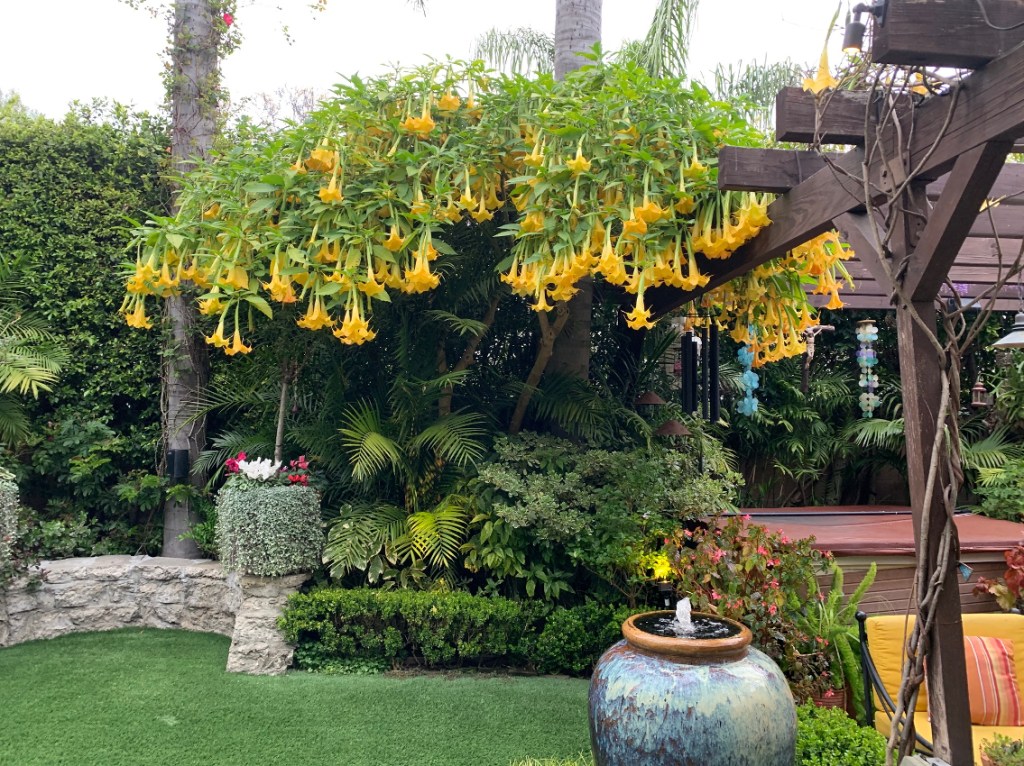
2. This omitted third specimen of ‘Charles Grimaldi’ angel’s trumpet is more impressive within Brent’s Dreamscape at the Jungalow. A picture of its bloom represents its species in the Sunset Western Garden Book from several years ago. It is the source of my copies.
3. This copy grew more than six feet tall from a cutting that I plugged last winter. Its can sits on the bottom of its big urn. Its bloom was too pretty to leave unseen in the nursery.
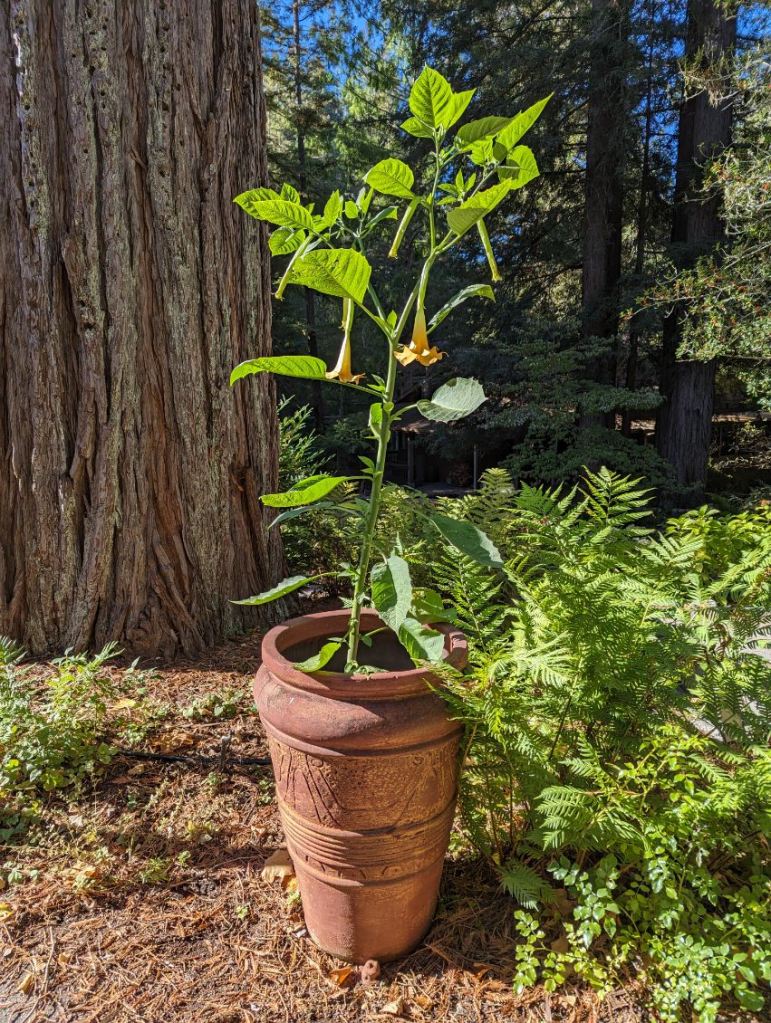
4. Bloom, which began only recently, will not likely continue much longer. The specimen might return to the nursery for winter, and then be installed into a landscape afterward.
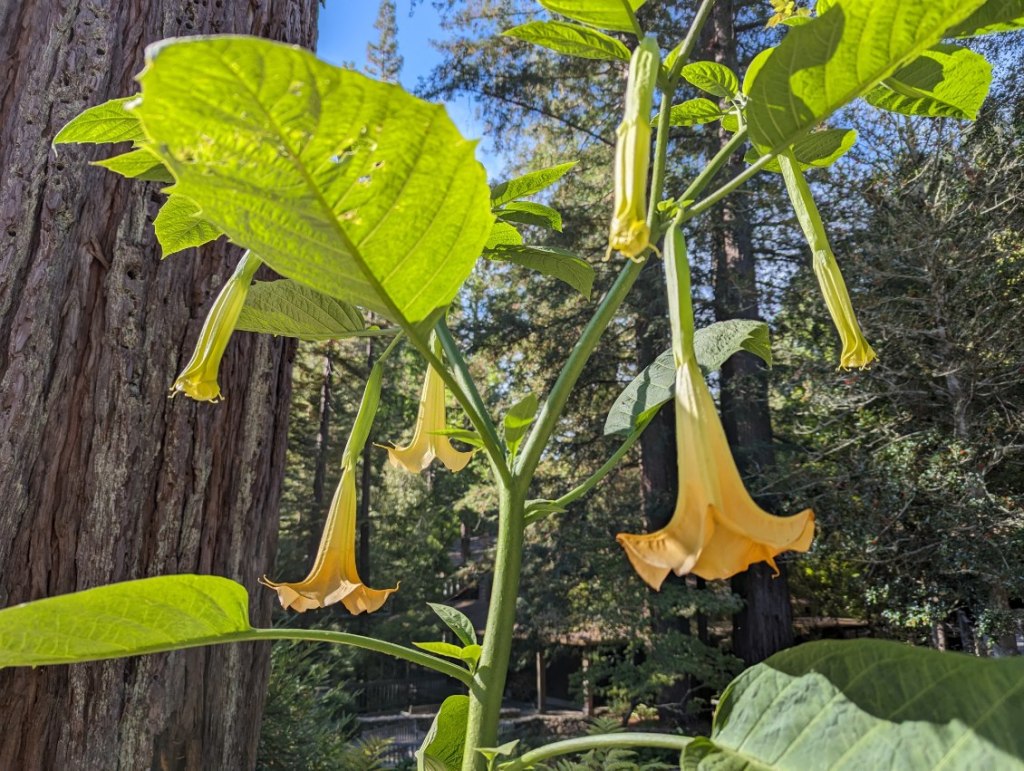
5. A comparably tall copy of an unknown cultivar with orange flowers is about to bloom. Unfortunately, the weather will likely become too cool for these buds to finish blooming.
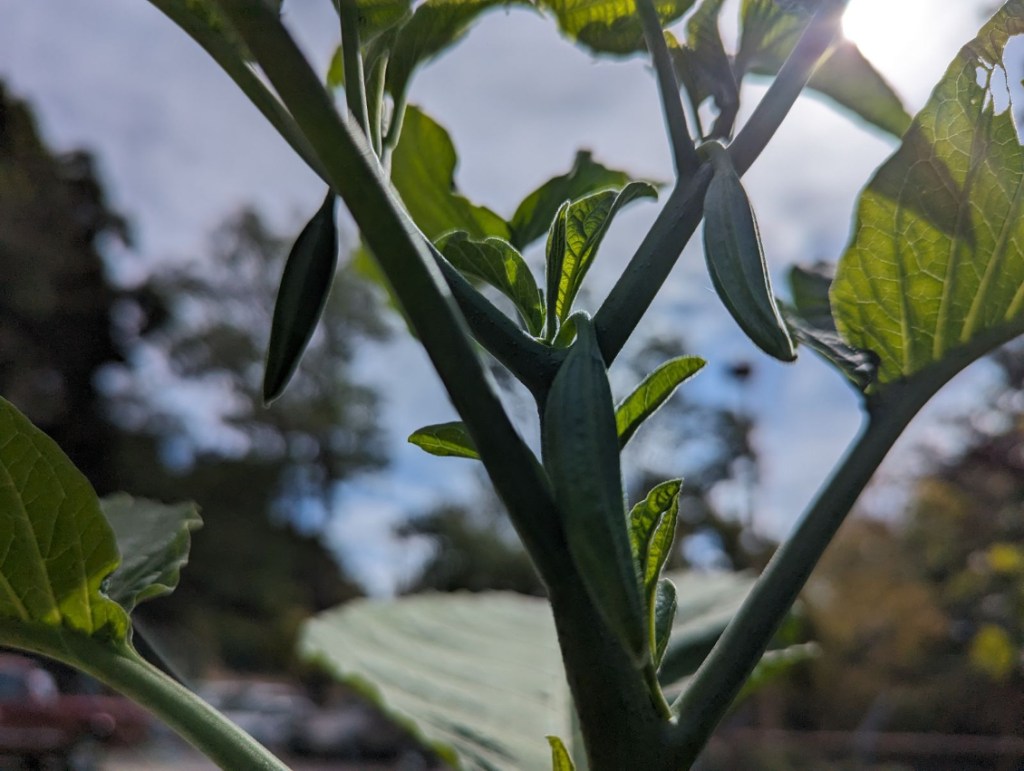
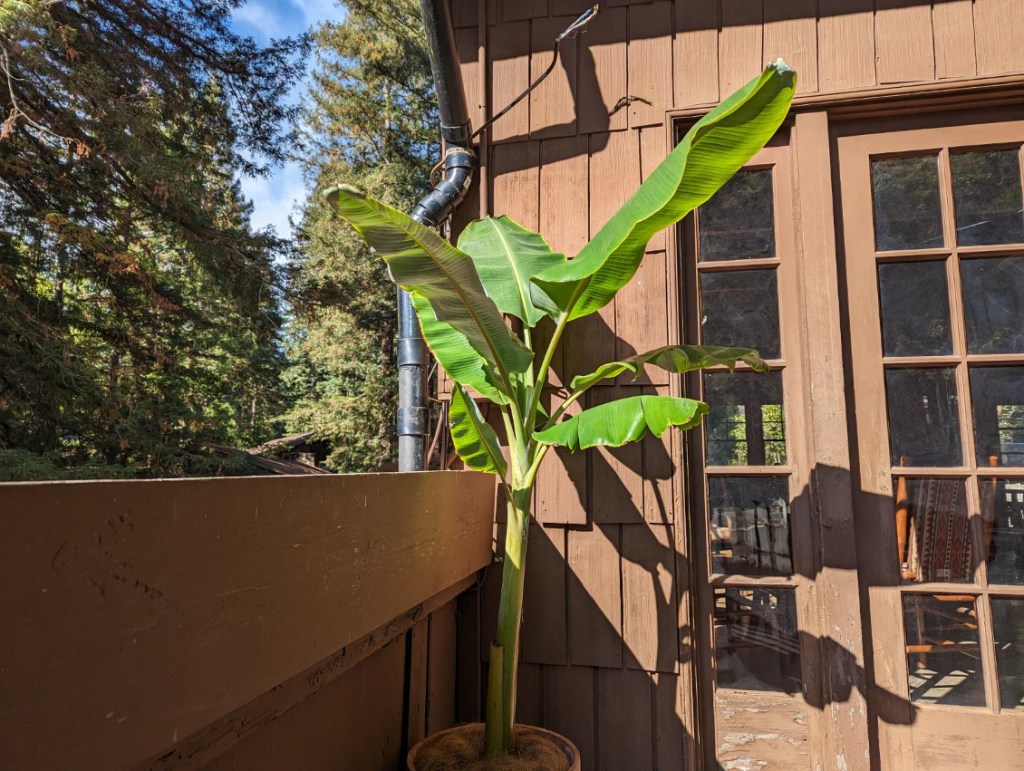
6. Young banana trees are likewise too striking to leave unseen within the nursery. Their cans were placed within more appealing pots within the landscapes at least until winter.
This is the link for Six on Saturday, for anyone else who would like to participate: https://thepropagatorblog.wordpress.com/2017/09/18/six-on-saturday-a-participant-guide/

Cultivar Is A Cultivated Variety

00422thumb
Most cultivars need to be cloned.

A plant ‘variety’ is a group within a species that exhibits distinguishing characteristics. A ‘cultivar’ is simply a cultivated variety. The first five letters of ‘cultivated’ merged with the first three letters of ‘variety’ to form the word ‘cultivar’. A variety should be self perpetuating to some degree, and may be naturally occurring. A cultivar perpetuates by unnatural means, and would go extinct otherwise.

Of course, the distinction between variety and cultivar is not always so obvious. Varieties of nasturtium were selected from plants that displayed desirable qualities. Seed of these varieties grows into plants that display the same qualities. However, without continued selection, some varieties eventually revert to a more feral state in only a few generation. They are not truly self perpetuating.

Most hybrid tomatoes are unable to perpetuate themselves naturally. Their seed is either not viable, or is very genetically variable. Genetically variable seed grows into plants that are very unlikely to produce fruit that is comparable to that which produced their own seed. Nonetheless, hybrid tomatoes grown from original (primary generation) seed are generally varieties rather than cultivars.

The distinction might be that they grow from seed. A plant that is cloned rather than grown from seed is a cultivar. Cloned plants can be grown from cutting, layering or grafting onto understock, but are genetically identical to the original. Some rare camellias grown now are genetically identical copies of original cultivars that were developed centuries ago. Their seed would not be the same.

Some cultivars developed from selective breeding. Others were random but appealingly distinctive plants in the wild or even in landscapes. Many originated as ‘sports’, which are mutant growths of otherwise normal plants. For example, some plants, on rare occasion, produce stems with variegated foliage. Cuttings taken from such variegated stems became popular variegated cultivars.

Seed from a variegated cultivar is very unlikely to produce more variegated plants.