 Many of us already understand that daisies, sunflowers, asters and all related flowers are composite flowers, which bloom as many tiny flowers clustered tightly together to form what appears to be significantly larger single flowers. Distended ‘ray’ florets around the edges imitate petals that other types of flowers are equipped with. It is like one stop shopping for pollinators craving nectar.
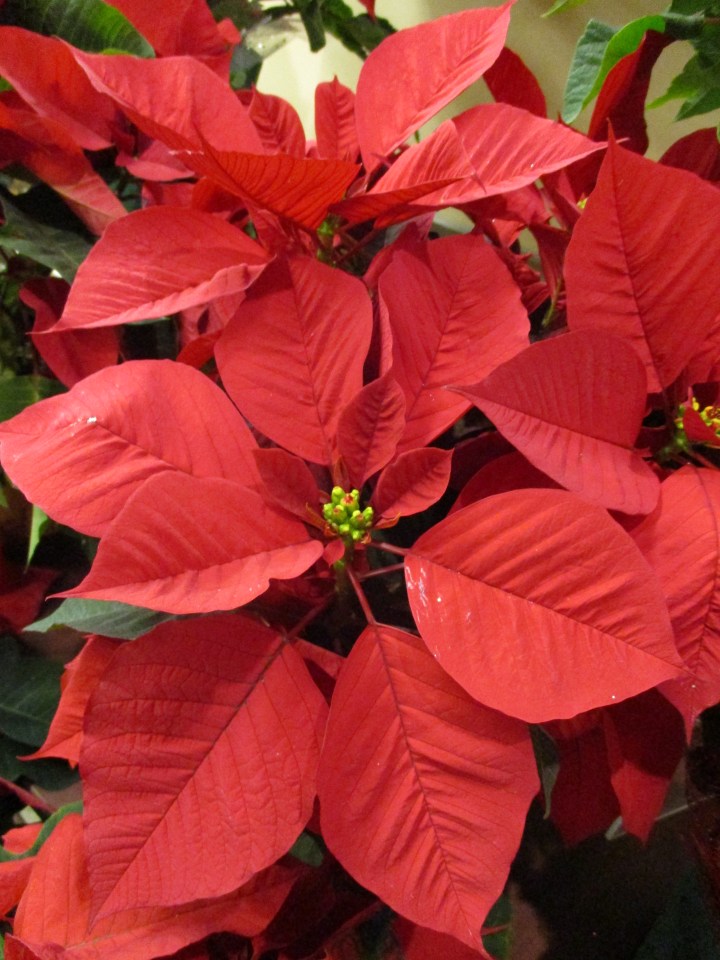
Many other plants have developed comparably ingenious techniques for facilitating what they need to do. Flowers are the more common beneficiaries of their creativity. Fruits, leaves, stems and roots have also been modified out of necessity. For example, the colorful bracts around tiny poinsettia and bougainvillea flowers are modified leaves that pretend to be petals to attract pollinators.
We think of strawberries, pineapples and figs as fruit. Strawberry fruits are actually the small specks on the outside that resemble seeds. The sweet and juicy part that suspends these fruits is a modified stem. Each ‘eye’ of a pineapple is a swollen flower, that is fused with flowers around it. Tiny fig flowers bloom and produce seed all within the fleshy floral structure that is eaten like fruit.
Some types of acacia trees have no real leaves. Their foliage is comprised of distended petioles (leaf stems) known as ‘phyllodes’, but without the leaves that petioles normally support. Juvenile leaves that actually look like lacy acacia leaves do not last long. Makrut lime has big phyllodes too, but in conjunction with leaves, which is why they seem to have double leaves joined end to end.
Cacti and the euphorbs (poinsettia relatives) that resemble them are among the most deceptive of plants. Euphorbs that have both recognizable leaves and thorns provide hints about how they work, since some tufts of thorns and spines also have leaves. Each tuft is a node. Small bristly spines are modified leaves. Larger and stouter thorns are modified axillary stems. A few stems develop into limbs or segments. Without leaves, the fleshy green stems do all the work of photosynthesis.
 Tony Tomeo