Perennial Gladiolus

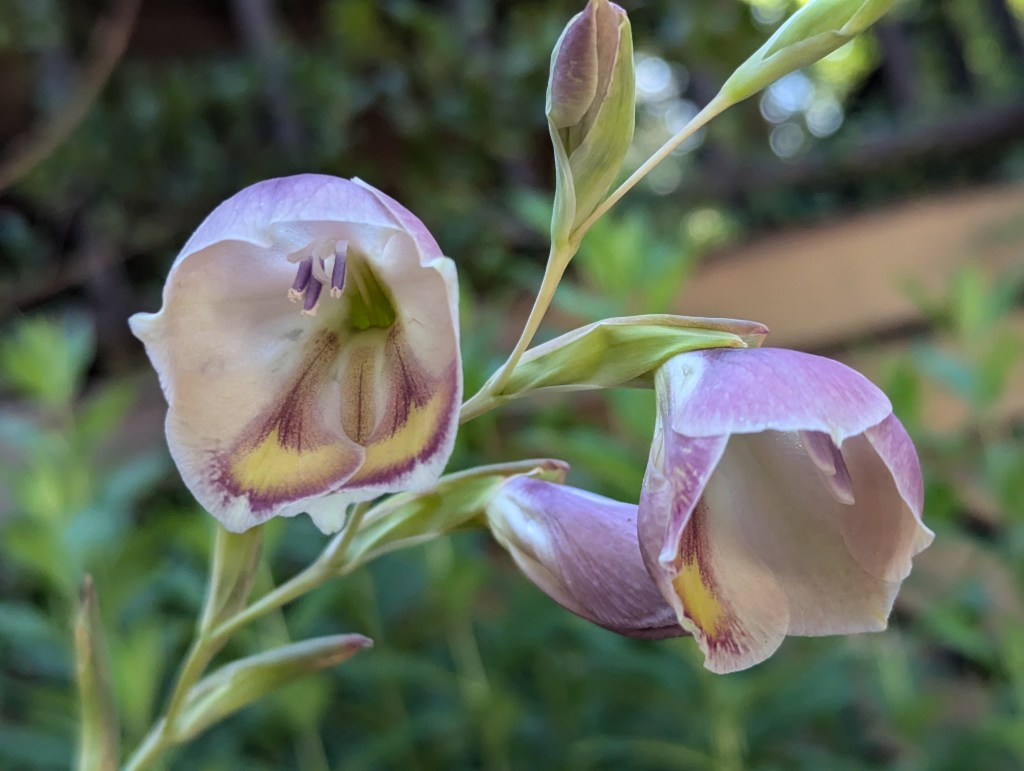
Gladiolus papilio, butterfly gladiolus

Gladiolus papilio, butterfly gladiolus has been performing very well, and, unlike the more common fancy hybrid gladiolus, it has been very reliably perennial. It multiplies and migrates like a wildflower. I know that I brag about it more than I should, and I just posted a picture of it for Six on Saturday last Saturday, but it happens to be one of my favorite perennials now. It was a gift from Tangly Cottage Gardening in the autumn of 2018, almost six years ago. Prior to that, I had been wanting to grow perennial gladiolus for quite a while, although I was not familiar with such species. I was only familiar with the common fancy hybrid sorts, which are generally not reliably perennial. Gladiolus murielae, Abyssinian gladiolus that arrived a few years ago as a gift from a neighbor may eventually inhabit a different portion of the same landscape that the butterfly gladiolus inhabits. It neither multiplies nor migrates as much as the butterfly gladiolus, and is a bit more garish in bloom, but is both reliably perennial and compatible with wildflowers, and technically, is probably more appropriate to that particular refined landscape. Various cultivars of Watsonia, bugle lily, most of which also came from Tangly Cottage Gardening, could also inhabit the same landscape. There is no rush to decide anytime soon, and the refined landscapes at work are constantly evolving. Within my home garden, I can be less concerned with how visually compatible some of such species and cultivars are, and be more concerned with growing what I enjoy. After all, that is how I acquire so many odd species and cultivars with so much history and from so many important gardens, and even from so many natural ecosystems. It is what makes my home garden so important to me.

Six on Saturday: Winter to Spring

Spring is beginning to express itself. Only one of my six thinks that it is still winter. After a mild winter, I expected this sooner.

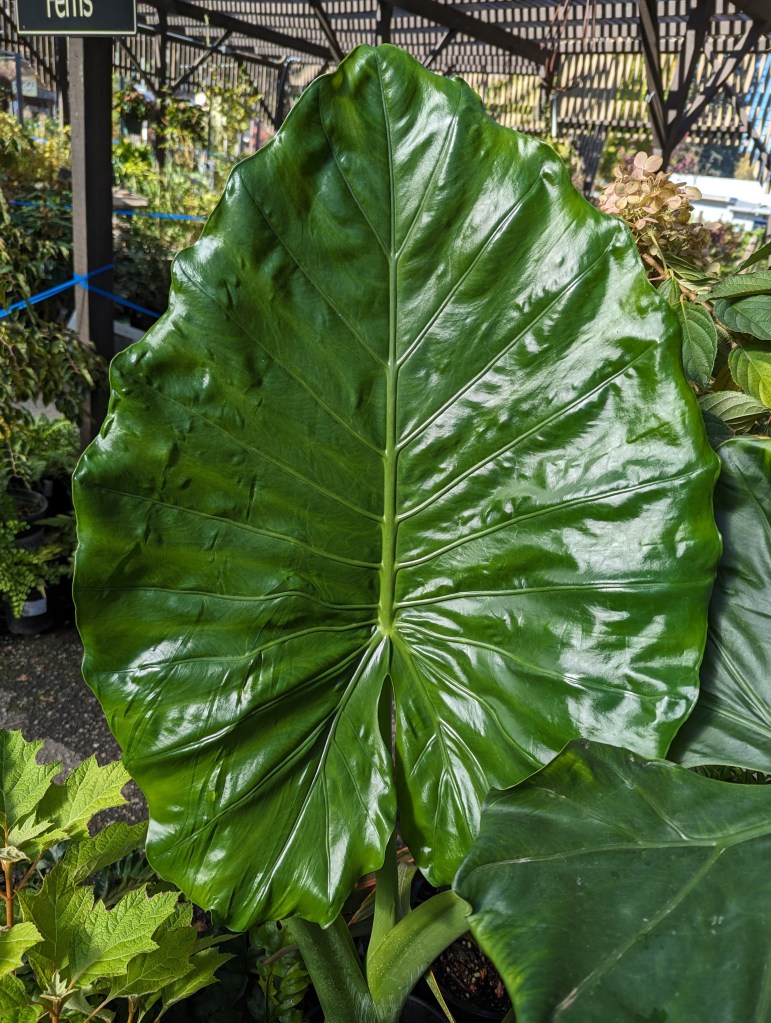
1. Colocasia gigantea ‘Thailand Giant’ elephant ear is the only one of these six to remain dormant. I still must determine if two will go directly into a landscape or get canned like the other two next week. I actually purchased these corms, but do not feel guilty about it.

2. Alocasia macrorrhiza ‘Borneo Giant’ elephant ear is another guiltless purchase. It has a very similar name and is from a similar region as the ‘Thailand Giant’ elephant ear, but grows from smaller rhizomes rather than fat corms. It is already generating new growth.

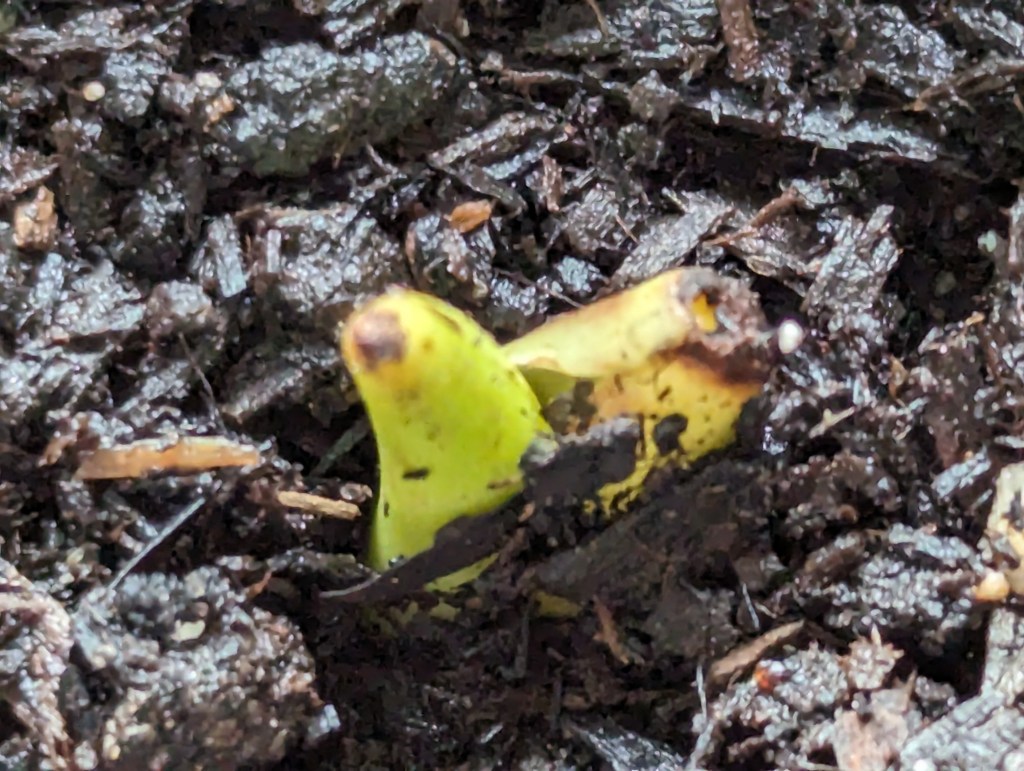
3. Musa acuminata ‘Double Mahoi’ banana was one of several items that I brought back from Los Angeles last year. After taking several small pups from it, I gave the original to a neighbor. Then, all the pups seemed to die! Now I am pleased that they are recovering.

4. Actinidia deliciosa, fuzzy kiwifruit cuttings are generating foliage. I hope that they are also generating roots. They are a male pollinator for a female cultivar that grew last year from a single pruning scrap that an associate here neglected to remove from his pickup.

5. Platycerium bifurcatum, staghorn fern looks weird as it extends new foliage. Actually, it always looks weird, which is its primary allure. I am concerned that such fresh foliage can be damaged by cold rain. It likes rain and humidity but in conjunction with warmth.

6. Viburnum tinus, laurustinus is the only floral feature of these six. I am not so keen on it, but am learning to appreciate it because its early spring bloom is popular where harsh weather through winter inhibits other bloom. It is simple white, without any pink blush.

This is the link for Six on Saturday, for anyone else who would like to participate: https://thepropagatorblog.wordpress.com/2017/09/18/six-on-saturday-a-participant-guide/

Alocasia or Colocasia? II

Alocasia or Colocasia or both?

While it seems that anything can be found online, it is baffling to see what can not be found online. Horticultural concerns seem to be particularly lacking. Perhaps those who enjoy horticulture innately dislike the internet. Perhaps they are merely too busy in their gardens to bother getting online too much.

‘Pele’s Smoke’ has been one of the more popular cultivars of sugarcane for home gardens for quite a while, but I can not determine how wide its canes are. Eucalyptus pulverulenta and Eucalyptus cinerea seem to have traded their names since the 1980s, but now, no one seems to know which is which, or if either ever was the other. No one can explain how seed from sterile banana cultivars are available online. Anyone can say anything. There is no accountability.

Alocasia and Colocasia are as baffling now as they were when I mentioned the difficulty with choosing between the two about a month ago. I am still inclined to procure Colocasia gigantea for a riparian landscape at work. However, I am now inclined to also procure Alocasia macrorrhiza. Both are quite appealing. I think that I would like to grow both within the same landscape so that I can compare them later. It would be easier than trying to compare vague information about them that I can find online. Realistically, since I would grow them from corms, both are quite inexpensive. If necessary, I can later relocate whichever is less appealing than the other.

This would not be my first occasion of not relying on the internet. I am working with ‘Pele’s Smoke’ sugarcane presently, and will be pleased with it regardless of how it behaves. I grow both Eucalyptus pulverulenta and Eucalyptus cinerea; although by mistake, since I procured one because I thought it was the same as the other. All of the cultivars of banana that I grow were procured as pups or plugs, since I do not trust seed. Ultimately, I will be pleased with both Alocasia and Colocasia.

Spring Bulbs Begin In Autumn

Spring bulbs are dormant through winter.

Crocus, daffodil, hyacinth, tulip, freesia, anemone and ranunculus will not bloom until the end of winter and early spring. They are spring bulbs or early bulbs. Crocus and daffodil, including the various narcissus, will be among the first to bloom. The others as well as a few types of iris will bloom a bit later. After they finish, summer bulbs will begin to bloom.

Although they will not bloom for a few months, spring bulbs go into the garden now while they are dormant. Visually, they are still unimpressive. They are even more uninteresting when hidden from view by interment. Their planting season appropriately begins prior to Halloween, and continues as long as they remain dormant and available from nurseries.

Spring bulbs generally bloom earlier within their bloom season after early planting within their planting season. Similarly, later planting delays bloom. Therefore, periodic planting of groups of the same bulbs throughout their planting seasons prolongs their subsequent bloom season. They begin to disperse roots and grow as soon as they are in the ground.

However, growth through the cool and rainy weather of winter remains subdued. Foliage should remain safely below the surface of the soil until warmer weather during the end of winter or beginning of spring. Like so many other plants in the garden, bulbs rely on chill to adjust their respective schedules after dormancy, but do not want to be vulnerable to it.

Winter is so mild here though that some spring bulbs do not experience sufficient chill to perform reliably as perennials. Daffodil, for example, can naturalize where it experiences more chill. Here, it may bloom best for its first spring, with less bloom annually afterward. Extensive breeding has also compromised the reliability of many perennial spring bulbs.

Some spring bulbs are actually corms, rhizomes, tubers or tuberous roots, which function much like bulbs. All are specialized storage structures that contain all that they require to survive through dormancy and then start growth for another season. They replenish their resources through subsequent active seasons to repeat the process perhaps indefinitely.