Cut Flower Alternatives

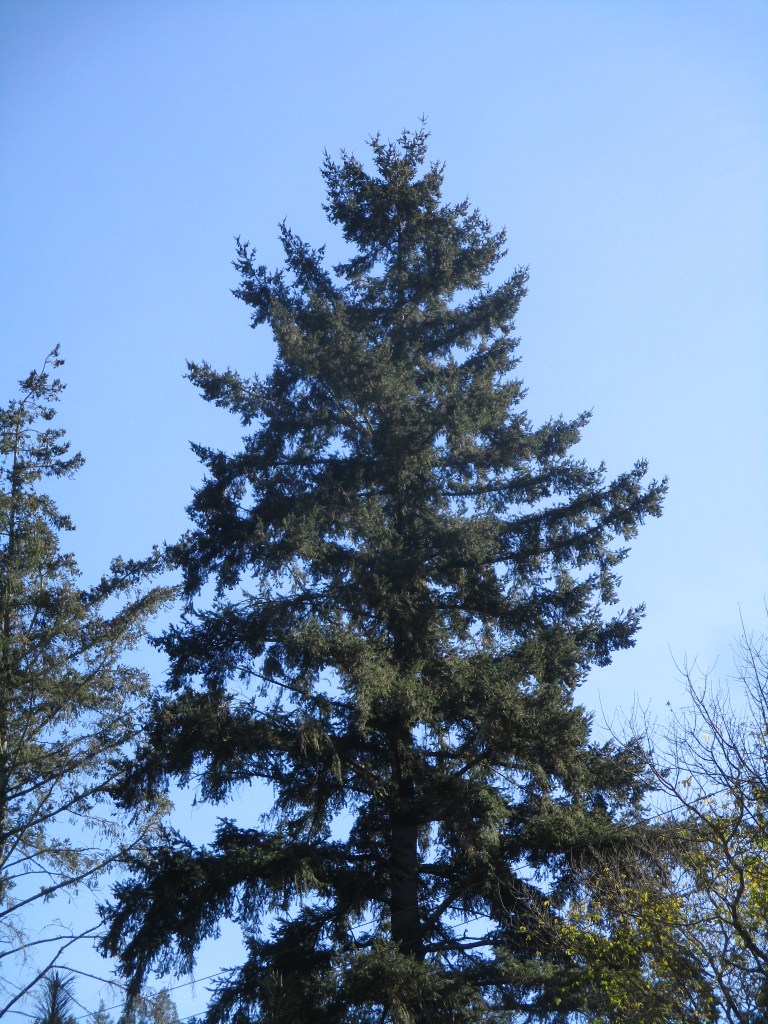
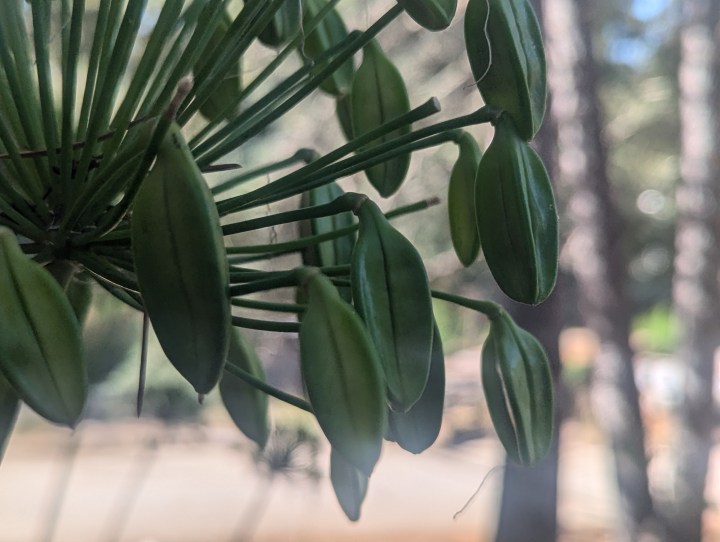
Lily of the Nile floral trusses are appealing even without bloom.

Most flowers bloom in spring. Many bloom a bit later and though summer. Not nearly so many start to bloom in autumn or though winter. This time of year, there is more to clean up from fading blooms than there are fresh blooms to cut and bring in.

Much of the color in the garden through autumn is provided by colorful foliage or foliage that gets colorful as the weather gets cooler. Later in winter, some plants have colorful bark and stems that gets revealed by winter defoliation. Coral bark Japanese maple, red twig dogwood and some arctic willows have remarkably colorful twigs.

Blooms of a few plants are sometimes cut and recycled after they fade because their dried flowers, flower stems or seed pods are appealing. Hydrangeas are not so attractive as they deteriorate out in the garden, but can be cut and hung upside down to dry to substitute for fresh flowers later. If done quickly, many types hold their color somewhat. Those that do not hold their fresh color may turn an appealing shade of brown.

Queen Anne’s lace can likewise be a nice dried flower, but is not so easy to hide in the garden while it dries. If cut and hung to dry, individual stems should be hung separately, since they bend and are difficult to separate if hung in clusters. Their flat-topped flower trusses curve inward as they dry, so they look nothing like they do fresh.

The rigid flower stems of New Zealand flax are rather sculptural protruding from their softer foliage. These same stems can be cut, plucked of seed pods, and like dried hydrangeas, used as cut flowers when there is not much else to get out of the garden. Ironically, New Zealand flax flowers sometimes get cut before they bloom, since not everyone appreciates their contrast against their own softly textured foliage.

Years ago, New Zealand flax flower stems were actually dried and spray painted! For those daring to try this technique, it also works well with lily -of-the-Nile flowers stems and trusses (plucked of their seed pods), Heavenly bamboo flower stems, and even dried pampas grass blooms. However, pampas grass blooms are deprived of their fluffiness and most appealing quality by spray paint. Bird-of-Paradise leaves twist interestingly as they dry, to provide texture with or without paint.

Fronds (leaves) of some fan palms can provide bold cut foliage. Mediterranean fan palm is difficult to handle because of the nasty teeth on the stalks, but has nice rounded leave that fan out nicely behind other flowers. They can be cut into smaller fans, or even other not so rounded shapes. Windmill palm is much easier to handle, but is a bit larger, so is more likely to need to be trimmed to shape. All are easy to cut with common scissors, and can be dried and spray painted.

There is probably more in the garden to substitute for cut flowers than would be guessed. Useful plant parts can be found in the least expected of places.
Cut Foliage For Christmas Decor

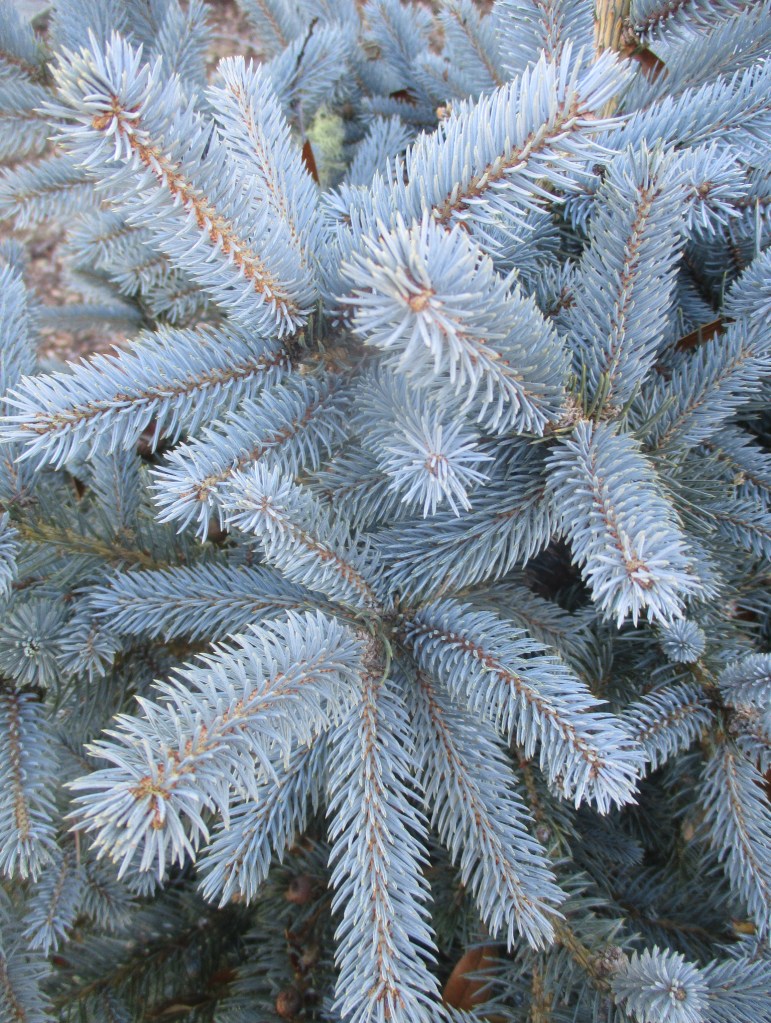
Coniferous evergreens are popular Christmas decor.

Christmas trees are extreme cut foliage. They grow on farms like cut foliage that florists use, but are entire trees! Although most fit under household ceilings, some within public venues are famously grand. Nonetheless, they are ultimately as disposable as any other cut foliage. Eventually, after their Christmas season, they become common greenwaste.

Other cut foliage is also popular as home decor through the Christmas season. Much of it is from the same sorts of coniferous trees that become Christmas trees. Almost all of it is evergreen, since deciduous vegetation is already defoliating. A few deciduous stems with colorful bark, such as red twig dogwood, are nice too. So are colorful winter berries.

Cut foliage is more practical as wintry decor within climates with cooler winter weather. Not much blooms during such weather. However, because of this same wintry weather, people prefer to be inside. While inside, they appreciate the color, texture, and perhaps aroma of cut foliage. Locally, such foliar decor for winter is more traditional than practical.

Actually, the most traditional cut foliage of Christmas is uncommon within local gardens. Scraps from the lowest branches of Christmas trees are a good source of minor bits of it. Premade wreaths and garland include a few types that are otherwise unobtainable here. Improvisation is necessary to create wreaths and garlands from locally available foliage.

Only a few of the few blue spruce that live here grow large enough to share many stems. Their best foliar growth is also their most important structural growth. Removal of it might cause minor disfigurement. Other spruce, as well as various fir, are very rare within home gardens. So is Eastern white pine, although a few other pines are notably common here.

Atlas cedar, Deodar cedar, various cypress and various juniper are also rather common. A few sorts of holly are uncommon but not rare, but they produce only a few berries here. Holly olive may be more common, and resembles English holly, but produces no berries. Southern magnolia is a strikingly untraditional cut foliage, but becomes fragile as it dries.

Christmas Trees Grow On Farms (2011)

Christmas trees grow on farms rather than forests, but some farms are in forests.

(This is an old article from 2011, so much of the information within is no longer relevant.)

Douglas, grand, white and Noble firs, as well as sierra redwoods, Monterey pines and at least fourteen other varieties of Christmas trees can be found and cut at Santa’s Tree Farm and Village near Half Moon Bay. Certainly, no one needs that many Christmas trees; and most select only one. Yet it is good to know that somewhere within such a vast selection, there is the perfect Christmas tree. Santa’s Tree Farm and Village also provides wreathes, garlands, tree stands, flocking, fire retardant and delivery.

On weekends, Sleighbells Gift Shop is open from 9:00 a.m. to 4:00 p.m.; and through December 18, Santa Visits between 9:30 a.m. and 4:30 pm.. For $2, children from two to ninety-two and older can ride the train from 9:30 a.m. to 4:00 p.m., as weather allows. Younger children ride for free. Santa’s Tree Farm is open between 8:00 a.m. and 5:00 p.m. on weekends (except for closing at 1:00 p.m. on Christmas Eve), and from 9:00 a.m. to 5:00 p.m. on weekdays.

Except for trees on the Diamond lot and pre-cut trees, prices range from $46 to $69. VISA and Mastercard and leashed dogs are welcome. Santa’s Tree Farm and Village is at 78 Pilarcitos Creek Road at Highway 92, six and a half miles from Highway 280 on the way to Half Moon Bay. Coupons, showtimes (yes, ‘showtimes’) and more information can be found at the website http://www.santastreefarm.com, or by telephoning 650 – 726 2246.

Atlantic cedar, Austrian pine, Arizona cypress, Leyland cypress Scott’s pine, sugar pine, white fir, as well as many other varieties of Christmas trees can also be obtained from Crest Ranch Christmas Tree Farm, located in the Santa Cruz Mountains west of the San Lorenzo Valley. Douglas firs, pines, cedars and cypress are $37 up to five feet tall, and $7.40 for each additional foot. White and Greek fir varieties are $42 up to five feet tall, and $8.40 for each additional foot. All sales are cash or check. An ATM is available.

The beautifully scenic picnic area is a good excuse to bring lunch, or at least get something at the snack bar. Leashed dogs are welcome. More information can be found at the website http://www.crestranch.com or by telephoning 831 – 426 1522. Crest Ranch Christmas Tree Farm is open from 8:00 a.m. to 5:00 p.m. until December 20, and is located at 12200 Empire Grade outside of Felton.

Beyond Fresh Cut Flowers

Palm fronds are striking cut foliage.

Most flowers bloom in spring. Many bloom a bit later and though summer. Not nearly so many start to bloom in autumn or though winter. This time of year, there is more to clean up from fading blooms than there are fresh blooms to cut and bring in.

Much of the color in the garden through autumn is provided by colorful foliage or foliage that gets colorful as the weather gets cooler. Later in winter, some plants have colorful bark and stems that gets revealed by winter defoliation. Coral bark Japanese maple, red twig dogwood and some arctic willows have remarkably colorful twigs.

Blooms of a few plants are sometimes cut and recycled after they fade because their dried flowers, flower stems or seed pods are appealing. Hydrangeas are not so attractive as they deteriorate out in the garden, but can be cut and hung upside down to dry to substitute for fresh flowers later. If done quickly, many types hold their color somewhat. Those that do not hold their fresh color may turn an appealing shade of brown.

Queen Anne’s lace can likewise be a nice dried flower, but is not so easy to hide in the garden while it dries. If cut and hung to dry, individual stems should be hung separately, since they bend and are difficult to separate if hung in clusters. Their flat-topped flower trusses curve inward as they dry, so they look nothing like they do fresh.

The rigid flower stems of New Zealand flax are rather sculptural protruding from their softer foliage. These same stems can be cut, plucked of seed pods, and like dried hydrangeas, used as cut flowers when there is not much else to get out of the garden. Ironically, New Zealand flax flowers sometimes get cut before they bloom, since not everyone appreciates their contrast against their own softly textured foliage.

Years ago, New Zealand flax flower stems were actually dried and spray painted! For those daring to try this technique, it also works well with lily -of-the-Nile flowers stems and trusses (plucked of their seed pods), Heavenly bamboo flower stems, and even dried pampas grass blooms. However, pampas grass blooms are deprived of their fluffiness and most appealing quality by spray paint. Bird-of-Paradise leaves twist interestingly as they dry, to provide texture with or without paint.

Fronds (leaves) of some fan palms can provide bold cut foliage. Mediterranean fan palm is difficult to handle because of the nasty teeth on the stalks, but has nice rounded leave that fan out nicely behind other flowers. They can be cut into smaller fans, or even other not so rounded shapes. Windmill palm is much easier to handle, but is a bit larger, so is more likely to need to be trimmed to shape. All are easy to cut with common scissors, and can be dried and spray painted.

There is probably more in the garden to substitute for cut flowers than would be guessed. Useful plant parts can be found in the least expected of places.

Argyle Apple

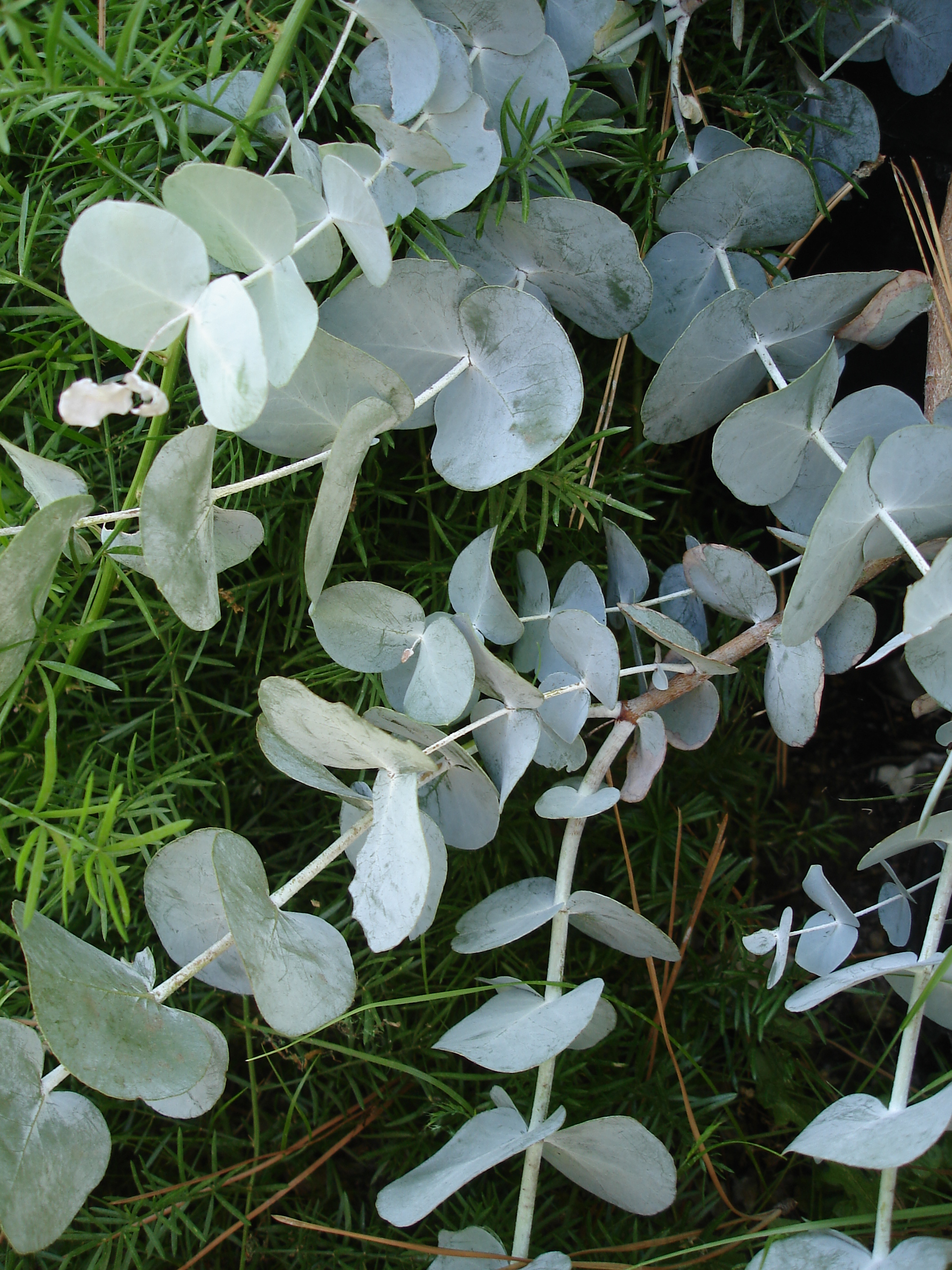
Silvery foliage with fibrous brown bark.

Such silvery foliage provides a bold display on such a substantial tree. Most comparably silvery foliage is of smaller perennials or shrubbery, such as agaves or artemisias. Agyle apple, Eucalyptus cinerea, grows intimidatingly fast to nearly thirty feet tall and almost as wide. Although shorter than most other eucalypti, it can get a hundred feet tall in the wild. 

Paired juvenile leaves of young trees are circular and sessile (clinging directly to stems, without petioles). Unpaired adult leaves are lanceolate and as silvery as juvenile leaves. Coppicing or pollarding force juvenile growth and temporarily eliminate adult growth, but also ruin structural integrity. Trees subsequently rely on repetition of the same technique. 

Trunks and limbs can be disproportionately bulky, and create an illusion of a bigger tree. Irregular branch structure can be sculptural. Fibrous brown bark is handsomely furrowed. Juvenile foliage is a popular accessory to cut flowers. Adult foliage is likewise delightful. Incidentally, the Latin name of this species often transposes for Eucalyptus pulverulenta.

Christmas Trees Dead Or Alive

Live Christmas trees can get huge.

Poinsettias, Christmas cacti, cyclamen, various forced bulbs and several other seasonal potted plants are again becoming popular. It happens annually prior to Christmas. Heath, heather, rosemary, English holly with berries, and delightful compact conifers have been gaining popularity for many past years. Seasonal potted plants are increasingly diverse.

Unfortunately, few survive for long after Christmas. Forced bulbs exhaust their resources. Cyclamen are likely to rot after a month or so. Very few retire to a garden. Poinsettia gets too lanky in the garden to be a favorite. Most seasonal plants simply succumb to neglect. After their primary performances, they are no longer interesting enough to justify tending.

In reality, some of these seasonal potted plants are little more than cut flowers with roots. These roots allow them to live longer than cut flowers, but their ultimate fate is the same. Wreaths, garlands and various seasonal cut greenery likewise serve a purpose, but only temporarily. Without roots, it all lacks any potential to retire into a garden after Christmas.

Christmas trees are really not much different. Although there are several different sorts of Christmas trees, they fit into similar categories as cut foliage and seasonal potted plants. Obviously, they are seasonal. They need not last much longer than Christmas. Although, some have a potential to do so, few survive or function for more than a few Christmases.

Contrary to popular belief, and their expense, cut Christmas trees are generally the most practical Christmas trees. They are essentially a very substantial sort of cut foliage. They grow on farms like any other foliage and vegetables. After such a tree serves its purpose, it resigns to compost or green waste recyclery. A freshly cut tree can replace it next year.

Large potted Christmas trees may seem to be more practical, but require maintenance to remain as appealing as they are now for another year. Despite the expense, few last that long. They want to get out of confinement, so that they can grow as trees. Pre-decorated small trees are Italian stone pines. They grow much too big for contained home gardens.

Christmas Trees Are Major Cut Foliage

Few Christmas trees are naturally compact.

Cut foliage is a common ingredient of ready-made mixed bouquets. Bundles and individual stems of cut foliage are available with cut flowers from florists. Cut foliage is the primary component of most wreaths and garlands that are now so popular for Christmas décor. It is another horticultural commodity like cut flowers, bulbs or nursery stock. Cut foliage is like vegetables that no one eats.

Cut Christmas trees are extreme cut foliage. They just happen to be much larger than stems of cut foliage that become wreathes and garlands. They grow on plantations like other crops. Contrary to a rather popular belief, Christmas trees are a renewable resource. Furthermore, cut Christmas tree production is less detrimental to the environment than the production of live Christmas trees.

Time and space are the only advantages of live Christmas tree production. As they grow, they occupy less space for less time. Obviously, cut Christmas trees need more space and time to grow. However, they do not consume proportionate quantities of water and fertilizers. Nor do they necessitate the consumption of the various plastics and synthetic potting media that potted trees need.

Regardless of the best intentions, few live Christmas trees come home for Christmas after their first. They often get too shabby through warm and dry summer weather to bring back in. The small and inexpensive sort with attached decorations rarely survive potted for more than a few months. If live Christmas trees were less perishable, their consumptive production could be more justified.

Whether they retire after a single Christmas or several, live Christmas trees must recover from previous shearing. Only dwarf Alberta spruce are naturally densely conical. Pruning other species to strict conical form is unnatural and disfiguring. As they recover, live Christmas trees need space to grow. Many, such as Italian stone pine and Canary Island pine, get far too big for urban gardens.

Experienced arborists concur that many problematic trees were originally small and seemingly innocent live Christmas trees.

Evergreens From Our Home Gardens

91225thumbEvergreens are popular for home décor through winter because there is not much blooming so late in most other American climates. The tradition endures, even though cut flowers of all sorts can easily be purchased from common supermarkets nowadays. Here on the West Coast, where several varieties of flowers can bloom through winter, evergreen foliage is as popular as it ever was.
Christmas trees are the most substantial form of traditional seasonal evergreens. The biggest wreaths occupy less space, and are mostly confined to walls rather than floors. Garlands can be big too, but their less defined form fits more neatly into limited space. For many of us, neatness is not a priority. Displays of evergreens and all the associated ornamentation can get quite elaborate.

Not many of us grow our own Christmas trees. It is more practical to purchase them as if they are very large cut flowers. Most but not all of us who hang garland likewise procure it already made. Some purchase prefabricated wreathes too. However, it is possible that more of us create our own. Other bits and pieces of evergreens are unlikely purchased. Most are from our home gardens.

Most of the pine, spruce, fir, hemlock, yew, arborvitae, and various genera known collectively as cedar, that are traditional evergreens in other regions are scarce here. A few other exotic species of pine, as well as natives, are more common in some landscapes. There are also different cedar and arborvitae. Blue spruce can sometimes be found. Douglas fir is native to nearby mountains.

Other regions lack the abundance of various cypress and juniper that are common here, as well as coastal redwood. (Redwood foliage is perishable once cut.)

There are no rules about cut evergreens anyway. Within reason, we can cut and bring in whatever we happen to find to be appealing in our gardens. We should cut the foliage properly though, as if pruning. Also, we should not cut too much from any particular spot, but instead harvest evenly over a large area. It helps to take pieces that are out of view, or that need to be pruned out anyway.

Argyle Apple

51104What an odd name. It sure sounds interesting, like some sort of exotic fruit tree. Alas; argyle apple is a eucalyptus; to be specific, Eucalyptus cinerea. Compared to most other eucalypti, it stays rather low. It barely gets as tall as a two story house, even if it gets broad enough to shade most of the backyard. The rusty brown bark becomes roughly furrowed. The irregular branch structure can be quite sculptural.
The main attraction of argyle apple is the aromatic silvery foliage. Young trees are outfitted with circular juvenile leaves that are attached directly to the stems without petioles (leaf stalks). Lanceolate adult leaves are as silvery as juvenile foliage is. (Juvenile foliage of most other eucalypti is more colorful than adult foliage is.) Aggressive pruning of small trees keeps foliage juvenile for a long time.

Actually, those who know how to work with it might pollard or coppice argyle apple. Pollarding eliminates all foliated stems at the end of winter, but for the rest of the year, allows vigorous arching canes of very silvery juvenile foliage to spread outward from a few stout limbs on top of a trunk. Coppicing allows the same sort of growth from stumps just above grade.

Vahz, Vawz or Voz

P81020‘V-A-S-E ‘ is probably how it is spelled, just like that which is pronounced exactly as it looks, or ‘vays’. ‘Vahz’, ‘vawz’ or ‘voz’ just sounds fancier, . . . or bigger.

That is how I learned it. ‘Vays’ is the smaller version that is designed to contain one or only a few flowers and maybe some foliage. ‘Vahz’, ‘vawz’ or ‘voz’ is the much larger version that is designed to contain entire bouquets or ‘floral arrangements’. Those that contain only dried flowers and foliage do not even need to hold water.

I learned this from those who were experts on the subject. My Aunt Betsy and her best friend Cathy were ‘flower children’. They rented an apartment in a hip and trendy neighborhood in western San Jose back in the early 1970s. The neighborhood was so trendy and hip that the neighbors were known as ‘hippies’. Aunt Betsy and Cathy outfitted their apartment accordingly, with wicker, shaggy rugs, and a big spider plant hanging from beaded macrame.

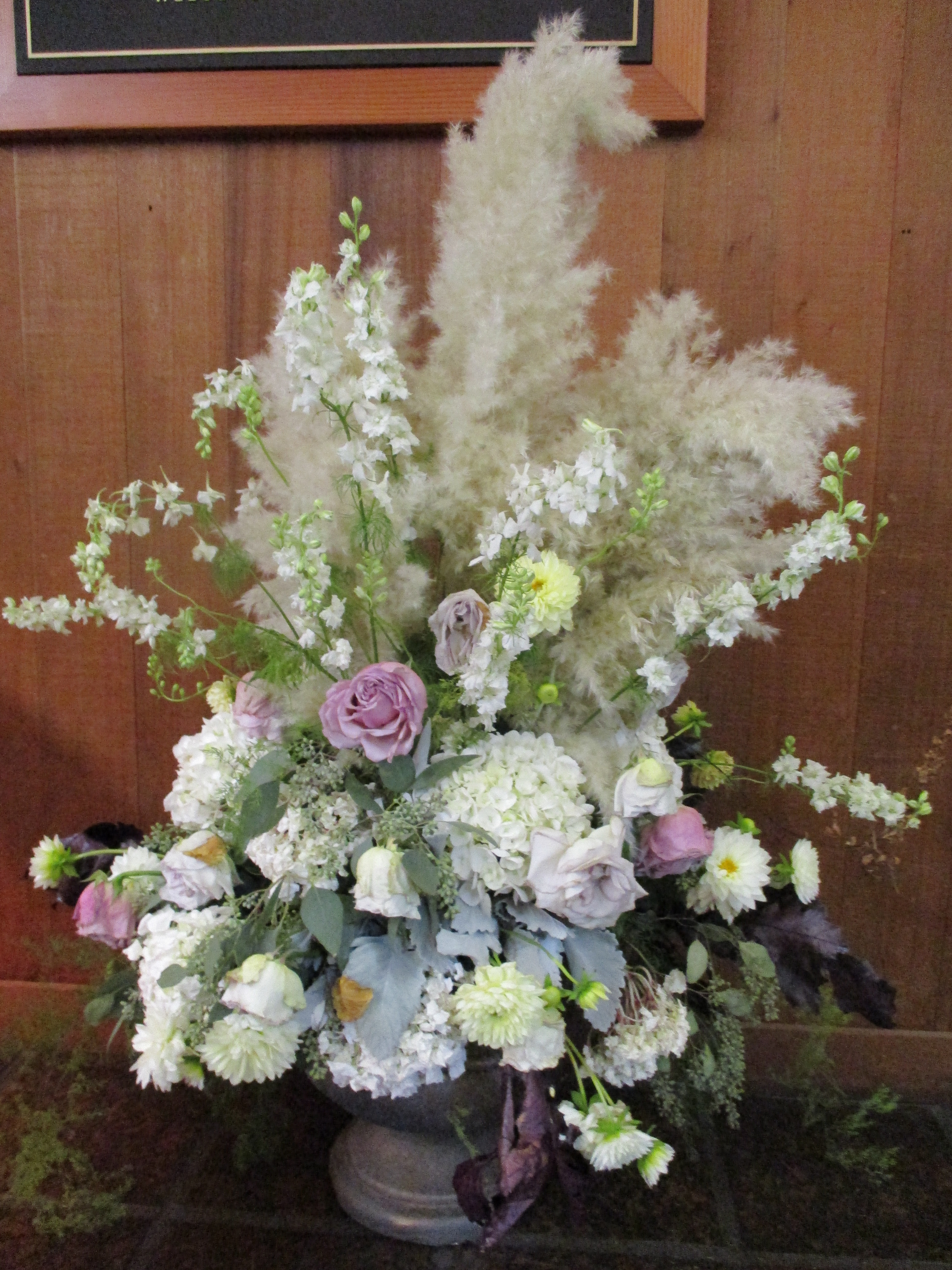
Of course, there was also a rather big ‘vahz’, ‘vawz’ or ‘voz’. It was cheap molded plaster painted glossy chocolaty brown. It contained a billowy abundance of only two species of dried cut flowers, cattails and pampas grass, that had been sprayed with hair spray to prevent them from sharing their seed. It was as gloriously hideous as it sounds, and more than adequately expressed impeccable cultural refinement and a keen appreciation for the remarkably distinctive and exquisitely tacky style of home decor that was so prevalent at the time.

The cattails might have been collected on the side of Highway 80 in Auburn, near the home of Aunt Betsy’s Great Aunt Mamie. The pampas grass might have been found in Vasona Lake County Park in Los Gatos.