Simple Species

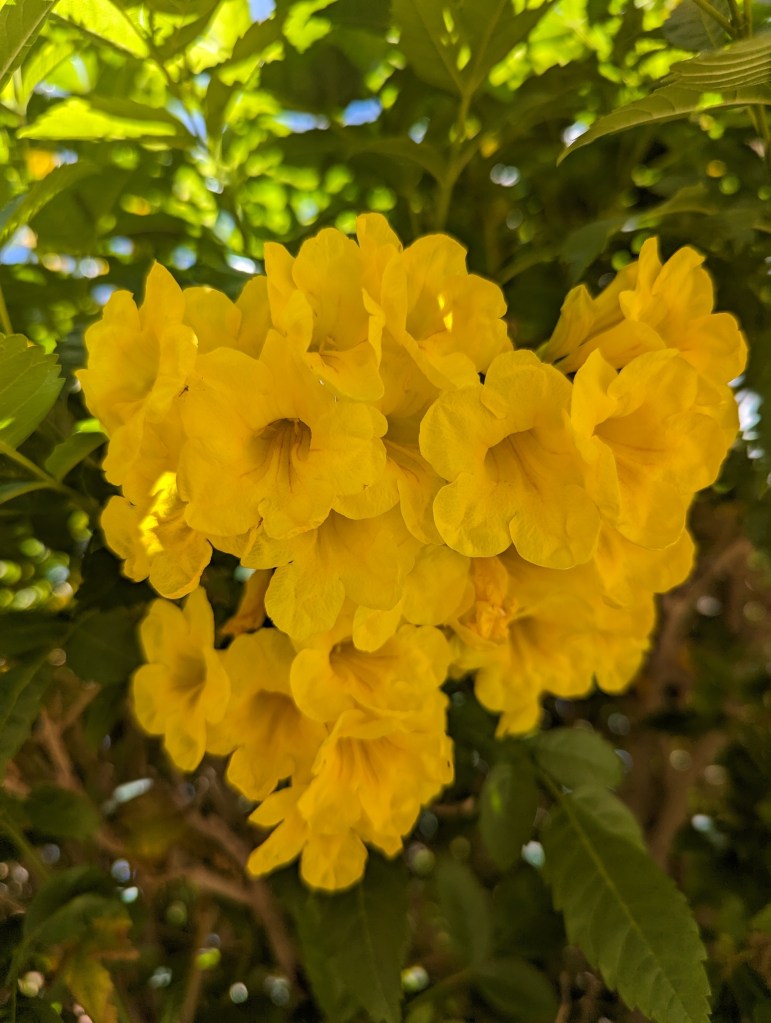
Unidentified cultivar of Tecoma stans

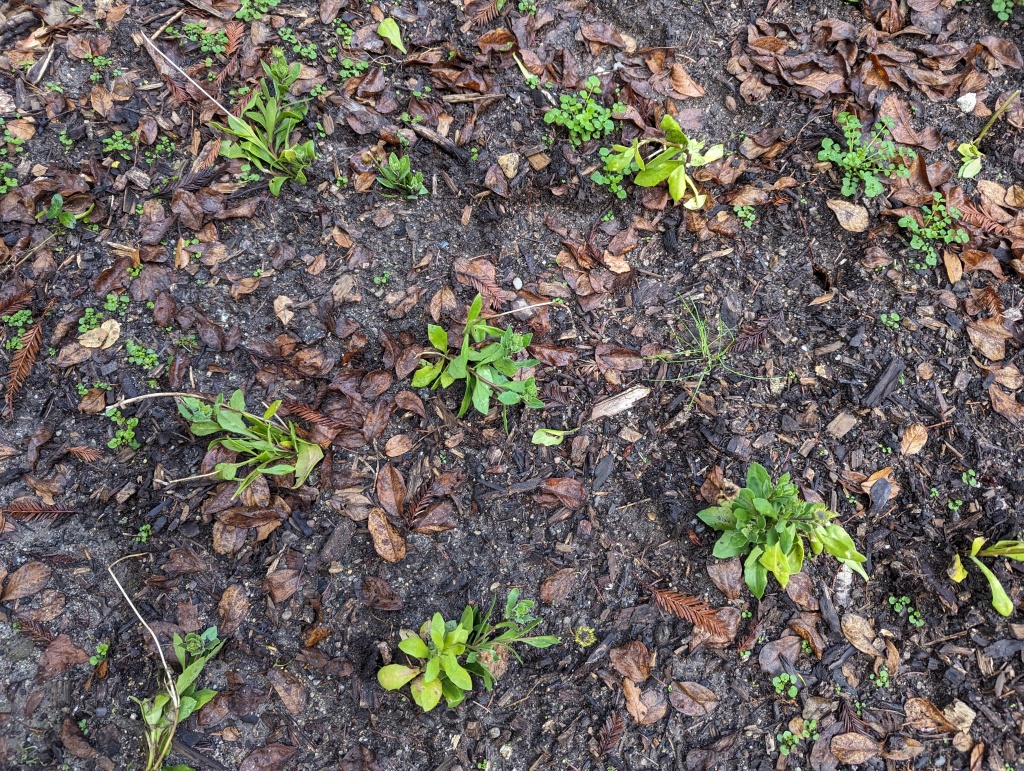
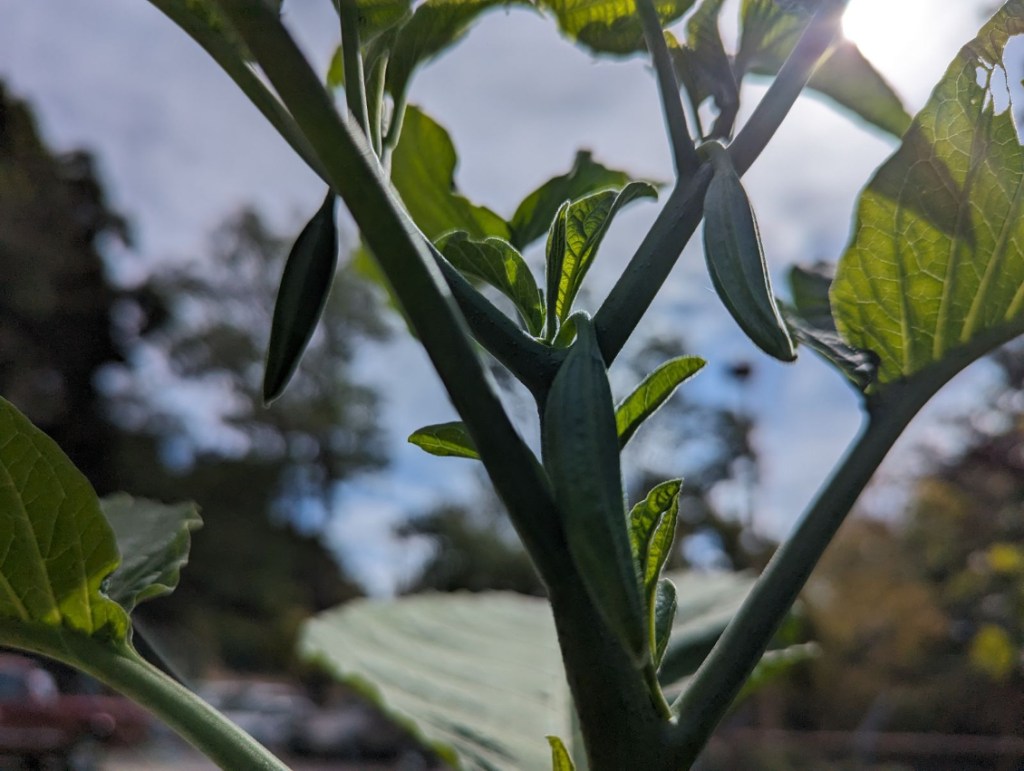
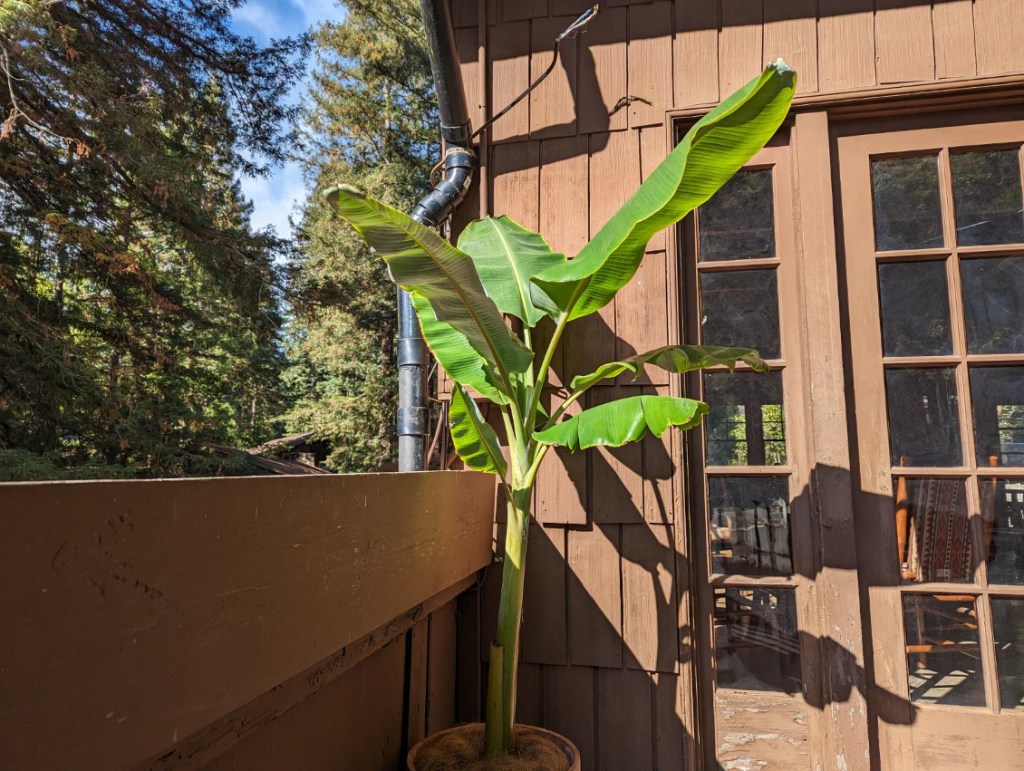
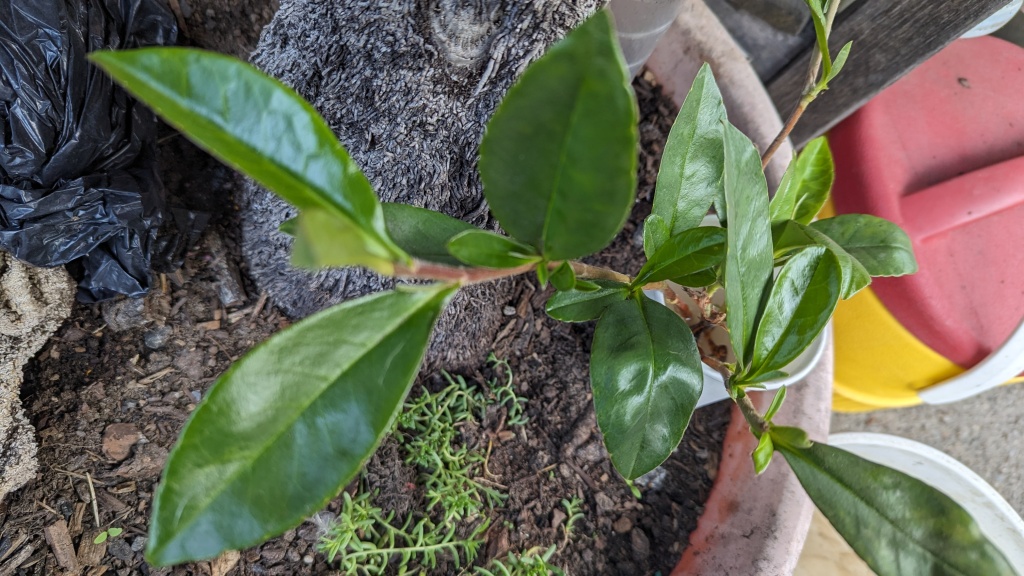
Tecoma stans is somewhat popular within the neighborhood where I stayed while in Arizona. It is available in nurseries also. I suppose that I could have purchased one or more for my garden. I had wanted to grow it for a long time. I refrained. I can explain.

The Tecoma stans that I can get from nurseries is an improved cultivar, or actually, about three cultivars. They are not the simple species, as it would be found growing wild. I realize that improved cultivars are known as ‘improved’ for a reason, but ultimately, I want to grow the simple species.

Crazy Green Thumbs sent me the seed for the simple species of Tecoma stans that I want to grow. That is all I need. Other colleagues have sent me seed, seedlings or cuttings for simple species of American beautyberry, American holly, American persimmon, pawpaw, red mulberry, red elderberry and perhaps too many other species to list briefly. In the future, I suppose that I could try cultivars of some of these species. I would like to get acquainted with them first though.

For most species, I suppose that I prefer cultivars. I want to grow the same ‘Moorpark’ and ‘Blenheim’ apricots that I grew up with. Eventually, I want to grow ‘John F. Kennedy’ rose. Cultivars serve a purpose also.

There are a few reasons why I want simple species rather than cultivars of some species. For American beautyberry, American holly and red elderberry, I want to grow what most other garden enthusiasts within the native ranges of these species grow merely because such species appear uninvited in their gardens. For American persimmon, pawpaw and red mulberry, I want to grow a few of the fruits that people enjoyed for culinary application prior to the development of relatively modern cultivars.
Ponderosa

‘Ponderosa’ for the Ponderosa

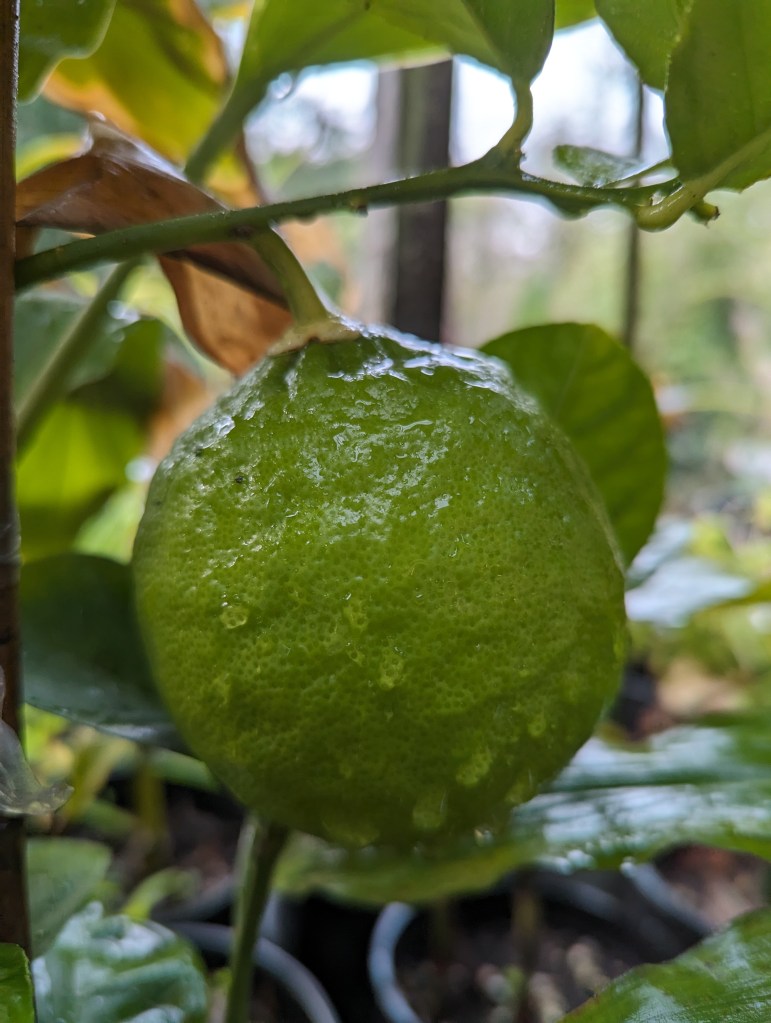
Citrus ripen through winter. This ‘Ponderosa’ lemon is taking its time, probably because it is still growing. Individual ‘Ponderosa’ lemons commonly weigh two pounds, and can potentially get a bit heavier than five pounds. That is heavier than some of Rhody’s chihuahua friends. I doubt that this particular lemon will get much larger than it is now, but it is already bigger than an average ‘Eureka’ lemon. It is about as big as a baseball.

The problem with this fruit is that it is on a tiny lemon tree in a #1 can. It is one of two fruits. I should not have allowed them to develop as much as they have. I should have removed them when they first appeared in order to divert resources into vegetative growth, rather than fruit development. Now that they grew this much, I sort of want them to finish ripening. It would be a waste to remove them now. After they ripen, I can prune their stems from the tiny tree, and process them as cuttings to grow more new trees.

I would like to install this little ‘Ponderosa’ lemon tree into a landscape at Ponderosa Lodge. Not only is its name appropriate, but the weirdly huge fruit might be interesting to the children who come to ‘Outdoor Science’ school there. Contrary to the huge size of its fruits, ‘Ponderosa’ lemon trees do not grow very large or very fast. However, a mature ‘Eureka’ lemon already inhabits the garden there, and we recently installed a ‘Bearss’ lime. Another lemon tree would redundant. We would prefer to grow a more edible citrus within the limited space that is available, such as a sweet orange, Mandarin orange or kumquat. For now, we will just enjoy this tiny lemon tree with its huge lemons right here.

Six on Saturday: Plugging Along

Agapanthus orientalis, lily of the Nile and Osteospermum ecklonis, African daisy are all there is to my Six for this Saturday. Lily of the Nile is in the first three. African daisy is in all but the first. Both are in the second and third. Both are from South Africa. Both have been getting recycled from where they are migrating a bit too much, and getting plugged into more appropriate situations. It is nursery production directly within the landscapes where the finished products are desired. Processing African daisy cuttings and lily of the Nile shoots takes time, but is still less expensive than purchasing nursery stock. They are byproducts of our normal landscape maintenance.

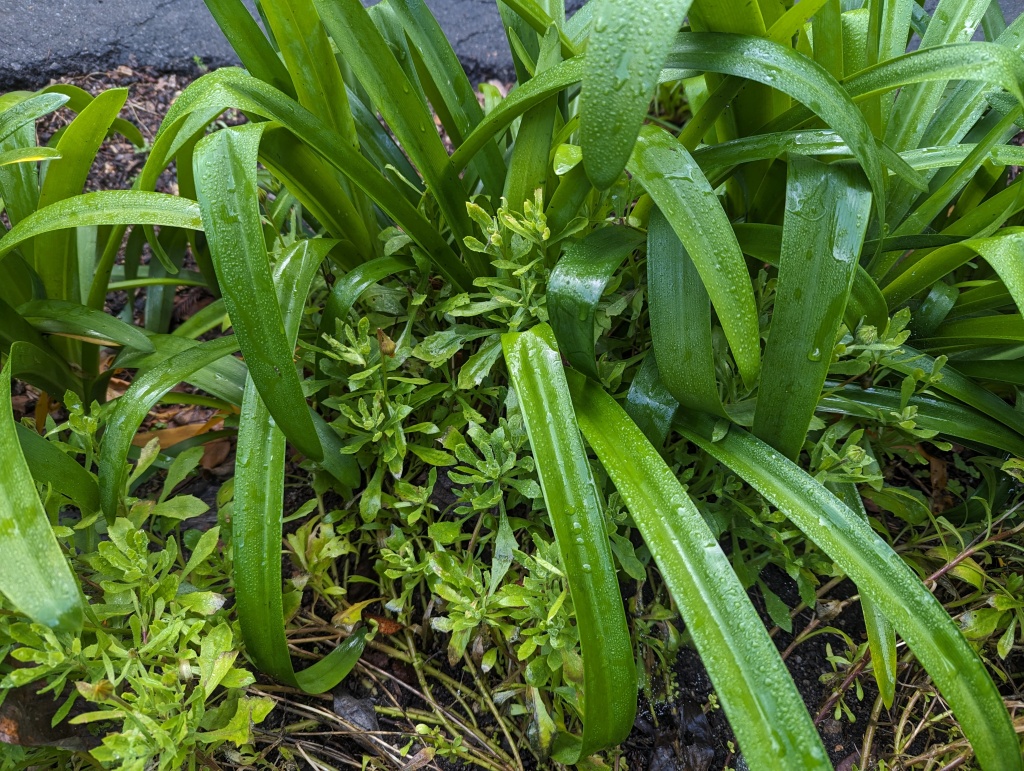
1. Gophers are killing fewer lily of the Nile than they killed last year. I must plug some of the spare shoots from last Saturday here though. Gophers ate the thick rhizomes below.

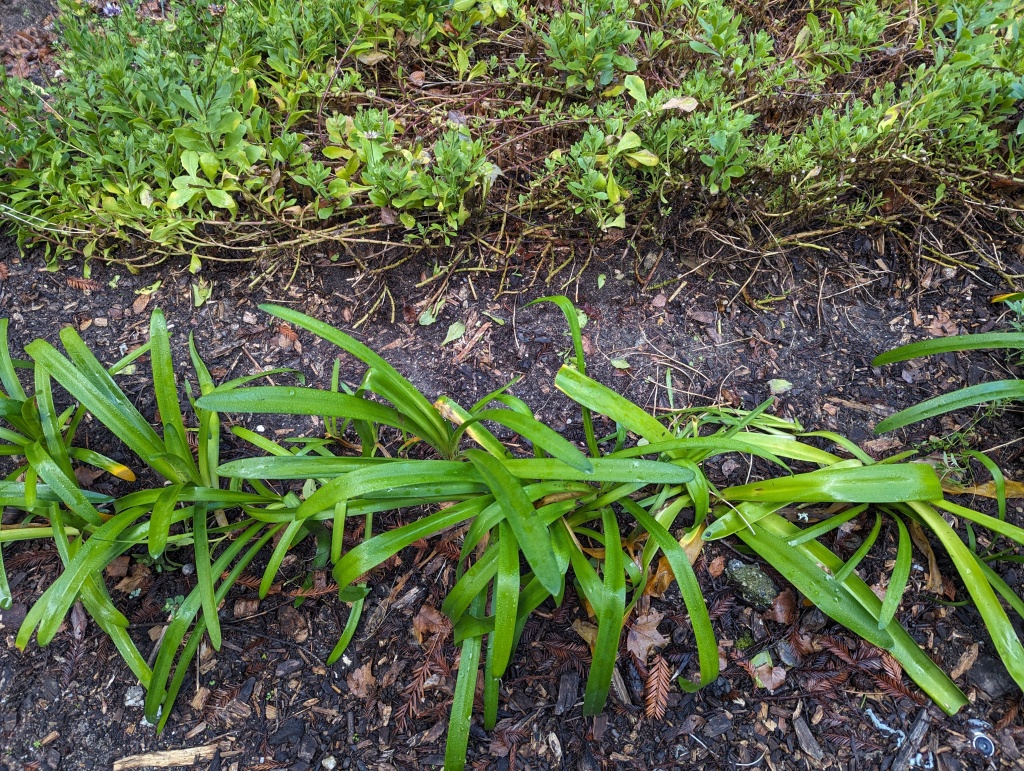
2. African daisy is performing as well as the majority of lily of the Nile in this landscape. It migrates nicely, but also encroaches somewhat into the adjacent row of lily of the Nile.

3. Edging is now necessary to separate the African daisy from the lily of the Nile. The lily of the Nile should grow to become too dense for the African daisy to encroach next year.

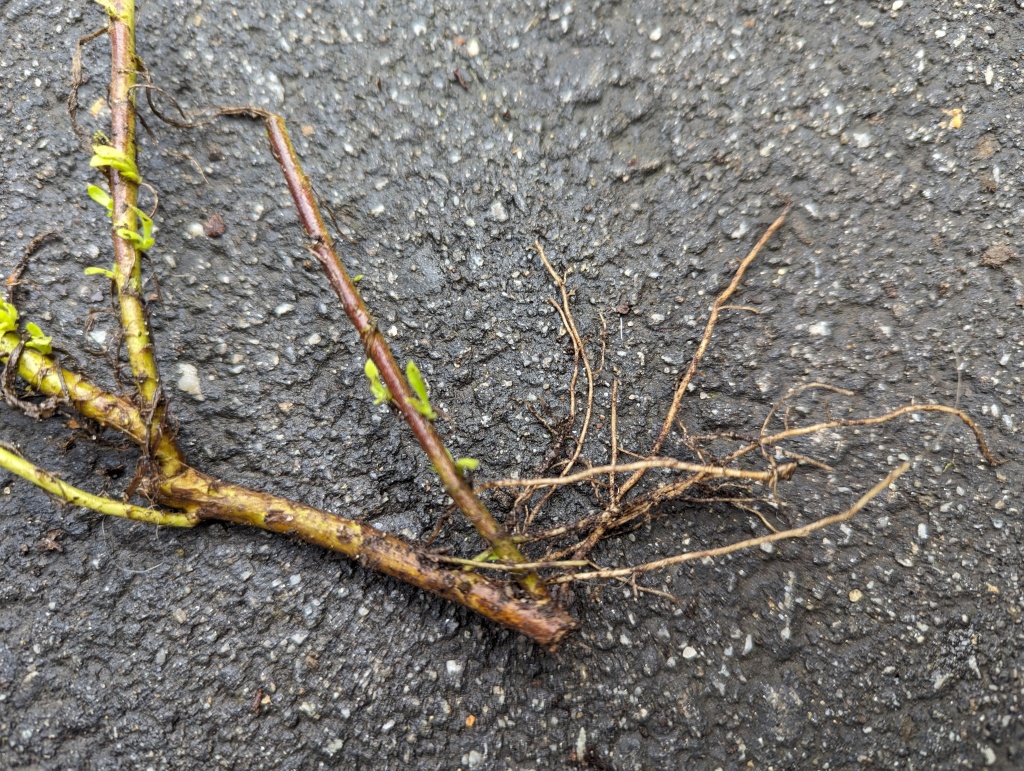
4. Some of the pruning scraps of the African daisy had already developed roots, as if they belong there. Their roots can be useful somewhere else. These scraps became cuttings.

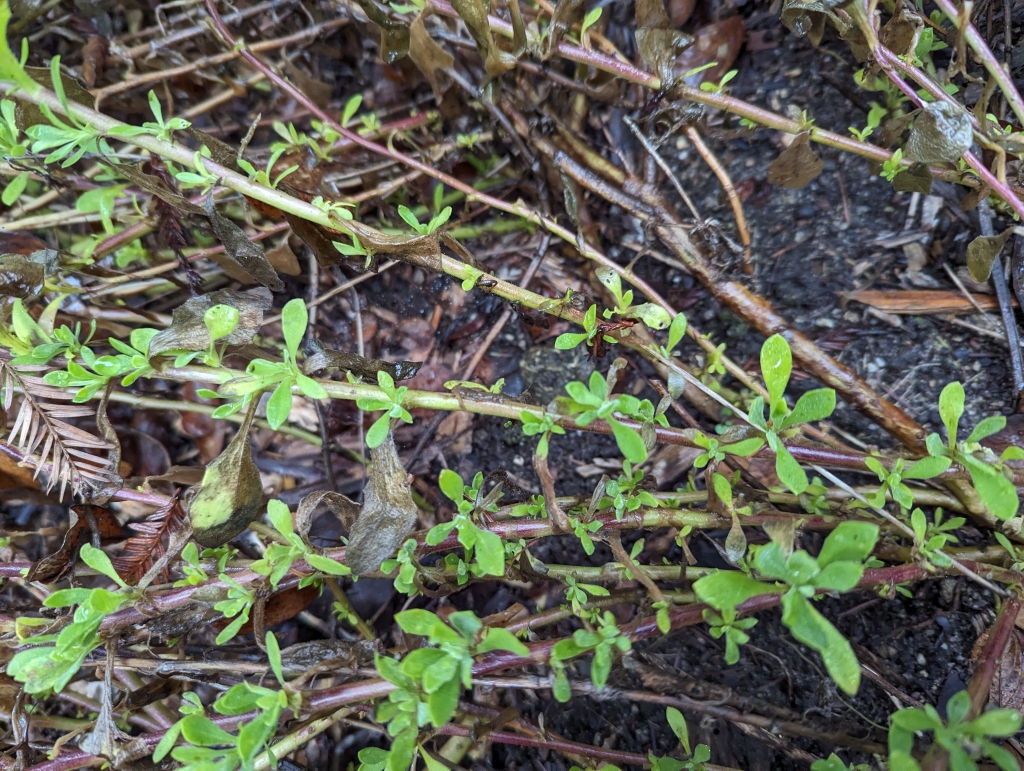
5. Remaining stems are generating axillary growth for this year. We should apply a layer of compost over the stems to hold some against the soil so that they can develop roots.

6. Pruning debris from the African daisy was processed into unrooted cuttings that were plugged wherever we wanted more African daisy. They will develop roots prior to spring.

This is the link for Six on Saturday, for anyone else who would like to participate: https://thepropagatorblog.wordpress.com/2017/09/18/six-on-saturday-a-participant-guide/

Six on Saturday: Bucket List

Hyacinth Bucket of ‘Keeping Up Appearances’ might say, “It’s ‘Bouquet’.” However, this really is about the contents of two buckets, two cans, a bin, and a terracotta pot, without flowers. Most of these items must be processed prior to the end of the rainy season.

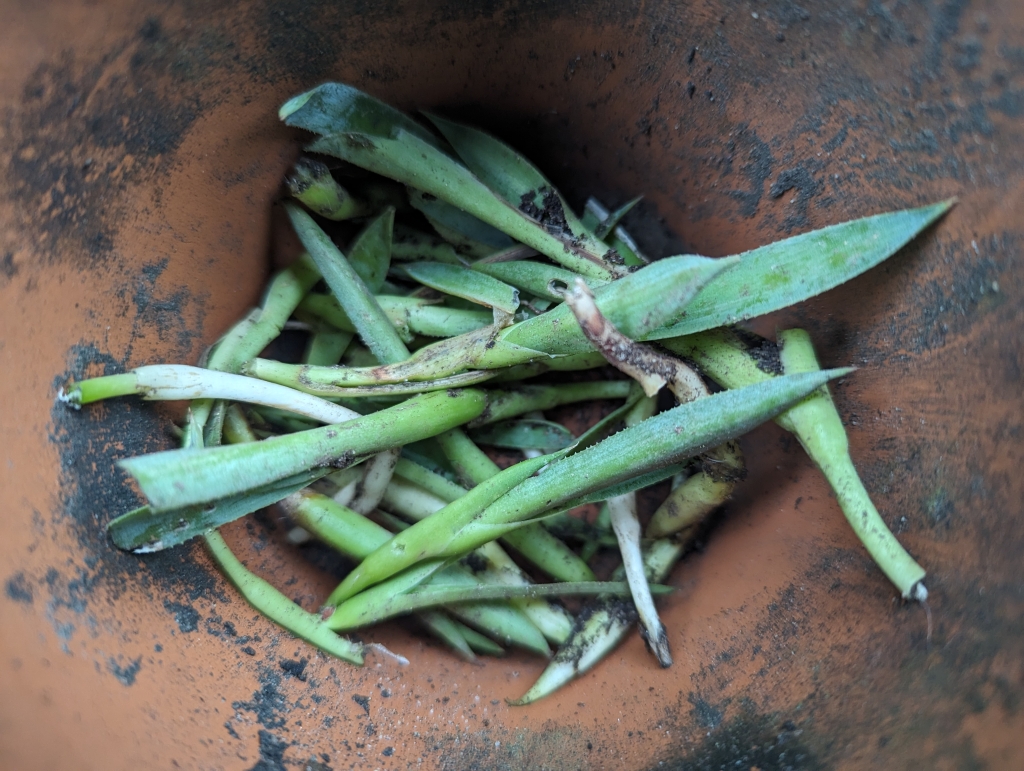
1. Agave ovatifolia, whale’s tongue agave bolted and bloomed too soon after installation. It is monocarpic, so died an ugly death while trying to replace itself with fresh new pups. I planned to later select the biggest pup to replace its original. Unfortunately, a gardener who did not know what they are pulled them all with nearby weeds. I scrounged through the debris to find these. Incidentally, I must still find homes for Agave americana pups.

2. Chrysanthemum X morifolium, mum contrarily will not die. It was abandoned after a wedding, but then potted into a landscape as it bloomed again. Removal for replacement as it again finished bloom revealed that each of these many stems is rooted individually.

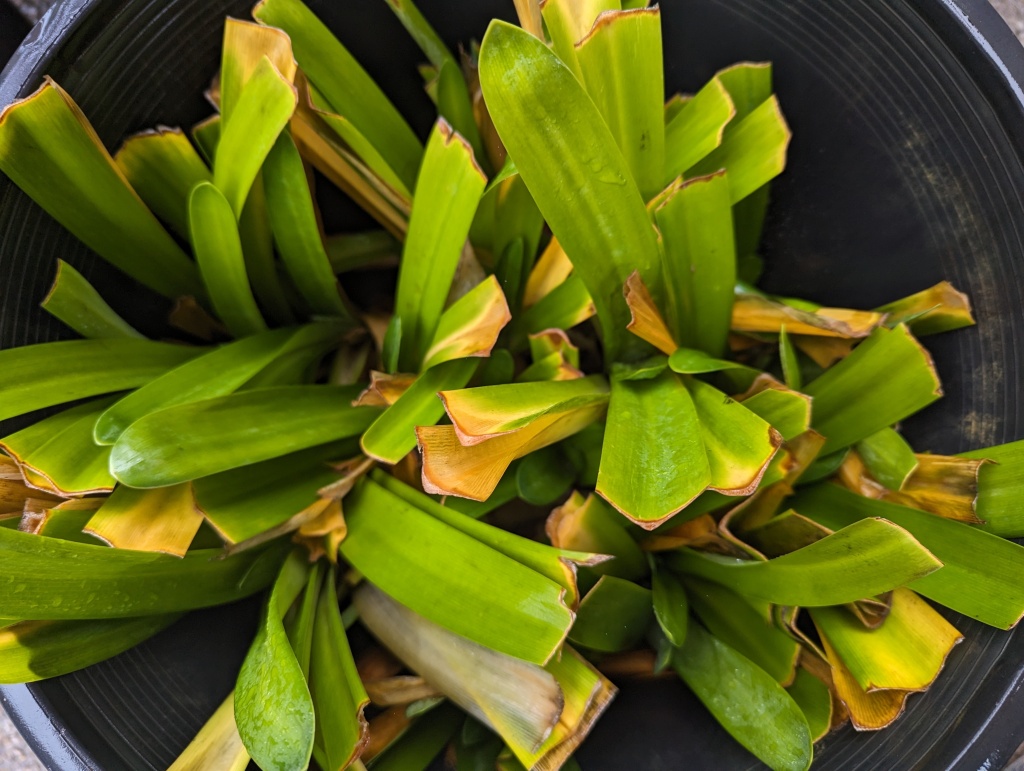
3. Agapanthus orientalis, lily of the Nile is getting to be rather tedious. These shoots are of the same batch that I featured last week, and that I processed more than a month ago. I processed too many, so must now get the leftovers into the ground before winter ends.

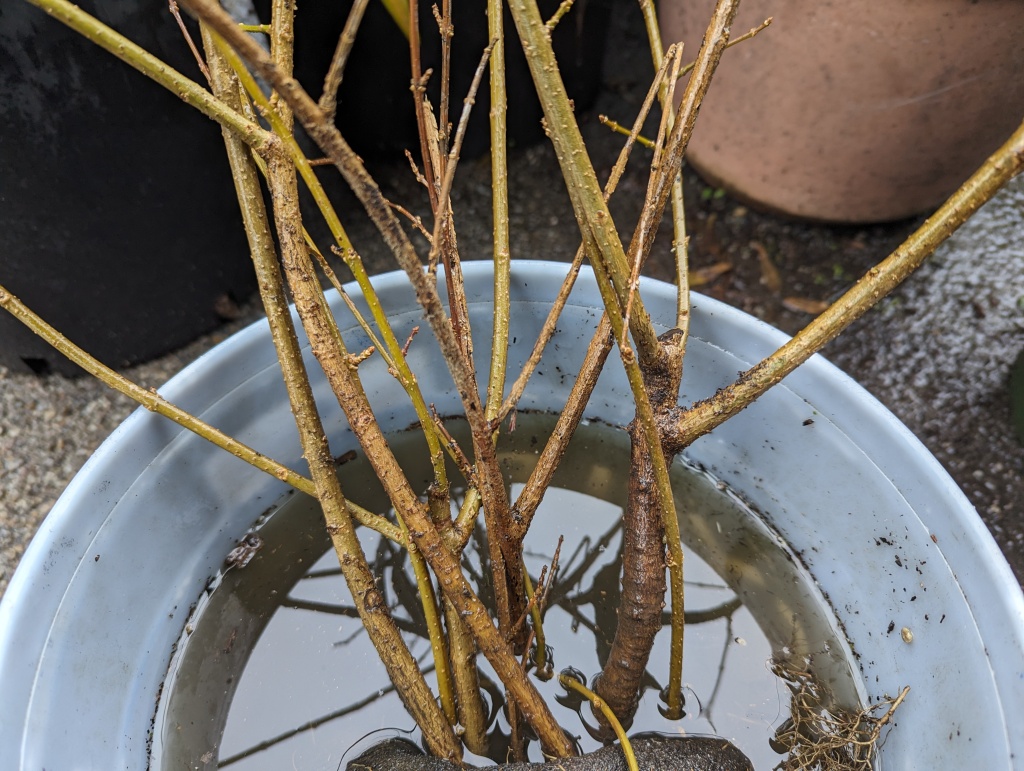
4. Forsythia X intermedia, forsythia will bloom soon, but for the moment, is dormant. I relocated an old specimen that was always in the way. These spare twigs can be forced.

5. Actinidia deliciosa, kiwifruit vines grew easily from a broken bit that I found in a load of debris that someone left here last winter. They are female without pollinators though. These are dormant pruning scraps of its male pollinator, and should grow just as easily.

6. Rain was falling yesterday and is forecast to continue lightly through most of Monday.

This is the link for Six on Saturday, for anyone else who would like to participate: https://thepropagatorblog.wordpress.com/2017/09/18/six-on-saturday-a-participant-guide/

Raising Cane

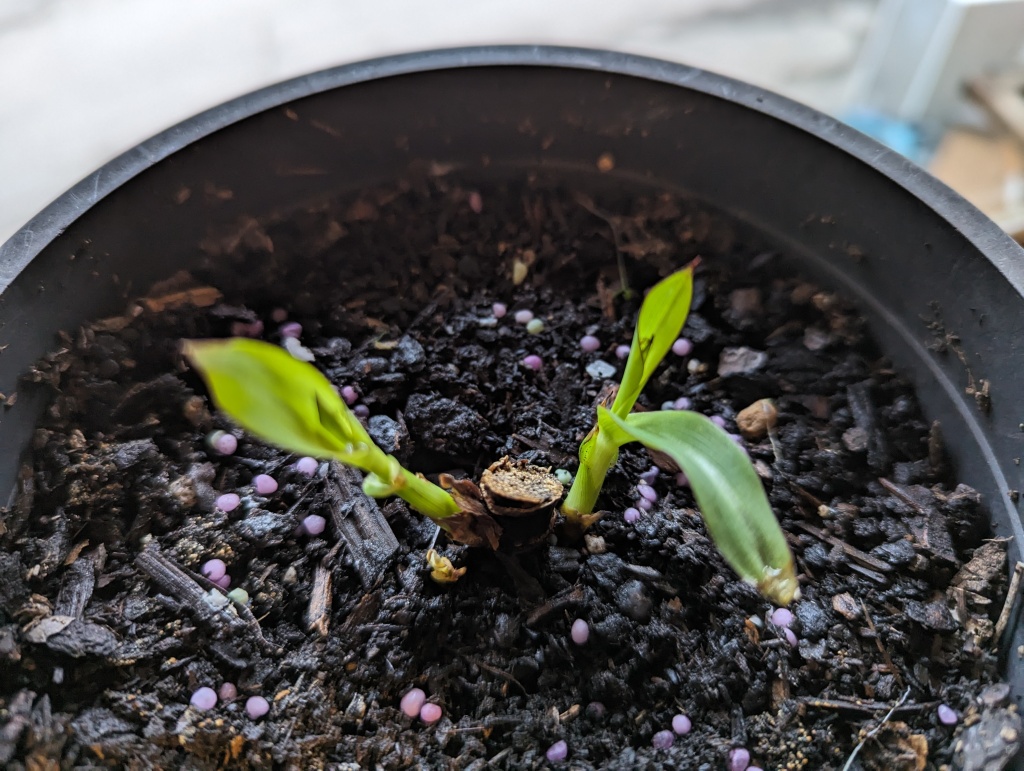
Sugarcane has been disturbingly easy to grow. This pair of pictures were taken about a day apart. The picture with smaller growth was taken yesterday morning, and posted with my Six on Saturday post at midnight. The picture with larger growth was taken this morning. If sugarcane grows this fast as a rooting cutting during winter, what will it do in the landscapes? Will it become an invasive weed? I suppose that I should be pleased with such healthy growth, but I am also concerned.

This particular sugarcane is likely ‘Pele’s Smoke’, which is more of an ornamental cultivar that should stay relatively compact. The original specimen from which I got the cuttings was not much more than six feet tall after at least two years, with bronzed foliage that is about the color of smoky topaz. It lives in Brent’s front garden. I pruned and groomed it while I was there for the first few days of November. Of course, I could not merely discard the scraps. I brought them back here and processed them into cuttings. I hoped that a few might take root.

The problem now is that most of the cuttings are beginning to grow. Only the softest of the terminal cuttings did not survive. Sugarcane is a tropical grass, so should not be growing much at all while the weather is cool. The many cuttings are stuffed into a pair of #5 cans, so may need to be separated prior to spring. I thought that only a few would survive at this time of year, and that they would grow too slowly to need separation until late next winter. Of course, I can not discard any surplus as I should. Only a few will go into the landscapes. Perhaps I can share some with neighbors.

The Hedge on the Ledge

Perhaps no one will notice.

I can explain. Firstly, I should mention that this is an industrial building at work, not a home garden; so no one else cares what it looks like. Secondly, although this building is outfitted with an abundance of external electrical lighting, it lacks external electrical outlets. Thirdly, I brought a ‘Double Mahoi’ banana tree back from the Los Angeles region less than a month ago, so divided its pups at the most inconvenient time, as autumn weather was getting cooler. Fourthly, I should stop numbering all these individual statements, and get on with a simple explanation of this visually unappealing contraption.

The banana tree went to its permanent home already, where it can hibernate through winter. However, its pups languished and immediately began to deteriorate here. Because they will not grow much until warmer weather after winter, their rudimentary corms can rot faster than they can recover from their division. Therefore, I purchased an electrical heating mat to warm their media from below, and accelerate root and corm growth. It was not a pleasant purchase, since I object to reliance on such technology, but that is another topic for later.

I did not want to extend an extension cord too extensively from a window to the nursery benches on the deck to the lower right in the illustration above. I thought that this shelf would be less obtrusive. Perhaps I should have thought a bit more about it. I successfully extended and obscured an extension cord for the fountain on the mountain, but again, that is another topic for later.

Now that it is installed directly outside the window, without the need for an extension cord, the shelf fits the heating pad reasonably well, and suspends eight #1 cans with three 4″ pots nestled in between.

By the time this explanation posts at midnight next Sunday morning, the largest of the four ‘Double Mahoi’ banana pups, which incidentally is already in the process of generating another rudimentary pup, might be exhibiting a slight bit of accelerated growth. The two smallest of these four pups were cut back to their corms, and the third will likely get cut back also, so will take a bit longer to exhibit growth. All four are arranged in the front row at the bottom of the illustration below.

The three 4″ pots that are nestled in between the #1 cans contain tissue cultured plugs of ‘Gran(d) Nain’, ‘Cavendish’ and ‘Orinoco’ banana. With all seven pups and plugs of banana neatly arranged on the heating mat, remaining space accommodated a few cuttings that should also benefit from the warmth of the heating mat.

The four #1 cans in the rear row at the top of the illustration below contain cuttings of passion flower vine and cup of gold vine. The passion flower vine to the right of center is unidentified, but ‘Constance Elliot’ is to the left of center, with a single cutting of ‘Frederick’. Almost predictably again, that is another topic for later. Nine cuttings of unvariegated cup of gold vine to the far right are shabby because they were superficially damaged by minor frost earlier. Six cuttings of variegated cup of gold vine are to the far left.

Although shabby, they do not look so silly from inside.

Six on Saturday: Los Angeles to Los Gatos II

Ilex opaca, American holly would have been a better topic for Six on Saturday this week. Woodland Gnome of Our Forest Garden sent me six seedlings from Williamsburg! They are now happily canned. I will share their pictures next week. For now, these are a few of the many goodies that I brought from Southern California. I sadly needed to go there for a memorial for an old college friend.

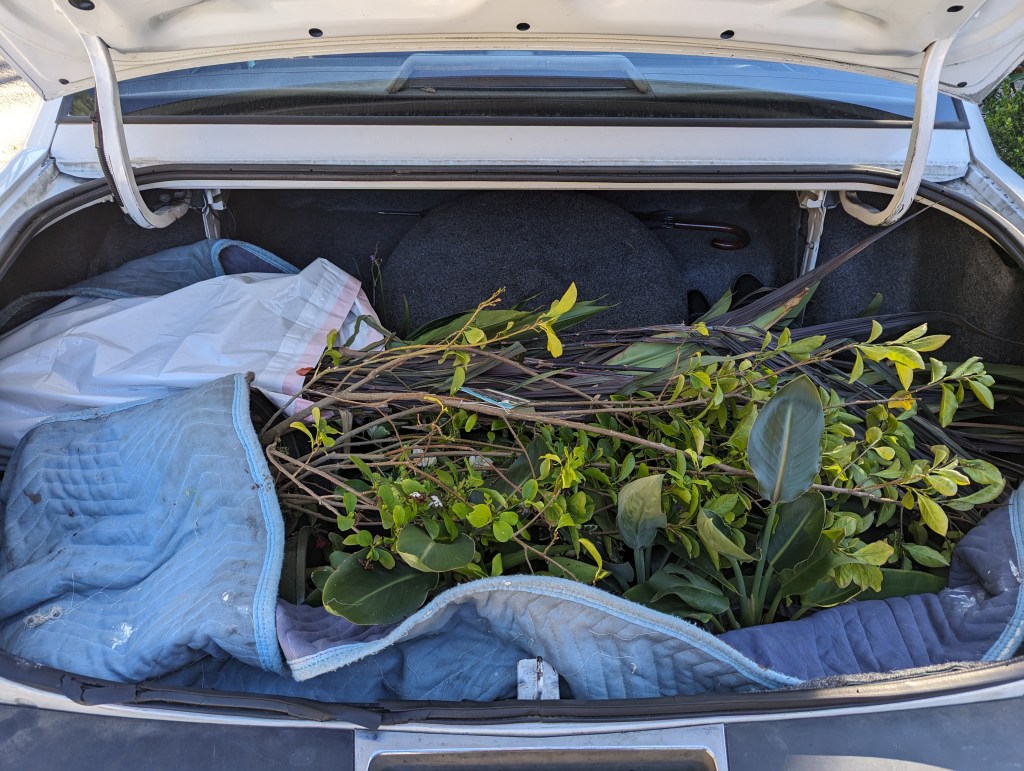
1. Carson is a 1994 Buick Roadmaster touring sedan, not a pickup. He diligently brought all this from Southern California anyway. It includes so much more than these six below.

2. Pimenta dioica, allspice is apparently quite rare. Brent had me trim his so that I could process these scraps as cuttings. However, it is dioecious, so requires a mate to set fruit.

3. Solandra maxima ‘Variegata’, variegated cup of gold vine was acquired in accordance with one of our collegiate traditions; theft. I processed these two scraps into six cuttings. Incidentally, I was uninvolved with its initial acquisition. I will merely grow the cuttings.

4. Nephrolepis exaltata ‘Variegata’, variegated Boston fern or tiger fern is a smaller copy of the mature specimen that provided picture #4 of my Six on Saturday of last Saturday.

5. Hedychium coronarium ‘Variegatum’, variegated white butterfly ginger should bloom with white flowers comparable to those of white butterfly ginger from Woodland Gnome of Our Forest Garden. However, I suspect that it is actually ‘Tahitian Flame’ with peachy bloom. To its right, Alpinia galanga, galangal is a culinary ginger with mundane bloom.

6. Canna of an unidentified cultivar is likely the most important of all these acquisitions. It was acquired by the same means as the variegated cup of gold vine #3, but worse. It is from the Baptist Church that hosted the repast for the memorial of our deceased friend.

This is the link for Six on Saturday, for anyone else who would like to participate: https://thepropagatorblog.wordpress.com/2017/09/18/six-on-saturday-a-participant-guide/

Six on Saturday: Chuck’s Grandparents

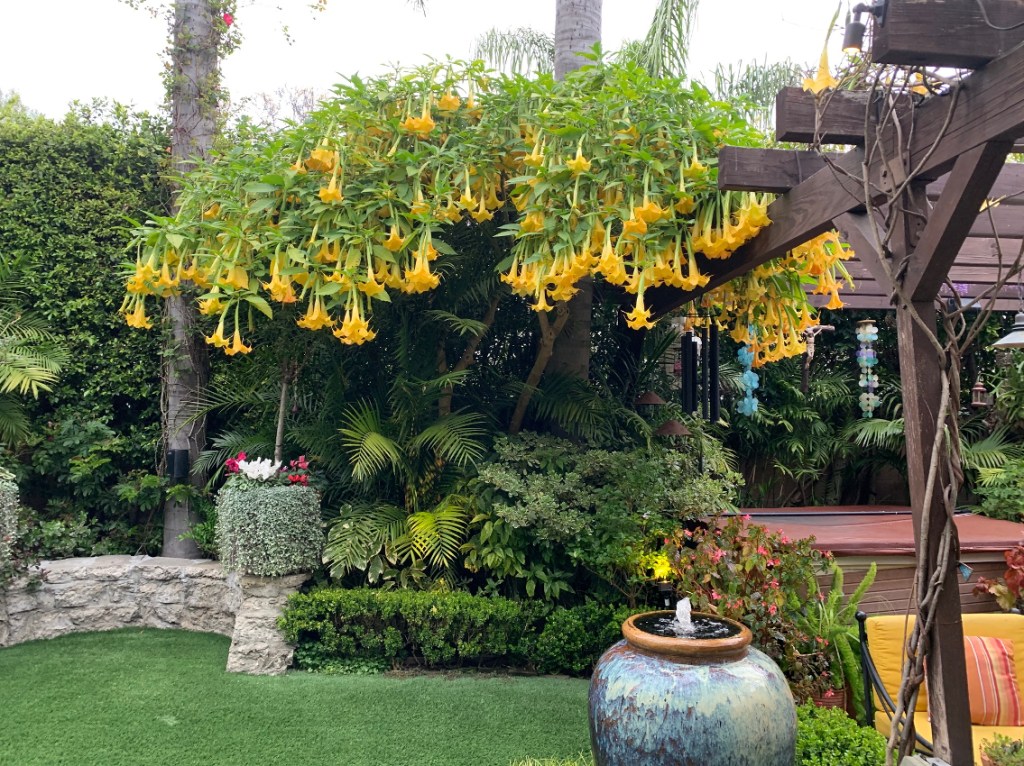
‘Charles Grimaldi’ is likely the most popular angel’s trumpet. It is very vigorous and very fragrant, with cheery yellow bloom. I plugged several cuttings last autumn, but then very unfortunately neglected to protect them from our unexpectedly and unusually cold frost. Of only two survivors, one grew so splendidly that it is now prominently displayed in the landscapes, rather than ignored in the nursery. It has an amusing history. (The first two pictures are not mine.)

1. This pair of ‘Charles Grimaldi’ angel’s trumpet might be familiar to those who watched television in the early 2000s. They were prettier while GreenArt managed the landscape back then. They are gone now. This was the best picture that I could find of them online. The third specimen that was omitted after it was delivered now inhabits Brent’s garden.

2. This omitted third specimen of ‘Charles Grimaldi’ angel’s trumpet is more impressive within Brent’s Dreamscape at the Jungalow. A picture of its bloom represents its species in the Sunset Western Garden Book from several years ago. It is the source of my copies.

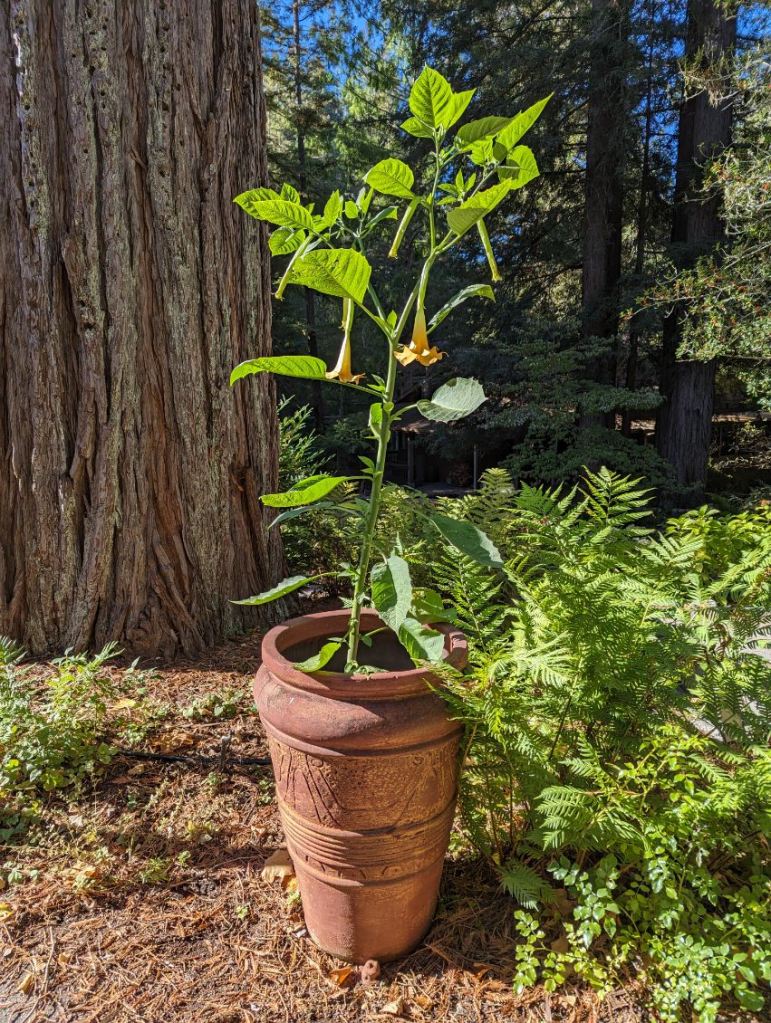
3. This copy grew more than six feet tall from a cutting that I plugged last winter. Its can sits on the bottom of its big urn. Its bloom was too pretty to leave unseen in the nursery.

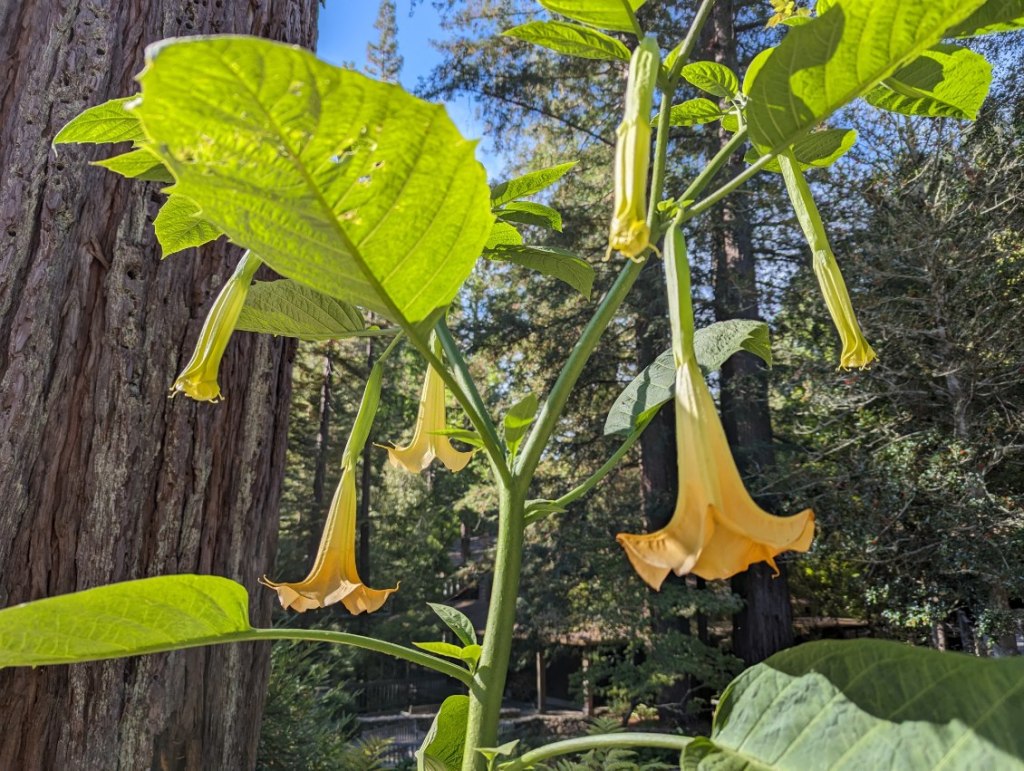
4. Bloom, which began only recently, will not likely continue much longer. The specimen might return to the nursery for winter, and then be installed into a landscape afterward.

5. A comparably tall copy of an unknown cultivar with orange flowers is about to bloom. Unfortunately, the weather will likely become too cool for these buds to finish blooming.

6. Young banana trees are likewise too striking to leave unseen within the nursery. Their cans were placed within more appealing pots within the landscapes at least until winter.

This is the link for Six on Saturday, for anyone else who would like to participate: https://thepropagatorblog.wordpress.com/2017/09/18/six-on-saturday-a-participant-guide/

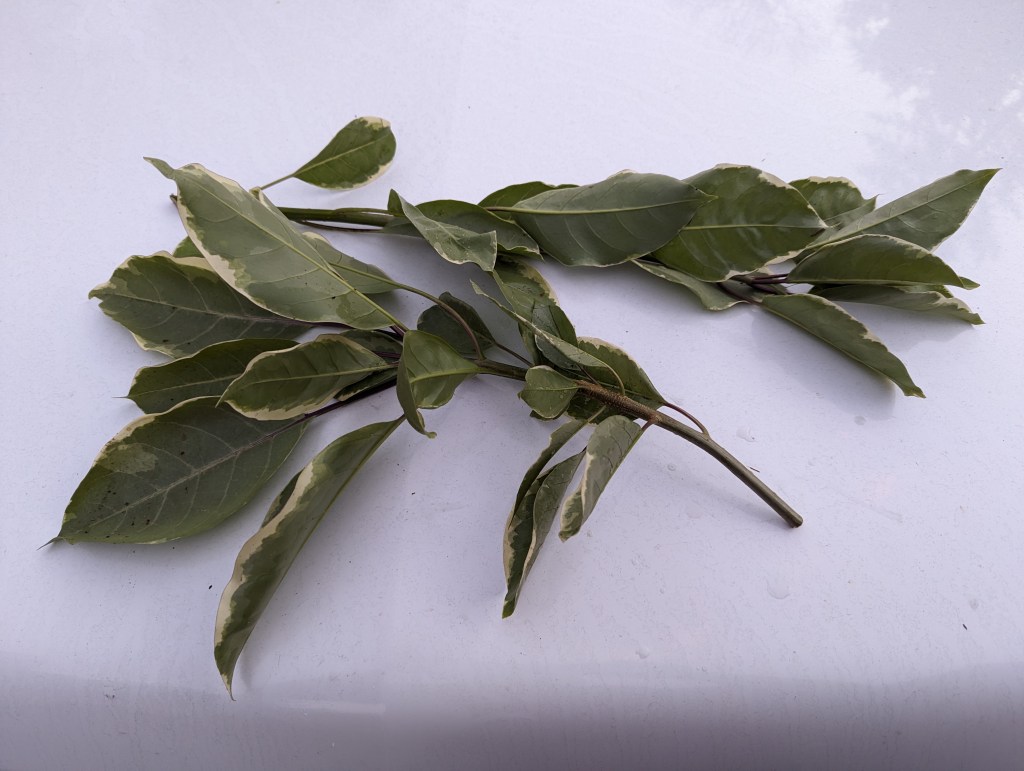
What Is This?! II – Hibbertia scandens (sequel from last Saturday)

Hibbertia scandens, Guinea flower

Obviously, it is not cup of gold vine, Carolina jessamine, yellow jasmine, yellow trumpet vine, yellow orchid vine, yellow black eyed Susan vine or any of the vines with yellow flowers that Google suggested as its identity. It is more than obviously not lotus, which incidentally blooms with orange flowers rather than yellow, but was somehow, according to Google, a candidate for vines with yellow flowers. It is amazing what can and can not be found on Google.

Brent recognized this vine just like I did, but also like me, could not remember its identity. We had not seen much of it in many years, but could remember that it was somewhat common in coastal regions while we were in school during the late 1980s. It lived at a doughnut shop that we sometimes went to in Morro Bay, and seemed to smell as if a tom cat had marked his territory on it. I can remember it within old gardens of Carmel and Monterey, as well as Santa Cruz, where I found these cuttings. I also remember encountering it while inspecting median landscapes of some of the major roads of Morgan Hill in the late 2000s, and that it did not perform as well within the somewhat inland climate there. Brent observed that specimens in Santa Monica and Beverly Hills seemed to express the same preference for the more coastal climate of Santa Monica.

Now that I got it, I have no idea of what to do with it. I suppose that, without mentioning the faint but potentially slightly objectionable floral fragrance, I can convince neighbors that they want it in their gardens. Some of our landscapes are big enough for it to be pretty at a distance. At least I know what it is, Guinea flower, Hibbertia scandens.

What Is This?!

I have no idea what it is, but I intend to grow it.

It is an evergreen vine that seems to sprawl over other vegetation rather than actually climb it. It lacks tendrils or other means with which to hold onto its support. It does not even seem to wrap around its support. Nor does it seem to get very high above the ground. It just sort of sprawls.

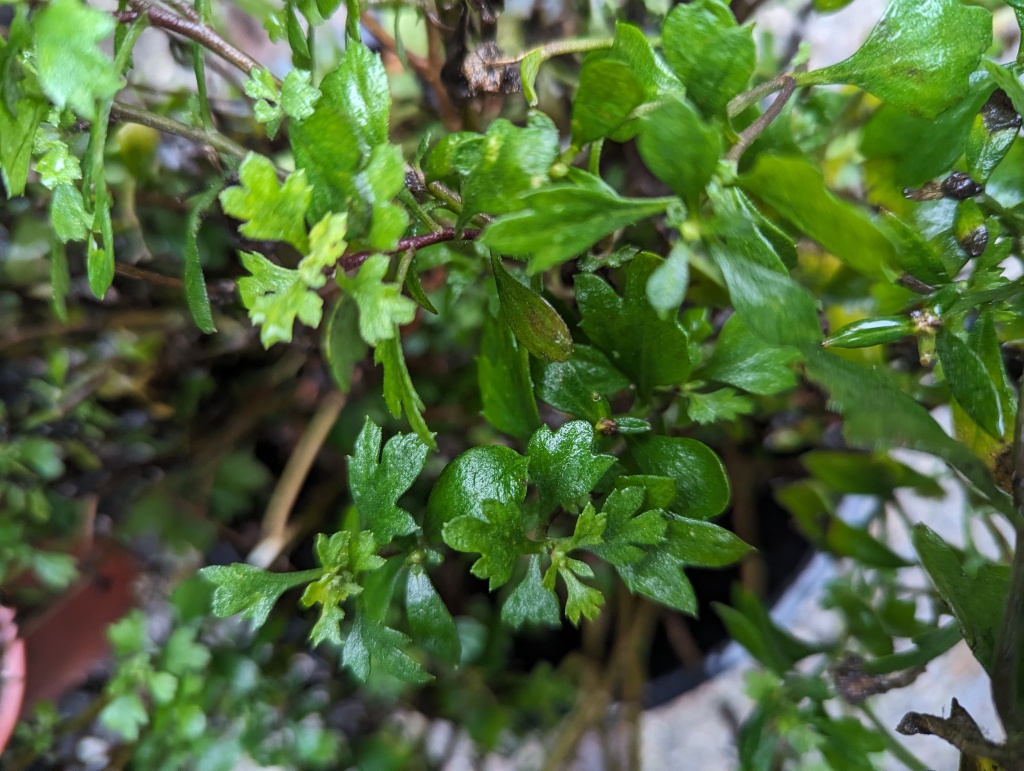
Its glossy leaves are rather simple, just like in the picture here.

Its bright yellow and staminate flowers, if I remember correctly, seem to resemble those of Saint John’s wort, but are a bit wider.

This vine, again if I remember correctly, seemed to be more popular years ago. I do not notice it much anymore. I can not remember when I last saw it in a nursery, or if I ever saw it a nursery. The few specimens that I am aware of inhabit old landscapes that have not been renovated in decades. I got these bits from where they were regenerating after their earlier removal from an old landscape.

Now that I have these bits, I intend to grow them, in order to get familiar with the species. I hope that I can eventually identify it. It should not be so difficult for something that had formerly been popular, or at least common enough for me to recognize it as something that had formerly been familiar.

I do not often encounter a species that I can not identify, and I even more rarely admit to it. If I do not recognize a species, I can typically recognize the genus, or at least the family, and then key it out. For this seemingly simple vine, I can not identify its family. I asked Brent, which I almost never do. He recognized it about like I did, but also could not remember its name.