Chimney Clearance

Combustible debris accumulates in gutters and behind chimneys.

There are several reasons why fireplaces are not nearly as commonly used as they once were. Modern building regulations have prevented construction of newer fireplaces (except pellet stoves). Many fireplaces that were ruined by the Loma Prieta Earthquake were never replaced; partly because there are other more efficient sources of heat, and partly because of the concern of air quality. The fuel that was once relatively easy to obtain from orchards that were getting removed to relinquish their land for urban development has been exhausted.

Regardless, those of us who use fireplaces need to be certain that they do not become overwhelmed by trees or climbing vines. Cypress, cedars, pines and some fan palms are remarkably combustible and hazardous when they get too close to chimneys, particularly if the roofs below are covered with old fashioned cedar shingles.

All trees and vines should be pruned away from chimneys so that they are out of reach of sparks and heat. The more combustible trees should get more clearance than deciduous trees (that are bare through winter) need. Nearby Monterey pines, Cypress and any trees that tend to accumulate debris should be groomed of debris, even if their limbs are already pruned back for sufficient clearance.

Trees should also be pruned for clearance from roofs and gutters; and any accumulated debris should be removed. Even before the weight becomes sufficient to cause damage, the motion of limbs in the wind is abrasive to roofs. Older roofs, particularly cedar shingles, will deteriorate under any accumulation of organic debris, particularly as it gets wet from rain.
Slugs & Snails

hor d’oeuvres

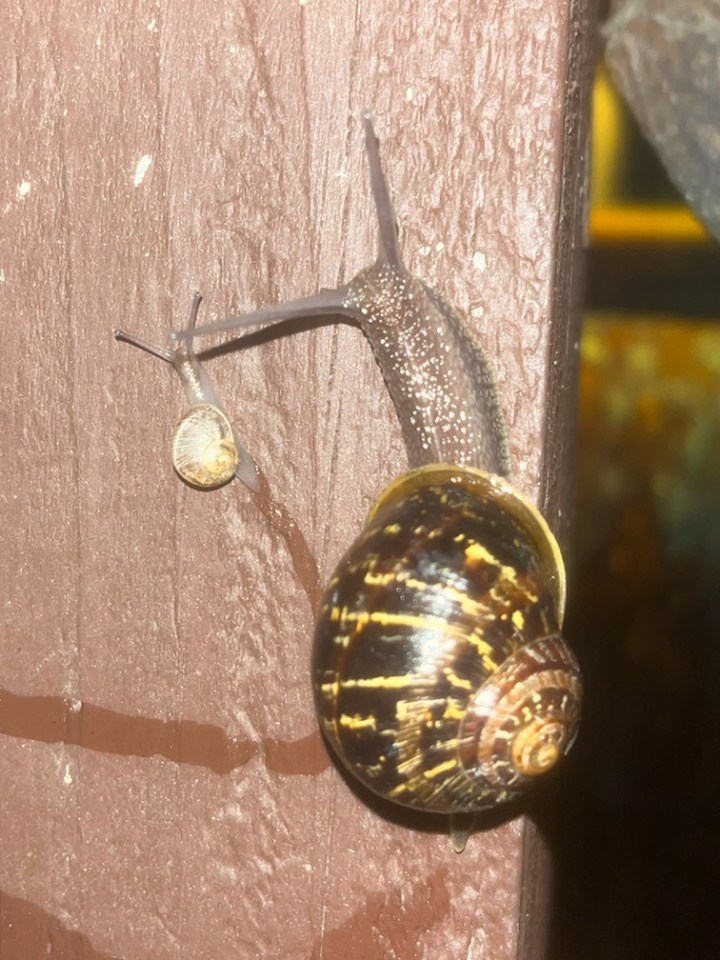
The British Invasion by the Beatles may not have been much of a problem to American gardens; but the French Invasion by brown snails is. Since getting imported as escargot, they eat much more than they get eaten, tearing apart flowers and foliage and devouring young seedlings completely. They tend to hide during the day, and emerge after sunset to graze voraciously until dawn.

Snails as well as slugs are most active this time of year, while the garden is still damp from winter rain, but getting warmer with springtime weather. Fresh vegetation that grows and starts to bloom about now is more than abundant enough to sustain them. Slugs and snails may be slow and ‘sluggish’, but have immense appetites.

Unfortunately, lush foliage that is most susceptible to the wrath of snails and slugs is also the most conducive to their proliferation. Overgrown foliage and plants with large leaves provide plenty of cool damp shade for snails and slugs to hide in during the day. Removing big weeds, fallen leaves and any debris eliminates some of the shelter that they crave while the sun is up.

Snails and slugs are neither elusive nor fast. Hunting them should be easier than it actually is. They are of course easiest to catch while they are out at night. Shallow containers, like saucers for potted plants, containing puddles of beer purportedly get snails to stay out drinking until the sun comes up and roasts them, but this technique is probably more work than it is worth. It wastes beer and seems to catch only a few victims at a time. Besides, the beer gets washed away whenever the garden gets watered.

It is easier and just as sneaky to leave boards or cardboard out overnight for snails and slugs to hide under in the morning, and then surprise the deceived snails and slugs during the day by depriving them of their shelter. They are objectionable to handle, but otherwise easy to collect. Your imagination is probably more useful than any recommendations about how to dispose of them once collected.

Copper tape that can be found in nurseries and hardware stores is a barrier to snails and slugs. It can be self adhesive, or stapled to wooden planter boxes. Plants must be contained within a copper barrier to prevent slugs and snails from getting over the barrier on any plant part that extends within their reach.

Bare copper wire can also be effective. Because trees are actively growing this time of year, copper wire wrapped as a barrier around tree trunks should have some slack, such as a flat ‘S’ shaped curve, to accommodate for trunk expansion.

Salt should not be used to control snails and slugs because it can be harmful to plants. Too much would be needed to surround susceptible plants, and like beer, it would get rinsed away when the protected plants get watered. Keeping drainage saucers filled with water as protective moats for potted plants inhibits drainage, and provides a place for mosquitoes to proliferate.

Debris Fills Gutters During Autumn

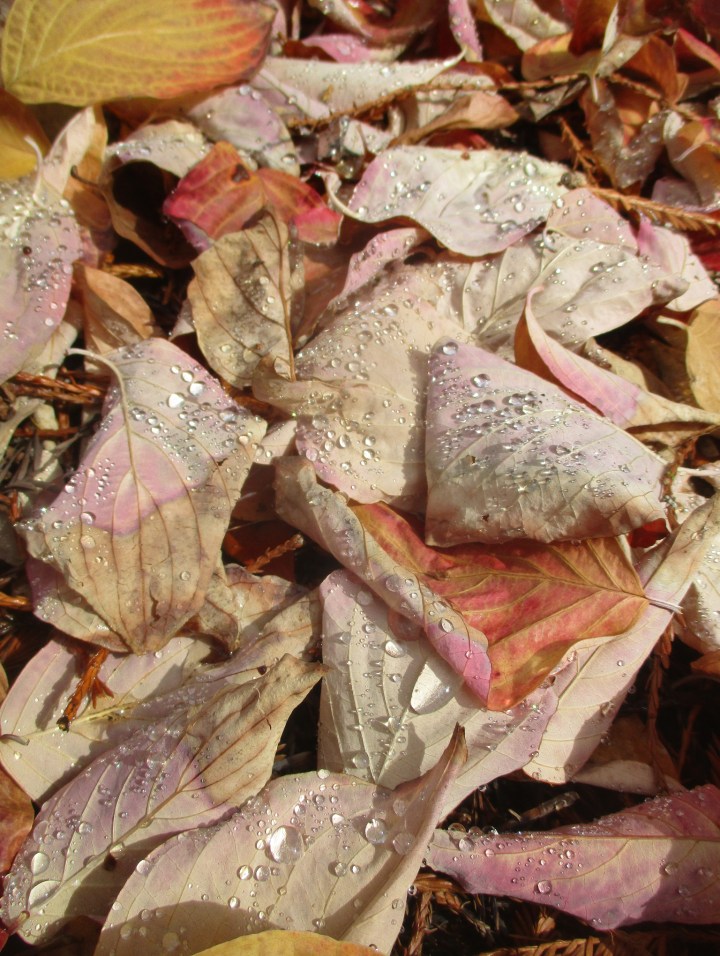
Falling leaves eventually become abundantly messy.

Autumn foliar color certainly is pretty while it lasts. Although less prominent locally than it is where cooler weather begins earlier, it is an asset to many home gardens. It generally appears a bit later within mild climates here, but might also remain suspended a bit later. Ultimately though, with enough wintry wind and rain, it eventually becomes foliar debris.

Evergreen foliage also contributes to the mess. It is likely less abundant than deciduous foliage is during autumn, but only because it sheds through more extensive seasons. For example, Southern magnolia sheds mostly through spring, as new foliage replaces older foliage. It then continues to shed additional debris throughout the year, including autumn.

Regardless of its various origins, foliar debris becomes more of a concern during autumn for two simple reasons. Firstly, and obviously, more of it accumulates during autumn than during any other season. Secondly, since autumn is the beginning of the rainy season, it is the most inconvenient time of year for such debris to accumulate within home gardens.

Roadside gutters, eavestroughs and their downspouts should drain efficiently. However, foliar debris can interfere with their drainage when it becomes most important. Roadside gutters are more accessible, so are easier to observe and clean. Eavestroughs and their downspouts may be beyond reach, but may need more cleaning if defoliation continues.

Foliar debris is unhealthy for turf, groundcover and shrubbery that it accumulates over. It inhibits photosynthesis by obstructing sunlight. It can also promote proliferation of fungal pathogens. This is why prompt raking is very important. Foliar debris can stain pavement and decking, and may be hazardously slippery. Behind chimneys, it can promote decay, and possibly become a fire hazard.

Gutters Collect Falling Autumn Leaves

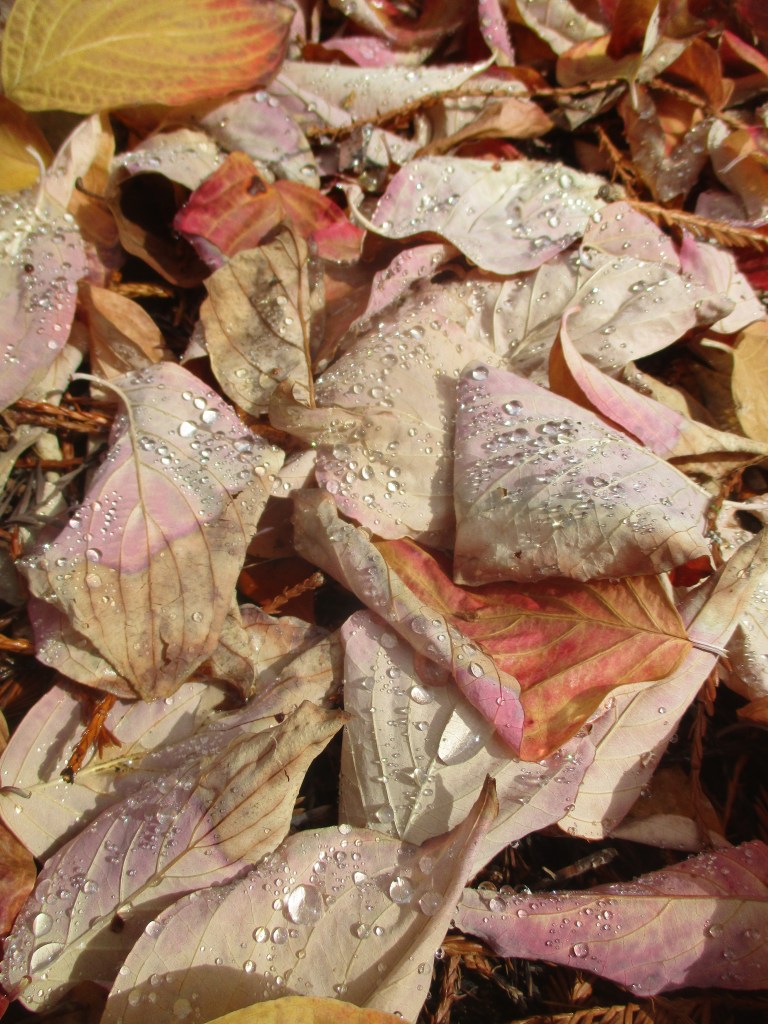
Fall color will soon fill gutters.

Autumn is also fall for a reason. It is the season during which most deciduous foliage will fall. Some deciduous trees that lack good fall color may look neater without their shabby old foliage. Sadly though, the splendidly colorful deciduous trees must shed also. All that collective debris that succumbs to weather and gravity gets messy, and can clog gutters.

Evergreen plants shed too. They are just sneakier about it. Some shed old foliage during spring or summer while simultaneously replacing it to stay evergreen. Some shed slowly but steadily for several months, rather than concentrating the mess within a brief season. Many shed during autumn though, as wind and rain dislodge their lingering older foliage. 

Whether deciduous or evergreen, various plants shed at various rates. Monterey cypress shed so steadily through the year that they are never caught in the act. Fruitless mulberry can defoliate in just a few days if frosted suddenly enough. Sudden defoliation seems to be messier, but can be an advantage. For example, gutters may need cleaning just once. 

Weather is also variable. Rain began a bit early this year. The associated dampness can accelerate defoliation for some species. Other species respond more to temperature. An early chill may accelerate their shedding. It is therefore impossible to predict when it will be necessary to rake fallen leaves or clean gutters. There are simply too many variables. 

Unfortunately, the weather that causes leaves to fall is the very same weather that makes raking and cleaning gutters so unpleasant. No one wants to work in the garden while it is cold. Nor does anyone want to get onto a dangerously wet roof to clean gutters. There is no need to rake or clean gutters before rain and cool weather cause debris to fall though. 

It should be obvious when it is necessary to rake leaves from lawn, pavement and street gutters. Bigger leaves tend to be more problematic by clogging drainage. Smaller leaves may just as easily stain pavement or decking though. Roof gutters are not so visible, but probably need cleaning while raking is necessary nearby, and hopefully before clogging. 

Leaf Litter Is Perfectly Natural

Mulch merely substitutes for leaf litter.

Forests lack gardeners. In the wild, there is no one to rake fallen leaves or blow them away. Foliage falls from trees and onto the ground, where it stays as it decomposes. It is the natural process. Raking and blowing leaf litter away is unnatural. It deprives the soil and organisms that inhabit it of significant organic matter that they crave. It also interferes with insulation and moisture retention.

Of course, there are some natural processes that are not so desirable in home gardens. After all, that is why raking and blowing is standard procedure. It is not practical to leave leaf litter on lawn, ground cover, pavement or roofs. Raking and blowing removes leaf litter from where it is unwanted, or at least moves it to where it is less visible. Leaf litter seems to be so useless and unwanted.

However, other procedures are necessary to compensate for the lack of leaf litter. Mulching insulates soil, retains soil moisture, and inhibits weed growth. Watering adjusts to deficient moisture in exposed soil. Weeding eliminates weeds that germinate and grow where there is nothing to inhibit them from doing so. Herbicide may be more practical. It is all so contrary to natural processes.

It is somewhat obvious why deciduous plants defoliate through autumn and winter. They do not need their foliage as much while days are shorter and sunlight is less intense. Also, they do not want to be battered by winter wind, or collect heavy snow. Yet, their desire to mulch their own soil is not so obvious. Evergreen plants do it also. They just do it slower, and generally throughout the year.

In fact, many evergreen plants are more efficient with their mulch than most deciduous plants are. Leaf litter of eucalypti, camphor, bay and nearly all conifers actually has a preemergent herbicidal effect. It inhibits germination of seed that can reach the soil. It can be a disadvantage for wildflowers, or an advantage for weed control. Incidentally, coniferous leaf litter is likely to be combustible.

Leaf litter, composted or left to its natural processes, is natural.

Deciduous Trees Defoliate Through Autumn

Too many fallen leaves get messy.

September 22 was the equinox. Here in the Northern Hemisphere, days will get slightly shorter as nights will get slightly longer. The intensity of the sunlight will diminish as the sun moves farther to the south. The weather will of course get cooler. In this particular climate, the rainy season will begin. Deciduous plants, as well as some evergreen plants, will respond accordingly to the changes.

Deciduous plants defoliate as they go dormant for part of the year. A few defoliate through hot and dry summer weather. Otherwise, almost all deciduous plants defoliate for dormancy through cool and stormy winter weather. They are more resilient without foliage that is sensitive to both frost and wind. While days are short and sunlight is diminished, foliage would not be very active anyway.

The foliage of many deciduous plants gets remarkably colorful during defoliation. Sweetgum, pistache and ginkgo are famously colorful. However, many deciduous plants, such as valley oak and silver maple, are not impressively colorful. Regardless, all deciduous plants that defoliate for winter will eventually start to do so, or have started already. Several evergreen plants shed debris too.

Gravity is a force that is more reliable than weather. It pulls foliar debris downward onto roofs, roadways, decks, patios, lawns and whatever happens to be below deciduous trees.

The timing of defoliation is ironic. Gutters and downspouts that were empty all summer now collect debris as the rainy season begins. They may need cleaning more than once if deciduous trees above defoliate slowly. While patios and decks get less use, they need more raking to avoid staining. Fallen leaves promote rot in turf grass and ground covers, and inhibit penetration of sunlight.

At this time of year, it is difficult to believe that evergreen trees are generally messier than deciduous trees. Deciduous trees tend to defoliate only once annually, although some drop bloom or fruit separately. Evergreen trees drop about as much debris, but do so for a longer season or continuously throughout the year.