Gutters Innately Accumulate Falling Leaves

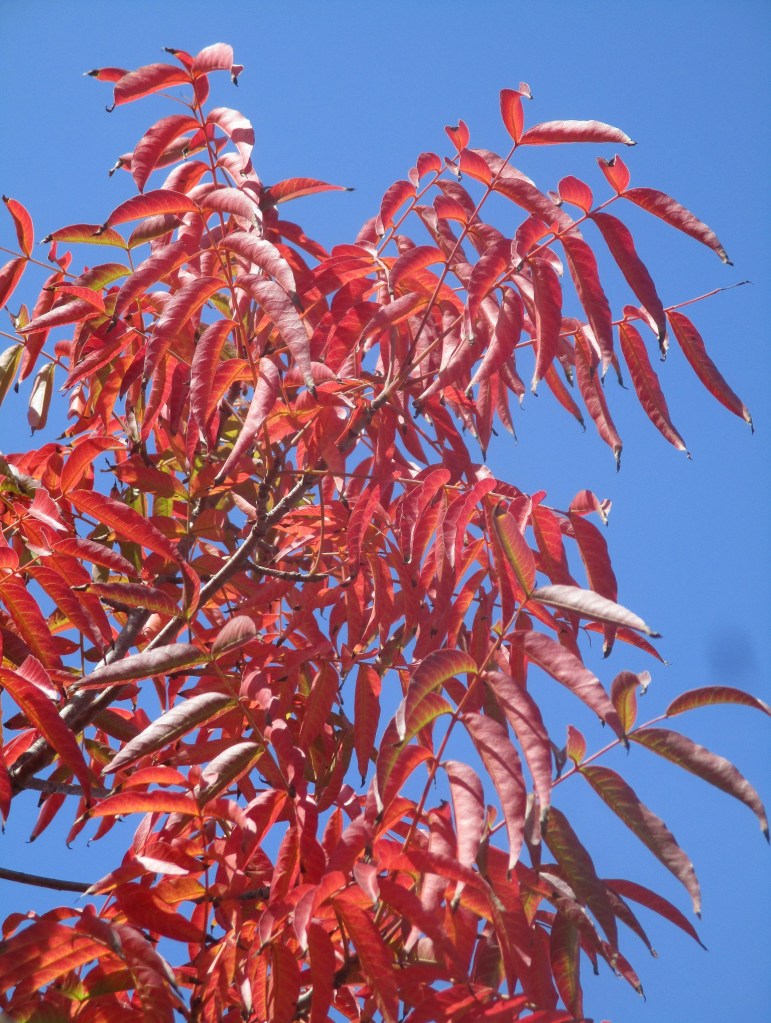
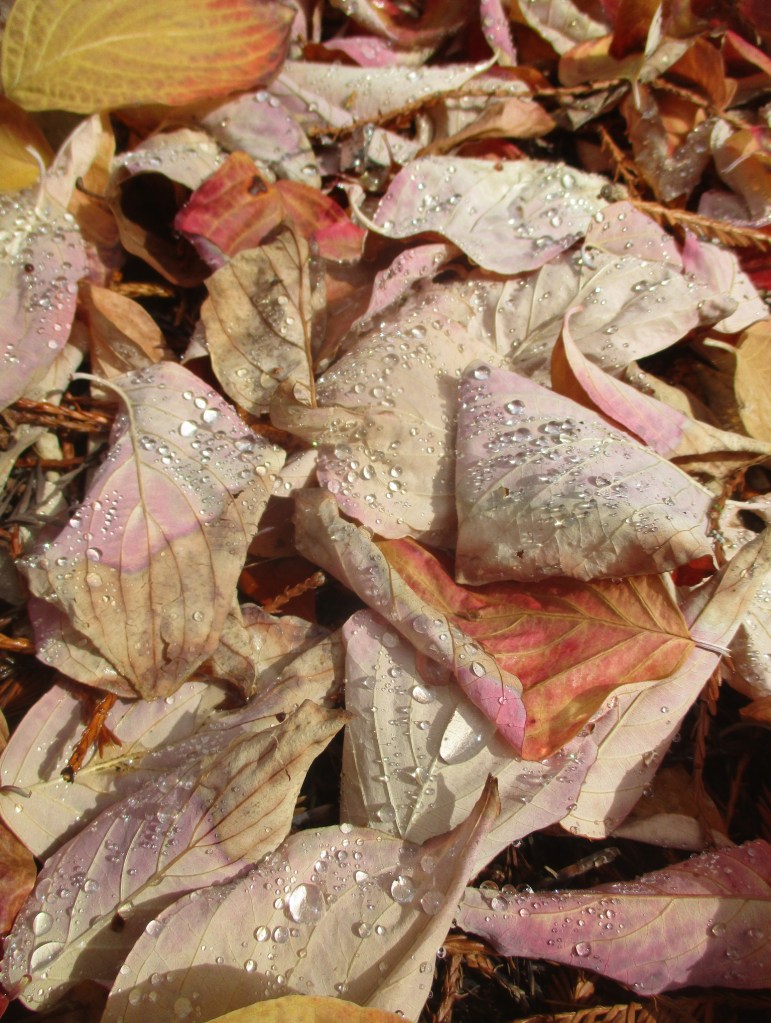
Falling leaves can overwhelm gutters.

Autumn foliar color gets messy. It is spectacular while suspended in deciduous trees and even on the ground. The problem is that it mixes with wind and rain as it deteriorates and gets sloppy. It necessitates raking from lawns, ground covers and hardscapes. It requires removal from gutters, or eavestroughs, and where it accumulates on roofs. It gets messy.

The timing could not be worse. The wind and rain that cause it to be so messy are no fun to work in. Using ladders to clean gutters and roofs is more dangerous in wet conditions. Fallen leaves are messier and heavier while wet. Yet, they are not too heavy for winds to blow green waste piles about after raking. Autumn weather will get progressively worse.

Unfortunately, gutters that accumulate fallen foliage require cleaning to function properly.  Otherwise, foliar debris clogs them and their downspouts when they are most necessary. Rain water then flows over their edges and onto the ground below. It can be more than a minor annoyance. Splattering water can cause rot within adjacent walls that it dampens.

That is why old historic houses originally had ‘foundation plantings’ of dense vegetation. Some lacked gutters because gutters were very expensive. Instead, rain was allowed to flow from eaves and directly onto the ground. Dense vegetation between the dripline and the foundation contained the splattering. Almost all modern homes, though, have gutters.

Gutters may need cleaning more than once before deciduous trees defoliate completely. Evergreen trees necessitate cleaning as well, but do not shed so profusely for autumn. A few, such as redwoods and pines, are exceptionally messy. Because their mess may not coincide with autumn, cleaning it can be a bit earlier. It is easier during pleasant weather.

Cleaning gutters is a gardening task that may be best to leave for professionals. After all, it may involve climbing to unsafe heights on ladders and roofs. Installation of screen like devices over gutters can mitigate the need for future cleaning. Of course, gutters that are not below messy trees might never need cleaning. There are many variables to consider.
Autumn Foliar Color Is Chill

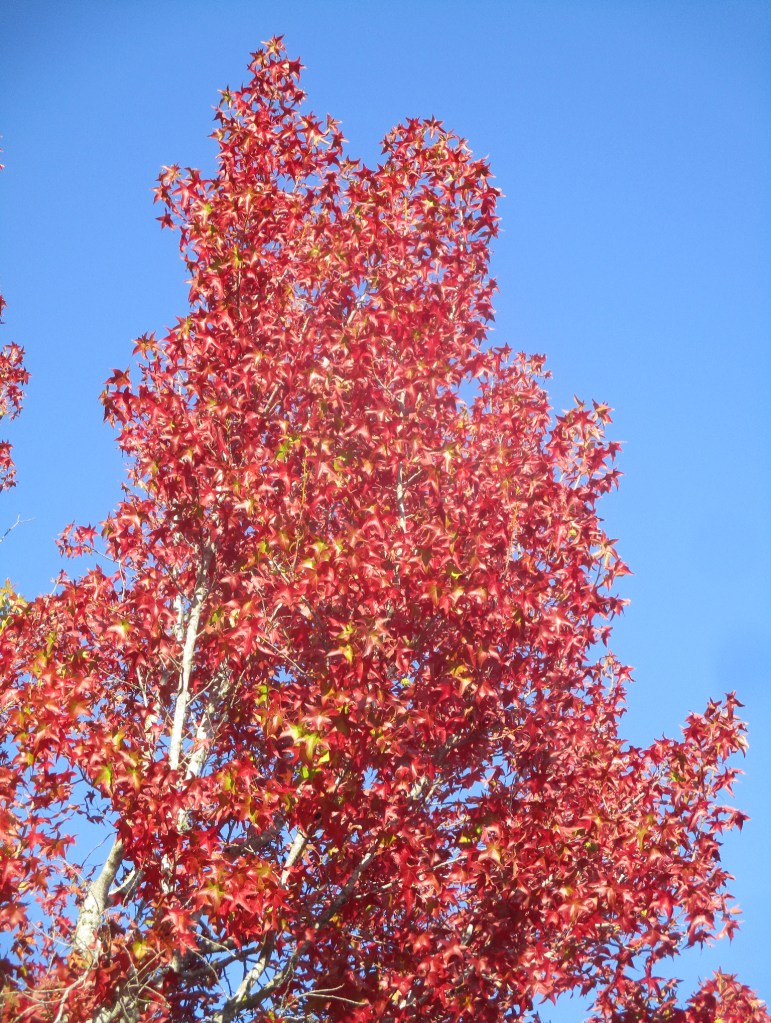
Sweetgum excels at autumn foliar color.

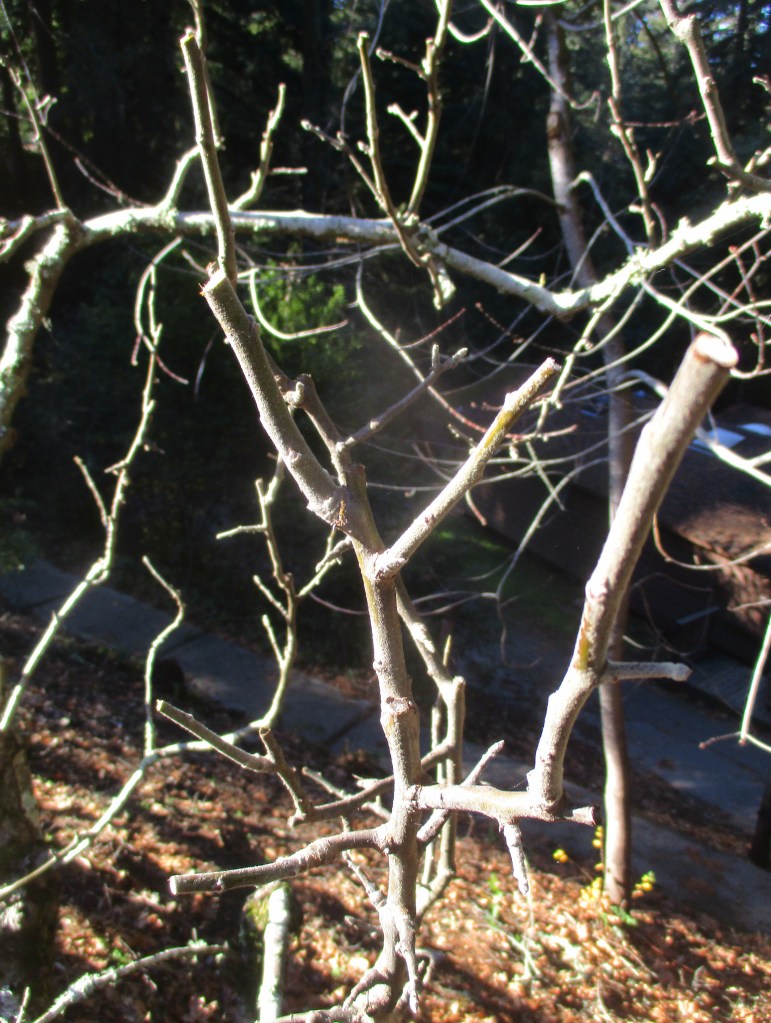
Cool season annuals are not the only options for home garden color for autumn. Even in mild climates, deciduous foliage eventually notices increasing autumn chill. While some merely sheds, some first develops spectacular autumn foliar color. Such foliage is not as conducive to instant addition to gardens as annuals are. Yet some may already be there.

A few deciduous shade trees and street trees provide the best autumn foliar color. Some are less popular with those who prefer evergreen trees. However, they are quite practical for some situations. Some are less messy than evergreen trees. They only seem messier because they defoliate so much at once. Most evergreen trees shed throughout the year.

Sweetgum, or liquidambar, probably provides the most colorful autumn foliar color. It also happens to be among the messier deciduous trees. That is because it retains its colorful foliage later into autumn and winter. While prolonged mess is a disadvantage, prolonged foliar display is an advantage. It is an unwieldy large tree, though, with aggressive roots.

Chinese pistache is as colorful, with dazzling yellow, orange and red autumn foliar color. It seems a bit less messy because it defoliates a bit sooner. Also, it does not produce the spiky seed capsules that sweetgum trees produce. However, its smaller leaves require a bit more effort to rake than larger leaves. Chinese pistache is a rather popular street tree.

Flowering pear, or callery pear, produces similar autumn foliar color, with more deep red. It also provides billowy white spring bloom. Crepe myrtle is a smaller tree with both vivid autumn foliar color and summer bloom. Ginkgo is a tall and slender tree with exclusively brilliant yellow color. Boston ivy is a clinging vine that is as colorful as Chinese pistache.

Not all deciduous trees produce impressive autumn foliar color. Sycamore might already be defoliating with just a bit of pale yellow color. Valley oak does the same later. Both are quite messy as they defoliate slowly through much of autumn. However, both are notably sculptural while bare later through winter. There are other advantages to deciduousness.

Winter Pruning Deciduous Fruit Trees

Specialized dormant pruning improves fruit production.

Bare root season is synchronous with winter for one simple reason. Winter is when bare root stock is dormant. Dormancy similarly justifies winter pruning of deciduous fruit trees. It functions like anesthesia for surgery. While dormant, deciduous fruit trees are unaware of relocation or pruning. They resume growth for spring as if nothing stressful happened.

Winter pruning, or dormant pruning, would be inappropriate at any time other than winter. It is both very specialized for particular deciduous fruit trees, and, for most, very extreme. Some trees that benefit from it could not survive such procedures while vascularly active. Such pruning would involve the removal of most or all foliage if it were not already gone.

Winter pruning is no more unnatural than major breeding that necessitated it. Because of breeding, fruit trees produce unnaturally heavy and abundant fruit. Many can not support the weight of the fruit that they could potentially generate. Major pruning limits production and improves structural integrity of stems. It also confines production to reachable stems.

Production of unnaturally big and abundant fruit consumes substantial resources. Winter pruning concentrates resources into less excessive fruit of better quality. Since fruit is not as congested as it would otherwise be, it is more resilient to pathogens. So are its stems, foliage and precursory bloom. Fruit is easier to harvest from less congested stem growth.

Stone fruit trees and pomme fruit trees are the most common that require winter pruning. Stone fruit include cherry, apricot, plum, prune, peach, nectarine and almond. They need distinct degrees of similar pruning. Large fruit like peach necessitate aggressive pruning. Cherry and almond do not require as much. Pomme fruit include apple, pear and quince.

Deciduous fruit trees are certainly not low maintenance. Their reliance on winter pruning is undeniable. Those who would like to grow such trees should be aware of their cultural requirements. Diligent research of pruning techniques is very helpful. Annual experience is even better. It is an opportunity to observe how trees respond to all earlier procedures.

Falling Leaves Are Getting Messy

Deciduous foliage gets messy through autumn.

The primary problem with autumn foliar color is that it eventually becomes quite a mess. Premature shedding started the process even before much of the foliar color developed. Evergreen foliage can contribute to the mess, but most debris now is deciduous. Autumn is, obviously, its season for defoliation. Falling leaves merely do what is natural for them.

Falling leaves fall at different rates. Just as some fall prematurely, some might linger into winter. Also, some that usually linger into winter may fall earlier or later for some winters. Unusually cool, windy or rainy weather accelerates defoliation. However, defoliation can be slower with milder weather. Prolonged foliar color is pretty, but prolonged mess is not.

Besides falling at different rates, falling leaves are quite diverse. Big leaves of sycamore and fruitless mulberry are easy to rake away. Small and abundant leaves of Chinese elm require a bit more effort. They tend to sift between rake tines. Sycamore leaves disperse tomentum that is irritating and perhaps dangerous to inhale. Oak leaves stain pavement.

In a few relevant regards, falling leaves are quite convenient. Their absence allows more warming sunshine through as the weather cools. Not very long ago, they provided shade during summer warmth. Defoliation also allows wintery wind to blow more safely through deciduous trees. Otherwise, such trees would be more susceptible to damage from wind.

Falling leaves are also quite inconvenient. They clog eavestroughs and gutters precisely when they should not. As rainy weather begins for winter, it dislodges even more foliage. Also, it dampens foliar detritus so that it stains concrete and decking more than while dry. Raking detritus is most important while it is most unpleasant because of wintery weather.

Some coarse groundcover, such as Algerian ivy, can absorb smaller falling leaves. Most groundcover or turf is not so accommodating, though. Bigger leaves can overwhelm and shade them, as well as low or dense shrubbery. Slugs and, where they do not hibernate, snails can proliferate within this damp shade. So can fungal pathogens that tolerate chill.

Fall Foliage Is Gaining Color

Minor chill can initiate major color.

Fall foliage is underappreciated here. It is not naturally prominent enough to suggest that it should be otherwise. Most native vegetation is evergreen. Most that is deciduous turns simple hues of yellow, without much orange or red. Some just gets shabby and brown as it defoliates with minor chill. Native vegetation does not represent total potential, though.

Contrary to common beliefs, local weather is not too mild for fall foliage to develop color. Only a few locally rare deciduous species need cooler weather for such color. Only a few deciduous species prematurely shed too much to develop their color for fall. Colorful fall foliage really could be more prominent within gardens than it is. It merely is not a priority.

Many home gardens here are within suburban or urban situations. Evergreen vegetation is therefore useful for privacy or to obscure undesirable views. Winter weather is not cold enough for evergreen shade to make it significantly colder. Some believe that deciduous vegetation is messier than evergreen vegetation. Some find it less appealing while bare.

Actually, evergreen foliage is generally more persistently messy than deciduous foliage. Although it sheds less abundantly, it does so more continuously through longer seasons. Some never stops shedding. Ultimately, the quantity of its detritus is at least comparable to that of deciduous foliage. Deciduous foliage sheds more profusely, but does so briefly.

Efficient shedding could be an incentive for deciduous vegetation. Sunnier conditions for winter could be another, whether or not it adds a bit of warmth. The color of fall foliage is obviously worthy of consideration also. Some types are more colorful than others. Some are more reliable than others. Ultimately, there is quite a bit of fall foliage to choose from.

Sweetgum, pistache and flowering pear develop the most exquisitely colorful fall foliage. Their color ranges from bright yellow, through orange, to deep red. Sweetgum is messier than the others, but only because it retains its fall foliage longer. Crape myrtle is smaller, but comparably colorful. Ginkgo is quite reliable for exceptionally brilliant yellow foliage, early in fall.

Deciduous Foliage Is Efficient

Maple foliage only seems to be messy because it all falls at once.

(Horridculture will resume on Friday.)

Contrary to popular belief, most deciduous trees, those that drop all their leaves in autumn, are not as messy as most evergreen trees. There are of course a few exception; such as cacti that lack foliage completely, or Italian cypress that drop their finely textured foliage straight down within a very narrow drip-zone, where it decomposes and disappears unnoticed. Very few leaves fall from a big silver maple through winter, spring and summer, so that almost all of the raking is done when almost all the leaves get shed in autumn. However, a big Southern magnolia generally drops leaves throughout the year, so that raking is always necessary.

The problem is that when deciduous trees get to be messy, they are very messy. Also, they get to be messy at the worst time of year, when their leaves mix with rain to clog drains and gutters. Unraked leaves become hazardously slippery when they get wet and start to decompose. It is amazing how something that can be so appealingly colorful through autumn can so quickly become such a nuisance.

Leaves of deciduous trees somehow seem to be better for composting than those of some of the evergreen trees. Anyone with a Southern magnolia knows how slow the foliage is to decompose. Foliage of camphor, bay, carob and various eucalyptus certainly decompose slower than various maple, ash, poplar and birch. Many of us outfitted with green waste bins or curbside collection of green waste prefer to recycle the less desirable evergreen foliage, and compost primarily deciduous foliage. Those of us who do not compost but need to rake under large or many deciduous trees may fill bins for several weeks, or leave very big piles of leaves at the curb.

Small leaves, such as those of most elms, or finely textured compound leaves, such as those of silk tree, jacaranda or locust, may not need to be raked if they fall onto lower shrubbery or ground cover. Small leaves or the small leaflets of disintegrating compound leaves simply sift through the lower plant material to decompose below. However, large elms may produce such an abundance of foliage that some may need to be removed. Maple and other large leaves are not so easy to ignore. They can shade lawns, ground cover or bedding plants, so need to be raked as they fall.

California Black Oak

California black oak defoliates through autumn.

Only a few counties within California lack native California black oak, Quercus kelloggii. Yet, it is not prominent where it is native locally. It generally inhabits mixed forests within the Coastal Ranges. It is rare among home gardens, and rarely available from nurseries. Within the Sierra Nevada, it is common enough to be harvestable as a hardwood timber.

With good exposure, mature California black oaks may get no taller than thirty feet. They can get twice as tall where they must compete with tall trees. The largest trees are higher than a hundred feet. Their elegantly upright trunks are generally less bulky than those of other oaks. Few are more than four feet wide. Gray bark darkens and roughens with age.

The deciduous foliage of California black oak is almost brownish drab green. It becomes brownish yellow prior to defoliation. Cooler weather enhances brighter yellow or orange color, but also accelerates defoliation. Foliage can linger into winter with milder weather. The handsomely lobed leaves are about four inches long, and bigger on vigorous stems. The docile roots are vulnerable to rot with frequent watering.

Big Leaf Maple

The sugaring maple of the West!

Maple sugar production has not always been exclusive to northeastern North America. In fact, it is not exclusive to sugar maple. Big leaf maple, Acer macrophyllum, also provides maple sugar in British Columbia. It is native from the southern extremity of Alaska to San Diego County. Most of its range is generally coastal but also includes the Sierra Nevada.

Bigleaf maple is one of merely two native maples here. It is more common within riparian ecosystems and at higher elevations. However, it is rare among home gardens because it is so vigorous and grand. Its aggressive roots eventually buttress, and are likely to ruin lawns and pavement. Autumn defoliation of big trees releases big volumes of big leaves.

Bigleaf maple can grow almost fifty feet tall and wide within sunny suburban landscapes. It can grow a hundred feet taller where it competes for sunshine within coastal forests! Its palmately lobed leaves are typically wider than six inches. They can be twice as wide on vigorous stems. Foliage turns yellow for autumn. Seedlings might be annoyingly prolific. Local climate is unfortunately not conducive to practical sugar collection and refinement.

Defoliation Is A Messy Process

Defoliating deciduous foliage must go somewhere.

Autumn foliar color eventually gets messy. Actually, any deciduous foliage can become messy during its autumn defoliation. Color is not a prerequisite. Some deciduous foliage remains green through the process. Furthermore, some evergreen foliage contributes to the mess. A few evergreen species shed a bit more as the weather becomes more wintry.

Contrary to popular belief, deciduous vegetation is neater than evergreen vegetation. It only seems to be messier because it defoliates completely at once. Also, such complete defoliation exposes bare stems. Evergreen vegetation sheds slower throughout the year. As it replaces old foliage with new, it sheds more in seasonal phases, but incompletely.

Deciduous leaves also seem to be messier because they are generally bigger. They do not disintegrate into landscapes as efficiently as tiny evergreen leaves do. They require raking from lawns, as well as groundcover that can absorb smaller leaves. So, they fall most abundantly, and dissipate least efficiently. That is why defoliation is so very messy.

Defoliation of deciduous foliage occurs at both the best and worst time of year. It allows more warming sunlight into homes and gardens while the weather is cooling. It leaves deciduous trees more resilient to eventual windy wintry weather. However, it gets messy while the weather begins to get less conducive to gardening. Summer is about finished.

It truly is ironic. Rain and wind will eventually dislodge the last deciduous foliage during winter. Rain is also why this same foliar debris must not clog eavestroughs and gutters. Yet, it is why removal of such debris can be such an unpleasant chore. Removal of foliar debris from hardscapes is also important. It stains and gets slippery if dampened by rain.

While defoliation decreases shade above, it can increase shade below. Accumulation of foliar debris can detrimentally overwhelm turf and groundcover. Some large leaves can do the same on top of dense shrubbery. Fungal pathogens proliferate within the dark and stagnant dampness below such debris. Shade from such debris inhibits photosynthesis.

Autumn Foliar Color Appreciates Chill

Maples perform better in cooler climates.

Indian Summer complicates autumn. It is an imposition of pleasant weather that delays inevitable chill. Gardening is a bit more enjoyable while the weather remains summery. However, late warmth confuses a few species that should decelerate growth for autumn. Deciduous species delay dormancy. This delays the development of autumn foliar color.

Consequently, autumn foliar color is somewhat late this autumn. It is only beginning to develop. Some species that eventually become spectacularly colorful remain very green. Only the most sensitive species, such as Boston ivy, are beginning to exhibit their color. Unfortunately, because of this delay, some may defoliate unusually soon after coloring.

Autumn foliar color is underrated here, for various reasons. It is less common in the wild than in other regions. The color range of native deciduous species is almost exclusively simple yellow. Orange or red are uncommon. This is not much incentive for incorporation of such species within home gardens. Nor does it promote more colorful exotic species.

Besides, deciduous trees are innately less popular here than within other regions. Local culture seems to promote a preponderance of broadleaf evergreen species. Penetration of warming sunlight through defoliated trees is not such a priority. Winter weather does not get very cold here. Concealment of undesirable suburban scenery is more important.

Also, the misbelief that chill is inadequate here for much autumn foliar color is common. Technically, many of the most colorful species of cooler climates lack such color locally. This unfortunately includes famously colorful North American maples. Several species, however, do not need much chill for spectacular color. They compensate for what lacks.

Sweetgum develops the most vivid autumn foliar color, including yellow, orange and red. It defoliates slowly to retain its color until winter. PIstache is about as colorful, although it defoliates a bit earlier. Flowering pear provides more orange, red and dark burgundy red. Crape myrtle is a smaller tree with comparable foliar color. Ginkgo becomes vivid yellow. Of course, physical traits of each species are also important.