
The main difficulty with such a mild climate is that many plants do not get sufficient chill in winter. Several types of apples do not perform well here without it. Only a few are productive in Beverly Hills (in the Los Angeles region), where I sometimes need to modify my gardening column accordingly. A few of my neighbors here somehow grow peonies; but I do not even bother.
Even plant that require more chill than they get here seem to be aware that it is cooler at this time of year. Their deciduous foliage turns color and eventually falls to the ground. They just want the weather to get a bit cooler and to stay cooler for a bit longer before they are convinced that it is really winter. Otherwise, they think that autumn simply merges directly into spring.
I really do not know what hydrangeas are thinking though. They perform about as well in milder climates of Southern California, and may not bother to defoliate completely if old foliage can linger until it is replaced by new foliage. In the mildest climates, bloom is merely subdued through winter, but might continue sporadically. I am not convinced that they need any chill at all.
The hydrangeas here get pruned shortly after the roses, and almost as severely. (They are a bit more complicated than roses, and a bit less cooperative, but respond well to their pruning.) I started the process on Thursday with a few that needed to be relocated, and will be finishing on Wednesday or Thursday. Most of the remaining yellowed old foliage falls away in the process.
Their lingering bloom is a bit more disconcerting. I hate to waste what the old hydrangeas put so much effort into producing. Some of the best blooms were outfitted with a bit of eucalyptus foliage (since they lacked their own) and given away to others who work here. However, there were invariably some undeveloped blooms that were just discarded as they got pruned away.
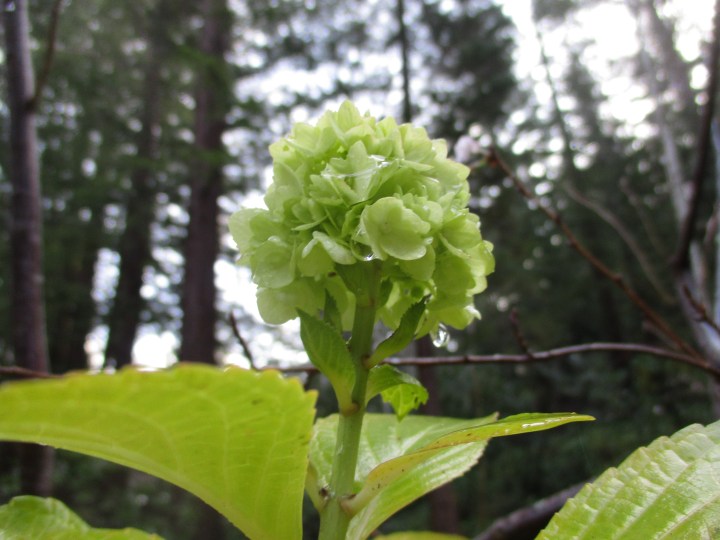
Hydrangeas seem to appreciate a good chill, but do not seem to need it, or expect it to last for very long. I sometimes wonder if I could just groom them to remove old canes throughout the year rather than pruning them aggressively in winter. I do not remember ever pruning any in Southern California, but might expect them to be less responsive to the even milder weather.
For me, they would be easier to prune where winter is cool enough for them to be completely dormant. Without foliage, it would not seem like I would be pruning them while they are still active. Without bloom, I would not be concerned about the waste. I could just prune them like so many other deciduous plants. There really are a few disadvantages to mild winter weather.

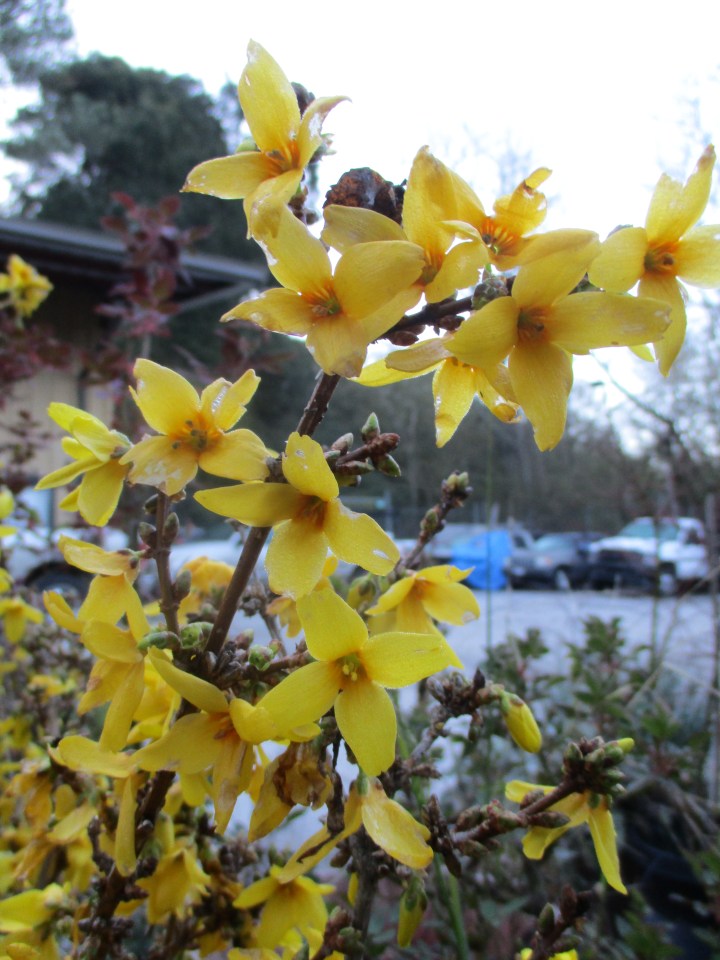 This may seem to be three months early, or an entire season out of season; but this is when bare root forsythia, Forsythia X intermedia, gets planted. Even so, the smaller of new bare root plants will bloom with only a few flowers early in their first spring, so will not produce their famously profuse and garishly bright yellow bloom for another year and three months. They will be worth the wait.
 That is a term that we do not hear much. There are not many plants that it applies to. Cyclamen is one of the more familiar plants that is summer deciduous. It is from a climate with reasonably mild winters and unpleasantly dry and warm summers. Just like most deciduous plants are dormant through winter to avoid the unpleasantries of the weather, cyclamen defoliates as the weather gets warm in early summer to avoid the expected heat and aridity. It somehow knows how to stay dormant until the weather starts to get cooler in autumn, and is ready to regenerate new foliage and bloom as the rain starts. The active growing season is through autumn, winter and into spring. It is all a matter of taking advantage of the weather while it can, and avoiding the discomforts of severe weather when necessary.


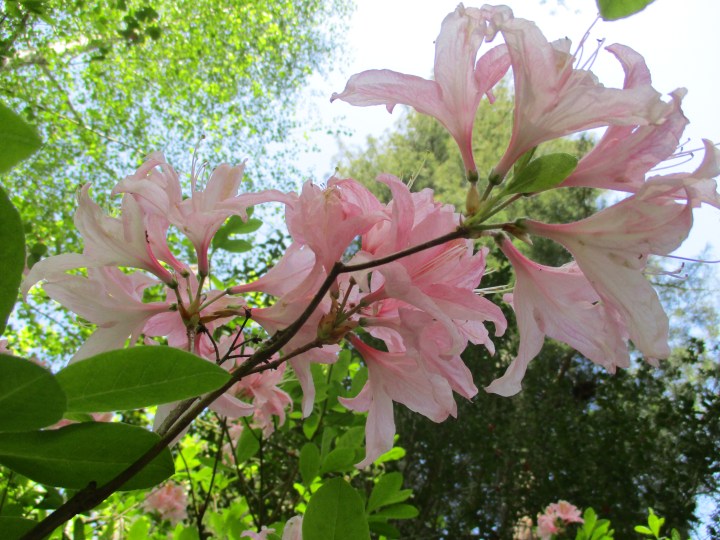
 They are not a myth. They are quite real. So are the related and similar deciduous azaleas. There are certainly not as popular or as diverse as the familiar evergreen cultivars, but they have their place.
 (The article from my weekly gardening column that is typically posted on Thursday was posted yesterday, which is why this article, which is more appropriate for Wednesday is posted today.)
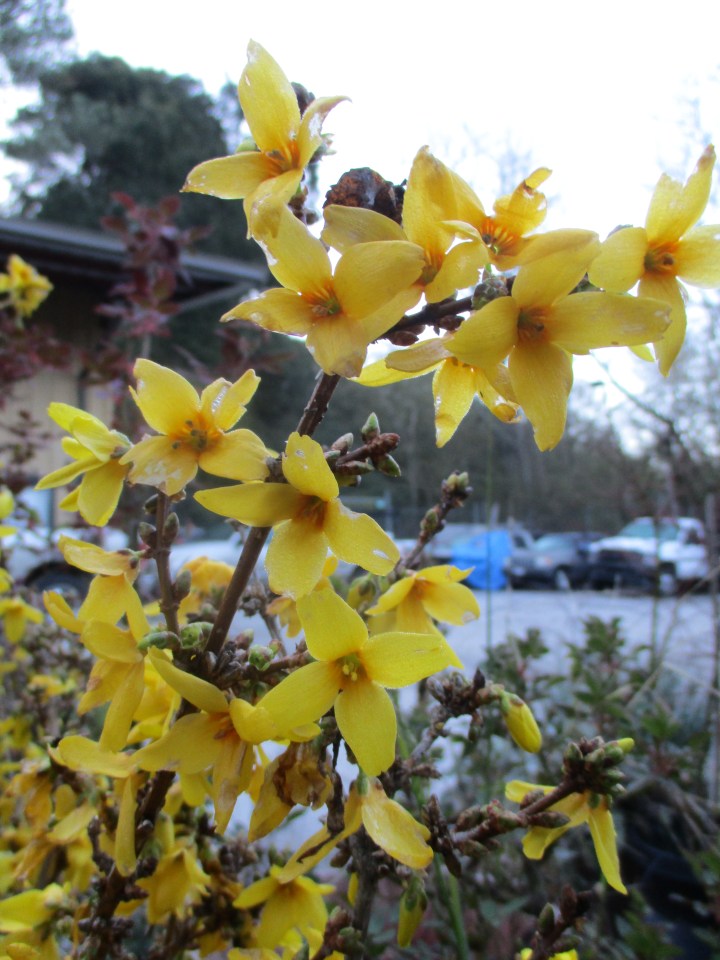 It is a shame that forsythia is not more popular here. Years ago, there was a commonly perpetuated myth that winters were not cool enough for it, as well as lilac. We now know that both lilac and forsythia are happy to bloom here. Now, some might insist that there are so many evergreen shrubs that bloom nicely right through winter, that there is no need for deciduous blooming shrubbery.
 The trees look spooky now. Box elders, honeylocusts and alders, and even some of the sycamores, have dropped so much of their foliage since that weirdly hot weather a few weeks ago. The smoky sky as a backdrop enhances the spooky factor. The trees do not seem to be too distressed. They just dropped their leaves a bit early to conserve resources. If they had not dropped foliage by now, they would be dropping it soon anyway.
 Tony Tomeo