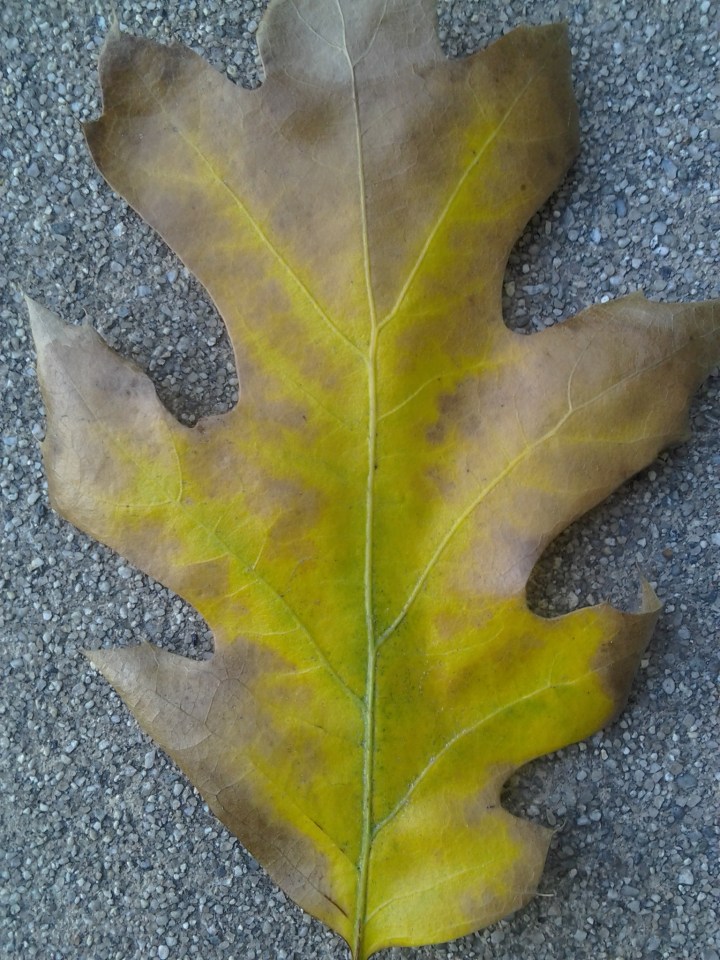
 Sweetgum, flowering pear and Chinese pistache are the most reliable trees for flashy autumn foliar color, especially in such mild climates. They may not seem like it this year though. After a late start, only sweetgum is coloring well. Flowering pear trees that are beginning to show color farther inland seem to lack their typical bright yellow and orange, and are showing more dark rusty red.
Like so many flowers that bloom in spring, foliar color in autumn is as variable as the weather. Temperature and humidity can either inhibit or enhance color. It is impossible to say what caused the disappointing color so far, or if foliage that colors later will be just as bland. A sudden chill could change things for Chinese pistache that are still behind schedule.
Maidenhair tree (gingko) is the best for bright yellow, but lacks any other color. Fruitless mulberry, tulip tree and various poplars can be nearly as bright yellow in a good season, and may still color well. Of the various willows, only a few color well, and they tend to be more sensitive to weather. Early rain can rot their leaves before they get much color at all.
Although elms are not known for coloring, some of the modern varieties turn remarkably bright orange. However, the few oaks that color well in colder climates turn only dingy brown locally. The few North American maples that can provide color do not hold their colored foliage very long. All sorts of trees have all sorts of personalities.
Eastern redbud, smoke tree and crape myrtle are shrubs or small trees that color as well as larger trees in autumn. Crape myrtle can be as bright yellow, orange and red as sweetgum. Some Japanese maples color better than others, and some can be quite impressive, but only if their foliage does not get roasted by warm and arid weather through summer.
Where it can be accommodated, Boston ivy is an aggressively clinging vine that provides all the remarkably colorful foliage on freeway sound-walls. It is out on the freeways for a reason though. It can ruin any other surface that it clings to.
 Several native species and varieties of poplar are known collectively as cottonwood. Not many are actually planted. They just have a sneaky way of appearing in well watered parts of the garden that are as damp as the riparian areas that they naturally inhabit. Only Fremont cottonwood, Populus fremontii, gets planted, rarely, and only in big spaces that can accommodate its grand scale.
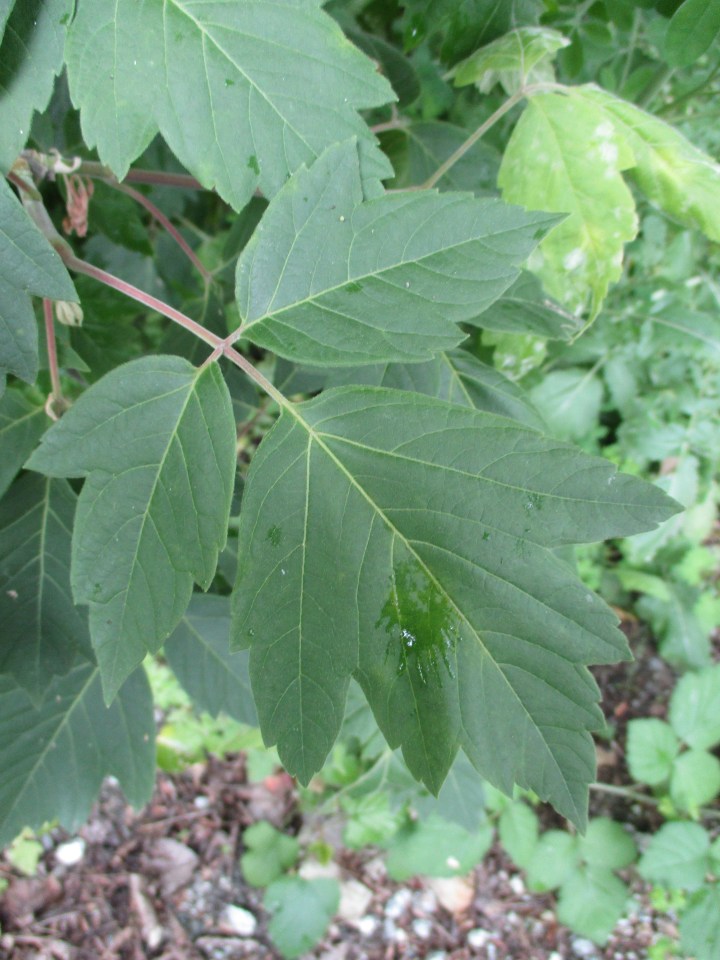 This ain’t no ordinary maple. Although there are other maples with trifoliate leaves (divided into three distinct palmately arranged leaflets), box elder, Acer negundo, is the only maple with pinnately compound leaves (divided into three or more distinct leaflets that are arranged pinnately on a central rachis). Leaflets might be solitary too. Almost all other maples have palmately lobed leaves.
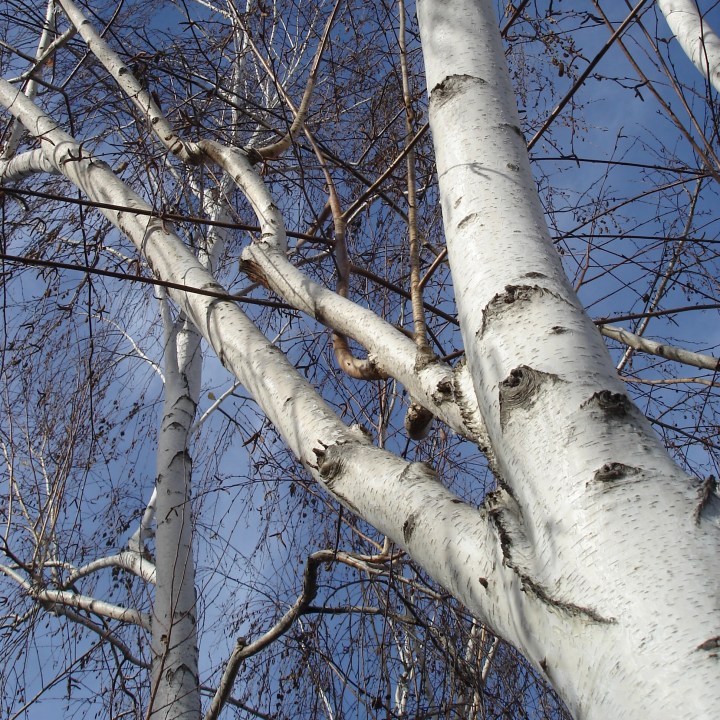 It may not be the biggest or best deciduous shade tree, but European white birch, Betula pendula, is famous for tall and elegant white trunks with wispy pendulous stems. It is a very informal tree that typically leans in one way or another, but is somehow right at home in refined landscapes. It is rarely alone, since it is usually planted with two or more friends, and sometimes in groves.
 The most popular hardwood in California is essentially unavailable in nurseries. California black oak, Quercus kelloggii, provides between a quarter and a third of the hardwood timber harvested in California. One would not know it by its sporadic appearance within mixed forests of the Coastal Ranges. It is much more common in the Sierra Nevada, which might be why no one grows it.
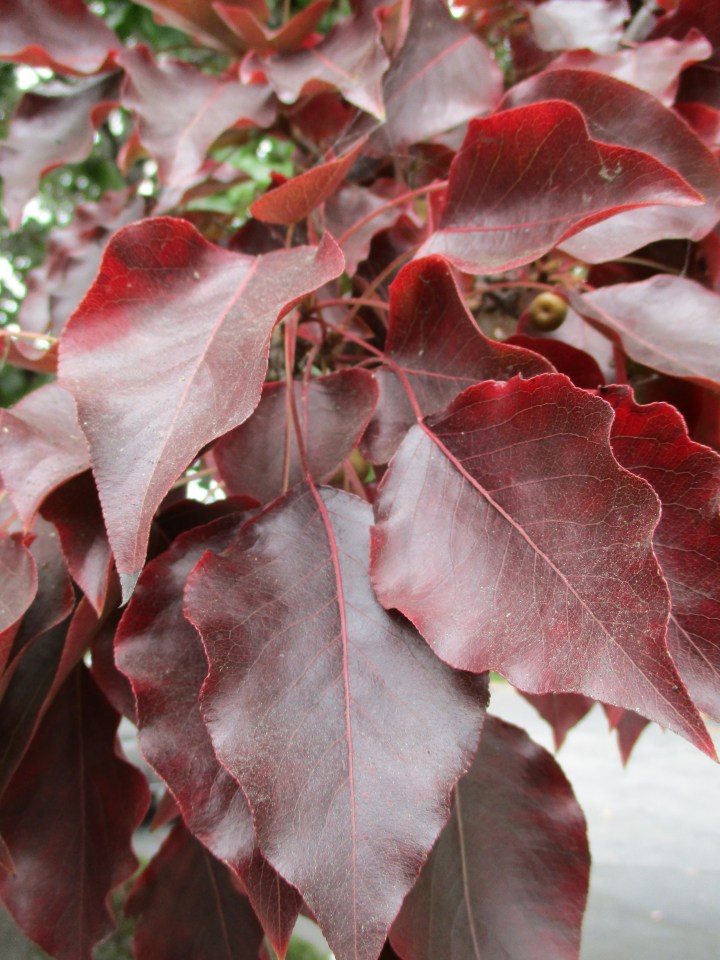 Now that they have been so popular for so long, the deficiencies of flowering pear, Pyrus calleryana, (which is also known as Callery pear), are becoming increasingly evident. The dense branch structure and compact form that are so appealing while trees are young compromise structural integrity as trees mature. Symmetrical trees can be severely disfigured if limbs get broken by wind.
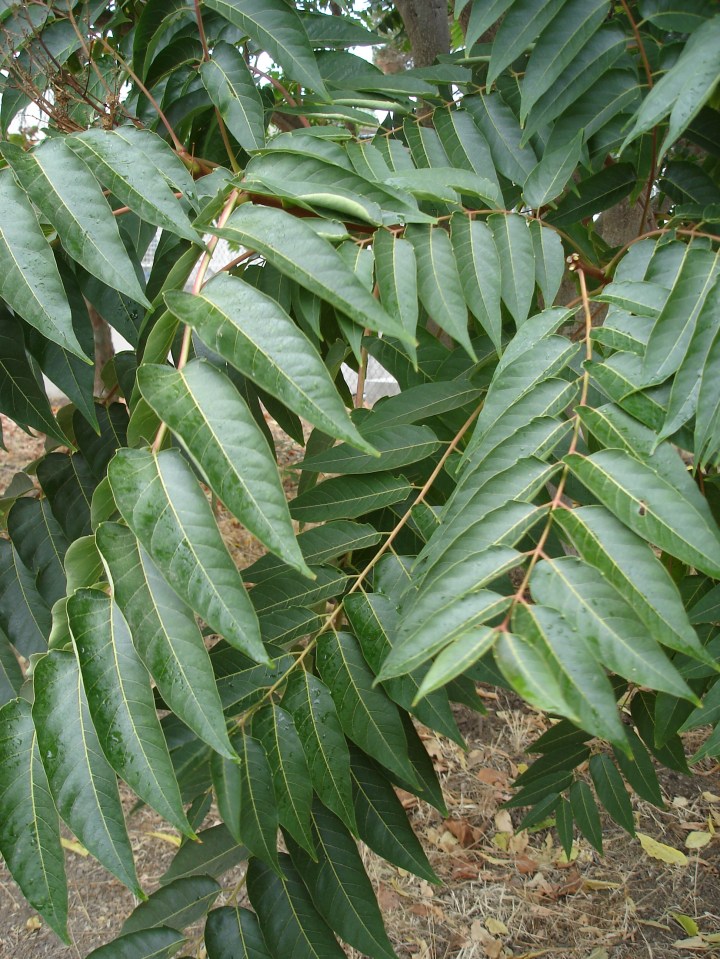 ‘A Tree Grows In Brooklyn’ documents the resiliency and invasiveness of the common but typically undesirable tree of Heaven, Ailanthus altissima. Once a single female tree get established, the extremely prolific seeds get everywhere, including cracks in concrete. The resulting seedlings conquer wherever they are not dug out. If cut down, they just resprout from the roots.
 Tony Tomeo