About a quarter of California is desert. Most of that desert is part of the Mojave Desert. Much of it is very sparsely populated. All of it is fascinating to those who appreciate it.
Not many people live in the desert because the climate is so harsh, and because there is not much reason for many people to be there. Not far north of Los Angeles, which is the second most populous city in America, is one of the most sparsely populated regions of America within the Mojave Desert. It is unpleasantly hot and dry there all summer. It is certainly not the sort of place that should be appealing to horticulturists, although it is.
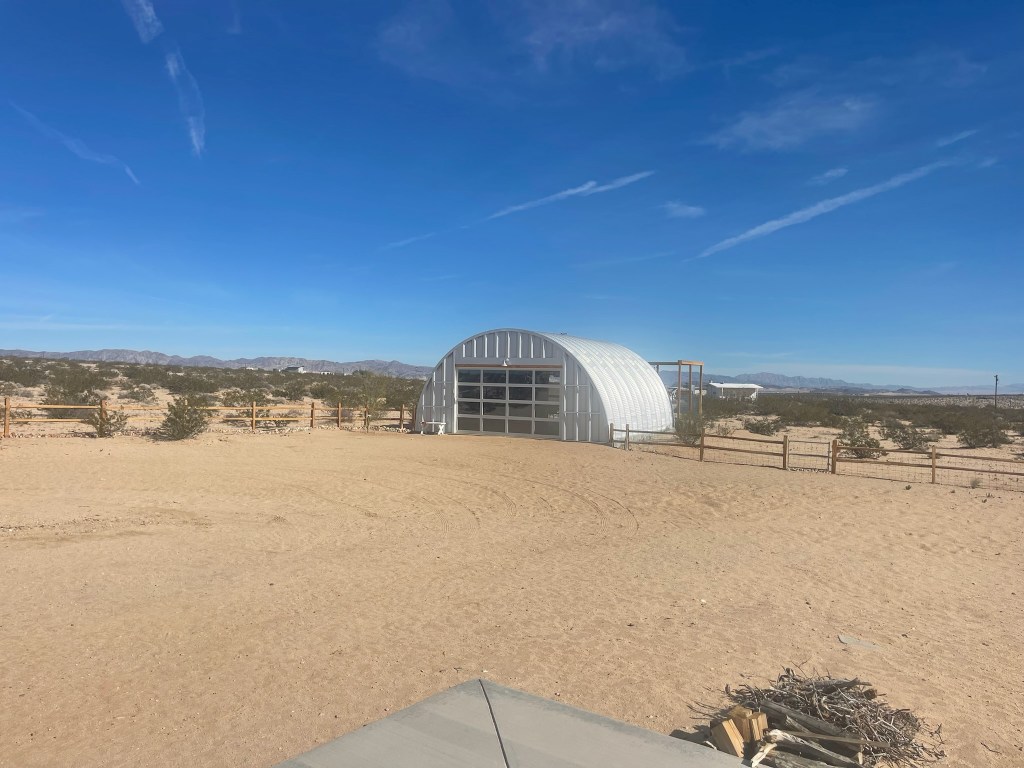
Brent sent me this picture from a place where he vacations near Joshua Tree. If there are Joshua trees near Joshua Tree, they are not visible within this picture. Actually, no trees are visible within this region where shade must be very important. The vegetation that is visible does not seem to be substantial. Vegetation is completely lacking within the fenced area. That small pile of firewood must have been brought from somewhere else. (Although nights are pleasant or warm between hot days, they can get very cold between cool days of winter.) I do not know what that building is. Without substantial vegetation, neighboring residences are visible in the distance.
Part of the allure of deserts for horticulturists is the very distinctive vegetation that lives only there. Part of the allure is the minimalism of such vegetation. Although many species live there, they are not very distinctive. Many resemble each other. In other words, much of the vegetation of the desert is easy to ignore. It is less distracting than that of other ecosystems that are more popular with those who are not horticulturists.






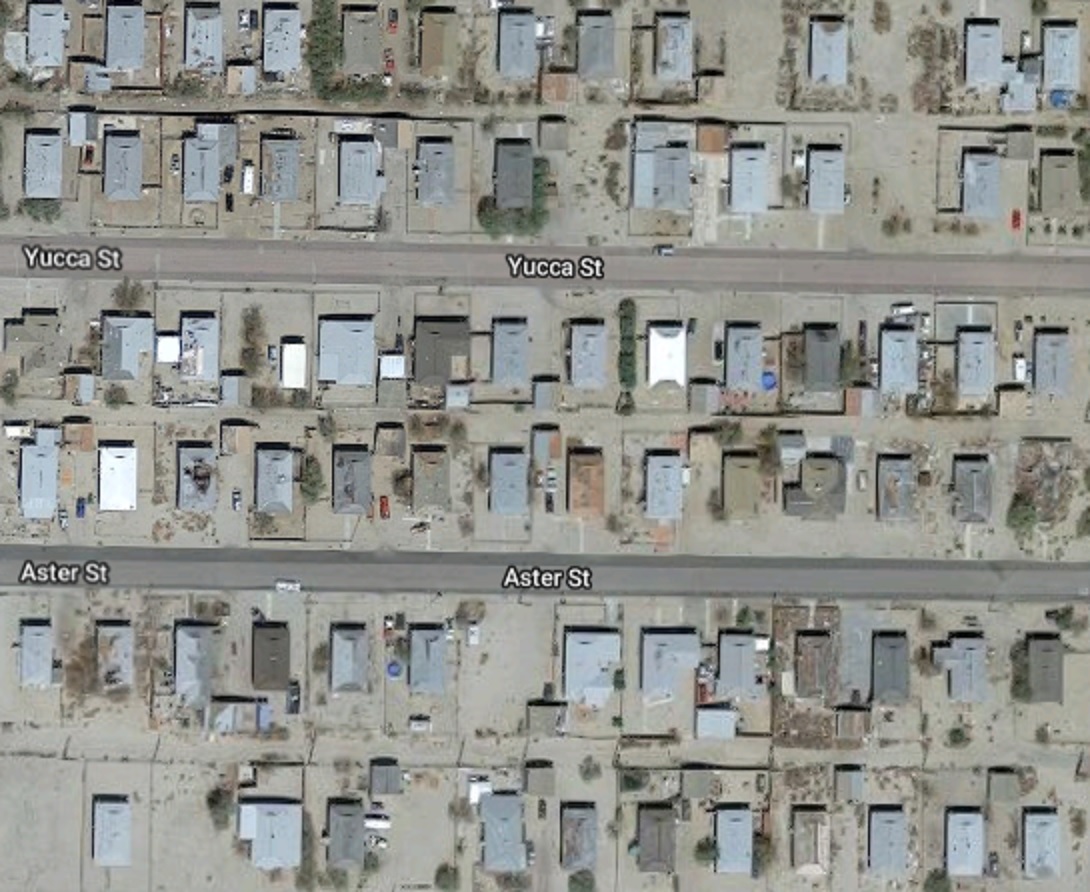 Trona
Trona The main complaint about this Remembrance Garden is that there is no garden. Two steel girders from the destroyed World Trade Center stand vertically on pedestals within a concrete slab shaped like the site of the World Trade Center. The pedestals are set within squares of stones that correspond to the outlines and locations of the of the World Trade Center Twin Towers #1 and #2 within the World Trade Center Site. The outlines and locations of the other buildings of the World Trade Center are designated by darker concrete within the slab. There is no real synthetic landscape.
 Yuccas are almost as useful as aloes are for gardening in chaparral or desert climates. I say ‘almost’ because most are not quite as friendly. The leaves are outfitted with nastily sharp tips. It is how they protect themselves from grazing animals in the wild, but it is not such an advantage in home gardens. Some actually have the potential to be dangerous where someone could bump into them. The leaves of Joshua tree can puncture leather. Some types of yucca get so big that they make it difficult to avoid their nasty leaves, even if planted in the background.
 Tony Tomeo