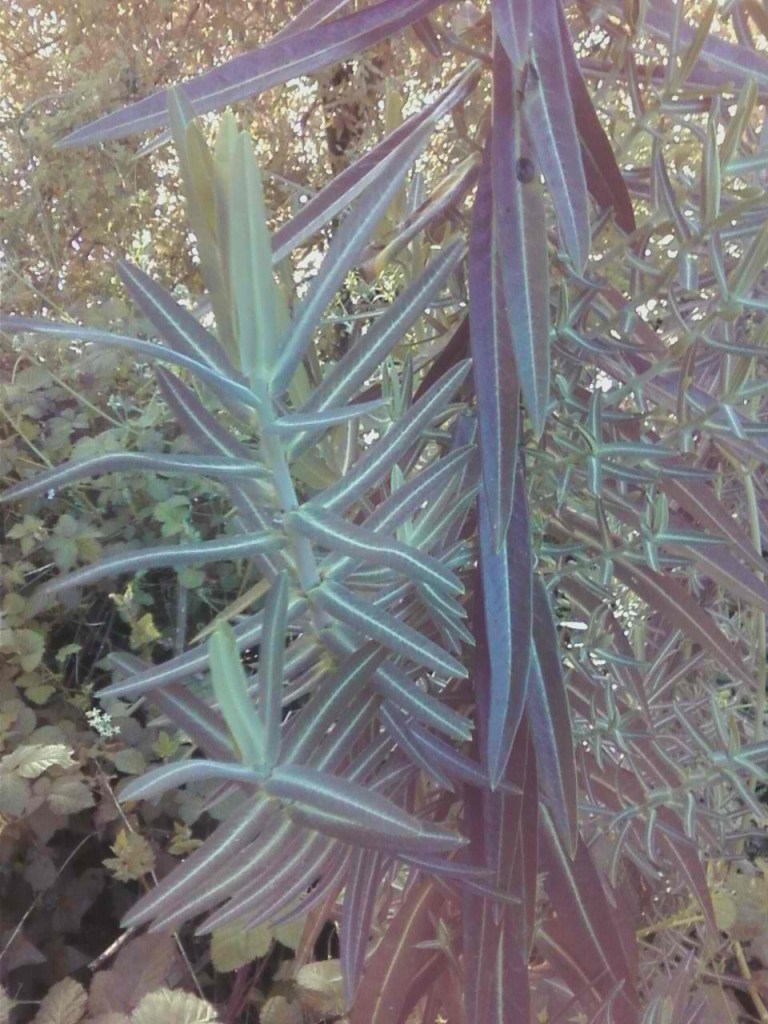
The common name may be derived from ‘gopher spurge’, since Euphorbia lathyris is within the family of plants known as ‘spurge’, and it is also purported to ‘purge’ the garden of gophers and moles. Like all related spurge, it has caustic opaque white sap that is very irritating to the skin and toxic if ingested. This offensive sap prevents anything from burrowing through the roots, but unfortunately does not prevent gophers and moles from going around. Therefore, a garden that is adequately protected may also be crowded by gopher purge.
Individual plants live for only two years, but produce enough seed to seem like perennials. Their mostly solitary stems can grow to nearly five feet tall with foliage that spreads up to a foot wide in the first year. Tiny yellow flowers that bloom in the second summer are not remarkable; and can set seed without getting much notice before the plant dies. Gopher purge can naturalize without becoming too invasive in regularly moist or somewhat shady parts of the garden. It prefers to be watered occasionally in drier and sunnier areas.
The foliage of gopher purge is strikingly symmetrical. Each pair of grayish or bluish green leaves is perpendicular to the pairs above and below it, in a four ranked pattern. Except for the newest upper leaves, each leaf pair is also arranged in a generally horizontal plane, perpendicular to the vertical stem. Gopher purge seems to have been assembled in the garden instead of grown there.
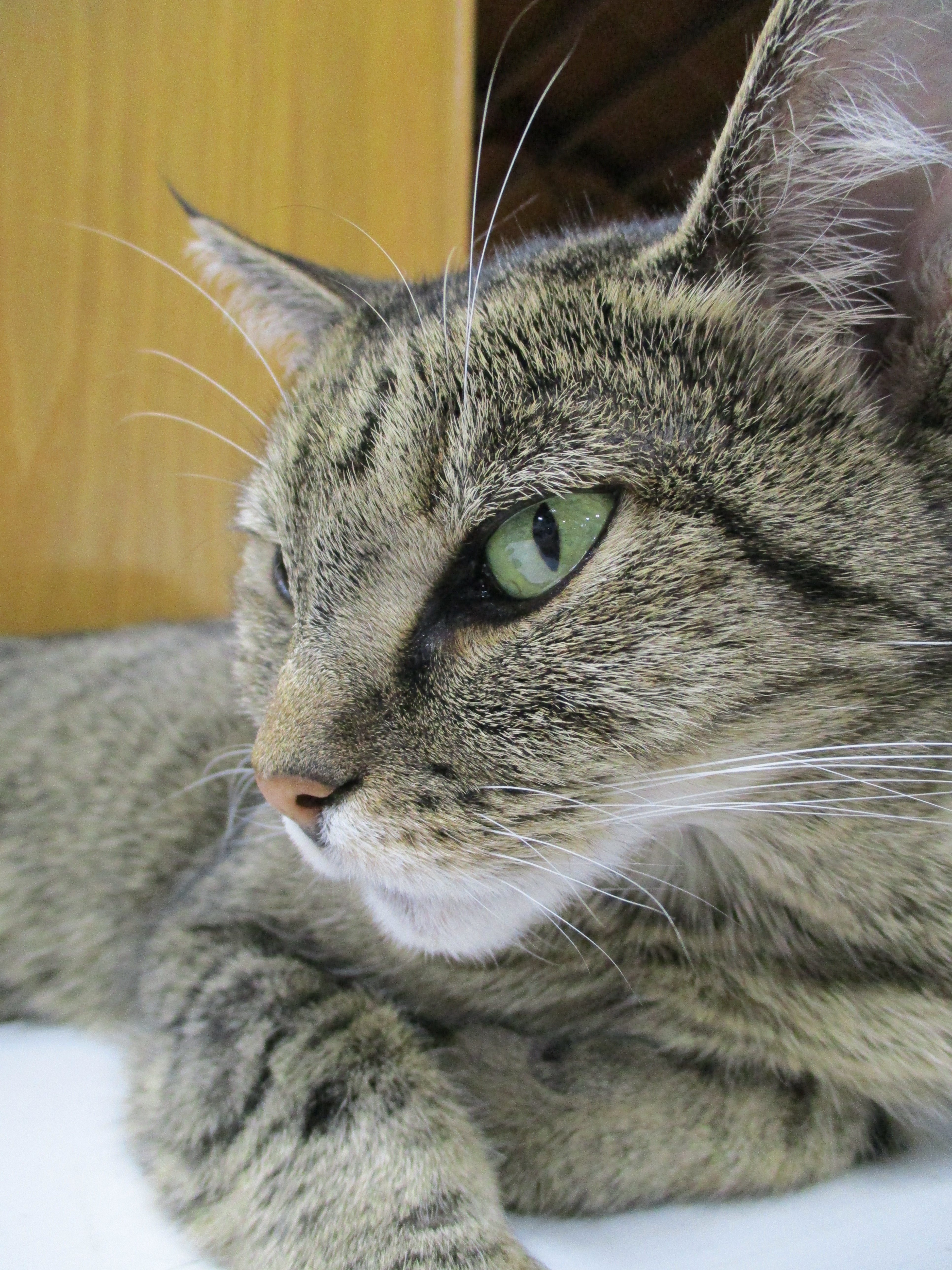 Anyone who has ever owned a cat knows that no one owns a cat. They do whatever they want to do, whenever and however they want to do it. They take orders from no one. If they decide to use a dry spot in the garden as their litterbox, or a tree trunk as their scratching post, it is impossible to dissuade them. They are so smug and arrogant. It is no wonder that so many dogs dislike them.
 Tony Tomeo