Canna Virus

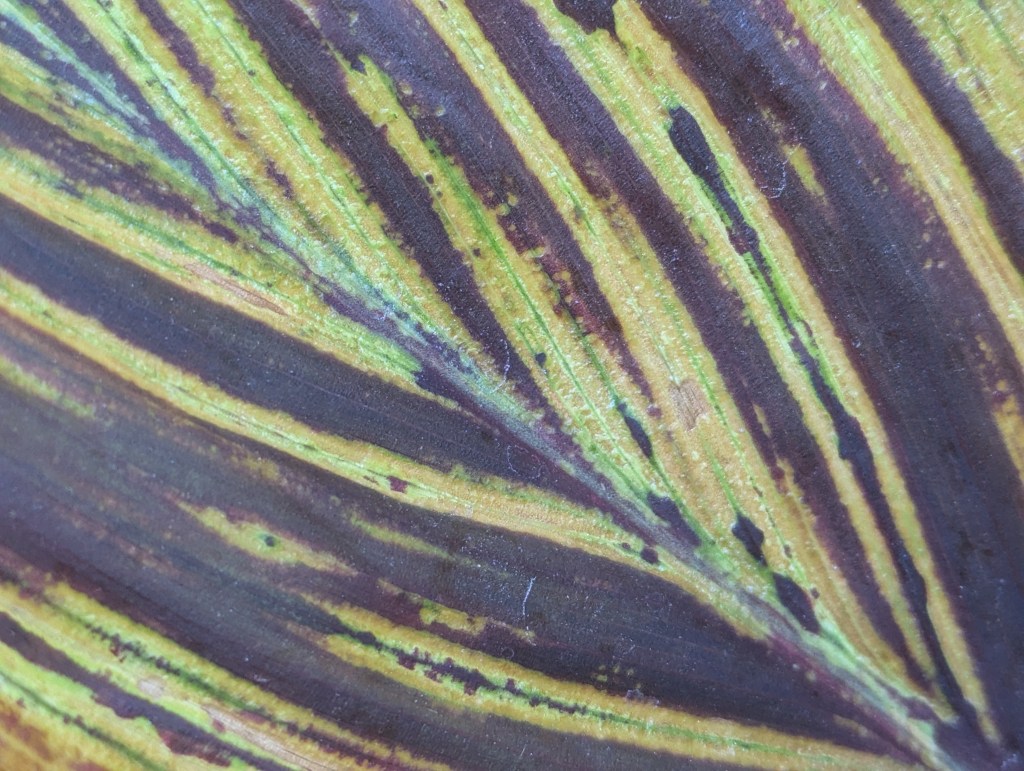
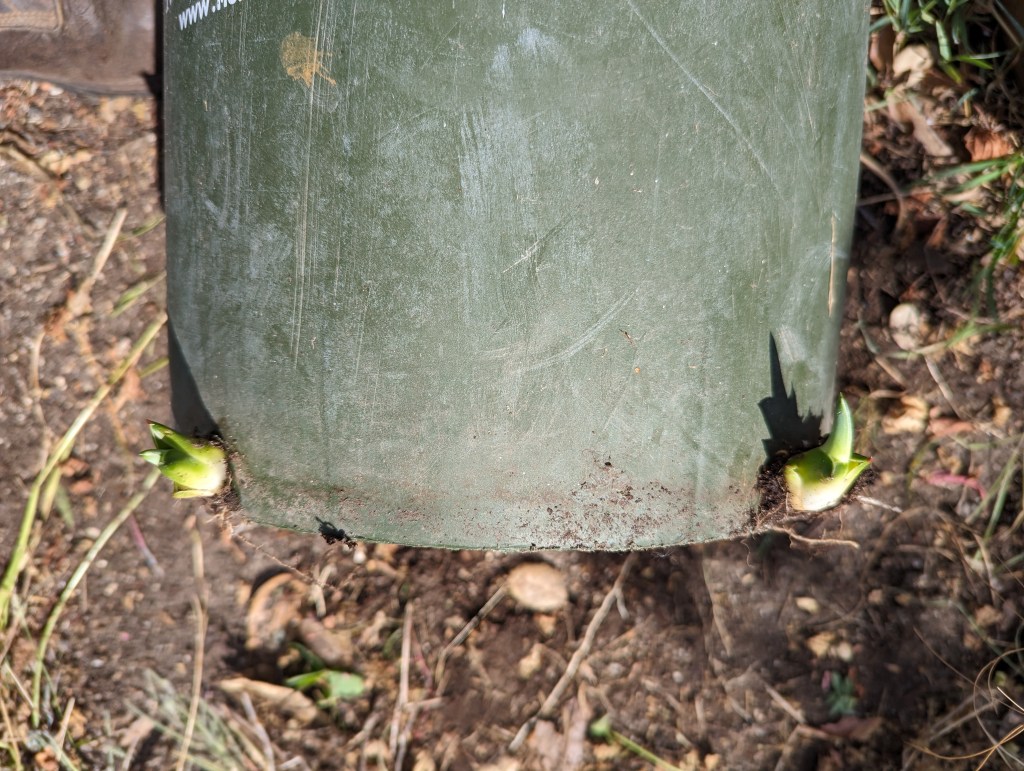
This is not a new problem, but it is infuriating nonetheless. ‘Cleopatra’ canna expressed symptoms of at least one virus about two years ago. A few other nearby cannas expressed similar symptoms shortly afterward. ‘Australia’ canna is particularly expressive of foliar streaking caused by virus. Isolation and disposal of obviously infected specimens seems to have prevented dispersion of the virus or viruses; but I really am uncertain. Three cultivars of Canna musifolia have suspiciously avoided any infection from adjacent infected cultivars. I can not help but wonder if they are actually infected but merely asymptomatic, and possibly able to transmit viruses to cultivars that are more expressive of symptoms. The canna in this picture is an important cultivar because it is one of only two remaining original cultivars that could have inhabited the landscapes here since about 1968. Because of gophers, very little of it remain, and some of what remains succumbed to virus already. I am quite protective of these few specimens that have not been infected, but would also like them to be able to inhabit the landscapes with the questionable Canna musifolia cultivars. For now, I must wait until they proliferate enough for some to be expendable.
Six on Saturday: Pestilence

Molluscs, rodents, insects, virus, fungal pathogens and an identified disease that causes gummosis; we have it all. I know that it is nothing to brag about, but it makes a good six.

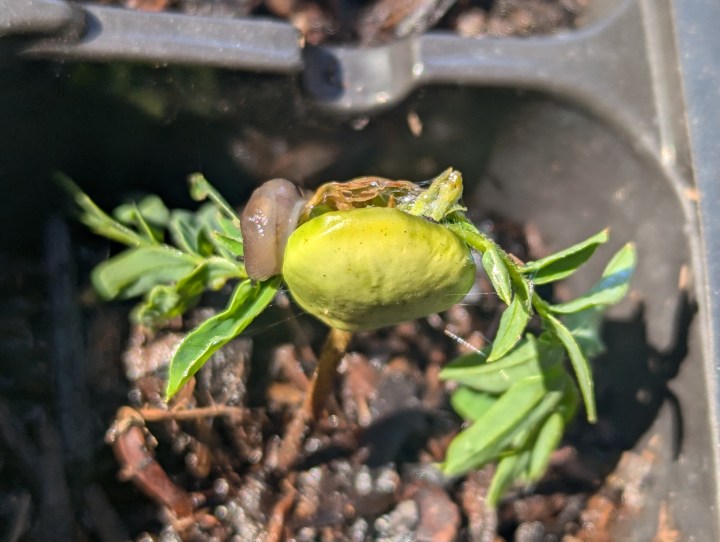
1. Tamarindus indica, tamarind seedlings are popular with slugs. Not much else here is. Weirdly, slugs do not seem to consume the foliage. They only coat it with slime that does not rinse off. The foliage eventually deteriorates. What is the point of this odd behavior?

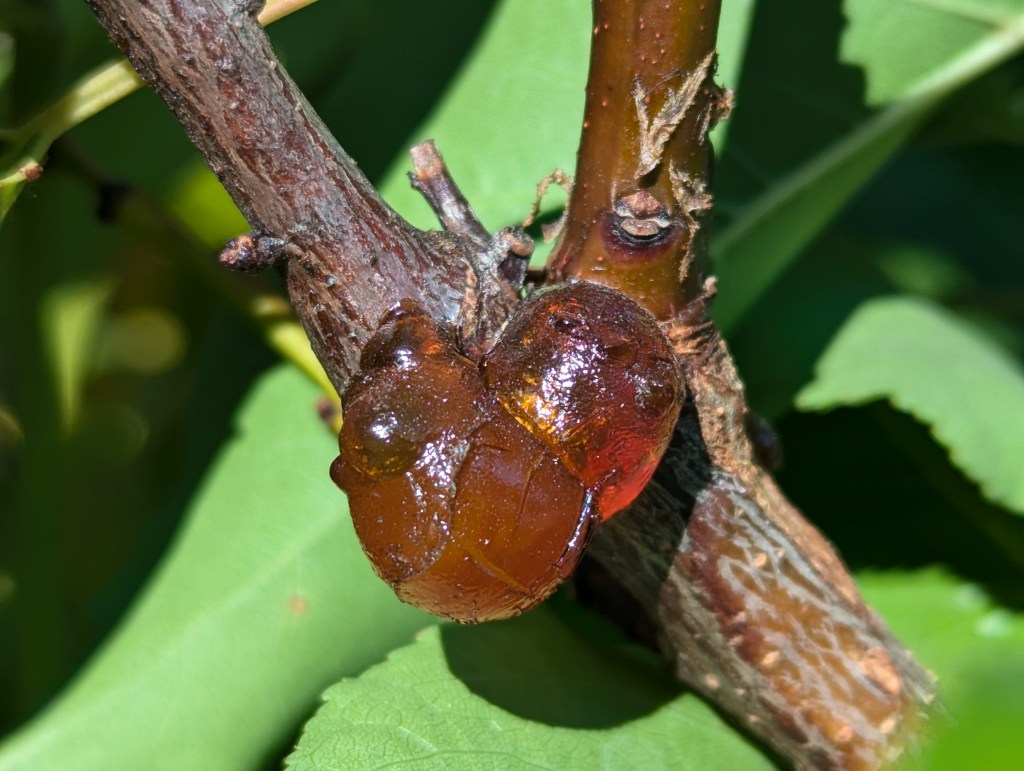
2. Prunus armeniaca, apricot trees sometimes exude gummosis as a symptom of disease or boring insect infestation. I can not see what caused this, and do not care to. I will just prune it out. I know that it will not be the last time. Gummosis is common with apricots.

3. Chamaedorea plumosa, baby queen palm was chewed so badly by some sort of rodent that it will not likely survive. I suspect that a squirrel did this. I have not seen any rats or their damage since Heather arrived. This is one of only two rare baby queen palms here.

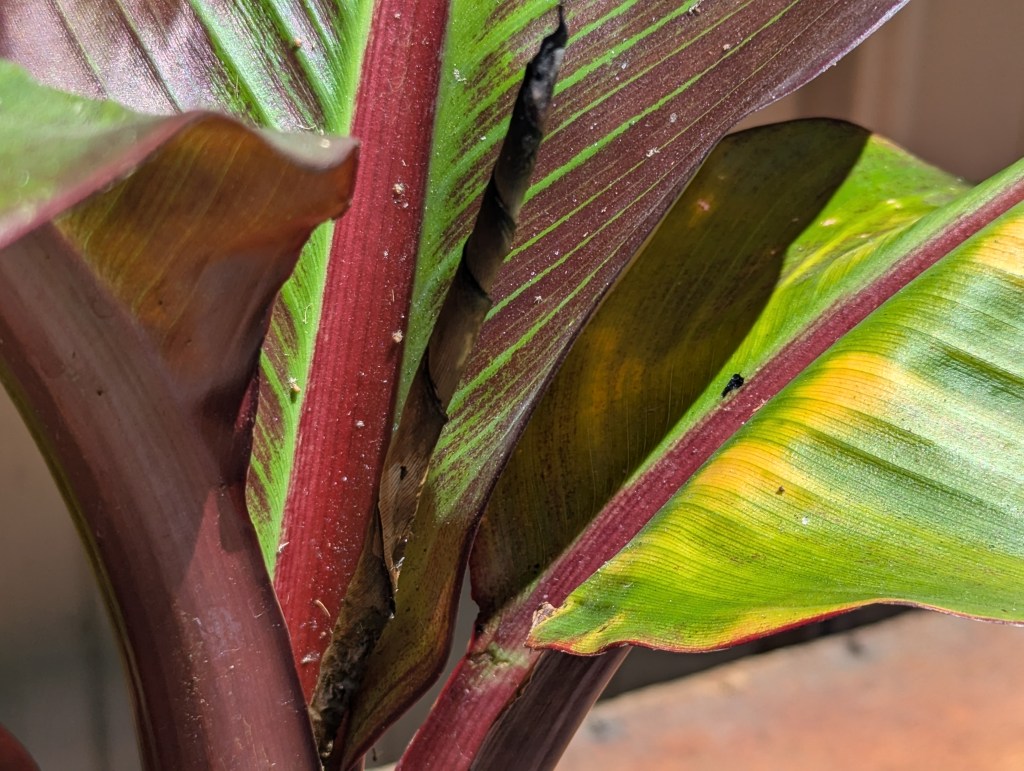
4. Ensete ventricosum ‘Maurelii’ red Abyssinian banana was initially infested with aphid and associated mold. The aphid disappeared, as it typically does, but the mold remained and ruined the currently emerging leaf. I hope that the primary bud within does not rot.

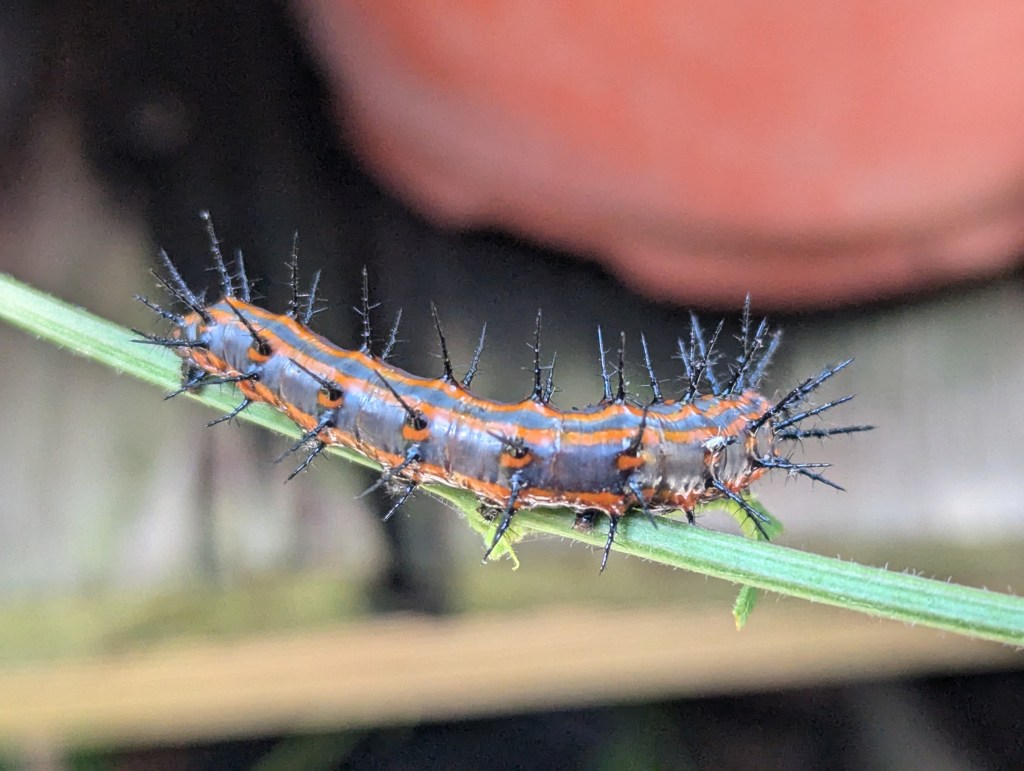
5. Passiflora racemosa, red passion flower vine has been defoliated a few times just this year by a few of these unidentified caterpillars. The caterpillars leave after they consume all foliage, but then return shortly after the foliage regenerates, while I am not watching.

6. Canna indica ‘Australia’ canna is infected with canna mosaic virus. Several others are also, although they do not express symptoms as colorfully as ‘Australia’ does. Most other cannas are isolated from this virus within their landscapes. I am infuriated nonetheless.

This is the link for Six on Saturday, for anyone else who would like to participate: https://thepropagatorblog.wordpress.com/2017/09/18/six-on-saturday-a-participant-guide/

Messy Mast

This is the mess that remains after acorns get raked or blown off pavement.

Masting is a technique that oaks and many other genera use to both outsmart and exploit squirrels and other wildlife that both consumes and disperses their seed. For several years, oaks here produce enough acorns to sustain a population of squirrels that is limited by their production of acorns. It may not seem to be very effective, since the squirrels consume almost all of the acorns, leaving very few or none to grow into new trees. Then, every several years, the same oaks collectively produce a ‘mast’, which is a crop of acorns that is too excessive for the limited population of squirrels to consume as thoroughly as they typically do. Squirrels instinctually bury many of the surplus acorns anyway. Because they do not return to dig and eat all of their buried acorns, some acorns grow as new trees. This is how the oaks sustain those who disperse their seed, but also get them to disperse their seed without eating all of it. Mast crops of acorns supposedly typically precede exceptionally rainy winters. So far, the mast this year is only coinciding with a messy situation with drippy nut disease. It is caused by bacterial infection of wounds that are caused by filbert weevils, filbert worms or other insects that damage developing acorns. Consequently, squirrels are ignoring many of the unusually abundant but damaged acorns, leaving icky messes of infected acorns and the goo that they exude. When it eventually arrives, the first rain will make this mess even messier. Later rain should rinse some of it away. It is impossible to know how successful this mast will be, since it is impossible to know how many viable acorns will actually contribute to the abundance and grow later, and how many will merely contribute to this unusually messy mast.

Parasite

Mistletoe, Phoradendron leucarpum

Mistletoe, Phoradendron leucarpum, suddenly and inexplicably disappeared from local ecosystems several years ago. Although it was unlikely completely gone, no one could find any. Carcasas of deceased specimens deteriorated and fell slowly in pieces from their host trees. Regeneration has been a very slow process, and in some local ecosystems, does not seem to be happening at all.

If botanists are aware of what happened to the mistletoe, they are not sharing what they know. Arborists are amazed by such sudden death of mistletoe that they had been unable to eliminate from infested trees. Some believe that it was the result of distress of host trees. However, it is unlikely that all host trees, including many within cultivated and irrigated landscapes, could have been so similarly distressed at the same time. Disease could be the primary culprit. There is even a possibility that mistletoe, the most familiar plant parasite, succumbed to another parasite.

Similar die off of various species of mistletoe has been observed within various other ecosystems, at various times, and with various rates of recovery. Perhaps several factors are involved, either individually or in any variety of combination. Because mistletoe is generally considered to be undesirable, investigation of such die off is minimal.

I noticed this particular mistletoe within the same Oregon white oaks in Oregon that I wrote about yesterday. It seems to be adequately healthy and unaffected by whatever killed mistletoe here. I do not remember if it had died off previously, and is now recovering. For all I know, it could be in the process of dying off right now. Mistletoe might be more efficiently controlled or even eliminated from infested trees within cultivated landscapes if someone could identify what kills it naturally. After all, it is a famously persistent and potentially very distressing parasite.

Six on Saturday: A Series Of Unfortunate Events

Horticulture can be so challenging. Some challenges are very frustrating. Some are quite infuriating. Some of the worst would be likewise if they were not so weirdly silly. Really, plants naturally present certain innate challenges. So do their pathogens. People though, are special. Their behavior is not completely innate. They should know better than to do so much of what they do. So many of their mistakes are so creatively inane. Yet, some of the most egregiously silly are not even mistakes according to their personal perceptions. Goodness, merely attempting to explain these unfortunate events becomes challenging! Realistically, it is not as bad as it seems. I swatted lily of the Nile buds when I was a kid. The neighbor with the ‘machine’ is unaware of the naked ladies, and will remain as such.

1. Lagerstroemia indica, crepe myrtle is susceptible to powdery mildew. These new specimens of a modern cultivar are more resistant than most but apparently not enough.

2. Hydrangea macrophylla, bigleaf hydrangea changes floral color according to soil pH. However, white is always white. We relocated this white specimen to the White Garden.

3. Canna ‘Cleopatra’ is the strangest Canna here, with mixed red and yellow bloom, and mixed green and bronze foliage. Unfortunately, it shared its virus with the other Canna.

4. Agapanthus orientalis, lily of the Nile is a reliably resilient and neat perennial for the edges of walkways, where kids unfortunately enjoy swatting their floral buds with sticks.

5. Agave americana, century plant is so prolific with pups that they are sneaking out the drainage holes! We can them to give them away, but no one wants them. They are nasty!

6. Amaryllis belladonna, naked lady was about to bloom as profusely as it does annually when this was maneuvered into position, back and forth, back and forth, back and forth.

This is the link for Six on Saturday, for anyone else who would like to participate: https://thepropagatorblog.wordpress.com/2017/09/18/six-on-saturday-a-participant-guide/

Plant Problems Are Sometimes Exaggerated

04It is not easy for wild trees to adapt to a refined landscape. After a lifetime of adapting to their native environment and dispersing their roots to where the moisture is through the dry summers, they must adapt to all sorts of modifications such as excavation, irrigation and soil amendment. Newly installed plants grow into a new landscape while some mature trees succumb to disease and rot.

Oak root rot is such a common disease in California that there are only a few places where it is not found in the soil. It is not often a problem to new plants, but often becomes a problem to mature trees that suddenly get more water than they are naturally adapted to, particularly if roots have been violated, and the soil has been amended to retain more moisture. Change is not always good.

However, many of the same trees that are so susceptible to oak root rot if the environment around them changes can be remarkable adaptable as young trees. California sycamore happens to be a riparian tree that naturally grows near water. Although old trees may not adapt well to change, young trees planted in new landscapes will adapt to the water that is available as they mature.

California sycamore trees that are adapted to landscape or lawn irrigation are not likely to be bothered by oak root rot until they get old. Realistically though, any old sycamore is susceptible to oak root rot. The only difference is that those that get more water mature faster, so get old sooner. A California sycamore tree planted into a home garden may live only one century instead of two.

Verticillium wilt is another disease that can be found in most places throughout California. It is notorious for severely disfiguring and killing ash trees and many other plants. However, it needs moist soil in which to proliferate. Because lawns are irrigated so frequently and often excessively, ash trees in lawns are innately susceptible to verticillium wilt. In situations that are not irrigated so frequently, newly planted ash trees can mature into healthy shade trees.