Restorative Pruning

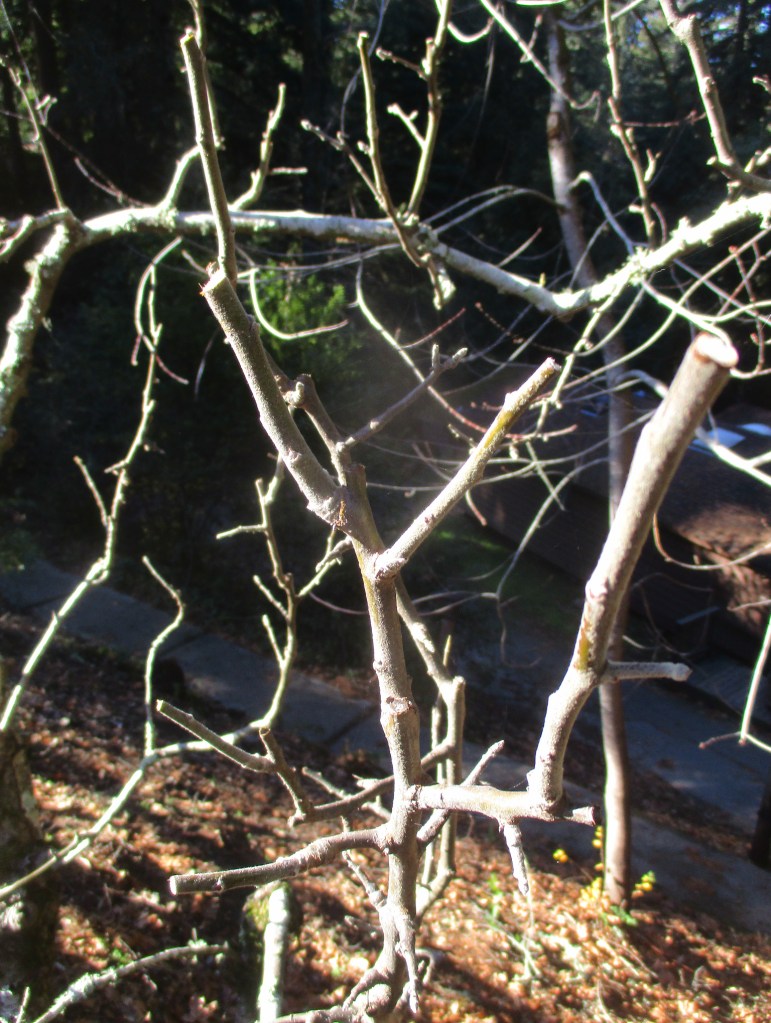
There is some good flowering quince in there, . . . somewhere.

Winter is the time to go wild in the garden, while plants are mostly dormant and not aware of what is going on. This is the time to tend to all the aggressive pruning that fruit trees and roses need annually, and to take care of overgrown deciduous plants that may not need to be pruned every year, but need it now. . . or may have needed it last year. . . or even a few years ago.

Regardless, if they are bare now, they are dormant. By the time their buds start to swell in spring, it will be too late, since they will no longer be dormant, and are likely to be damaged by overly aggressive pruning. Evergreen plants that can be sensitive to frost, like avocadoes and citrus, are the only ones that should not be pruned now, since aggressive pruning may stimulate new growth that is even more sensitive to late frost.

Plants that are too overgrown to be salvaged by tame pruning or typical shearing should be evaluated. Would a particular plant be more desirable if it were tamed? Is removal the only alternative to aggressive pruning? It is sometimes worth taking a chance that an obtrusively overgrown but otherwise desirable plant may actually be killed by aggressive renovation if it is about to removed anyway. For example, overgrown oleanders can be cut down instead of removed. Those that survive will grow into fresh new shrubs by the end of summer.

(The last paragraph of this recycled article is omitted here because the information that it provides about a particular horticultural event is very outdated.)

Dormant Pruning of Deciduous Fruit Trees

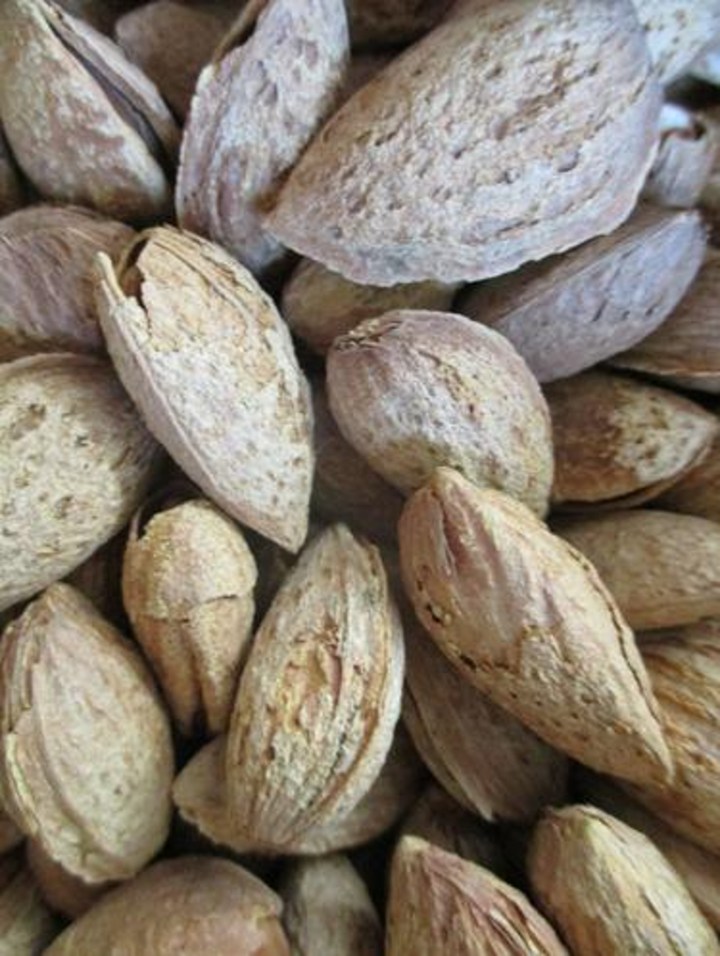
Almond trees require specialized dormant pruning.

There is nothing like the flavor of ripe fruit fresh off the tree during summer; whether cherries and then plums, prunes and apricots early, or peaches and nectarines in the middle, or pears and apples at the end of summer. Even though summer is still a few months away, it is already time to get ready for summer fruits, as well as almonds, by pruning the deciduous fruit trees that produce them while they are still dormant in winter.

Because fruit trees have been bred over the past many centuries to produce unnaturally large and abundant fruit, most are unable to support the weight of their own fruit without some sort of unnatural intervention. Trees consequently need to be pruned so that they do not produce so much fruit that their limbs break, destroying the fruit and disfiguring the trees. Pruning also helps to concentrate resources into fruit of superior quality instead of excessive but inferior fruit.

There are as many different techniques for pruning deciduous fruit trees as there are different types of deciduous fruit trees, and certainly too many to write about in a single gardening article. For example, cherries, plums, prunes, apricots, peaches, nectarines and almonds are all ‘stone fruit’ which need varying degrees of similar pruning. Peach trees produce the heaviest fruit, so require the most aggressive pruning. Cherry trees are pruned in a similar manner, but only minimally because they are not so overburdened with fruit. Only evergreen fruit trees like citrus, avocado, guava, olive and tropical fruits do not get some sort of pruning this time of year.

(Stone fruit have substantial seeds which are known as ‘stones’. Almonds are the stones of the fruit that comprises their hulls.) 

It is best to become familiar with the pruning requirement of each type of fruit tree before planting them, since some are simply too labor intensive for some people, and most are too involved for almost all maintenance gardeners. It is also easiest to start with young trees and become more familiar and comfortable with pruning them as they grow over the years.

(Because this post is from an old article, outdated information was deleted below.)

Apricot, cherry, prune, almond, walnut, apple, pear, plum, fig and various other trees will be there. The 3.3 acre Historic Orchard was developed in 1994 to include more than 220 of the many types of fruit and nut trees that once made the Santa Clara Valley famous as the Valley of Hearts Delight.

Coppiced Vegetation Regenerates With Vigor

Coppicing can alleviate congested basal growth.

Winter dormancy has advantages. It facilitates acquisition and establishment of bare root stock, and winter dormant pruning. Coppicing and pollarding are the most severe sorts of winter dormant pruning. Although initially ugly, coppiced and pollarded vegetation mostly grow vigorously later. Most species bloom and fruit better. All species foliate more lushly.

There is certainly nothing wrong with proper coppicing and pollarding. Both are common beyond America, particularly within Europe. However, both are very unfortunately vilified as disfigurement here. Not many arborists know how to perform such techniques, or may not admit to it. Yet, some coppiced vegetation is covertly popular in some home gardens.

Coppicing and pollarding are genuinely extreme and harsh techniques. Coppicing is the removal of almost all growth that is above the surface of the ground. For some shrubbery or trees, short stumps may remain. Coppiced vegetation is therefore not much to look at. Pollarding is similar, but retains primary trunks and limbs. Pollarded trees seem hideous.

Hideousness is subjective, though. By European standards, pollarding is an acceptable horticultural technique. European arborists know how to perform it properly during winter dormancy. They do so neatly, without stubs or torn bark, and direct growth as necessary. Coppiced vegetation is not as hideous because not much of it remains to see afterwards.

Because of its vilification, coppicing became more tolerable with different classifications. “Cutting back” perennials, such as African iris, lion’s tail and canna, is the same process. So is cutting back carpet roses or honeysuckle to the ground. The alternate classification is more acceptable. It is just as effective for removal of thicket or deteriorating old growth.

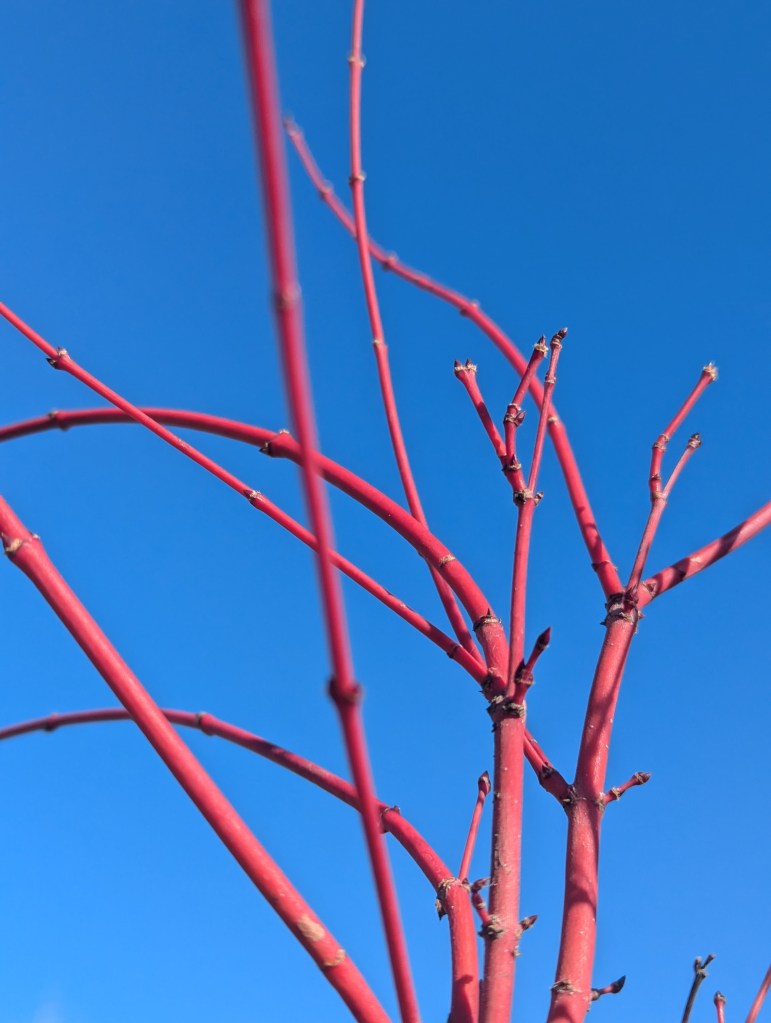
Also, coppiced vegetation regenerates more vigorously for spring than it may otherwise. Elderberries prefer selective grooming, but coppiced plants produce bigger fruit clusters. English Laurel, osmanthus, photinia and red twig dogwood respond nicely to coppicing. However, coral bark Japanese maple is grafted, so is likely to lose its scion if cut too low down.

Bare Root Season Is Winter

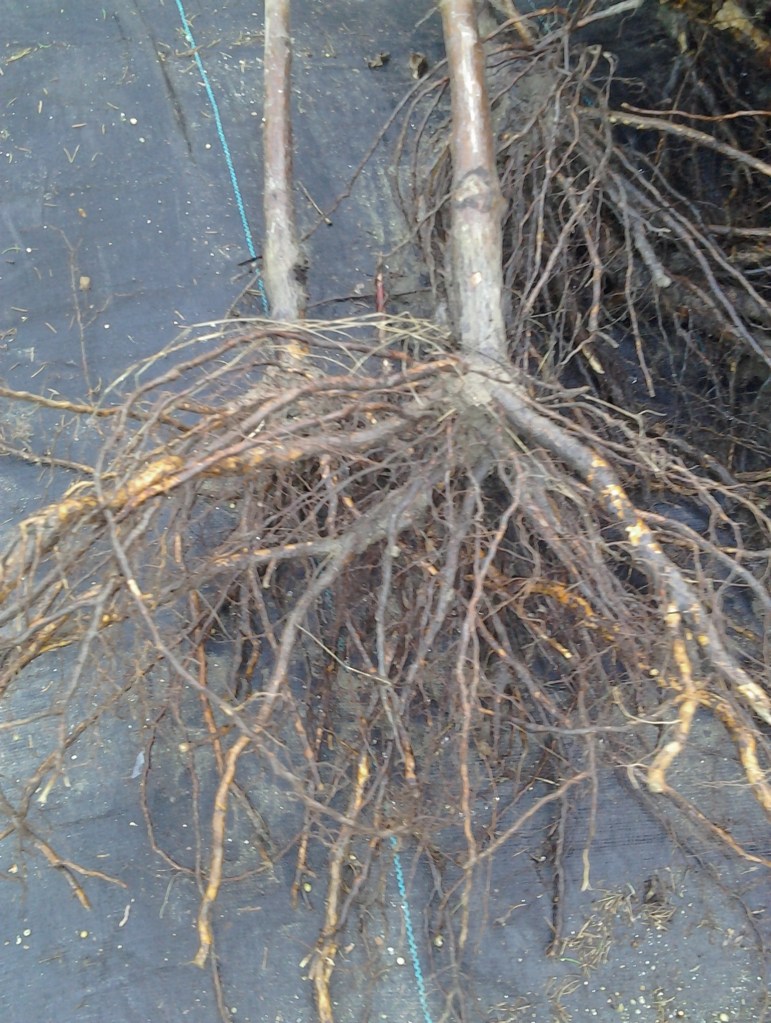
Dormant roots resume growth next spring.

Gardening is dynamic. It must adapt as each season becomes the next. Autumn became winter. Then, suddenly, the Christmas Season became bare root season. Cut Christmas trees that did not sell became green waste. Formerly expensive live Christmas trees that did not sell became bargains. They must relinquish their spaces for fresh bare root stock.

The chronology could not be better. Christmas trees are seasonable while not much else is. Their season abruptly ends precisely as bare root season begins. Bare root season is contingent on the winter dormancy of all associated bare root stock. While dormant, such stock is unaware of what is happening. Otherwise, it would not survive such techniques.

Bare root stock grows in the ground on farms. The roots become bare by separation from their soil during winter dormancy. They should be comfortable within the soil of their new gardens before dormancy ends. They disperse new roots into their new gardens as they resume growth after dormancy. Therefore, transition from farm to garden should be quick.

Some bare root stock arrives by parcel delivery with damply wrapped and bagged roots. More is available from nurseries, with its roots relaxing within damp sand until purchase. Some is available within individual bags of damp sawdust. Most bare root stock benefits from generally minor trimming or grooming. All benefits from prompt and proper planting.

Bare root season is the best time to procure and install several types of plants. Bare root stock is significantly less expensive than canned stock. It is also much less cumbersome to bring home from nurseries. Because bare roots were never confined within cans, they disperse more efficiently. Formerly canned root systems must recover from confinement.

Deciduous fruit trees and roses are the most popular bare root plants. More cultivars are available during bare root season than as canned nursery stock later. Several deciduous but fruitless trees, vines and shrubs are also available. So are a few types of berries and perennials, like rhubarb, asparagus and artichoke. Bare root season finishes with winter.

Tree Work Will Be Less Stressful During Dormancy.

Only arborists can work on the big trees.

The taller trees are typically the first to admit that summer is finished and that it is now autumn. Perhaps because they are higher up and into the changing weather more than smaller plants that are sheltered and closer to the ground. Some trees are changing color nicely. Others are thinking about it. Evergreens are, . . . well, evergreen; so they may not seem to change so much. Nonetheless, autumn is here, and most plants will consequently be going dormant for the winter, or at least slowing down a bit.

For many trees and other plants that need to be pruned, the next few months will be the best time for it. Because they are more or less dormant, they are not very aware of whatever procedures they are subjected to. When they wake up in spring, they simply adapt to the earlier pruning and start growing as if not much happened to them. Dormancy is like a natural anesthesia for trees and plants.

Conversely, the end of winter and beginning of spring is the worst time to prune many trees and plants because they are just emerging from dormancy, so are wide awake! If necessary, minor pruning done properly is generally tolerable, but should realistically be done either before or after that time. Maples, birches, mulberries and figs express their disapproval of late pruning by bleeding profusely, and sometimes for a long time.

Deciduous trees are most dormant by winter when their leaves have fallen off. Pruning them a bit earlier would probably be harmless, but deprives them of their colorful foliage. Maples, gingkoes, poplars and mulberries typically defoliate earliest. Oaks, elms and sweetgums (liquidambars) take their time, holding onto their leaves until they get knocked out by wind and rain. Oaks and elms are not very colorful anyway. Sweetgums though can look too good to get pruned late into winter!  

Arborists are physicians of trees, so can prescribe recommended pruning and maintenance procedures. Many trees, like Chinese elms, fruitless mulberries and willows, need more attention than others. Austrian black pines and Eastern redbuds are not so needy. Blue spruces that are allowed to remain branched to the ground and have enough space around them may never need a visit by an arborist.

Regardless of how much attention any particular tree needs, when it develops a problem that is out of reach, it should be assessed by an arborist, and hopefully pruned accordingly. Because trees are the most substantial features of the landscape, and can develop worse problems if not maintained properly, it is imperative to procure the services of qualified arborists; and not trust such important tasks to a gardener or anyone who can find a chain saw and pick up. Fortunately, certified arborists can be found at the website of the International Society of Arboriculture (ISA), at www.isaarbor.com.

Ranunculus

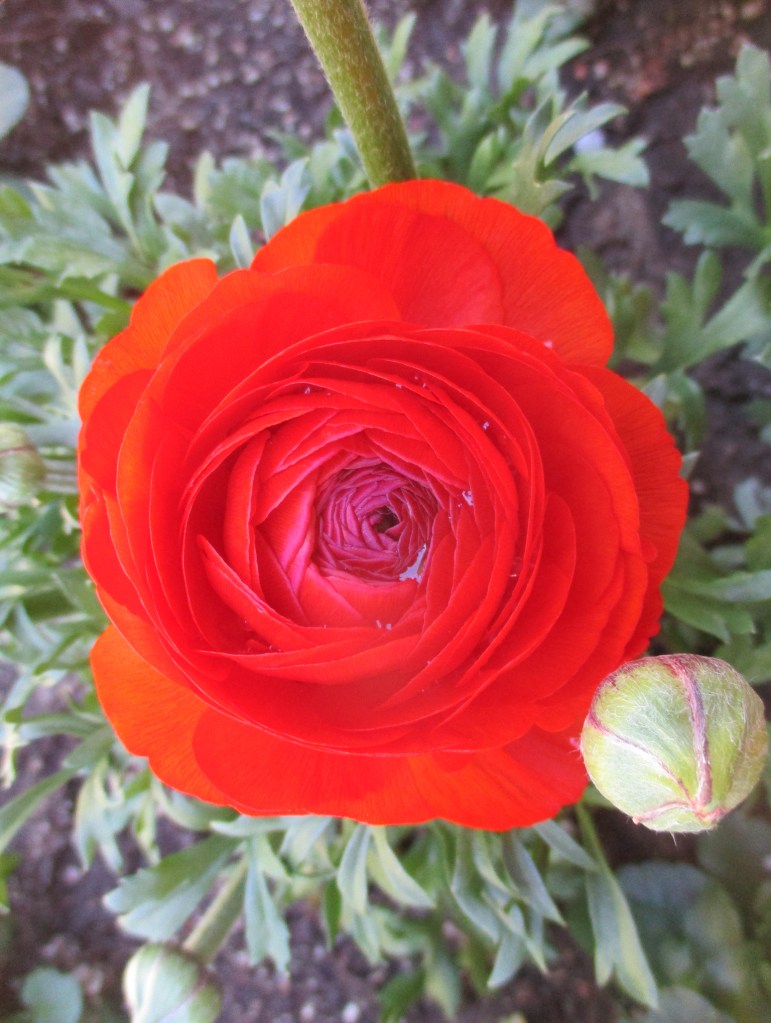
Ranunculus blooms several months from now.

The shriveled and dried tuberous roots of Ranunculus are not much to brag about. They look more like dehydrated mini calamari than dormant and viable spring bulbs. Yet, they somehow bloom as soon as the weather warms enough after winter. Although they need no vernalization, they need time to grow. Bulbs should be into their garden by December.

Alternatively, small budding plants will be available from nurseries after winter. They are too big for cell packs, so are mostly in four inch pots. Larger one gallon plants often have shabby foliage. Although popular as annuals, Ranunculus can be reliably perennial like other bulbs. They are less susceptible to rot if dug and stored while dormant for summer.

Ranunculus bloom is white, yellow, orange, red, pink or purple. The plump flowers have many papery and densely set petals, like small peonies. They typically stand less than a foot high, and may be only half a foot high. Their finely textured basal foliage stays even lower. It resembles parsley, but is a bit more substantial. It shrivels during warm weather.

Shedding Foliage Often Precedes Defoliation

Shedding foliage will eventually get messy.

Indian summer is more typical here than not. As usual, the weather cooled somewhat as summer finished, and then warmed again. It is now autumn by date, but still seems to be summer by weather. This might confuse some vegetation, although some is familiar with this pattern. Some vegetation reacts by shedding foliage prematurely, prior to dormancy.

Prematurely shedding foliage is not the same as defoliation of deciduous species. Many of the species that exhibit such response to the weather are evergreen. More importantly, both evergreen and deciduous species do it prior to autumn dormancy. Also, they do not defoliate completely. There will be enough deciduous foliage for autumn foliar color later.

In the wild, prematurely shedding foliage is common among native California sycamore. It is a natural response to minor desiccation from any combination of aridity and warmth. It is as random as weather. Anthracnose is a foliar disease that might cause more severe defoliation earlier. Either type of shedding may be visually unappealing, but is harmless.

Actually, premature shedding foliage is common among many regionally native species. It helps them survive within chaparral climates. Although not a problem in the wild, it can be messy in or adjacent to refined landscapes. Both coastal redwood and coast live oak are notoriously messy. Yet, both species are evergreen and endemic to coastal climates.

Some exotic species from various climates can exhibit prematurely shedding foliage too. Species from other chaparral or desert climates are naturally proficient with the process. Species from less arid climates learn fast. It can be stressful for some of them. Daylength assures them that shedding is now safe. However, warmth that necessitates it might not.

Various species react variously to the various causes of premature shedding. That is too many variables. Simply, shedding is different every year because the weather is different every year. Eastern redbud and birchs that are exceptionally messy now may not be next year. Japanese maples happen to be shedding a bit less this year than they typically do.

Learn How To Prune Dormant Deciduous Fruit Trees Properly

(This article is recycled from 2010, so includes outdated information. It is deferred from yesterday because Wi-Fi was not operational.)

Deciduous fruit trees require very specialized pruning.

            So many of the kids I grew up with now have an apricot tree in their own back yard, even though not many of us actually like the fruit. We all remember the remnant orchards, mostly apricots, which were scattered about the Santa Clara Valley when we were young. We also remember how we consumed vast volumes of apricots in every form imaginable; including fresh, dried, canned and stewed, and in jams, jellies, compotes, syrups and pies. I could go on, but it would ruin my appetite.

            Deciduous fruit and nut trees are certainly not ‘low maintenance’. Most need to be pruned annually, while dormant in winter. If not pruned correctly, they become overburdened with their own fruit. Also, the process of selecting from the many different cultivars of the many different types of fruit is quite a chore. There are many more cultivars to choose from for home gardens than for orchards, particularly with the many modern cultivars introduced during the past few decades.

            Because those who maintained the orchards are now as nearly extinct from the Valley as the orchards are, we need to know how to care for our own trees. This is why Friends of Guadalupe River Park and Gardens has scheduled the Dormant Fruit Tree Pruning Class with Sean McGrail in only a few days, on January 23, from 9:30 to 11:30 a.m.. Tools, techniques and basic pruning concepts will be explained and demonstrated among the many fruit trees, including apricots, cherries, prunes, apples and others, of the Historic Orchard of Guadalupe Gardens. Participants will then get to participate in pruning some of these trees. The Historic Orchard is located just south of Taylor Street in San Jose, adjacent to the Guadalupe River Park Trails. Admission is $15. 

            A week later, on January 30 from 9:00 a.m. to noon, the Best of the Best class, also with Sean McGrail, as well as Nancy Garrison and the California Rare Fruit Growers, will discuss many of the best fruit cultivars for the Santa Clara Valley. Afterward, planting, site selection, drainage and pruning of new trees will be demonstrated in the Historic Orchard. Admission is $30. Required registration can be arranged by telephoning 298 7657. Information about both classes can be found online at www.grpg.org.     

Bareroot Season Begins With January

Bare roots are dormant for winter.

Christmas trees and associated items are no imposition for nurseries. They are seasonal while not much else is appealing to a retail market. They occupy retail area that summer and autumn commodities relinquished earlier. Then, they relinquish their same space as bareroot stock becomes seasonable. The chronology is very coincidentally very efficient.

Bareroot season is not actually contingent on the end of Christmas tree season. It begins with winter dormancy of bareroot stock. This dormancy merely and fortuitously coincides with Christmas. It is as effective as anesthesia for surgery. Basically, dormant stock goes to sleep on a farm, and awakens in a new home garden. Timing of the process is critical.

Bareroot stock initially grows in the ground rather than within nursery cans. Separation of its roots from the soil they grew is harmless during dormancy. Both roots and stems need simultaneous pruning. Then, stock is ready for transport without soil. Some gets packing of moist sawdust in plastic bags. Most awaits resale from bins of moist sand at nurseries.

Bareroot stock has several advantages to more familiar canned nursery stock. It is much less expensive. It is also much less cumbersome. So, not only are more items affordable, but also, more fit into a car at the nursery. Their relatively small roots systems are easy to install. More importantly, without binding, their new roots disperse much more efficiently.

Deciduous fruit trees are the most popular bareroot stock. This includes stone fruits such as apricot, cherry, plum, prune, peach and nectarine. Also, it includes pomme fruits such as apple, pear and quince. Roses and cane berries are likely the second most popular of bareroot stock. Persimmon, pomegranate, fig, mulberry, and nut trees are also available.

Some of the more unusual bareroot stock is available only from online catalogues. More variety seems to become available locally though. Elderberry has only been available in California for the past several years. Currant and gooseberry are variably available here. Artichoke, asparagus, rhubarb and strawberry are perennials that are available bareroot. Cultivars of blueberry and grapevines are available.

Dormancy Facilitates Survival Through WInter

Deciduous vegetation defoliates for winter dormancy.

Dormancy is not exclusive to vegetation. Many animals are dormant while they hibernate through cold winter weather. Some animals are dormant while they aestivate through hot and dry weather. Fungi and bacteria can maintain dormancy for many years or centuries. Dormancy is a technique for avoiding unpleasant situations, such as cold or hot weather.

Like some animals, fungi and bacteria, some vegetation is dormant through dry weather. This is evident within local chaparral climates and nearby desert climates. Even within a few coastal forests, buckeye defoliates during summer. Such vegetation resumes activity in response to late autumn rain. However, most vegetation here prefers winter dormancy.

Such winter dormancy is especially evident among deciduous species. Many evergreen species merely halt or decelerate their growth, but without defoliation. Several evergreen species defoliate only partially. A few only shed their old foliage as new foliage replaces it during the following spring. Few species prefer to grow most vigorously through winter.

There are a few advantages to defoliation for winter. Wintry wind blows much more freely through defoliated canopies. Evergreen canopies are therefore more vulnerable to wind. In other harsher climates, defoliated canopies do not accumulate much snow. Evergreen canopies might accumulate more snow than they can support. Some get heavy with rain.

Foliage is not as useful through winter as it is through summer anyway. The sun is lower to the south. Consequently, less sunlight gets through more of the atmosphere. Days are shorter while nights are longer. Furthermore, cooling autumn and winter weather inhibits photosynthesis. For deciduous species, foliage becomes less of an asset than a liability.

Dormancy, whether it involves defoliation or not, facilitates a few horticultural techniques. Bare root stock becomes available at the beginning of winter. Transition from its farms to home gardens is much less stressful during dormancy. So is the aggressive pruning that roses and deciduous fruit trees require. Most pollarding is safest during winter dormancy.