Learn How To Prune Dormant Deciduous Fruit Trees Properly

(This article is recycled from 2010, so includes outdated information. It is deferred from yesterday because Wi-Fi was not operational.)

Deciduous fruit trees require very specialized pruning.

            So many of the kids I grew up with now have an apricot tree in their own back yard, even though not many of us actually like the fruit. We all remember the remnant orchards, mostly apricots, which were scattered about the Santa Clara Valley when we were young. We also remember how we consumed vast volumes of apricots in every form imaginable; including fresh, dried, canned and stewed, and in jams, jellies, compotes, syrups and pies. I could go on, but it would ruin my appetite.

            Deciduous fruit and nut trees are certainly not ‘low maintenance’. Most need to be pruned annually, while dormant in winter. If not pruned correctly, they become overburdened with their own fruit. Also, the process of selecting from the many different cultivars of the many different types of fruit is quite a chore. There are many more cultivars to choose from for home gardens than for orchards, particularly with the many modern cultivars introduced during the past few decades.

            Because those who maintained the orchards are now as nearly extinct from the Valley as the orchards are, we need to know how to care for our own trees. This is why Friends of Guadalupe River Park and Gardens has scheduled the Dormant Fruit Tree Pruning Class with Sean McGrail in only a few days, on January 23, from 9:30 to 11:30 a.m.. Tools, techniques and basic pruning concepts will be explained and demonstrated among the many fruit trees, including apricots, cherries, prunes, apples and others, of the Historic Orchard of Guadalupe Gardens. Participants will then get to participate in pruning some of these trees. The Historic Orchard is located just south of Taylor Street in San Jose, adjacent to the Guadalupe River Park Trails. Admission is $15. 

            A week later, on January 30 from 9:00 a.m. to noon, the Best of the Best class, also with Sean McGrail, as well as Nancy Garrison and the California Rare Fruit Growers, will discuss many of the best fruit cultivars for the Santa Clara Valley. Afterward, planting, site selection, drainage and pruning of new trees will be demonstrated in the Historic Orchard. Admission is $30. Required registration can be arranged by telephoning 298 7657. Information about both classes can be found online at www.grpg.org.     

Dormant Pruning Exploits Winter Dormancy

Fruit trees become congested without pruning.

Bare root season begins as the year ends for a simple reason. That is when deciduous plants are dormant. They are unaware of the otherwise distressful process of relocation. This is also why winter is the season for dormant pruning. Such pruning would be very distressful at any other time of year. While dormant, deciduous plants are unaware of it.

Dormant pruning of fruit trees is also important for a simple reason. Extensive breeding has increased reliance on horticultural intervention. In other words, deciduous fruit trees now generate more fruit than they can support. Their fruit is both unnaturally abundant and unnaturally large. It is both too heavy and too consumptive for its unpruned stems.

Dormant pruning enhances the quality of fruit by concentrating resources. Although less copious, fruit is bigger and better. Also, dormant pruning enhances structural integrity of supportive stems. Although more vigorous, vegetative growth is more compact. Stouter stems endure less leverage from fruit weight. As a bonus, more fruit is easier to reach.

Almost all deciduous fruit trees require very specialized dormant pruning. This includes some nut trees, as well as grapevines, kiwi vines, cane berries and roses. However, it does not include evergreen fruit trees, like citrus and avocados. They do not need such aggressive pruning. Besides, pruning stimulates new growth that is vulnerable to frost.

Unfortunately, dormant pruning is too specialized to describe in a few paragraphs. For most deciduous fruit trees, it is quite aggressive. Peach and nectarine trees may benefit from removal of half of their stem growth! Apricot and plum trees need a bit less pruning. Cherry and almond trees may need only minor pruning. Yet, all six are stone fruit trees.

Apple, pear and quince are all pomme fruits. Their trees require similar dormant pruning. Their many varieties require various degrees of such pruning though. Fig, mulberry and persimmon trees all require particular types of dormant pruning as well. Deciduous fruit trees are certainly not low maintenance. This should be considered before planting any.

Modern Roses Require Dormant Pruning

Aggressive dormant pruning promotes spring and summer bloom.

(This recycled article posted in 2012, so some information within is now outdated.)

Just about anyone can plant roses in the garden, and care for them for at least the first year. Pruning them properly while they are dormant in winter in order to get them to perform satisfactorily every subsequent year is what most of us who grow roses have difficulty with. Like deciduous fruit trees, roses should not be planted and expected to perform with minimal attention. They certainly should not be pruned with hedge shears!

The once modern, but increasingly old-fashioned, hybrid T roses have traditionally been the most common victims of inadequate pruning, since they need such aggressive pruning every winter to prevent overgrowth that interferes with healthy cane growth and bloom. More modern cultivars (cultivated varieties) designed to resemble older roses, as well as reintroduced old fashioned roses are generally not so demanding, but likewise perform best with proper dormant pruning. There are slightly, and not so slightly, different ways to prune the different types of roses. Even the ‘low maintenance’ carpet roses should be pruned to some degree.

Fortunately for those of us who are just learning about roses, the first of several free rose pruning lessons in the San Jose Heritage Rose Garden began this morning, January 4. These hands-on lessons continue at 9:00 a.m. every Wednesday and Saturday until late February. Participants meet in the center of the Garden. The minimum age to attend is sixteen; but minors without parental supervision require a signed minor release form that can be obtained from the Guadalupe River Park Conservancy.

Participants should bring bypass shears, leather gloves, closed-toe shoes and preferably a water bottle. Those who lack shears or gloves can borrow what they need at the Garden. The Heritage Rose Garden is located on West Taylor Street near Walnut Street in San Jose. Parking can be found on Seymour, Taylor or Walnut Streets. More information can be obtained by email to Emily of the Guadalupe River Park Conservancy at emily@grpg.org  or by telephoning 298 7657.

The Heritage Rose Garden is the most complete collection of old world roses, the ancestors of modern roses, in the world! Although it lacks modern cultivars, it exhibits a remarkably extensive variety of roses, with all sorts of growth habits. There really is no other garden where one can prune roses with the same basic techniques in so many different ways.

Incidentally, modern hybrid T roses derive their designation from the ‘T budding’ technique employed to attach the scion (upper blooming portion) to the understock (roots), not because the rose hips (fruiting structures) are used to make tea. However, all sorts of roses, including floribundas, polyanthas, grandifloras and all sorts of climbing roses, are budded by the same means; and many hybrid T roses are actually grown on their own roots and not budded onto understock at all. The designation of hybrid T seems somewhat out dated, but is still effective.

Spring Pruning Breaks The Rules

Spring pruning allows bloom to finish.

Dormant pruning is the best pruning. It happens while the subject plants that benefit from it are dormant and unaware of such procedures. Such procedures would be significantly more distressing to plants while they are vascularly active. In comparison, spring pruning may seem to be cruel and tortuous. Nonetheless, it is justified for particular applications.

For most plants that benefit from dormant pruning, the worst time to prune is immediately after the best time. Such plants are most vascularly active while blooming and refoliating during early spring. They become more resilient to pruning as they finish bloom and their foliage matures. This generally applies to plants that benefit from spring pruning as well.

The primary difference between plants that prefer dormant pruning and plants that prefer spring pruning is their primary purpose. Several plants that benefit from dormant pruning produce fruit. Plants that benefit from spring pruning merely produce profusion of bloom. Dormant pruning concentrates resources. Spring pruning allows maximum spring bloom.

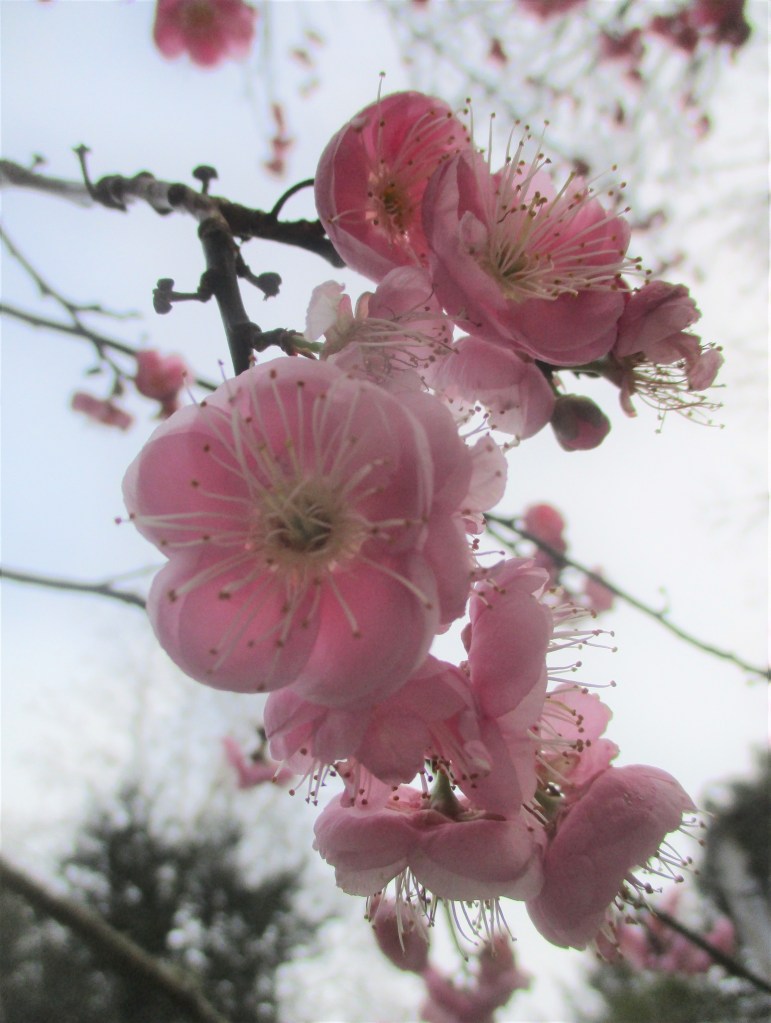
For example, flowering plum is like a sterile but prettier version of fruiting plum. It merely blooms impressively without subsequently fruiting. There is no need for dormant pruning to concentrate resources into fruit, or to compensate for fruit weight. When and if pruning becomes necessary, it can happen after any unwanted growth has contributed to bloom.

Flowering cherry, flowering crabapple and flowering quince may actually prefer dormant pruning like their fruitful relatives do. However, like flowering plum, they also bloom more abundantly prior to spring pruning. Unrelated dogwood, redbud, forsythia and even New Zealand tea tree likewise benefit from spring pruning, which is the same as late pruning.

In moderation, blooming stems of plants that get either dormant or spring pruning can be delightful as cut flowers. A few unpruned stems can remain after dormant pruning for that purpose. They only need proper pruning when harvested or after bloom. Likewise, plants that get later spring pruning after bloom can likely spare a few stems while still blooming. Alternatively, such stems should be conducive to forcing.

Deciduous Fruit Trees Need Specialized Dormant Pruning.

Apple and other pomme fruit trees are pruned very differently from stone fruit trees.

It seems unfair that so many deciduous fruit trees are available without warnings that they need such specialized maintenance. They are certainly worth growing. Otherwise, not many of us would grow them. Yet, those of us acquiring fruit trees for the first time should be aware that, with few exceptions, deciduous fruit trees need specialized and meticulous pruning while dormant every winter.

The pruning these trees require is too specialized to explain in a few short paragraphs; but can be researched for each particular type of fruit tree. Sunset publishes an excellent book about ‘Fruit Tree Pruning’, that illustrates and explains the different types of pruning that each different fruit tree needs. Pruning is the sort of thing that gets better with experience; so even though the pruning gets more involved over the years as the trees grow, the procedure becomes more familiar.

Without pruning, deciduous fruit trees produce more fruit than they can support, which disfigures and breaks branches as the fruit matures and gets too heavy. Even if limbs do not break, overabundant fruit is often of inferior quality because the trees that produce it exhaust their resources. Fruit of well pruned trees may not be as abundant, but is typically better. Besides, pruning is good arboricultural hygiene, keeping trees vigorous and more resistant to disease.

The stone fruits probably need the most severe pruning. These are fruits like apricots, plums, prunes, nectarines and peaches, that have hard pits or ‘stones’. They develop fruit on stems that grew during the previous year. Generally, these stems need to get cut back short enough to support the weight of the fruit that will develop in the next season. Dead, dying, damaged and diseased stems, known as the four ‘D’s, should be pruned out completely.

Cherries and almonds are the exceptions to the generalization about severe pruning for stone fruit, since the trees can support the weight of the fruit. They only need pruning to eliminate the four ‘D’s and to limit height. Because almonds get shaken from their trees instead of picked, they are often allowed to get quite tall, and can even function as small shade trees. Peaches are the opposite extreme since their fruit is so large and heavy, necessitating the harshest pruning.

Pomme fruits like apples and pears need similar but somewhat different pruning, which preserves stunted ‘spur’ stems that produce fruit low on older stems for many years. Like cherries, certain pears may not need much pruning. Certain apples need more pruning than others. Again, the needs of particular trees are best learned from experience.

Dormant Pruning For Roses

Proper pruning during winter promotes the best roses during summer.

(This recycled article is eleven years old. Therefore, the event that it describes is no longer relevant.)

Just about anyone can plant roses in the garden, and care for them for at least the first year. Pruning them properly while they are dormant in winter in order to get them to perform satisfactorily every subsequent year is what most of us who grow roses have difficulty with. Like deciduous fruit trees, roses should not be planted and expected to perform with minimal attention. They certainly should not be pruned with hedge shears!

The once modern, but increasingly old-fashioned, hybrid T roses have traditionally been the most common victims of inadequate pruning, since they need such aggressive pruning every winter to prevent overgrowth that interferes with healthy cane growth and bloom. More modern cultivars (cultivated varieties) designed to resemble older roses, as well as reintroduced old fashioned roses are generally not so demanding, but likewise perform best with proper dormant pruning. There are slightly, and not so slightly, different ways to prune the different types of roses. Even the ‘low maintenance’ carpet roses should be pruned to some degree.

Fortunately for those of us who are just learning about roses, the first of several free rose pruning lessons in the San Jose Heritage Rose Garden began this morning, January 4. These hands-on lessons continue at 9:00 a.m. every Wednesday and Saturday until late February. Participants meet in the center of the Garden. The minimum age to attend is sixteen; but minors without parental supervision require a signed minor release form that can be obtained from the Guadalupe River Park Conservancy.

Participants should bring bypass shears, leather gloves, closed-toe shoes and preferably a water bottle. Those who lack shears or gloves can borrow what they need at the Garden. The Heritage Rose Garden is located on West Taylor Street near Walnut Street in San Jose. Parking can be found on Seymour, Taylor or Walnut Streets. More information can be obtained by email to Emily of the Guadalupe River Park Conservancy at emily@grpg.org or by telephoning 298 7657.

The Heritage Rose Garden is the most complete collection of old world roses, the ancestors of modern roses, in the world! Although it lacks modern cultivars, it exhibits a remarkably extensive variety of roses, with all sorts of growth habits. There really is no other garden where one can prune roses with the same basic techniques in so many different ways.

Incidentally, modern hybrid T roses derive their designation from the ‘T budding’ technique employed to attach the scion (upper blooming portion) to the understock (roots), not because the rose hips (fruiting structures) are used to make tea. However, all sorts of roses, including floribundas, polyanthas, grandifloras and all sorts of climbing roses, are budded by the same means; and many hybrid T roses are actually grown on their own roots and not budded onto understock at all. The designation of hybrid T seems somewhat out dated, but is still effective.

Dormant Pruning Enhances Fruit Production

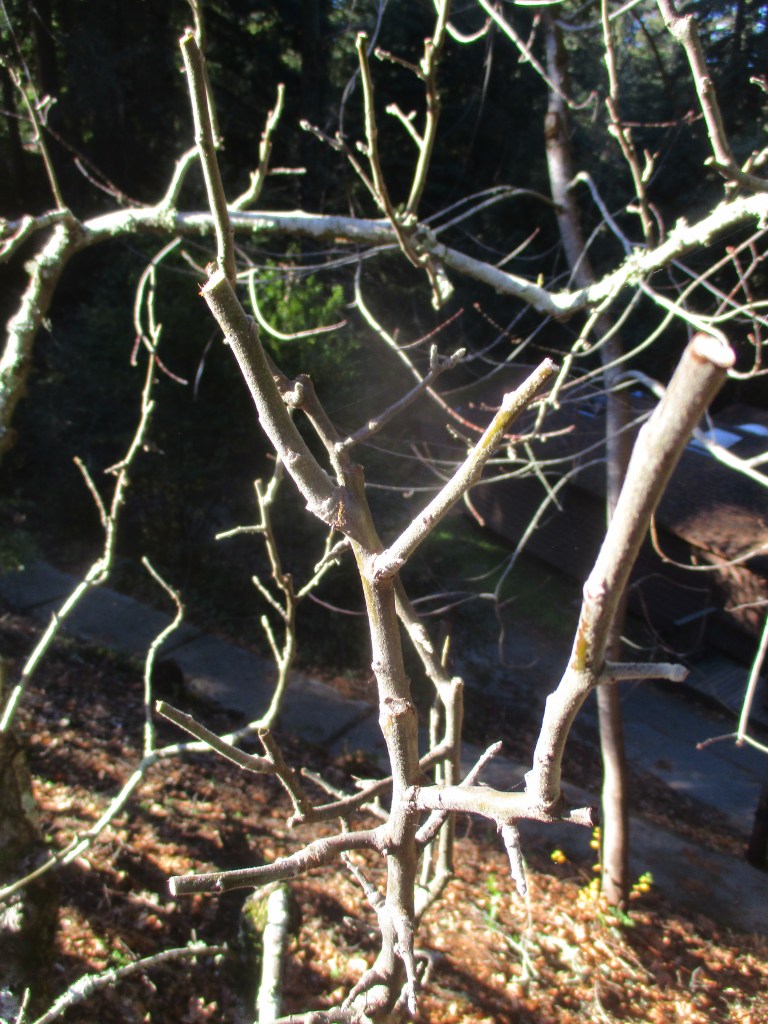
Dormant pruning may not be pretty.

Adding new fruit trees to a garden is reasonably easy. Maintaining them properly as they mature is more of a challenge. Centuries of extensive breeding to enhance production of such trees has also increased their reliance on horticultural intervention. Most deciduous fruit trees consequently need specialized dormant pruning during their winter dormancy.

Without adequate dormant pruning, most deciduous fruit trees are unable to support their unnaturally large and unnaturally abundant fruit. Dormant pruning actually enhances the size and quality of fruit. However, it also limits the weight of excessiveness, and confines it to sturdier branch structure. It concentrates resources into fewer fruit of superior quality.

Dormant pruning, or winter pruning, likewise concentrates resources into more docile but healthier vegetative growth. It eliminates or at least diminishes the 4 Ds, which are dead, diseased, damaged and disfigured growth. Confinement of potentially rampant stems not only improves structural integrity, but also limits wasteful production of unreachable fruit.

Almost all deciduous fruit trees, and most nut trees, require specialized dormant pruning. So do grapevines, kiwi vines, berry canes and roses. Evergreen fruit trees, such as citrus and avocados, are exempt for now though, since such pruning promotes new growth that is vulnerable to frost. Most of such trees do not require such aggressive pruning anyway.

Almonds, apricots, cherries, nectarines, peaches, plums, prunes and all their hybrids are stone fruits of the genus Prunus. Almonds are actually seeds, or stones, of leathery fruits that are merely hulls. Various stone fruits need various degrees of similar pruning. Heavy peaches need aggressive pruning. Lightweight cherries might need only minor trimming, or no pruning at all.

Apples, pears and quinces are pomme fruits that, like stone fruits, need various degrees of similar pruning that conforms to their distinct characteristics. Persimmons, mulberries, pomegranates and figs each need specific types of pruning as well. Familiarity with each of the dormant pruning techniques that each fruit tree in the garden requires is essential.

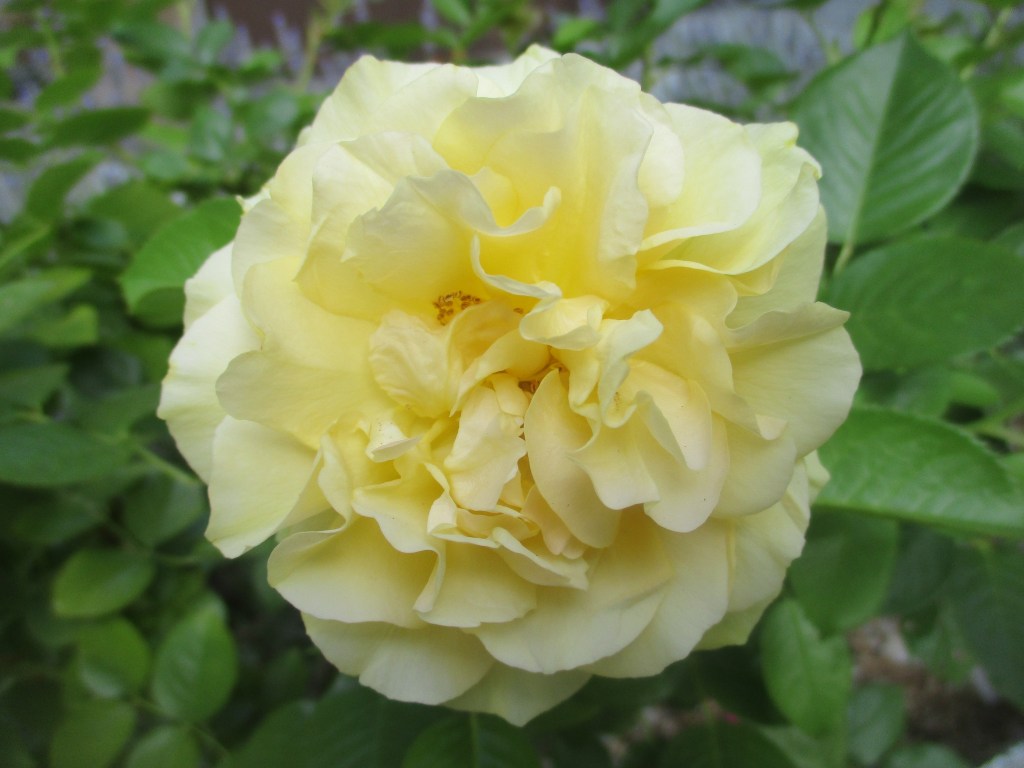
Prune now for roses later.

Roses should be pruned before the end of winter. Here where winters are so mild, they can get pruned early.

Just like most of the modern fruit trees that were bred over the past few centuries to produce unnaturally large and abundant fruit, almost all modern roses have been bred for unnaturally large flowers. Production of such large flowers takes quite a bit of work. An excess of these large flowers is more than overgrown rose plants can keep up with. This is why roses should be pruned so aggressively while dormant in winter.

Pruning should be done before buds start to swell at the end of winter. Some people prefer to wait until the end of February. However, because winters are so mild here, buds are already starting to swell, and some are even beginning to grow. I actually prefer to prune early, as soon as roses are dormant and most of the foliage falls off easily when disturbed.

The objective of pruning is to remove as much superfluous growth as possible, in order to concentrate growth into fewer but more productive stems and flowers. Without pruning, roses naturally develop into rampant thickets of abundant but less productive stems. It is also good horticultural hygiene to remove all foliage from last year, since that is where fungal and bacterial pathogens overwinter. Leaves should be plucked from stems and raked from the ground.

Hybrid tea roses get pruned severely so that there are only three to six canes about two feet high. Healthy canes that grew from the base last year are the best. They should have fresh green bark, and preferably lack branches below where they get pruned. Older canes that are developing striations (rough bark texture) should be pruned out. Most floribunda roses can get pruned almost as severely, so that they have only five to a dozen canes.

Some grandiflora roses are allowed to get significantly taller. They develop most new canes on top of canes that were pruned during the previous winter, instead of from the base. Consequently, some stems can get quite old and tall before new basal canes develop to replace them. Climbing roses are likewise pruned less aggressively, since new canes grow from old canes.

Like most fruit trees, most roses are grafted. Therefore, ‘suckers’ (shoots from below graft unions) must be removed. Tree roses should not be pruned below the graft unions on top of their main trunks. Most carpet roses are not grafted, so do not develop suckers; but then, they do not require such specialized and aggressive pruning either.

Pollarding Pruning Techniques Remain Controversial

Pollarding is pruning to the extreme.

Olive orchards formerly inhabited some of the regions that became urban in California. A few orchard trees remained within urban gardens of the homes that encroached on them. Unfortunately, for those who did not utilize the abundant olives, these trees were horridly messy. Many decades ago, pollarding eliminated the mess without eliminating the trees.

Pollarding is extreme pruning that eliminates all but the main trunk and a few main limbs. It deprives olive trees of their ability to bloom, by eliminating stems of a previous season that would otherwise bloom during the next season. Fruit can not develop without bloom. For other trees that bloom only on older stems, pollarding eliminates bothersome pollen.

Pollarding has several other practical applications. It confines trees that would otherwise get too big for their respective situations. It enhances foliar color and texture for trees that display colorful foliage through summer, such as Schwedler and Princeton Gold maples. Red twig dogwood generates more colorful twigs, and more abundantly, after pollarding.

For agricultural purposes, pollarding generates lush vegetative growth of white mulberry to sustain silkworms, or other vegetation for livestock. It similarly generates long and thin willow stems for basketry. Various eucalypti rely on pollarding to produce juvenile foliage that is colorful and healthy enough for floral design, or aromatic enough for essential oils. 

Nowadays, pollarding is unfortunately passe and even vilified. Consequently, almost no arborists learn about it. Because it is technically disfiguring and potentially unsightly, it is undesirable for many situations. Annual repetition is needed to prevent bloom or fruiting. Otherwise, restorative pruning or more extreme pollarding eventually become necessary. 

For pollarding, proper technique is imperative. Such severe pruning must happen during winter dormancy. It would it be too stressful during vascular activity. Besides, bark would be very susceptible to scald if so suddenly exposed during warmer and sunnier weather. Pruning cuts must be very neat, and back to any old pollard cuts, without stubs to inhibit healing.

Dormant Pruning Promotes Fruit Production

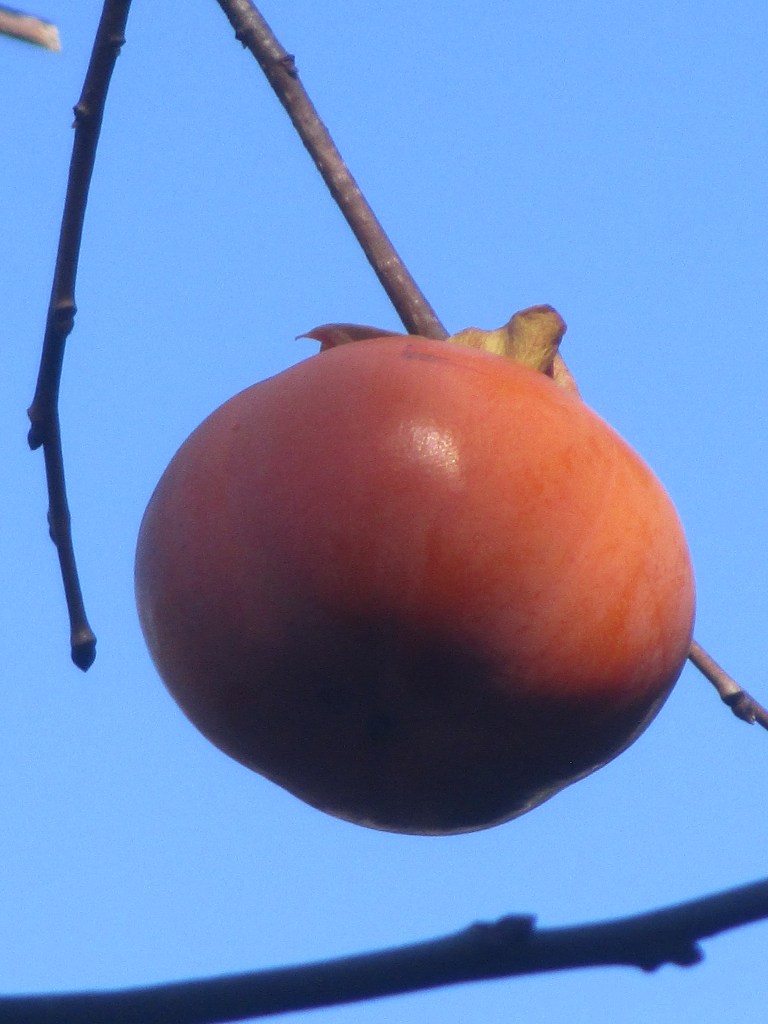
Persimmon trees get pruned after harvest.

While they are dormant through winter, deciduous fruit trees require specialized ‘dormant pruning’. Exceptions are rare. Most need major pruning that might seem to be excessive. Without such pruning, fruit trees produce more fruit than they can sustain. Excessive fruit is very likely to be of inferior quality, beyond reach, and heavy enough to disfigure limbs.

Dormant pruning limits the volume and weight of fruit that can develop during a following season. By eliminating structural deficiencies and maintaining compact form, it improves the structural integrity of trees. It eliminates diseased stems, and concentrates resources into healthy stems. Dormant pruning concentrates resources into less but better fruit too.

Dormant pruning is necessary because of extensive breeding to improve the quality and quantity of fruit that fruit trees produce. The ancestors of modern cultivars of fruit produce either smaller or less abundant fruit that they can generally support in the wild. However, even some wild fruit trees will produce better fruit with pruning to concentrate resources.

The many various types of fruit trees need various types of specialized dormant pruning. Unfortunately, such trees, which are so commonly available from nurseries, do not come with instructions. It is important to be aware of the sort of maintenance any particular fruit tree will require, prior to incorporating it into a garden. Some dormant pruning is extreme! 

The various stone fruits are the most popular deciduous fruit trees. They are of the genus ‘Prunus‘. Their fruits contain single large seeds, or ‘stones’. This includes apricot, cherry, nectarine, peach, plum, prune, almond and all their hybrids. They need the most intense dormant pruning. (Almond nuts are stones of leathery fruits that are the hulls of the nuts.)

Although uncommon within the mild coastal climates of Southern California, pome fruits, primarily apple and pear, are very popular too. They require specialized dormant pruning that is very different from what stone fruits need. Likewise, persimmon, pomegranate, fig, mulberry, currant, kiwi, grape and cane berries, each need customized dormant pruning.