Statice is so popular as a cut flower that it should be more popular than it is in home gardens.
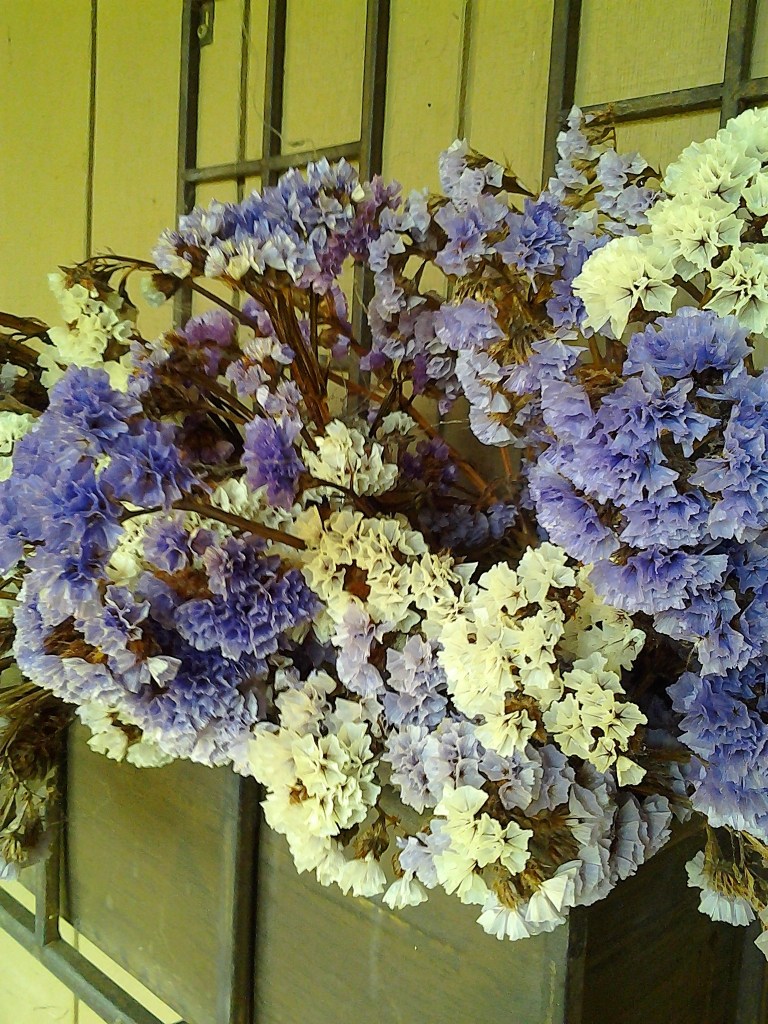
The papery flowers of annual statice, Limonium sinuatum, are so popular as seemingly synthetic dried flowers that many garden enthusiasts are surprised to find that they are happy to bloom naturally in home gardens. The clear shades of blue, purple, pink, orange, yellow and white seem to be dyed. The one or two foot tall flower stems are outfitted with odd papery ‘wings’ that make the stems seem wider than they actually are. Deeply lobed basal foliage forms shallow rosettes. Mature plants are about one or two feet tall, and a foot or so wide. Bloom begins late in summer, and continues into autumn. Good sun exposure and good drainage are preferred. Seed can be sown directly, or young plants can be added to the garden early in spring.
These flowers were cut weeks ago, and will look just as fresh months later.
Statice, strawflower and globe thistle continue to bloom later than most other summer annuals, and hold their flowers longer. Even after bloom, the flowers are so stiff and ‘crispy’ that they remain intact and colorful until they succumb to exposure to weather. If cut and brought in from the weather soon enough, they will last as dried flowers at least until fresh flowers start to bloom in the garden next spring.
Strawflower and larger globe thistle tend to wilt and droop from the weight of the bulky flowers, so should be tied in small bunches and hung upside down to dry. Perennial statice (which has larger blooms than annual statice) tends to flop to the ground, but the stems often bend only at the base so that the rest of the stem length stays somewhat straight. Smaller globe thistle and annual statice often dry standing up while still out in the garden.
Yarrow and English lavender can be dried as well, but lose most of their color. Lavender dries naturally in the garden. Yarrow can likewise be allowed to dry in the garden, but probably keeps a bit more color if cut while still fresh and hung upside down. Because yarrow blooms are so wide, they should be hung individually or in small bundles. Queen Anne’s lace has even wider blooms that curl inward as they dry, so they really should be hung individually.
Old hydrangea flowers that are only beginning to fade can dry surprisingly well if cut and hung individually before they deteriorate too much or start to rot. Some varieties retain color better than others. Some fade almost completely to an appealing brown paper bag.
There are not many roses this time of year, but when they do bloom, even they can be cut and dried while beginning to unfurl. Only a few small and tightly budded roses can be dried when completely open. Because they droop right below the blooms, roses should be hung upside down to dry. Dark colored roses get very dark as they dry. White roses turn tan. Pink and yellow are probably the better colors.
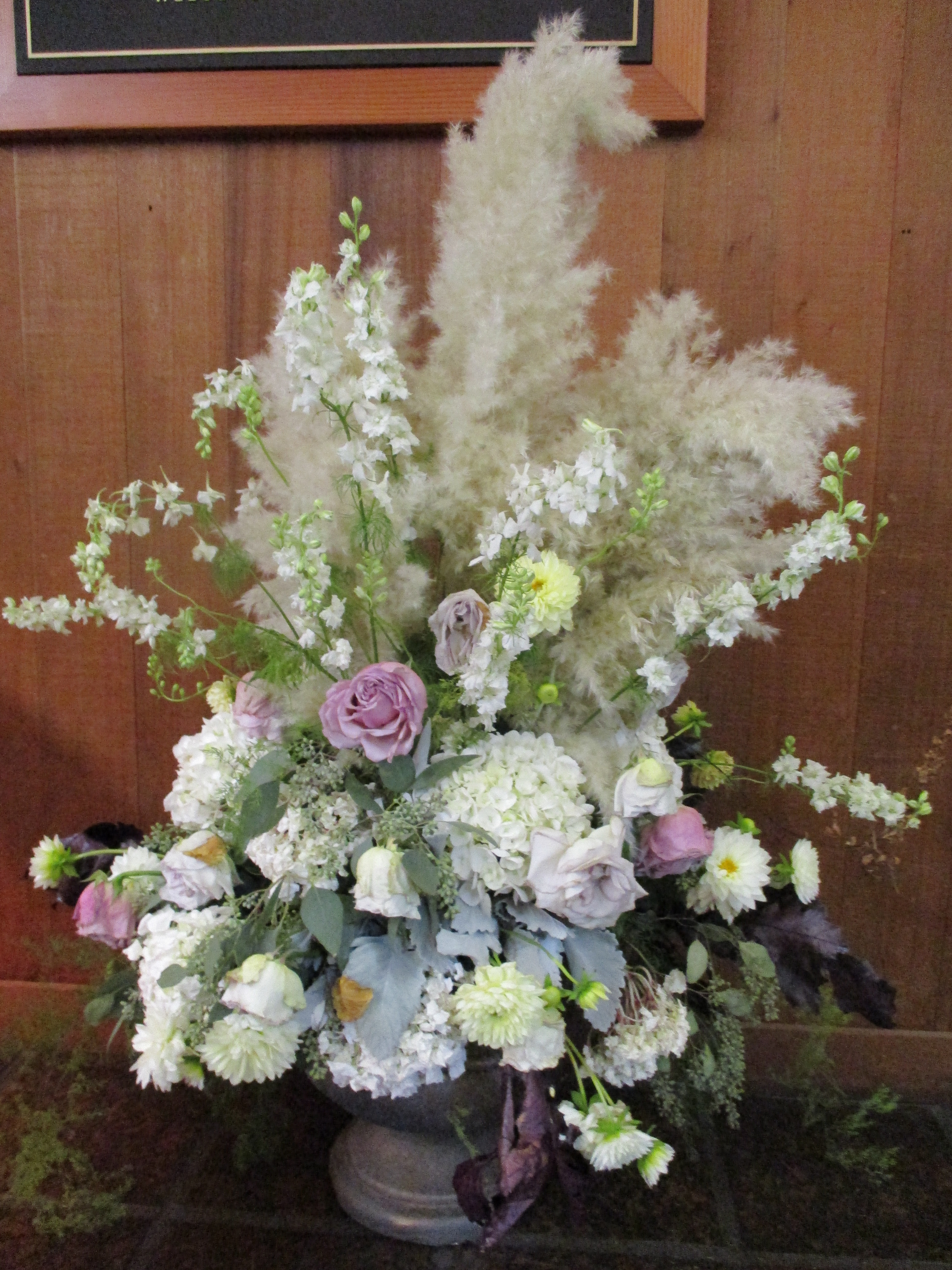
Cat-tails and pampas grass flowers are big, bold and dated cut flowers. Yet, for situations where big flowers fit, they are just as practical now as they were in the 1970s. Because pampas grass flowers shed, and cat-tails can explode (to disperse their seed), they should be sprayed with hair spray or another fixative to keep them contained. Pampas grass foliage has dangerously serrate edges that can give nasty paper cuts, so should be handled carefully, and displayed out of the way.
‘V-A-S-E ‘ is probably how it is spelled, just like that which is pronounced exactly as it looks, or ‘vays’. ‘Vahz’, ‘vawz’ or ‘voz’ just sounds fancier, . . . or bigger.
That is how I learned it. ‘Vays’ is the smaller version that is designed to contain one or only a few flowers and maybe some foliage. ‘Vahz’, ‘vawz’ or ‘voz’ is the much larger version that is designed to contain entire bouquets or ‘floral arrangements’. Those that contain only dried flowers and foliage do not even need to hold water.
I learned this from those who were experts on the subject. My Aunt Betsy and her best friend Cathy were ‘flower children’. They rented an apartment in a hip and trendy neighborhood in western San Jose back in the early 1970s. The neighborhood was so trendy and hip that the neighbors were known as ‘hippies’. Aunt Betsy and Cathy outfitted their apartment accordingly, with wicker, shaggy rugs, and a big spider plant hanging from beaded macrame.
Of course, there was also a rather big ‘vahz’, ‘vawz’ or ‘voz’. It was cheap molded plaster painted glossy chocolaty brown. It contained a billowy abundance of only two species of dried cut flowers, cattails and pampas grass, that had been sprayed with hair spray to prevent them from sharing their seed. It was as gloriously hideous as it sounds, and more than adequately expressed impeccable cultural refinement and a keen appreciation for the remarkably distinctive and exquisitely tacky style of home decor that was so prevalent at the time.
The cattails might have been collected on the side of Highway 80 in Auburn, near the home of Aunt Betsy’s Great Aunt Mamie. The pampas grass might have been found in Vasona Lake County Park in Los Gatos.
They sure took their time getting this far along. The bluish green succulent foliage of showy stonecrop, Hylotelephium spectabile, (formerly Sedum spectabile) first appeared at ground level in early spring, and has been growing into rounded mounds so slowly that it now stands less than three feet high and wide. Smaller types are half as big. Blooms are only now beginning to turn color.
Broad and flat-topped floral trusses of minute flowers are almost always some sort of pink. Sometimes, they are almost terracotta red. Sometimes, they are somewhat peachy. They might even be blushed with a bit of lavender. ‘Stardust’ blooms white. The biggest blooms can be as wide as five inches. If not pruned away as they fade, the blooms (according to some) dry nicely by winter.
New growth starts to appear from the ground almost as soon as old stems die in late winter. Established clumps can be divided in spring every few years. Even small plants can spare a few small pups that will grow into new plants. Stems might get taller in partial shade, but might also need to be staked as they bloom. Bees really flock to the flowers because not much else blooms so late.
‘Moonshine’ is probably the epitome of fernleaf yarrow, Achillea filipendulina, even though it is technically a hybrid. From the middle to the end of summer, its three inch wide corymbs (flat-topped trusses) of tiny bright yellow flowers stand as high as three feet above ferny and gray basal foliage. Bloom is best in full sun and warm exposure. Established plants do not need too much water.
Most varieties of fernleaf yarrow also bloom with bright yellow or gold flowers. Some might bloom with pale yellow, rosy pink, pale pink, reddish, white or pink and white flowers. All are good cut flowers, and can be dried. Some varieties are more compact. The most compact varieties work nicely in planters of mixed perennials. Butterflies and hummingbirds find them wherever they are.
Pruning out deteriorating blooms may promote sporadic subsequent bloom until autumn. However, some plants may bloom all at once, and then not bloom again until the following summer. Large blooms on the most vigorous plants may need to be staked. New plants can be propagated by division from mature plants. ‘Moonshine’ and many other cultivars are sterile. Others might self sow.
 ‘V-A-S-E ‘ is probably how it is spelled, just like that which is pronounced exactly as it looks, or ‘vays’. ‘Vahz’, ‘vawz’ or ‘voz’ just sounds fancier, . . . or bigger.
 They sure took their time getting this far along. The bluish green succulent foliage of showy stonecrop, Hylotelephium spectabile, (formerly Sedum spectabile) first appeared at ground level in early spring, and has been growing into rounded mounds so slowly that it now stands less than three feet high and wide. Smaller types are half as big. Blooms are only now beginning to turn color.
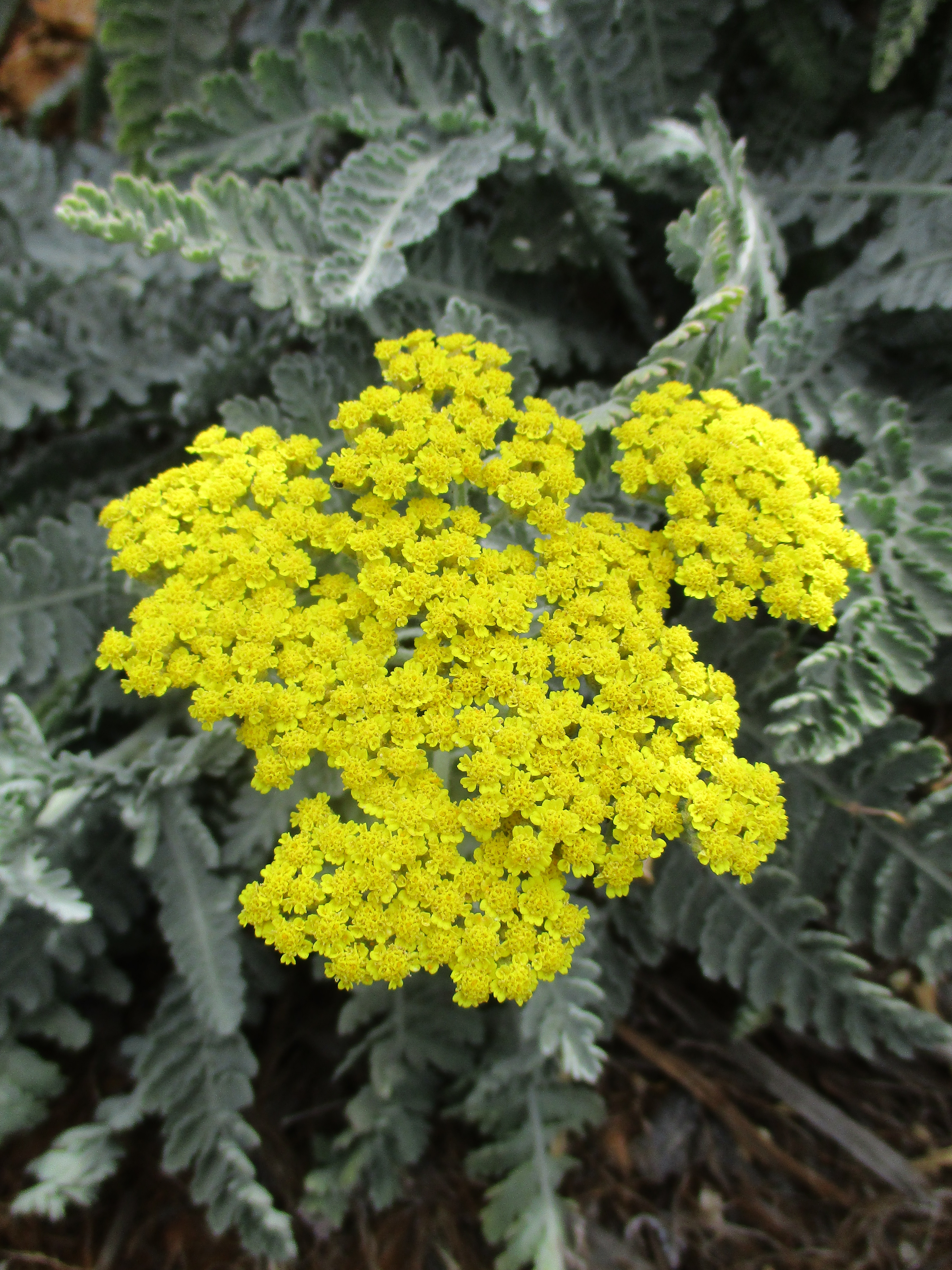 ‘Moonshine’ is probably the epitome of fernleaf yarrow, Achillea filipendulina, even though it is technically a hybrid. From the middle to the end of summer, its three inch wide corymbs (flat-topped trusses) of tiny bright yellow flowers stand as high as three feet above ferny and gray basal foliage. Bloom is best in full sun and warm exposure. Established plants do not need too much water.
 Tony Tomeo