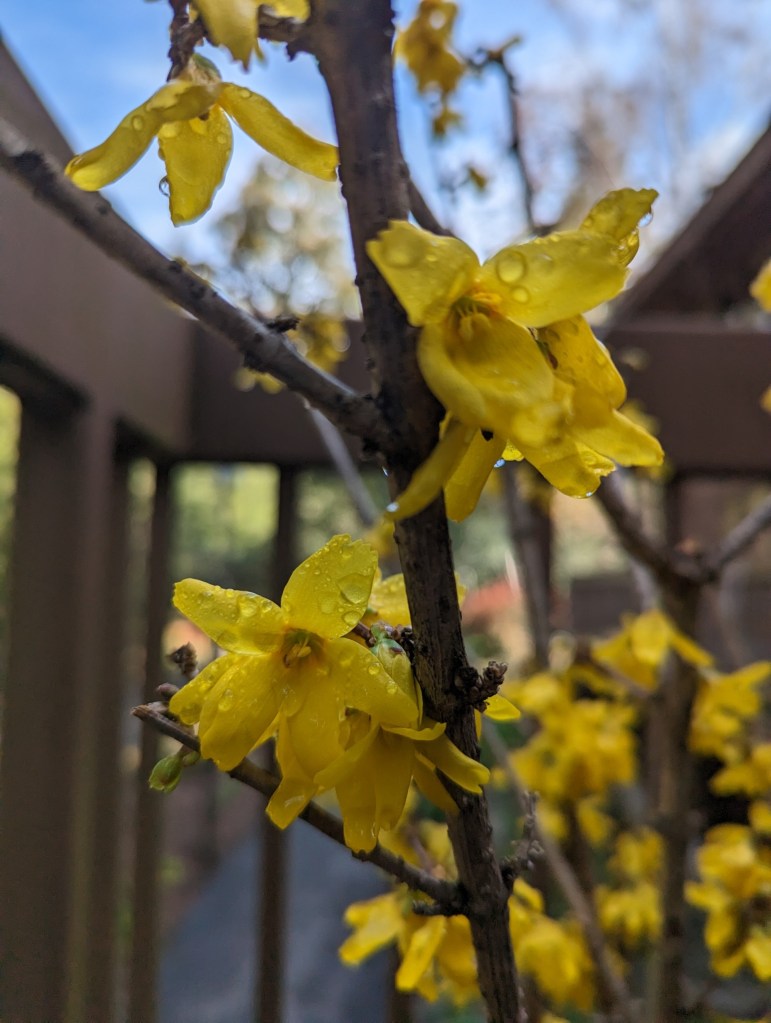
This may seem to be unseasonable for now. Forsythia, Forsythia X intermedia, does not bloom until early spring. However, this is the time to plant it as bare root stock. It is one of only a few fruitless ornamental species that is available as such. New specimens will not bloom much for spring. They grow through summer, though, to bloom for the next spring.
The famously bright yellow flowers of forsythia are small but very abundant. They bloom on bare stems before their deciduous foliage regenerates. The simple paired leaves are about two or three inches long. Mature specimens mostly do not grow more than ten feet tall unless partly shaded. Most branches arch upward and outward from their root bases.
Pruning should involve the removal of deteriorating older canes, to favor younger canes. Complete removal at their base promotes more vigorous new basal growth. Pruning can happen after bloom rather than before. Pruning of the exterior compromises the naturally outwardly flaring form. Complete coppicing eliminates all bloom for the following season.




 Tony Tomeo