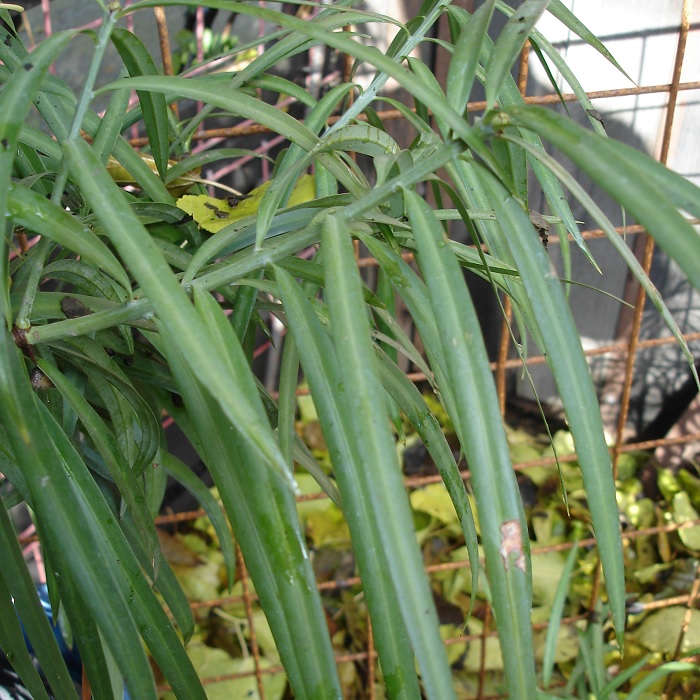
 Of the various specie of podocarpus, and as the name implies, the long leafed yellowwood, Podocarpus henkelii, has the longest leaves. They can get about six inches long, and hang elegantly from upwardly curving branches. This glossy evergreen foliage can be quite dense. It is dark green in full sun, and can be a slightly bluish in partial shade, particularly as new growth develops.
Mature trees have the potentially to get a bit taller than second story eaves, and nearly as broad, but are typically kept shorter. Most grow as big fluffy shrubbery or as informal hedges. Long leafed yellowwood can be pruned (but not shorn) into a handsome formal hedge, or even espaliered against a fence. It prefers somewhat regular watering and well drained soil. It might be unhappy in dense soil. Fertilizer can improve color and density if foliage gets distressed.
 Some might say it blooms very late. Others might say it blooms very early. Regardless, sasanqua camellia, Camellia sasanqua, blooms in autumn or early winter when not much else is blooming. The abundant two inch wide flowers can be pale pink, rich pink, white or red, all with prominent yellow stamens. Some are fluffy with many petals. Others have only a few. Alas, fragrance is rare.
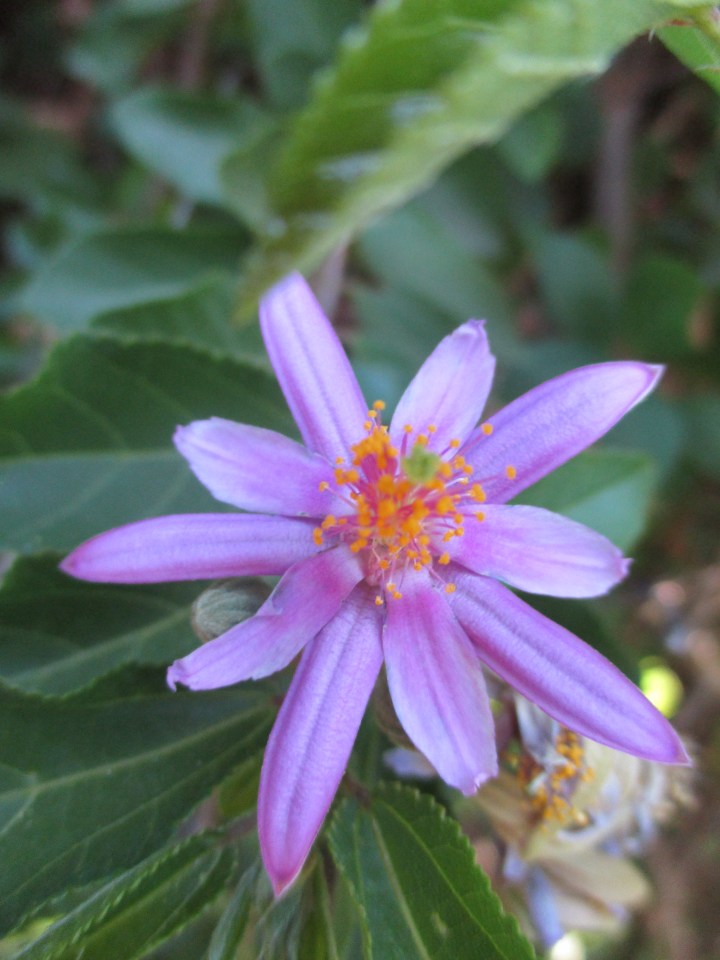 It is really an evergreen shrub with limber stems; but lavender starflower, Grewia caffra, can work almost like a rambling vine. It does not actually climb or grip anything. Like the canes of a climbing rose, it can be tied onto a trellis or fence as an espalier. As a free standing shrub, the arching stems should be pruned selectively. Shearing deprives them of their natural form, and inhibits bloom.
 Tony Tomeo