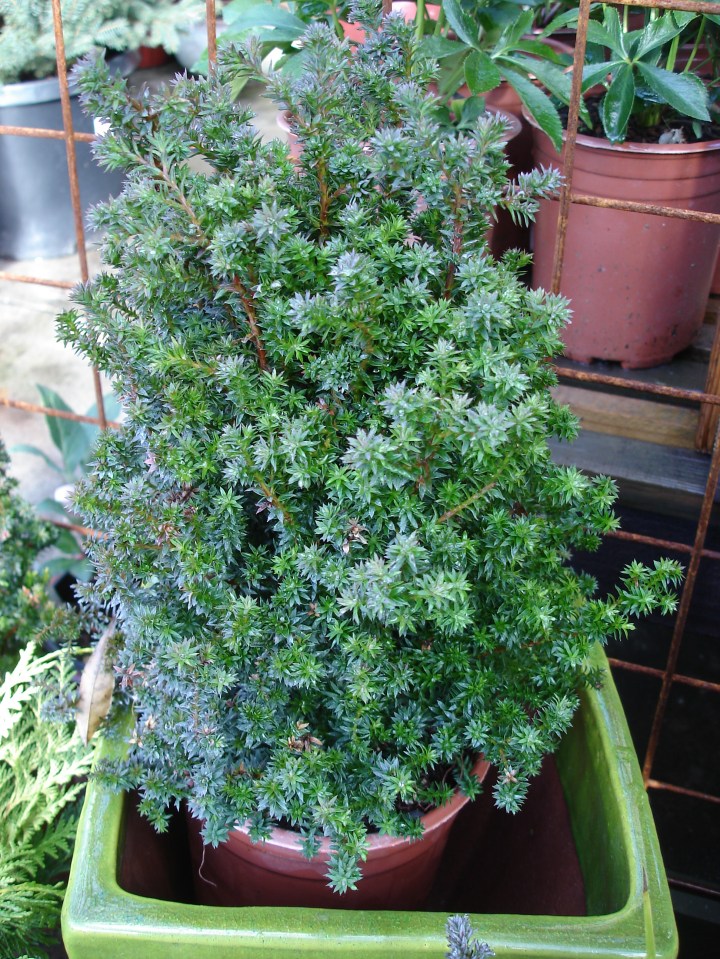
 Is it red or white? Actually, it is neither. ‘Whitecedar’ is the common name for Chamaecyparis thyoides, which is a formidable coastal conifer from Maine to Mississippi. ‘Red Star’ is a much smaller garden variety. Its finely textured foliage is bluish green when it first emerges in spring, and can turn slightly purplish or bronzed gray if it gets cold enough in winter, but never turns red.
In more humid climates, ‘Red Star’ Atlantic whitecedar can eventually reach second story eaves, and can get half as broad. It rarely gets half as large locally, and can take quite a few years to do so. The slightly aromatic evergreen growth is densely conical, almost like a lumpy dwarf Alberta Spruce with an upwardly rounded underside. It can be a bit more sculptural if partially shaded.
Even without pruning, ‘Red Star’ Atlantic whitecedar is symmetrical enough for formal landscapes. Alternatively, it can add a bit of formality to relaxed landscapes. Although it is slow to provide privacy, it works nicely as an unshorn hedge. If somewhat crowded in a row, it grows taller faster. Shorn hedges lack natural form, but can recover their natural texture between shearing.
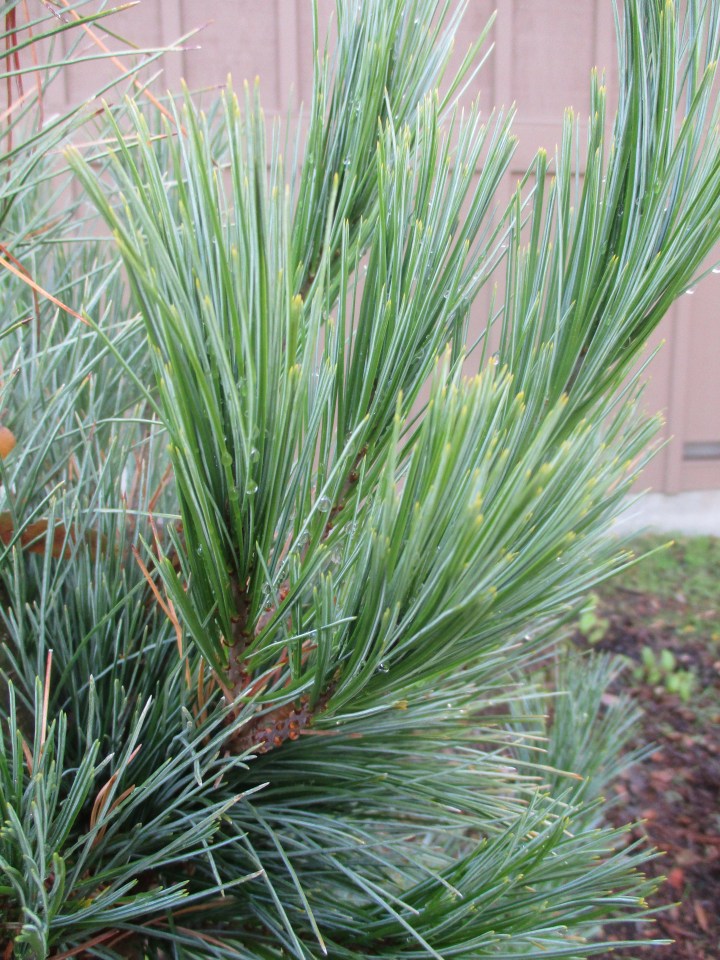 The big name of this little pine takes some explaining. Domingo pine is a cultivator of an interspecific hybrid of two distinct specie, Eastern white pine, Pinus strobus, and Mexican white pine, Pinus ayacahuite. Until a better name in invented, it is known as Pinus strobus X ayacahuite ‘Domingo’. It is typically but incorrectly abbreviated as Pinus ‘Domingo’, or Pinus strobus ‘Domingo’.
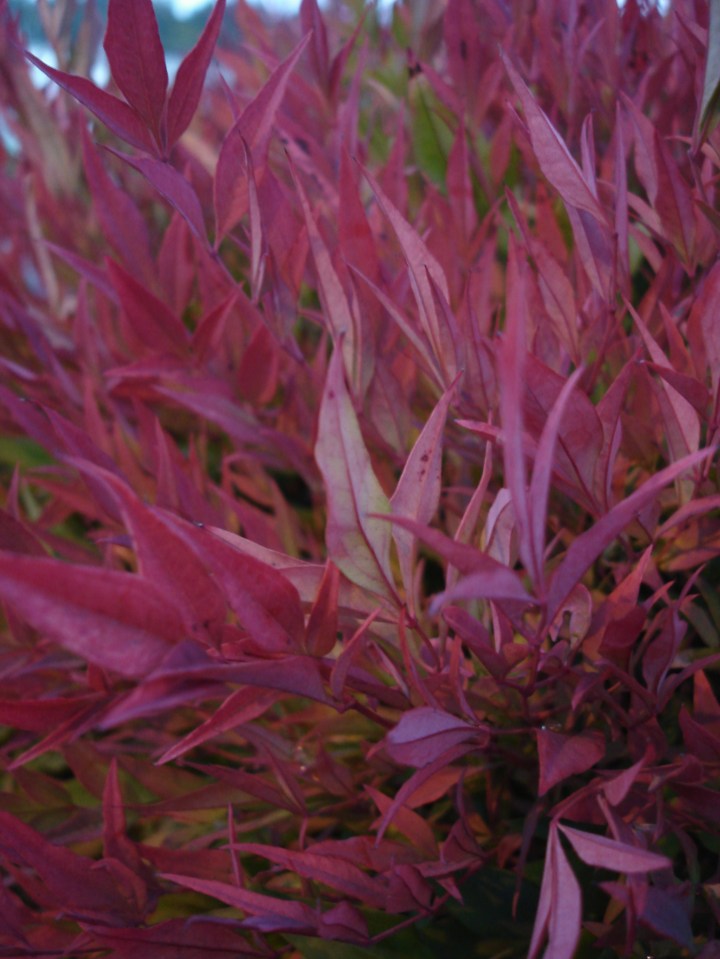 Good old-fashioned Heavenly bamboo, Nandina domestica, which can almost reach the eaves, can be difficult to obtain nowadays. More compact modern cultivars do not get much more than six feet tall, and some stay less than three feet tall. Foliage is airier in partial shade, but more colorful where more exposed.
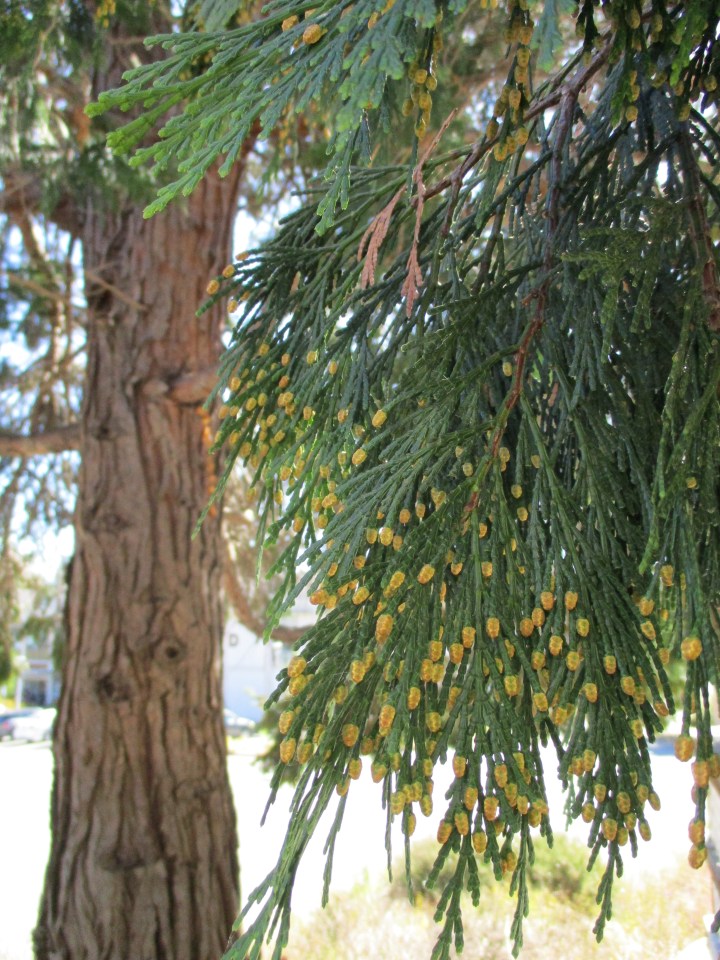 Calocedrus decurrens. Incense cedar. The first tree that I ever planted was a small incense cedar, like the tree in the picture here. Of course, it was not this big when I planted it.
 The first half of the name sound appealing enough. The second half, not so much. Do the seeds grow into snails? Do they just look like snails? Not many have seen them. Tiny pale white flowers that are supposed to bloom in spring, as well as small black berries that develop after bloom, are rare. Laurel-leaf snailseed, Cocculus laurifolius, is grown just for its glossy evergreen foliage.
 With indiscriminate pruning, glossy abelia, Abelia X grandiflora, will never develop its natural form, with elegantly long and thin stems that arch gracefully outward. Sadly, almost all get shorn into tight shrubbery or hedges that rarely bloom. If only old stems get selectively pruned out as they get replaced by fresh new stems, mature shrubs can get eight feet tall and twelve feet wide.
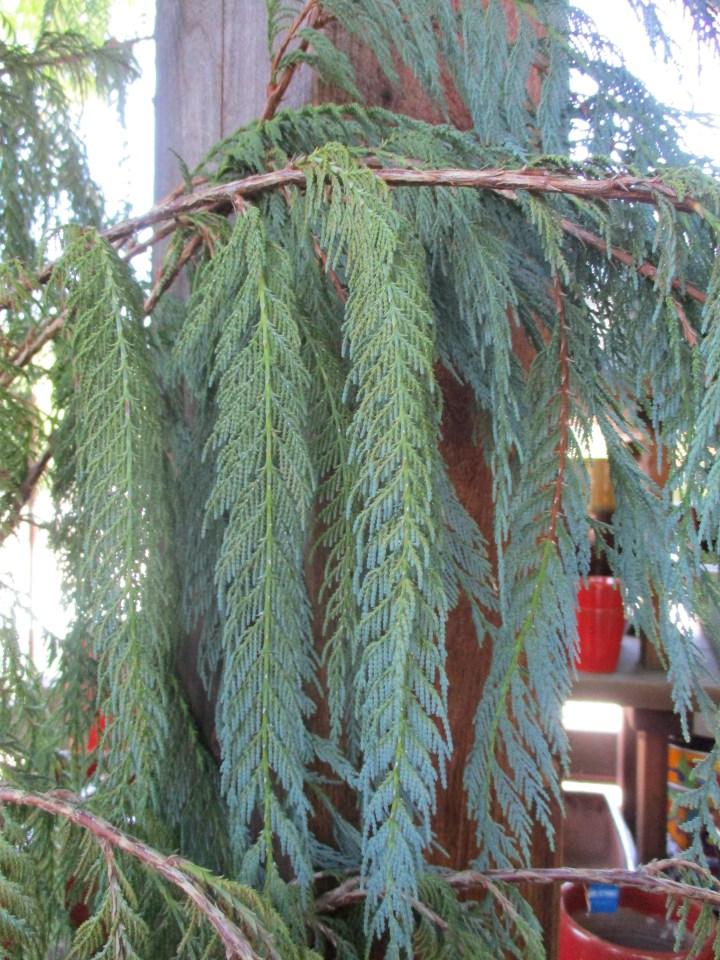 Plants are usually well suited to the climates that they are native to. Glaucous (slightly reflective grayish) foliage is more common in harsh climates where darker green foliage might get cooked by the sun. Pendulous growth is more common among plants that want to shed heavy snow efficiently. Kashmir cypress, Cupressus cashmeriana, has both, but is from a tropical monsoonal climate.
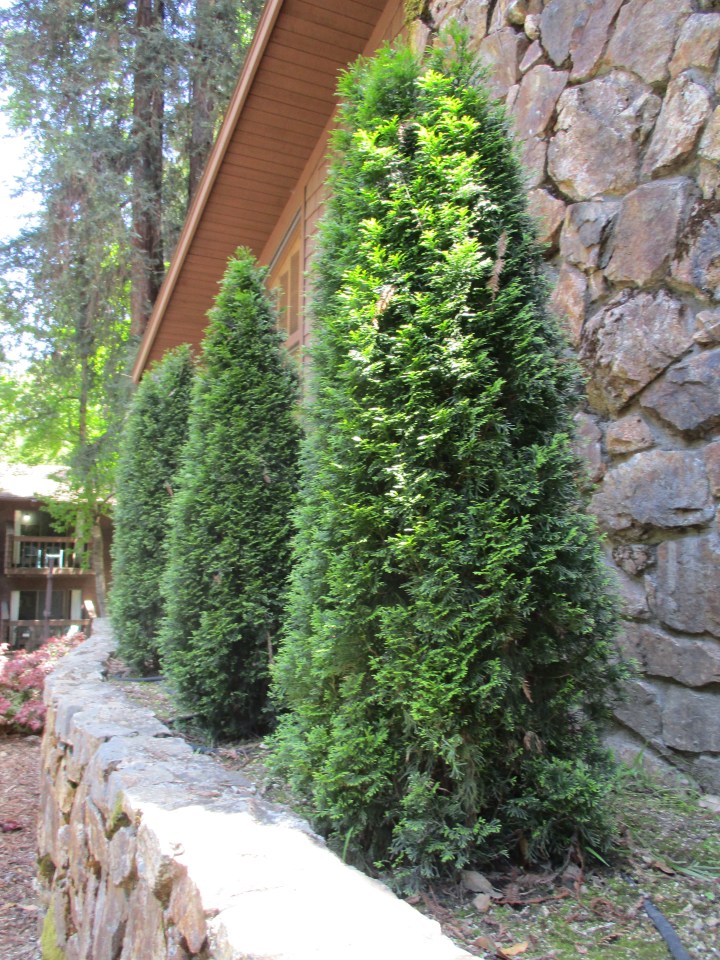 The many cultivars of arborvitaes of home gardening have been so extensively bred and selected that only the foliar texture resembles that of their ancestors. ‘Emerald Green’ which is also known by its Danish name ‘Smaragd’, is a cultivar of arborvitae that was developed from the white cedar, Thuja occidentalis,which grows wild from Minnesota to New Brunswick, as a forty foot tall tree!
 Fans of the Brady Bunch might recognized agonis, Agonis flexuosa, from the front yard of the Brady Residence. That particular tree was rather dark olive green, and might have grown two or three feet annually to reach the upstairs eaves. Most of the popular modern cultivars are darker bronze or burgundy, and probably stay a bit shorter, but attain the same elegant and slender form.
 Tony Tomeo