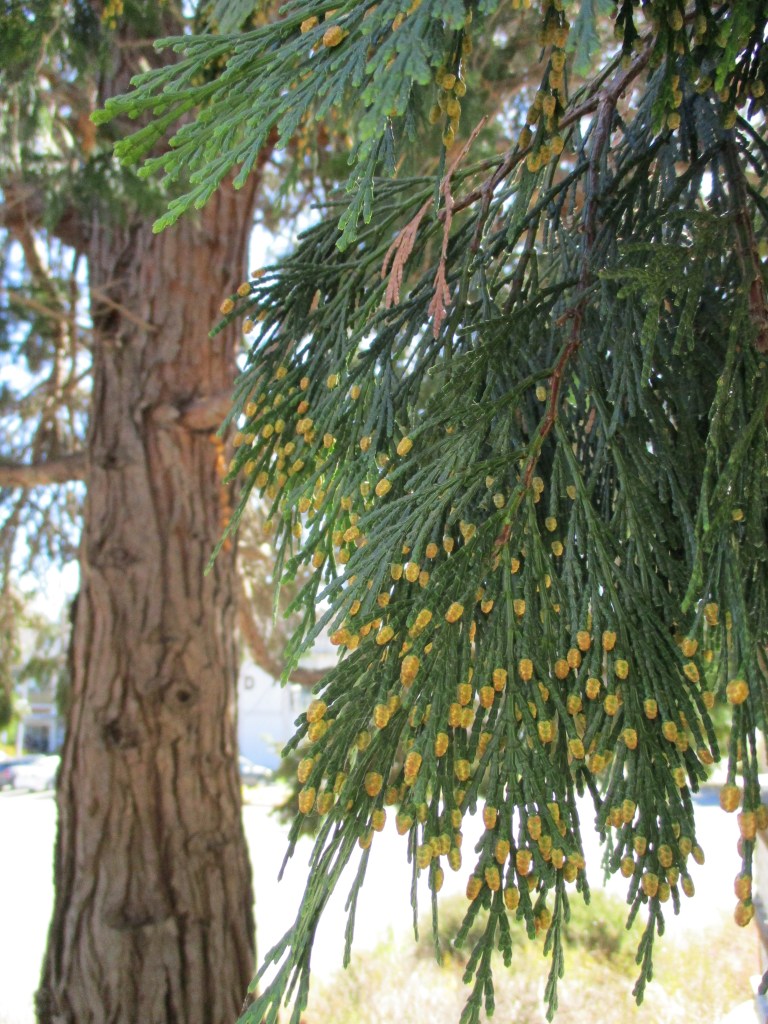
Nowadays, the delightfully aromatic foliage is familiar primarily in garlands at Christmas time. Most of the foliage of old trees is too high up for direct contact. Young trees with low foliage are rare. Incense cedar, Calocedrus decurrens, is unfortunately not as popular as it was a century ago. At that time, it was as utilitarian as it was appealing for spacious but minimally irrigated landscapes.
Incense cedar wood made good shingles and laminate for closets and cedar chests. The wood is aromatic enough to repel moths from woolens and furs, which were still popular then. It was less expensive to import than Eastern red cedar. It grows wild relatively nearby, in the Sierra Nevada and Cascade Mountains. Incense cedar fence posts might resist decay as well as redwood posts.
If the wild, where they compete with other trees for sunlight, old trees can get almost two hundred feet tall. However, well exposed old trees in Victorian gardens are less than half as tall after more than a century. Their canopies are generally conical. Large limbs can curve upward like extra trunks. Flat foliar sprays resemble those of arborvitae. The deeply furrowed bark is cinnamon brown.
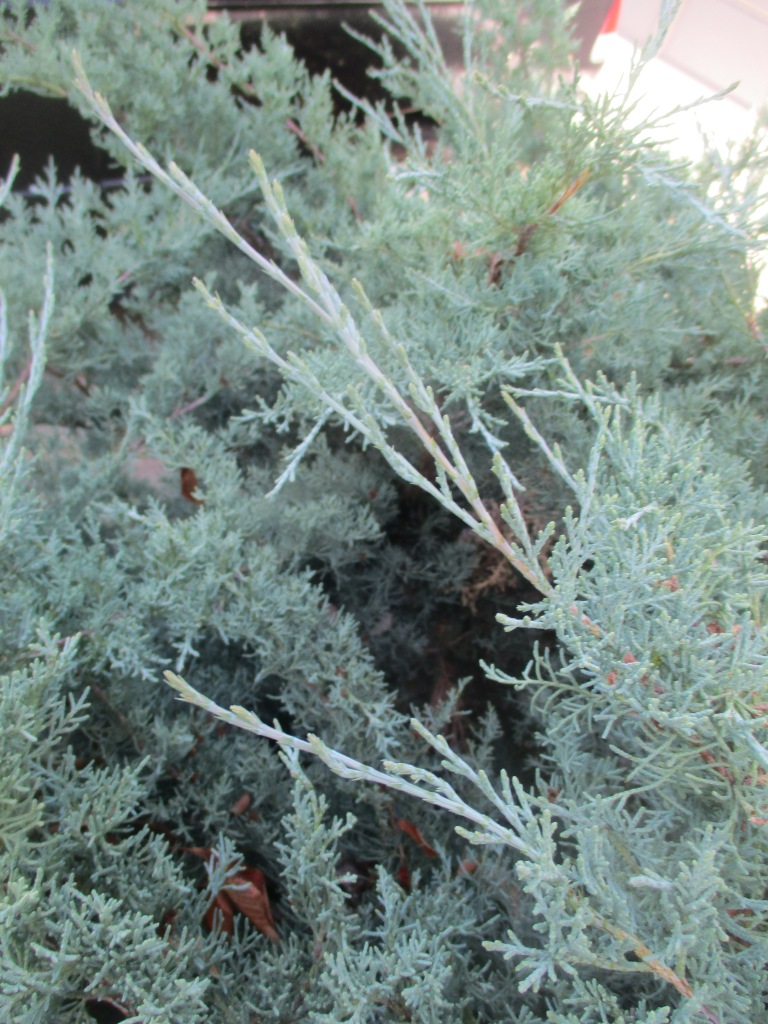
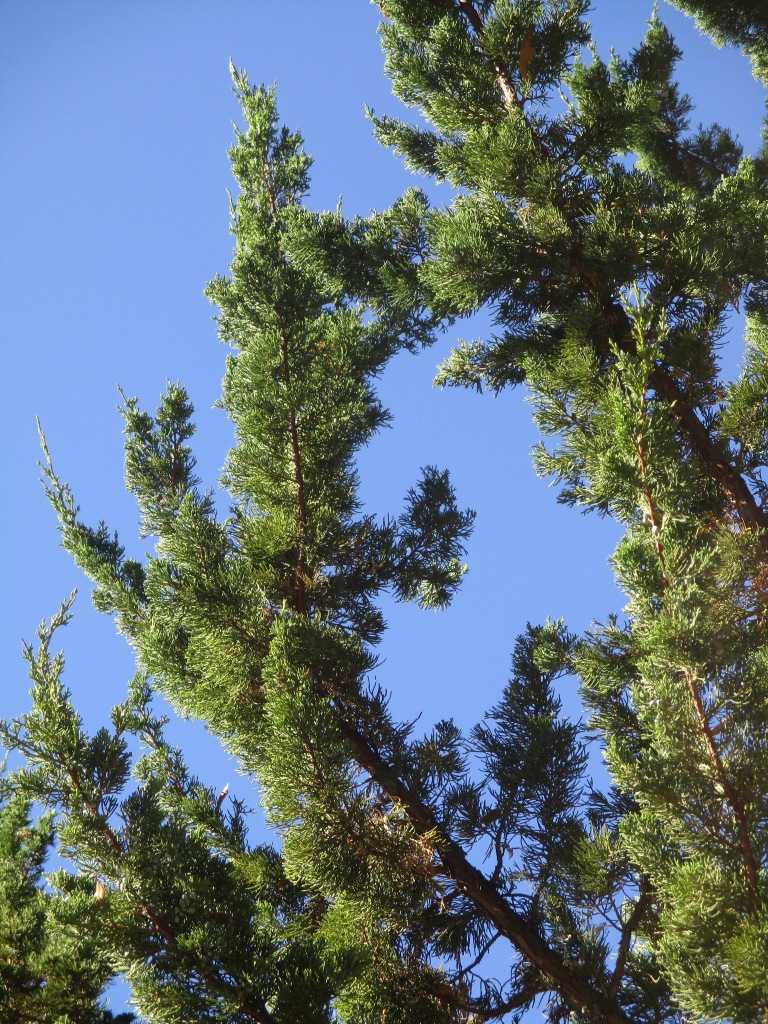


 ‘Conifer’ and ‘evergreen’ are almost synonymous. Of the two, ‘evergreen’ is the more familiar term. Some people do not know what a ‘conifer’ is. Simply speaking, an evergreen is a plant that retains foliage throughout the year, even while deciduous plants defoliate through winter. A conifer is a plant that produces seeds in cones, such as pine cones, although many are not easy to recognize as such. Actually though, not all evergreens are conifers; and not all conifers are evergreens.
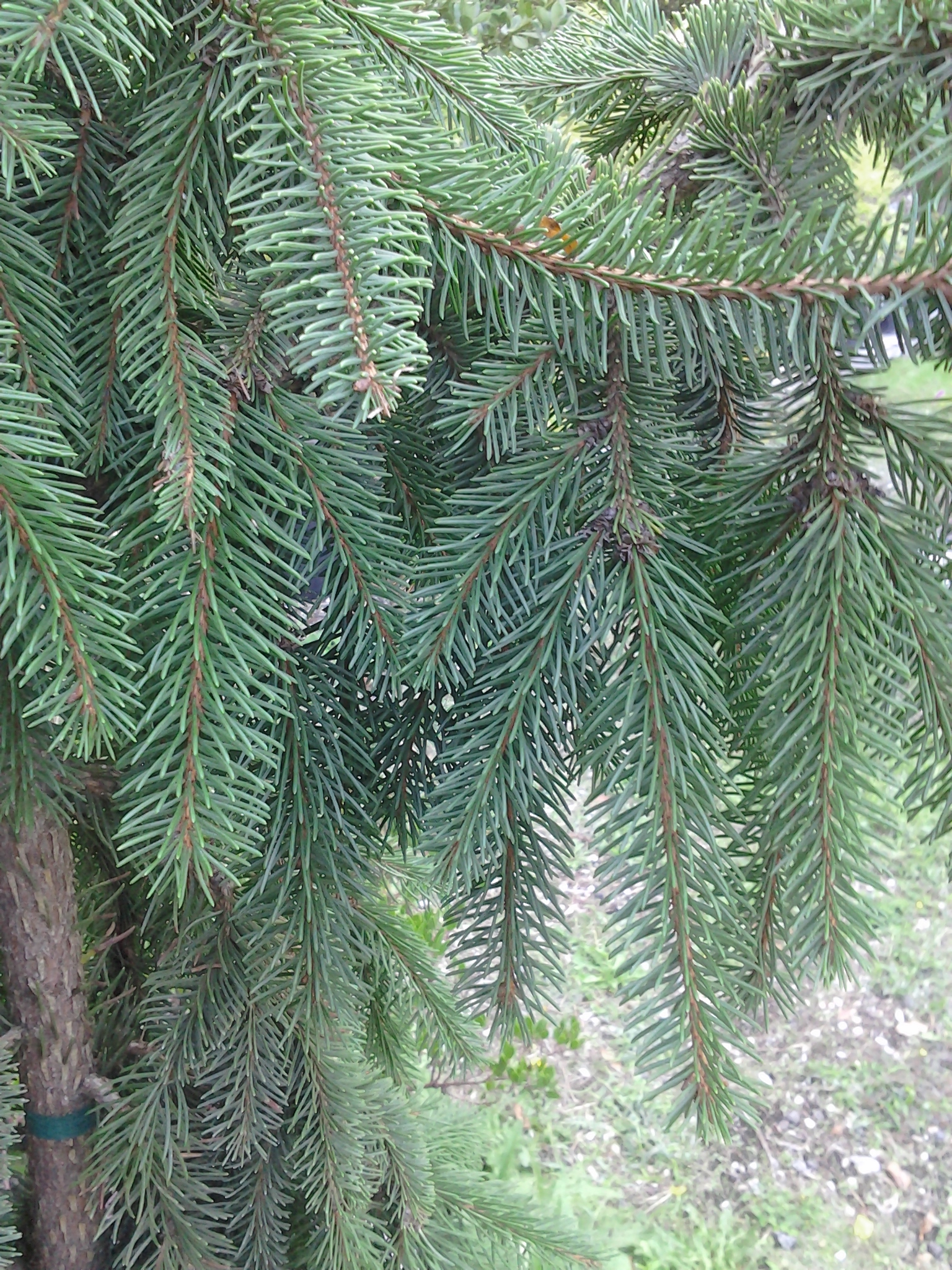
 For a tree that is native to the upper elevations of the Rocky Mountains, blue spruce, Picea pungens, does surprisingly well here. It only wants to be watered a bit through summer to compensate for the lack of rain and humidity in chaparral climates. It does not seem to miss a more pronounced chill through winter. Disease and insect infestation are uncommonly noticeable or damaging.
 Evergreens are popular for home décor through winter because there is not much blooming so late in most other American climates. The tradition endures, even though cut flowers of all sorts can easily be purchased from common supermarkets nowadays. Here on the West Coast, where several varieties of flowers can bloom through winter, evergreen foliage is as popular as it ever was.
 Tony Tomeo