 There should be no guilt associated with a cut Christmas tree. They were stigmatized many years ago, when some people believed that they were harvested from forests, and more of them likely were back then. However, most of us now know that, except for a few that actually are harvested from the wild, Christmas trees are grown on farms like most other cut foliage or horticultural crops.
That is how Christmas trees get their nice Christmas tree form. Only spruce and a few types of firs grow so densely and symmetrically in the wild; and spruce are not commonly cut as Christmas trees. Almost all types of Christmas trees need to be pruned or shorn for density, symmetry and maybe even form. Most of the foliage for wreaths and garlands is likewise grown on foliage farms.
Contrary to popular belief, living Christmas trees are no more environmentally responsible than cut trees are. They are farm grown and artificially irrigated exotic (non-native) trees in vinyl cans filled with synthetic media (potting soil) and synthetic fertilizers. Just like cut trees, they need to be shorn unnaturally. Then, after all that effort, most die and get discarded after Christmas anyway.
Those that survive are usually more trouble than they are worth. Because they are exotic, they should not be planted out in the wild. Because their roots are confined, they would not survive without irrigation through the first year anyway. A few types that grow slowly and maintain density might stay potted and be brought in at Christmas for a few years, but that requires diligent maintenance.
The worst problem with living Christmas trees is that they often get planted into home gardens that can not accommodate them. Few people know what kind of tree their living Christmas tree is, or realize how big it can get. Some trees are Italian stone pines or Canary Island pines, which simply get too large. Even junipers, arborvitaes and smaller pines need adequate accommodations. Arborists can attest to damage caused by living Christmas trees in bad situations.
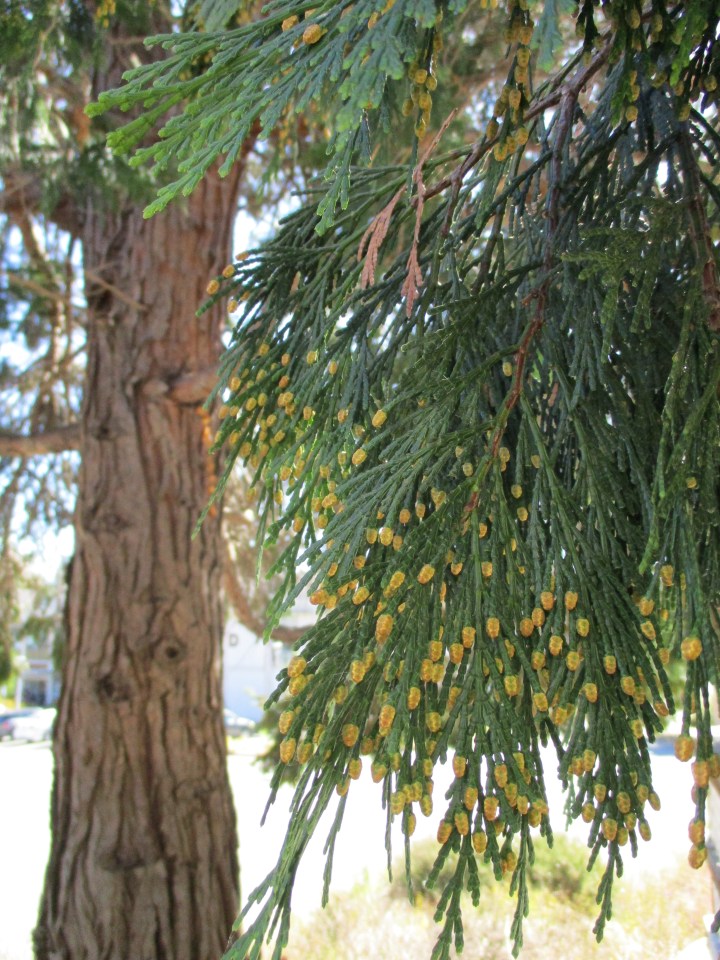 In the west, the incense cedar, Calocedrus decurrens, was made into cedar chests or paneling for cedar closets as a substitute for the more traditional Eastern redcedar (which is incidentally a big juniper). The wood is supposedly aromatic enough to repel moths from woolens and furs. The evergreen foliage is very aromatic as well, so is sometimes used for garlands at Christmas time.
 Tony Tomeo