Rhody, Carson and I are still here. We should be in Washington now. We were supposed to leave at about midnight between last Tuesday and Wednesday. Now, we plan to leave at about midnight between Sunday and Monday, and stay in the Pacific Northwest for as long as initially planned. I wrote about the delay earlier. It is why I posted no pictures of our trip yet. Instead, there are three ‘X’s and three eXotics, although the last might really be an undocumented native species. The first three ‘X’s are between generic and specific names of three interspecific hybrids. By next week, I should get six pictures from Oregon and Washington. Incidentally, the Official State Flower of Washington was nicely named after Rhody.
1. Prunus X subhirtella, winter flowering cherry was featured for the garden column last week, or later in some papers. This picture was not used. I did not want it to go to waste.

2. Pelargonium X hortorum, zonal geranium is nothing special, but I happen to like this red too much to discard it after it was clobbered by a car. I can only hope it was a Buick.
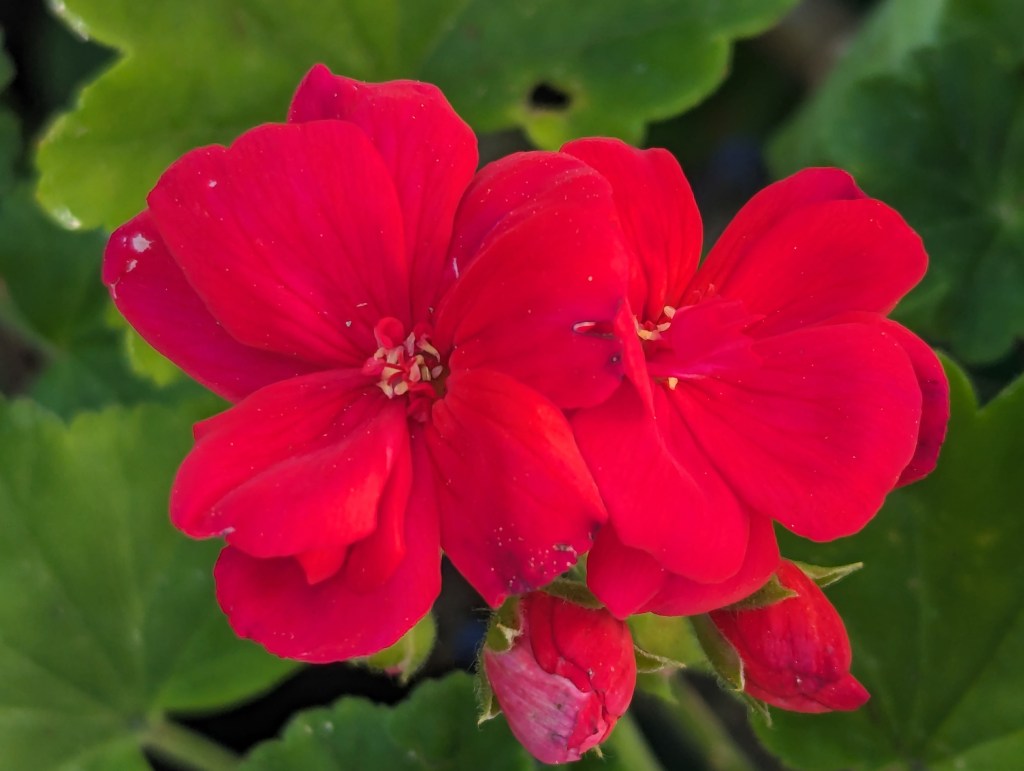
3. Freesia X hybrids, freesia is likewise nothing special, but got my attention just after I mentioned feral freesia in the garden column. It is misplaced but too colorful to be feral.

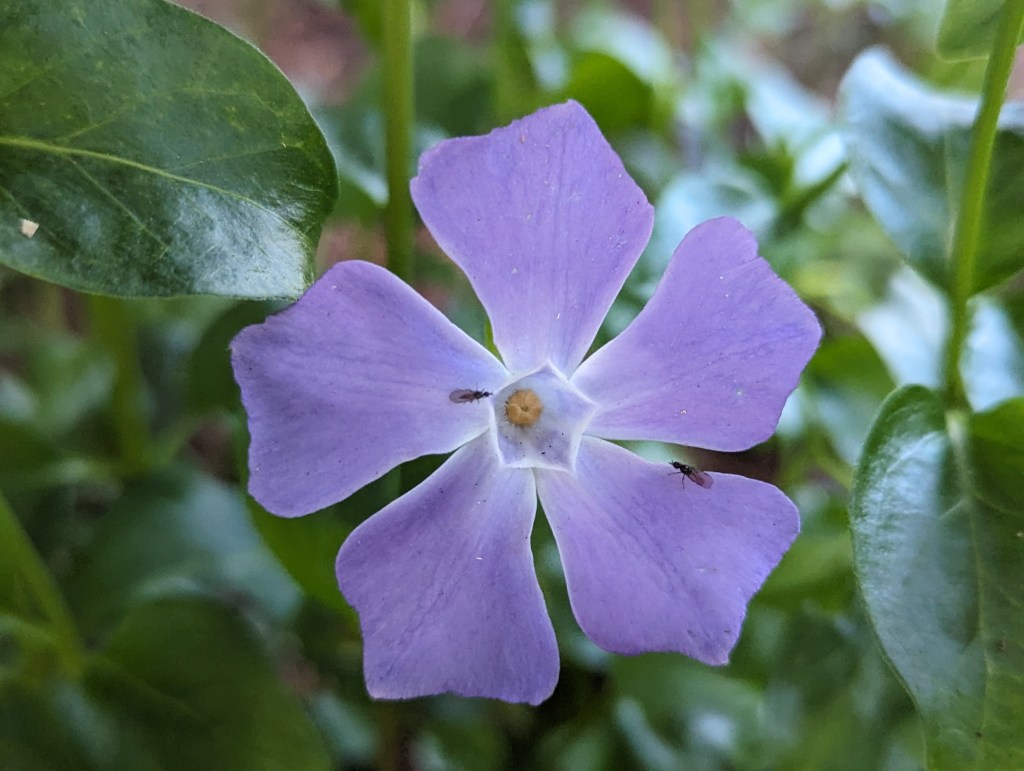
4. Vinca major, greater periwinkle is an aggressively invasive naturalized exotic species. Less pretty aggressively invasive naturalized exotic species would replace what I remove.
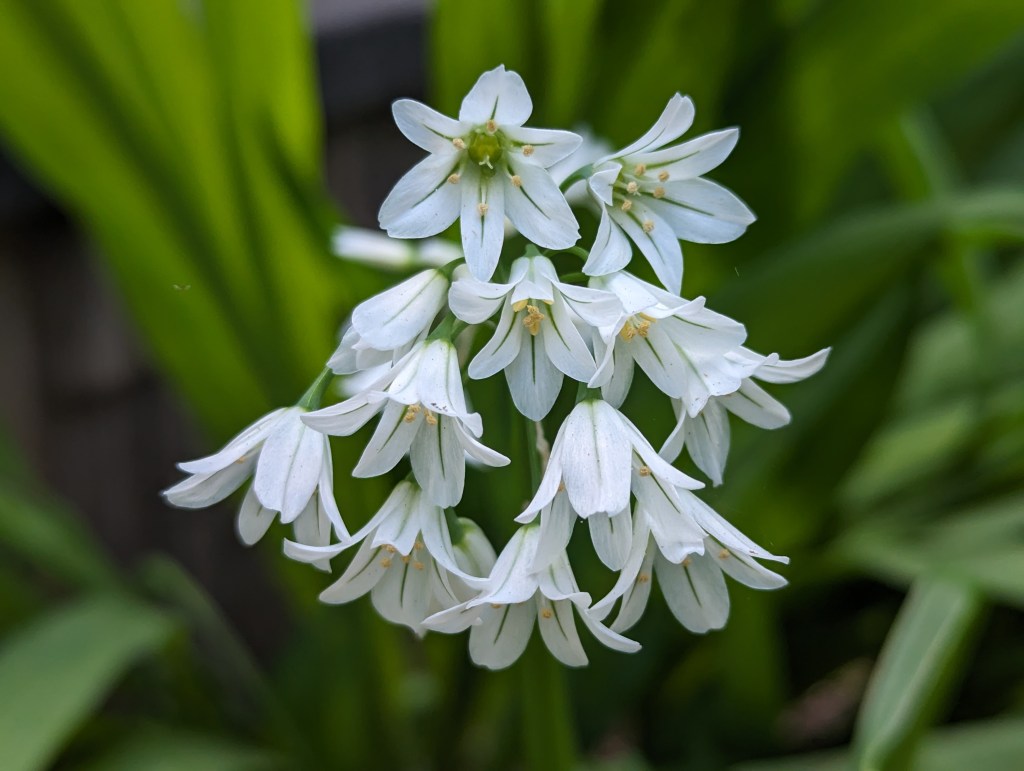
5. Allium triquetrum, wild onion is supposedly another aggressively invasive naturalized exotic species. It is so established that I had always considered it to be a native species.
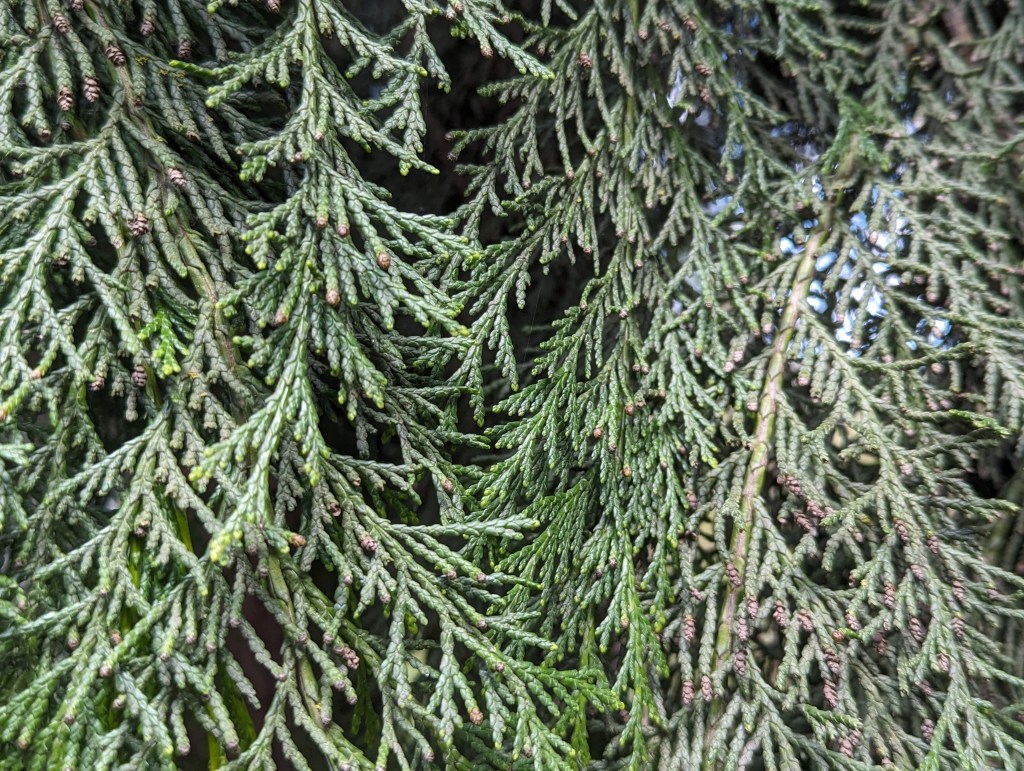
6. Thuja plicata, Western red cedar is supposedly a naturalized species, but could be an undocumented native species. No one seems to know; but it is not aggressively invasive.
This is the link for Six on Saturday, for anyone else who would like to participate: https://thepropagatorblog.wordpress.com/2017/09/18/six-on-saturday-a-participant-guide/

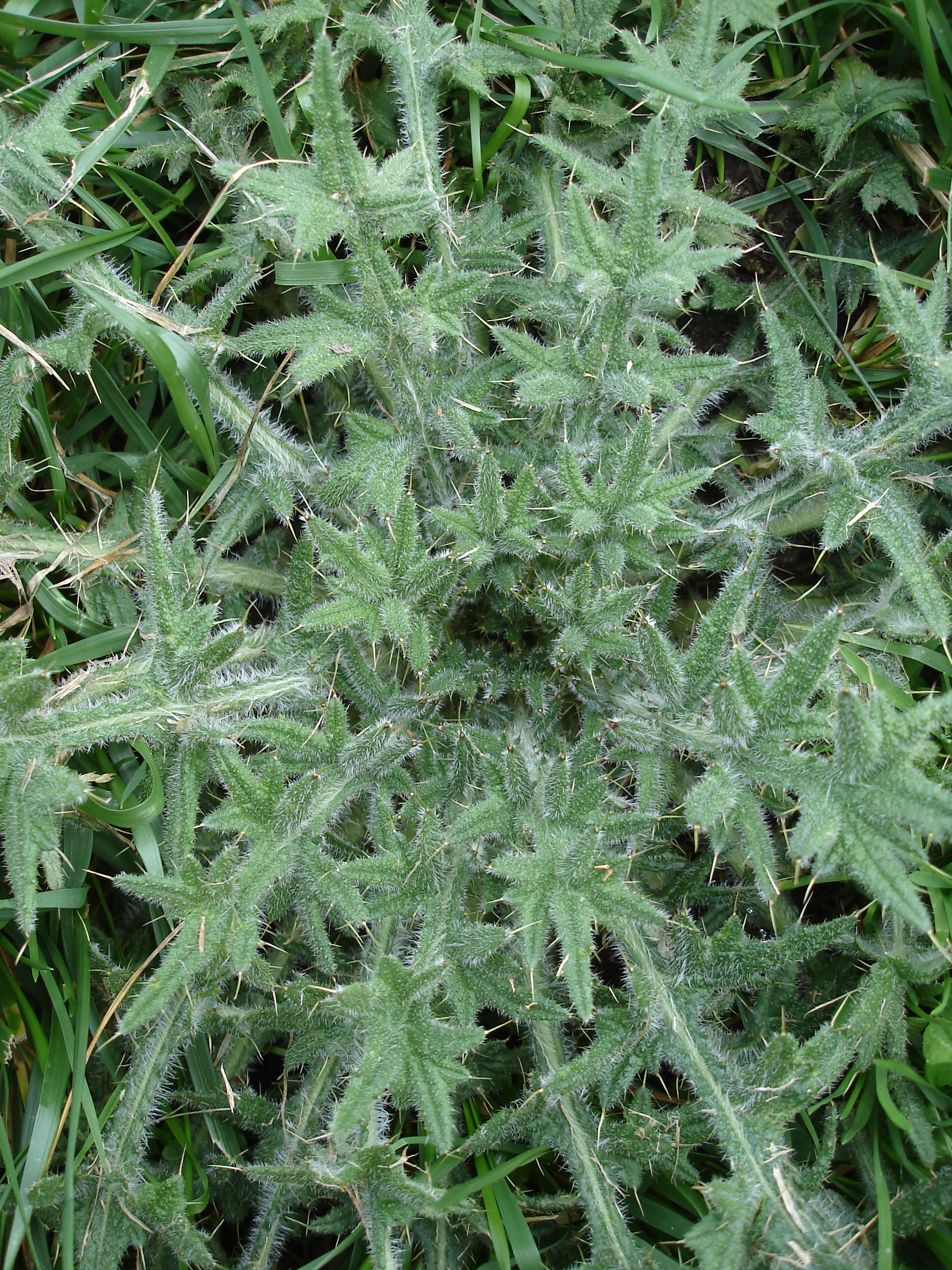
 It is known by a few different common names, including ‘Andean pampas grass’, ‘purple pampas grass’, and simply ‘pampas grass’. ‘Andean pampas grass’ sounds almost like an oxymoron, since the Andes Mountains are in a separate region to the west of the pampas region of Uruguay and eastern Argentina. ‘Purple pampas grass’ is even sillier, since it is devoid of any purple.

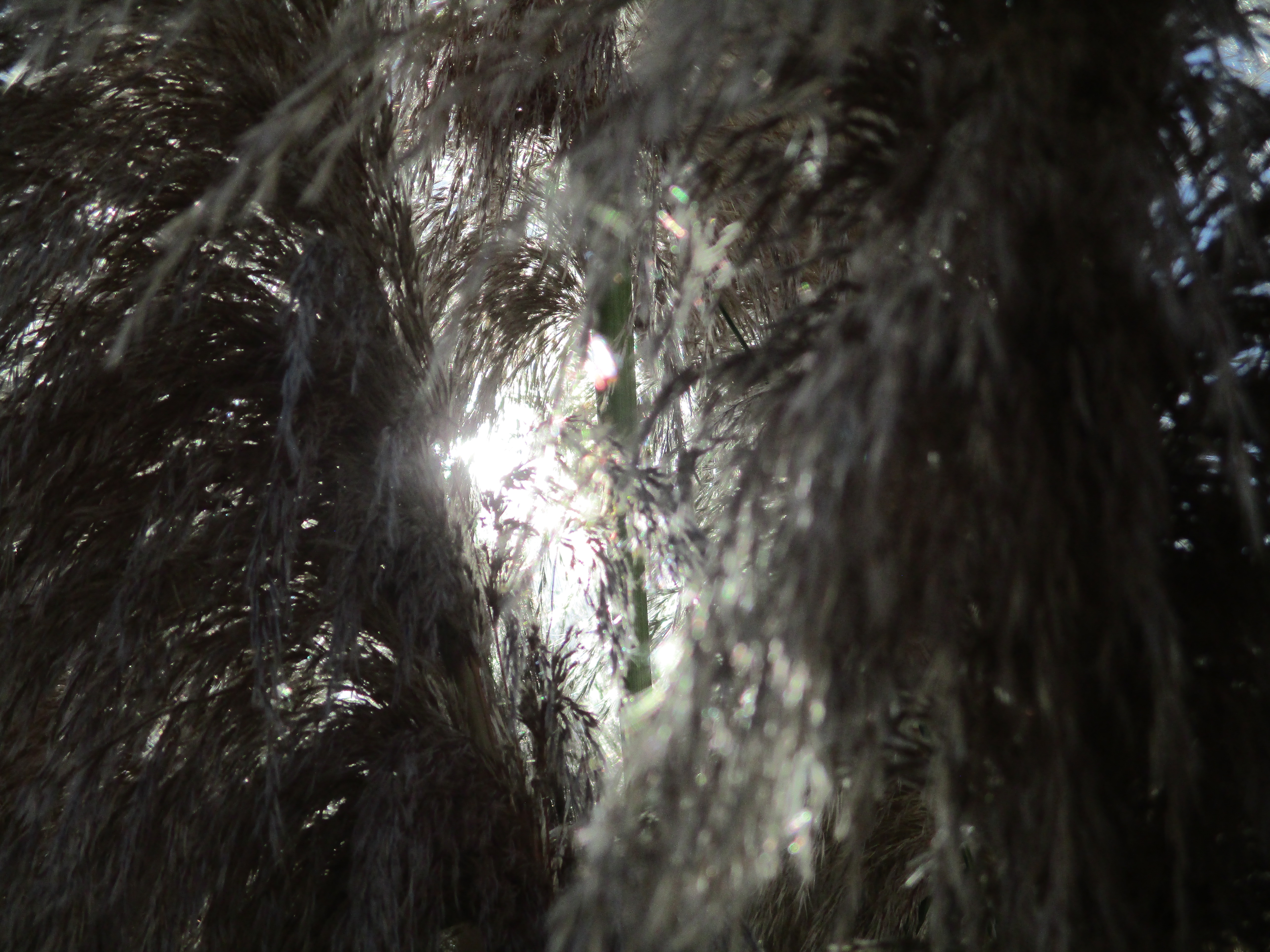
 This is a relatively new development. The first few arrived here only two years ago. By last year, a few more arrived to make a significant herd that split into two smaller herds. Now these two smaller herds are quite significant. If they continue to proliferate as they have been, they will become more of a problem. They are already shredding flowers and colorful berries that are within their reach, and digging up flexible irrigation hoses.
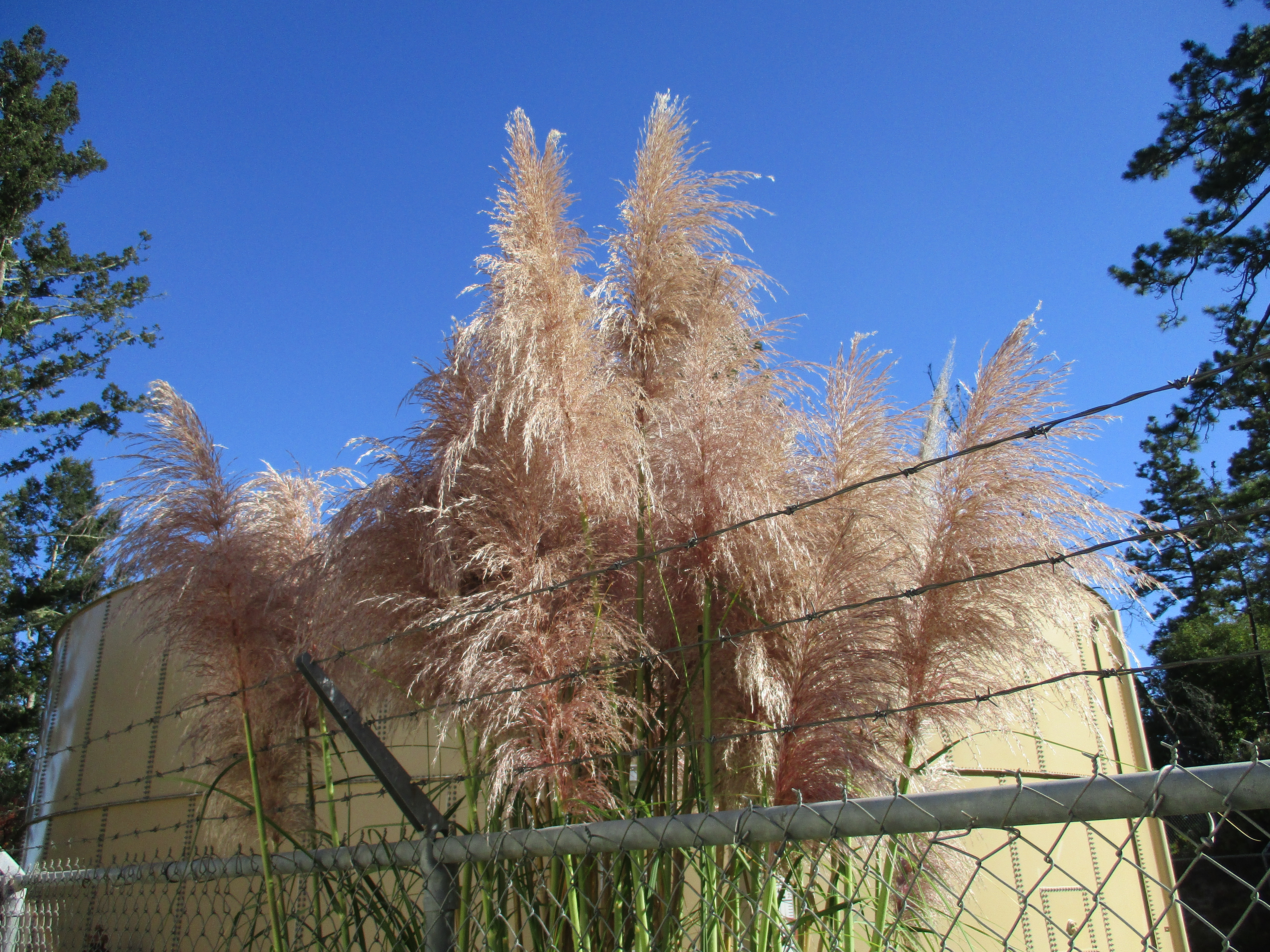 Just about everything in this picture is icky! This species of pampas grass, Cortaderia jubata, is one of the most aggressive and noxious of the invasive exotic specie that have naturalized here. It seems to be incarcerated behind the weathered cyclone fence with barbed wire on top. The big water tank is is a harshly stark background. The tired old Douglas firs and ponderosa pines to the left and right seem to be unhappy here. The small coast live oak that is at least trying to make a more cheerful appearance is only oppressed by the surroundings. Only the clear blue sky above lacks the ick factor.
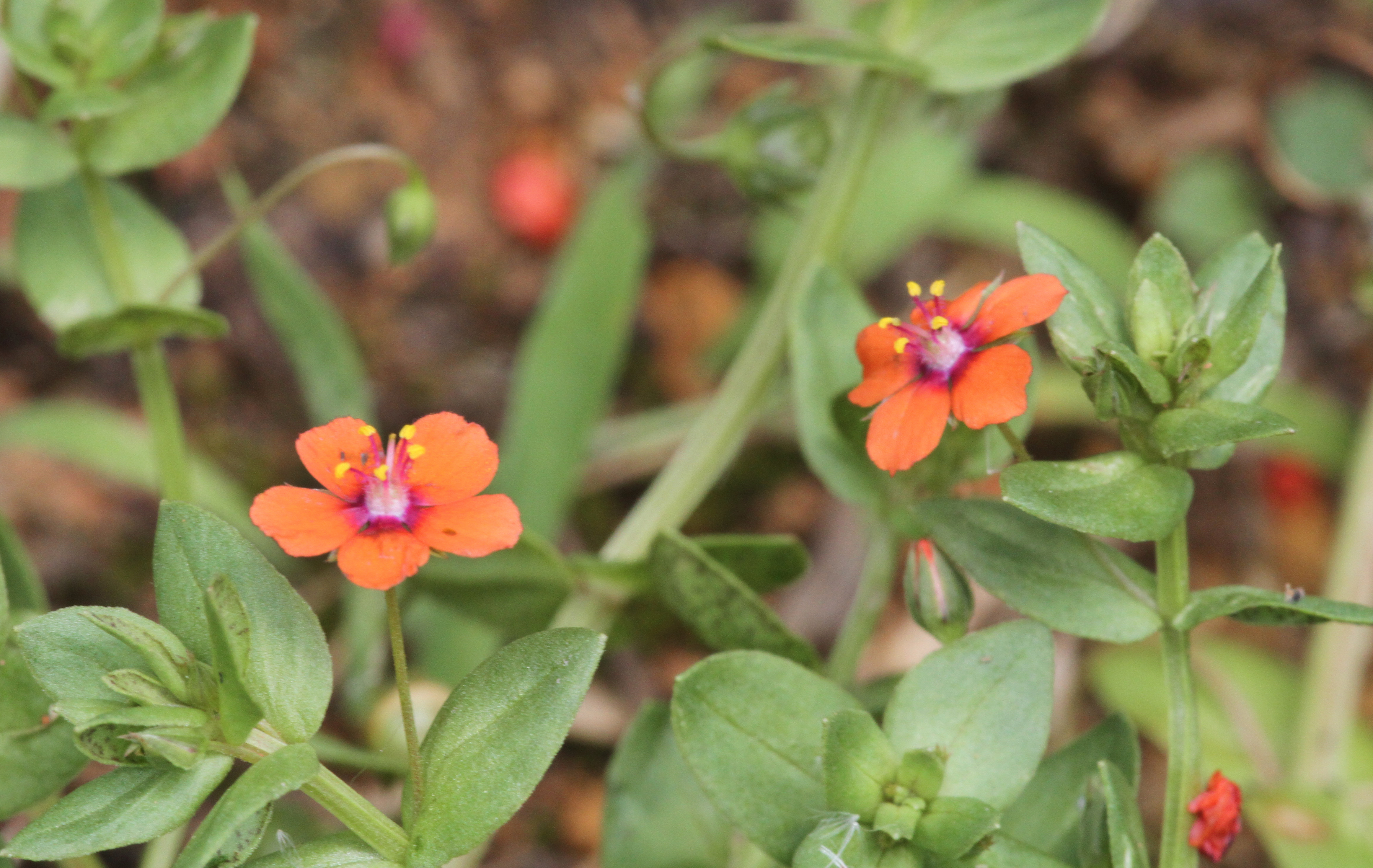 It is pretty but pervasive. Actually, I do not really find scarlet pimpernel to be all that appealing, but this is how someone who reads my gardening column in the Santa Ynes Valley News describes it. Embarrassingly, she requested that I discuss scarlet pimpernel while it was more of a problem back on June 7, but I only recently read the message. By now, it is already dying back for autumn, and is completely deteriorated in dry and hot exposed areas. It will be back next spring, and will bloom with tiny peachy orange flowers so that it can throw tiny but ridiculously abundant seed by summer before anyone notices. Flowers can be other colors in other regions. The sprawling stems can spread more than a foot wide, and can get up to about ten inches high if sprawling over other weeds. The tiny and soft leaves are arranged in opposing pairs. Scarlet pimpernel may not seem like much of a threat now that it is deteriorating, but new seedlings will be profuse early next spring, and can compete with seedlings of more desirable plants.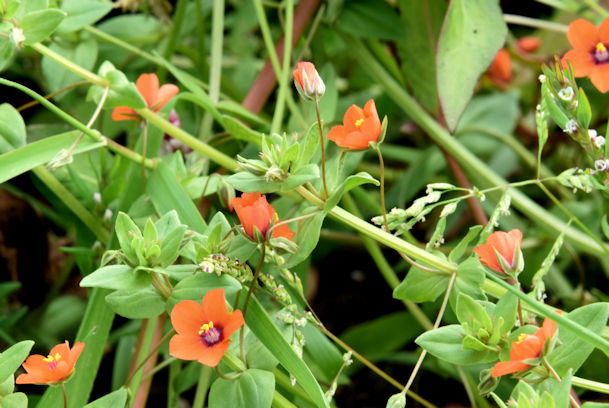



 Nature has been getting by just fine for a very long time before humans started to interfere. It has survived all sorts of catastrophes literally longer than anyone can remember. It was here when dinosaurs were exterminated by a meteorite or comet or vulcanism or whatever catastrophic yet natural event finished them off. In fact, Nature was here for all of the few mass extinction events of the very distant past, including the Permian – Triassic Extinction, which only about 4% of life on earth survived! We all know that “It’s not nice to fool with Mother Nature.”, or serve her margarine that tastes like real butter; but we should also realize that it is rather presumptuous to think that we can be more efficient with correcting all environmental damage. Very often, it is best to let nature do what nature does best.
 Tony Tomeo