Sun Scald

Vegetation needs sunlight, but sunlight can be excessive.

It was sad to see the removal of a rather mature but unstable Italian stone pine from the neighborhood. Fortunately, the arborist who removed it was careful to avoid damaging the garden below. Yet, after all the effort, the garden did not remain undamaged for long. The healthy bear’s breech (acanthus) and young Australian tree ferns that had been shaded by the dense canopy of the pine got roasted by the first warm weather.

These perennials got roasted because they were adapted to shade, but could not adapt soon enough to exposure to direct sunlight. This illustrates one of the main problems of topping trees and exposing the interiors of formerly shaded canopies. (‘Topping’ is the disfiguring removal of major portions of the upper canopies of trees.) Like perennials on the ground, foliage as well as stems and main limbs within the canopies of topped trees gets damaged by increased exposure. Although most perennials eventually adapt and recover, topped trees are often damaged too severely to recover.

Foliage can be replaced, but stems and limbs are not so expendable. Deciduous trees and most evergreen trees will replace damaged foliage within the first year. Deciduous trees that get topped while dormant in winter actually do not exhibit foliar damage, since foliage that emerges in spring will be adapted to the exposure that they grow into. However, formerly shaded stems that suddenly become exposed by topping are easily damaged by sun scald, which is like sunburn of the bark.

Sun scald deteriorates into open wounds which leave inner wood susceptible to decay. Minor sun scald of small limbs can eventually be compartmentalized (healed over) before it becomes too much of a problem. Major sun scald can destroy main limbs and even trunks, causing additional disfigurement to trees that were already disfigured by topping! Even if sun scald does not develop, the open wounds left from topping are often too large to be compartmentalized, so remain open to decay.

Regardless of sun scald, topping is more directly disfiguring, by removing well structured limbs and trunks, and causing the development of disfigured and structurally unsound limbs. Secondary growth that emerges in response to topping or severe pruning is weakly attached to the mature limbs that it emerges from because it did not grow together with the mature limbs. It breaks away easily in wind, or simply because it grows too vigorously and soon gets too heavy for weak unions.

Topping actually causes more problems than it is thought to remedy. In some situations, it is actually more practical to remove potentially hazardous trees than to make them more hazardous by topping them.

Sun Exposure Relative To Orientation

Sun exposure changes with the seasons.

Understory plants, which tolerate various degrees of shade, are more popular than ever. Basically, smaller modern gardens amongst larger modern homes are shadier than ever. Densely evergreen trees that provide privacy for such gardens also provide more shade. Sunlight can be scarce. It may be helpful to know where to locate optimal sun exposure.

The sun moves from east to west as each day gets warmer. It does so more or less to the south of vertical. It is a bit farther to the south for winter than for summer. Such orientation and motion determine sun exposure within home gardens. Each side of a house, garage or fence faces one of such exposure or another. Eaves might provide shade from above.

Eastern exposure is good for plants that crave some direct sun exposure but not warmth. Azalea, rhododendron, andromeda and hydrangea prefer such exposures. They receive enough sunlight to bloom, but not so much that their foliage scorches. They enjoy partial shade before sunshine gets uncomfortably warm. Eastern exposures are sunny but cool.

Northern exposure is good for plants that do not require much sun exposure. Hydrangea may be somewhat lanky within such situations. Clivia, elephant ears, philodendrons and ferns may be better options. Upper floors and eaves significantly enlarge the shadows of northern exposure. Shadows are also larger in winter while the sun is lower to the south.

Western exposure is good for plants that crave both direct sun exposure and warmth. It is the opposite of eastern exposures, but is certainly no less sunny. It is merely warmer. Lily of the Nile, lavender, oleander and bougainvillea enjoy such sunny warmth. Some types of ferns and elephant ears may scorch with such exposure. Eaves delay direct exposure.

Southern exposure is good for plants that crave full sun exposure, but tolerate heat. Most plants that enjoy western exposure can also enjoy southern exposure. Many vegetables, with regular watering, are more productive with such exposure. Eaves provide shade for the warmest summer weather. They provide less shade while the sun is lower for winter.

Understory Is Made For Shade

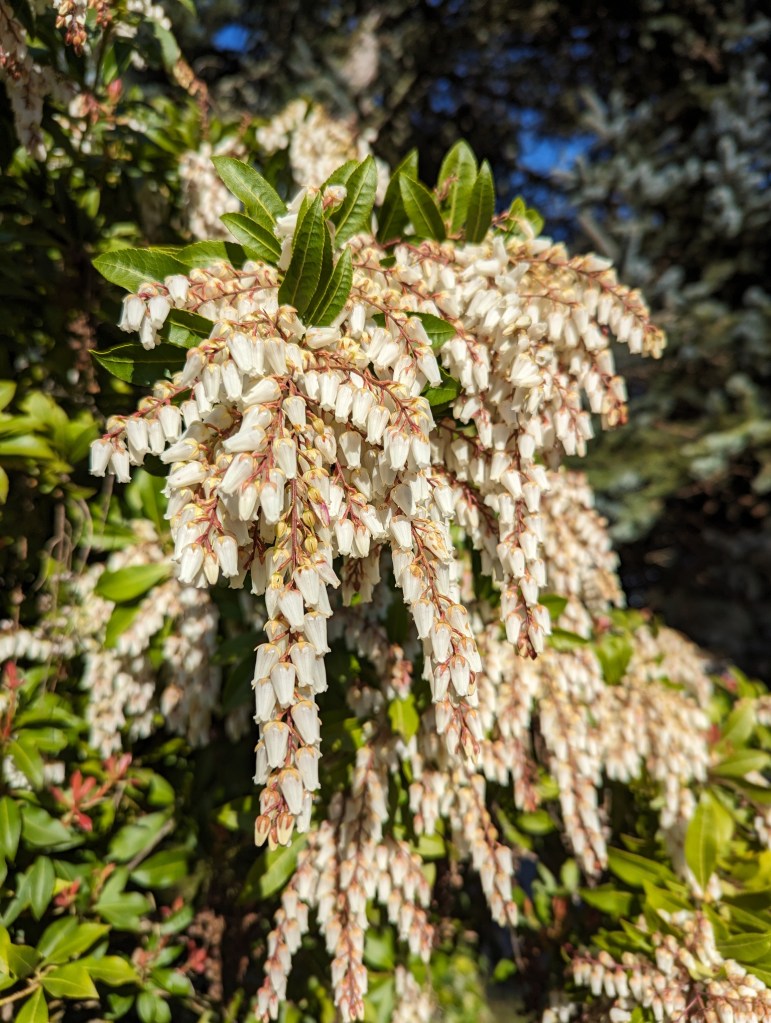
Andromeda tolerates a bit of shade.

Shade influences every ecosystem. Where it is scarce, some vegetation adapts to harsh exposure to sunlight. Some develops glaucous foliar color to reflect some of the sunlight. Some develops tomentum, or foliar fuzz, to shade its foliar surfaces below. Where shade is abundant, understory vegetation adapts as efficiently. Essentially, it is made for shade.

Understory vegetation naturally grows beneath larger trees and shrubbery. It is therefore more tolerant of partial shade. Some tolerates significant shade. Ferns that inhabit forest floors beneath shady redwood trees are notable examples. So are most houseplants that originated from tropical rainforest. Naturally, most live in the shade of bigger forest trees.

Not all understory vegetation is diminutive. Some Japanese maple trees can grow rather large. However, they naturally inhabit forests of trees that grow larger. Some palms begin as understory vegetation to become the tallest trees of their gardens. Their foliage simply adapts as it becomes more exposed. Banana and tree fern foliage might adapt similarly.

Such adaptation is an advantage now that home gardens are becoming shadier. Modern homes are taller, so produce bigger shadows than older homes. They are closer to other tall homes with comparable shadows. Fences are higher to compensate for the proximity of homes. Garden spaces are more compact, with less space that is not partially shaded.

No vegetation survives without sunlight. Understory vegetation is simply more tolerant of partial shade than most other sorts. It is adapted to it, just as some vegetation is adapted to extreme exposure. Generally, understory vegetation is deep green, to absorb as much sunlight as possible. For the same reason, individual leaves are typically large and lush.

Cast iron plant seems to tolerate more shade than any other understory vegetation. Kaffir lily and hosta tolerate almost as much shade as some ferns. Rhododendron, azalea and andromeda prefer only partial shade. Excessive shade inhibits bloom. The same applies to camellia and hydrangea. Realistically, all species of understory vegetation are unique. Each tolerates a particular degree of shade that it is adapted to.

Exposure

Sunshine promoted bloom to the left. Shade inhabited bloom to the right.

Naked ladies like exposure. Amaryllis belladonna can certainly survive and actually develop lushly healthy foliage in partial shade. However, it needs sunshine to bloom. This picture above, which was recycled from yesterday when I mentioned that I might elaborate on it later, demonstrates how discriminating this species is. As mentioned yesterday, a row of naked lady bulbs extends completely across the picture from left to right. It does not extend only from the left to the middle of the picture, as the bloom might imply. Now that bloom is finishing, foliage will develop throughout the entire row, including the portion of the row that currently lacks bloom, so that the extent of their herd will be more apparent. The lack of bloom to the right is the result of the shade of a densely foliated coast live oak above. Because coast live oak is evergreen, it shades the area below its canopy through winter, when naked lady is also foliated and storing resources for subsequent late summer bloom. Those that do not get sufficient sunshine to initiate bloom within any particular season will be unable to bloom for the beginning of their subsequent season. When we installed these recycled bulbs here, we considered that bloom would likely be inhibited below the coast live oak, and that we would relocate bulbs that were too shaded to bloom, but we expected more of a transition between the shaded area and the sunnier area. This is so blunt, with bloom to the left, but none to the right. At least we now know precisely which bulbs to relocate while they are dormant next summer. Although there is technically no need to relocate them, and they can be adequately healthy here, they would be more appealing within a sunnier situation that would promote bloom.

Sunscald

Even cacti are susceptible to scald if their exposure changes.

Agave americana is a tough perennial that is naturally endemic to harsh desert climates. It not only survives, but is happy in awful heat and dry air without shade. However, a specimen that lived in my garden for about two years succumbed to sunburn and moderate heat in less than a day.

The problem was that it had been growing in a rather shady spot since it arrived. There was enough ambient sunlight to sustain it, but no direct exposure to sunlight. The typically stout steely blue leaves were consequently elegantly elongated and slightly twisted, but well adapted to their particular environment. This would not have been a problem, except that I dragged the plant out to relocate it.

In only a few hours, the leaves were roasted by exposure to sunlight. They melted and laid limp like steamed asparagus. Only the unfurled leaves in the middle remained turgid. By the next morning, the scorched leaf surfaces were already turning ashy white. Now, the desiccating foliage lays flat with slightly curled blackening edges, around the surviving meristem (terminal bud in the middle), like an angry starfish road kill taking its last gasp.

The good news is that the new foliage that eventually develops from within the presently unfurled middle leaves should adapt to the environment where the plant gets relocated to, even if the first leaves to open are not quite adapted. The bad news is that the damaged foliage cannot be salvaged, and will need to be cut before planting. I will put the plant deeper in the ground than the level it had been growing at so that the leaf stubs will be buried.

Just as people can get sunburned, plants that are sheltered can succumb to sunscald when they suddenly become too exposed. It does not always result from the particular plant getting moved, but sometimes happens when nearby plants or features change. For example, foliage of Japanese maples that have grown as understory plants to larger shade trees is susceptible to foliar sunscald if the larger trees get removed or pruned significantly. Replacing old large picture windows with more reflective windows to keep the interior cooler may reflect enough glare to the exterior to temporarily scald sensitive ferns. Aggressively pruning English walnut, avocado or silver maple trees in summer may expose sensitive bark of main limbs enough to cause bark scald.

Damage to foliage may linger as long as the foliage does, but is typically as temporary as the foliage is. Deciduous plants will drop the damaged foliage in autumn, and replace it with more adapted foliage in spring. Bark scald though can be a serious problem, since the bark is not so easily replaced in a year. One of my great grandfather’s old English walnut trees got sunscald on some main limbs when the tree was pruned for clearance from a room addition in about 1950, and remained damaged when the tree was removed about half a century later. The scalded bark decayed decades ago, exposing inner wood to decay.

Microclimates Are Distinct From Climates

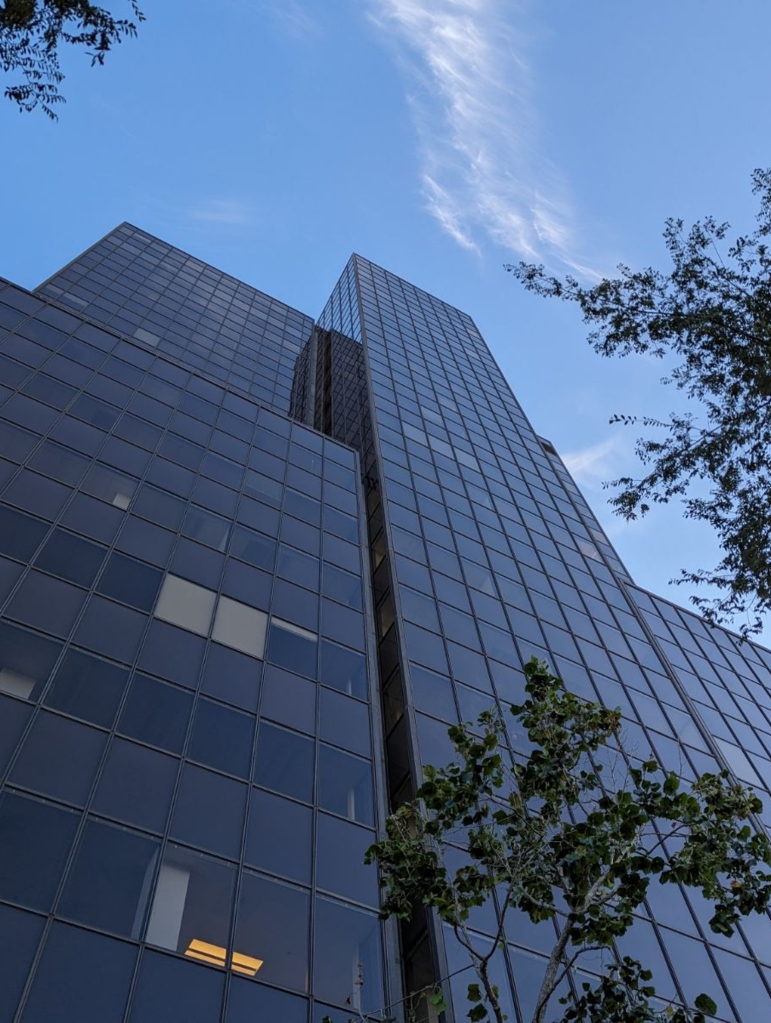
Larger buildings inevitably produce larger microclimates.

Climates and geology are why cinema and television industries are so established here. Cinema evolved in Niles before relocating, with the evolution of television, to Hollywood. The diversity of local climates, geology and associated scenery was the primary appeal. Farmers of all sorts had already been exploiting such climates as well as microclimates.

Climate is a regionally prevalent pattern of weather. Mediterranean or chaparral climates are prominent locally. Coastal, desert and alpine climates occupy other relatively nearby regions of California. Variations of geology influence weather, which determines climate. This comprises mountains, valleys, various altitudes and proximity to the Pacific Ocean.

Microclimates, as their designation suggests, are small climates within big climates. With such a mix of climates here, microclimates might be difficult to distinguish. Some climate zones of steep coastal hillsides are very narrow, for example. Yet, if they are distinct from those for higher and lower elevations, they are climates. Microclimates are even smaller.

For microclimates, exposure is as relevant as endemic climates. Such exposure can not change climate, but modifies its influence. For example, large eaves and warm walls can provide localized shelter from frost. Southern slopes of hilly terrain are likely a bit sunnier and warmer than northern slopes. Buildings and fences shade garden area to their north.

Many microclimates, such as those that involve terrain or forest shade, are natural. They are generally less dynamic than unnatural microclimates. Forest shade changes only as fast as associated trees grow or die. Only major disruption, such as fire or timber harvest, accelerates such slow change. Terrain may not change significantly for millions of years.

Unnatural microclimates are more dynamic and unpredictable. Taller modern homes and fences shade more within adjacent gardens. Skyscrapers can extend their shadows into gardens a few blocks away. Conversely, some can reflect sunlight to adversely increase heat and glare. Expansive and unshaded pavement likewise increases ambient warmth.

Physics of Exposure

Pavement reflects glare and enhances harsh exposure, which can roast small plants.

How can so many colorful annuals and perennials be so surprisingly happy in the many large pots on the sidewalks in front of downtown shops? Downtown does not seem like it should be so comfortable to them, with all the concrete, glass, stucco and all sorts of other reflective surfaces to enhance the harsh exposure. Yet, the buildings and street trees instead provide a bit of shade to soften exposure and hold in a bit of ambient humidity. Some areas are even too dark for many plants.

Exposure is as important to selection of appropriate plants as climate and soil (or potting media) are. Plants that need full sun exposure will not perform like they should in partial shade. Those that want partial shade may get roasted by too much sunlight.

Walls, fences, and windows to the north can enhance the harshness of exposure by reflecting glare. To the south, they can conversely limit exposure with shade. Such structures to the west increase morning warmth but provide shelter from afternoon heat. To the east, these features are not so advantageous, since they shade morning sun, but enhance afternoon heat. Pavement adds to glare without providing any shade.

As if this is not confusing enough, there are  many more factors to consider. Coarsely textured or darkly colored surfaces do not reflect glare as severely as smooth or lightly colored surfaces do. Broad eaves, like those that adorn classic ranch style architecture, not only add more shade, but also limit reflected glare from walls below. Taller buildings, like two story Victorian houses, create more shade than single story Spanish colonial houses with flat roofs. Even shade trees are variable, ranging from the dark evergreen shade of Southern magnolia, to the light deciduous (absent through winter) shade of silk tree.

Most plants do well within a significant range of exposure, between full sun and partial shade. A few, like agaves, yuccas, oleanders and most eucalyptus, are resilient to harsh exposure, but would not survive significant shade, and would look tired in even partial shade. Even fewer, like ferns, fuchsias, impatiens and Japanese aralia, tolerate darker shade (although none survive in complete shade), but would get roasted if too exposed. Shade, reflected glare, and anything that might affect exposure must be considered in the selection of appropriate plants for each particular application.

Shade Imposes Limitations On Gardening

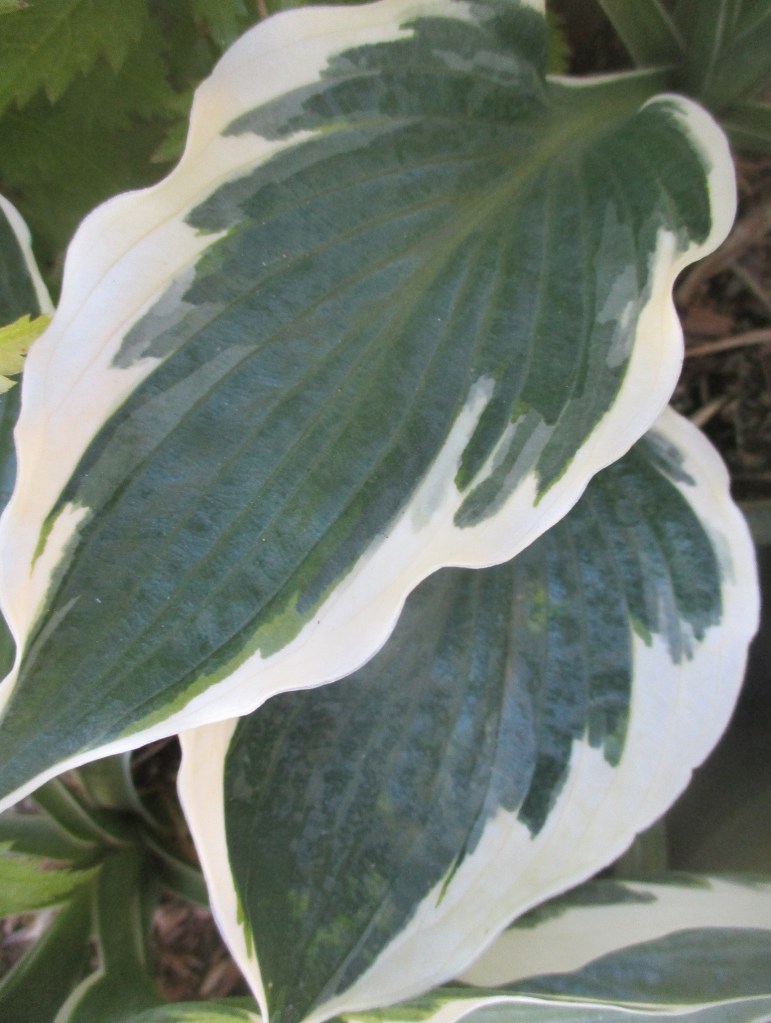
Hosta is tolerant of moderate shade.

Home gardens are becoming shadier. Modern homes are taller to fit closer together. Modern fences are taller to compensate. Densely evergreen trees and large shrubbery compensate more. Taller homes and fences, and denser vegetation, shade more of their smaller modern parcels. Not much sunlight can reach the soil of modern home gardens.

Portions of a garden that are too shady for gardening are not necessarily useless. During warm weather, patios, sheds and workspaces are cooler with shade. Koi generally prefer shade to sun exposure most of the time. Compost piles and woodpiles need no sunlight. Such utilization of shady areas leaves more sunny areas available for actual gardening.

Deciduous trees that let warming sunlight through for winter are less practical nowadays. They do not always obscure undesirable scenery as trees in modern landscapes should. Warming winter sunlight is not so useful to energy efficient modern homes anyway. It is useful for gardening though. That is why smaller evergreen trees are now more practical.

Such trees or large shrubbery can do what they must without creating too much shade. If they get only high enough to hide nearby windows, they should not shade solar panels. Nor should they fill eavestroughs with debris. Perhaps more importantly, they allow more sunlight through than larger trees would. Lower vegetation appreciates what it can get.

Some plants tolerate more shade than others. Some of the most tolerant are understory species. They naturally live within the partial shade of larger plants. Many have big dark green leaves to maximize sunlight absorption. Fern are familiar shade tolerant plants, but have finely textured foliage. Coleus and hosta have exquisitely colorful variegation.

Because most plants enjoy sunlight, the selection of plants for shade is limited. Rhododendron and azalea have a reputation for tolerance of shade. However, too much shade inhibits their blooms. Camellia and hydrangea tolerate a bit more shade, with less inhibition. Cast iron plant is a famously shade tolerant foliar perennial. Kaffir lily tolerates almost as much shade, and blooms splendidly.

Humidity And Wind Affect Heat

Heat is more than mere temperature.

Gardening is not so much fun when the weather gets as warm as it has been recently. It is more comfortable to stay inside with air conditioning, or at least where it is shadier. The plants out in the garden are on their own. Except only for those that are potted, they do not have the option of coming in out of the heat.

Most plants actually do not mind the sort of heat that is uncomfortable for us. Some actually enjoy it. The problem is that heat often occurs in conjunction with other weather conditions that can collectively become really unpleasant for plants.

Minimal humidity makes otherwise unpleasantly warm weather more comfortable for us, but can desiccate foliage that prefers more humidity. Japanese aralia, fuchsia, rhododendron, split-leaf philodendron and many other plants that should not mind warmth can get roasted if warm weather is also too dry. Because sunlight enhances the process, exposed foliage is much more susceptible to damage. To make matters worse, sunlight is more penetrating through clear dry air.

Wind that makes us feel a bit cooler in warm temperatures can likewise cause desiccation as it draws more moisture from foliage. Finely textured plants like Japanese maple, many ferns and some grasses, are particularly susceptible. Offshore wind, like the famous Santa Anna Winds of Southern California, are the worst, because they come in both hot and dry from more arid inland areas, combining all three factors of minimal humidity, heat and wind.

Many of the plants that are susceptible to damage from heat happen to be tropical or subtropical plants that typically enjoy heat as long as the air is humid and still. Others are ‘understory’ plants that naturally live in the shelter of higher trees, so do not like direct sun exposure or wind. Yet, even substantial trees, like fern pine (Podocarpus spp.) and even redwood, can get a bit roasted if the weather gets hot, dry and windy enough.

Conservation of water makes warm weather even more uncomfortable for sensitive plants. They really want more water to keep their foliage and stems well hydrated. Hosing ferns and grasses when things get really hot helps to cool the foliage, and briefly increase the ambient humidity. Because thin young bark is more susceptible to sun-scald in hot weather, pruning that would expose more bark should be delayed until the weather turns cool again.

Shade Is Not Always Cool

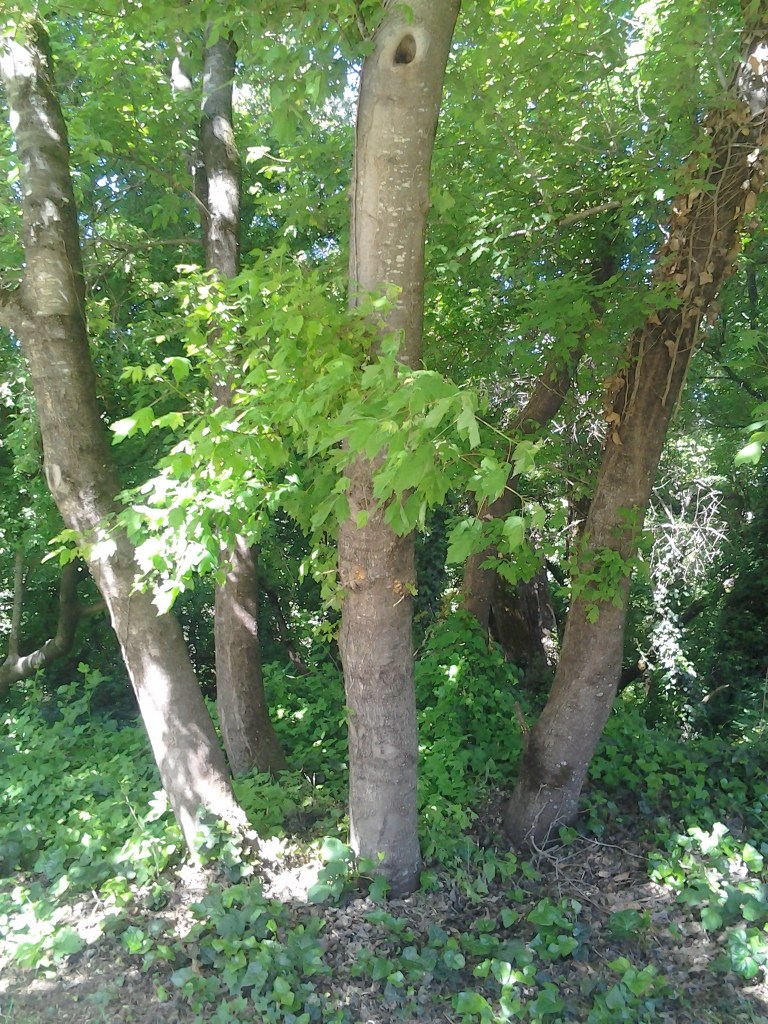
Deep shade can be a problem.

Tall Victorian houses make long shadows. Lower ranch houses make shade with broad eaves. Awkwardly big modern homes shade more of their disproportionately small gardens than the others, especially since they have such tall fences to compensate for their minimal proximity to other homes. Even the sunniest of home gardens have some sort of shade.

Like various architecture, various shade trees make different flavors of shade. Silk tree, honeylocust and silver maple make broad shadows of relatively light shade. Because they are deciduous, they allow most sunlight through while bare in winter. Southern magnolia, Canary Island pine and Canary Island date palm make darker shade throughout the year.

Spots that are shaded only by the west side of a fence get warmer afternoon sun exposure than spots that get eastern exposure in the morning. Plants that are only shaded in the morning therefore need to tolerate both warm afternoon exposure and partial shade. Eastern exposures are easier to work with, since most plants that tolerate a bit of shade also like to be sheltered from harsh afternoon exposure.

Because fences lack eaves, southern exposures lack shade, and may enhance exposure by reflecting glare and heat. Southern exposure against houses and garages is determined by the height and width of the eaves. Light colors reflect more than darker colors. Northern exposures are of course the shadiest.

Whether for shade of sunny exposure, plants need to be selected accordingly. Bougainvillea, ceanothus and other plants that like good warm exposure with plenty of sunlight will not do much if shaded. Kaffir lily, hosta, rhododendron and various ferns that prefer partial shade can get roasted if too exposed when the weather gets warm and dry (with minimal humidity).

Eastern redbud, sweet bay, Oregon grape, Heavenly bamboo (nandina), various hollies, various podocarpus and both English and Algerian ivies are some of the few plants that are not too discriminating about their exposure, and will be just as happy with partial shade as with full exposure. Hydrangea, camellia, fuchsia and aucuba are nearly as agreeable, but will get roasted by harsh exposure enhanced by reflected glare from walls or pavement. All palms tolerate shade while young, but adapt to full exposure as they grow above what shades them.

Shade can change as the environment changes. Sun exposure increases if a tree or building gets removed. Remodels or newer and higher fences can increase shade. Even without such obvious modifications, large shrubbery and trees make more shade as they grow.