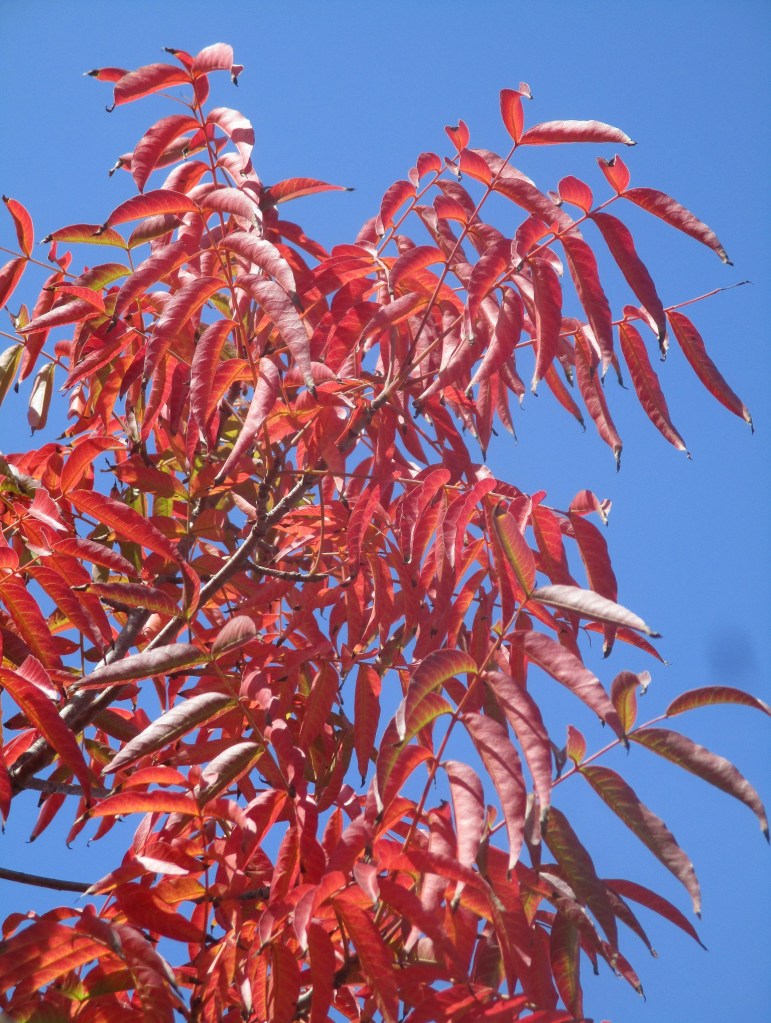
Fall foliage is underappreciated here. It is not naturally prominent enough to suggest that it should be otherwise. Most native vegetation is evergreen. Most that is deciduous turns simple hues of yellow, without much orange or red. Some just gets shabby and brown as it defoliates with minor chill. Native vegetation does not represent total potential, though.
Contrary to common beliefs, local weather is not too mild for fall foliage to develop color. Only a few locally rare deciduous species need cooler weather for such color. Only a few deciduous species prematurely shed too much to develop their color for fall. Colorful fall foliage really could be more prominent within gardens than it is. It merely is not a priority.
Many home gardens here are within suburban or urban situations. Evergreen vegetation is therefore useful for privacy or to obscure undesirable views. Winter weather is not cold enough for evergreen shade to make it significantly colder. Some believe that deciduous vegetation is messier than evergreen vegetation. Some find it less appealing while bare.
Actually, evergreen foliage is generally more persistently messy than deciduous foliage. Although it sheds less abundantly, it does so more continuously through longer seasons. Some never stops shedding. Ultimately, the quantity of its detritus is at least comparable to that of deciduous foliage. Deciduous foliage sheds more profusely, but does so briefly.
Efficient shedding could be an incentive for deciduous vegetation. Sunnier conditions for winter could be another, whether or not it adds a bit of warmth. The color of fall foliage is obviously worthy of consideration also. Some types are more colorful than others. Some are more reliable than others. Ultimately, there is quite a bit of fall foliage to choose from.
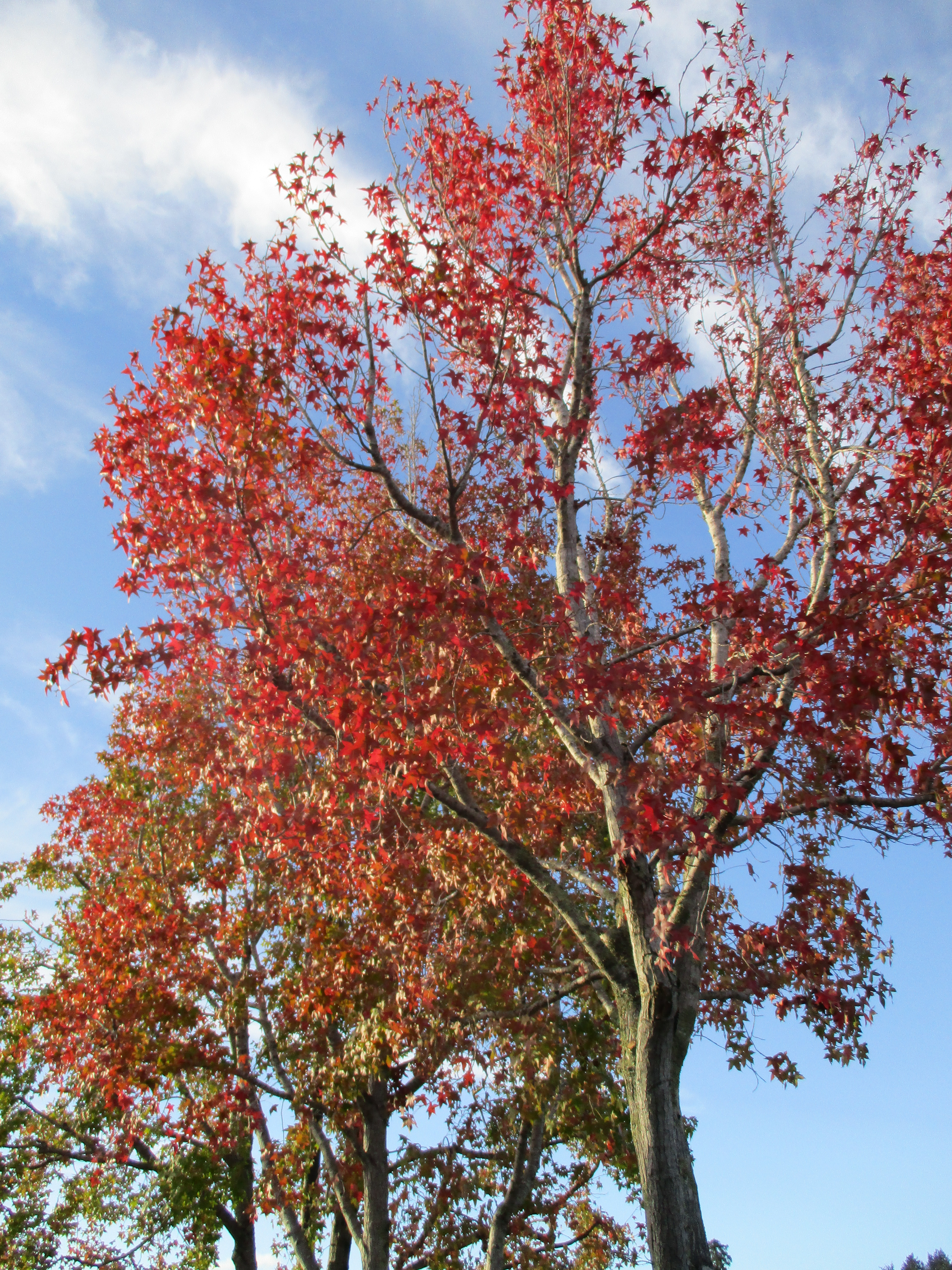
Sweetgum, pistache and flowering pear develop the most exquisitely colorful fall foliage. Their color ranges from bright yellow, through orange, to deep red. Sweetgum is messier than the others, but only because it retains its fall foliage longer. Crape myrtle is smaller, but comparably colorful. Ginkgo is quite reliable for exceptionally brilliant yellow foliage, early in fall.


 Ready or not, it will be autumn in just a few days. Formal hedges can be shorn one last time if they need it. They will not grow much until spring. Actually, photinia and the various pittosporums should not be shorn much later than now if they exhibit any dieback. Some of the diseases that cause dieback are more likely to infest freshly cut stems during rainy weather. Citrus and plants that can be sensitive to frost should not be pruned later, since pruning can stimulate new growth that will be more sensitive.
 As zinnias, petunias, cosmos and other warm season annuals fade in the cooling weather, we might add a few chrysanthemums or marigolds for color through autumn, or we might go straight for pansies, violas or other cool season annuals that will provide color through winter. In the locally mild climate, there is always potential for some sort of colorful bloom. Mild weather has advantages.
 Mild winter weather on the West Coast limits the choices for autumn color. So many of the trees, shrubs, vines and perennials that get so colorful where autumn weather is cooler do not get so colorful here. Mild weather also allows so many more evergreen plants and plants that do not get colorful in autumn to thrive here than in harsher climates. Consequently, the tougher and more colorful plants are not so common.
 I prefer to call it ‘autumn’. It sounds prettier. Perhaps it even sounds a bit more exotic, like something that happens in far away climates were the seasons are more distinct, and the weather gets a bit cooler this time of year.
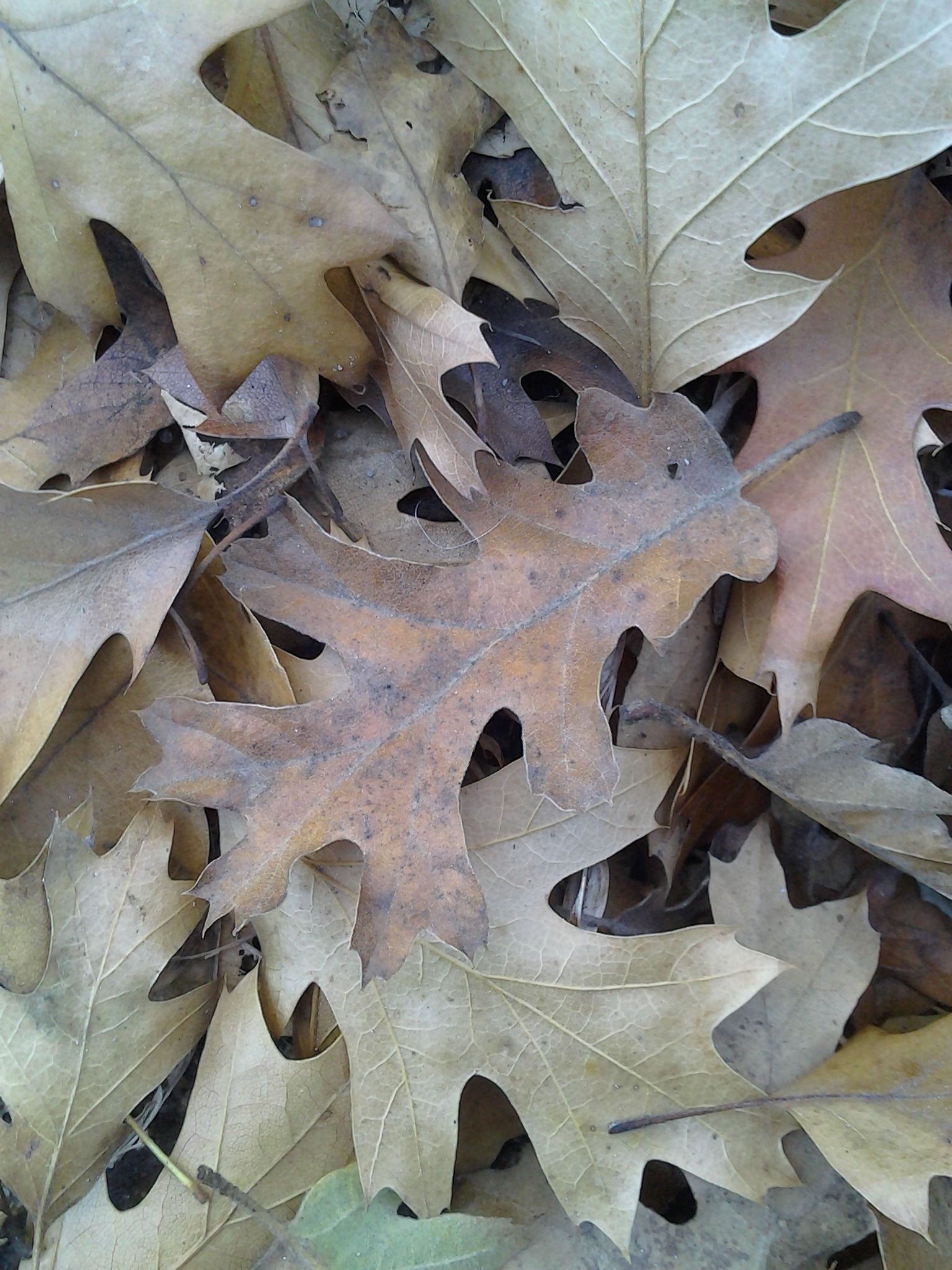
 Autumn is for planting . . . but not much else. While it is important to get certain new plants into the garden before cool and rainy weather, other gardening chores will not be necessary while plants are becoming less active before winter dormancy. Raking falling leaves is probably the biggest of the new chores that are specific to autumn.
 Tony Tomeo