 It might seem like autumn color is a bit early this year. In the wild, where there is no irrigation, native box elders, and maybe some of the cottonwoods and sycamores, are already yellowing. The box elders are already dropping some of their foliage. However, this is not caused by an early chill. It is caused by late warmth after an otherwise mild summer, and might inhibit better color later.
It is still impossible to say for certain. There are so many variables that affect autumn color, such as temperature, humidity and daylength. Some of the plants that develop color late, like flowering pear trees in irrigated landscapes, might not be bothered too much by the same variables that are troubling wild box elders now. Where autumn weather is so mild, color is unpredictable anyway.
Sudden cool weather after mild weather late in summer would have been better for autumn color. (Warmth through the middle of summer is no problem.) Foliage lingers best if the weather stays cool without getting too cold. Wind and rain will eventually dislodge foliage. Sheltered sweetgums might hold their foliage until just before it gets replaced by new foliage late in the following winter.
The earliest trees to color, as well as those that are notoriously less reliable for color, are the most likely to be inhibited by the weather this year. Besides box elders, cottonwoods and sycamores, other marginally colorful trees like willows, walnuts, maples, elms, redbuds, smoke trees and deciduous oaks, may develop bland color. Mulberries and tulip trees, though early, are more reliable.
Sweetgums (which are also known as liquidambars) , flowering pears, Chinese pistaches and maidenhair trees (which are also known as gingkos) are the most reliable trees for color locally. Maidenhair trees turn remarkably bright yellow. The others can be various shades of bright yellow, orange, red or burgundy red, (although Chinese pistaches do not not often get burgundy color here). Crape myrtles have the potential for the same color range if conditions are right.
 Autumn color is different every year. Sometimes, early and sudden cool weather after a mild summer promotes good foliar color that lingers longer while relaxed trees slowly realize that they should probably start to defoliate. Sometimes, early wind and rain accelerate defoliation of otherwise good color. There are a few variables that trees must adapt their performance to.
 After reading so much about the exquisite foliar color that most everyone else in the Northern Hemisphere gets this time of year, I must admit, I can get rather envious of those who experience four seasons instead of just two. The abundance of spring in the Southern Hemisphere does not help. Why have I not found a garden blog from Ecuador or Indonesia so that I have something to point and laugh at? It just isn’t fair.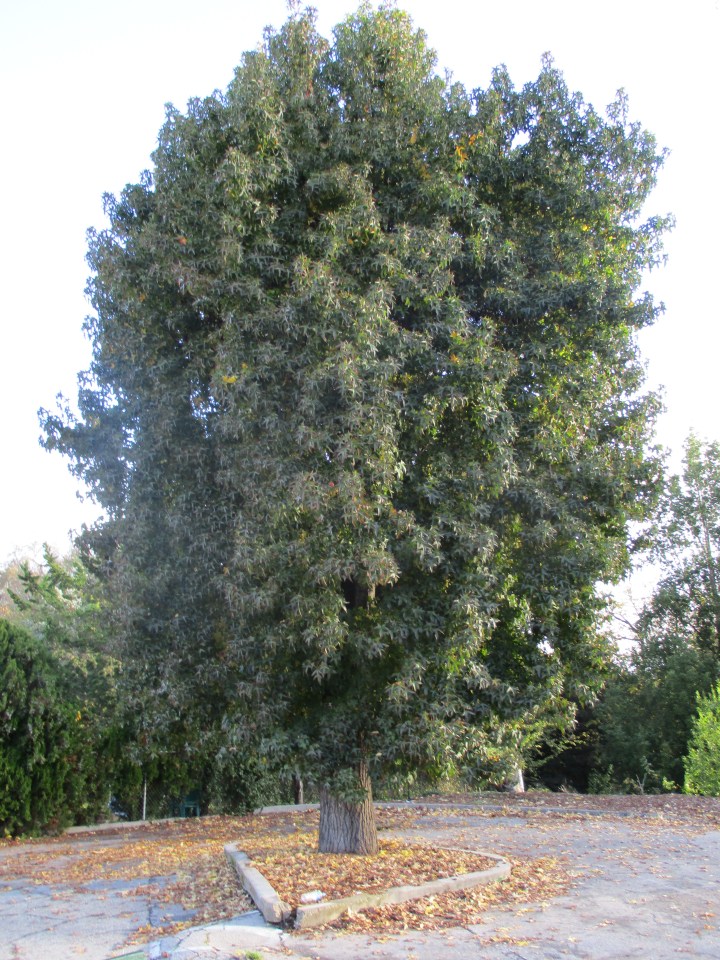
 There may not be a good time to talk about it this year. The late warmth really put a damper on some of the autumn foliar color. Some trees are dropping their leaves as soon as they start to turn color, leaving only fading green leaves in their canopies. Only the most reliable trees for autumn color, sweetgum, Chinese pistache, flowering pear and gingko, are trying to make up for lost color.
 Tony Tomeo