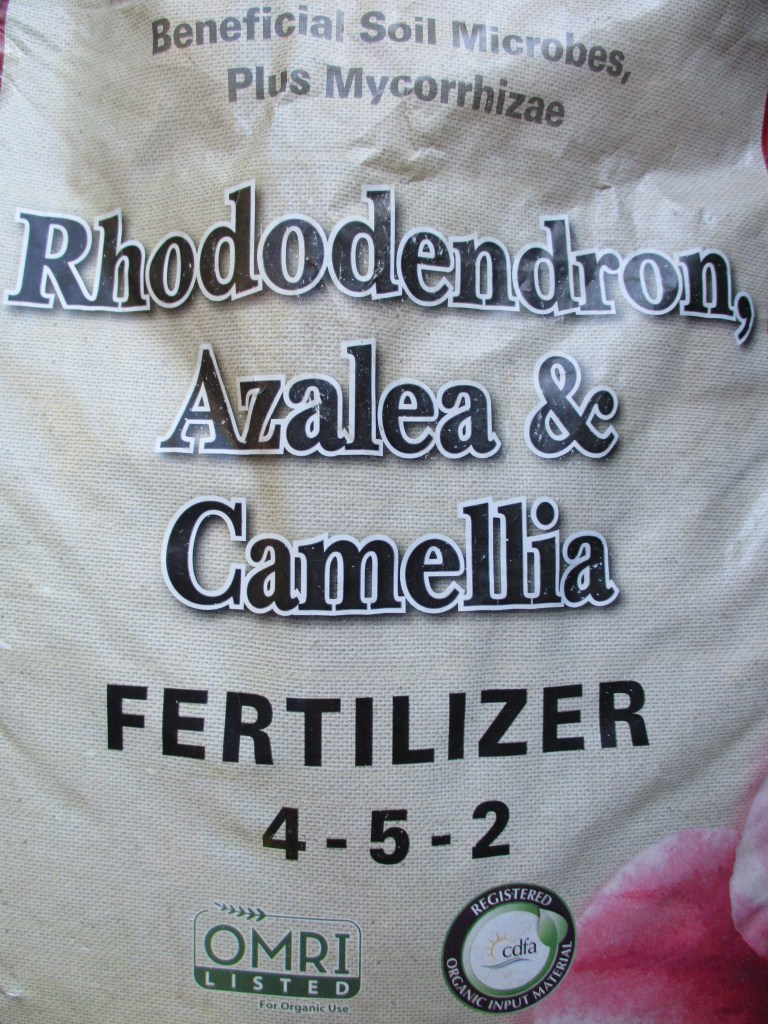
Fertilizer, in simple terms, helps plants grow. It provides a bit more of what growing plants crave. In some situations, it compensates for nutrient deficiencies. Fertilizer can be organic or synthetic. Various formulations serve a variety of purposes. Custom formulations appeal to plants with discriminating taste, such as citrus, orchids and roses. Slow release fertilizer lasts for a month or two.
Of course, proper scheduling of the application of fertilizer is very important. Fertilizer can actually become toxic with excessively frequent application. Fertilizer that provides significant nitrogen to promote vegetative growth after bloom can inhibit floral growth prior to bloom. Fertilizer that promotes root growth for new plants is unnecessary for mature plants. The diets of plants are variable.
Summer lingers later here. Regardless of the weather, it is now autumn. This is when deciduous plants start the process of defoliation for their winter dormancy. Evergreen plants are less obvious about their winter dormancy. Some remain active and even bloom through autumn and winter locally. Nonetheless, cooling weather and shortening days inhibit vascular activity of almost all plants.
Except for cool season vegetables and bedding plants, not many plants benefit from fertilizer applied this late. New plants might appreciate a bit just to help them adjust to their new environment. Some deciduous plants, particularly roses, like a last late application of fertilizer as they get ready for their long winter dormancy. Lawns might want fertilizer this late or perhaps later to stay green.
Otherwise, it is getting late to utilize fertilizer.
Late application of fertilizer can be very detrimental to plants that are sensitive to cool weather. Such plants typically finish growing through summer. By autumn, their mature foliage and stems are either resilient to minor frost, or are dieing back (defoliating) for winter dormancy. Fertilizer can stimulate premature development of new growth that will be much more sensitive to even mild frost.
 Too much of a good thing can be a problem. That is why bacon is not one of the four basic food groups. It is why sunny weather gets mixed with a bit of rain. It is why we can not give plants too much fertilizer. Since late last summer or autumn, there has not been much need for fertilizer. If fertilized too late, citrus and bougainvillea develop new growth just in time to be damaged by frost.
 Tony Tomeo