Horridculture (deferred from Wednesday) – Bad Garden Tour

The Jungalow, as I wrote six years ago, is Brent’s home and associated gardens. It is an overgrown mess of lush foliage. I perceive it to be a frivolous waste of very limited space. Everyone else perceives it to be a phenomenally luxuriant urban oasis.

The house next door is more my style. It is a compact and simple home with simple bisymmetric architecture and an even simpler landscape. If Brent had not installed a symmetrical pair of tipu trees at the curb, a symmetrical pair of Tolleson’s weeping junipers flanking the porch and a foundation planting of star jasmine, it would have no landscape at all. It might be my favorite house in the neighborhood. Brent hates it.

More specifically, he hates that it is right next door. He would prefer it to be a bit farther away, so that a home with a landscape that is more compatible with his could be next door instead.

Anyway, sadly, a back bedroom of the house next door that I am so fond of burned a few days ago. Fortunately, Brent was in his office behind his home when it happened. He noticed a red glow and heard a window break. When he investigated, he could see the fire and smoke through the hedge between the backyards, so called 911. A fire crew arrived within only a few minutes to extinguish the fire before it ruined more of the home.

Brent sent this brief and blurry video of the situation shortly after the fire was extinguished. It resembles a hasty video garden tour, but speeds past some of the more interesting features of the garden, including my homeless camp, before turning back to show smoke rising from the house next door. It is a saddening situation for the next door neighbor.

Fire! . . . Again

This article is three years old, but is relevant annually until the end of fire season.

tonytomeo's avatarTony Tomeo

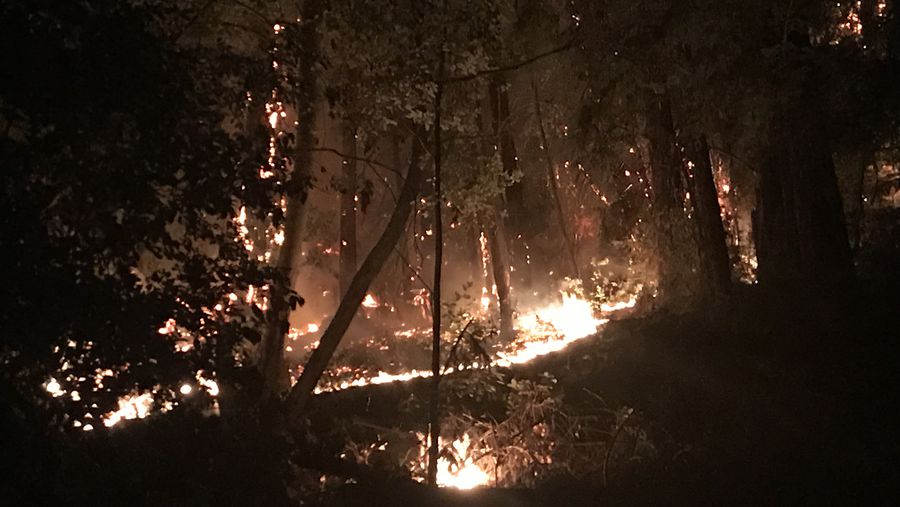
P71018“It’s not nice to fool Mother Nature.” That old margarine commercial was lame back in the 1970s, but the quote is so true. Inadvertent interference with the natural process of wildfires has unfortunately increased the combustibility of the flora of forests and wildlands throughout California. No one really meant to interfere with the process. It is just what happens when we need to protect our homes and properties from fire.
The longer the vegetation is deprived of fire, the more overgrown and combustible it becomes. If deprived of fire long enough, many plants start to succumb to insect infestation and disease, and they become more combustible as they deteriorate and die. To make matters worse, so many of the exotic (non-native) plants that have been introduced into California are just as combustible, and some are even more combustible than native flora!

Combustibility is certainly no accident on their part. It…

View original post 222 more words

CZU Lightning Complex Fires

Lightning is very rare here. For half of the year between spring and autumn, rain is also very rare. Summers are long and dry. Weirdly though, if a storm passed through between spring and autumn, it usually involves lightning, and is usually within only a few days of the Feast of the Assumption, on August 15. This time, it arrived just about an hour after midnight on August 16.

It was warm that night, so the windows were open at home. There was a gust of wind in the cottonwoods that sounded like the Santa Ana Winds of the Los Angeles region, and the electricity went out, likely because the same gust knocked a tree onto cables elsewhere. The lighting might have started earlier, but became visible without electrical lights outside. I heard no thunder.

Lightning worries us while the weather is so warm and dry. It came without rain. Previously, humidity had been minimal. There was a faint aroma of smoke in the morning, but nothing was mentioned about fires during the day. That was Sunday. Monday was warmer and less humid, and smelled notably smokier as I left for the Santa Clara Valley, where I have been since then.

Fires that were started by the lightning in Bonny Doon was finally mentioned in the news on Tuesday, but did not seem to be a major concern. By the next morning, Boulder Creek was being evacuated! Brookdale and Ben Lomond were evacuated later on Wednesday. By this morning, Felton and everyone at work were being evacuated! Scott’s Valley and environs could be next!

It all happened so fast and I am miles away. Even if I were not miles away, I would need to go miles away with everyone else who was evacuated. I was told that ash and burned leaves were falling from the sky around my home this morning. I have never seen so much smoke over the Santa Cruz Mountains, or filling the sky of the Santa Clara Valley. I hope to never see it again.

This reblogged post is from my other blog at ‘Felton League’.

via CZU Lightning Complex Fires

Six on Saturday: More Outages


Electricity is expected to be turned off again tomorrow. The weather is predicted to be too warm, windy and arid (with minimal humidity) to leave it on. Otherwise, sparks from electrical cables out in forested areas could potentially start catastrophic fires. Although unlikely, it is more likely during such weather.

Hopefully, fires will not be started by candles, oil lamps, barbecues, or any of what will compensate for the lack of electricity. One of the worst fires in history here was incidentally started by sparks from a generator.

Trees are regularly and efficiently pruned for clearance from electrical cables. That does not fix everything though. Utility cables can spark even without trees blowing into them. Many trees in many areas are much higher than the utility cables, so can drop limbs onto them.

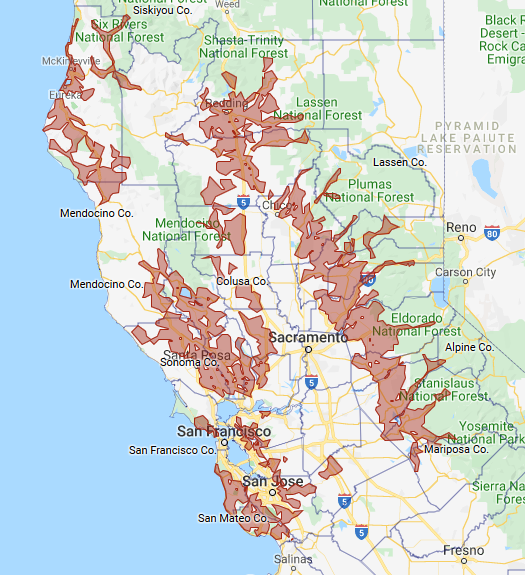
1. These are the regions of Northern California where electricity will be turned off.

P91026

2. This is a close up of our region, between San Jose and Santa Cruz. At the moment, I am near the first ‘t’ in Scott’s Valley.

P91026+

3. I am not as concerned about the garden in this weather as I am about this freezer without electricity. I would not use a freezer, but this one if for Felton League. I would not normally freeze bread either, but there happened to be space at the time, and it was better than discarding it.P91026++

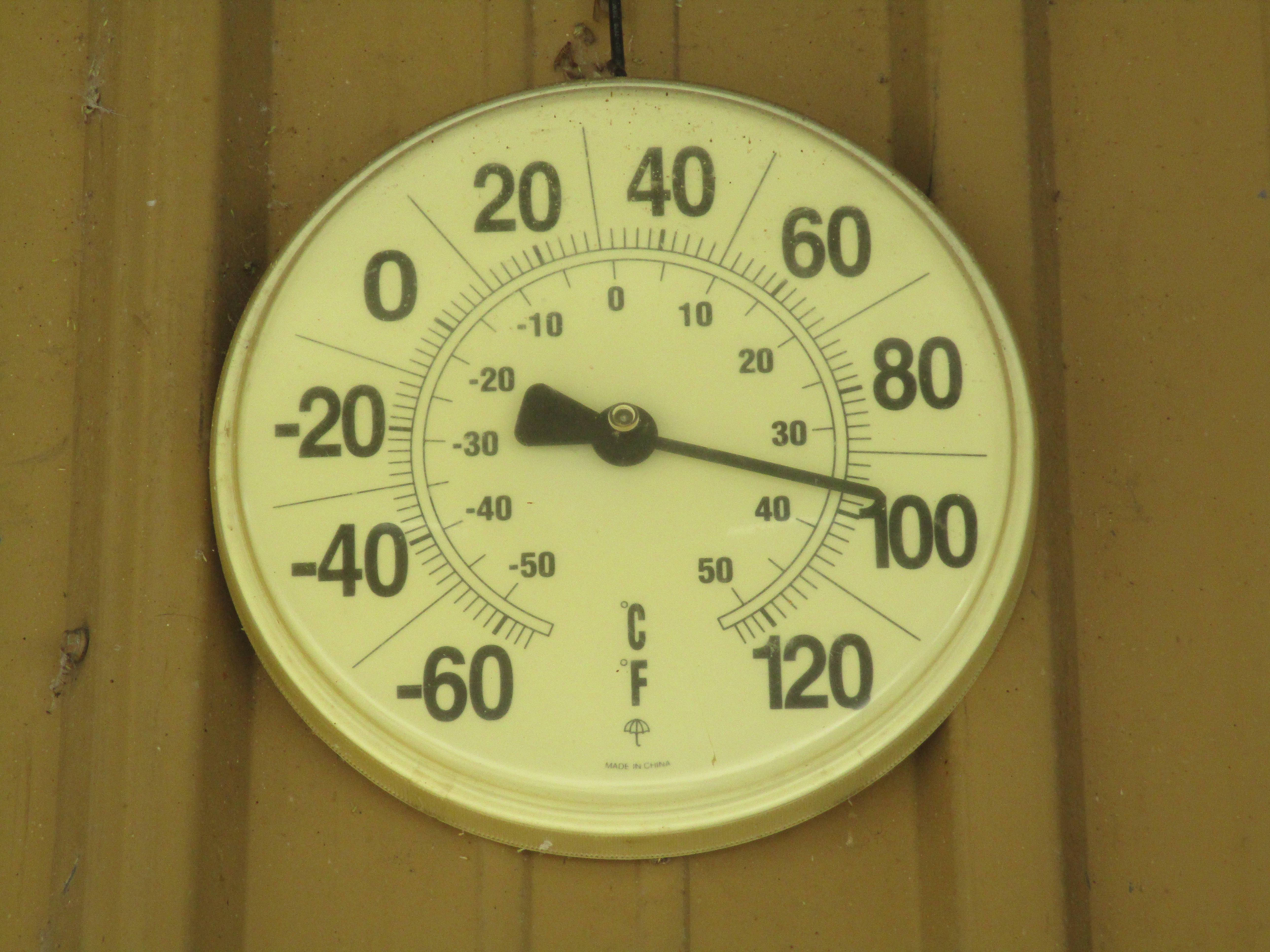
4. Although this thermometer supposedly got to a hundred today after I got this picture, it was really not much more than ninety degrees. This thermometer is just in a hot spot. According to the weather forecast, it should be only in the mid seventies tomorrow. Obviously, the predicted fire risk is determined by a combination of heat, humidity and wind.P91026+++

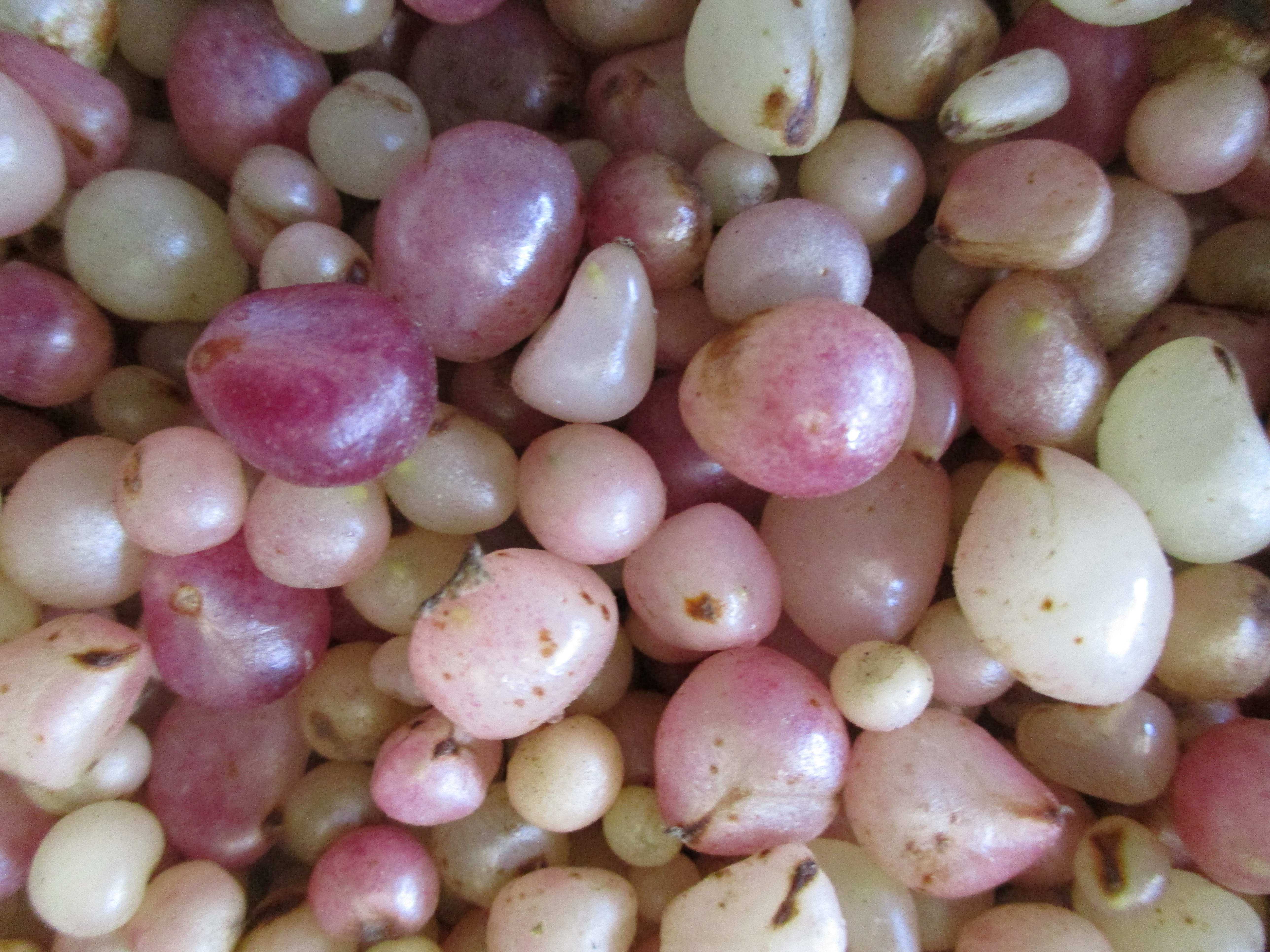
5. There was a bit of horticulture to mention too. These are seeds of naked lady amaryllis. They certainly are weird, like mutant salmon eggs, or pink pomegranate seeds. They are supposed to be sown while still pink and fleshy like this, rather than dried. It just seems wrong.P91026++++

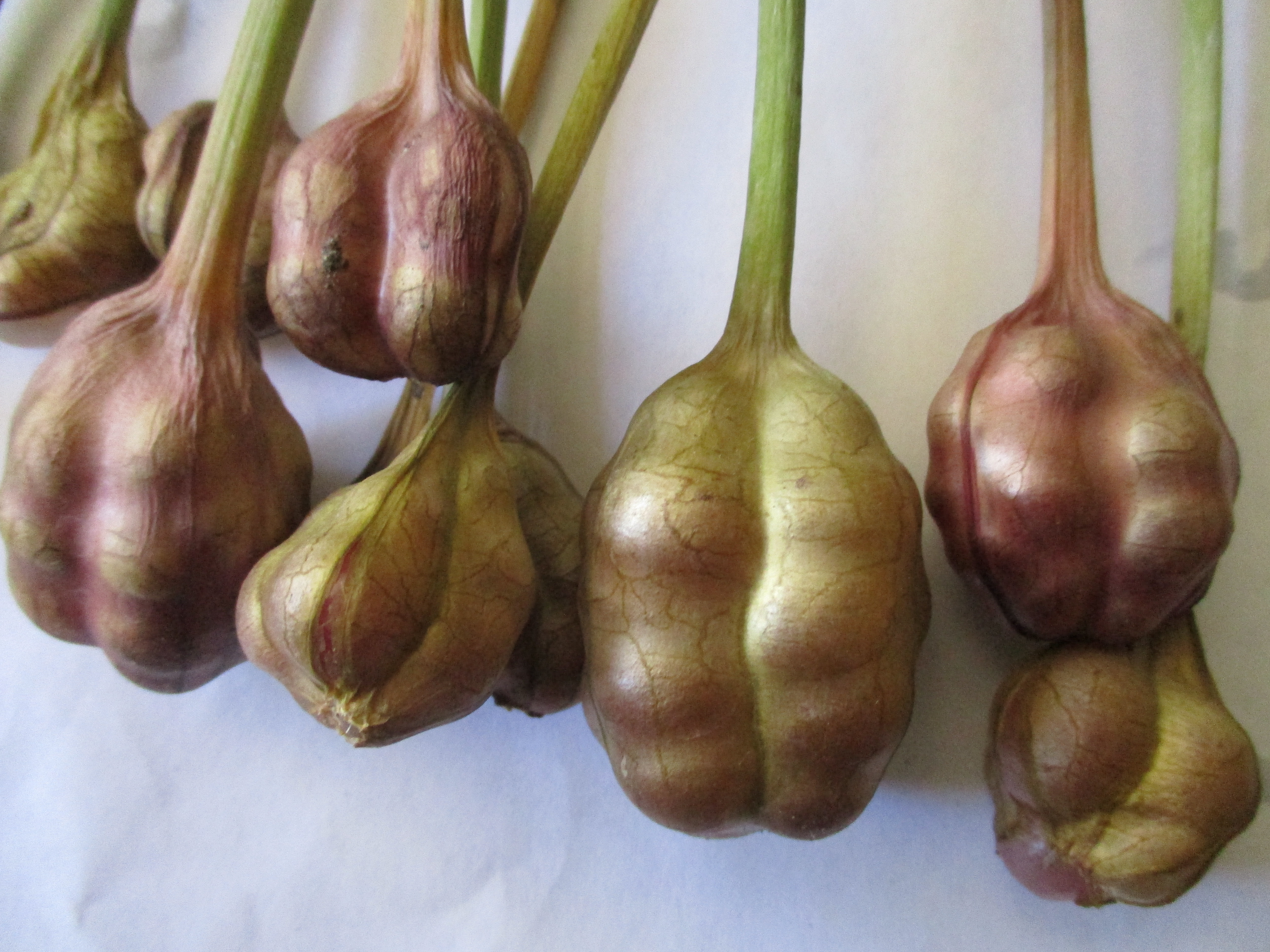
6. There were a few amaryllis bulbs in a group that made these unusually big seed capsules. I should have put something else in the picture to show scale. The largest is about as big as a ping pong ball. I suspect that they are the same as the others, but I will sow them separately anyway. Although unlikely, neighborhood crinum could have gotten in the mix.P91026+++++

This is the link for Six on Saturday, for anyone else who would like to participate:

https://thepropagatorblog.wordpress.com/2017/09/18/six-on-saturday-a-participant-guide/

Electrical Outage

P91012KWarnings were broadcast in local news for a few days prior. Because of the extreme potential for catastrophic forest fires, electrical service was to be disabled to our region, and large areas of California. Weather was predicted to be warm, windy and dry (with minimal humidity). Such conditions are exactly what cause fires to spread so explosively through the overgrown forests.
The potential for sparks from electrical cables, especially as debris gets blown onto to them, was why the electricity needed to be disabled. Supposedly, it is more likely for fires to be started by sparks from utility cables than by sparks from the many generators and barbecues that compensate for a lack of electricity. These considerations are taken very seriously in this region.

There are many reasons why the local forests are more combustible than they would naturally be. The less combustible redwood forests were clear cut harvested about a century ago, which stimulated a proliferation of more combustible vegetation. Containment of fires since then has allowed an accumulation of combustible vegetation, but inhibited growth of fresher vegetation.

Regardless, many of us had our doubts about the necessity of the outages, which were actually delayed as the forecast weather was slow to develop. Tuesday happened to be one of the most humid days of summer, and might have been the most humid. It was not particularly warm, and was actually relatively cool. Wind was strangely lacking. The weather was really quite bland.

When this picture was taken early Wednesday morning, the street lamp was still on. Dew condensed on the parked car below as the weather cooled overnight. There was no breeze to dry it. The planned outage was delayed for a while, but eventually happened at about 10:30 that night, and stayed out for most of Thursday. It got a bit warmer and drier, but not like predicted.

Most of us accepted it as part of living in such a forested region. A few were annoyed by the associated inconveniences, particularly since it all seemed to be unnecessary. However, what few of us at lower elevations and in town were aware of was that there really were somewhat powerful winds at higher elevations near the summit, and that humidity had dropped significantly.

After electrical service was restored, we could see news coverage of the Saddleridge Fire in Los Angeles County. Unfortunately, fire is a part of nature here. The forests and ecosystems are designed for it. This was the first planned electrical outage here, but will not likely be the last. Those who appreciate living here, and know how the ecosystem works, will be willing to adapt.

Fire Is Part Of Nature

P81106Plants have very different priorities from those who enjoy growing them. The colors and fragrances of flowers that we find so appealing are really designed to guide pollinators. The appealingly aromatic foliage of scented geranium and other herbs is actually designed to repel hungry insects and animals. Many tasty fruits are designed for seed dispersion by animals who enjoy them too.

Pollination, dispersion of seed and self defense are all part of what plants do in nature. They must also know how to survive in their respective natural environments. Many plants survive cold arctic weather. Others survive arid deserts. Many native plants want a bit of water through winter, but know how to survive through long dry summers. Many or most natives know how to survive wildfires.

As unpleasant as it seems to us, wildfires are very natural here. Native plants lack the mobility to get out of the way, so use other techniques to survive. A few, such as the two specie of redwood, survive by not being very flammable. More know how to resprout from their roots after they burn. Even more simply regrow from new seedlings. Then there those that use fire to their advantage.

Monterey pine trees tend to accumulate combustible debris. They also produce more seed-containing cones as they age and deteriorate. When they burn, all the debris burns so hotly that most of the other competing vegetation gets incinerated. However, the dense cones of Monterey pine protect the seed within, only to open to disperse the seed afterward. It is a rather ingenious plan!

Ungroomed desert fan palms burn at least as hotly, but survive because the hefty trunks protect the buds within. Each technique works for the specie that use it, but is not safe for home gardens! This is why combustible vegetation needs to be managed around the home. The rules are different in urban areas than they are where wildfires are a concern, but they are important everywhere. Even the most combustible of native plants, as well as exotics, can be reasonably safe with proper pruning and maintenance.