Burn Season

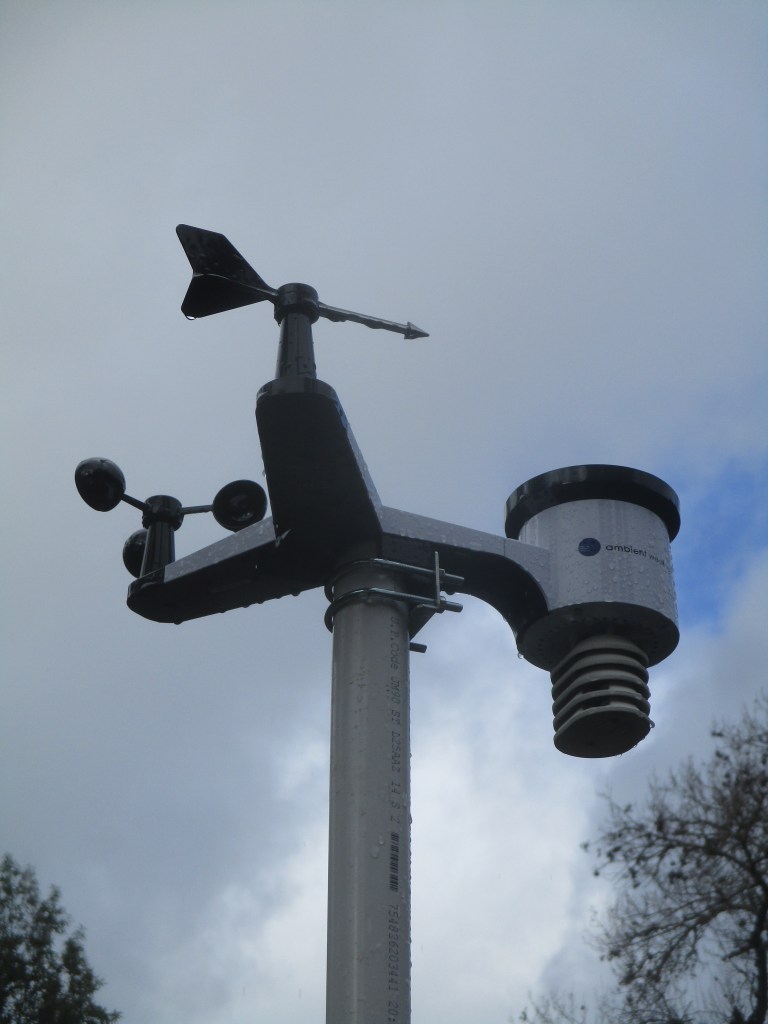
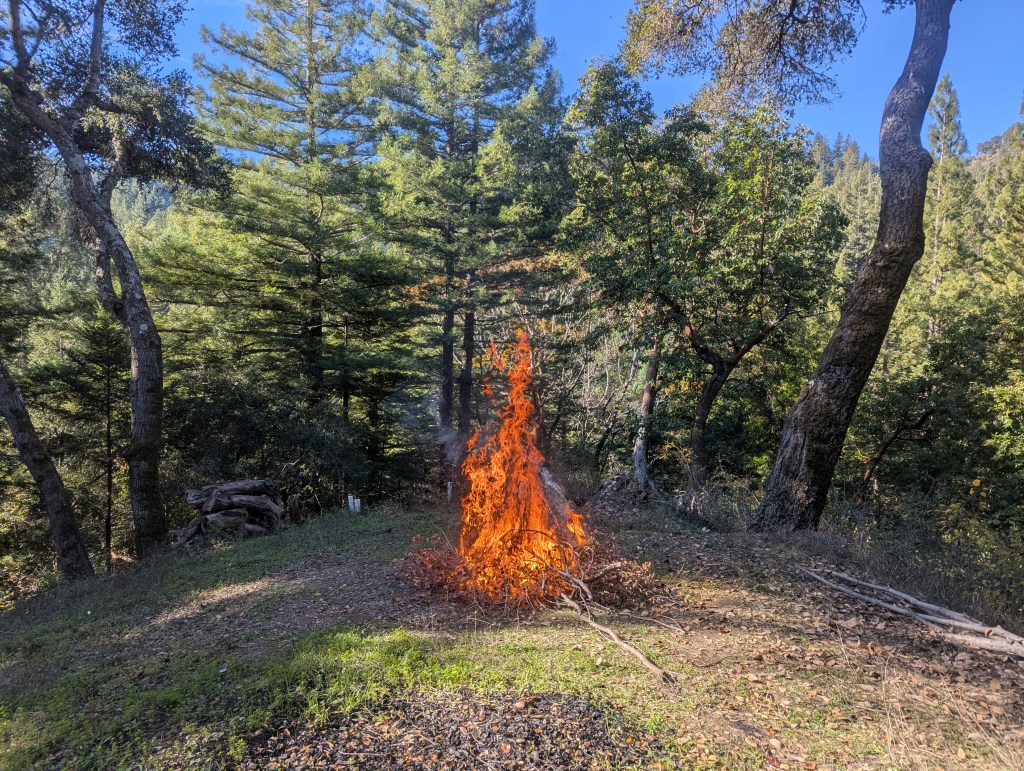
Monday was the first day of burn season, which continues from December 1 until April 30. On designated burn days within burn season, we can burn green waste that would otherwise make our properties more combustible during fire season, which is generally the opposite of burn season. The designation of burn days is determined by multiple meteorological factors, such as temperature, humidity, wind, atmospheric pressure and air quality. It is also limited by the moisture content of the forest, so can be delayed until after the first soaking rain storms. So, not only was Monday the first day of burn season, it was also the first designated burn day within burn season. I took the opportunity to burn some of the green waste that has been accumulating since the previous burn season. It was tedious but gratifying. A chipper would have been faster, but that is something that I lack here. Besides, a chipper can not go where some of the green waste remains. It is so far down steep hillsides that I may try to burn it where it is, rather than drag it up to where this primary burn pile was. There is a lot of green waste!

Six on Saturday: Fire Season

Fire season can begin as early as May and continue as late as November. It is defined by the rainy season. It is a long season because the rainy season is not. Summer is naturally warm and arid. Native vegetation is consequently desiccated. It is no coincidence. Fire is unfortunately a natural component of the ecosystems here, and native vegetation knows it. Many exotic species also react to the meteorological influences that affect fire season. Some are from similar chaparral ecosystems. However, some are from other ecosystems that are likely less adapted to fire. Perhaps their native ecosystems are less relevant than associated meteorological influences, which is what they are actually reacting to. A forty percent chance of rain on Monday morning is the first chance of rain in a long time.

1. Sequoia sempervirens, coastal redwood is always messy and gets even messier when a breeze dislodges foliage which got desiccated by arid warmth. It is a bad combination.

2. Adiantum capillusveneris, maidenhair fern also reacted to arid warmth. In the wild, foliar desiccation through summer is normal. It is not so normal in irrigated landscapes.

3. Musa acuminata X balbisiana ‘Blue Java’ banana would enjoy sustained warmth with more humidity. While humidity is inadequate, wind more easily shreds its flimsy foliage.

4. Musa acuminata ‘Kokopo’ or ‘Patupi’ banana is more sheltered from breezes and more generously irrigated, so can exhibit guttation overnight and into the cool early morning.

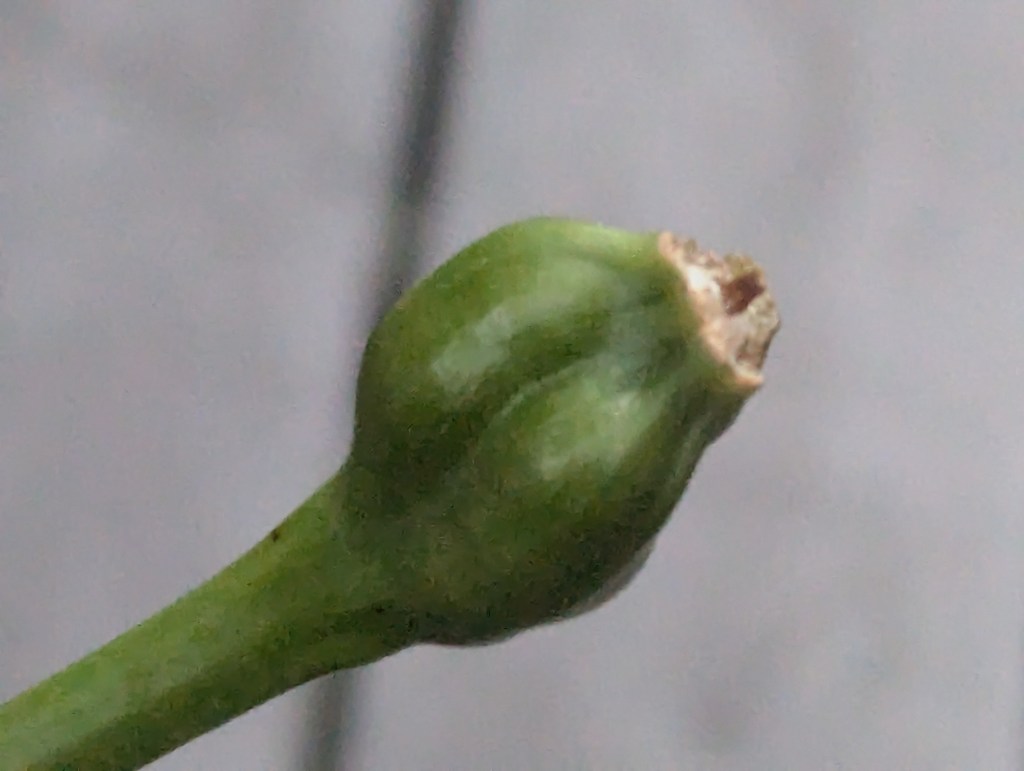
5. Amaryllis belladonna, naked lady is generating seed as it typically does by now. Seed is very perishable, but grows in soil that is damp from the first rain that ends fire season.

6. Solidago rugosa ‘Fireworks’ goldenrod is only fiery by name. It was a gift from Tangly Cottage Gardening. It is the only bloom I will brag about today, and our first goldenrod!

This is the link for Six on Saturday, for anyone else who would like to participate: https://thepropagatorblog.wordpress.com/2017/09/18/six-on-saturday-a-participant-guide/

End of Fire Season

Burned trees are visible on ridge tops within the CZU Fire zone.

Rain is gratifying at the beginning of the rainy season. We all know that it has potential to become excessive later in the season, but we are not yet concerned with flooding or mudslides. After a typically long and dry summer, we enjoy it while we can. A storm that finished earlier yesterday was relatively minor, but was nonetheless the first significant storm of this new rainy season of 2023 and 2024. Only minor drizzle preceded it.

The beginning of the rainy season is also the end of the fire season. Forest fires become less likely as the forests become more saturated through the season. However, rain also sustains growth of vegetation that will become combustible during the following fire season, especially if the weather becomes unusually warm and arid by then. Unfortunately, this is the natural pattern of the climate here. Fire is a major component of local ecosystems.

Three years ago, the CZU Fire was the most destructive forest fire within documented history of this region. Larger fires likely occurred prior to documented history, but burned forests that expect to occasionally burn, without damage to unnatural infrastructure that did not exist at that time. Prehistoric fires were likely less common than modern fires, but involved much larger areas. They also likely burned faster and less violently. Modern forest fires involve more fuel because of regeneration of hardwood species after clear cut redwood harvesting a century ago. That is why so many coastal redwoods that survived several fires during their long lives succumbed to the CZU Fire.

Much of the marginal area of the CZU Fire is regenerating efficiently enough to eliminate evidence that it burned so recently. The scenery of areas that burned more severely remind us why we are grateful for the beginning of the rainy season.

Rain Initiates The Rainy Season

Weather generally conforms to the seasons.

Seasons here may seem to be less extreme than they are within other climates. Summer warmth is rarely too hot, and when it is, it does not continue for too long. Winter chill may be insufficient for some plants that rely on it to sustain their winter dormancy. Autumn and spring are as notable for the first and last seasonal rain as for colorful foliage and bloom.

This is actually very relevant within local chaparral climates. Rain and lack of rain define seasons here as much as extremes of temperature. Where the traditional four seasons of winter, spring, summer and autumn merge so softly, the rainy season and the dry season generally do not. Rain begins abruptly in autumn, and ends almost as abruptly in spring.

Consequently, home gardens can get inhospitably dry without adequate irrigation during more than half of the year. Then, they may require no irrigation for almost half of the year. Warm weather that coincides with the dry season enhances aridness. Cool weather that coincides with the rainy season enhances dampness. Mild climates can get extreme too.

Recent rain ended both the dry season and the fire season, and began the rainy season. For many plants, irrigation will be unnecessary until the dry season resumes next spring. Plants that continue to require irrigation will require much less, and only as their soil gets dry during prolonged lapses of rain. Therefore, automated irrigation requires adjustment.

Potted plants, bedding plants and young plants with minimal root dispersion will be more likely to want watering during warm lapses of rain. Substantial foundation plants beneath eaves generally extend roots beyond sheltered soil, but some do not. Also, potted plants under eaves of porches are unable to reach rain moistened soil with their confined roots.

While diminishing the need for irrigation, rain can be messy. It is, of course, wet. It makes soil muddy. Runoff can cause erosion. Stormy weather, which typically involves both rain and wind, dislodges copious foliar debris. Such debris accumulates while no one wants to go outside during stormy weather to rake it. Inconvenient timing seems to be a pattern. Yet, rain is undeniably gratifying.