Sunday Best – Campion


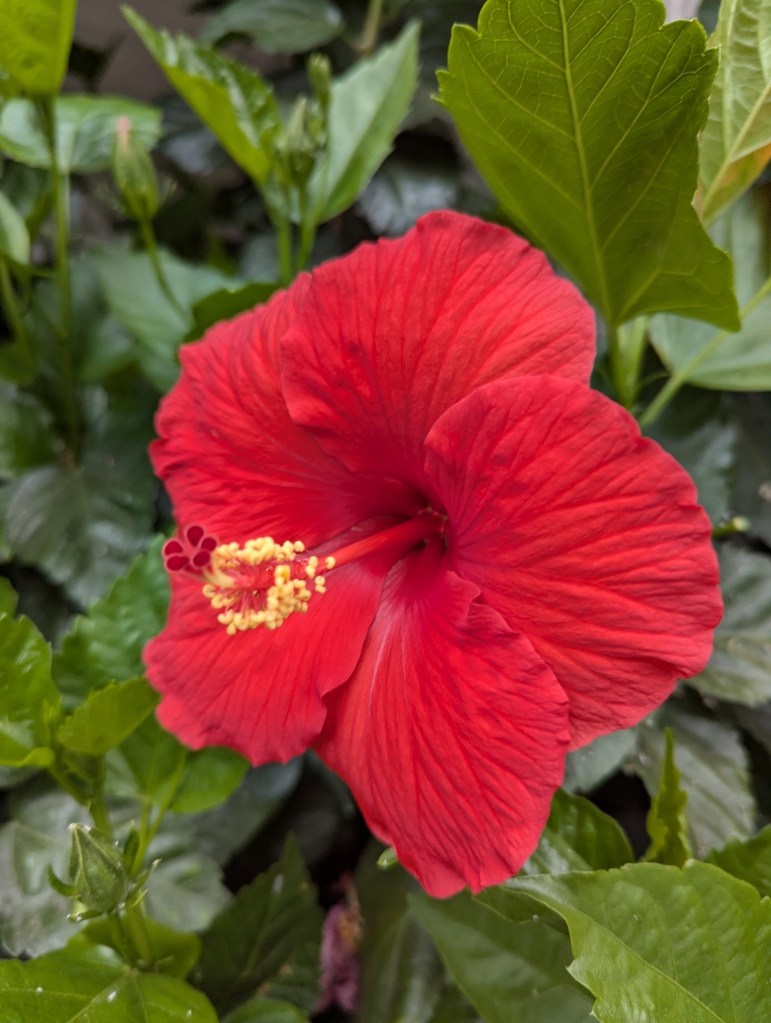
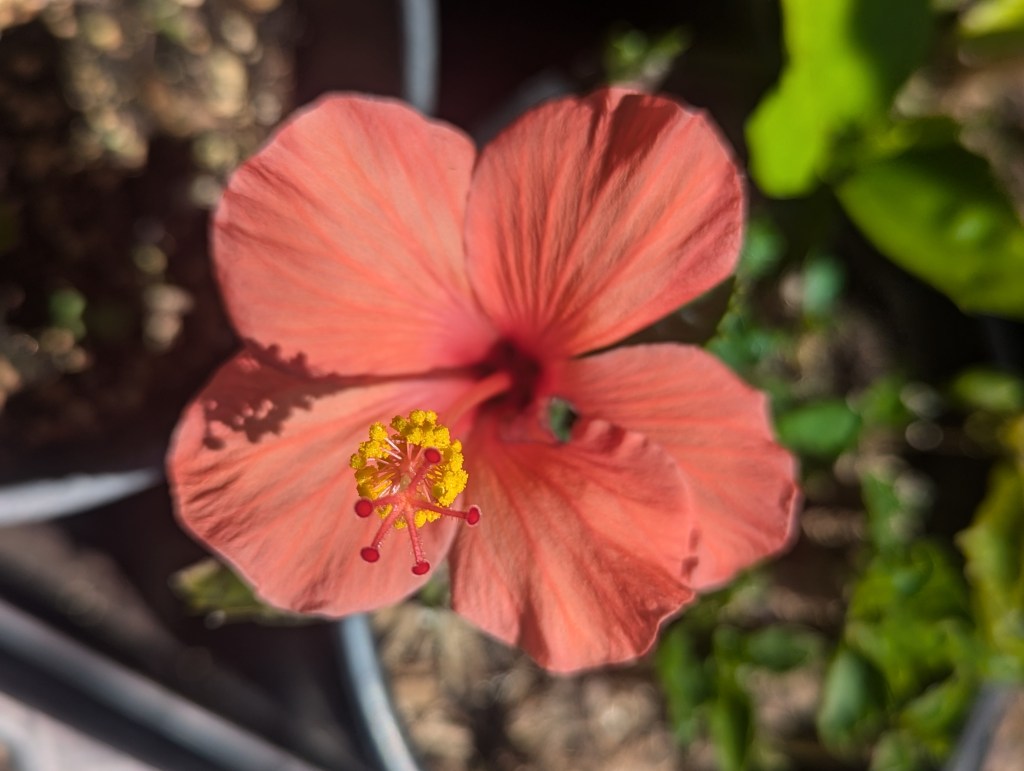
Hummingbirds and butterflies are quite fond of tropical hibiscus, Hibiscus rosa-sinensis. They are attracted to the bright yellow, orange, red, pink or white color of its bloom. They stay for the syrupy nectar that they find deep within the flowers. Tropical hibiscus attracts pollinators rather efficiently, but almost never generates seed. Most cultivars are hybrids.
Tropical hibiscus flowers are not overly profuse, but are about three or four inches broad. Fancy hybrids that bloom with broader flowers are not as vigorous as more typical sorts. Most cultivars bloom with somewhat ruffled single flowers. Some bloom with more ruffled double flowers. Both types of flowers have five garishly flaring petals. None are fragrant.
Tropical hibiscus grows as evergreen shrubbery about six to a bit more than ten feet tall. Pruning to remove congestion of inner growth promotes healthier outer growth. Besides, whitefly and scale insects often proliferate on crowded foliage. Leaves are mostly two to five inches long and two to three inches wide. Bloom continues from summer to autumn, mostly with warmth.

There are actually a few different flowers known as Queen Anne’s lace. The most common species, Daucus carota, that has naturalized and even become somewhat of a weed in some areas, has two and a half inch broad, flat-topped trusses of delicately minute but abundant flowers, with a single red flower at the center of each truss. Apparently, Queen Anne pricked a finger with a needle while making the lace, leaving a drop of blood. Modern varieties have broader and fluffier trusses, often lacking central red flowers. They are a popular ingredient or fill for mixed bouquets with more colorful flowers.
The biennial foliage of Queen Anne’s lace grows to about three feet tall in the first year, with weedy but intricately lacy leaves. It blooms in summer of the second year. It is very similar to poison hemlock, which is poisonous enough to kill Nero, so should not be allowed to grow in vegetable gardens or where toxicity might be a problem; just in case.

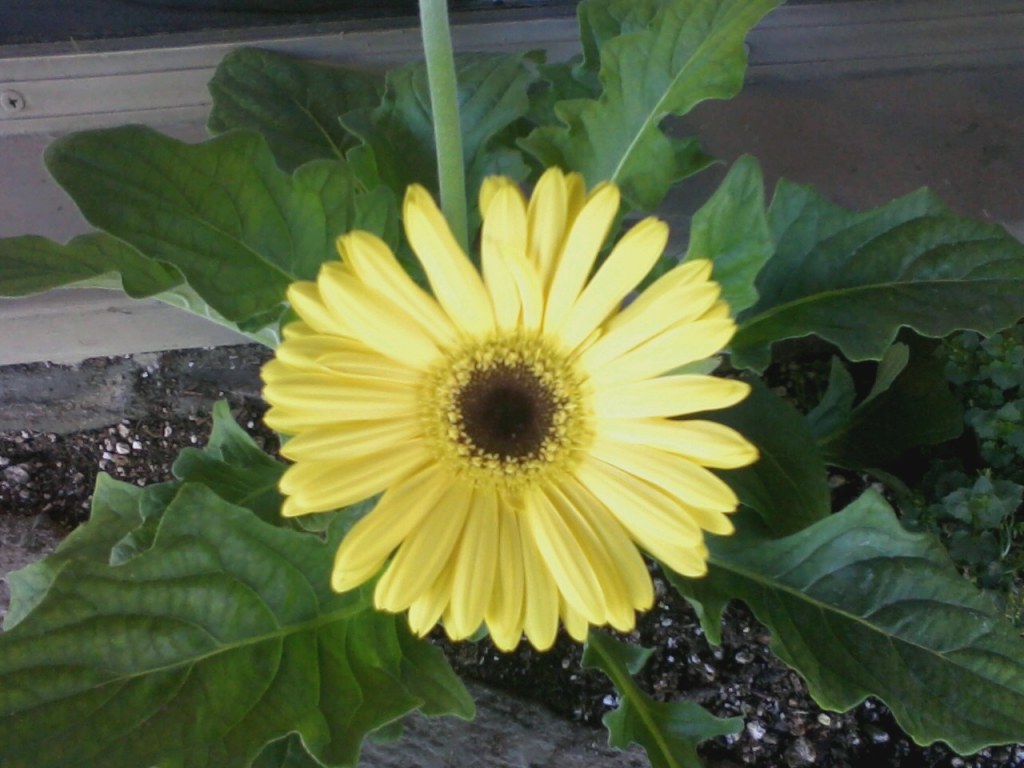
After rose, carnation, chrysanthemum and tulip, the fifth most popular cut flower is the Transvaal daisy, which is also commonly known as the gerbera daisy, Gerbera hybrida. The composite (daisy-like) flowers are typically about three to four and a half inches wide, in bright shades of yellow, orange, red, pink and white, with dark centers. They stand several inches high on bare stems, adequately above the lower, coarsely textured foliage. Transvaal daisies can bloom well for a month or more as potted houseplants in sunny spots, but rarely survive more than two months indoors. If planted in a sunny but not too harshly exposed spot in the garden as they begin to deteriorate, they can sometimes recover and continue to bloom as short lived perennials. They need good drainage but uniform moisture in organically rich soil.