
Sunday Best – Winter Flowering Cherry
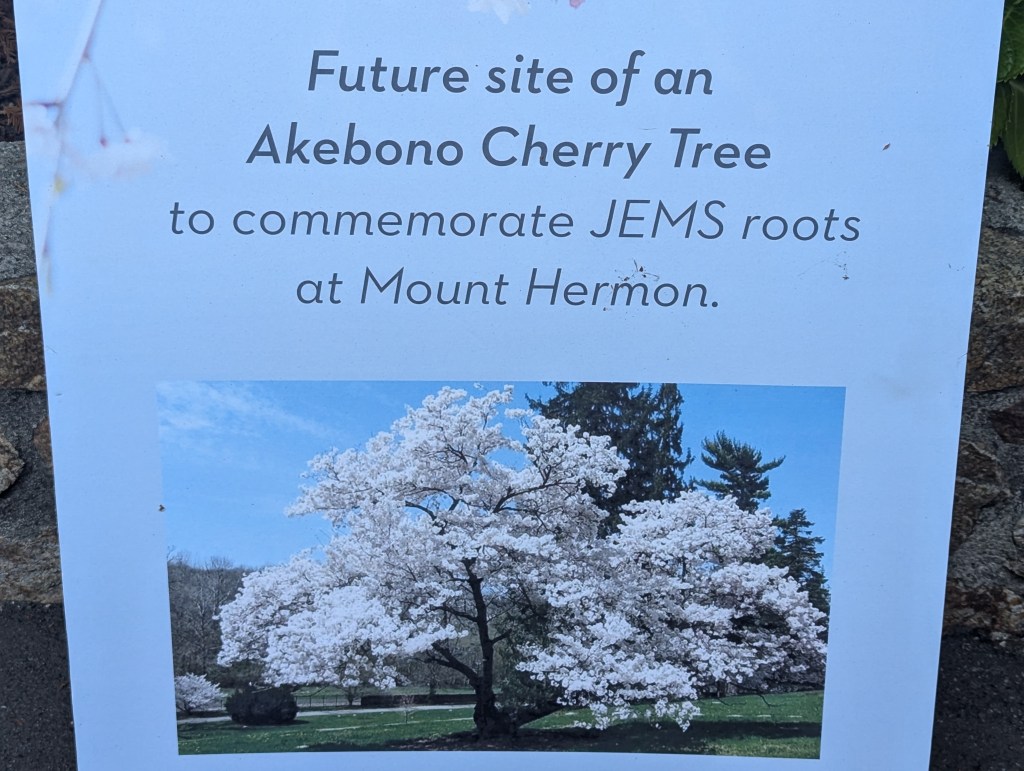
Yoshino is such an elegant name! It is the middle name of one of my nieces. A few of the flowering cherry trees here are very likely cultivars of Yoshino flowering cherry. Another recently arrived. It is a Commemorative Tree from the Japanese Evangelical Missionary Society, which we know simply as ‘JEMS’, for three quarters of a century of involvement with Mount Hermon Christian Conference Center. Its cultivar name is ‘Akebono’. We do not install many trees here, and we are more concerned with cutting trees down, but this tree is very special. It is situated very prominently on the central Mall at Mount Hermon where its spring bloom will be spectacular. It already seems to be a venerable Historical Tree that lacks only age. Now that it is here, it will acquire that eventually.
1. The Japanese Evangelical Missionary Society, or JEMS commemorated three quarters of a century of involvement with Mount Hermon with this gift of a flowering cherry tree.
2. Unfortunately though, the pair of tiny flowering cherry trees that I installed to replace a very deteriorated and elderly pair of the same is already obsolete before it got to grow.
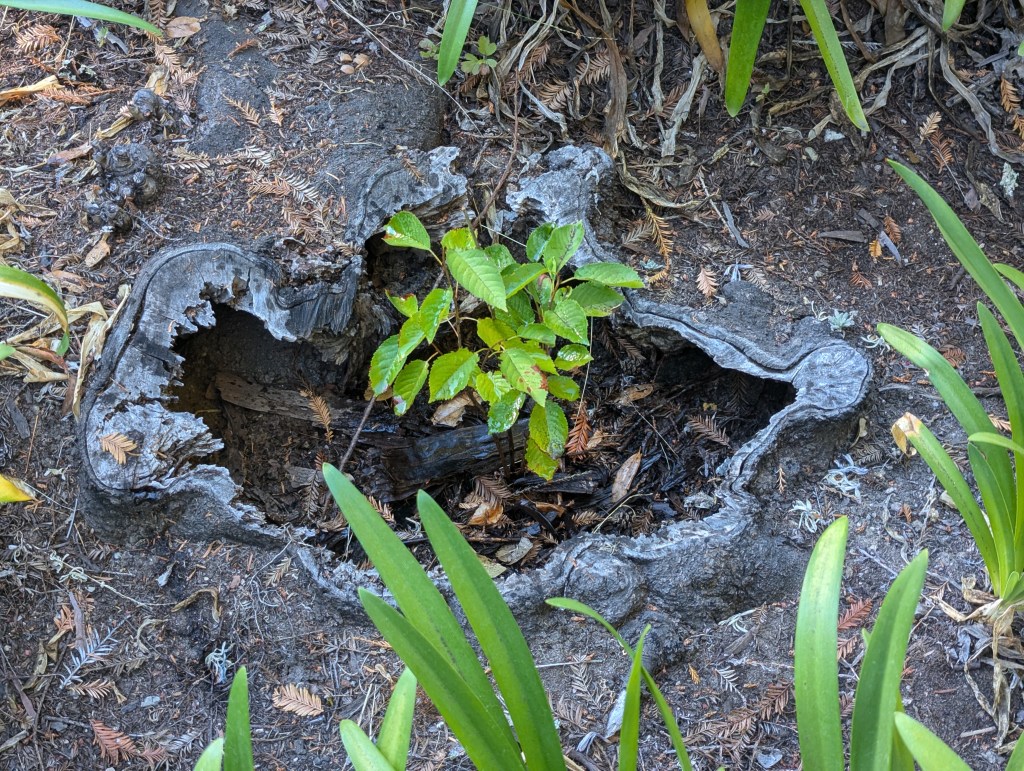
3. This pair of tiny flowering cherry trees grew from suckers from the original ungrafted pair, so are genetically identical, and are installed within the stumps of the original pair.

4. The new Commemorative Flowering Cherry Tree is much more prominent and better situated than the original pair, which was there prior to some of the adjacent pavement.

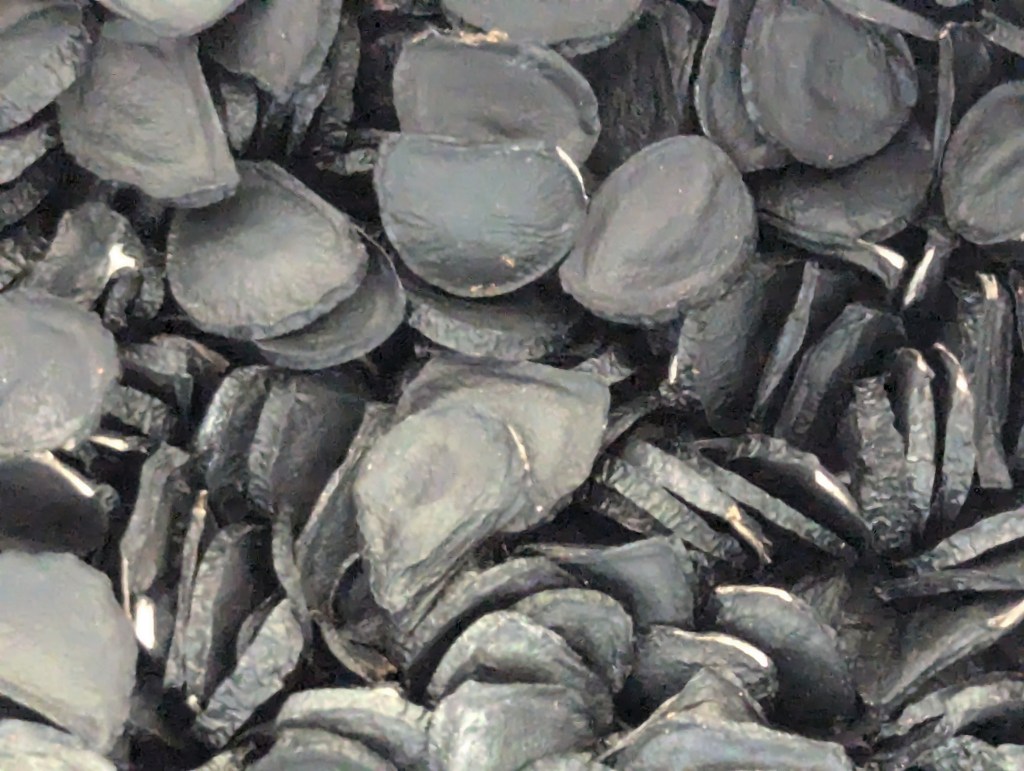
5. In other news, seedpods from (Hespero)Yucca whipplei, chaparral yucca, supposedly without its specialized pollinator, generated quite a few of what seems to be viable seed.
6. Also, Hedychium gardnerianum, kahili ginger that bloomed prematurely for the first several days of August is blooming again and more appropriately for the end of summer.

This is the link for Six on Saturday, for anyone else who would like to participate: https://thepropagatorblog.wordpress.com/2017/09/18/six-on-saturday-a-participant-guide/
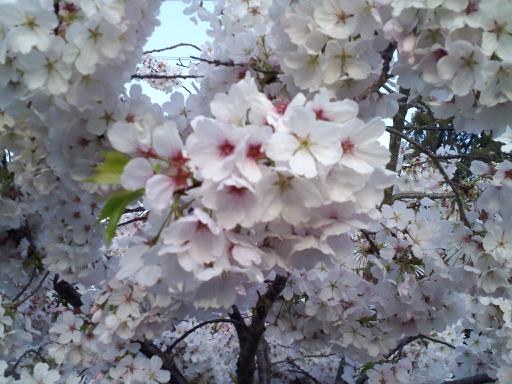
Like camellias and chrysanthemums, the many different varieties of flowering cherries, Prunus spp., have been developed by horticulturists in Japan for centuries. There are now almost too many to choose from. Most stay less than about twenty feet tall and broad, so are proportionate to compact gardens. A few stay even smaller. The classic Yoshino flowering cherry can get somewhat larger. Weeping cherries have pendulous branches. Columnar types are noticeably taller than wide, at least while young. Some flowering cherries have remarkable fall color.
Despite my preference for cherry trees that produce cherries, I can not deny that the spring bloom of the innately non-fruiting flowering cherries is spectacular! Most bloom before any foliage develops. Their flowers can be single, semidouble or double, in various shades of white or pink, including rich rosy pink. They can not be very messy without fruit. Unfortunately though, flowering cherry trees are susceptible to rot in the endemically dense soil, so should not be watered too much.
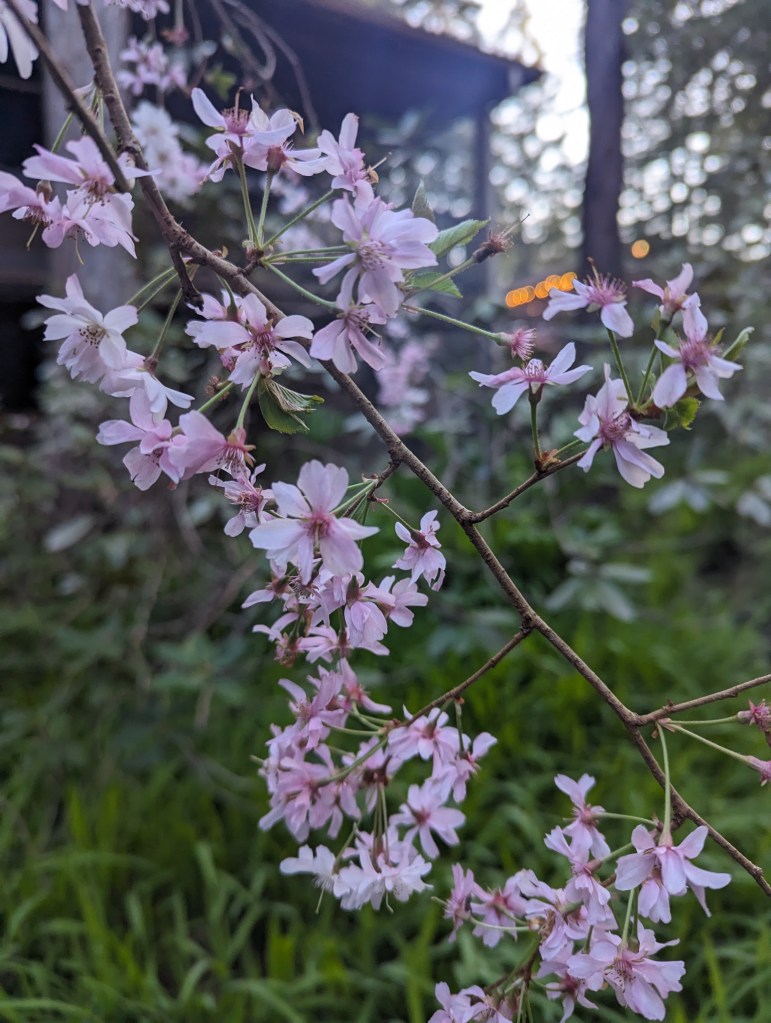
Its name describes it simply. Winter flowering cherry, Prunus X subhirtella, is a flowering cherry that blooms for winter. It is more popular where winters are cool enough to inhibit other bloom. It is less common here only because of other options for wintry floral color. Besides, slightly more floriferous flowering cherries bloom almost immediately afterward.
WIntertime bloom is actually a bit more reliable here than where it is more popular. Frost is too mild locally to damage it much, and mostly occurs earlier. Rain is mostly too light and too brief to dislodge much of the bloom. Bloom is a bit less profuse than that of other cherries because it is a bit more continuous. Therefore, it recovers from minor damage.
The relatively common sort of this uncommon flowering cherry blooms for late winter. Its bloom is slightly lavenderish pink. Some rare cultivars can bloom as early as autumn or as late as spring. A few are pendulous. Floral color ranges from white to pink. Floral form is mostly single but can be double. Deciduous foliage turns yellow or orange for autumn.
All but the first of these six are Camellia japonica. They bloomed late this year, likely as a result of the exceptionally wintry winter. Also, these pictures are more than two weeks old. They likely finished blooming by now. I do not know because I am not there. Rhody, Carson and I are still on vacation in the Pacific Northwest. As these Six on Saturday post at midnight, we will begin our trip home. Pictures of our vacation would be appropriate, but are not processed yet. Besides, I do not take many pictures. Also, although these few pictures are now outdated, I did not want to waste them. These five camellias and single flowering cherry demonstrated commendable diligence by blooming after such a wintry winter.
1. Double white flowering cherry is obviously not a Camellia japonica, but happens to be my favorite of our several flowering cherries here. The tree is in rough condition though.

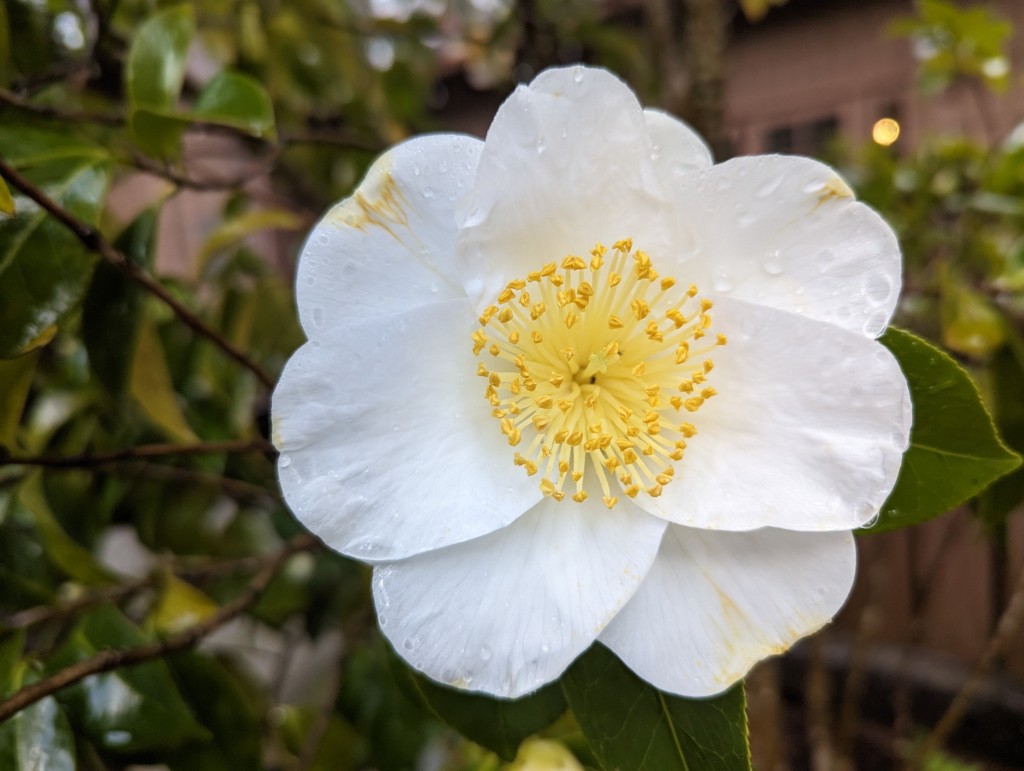
2. Frilly white camellia with a relatively modest staminate center may be the prettiest of the white camellias here, but does not look so pretty in this shaded picture after the rain.
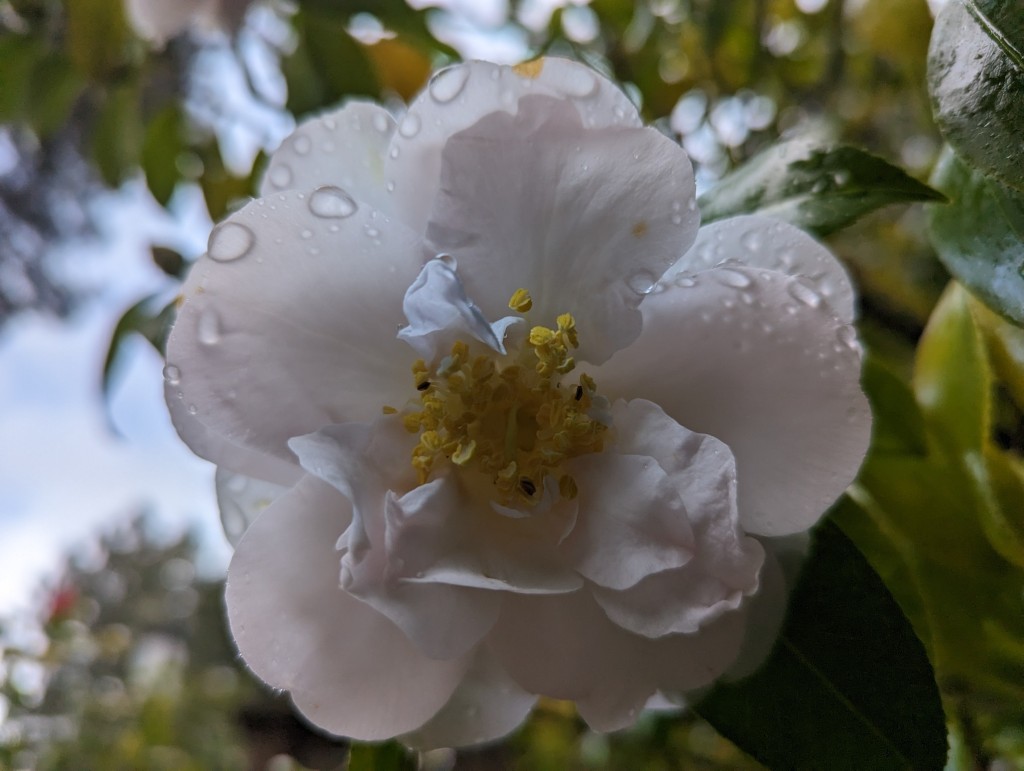
3. Pinkish watermelon red camellia blooms with variable floral form. Some flowers seem to be of peony form. Some seem to be of anemone form. I have no idea what form this is.
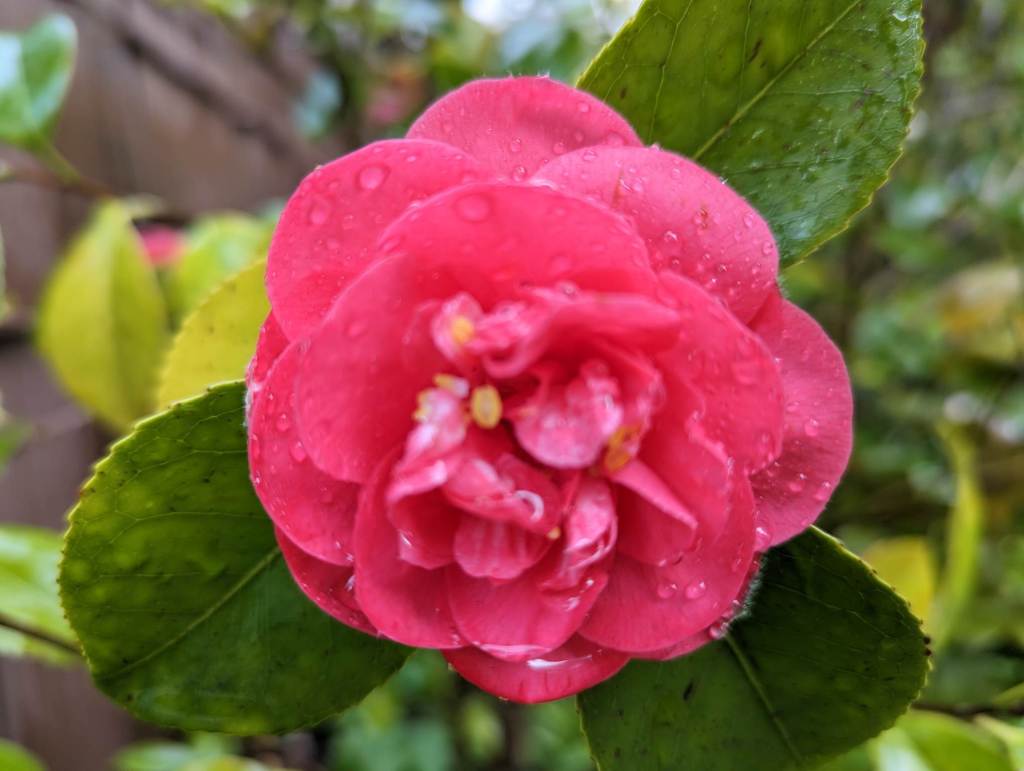
4. Very pallid pink camellia seems to be almost white. Whiter white or pinker pink could be prettier, but its pastel color seems to be very appropriate to its distinctive floral form.

5. Pinkish watermelon red camellia resembles the color of #3 now, but normally blooms deeper red. Perhaps the unusually harsh weather last winter somehow altered the color.
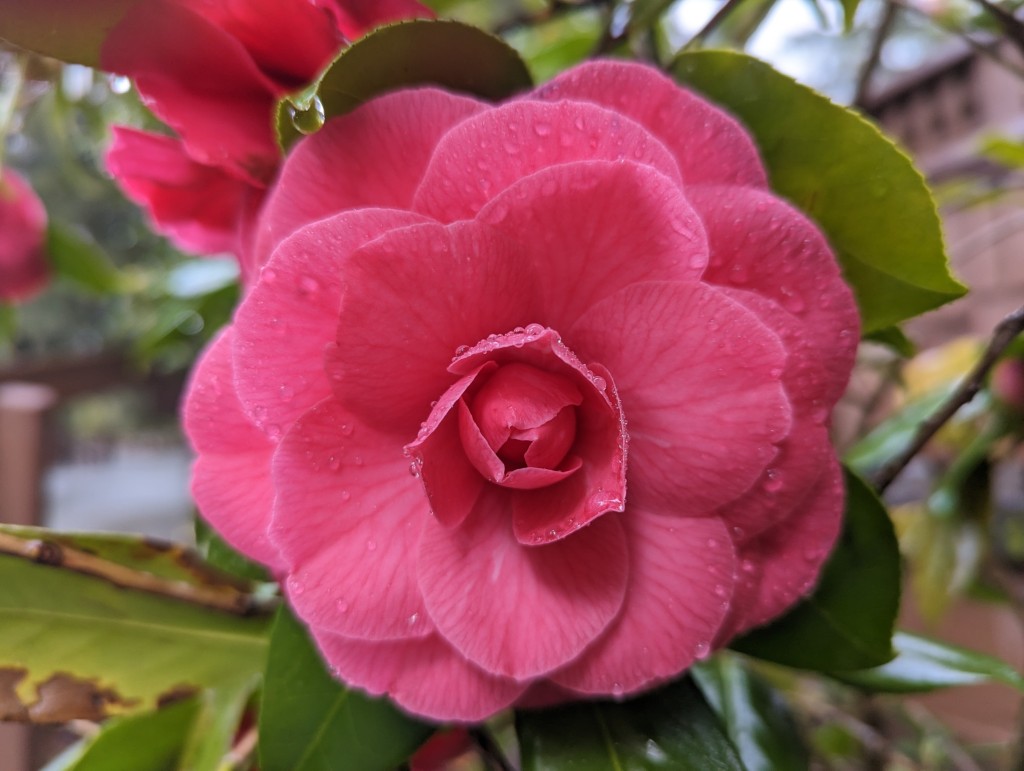
6. Single white camellia with a prominently staminate center looks like a sunny-side-up egg. Camellia blight around the edges proliferated during the exceptionally rainy winter.
This is the link for Six on Saturday, for anyone else who would like to participate: https://thepropagatorblog.wordpress.com/2017/09/18/six-on-saturday-a-participant-guide/
Beau prefers French. I do not know why. He was born in Missouri. His name is derived from ‘Hobo’ (‘HoBeau’). Since vehicles here are traditionally named after places, he may believe that his name was derived from ‘Boulder Creek’ (‘Beaulder Creek’) or Bonny Doon (‘Beaunny Doon’). Nonetheless, there is nothing French about Beau. I do not argue. Nor do I argue with Rhody if he insists that Beau is a Pontiac rather than a Chevrolet. If he believes that we ride in that kind of style, it is just fine with me. Anyway, after last Saturday, some wanted to see Beau.
1. Two years after we intended to remove this pair of historic flowering cherry tree, they get to bloom one last time. Sadly, their demise can be delayed no longer. Their trunks are too rotten.

2. Three similar flowering cherry trees down the road have been recovering from foliar disease during the same two years. They are neither as pretty nor as distinguished, but have potential.
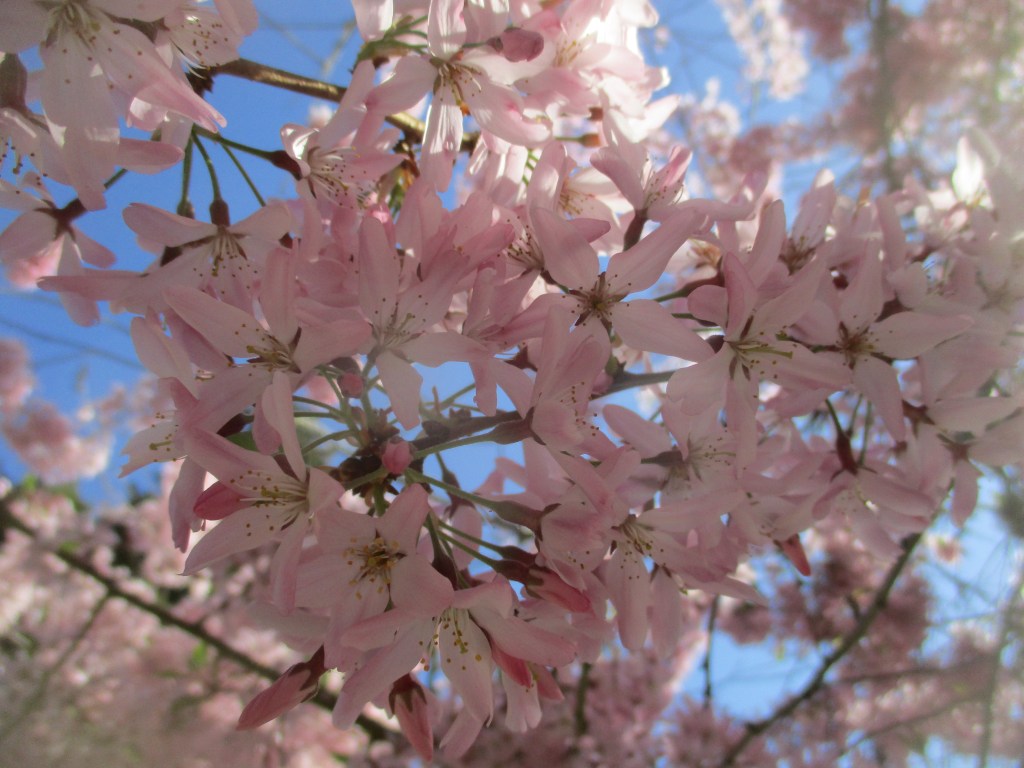
3. Adjacent to #2, this most garish flowering cherry tree is the most prominent. Unfortunately, like #1, it is deteriorating, so will also be removed after bloom. Half of the canopy is necrotic.

4. This one should succumb instead. To me, weeping flowering cherries look weird. This one was in bad condition when I met it. Unfortunately, my efforts to renovate it have been effective.

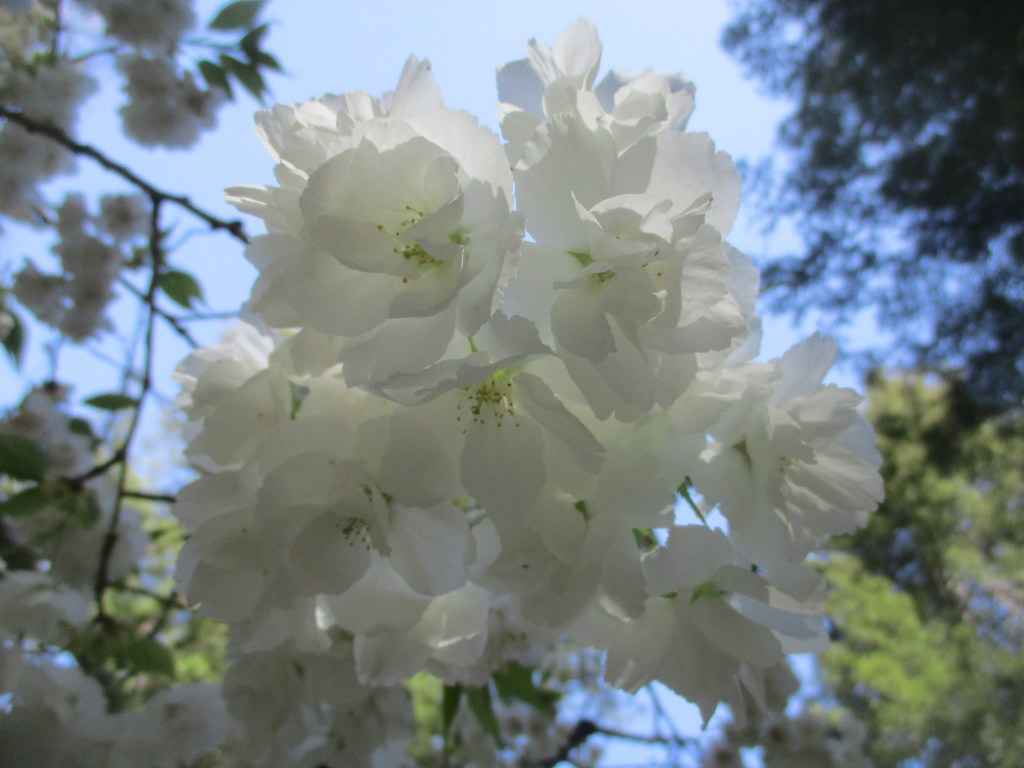
5. Oh, my favorite. The flowers are double, but not as fluffy as those of #3. It really is as white as it looks, without any blush. The tree is disfigured and shaded by redwoods, but blooms well.
6. Beau was the unseen star of my previous Six on Saturday. He is neither French nor related to ‘the’ Beau of the Frustrated Gardener, but is pretty cool anyway, and drives on the right side.

This is the link for Six on Saturday, for anyone else who would like to participate:
https://thepropagatorblog.wordpress.com/2017/09/18/six-on-saturday-a-participant-guide/
Six on Saturday is about gardening. It should therefore feature flowery pictures. I do sometimes try to comply, but often neglect to include flowery pictures. I included one for this week, and two more horticulturally oriented pictures. Of course, the most important picture is of Rhody; because everyone loves Rhody. The other two pictures are neither horticulturally oriented, nor relevant to Rhody. I just found them appealing.
1. Rhody is who you came here for. I did not even bother saving the best for last this time. Do you really need to see the other five? I am sorry that he does not cooperate for better pictures.

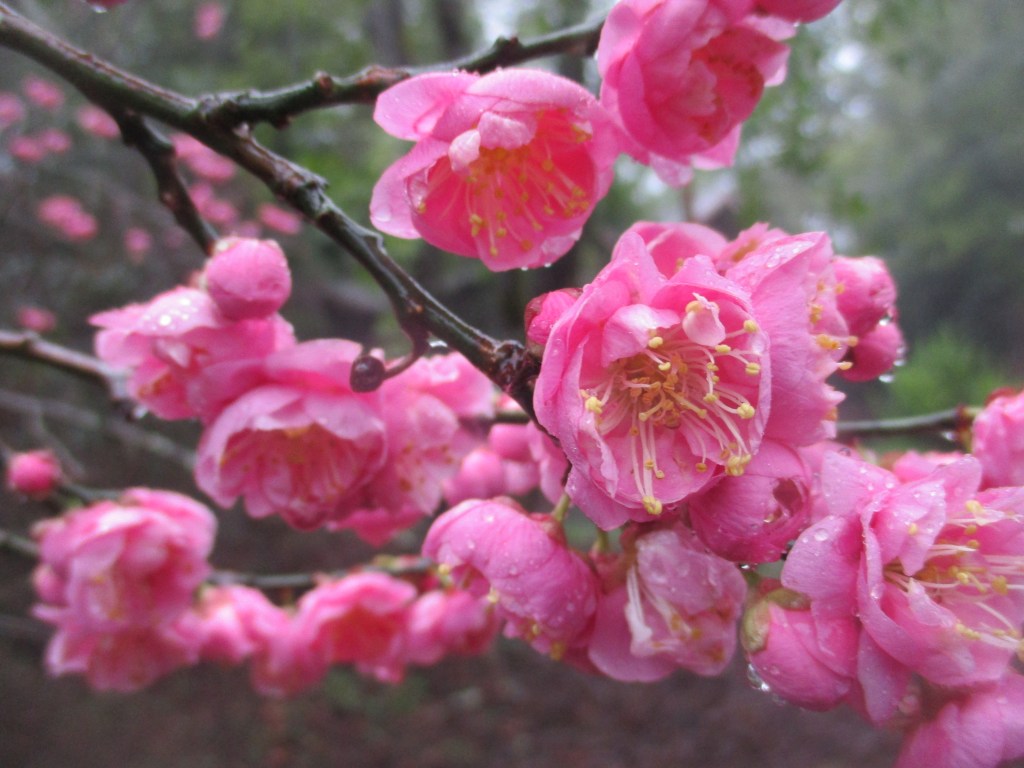
2. Prunus bloom provides a flowery picture. This and the picture of Rhody are all my Six on Saturday needs. I do not know what species this is. It was understock of a tree that got cut down.
3. Daffodil bloom after other narcissus, so typically get thrashed less by wintry weather. Each year is unique though. Paperwhite narcissus bloomed before stormy weather started this year.
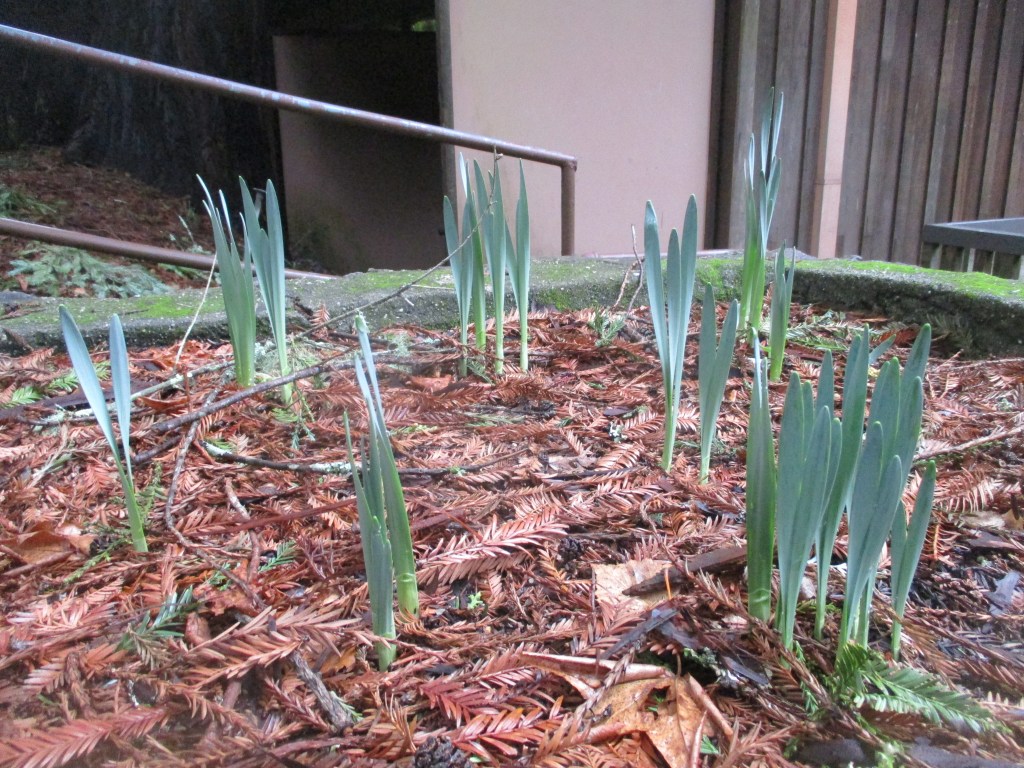
4. Palms do not dominate all of the landscapes of California. Although they are common near the Coast of Southern California, they are uncommon, and look weird, here among the redwoods.

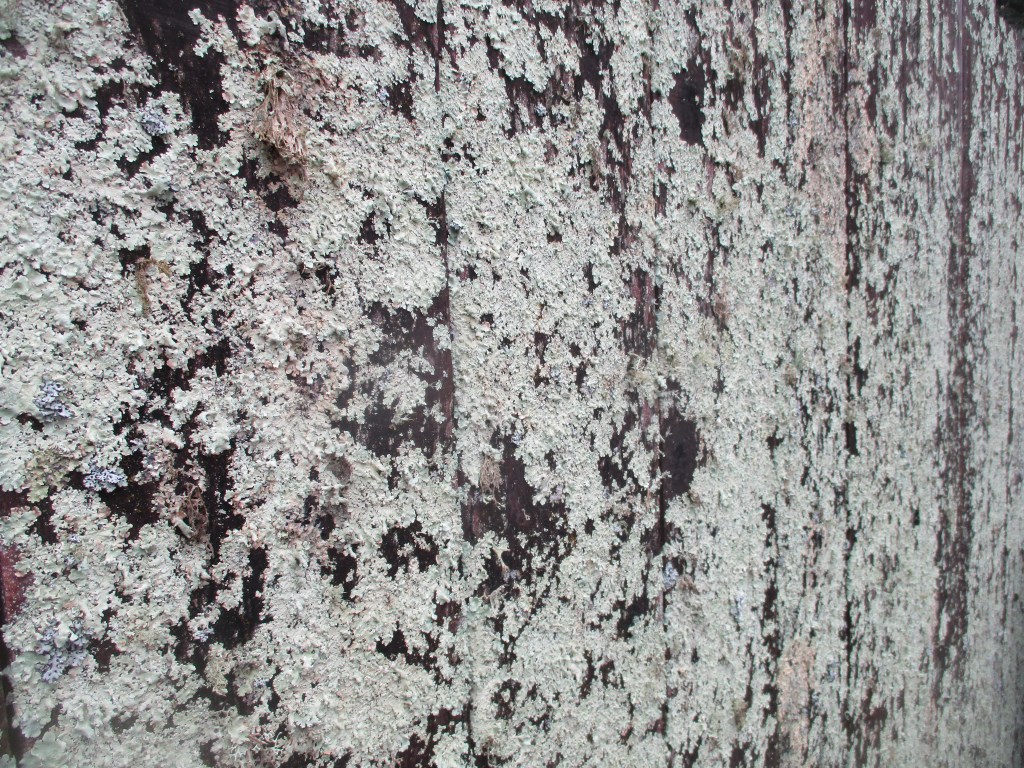
5. Lichens are not exactly relevant to horticulture. I just happened to notice how uniformly these lichens cover this fence. If they were greener, they might resemble a squarely shorn hedge.
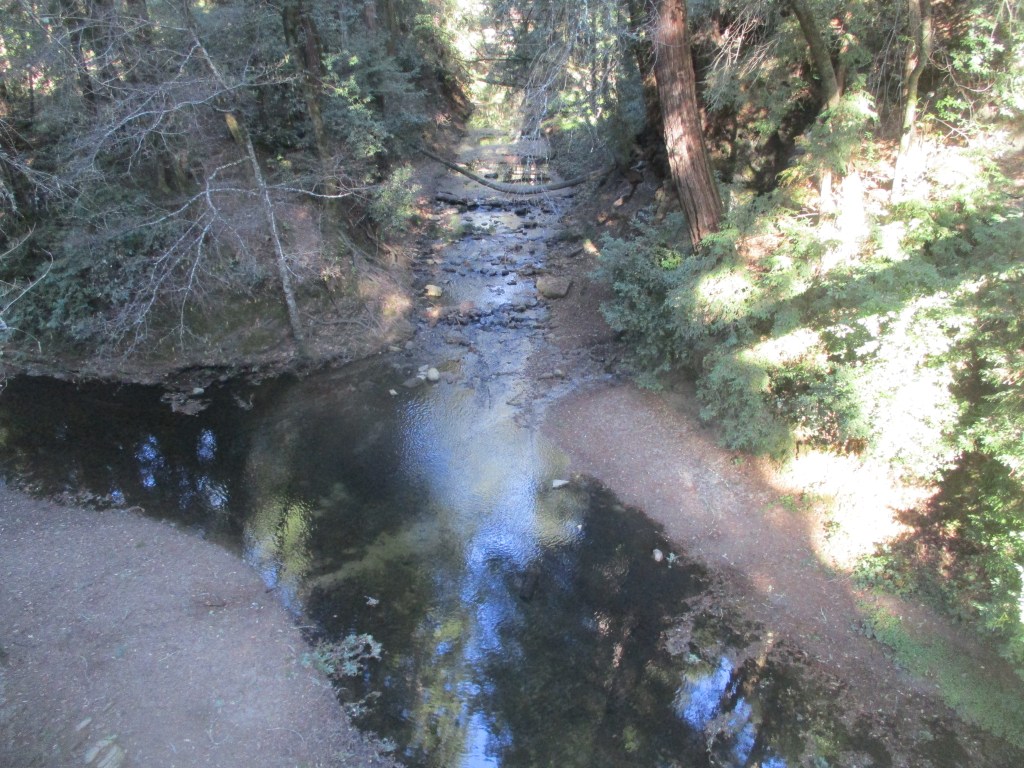
6. Bean Creek flowing from the top of the picture into Zayante Creek is irrelevant to horticulture as well. I just happened to like this picture of this bit of the forest. Bean Creek flows through the Farm just a few miles away. Ferndell Creek is barely visible where it flows into the middle of this picture from an unseen waterfall to the right. Miley Cyrus was filmed there for ‘Malibu’.
This is the link for Six on Saturday, for anyone else who would like to participate:
https://thepropagatorblog.wordpress.com/2017/09/18/six-on-saturday-a-participant-guide/
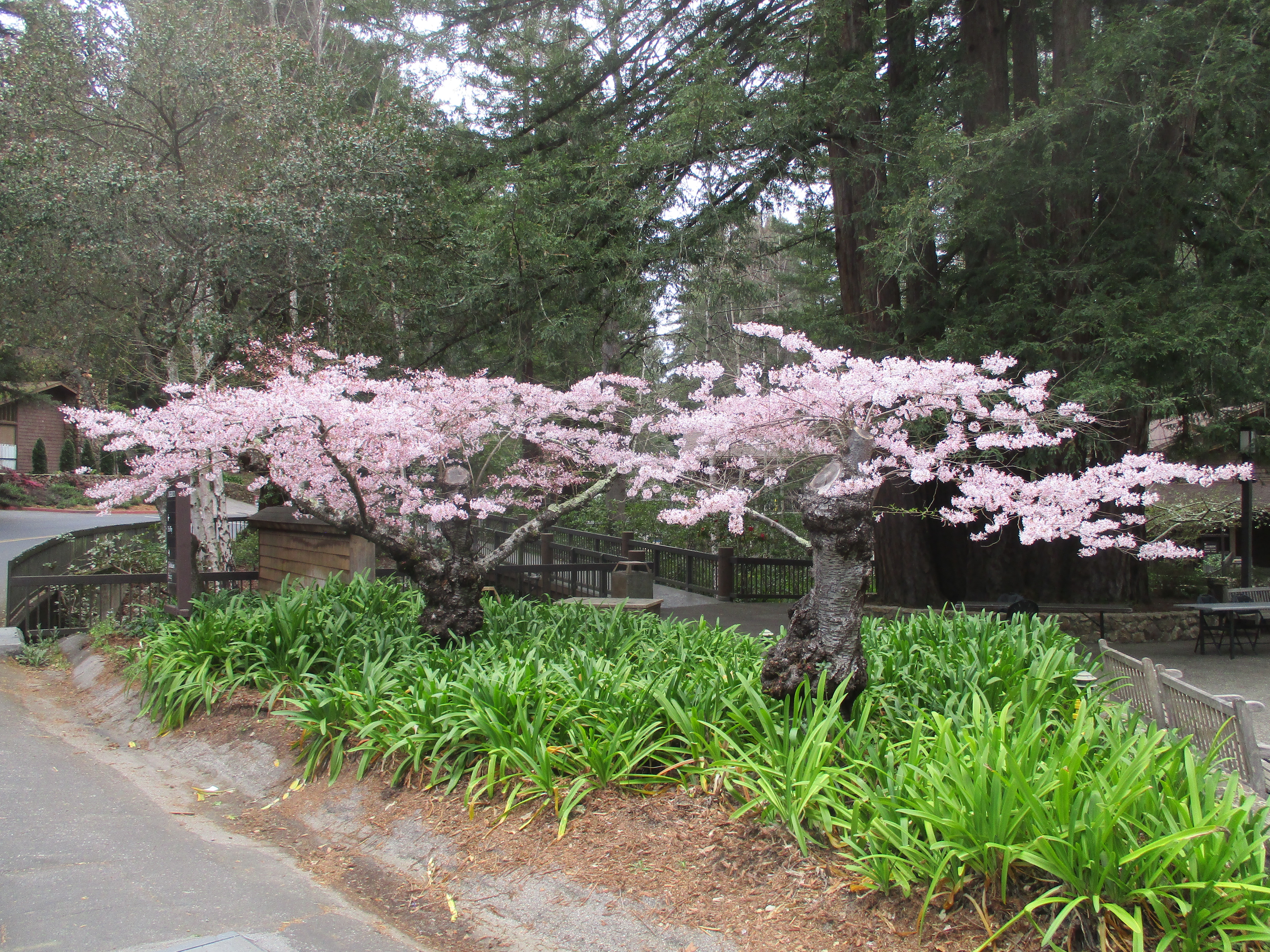
This is the third spring that I got picture of this pair of flowering cherry trees in bloom. I took several pictures last year, ranging from closeup pictures of the flowers, to pictures taken from a distance like the picture above. Fewer pictures were taken during the previous spring of 2018, before these trees were groomed of copious necrosis. Sadly, this picture will be one of the last.
The trees will be cut down this year. They stayed just long enough to bloom this one last season, but will not likely be here much longer. They are deteriorating at such a rate that if I were to prune the necrosis away after bloom, there would not be much remaining. The tree to the right in this picture would be only a rotten stump with a few limber twigs protruding from the top.
Structural integrity has been so compromised by decay that, even without the weight of all the limbs that have been pruned back during the past many years, the trunks could easily break off at the ground. When I remove them, I will likely just push the tree to the right over without cutting it first. If there were any branches left, a kid could knock it over by trying to climb it.
As much as I would prefer for these trees to last much longer, I want to install their replacements as soon as possible. Planting them this spring would give them all summer to disperse roots and grow a little bit before blooming next spring. I know they will not be much to look at for a few years, but many years from now, they might be as spectacular as these two originals were.
Regardless, it will be a saddening task to cut down these distinguished trees.
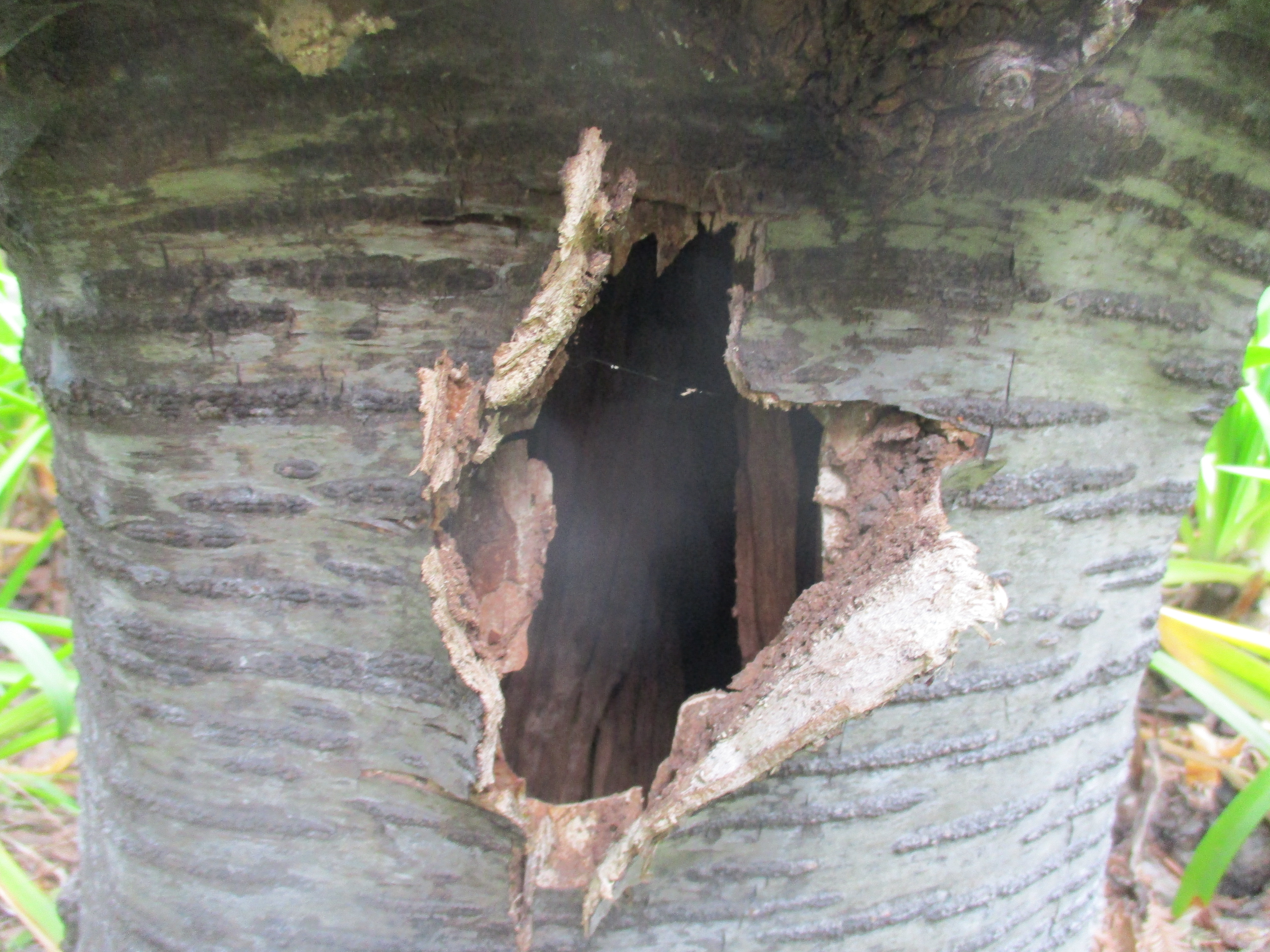
That was a scary movie back when horror movies really were scary! The first appearance of the baby alien was the creepiest part and one of the scariest scenes! It is too disturbing and gory to describe here. Those who have seen it may have noticed how it might seem to be weirdly relevant to the cavity that opened in the rotting trunk of this deteriorating flowering cherry tree.
With a bit more distance, the rotting trunk looks sort of like an associate of ‘H. R. Pufnstuf’ after an interaction with a baby alien. If you can remember who H. R. Pufnstuf was, you probably shouldn’t. He starred in his own television show for children on Saturday morning in the 1970s. It was disturbingly weird and perhaps even inappropriate for the children it was intended for.

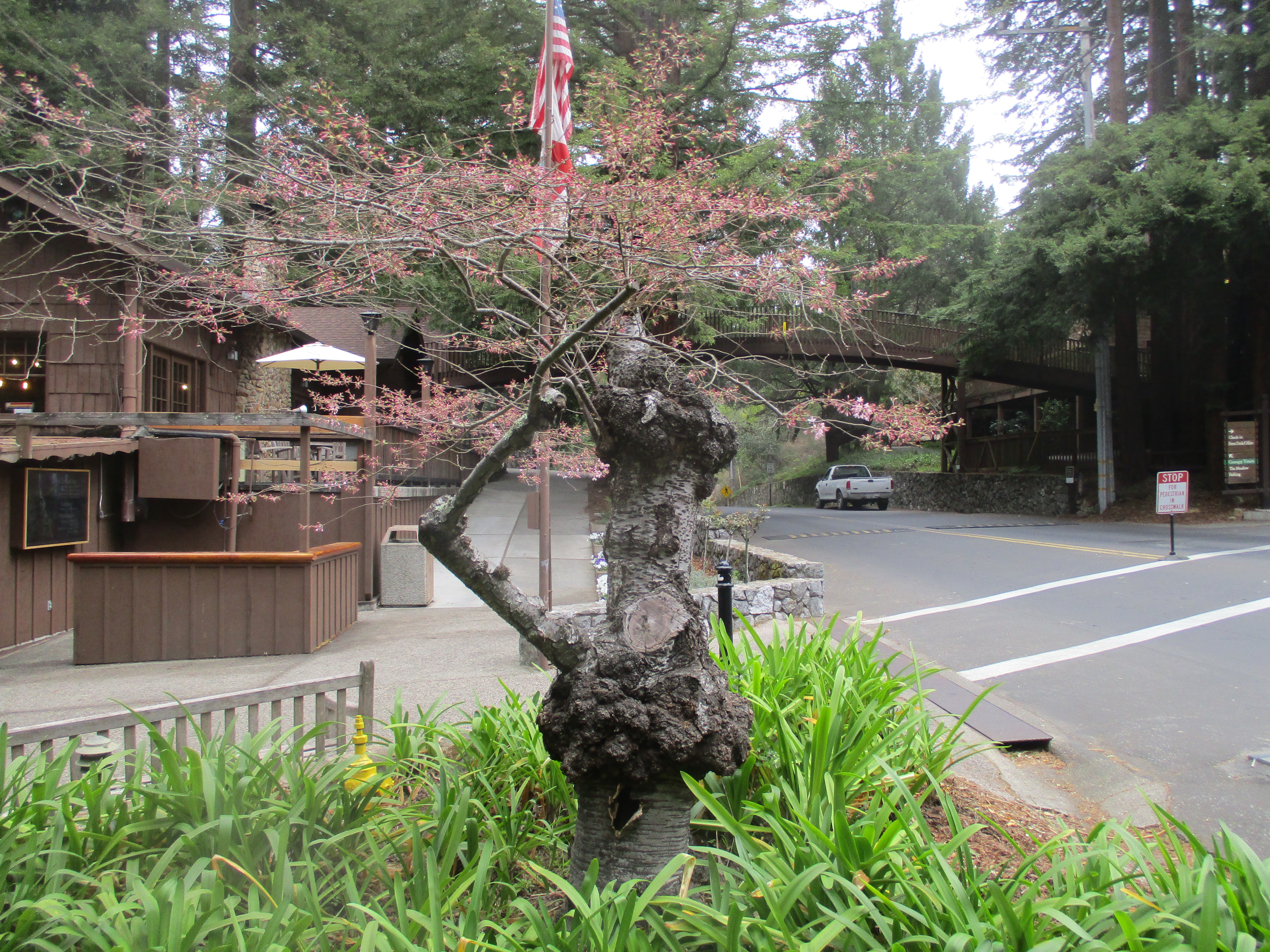
With even more distance, it is obvious that this is nothing to joke about. This is one of two flowering cherry trees that I have been so protective of, and put so much work into temporarily salvaging. Both should have been removed and replaced years ago. This project was scheduled for after bloom in 2018, postponed until after bloom in 2019, and has yet to be done even now.
The problem is that these trees are so popular and so appreciated by the Community. They have been here in the most prominent spot in the neighborhood for several decades. There are not many who remember when the trees were young. No one seems to remember before the trees were here. They are as historical as the older buildings. I can not bear to cut them down.
As you can see, there is no choice now, at least for this particular tree. It is already so decayed that it can barely support its own weight.
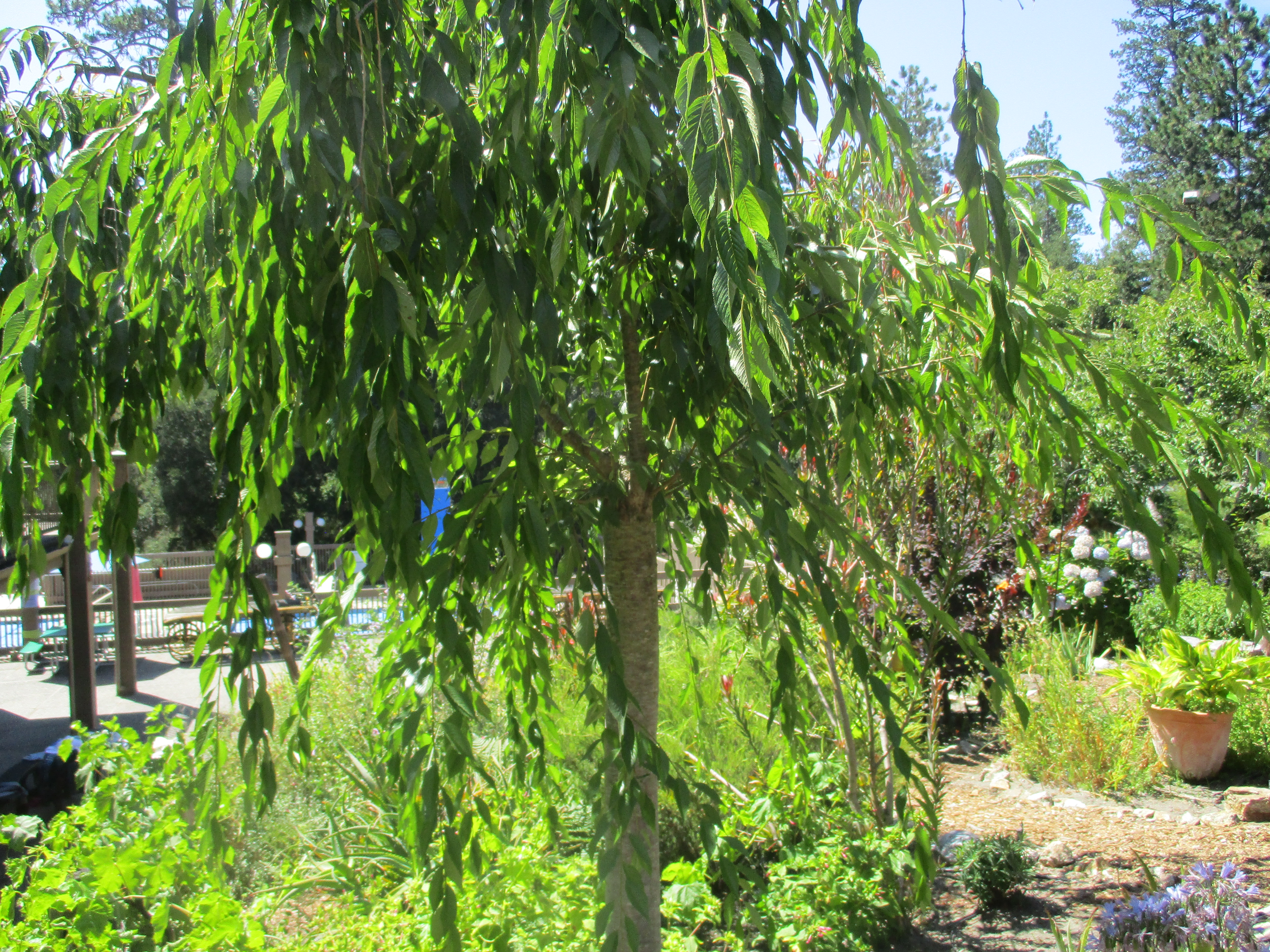 Weeping flowering cherry is another type of tree that almost never gets appreciated like it should. Like so many Japanese maples, they get planted into situation where so-called ‘gardeners’ shear them into nondescript globs of worthless foliage that only get in the way. Some get shorn so regularly that they are deprived of bloom. Their form and bloom are their two main assets.
The climate here is not easy on them either. Although comfortably mild, the climate is also arid. This aridity enhances the potential for sun scald of exposed bark. Because upper limbs bend over to hang back downward, their bark is more exposed than that of upright flowering cherries. Consequently, upper limbs are often scalded and ruined, disfiguring the remaining canopy.
Pruning can be complicated. Removal of scalded upper growth exposes inner growth that is more sensitive to scald. It is sometimes necessary to leave damaged upper growth until it gets replaced from below by newer growth. Regular pruning to remove as much of the superfluous lower growth as possible should stimulate more vigorous growth among the stems that remain.
This is really the best technique for preventing scald among upper growth. It may sound silly, but pruning from below to concentrate growth into fewer stems that extend from or through the top of the canopy keeps the top of the canopy healthy and resilient to scald. It also elevates the pendulous canopy that needs to be pruned very regularly for vertical clearance anyway.
It is not easy to see in this picture, but this small weeping cherry tree is developing two distinct canopies. The original upper canopy was damaged by scald and is now disfigured. It is mostly to the upper left of center of the picture. A more symmetrical inner canopy that is developing where superfluous inner growth was pruned out last winter is evident below and to the right.
If there were not a walkway so close to the tree, and I were not concerned with maintaining vertical clearance, I could prune the upper canopy back over a few years, and subordinate it to the healthier lower canopy as it grows through it. Instead, I will prune out most of the inner canopy, leaving only a few vigorous stems that can replace what is missing in the upper canopy.
There is no need to be concerned with it now. The lower stems are not too obtrusive yet. They can bloom next spring, and get pruned out next summer before they really do get obtrusive.
 Tony Tomeo