You probably do not notice the problems while distracted by the profuse bloom. That is just swell. It is gratifying that the trees that I work with are appealing to those who see them. Since I work with them, I notice their problems. I would have posted just close up pictures of the flowering cherries and flowering crabapples, but because they are blooming at different times this year, I got only these three.
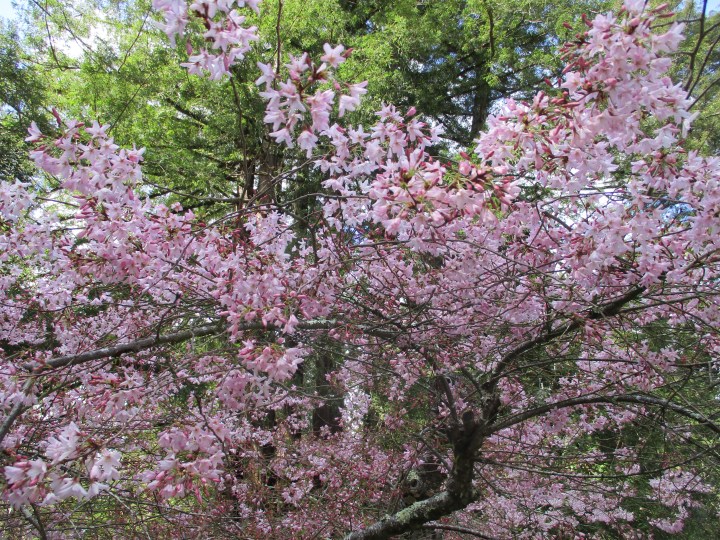
1. The shade of the big redwood trees is a bit too dark for this flowering cherry tree. It is always this sparse. What is worse is that the upper layer of bloom is suspended on a single horizontal limb that extends from the right, out the backside, back in toward the center and off to the left as it is seen here in the picture. What looks like supporting limbs is actually trunks of birch trees in the background. I would prefer to cut the awkward limb off, but you can see how flat topped the remaining portion of the tree would be without it.
2. This is the main reason the tree remains. These double white flowers are the whitest of the trees here.
3. My absence at a previous work day at the Presbyterian Church was the problem with this ‘Prairie Fire’ flowering crabapple. I had worked with this tree for a few years to thin out the thicket growth, and repair structural damage. Then, because I was not there, someone else pruned it indiscriminately with hedge shears and loppers! What a mess! It is best that you can not see the damage within the canopy. I don’t know why this was done. The tree only needed minor trimming for clearance above parked cars. After bloom, I will start the process of structural repair all over again.
4. These rosy pink flowers make it all worth it though.
5. This flowering cherry actually looks better than I expected it to this year. I pruned out so much necrosis last years that I figured that the tree was deteriorating. I expected a bit more new necrosis to develop this years. As you can see, that did not happen so much. I am not disappointed. Actually, I am impressed that there is no necrosis worth noticing. The worst problem with the tree right now is that it is disfigured by the unexplained necrosis. Well, that will not prevent us from appreciating the bloom.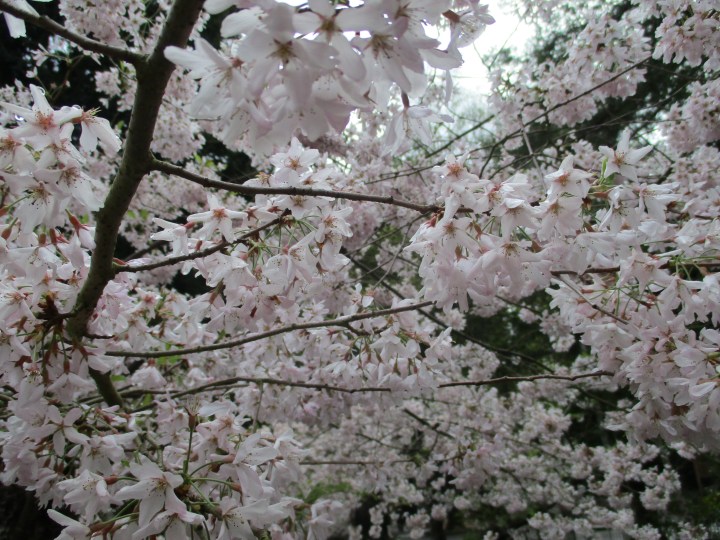
6. This is the bloom close up. It is very similar to the other two old cherry trees that I will be cutting down this year. I wrote an article, and perhaps others, about them earlier. https://tonytomeo.com/2019/03/31/the-end-of-the-cherry-blossom-festival/
This is the link for Six on Saturday, for anyone else who would like to participate:
https://thepropagatorblog.wordpress.com/2017/09/18/six-on-saturday-a-participant-guide/
 After decades of spectacular spring bloom, this pair of flowering cherry trees in the picture above must be removed. They have been deteriorating for a very long time. Below the limber blooming branches of the tree on the right, there is not much more than a bulky rotten trunk, one rotting limb, and a short stub of a limb that was cut back to a bit of viable twiggy growth last year. The tree to the left has only a few more viable but rotten limbs.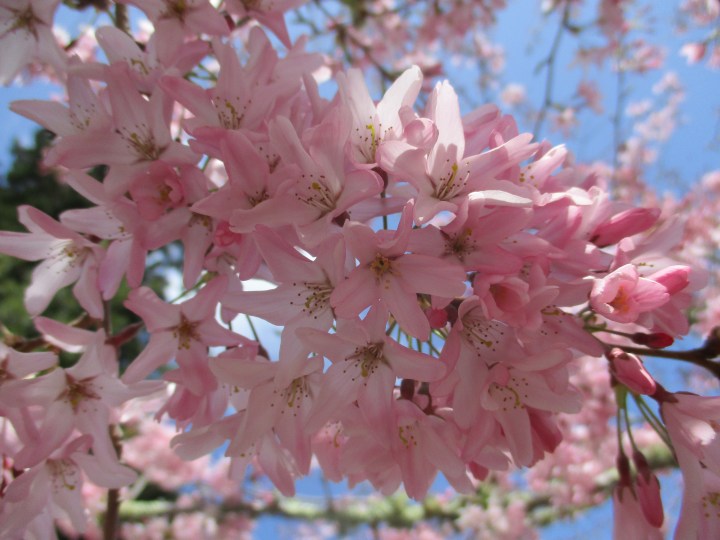

 The ‘politically correct’ designation for them now is ‘flowering cherry’. We all know what it means, but it is not quite as accurate. After all, they all flower. Fruiting cherries can not make fruit without flowering first. The old fashioned designation as ‘fruitless cherry’ is more accurate, but not so appealing. Besides, after half a century, the work of these two deteriorating old fruitless cherry trees has not been in vain.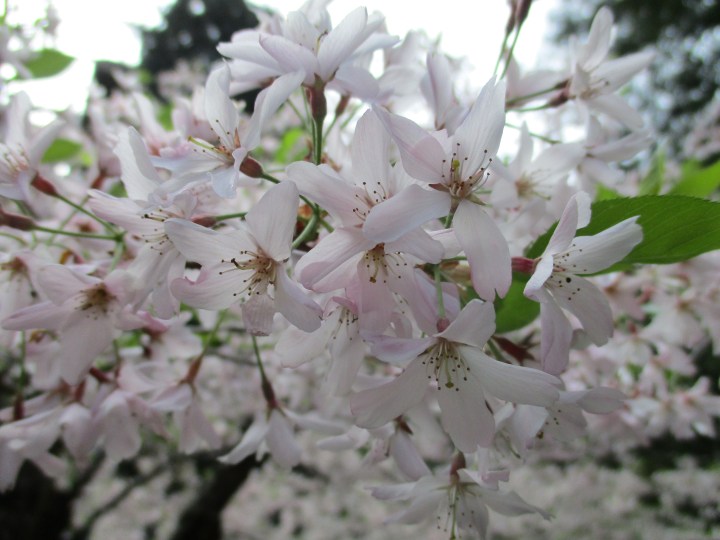


 I would say that this is our own private Cherry Blossom Festival, but it really gets a crowd. These two old trees are at the edge of the main roadway through town, so several people driving by stop to take pictures. They may not seem to be very impressive compared to healthier flowering cherry trees, but they are what we have, and we are happy to get the bloom.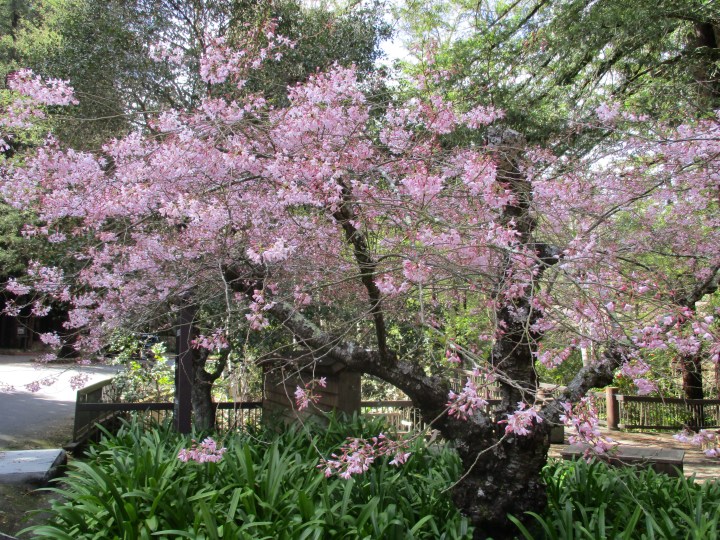
 Tony Tomeo