 Long before hydrangea blooms with its distinctively round floral trusses of abundant small flowers, the snowball bush, Viburunum opulus ‘Roseum’, shares its own unique version of similar bloom. Although the cultivar name suggests that the bloom would be pink or red, it is exclusively white. Hydrangea will bloom later, mostly in pink or red, with some in blue or lavender, and a few in white.
The snowball blooms of snowball bush are about thee inches wide, so are smaller than those of hydrangea, and do not last quite as long. They bloom early in spring, without subsequent bloom. The two or three inch long deciduous leaves might turn surprisingly vivid orange and red before defoliating in autumn. Mature specimens easily get taller than ten feet, and might reach fifteen feet.
Snowball bush eventually develops a relaxed and unrefined style that fits nicely into woodsy landscapes. Autumn foliar color is better with full sun exposure, but a bit of partial shades promotes a slightly more open branch structure that displays the spring bloom better. Pruning should be done after bloom. Snowball bush prefers somewhat regular watering and rich soil, but is not too finicky.
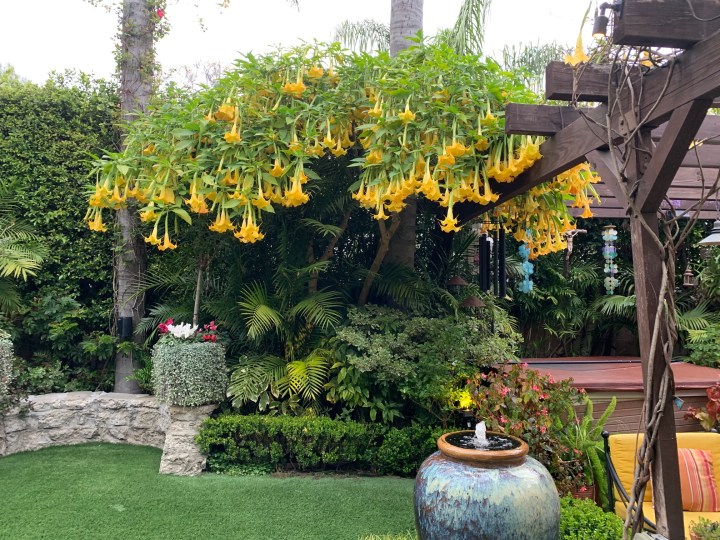 When spelled like that, the whole thing looks like someone’s long name. ‘Charles Grimaldi’ really is someone’s name, and the particular cultivar of brugmansia happens to be named after him. Because no one knows who the parents of this hybrid cultivar are, the species name is omitted. It is therefore described by just the genus name followed by the cultivar name, as Brugmansia ‘Charles Grimaldi’; or simply ‘Charles Grimaldi brugmansia’.
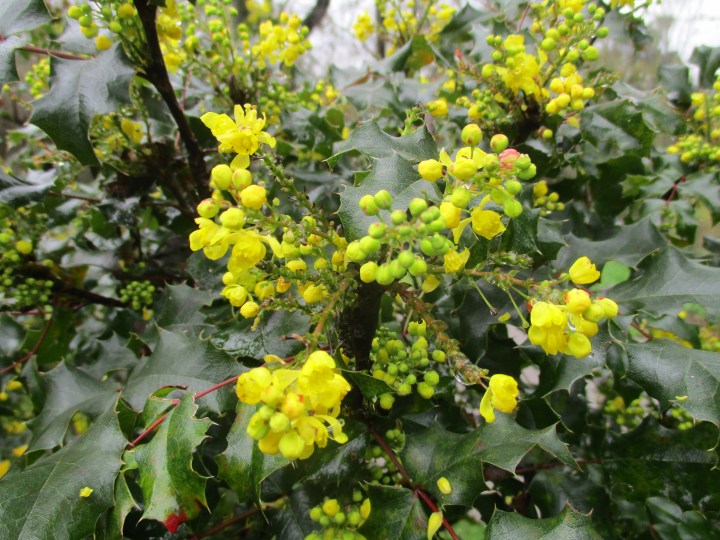 If California is the most excellent state in the entire Unites States of America and surrounding Universe, and Oklahoma is the second most excellent, then Oregon might be number . . . hmmm . . . fourteen or fifteen . . . or maybe like twenty or something. However, in MY (very important) opinion, Oregon is like the third most excellent state, and almost ties with Oklahoma! That makes it even slightly more excellent than Pennsylvania, Vermont and Arizona! Yes, it is THAT excellent!
 There may not be exceptions to every rule, but there are a few exceptions to the rule that winter is the best time for pruning. It is generally true that most plants are the most dormant through the coolest part of winter. It is also true that while they are the most dormant, most plants are less sensitive to pruning, as well as other horticultural techniques that interfere with their normal function.
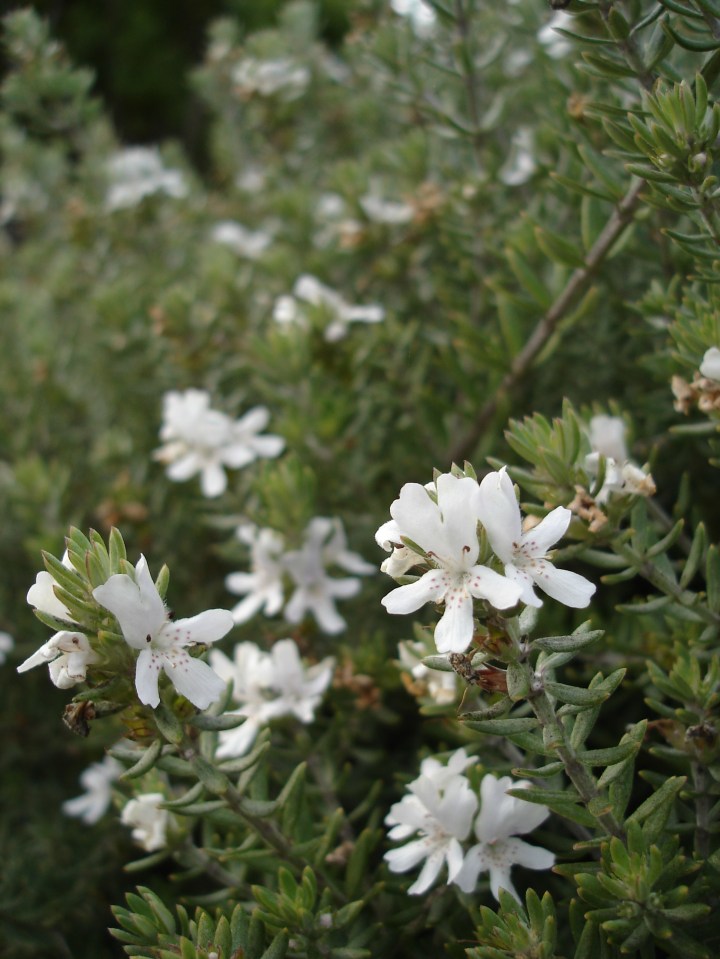 Just like real rosemary, the coast rosemary can either be a low ground cover or a dense shrub. Lower cultivars can get nearly five feet wide without getting much more than a foot high. Shrubby types can get nearly six feet tall without getting much wider. Shrubby types are more popular than ground cover types, and are often pruned so that they do not get too broad.
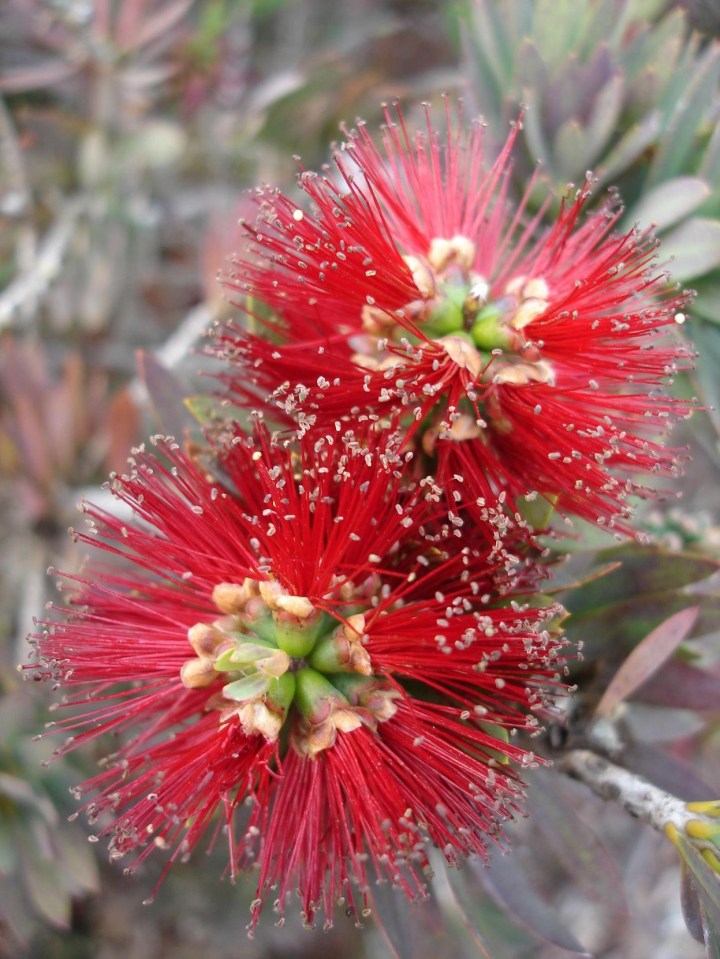 Where it has space to grow, classic lemon bottlebrush that was so popular in the 1960’s is still a practical and resilient large shrub, and is happy to bloom with bright scarlet flowers as long as the weather is warm. It is resistant to most diseases and pests, and once established, survives on annual rainfall. Its main problem is that it simply gets too big for many situations.
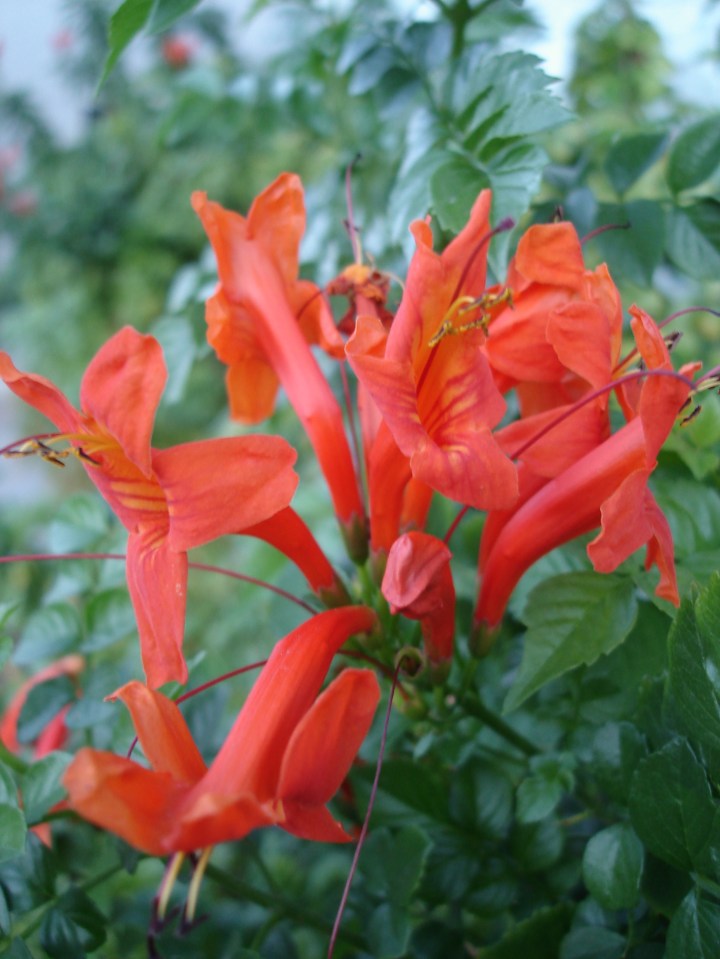 It may not bloom profusely, but cape honeysuckle, Tecoma capensis, blooms sporadically at random times throughout the year, and often while not much else is blooming. The bright reddish orange flowers contrast nicely against glossy evergreen foliage. Some blooms are slightly more reddish, while others are slightly more orangeish. A somewhat more compact cultivar blooms with light yellow flowers.
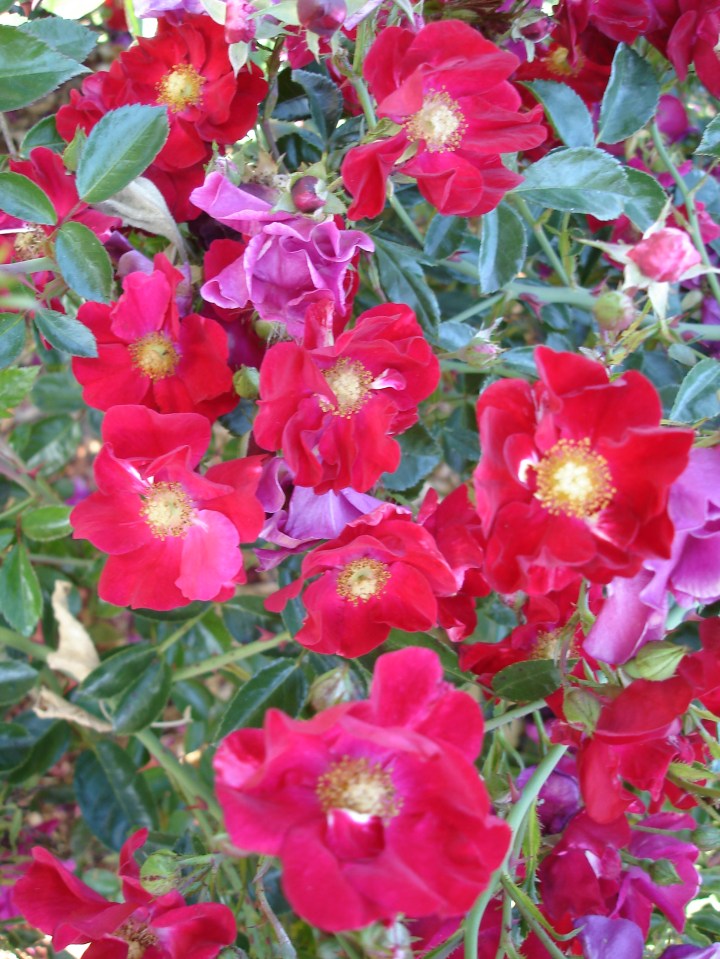 They compare to more traditional roses like instant coffee compares to real coffee. They are too easy and cheesy. However, even instant coffee can be rather good as long it is not expected to taste like the real thing. Likewise, carpet roses do not produce big and fancy flowers on long stems for cutting, but they have other attributes that are advantageous in the landscape.
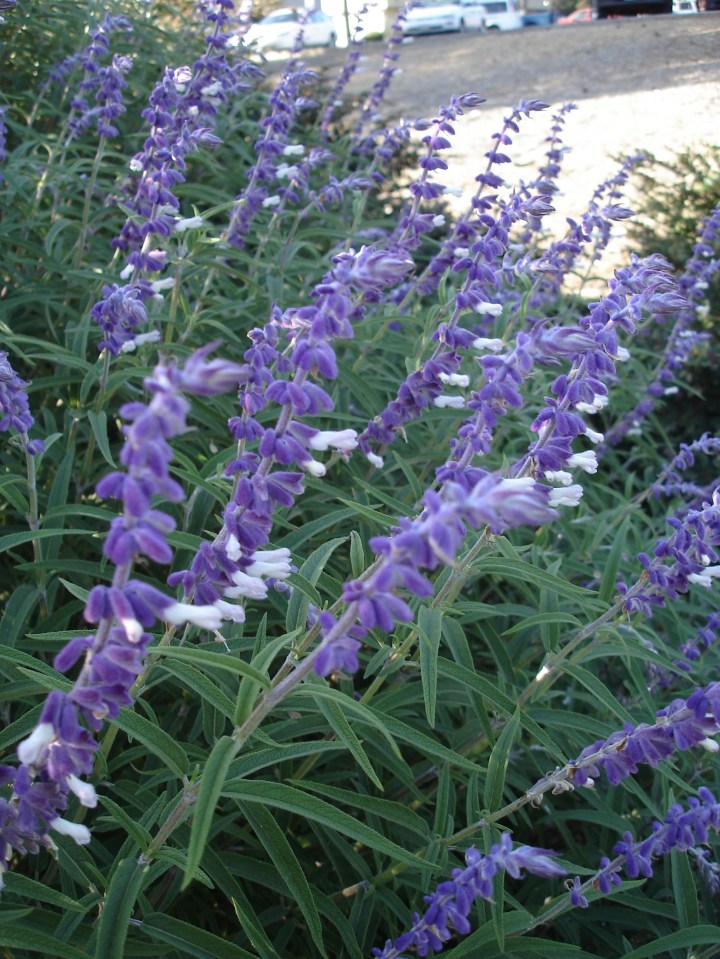 In the first year, Mexican bush sage, Salvia leucantha, does not get very big. Then it gets cut back to the ground at the end of winter. It gets about twice as big in the second year, only to get cut back again as winter ends. By the third or fourth year, healthy maturing plants can grow to five feet tall and seven feet wide each season. While cut back, big clumps can be divided to propagate.
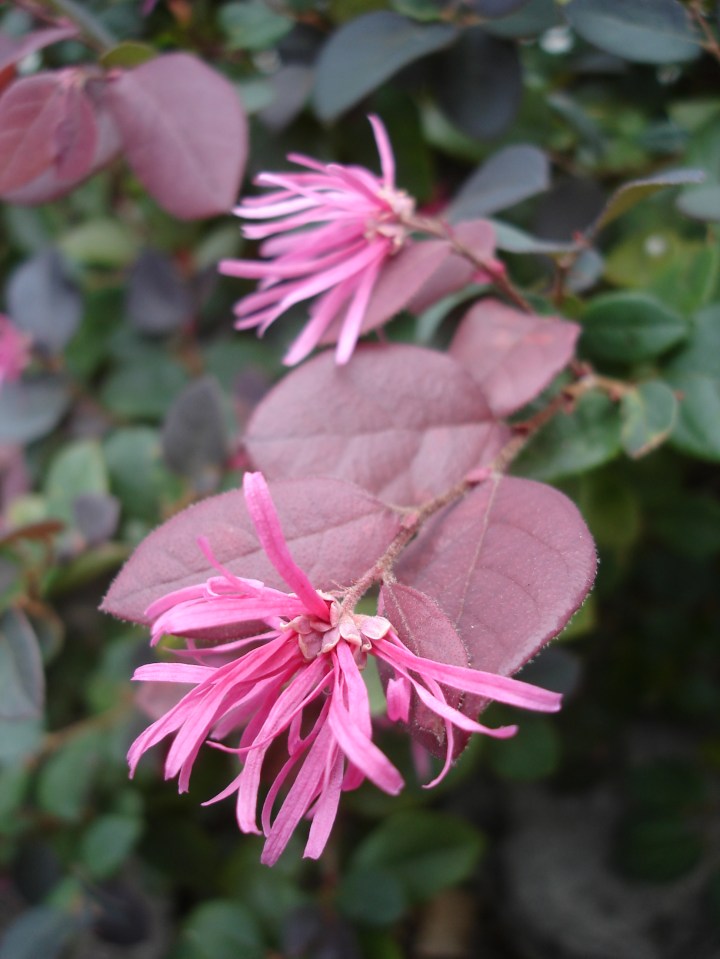 Since modern cultivars became trendy several years ago, the old fashioned ‘common’ fringe flower, Loropetalum chinense, has become even more uncommon than it already was. It does not grow fast enough to function as large scale shrubbery, but slowly gets too big to work as small shrubbery. Without pruning, old plants take many years to get to fifteen feet tall.
