Purple Leaf Plum

Spring bloom is spectacular prior to foliation.

There are actually several different purple leaf plums, Prunus cerasifera, to provide colorful white or pink bloom sometime between the middle of winter and the middle of spring, followed by colorful bronzy or purplish foliage through summer. Some also provide good fruit, which can unfortunately be messy if it is not harvested. Most stay quite compact, less than twenty feet tall and broad, so are proportionate to small garden spaces. ‘Hollywood’ is the largest, but rarely gets more than thirty feet tall, and not quite as broad. Prunus X cistena does not get much more than six feet tall and broad.

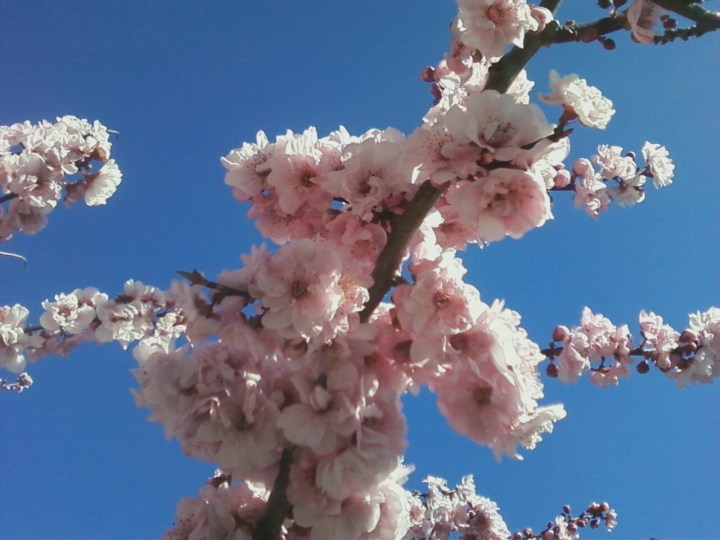
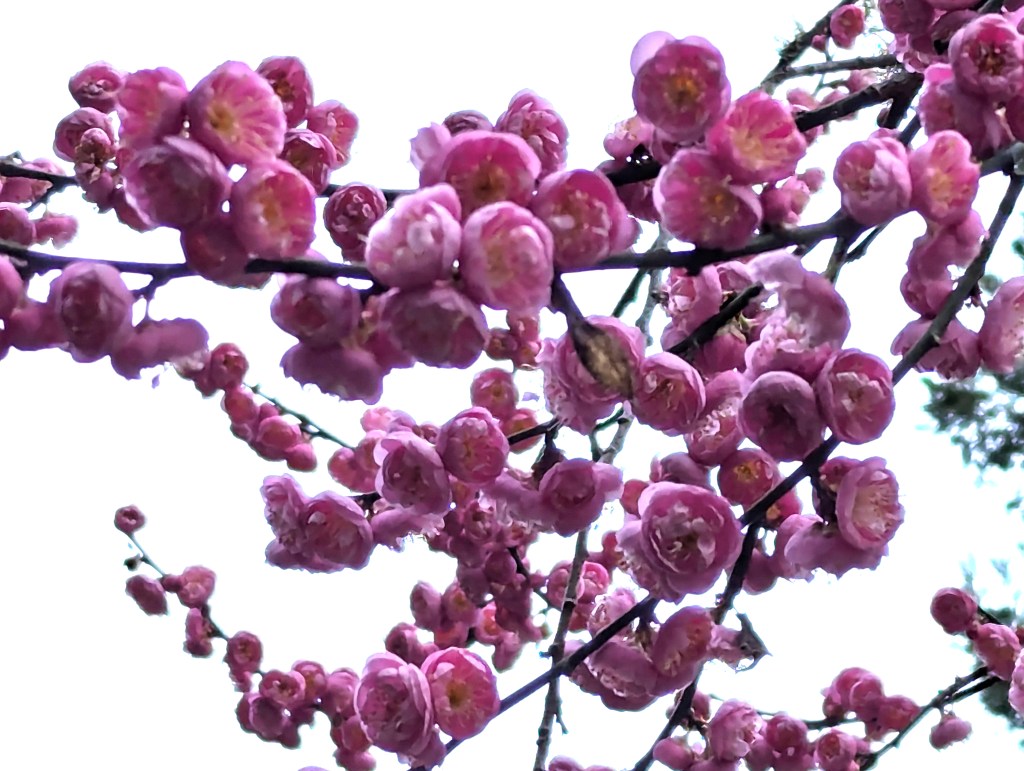
Because each cultivar has a distinct personality, it is important to match trees when adding or replacing trees in a grove. The fruitful ‘Atropurpurea’ has single white flowers in spring, followed by bronzy red new growth that turns purplish in summer and reddish brown in autumn. ‘Krauter Vesuvius’ has single pale pink flowers and the darkest foliage, but lacks fruit. ‘Thundercloud’ has similar or paler flowers, lighter or more bronzy foliage, and sometimes produces tangy red fruit about an inch wide. Prunus X blireiana (illustrated) fades to bronzy green by summer, but has handsome branch structure and double pink flowers that are slightly fragrant. Unlike plums that are grown for larger and more abundant fruit, purple leaf plums do not need much pruning.

Purple Leaf Plum

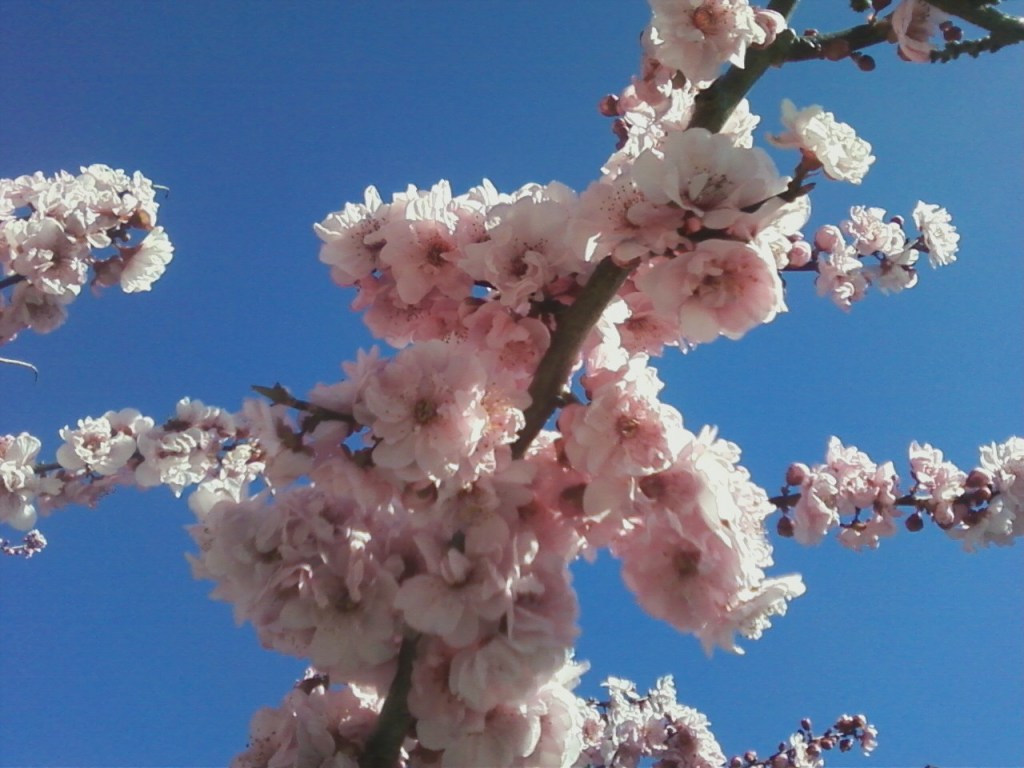
Purple leaf plum bloom is more colorful than its purplish foliage.

There are actually several different purple leaf plums, Prunus cerasifera, to provide colorful white or pink bloom sometime between the middle of winter and the middle of spring, followed by colorful bronzy or purplish foliage through summer. Some also provide good fruit, which can unfortunately be messy if it is not harvested. Most stay quite compact, less than twenty feet tall and broad, so are proportionate to small garden spaces. ‘Hollywood’ is the largest, but rarely gets more than thirty feet tall, and not quite as broad. Prunus X cistena does not get much more than six feet tall and broad.

Because each cultivar has a distinct personality, it is important to match trees when adding or replacing trees in a grove. The fruitful ‘Atropurpurea’ has single white flowers in spring, followed by bronzy red new growth that turns purplish in summer and reddish brown in autumn. ‘Krauter Vesuvius’ has single pale pink flowers and the darkest foliage, but lacks fruit. ‘Thundercloud’ has similar or paler flowers, lighter or more bronzy foliage, and sometimes produces tangy red fruit about an inch wide. Prunus X blireiana (illustrated) fades to bronzy green by summer, but has handsome branch structure and double pink flowers that are slightly fragrant. Unlike plums that are grown for larger and more abundant fruit, purple leaf plums do not need much pruning.

Flowering Crabapple

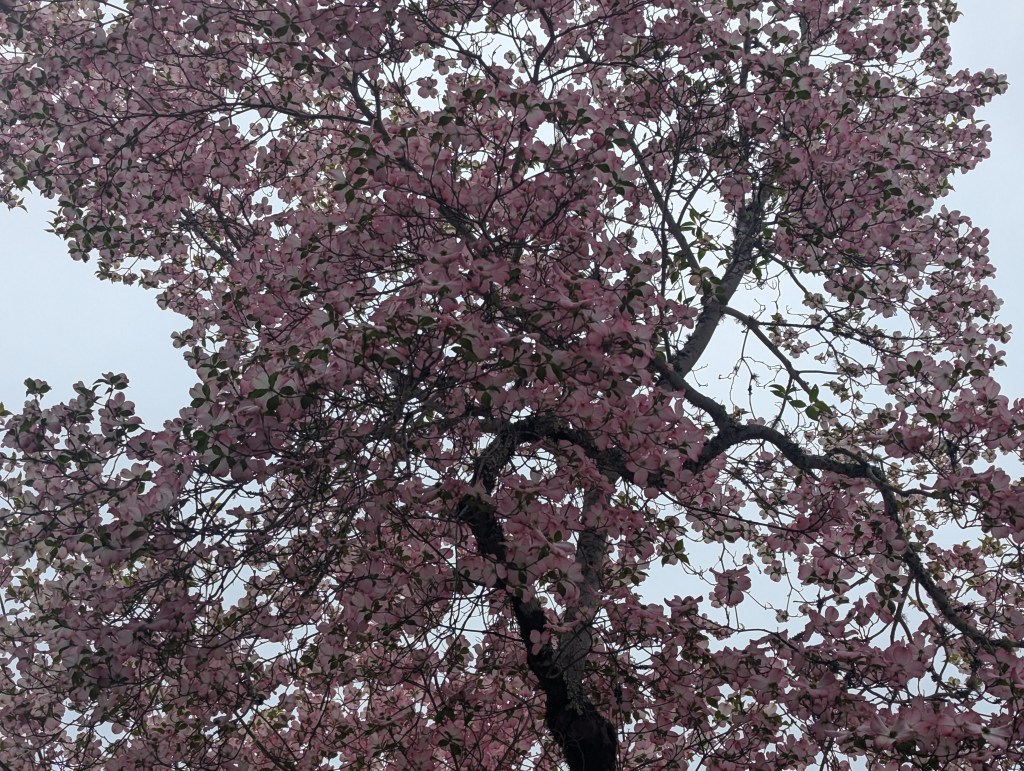
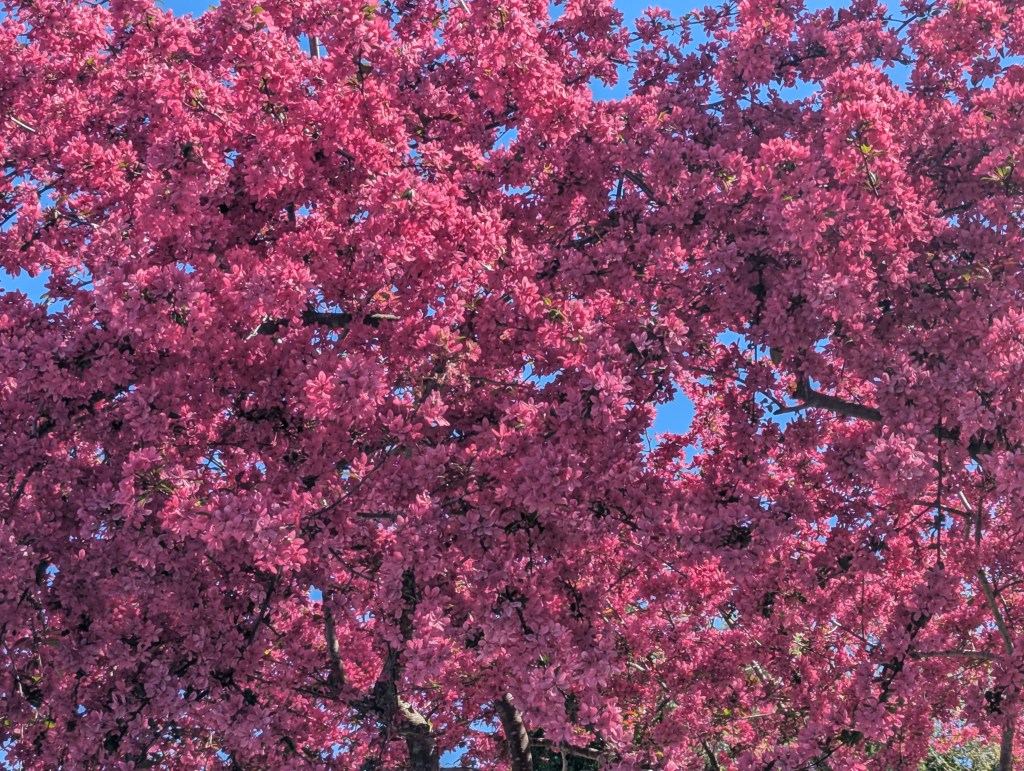
Flowering crabapple is more colorful than crabapples that are grown more for fruit.

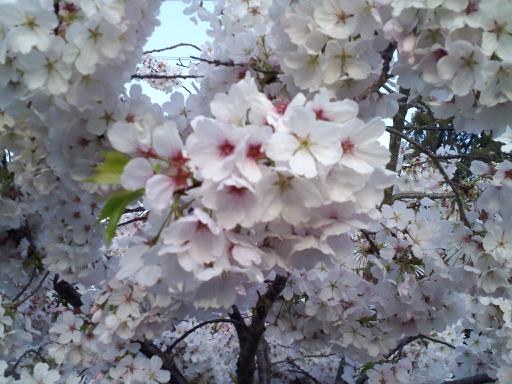
This picture resembles flowering cherry, but is actually a flowering crabapple, Malus spp.. Both provide impressively abundant spring bloom before foliation in spring. Both may have single, semidouble or double flowers in various shades ranging from white to rich pink. Some flowering crabapples though have nearly red flowers. Flowering crabapples get slightly larger, more than twenty feet tall and broad; but some stay as short as five feet, and others get taller than thirty feet! Some have bronzy or purplish foliage through summer. The half inch to nearly two inch wide yellow, orange or red fruit can be colorful into autumn, and some makes good jelly; but it can also be messy. The main advantage of flowering crabapples is that they are somewhat less susceptible to rot than flowering cherries are in dense slowly draining soil.

Flowering Cherry

Flowering cherry is the fruitless counterpart of fruiting cherry.

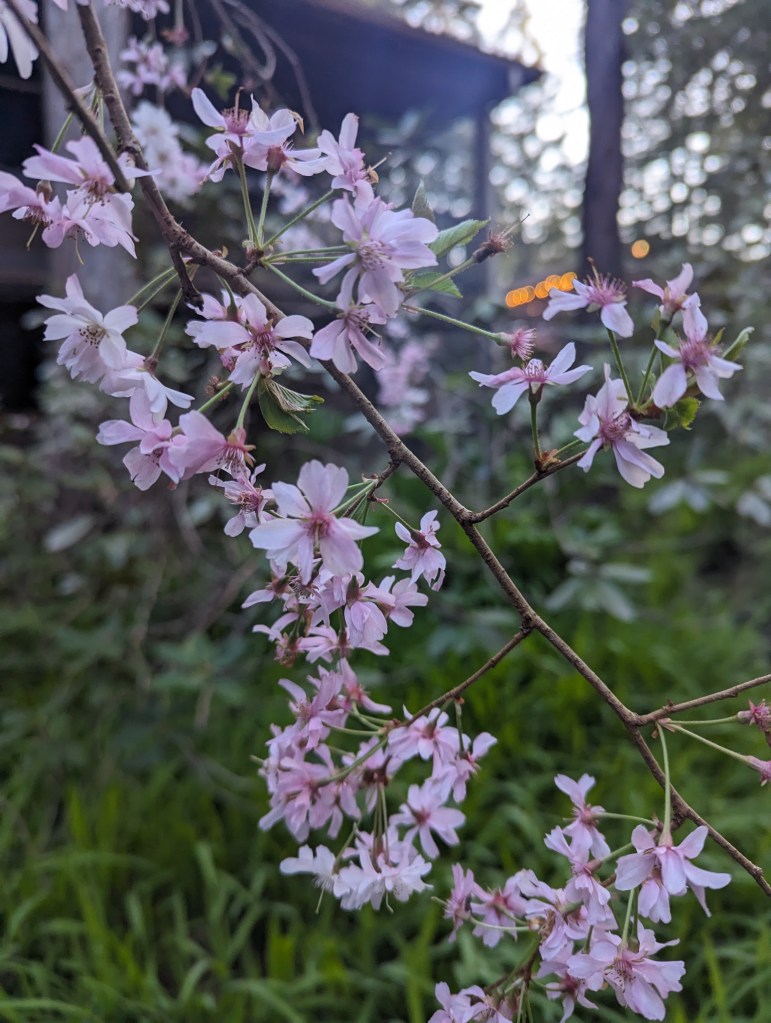
Like camellias and chrysanthemums, the many different varieties of flowering cherries, Prunus spp., have been developed by horticulturists in Japan for centuries. There are now almost too many to choose from. Most stay less than about twenty feet tall and broad, so are proportionate to compact gardens. A few stay even smaller. The classic Yoshino flowering cherry can get somewhat larger. Weeping cherries have pendulous branches. Columnar types are noticeably taller than wide, at least while young. Some flowering cherries have remarkable fall color.

Despite my preference for cherry trees that produce cherries, I can not deny that the spring bloom of the innately non-fruiting flowering cherries is spectacular! Most bloom before any foliage develops. Their flowers can be single, semidouble or double, in various shades of white or pink, including rich rosy pink. They can not be very messy without fruit. Unfortunately though, flowering cherry trees are susceptible to rot in the endemically dense soil, so should not be watered too much.

Winter Flowering Cherry

Such bloom seems a bit early.

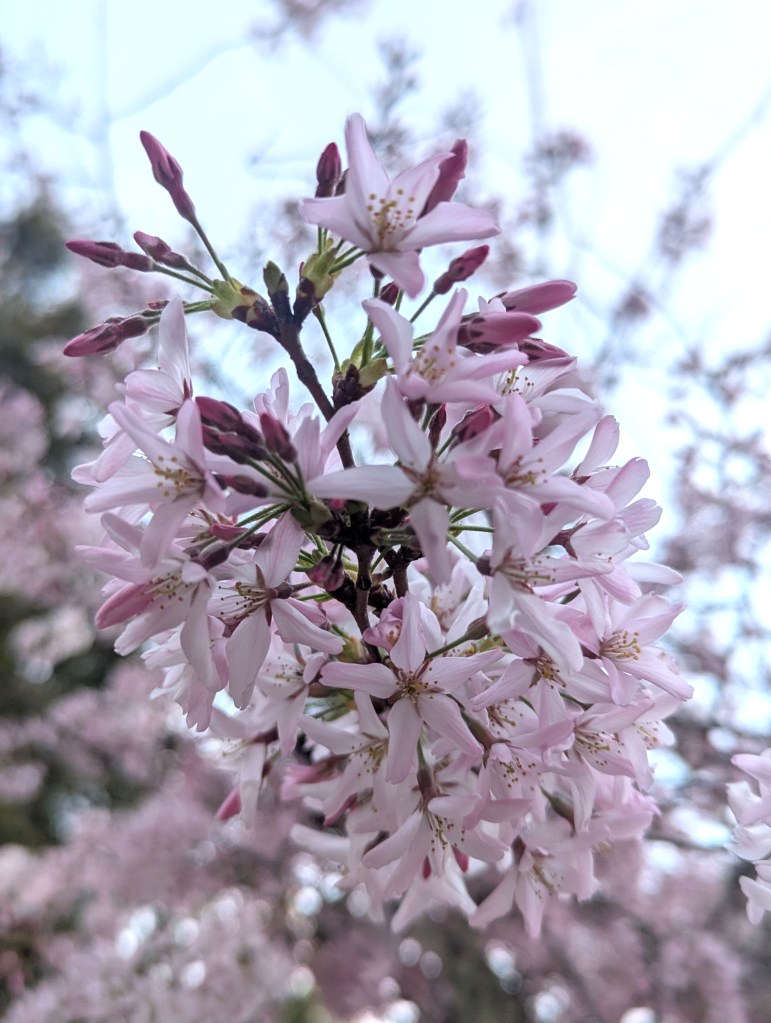
Its name describes it simply. Winter flowering cherry, Prunus X subhirtella, is a flowering cherry that blooms for winter. It is more popular where winters are cool enough to inhibit other bloom. It is less common here only because of other options for wintry floral color. Besides, slightly more floriferous flowering cherries bloom almost immediately afterward.

WIntertime bloom is actually a bit more reliable here than where it is more popular. Frost is too mild locally to damage it much, and mostly occurs earlier. Rain is mostly too light and too brief to dislodge much of the bloom. Bloom is a bit less profuse than that of other cherries because it is a bit more continuous. Therefore, it recovers from minor damage.

The relatively common sort of this uncommon flowering cherry blooms for late winter. Its bloom is slightly lavenderish pink. Some rare cultivars can bloom as early as autumn or as late as spring. A few are pendulous. Floral color ranges from white to pink. Floral form is mostly single but can be double. Deciduous foliage turns yellow or orange for autumn.

Spring Blooming Trees

Silver wattle is an aggressively invasive exotic species, but certainly is pretty in bloom!

From my window, I can see across the way to one of my all time favorite weeds in my neighbor’s garden. A healthy acacia tree is nearly in full bloom! Throughout the year, I occasionally remind my neighbor that we really should cut the tree down before its seedlings overwhelm the neighborhood. This time of year though, I am secretly glad that we have not gotten around to it yet.

Even though most people find the fragrance objectionable, I actually find it appealing. It reminds me of Southern California, perhaps because, even on a cool wintry day, it smells like a sun roasted freeway on a hot smoggy day. I suppose that its pollen is a problem for anyone with even mild allergies; and after all, it is still a major weed.

Other trees that are now blooming are not so problematic, or equipped with a petroleum based fragrance. Shrubby forsythia and flowering quince were the first to bloom. Forsythia is the best bright yellow besides acacia. The most popular flowering quince are rich pinkish orange. Apricot, cherry, peach, plum, prune, nectarine, almond and a few other fruit trees, as well as their fruitless ‘flowering’ counterparts, including purple leaf plum, are blooming about now. (Flowering apricot, peach, nectarine and almond are rare.) Fruiting pear and apple trees typically bloom a bit later; but flowering pear and some flowering crabapple are already blooming. Later, redbuds bloom bright purplish pink.

When pruning fruit trees during winter, I sometimes leave a few branches to cut and bring inside while in bloom. Fruitless flowering trees do not need to be pruned like fruiting trees, so can provide even more flowering stems with more flower variation. Stems of forsythia, flowering quince and flowering cherry are often ‘forced’ into bloom by getting cut and brought in just as flower color start to become visible, so that they can finish their bloom inside. Except for redbud, any of the other spring bloomers can also be forced, but are more likely to get desiccated by the dry air inside.

As red maple and red oak begin to break dormancy, they develop delicate pendulous ‘blooms’ that are not very colorful, but might be interesting enough to add to more colorful cut flowers. Of course, pussy willows are always traditional.

Muskogee?

This is not a color I had expected.

What cultivar of crape myrtle is this?! I realize that this picture is blurred, which is why it was not included within my ‘Six on Saturday’ post this morning, but it is the floral color that is important. Is it purplish pink, or just bright pink? What cultivar does it look like?

I expected this crape myrtle to be one of the old reliable cultivars because it was a gift from the Arbor Day Foundation. The primary old reliable cultivar that blooms with similar floral color is ‘Muskogee’. Yet, even with my limited ability to discern color quality, this floral color seems to be a bit too rich. I sort of expect a milder and scarcely purplish pink from ‘Muskogee’. I suppose that the Arbor Day Foundation can also grow modern cultivars like the rest of us.

Regardless of its identity, it is certainly pretty. The foliar color during autumn is comparable to that of old reliable cultivars. Because neighbors like it, I grew a few copies for them. We would like to incorporate more crape myrtles into the landscapes at work. The abundance of spring color from other species there mostly finishes prior to the summer bloom of crape myrtle. Summer is the busiest season, so justifies flashy color.

Embarrassingly though, I am still none too keen on crape myrtle. If I did not typically spell ‘crape’ as ‘crepe’, I would prefer to spell it without the ‘e’ at the end. I was impressed with it when I first started to notice it through the 1980s, but then realized that it was becoming too common through the 1990s. That was long after Brent told me that it had become too common throughout the Los Angeles region significantly earlier. Decades later, it is still too much of a good thing.