Spring Blooming Trees

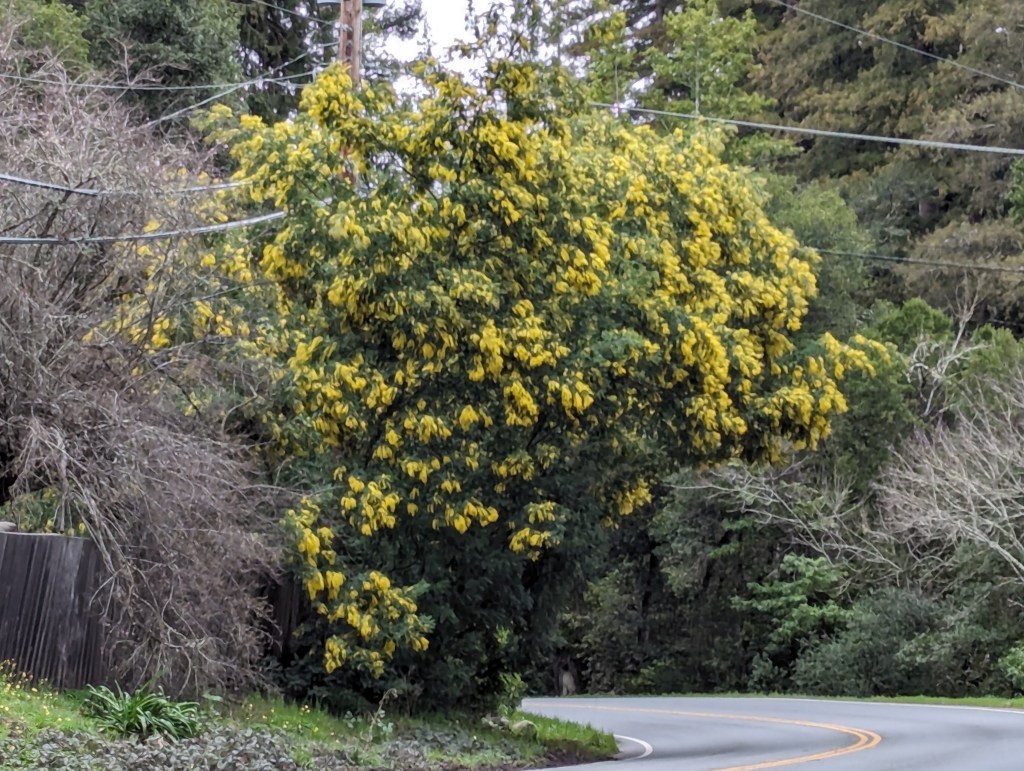
Silver wattle is an aggressively invasive exotic species, but certainly is pretty in bloom!

From my window, I can see across the way to one of my all time favorite weeds in my neighbor’s garden. A healthy acacia tree is nearly in full bloom! Throughout the year, I occasionally remind my neighbor that we really should cut the tree down before its seedlings overwhelm the neighborhood. This time of year though, I am secretly glad that we have not gotten around to it yet.

Even though most people find the fragrance objectionable, I actually find it appealing. It reminds me of Southern California, perhaps because, even on a cool wintry day, it smells like a sun roasted freeway on a hot smoggy day. I suppose that its pollen is a problem for anyone with even mild allergies; and after all, it is still a major weed.

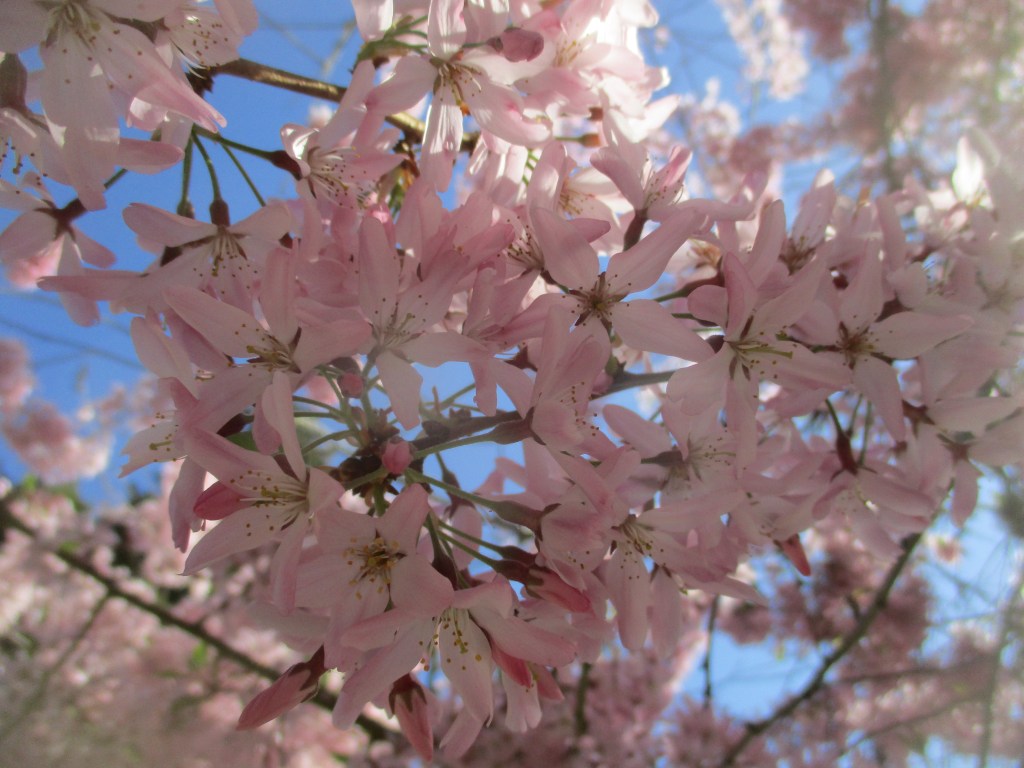
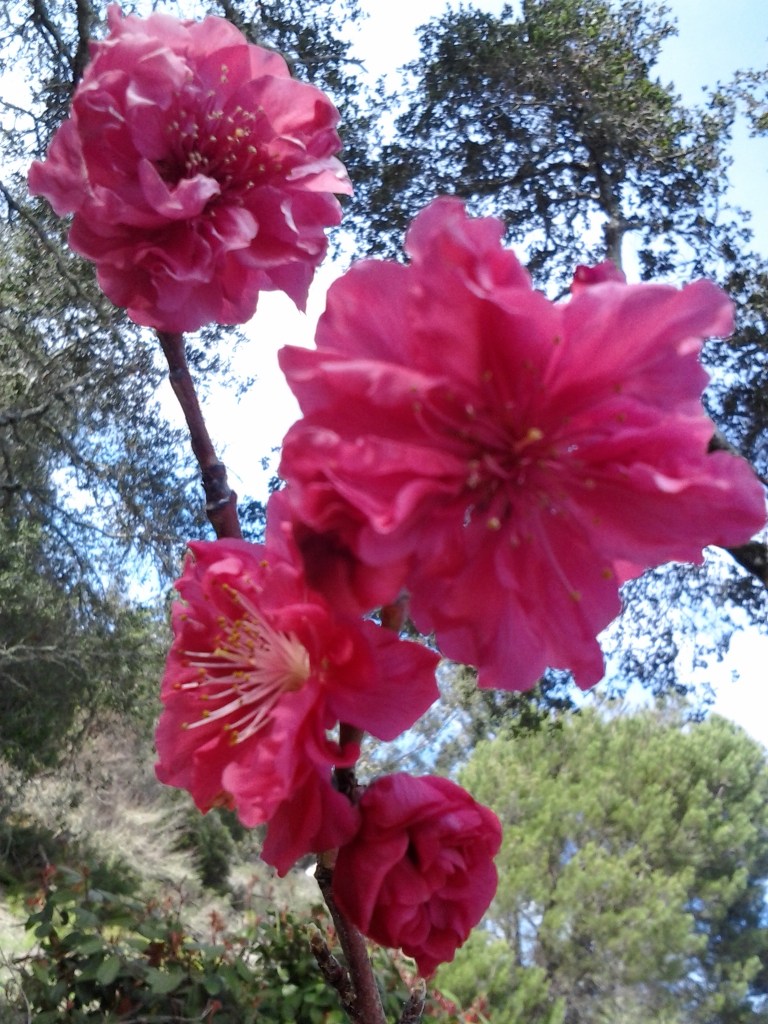
Other trees that are now blooming are not so problematic, or equipped with a petroleum based fragrance. Shrubby forsythia and flowering quince were the first to bloom. Forsythia is the best bright yellow besides acacia. The most popular flowering quince are rich pinkish orange. Apricot, cherry, peach, plum, prune, nectarine, almond and a few other fruit trees, as well as their fruitless ‘flowering’ counterparts, including purple leaf plum, are blooming about now. (Flowering apricot, peach, nectarine and almond are rare.) Fruiting pear and apple trees typically bloom a bit later; but flowering pear and some flowering crabapple are already blooming. Later, redbuds bloom bright purplish pink.

When pruning fruit trees during winter, I sometimes leave a few branches to cut and bring inside while in bloom. Fruitless flowering trees do not need to be pruned like fruiting trees, so can provide even more flowering stems with more flower variation. Stems of forsythia, flowering quince and flowering cherry are often ‘forced’ into bloom by getting cut and brought in just as flower color start to become visible, so that they can finish their bloom inside. Except for redbud, any of the other spring bloomers can also be forced, but are more likely to get desiccated by the dry air inside.

As red maple and red oak begin to break dormancy, they develop delicate pendulous ‘blooms’ that are not very colorful, but might be interesting enough to add to more colorful cut flowers. Of course, pussy willows are always traditional.
Muskogee?

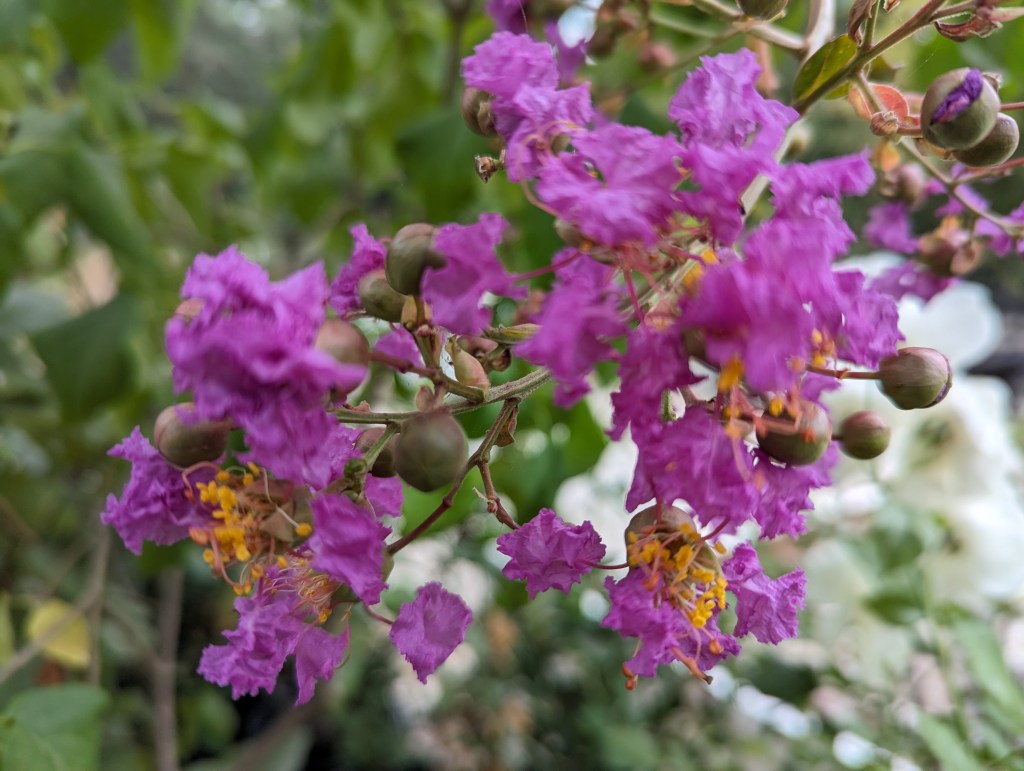
This is not a color I had expected.

What cultivar of crape myrtle is this?! I realize that this picture is blurred, which is why it was not included within my ‘Six on Saturday’ post this morning, but it is the floral color that is important. Is it purplish pink, or just bright pink? What cultivar does it look like?

I expected this crape myrtle to be one of the old reliable cultivars because it was a gift from the Arbor Day Foundation. The primary old reliable cultivar that blooms with similar floral color is ‘Muskogee’. Yet, even with my limited ability to discern color quality, this floral color seems to be a bit too rich. I sort of expect a milder and scarcely purplish pink from ‘Muskogee’. I suppose that the Arbor Day Foundation can also grow modern cultivars like the rest of us.

Regardless of its identity, it is certainly pretty. The foliar color during autumn is comparable to that of old reliable cultivars. Because neighbors like it, I grew a few copies for them. We would like to incorporate more crape myrtles into the landscapes at work. The abundance of spring color from other species there mostly finishes prior to the summer bloom of crape myrtle. Summer is the busiest season, so justifies flashy color.

Embarrassingly though, I am still none too keen on crape myrtle. If I did not typically spell ‘crape’ as ‘crepe’, I would prefer to spell it without the ‘e’ at the end. I was impressed with it when I first started to notice it through the 1980s, but then realized that it was becoming too common through the 1990s. That was long after Brent told me that it had become too common throughout the Los Angeles region significantly earlier. Decades later, it is still too much of a good thing.

Star Magnolia

Star magnolia insists it is springtime.

Unusually wintry weather did not seem to delay star magnolia, Magnolia stellata, bloom. Such bloom can begin immediately prior to March, or finish immediately afterward. Yet, it typically occurs at about the same time annually within any particular situation. Few here were notably later than they were last year. Bloom lasts only for about two weeks though.

Nonetheless, bright white bloom is spectacular prior to foliation of otherwise bare stems. Formerly rare cultivars with blushed or pastel pink bloom are becoming popular. Delicate floral fragrance is proportionate to profusion of bloom. Individual flowers are about three inches wide with many narrow tepals. Deciduous foliage appears as bloom deteriorates.

Star magnolia may be more comparable to large shrubbery than small trees. Most do not grow much taller than six feet. Some of the largest may be twice as tall and broad, with a few trunks. Old trunks and branches can be somewhat sculptural. Bark is pallid, like that of fig trees. As their plump floral buds begin to burst, bare stems are conducive to forcing.

Silk Tree

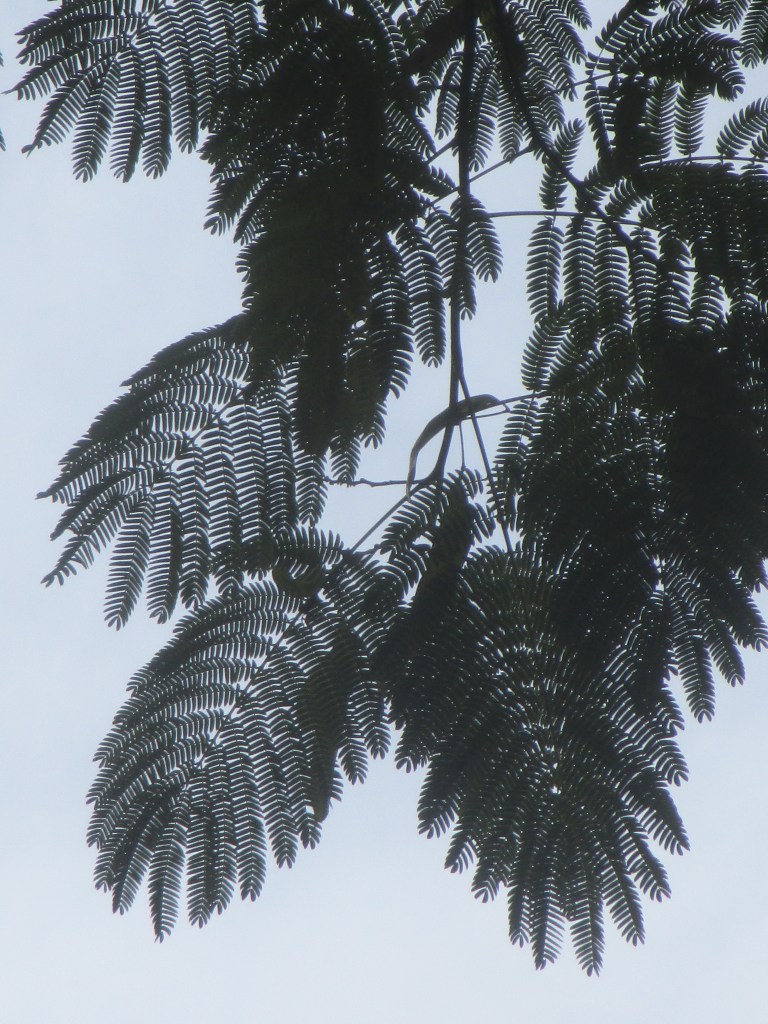
Silk tree leaves are bipinnately compound.

Resiliency is typically an attribute. It is how silk tree, Albizia julibrissin, adapts to various urban landscapes. Unfortunately, it is also how it naturalized within a few ecosystems of North America. It grows easily from seed, whether or not it is appropriate to where it does so. Many naturalized specimens somehow find good situations in which to grow though.

With good exposure, most mature silk trees develop rather low but broad canopies. They have potential to grow taller than forty feet, but if not competing with taller trees, may stay half as tall. Their arching limbs flare elegantly outward in low mounding form. Their finely textured foliage provides appealingly uniform shade that is neither too dark nor too light.

The lacy and bipinnately compound leaves of silk tree are between half a foot and a foot long. Each leaf divides into as many as a dozen pairs of pinnae (leaflets). These pinnae divide into about twice as many pairs of pinnulae (leaflets of leaflets). Such minute foliar components disintegrate during autumn defoliation, and can disappear into groundcover.

The pink and fluffy summer bloom can actually be messier than the deciduous foliage. It does not disintegrate as it falls, so may accumulate on top of vegetation below. Cultivars generally bloom with richer pink color, although at least one blooms with white. ‘Summer Chocolate’ exhibits richly bronzed foliage that contrasts strikingly with pastel pink bloom.

American Dogwood

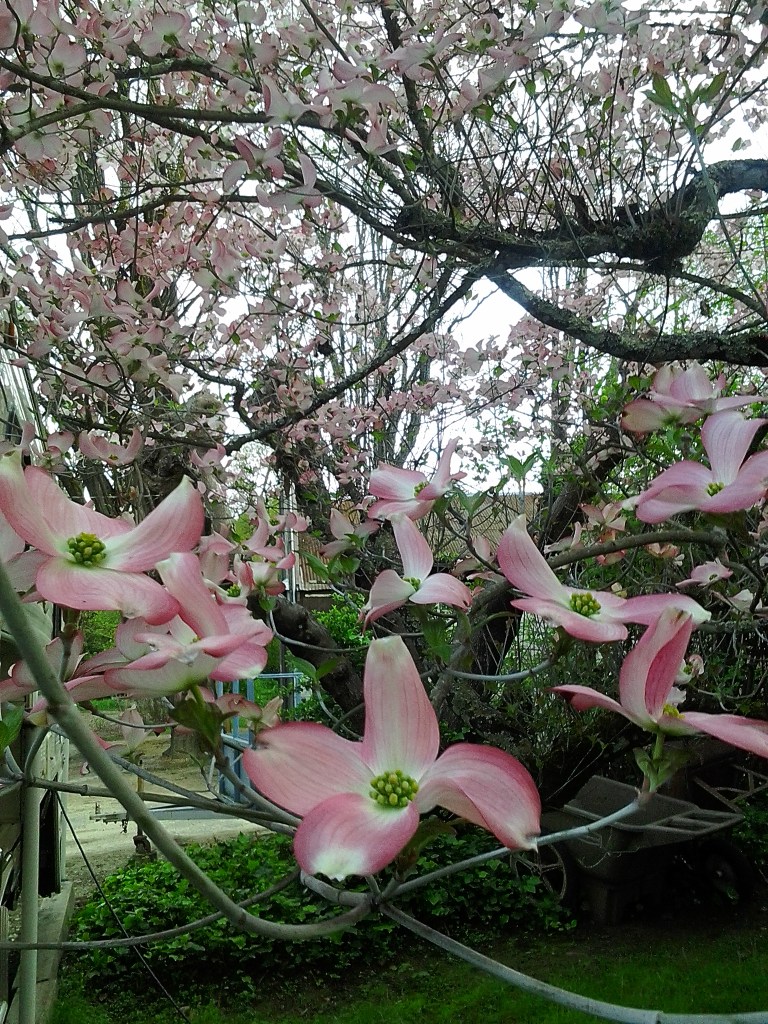
Before foliage develops, this American dogwood is a cloud of profuse pink bloom in a partly shaded and sheltered garden.

The state tree of Missouri produces the state flower of North Carolina, which are both the state tree and state flower of Virginia, but no so exploited by the state that it seems to be named for! The American dogwood, Cornus florida, is such a classic American tree that last year, young trees were given to Japan to commemorate the gift of Japanese flowering cherry trees from Japan a century earlier.

Profuse early spring bloom is not what it seems to be. Tight clusters of minute flowers would not be much to look at, but are surrounded by four big white bracts (modified leaves) that really put on an impressive show before green leaves develop. Many modern varieties have pink or nearly brick red bracts, and a few get variegated foliage as bloom dissipates. Foliage can get quite colorful just before it falls in autumn.

In the wild, American dogwoods are ‘understory’ trees that are happiest in forests of larger trees that shelter them from harsh sun exposure and drying wind. In relatively arid western climates, they want rich soil, regular watering and partial shade at least after noon. They are sensitive to reflected glare and wind, as well as alkalinity and salinity. (Too much fertilizer will roast the foliage.) Since American dogwood trees rarely get more than fifteen feet tall in cultivation, they are proportionate to sheltered atriums. Wild trees do not get much taller than thirty feet.

Flowering Apricot

Flowering apricot blooms before flowering cherry.

Even when weather is more typical for the local climate, many types of flowering apricot, Prunus mume, bloom during winter. Flowers seem to be a bit more resilient to wind, rain and frost than those of flowering cherry that bloom a month or so later. Nonetheless, they are delicate and share their white or pastel pink color with wintry landscapes only briefly. 

Although many garden varieties of flowering apricot are fruitless, some, particularly feral trees, produce fruit. Some of such fruit is desirable to those who utilize it. However, most is unpalatable without specialized processing. Flowering apricot works as understock for a few related trees, so occasionally grows from the roots of such trees after their removal. 

Flowering apricot is quite rare locally, which is why it seems to be so unseasonable as it blooms so early. Like flowering cherry and plum, it blooms on otherwise bare stems prior to generating new foliage for spring. Copious bloom of garden varieties is nicely fragrant. Flowers are nearly an inch wide. Mature trees are about ten to more than twenty feet tall, and almost as broad.

Black Locust

White black locust bloom seems oxymoronic.

The natural ranges of black locust, Robinia pseudoacacia, likely included only the Ozark Mountains, the Ouachita Mountains, and the Appalachian Mountains south of New York. Early American colonists planted it elsewhere before botanists documented its origins. It was notably used for firewood, durable lumber, erosion mitigation, and soil conditioning.

Modern cultivars are less useful for such applications, but are more appropriate for home gardens. Regardless of elegantly lofty form, delightfully finely textured foliage, and richly fragrant white bloom, the species is aggressively invasive and wickedly thorny. Cultivars can bloom pink or rosy pink, lack thorns, and develop more compact and shapely forms.

Bloom resembles that of wisteria, with many small flowers hanging in pendulous trusses. Deciduous foliage, which was absent through winter, appears in conjunction with bloom, but does not obscure it. Individual leaves are pinnately compound, with small leaflets on central rachises (stalks). Most modern cultivars will not get much more than forty feet tall, to make moderate shade.

Six on Saturday: Festival des Fleurs de Cerise

Beau prefers French. I do not know why. He was born in Missouri. His name is derived from ‘Hobo’ (‘HoBeau’). Since vehicles here are traditionally named after places, he may believe that his name was derived from ‘Boulder Creek’ (‘Beaulder Creek’) or Bonny Doon (‘Beaunny Doon’). Nonetheless, there is nothing French about Beau. I do not argue. Nor do I argue with Rhody if he insists that Beau is a Pontiac rather than a Chevrolet. If he believes that we ride in that kind of style, it is just fine with me. Anyway, after last Saturday, some wanted to see Beau.

1. Two years after we intended to remove this pair of historic flowering cherry tree, they get to bloom one last time. Sadly, their demise can be delayed no longer. Their trunks are too rotten.

2. Three similar flowering cherry trees down the road have been recovering from foliar disease during the same two years. They are neither as pretty nor as distinguished, but have potential.

3. Adjacent to #2, this most garish flowering cherry tree is the most prominent. Unfortunately, like #1, it is deteriorating, so will also be removed after bloom. Half of the canopy is necrotic.

4. This one should succumb instead. To me, weeping flowering cherries look weird. This one was in bad condition when I met it. Unfortunately, my efforts to renovate it have been effective.

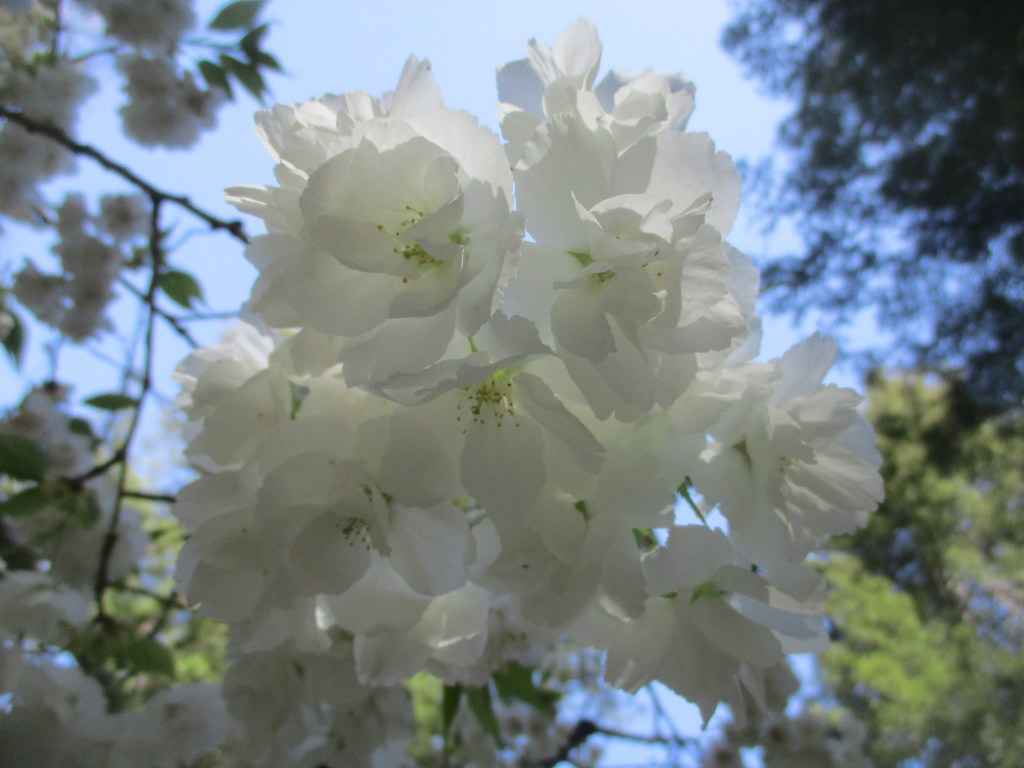
5. Oh, my favorite. The flowers are double, but not as fluffy as those of #3. It really is as white as it looks, without any blush. The tree is disfigured and shaded by redwoods, but blooms well.

6. Beau was the unseen star of my previous Six on Saturday. He is neither French nor related to ‘the’ Beau of the Frustrated Gardener, but is pretty cool anyway, and drives on the right side.

This is the link for Six on Saturday, for anyone else who would like to participate:

https://thepropagatorblog.wordpress.com/2017/09/18/six-on-saturday-a-participant-guide/

Star Magnolia

Star magnolia blooms before it foliates.

Spring seems to develop suddenly, and without a very precise schedule. Star magnolia, Magnolia stellata, which can bloom as late as early in April, is already finished blooming in most regions. It should be no surprise. Technically, it can bloom before March. Foliage does not compete with bloom on otherwise bare stems. It appears as bloom deteriorates.

The bright white flowers are about three inches wide, and lavishly profuse. Cultivars with pale pink bloom are increasingly popular. Their pink color may be variable, according to the weather. Flowers have more than a dozen narrow tepals. Some are fluffier with twice as many. Fragrance is mild. Stems can be cut and brought inside just as buds pop open.

Star magnolia is more of a deciduous flowering shrub than a small tree. It should not get much taller than six feet, although it can eventually get to be nearly twice as wide. Partly shaded specimens can reach ground floor eaves. The lime green leaves darken through summer, turn pale yellow for autumn, and finally defoliate to reveal sculptural gray stems.

Flowering Peach

Flowering peach flowers produce no fruit.

Since it does not produce an abundance of cumbersome fruit, flowering peach, Prunus persica, does not need the aggressive pruning while dormant through winter that fruiting peach requires, and can get significantly larger. However, tip pruning after bloom instead promotes shrubbier growth that blooms more prolifically the following spring. The fluffy double flowers are clear white, bright pink or rich pinkish red. ‘Peppermint’ flowering peach has red and white flowers, with a few flowers that are only white, and sometimes a few that are only red.