Spring Pruning Of Flowering Trees

Some plants prefer pruning after bloom.

Most major pruning happens while the plants that need it are dormant through winter. That is why it is known as ‘dormant pruning’. Such pruning would be so much more disruptive while plants are blooming, fruiting, foliating or growing. Pruning that happens during other seasons is not as aggressive as dormant pruning. Spring pruning, although practical for some plants, is relatively docile.

For deciduous fruit trees, dormant pruning is very important. It concentrates resources into fruit production, but also limits production to sustainable quantities. Otherwise, such fruit trees would be unable to support the weight of their own copious fruit. Spring pruning of such trees is simply too late. By that time, superfluous fruit has already consumed significant resources, only to be wasted.

Stone fruit trees and pome fruit trees are familiar examples of deciduous fruit trees that rely on dormant pruning. Stone fruits include peach, nectarine, apricot, plum and their relatives. Pome fruits are primarily apple and pear. Ironically though, their fruitless but flowering counterparts perform best with spring pruning instead. As similar as they all are, they have completely different priorities.

Flowering cherry trees bloom more spectacularly than fruiting cherry trees, but produce no fruit. Similarly, flowering crabapple trees bloom more colorfully than fruiting apple trees, but produce only tiny fruit. Neither must sustain production of significant fruit. Nor must they support the increasing weight of developing fruit. Prolific bloom is their primary function. Spring pruning accommodates.

Spring pruning allows flowering trees to first bloom as profusely as possible. Pruned out stems have already served their purpose. Because fruit production is not a concern, spring pruning is less severe than dormant pruning. Nonetheless, because dormant pruning is so practical for so many plants, spring pruning may seem impractical. It is tempting to prune dormant flowering trees now. Doing so harmlessly compromises bloom.

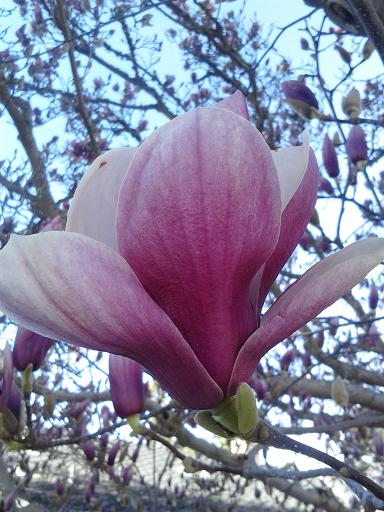
Saucer Magnolia

Spring color blooms before winter ends.

Before the deciduous foliage regenerates, saucer magnolia, Magnolia X soulangeana, is already completely overwhelmed with a profusion of big pastel pink and white flowers. Some of the many cultivars bloom white, paler pink or purplish. Some are more purple than pink. Individual flowers are about six inches wide. Some cultivars bloom with globular flowers that do not open quite so broadly. Others open even wider. The largest flowers can get almost a foot wide. Eventually, fading flowers will be replaced with big and soft lime green leaves. Most saucer magnolia trees are grown with several trunks and low branches to display the bloom more prominently, as well as to display the sculptural branch structure while bare through winter. The flat bark is strikingly light gray.

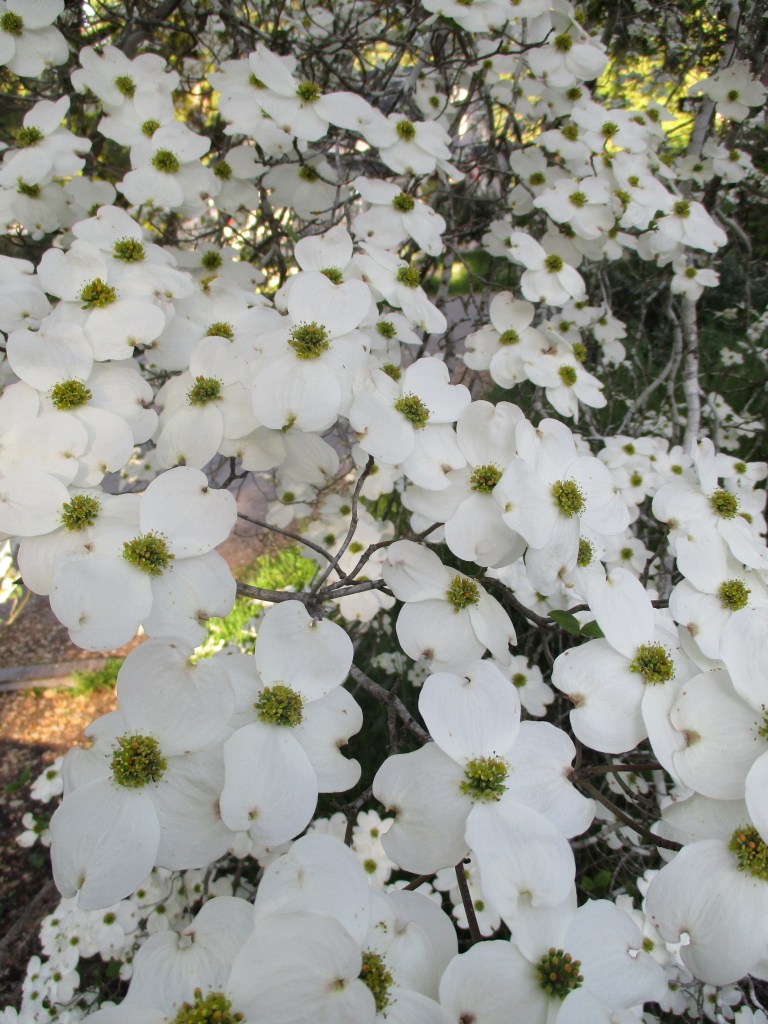
Flowering Dogwood

Bloom like this waits for spring.

Flowering dogwood, Cornus florida has something in common with Poinsettia. The most colorful component of their bloom is not floral, but is instead foliar. What appears to be petals are colorful leaves known as bracts. Exactly four bracts surround each small cluster of tiny and unimpressive pale green real flowers. These bracts are most popularly white, but can be pink or rarely brick red.

The deciduous trees are bare now, but bloom spectacularly in early spring. Any necessary pruning should happen after bloom, and preferable after new foliage matures somewhat. Floral buds for next year are already prominent on the tips of bare twigs. Dormant pruning would eliminate some of the buds prior to bloom. For now, only minor grooming of unbudded interior growth is practical.

Mature flowering dogwood trees can be twenty feet tall, but typically stay lower. As understory trees, they prefer a bit of shelter from larger trees. Foliage can scorch if too exposed. Some cultivars have variegated foliage. All can develop vibrant orange and red foliar color for autumn, even with minimal chill. Floral debris resembles fallen leaves that fall just as new and real foliage develops.

Horridculture – Major Improvement

P00401-1
A bit of Boston ivy adds a bit of texture and color to the stone wall.

My rant for this week is that I was deprived of my rant. I went to a nearby landscape that had been trashed by the so-called ‘gardeners’ for many years, only to find some unexpected and major improvements. I do not know what happened. Although it will take some time for the landscape to recover from the prior damage, it is already starting to function as intended.

It is obvious that the landscape was very well designed. Although I know very little about design, I know what is horticulturally correct. The designer selected species that are very appropriate for every application, even though none were particularly trendy at the time. Those who were hired to maintain the landscape only interfered with its intended development.

I noticed several improvements, but got pictures of only two features that bothered me the most prior to this season.

Obviously, the landscape designer intended the trailing rosemary in the picture above to cascade over the stone retaining wall, not so much to obscure the appealing stonework, but to break up its expansiveness. Obviously, the Boston ivy was intended to climb up from below to do a bit more of the same, and provide a bit of color in autumn, without overwhelming the rosemary.

Until recently, the so-called ‘gardeners’ had shorn the Boston ivy into useless little globs at the base of the wall. If it crept onto the wall, they were sure to remove it just as it was starting to exhibit color for autumn. The rosemary was never allowed to hang over the edge, and typically got shorn just as it was beginning a bloom phase.

Now, the Boston ivy is allowed to climb the wall somewhat. I suspect that it will be partly removed through the year, just so that it can provide a bit of color by autumn, but without getting too overgrown. Also, the formerly shorn edge of the rosemary is beginning to take on a natural form, and will likely start to cascade through summer, hopefully with occasional thinning.

What bothered me even more than the glaringly bare wall was how this pair of flowering crabapples in the picture below got hacked back annually just as the flower buds were beginning to show the slightest bit of color. Seriously! Every little twig that could have bloomed was removed. The so-called ‘gardeners’ were weirdly punctual about this.

Well, the trees got pruned a bit earlier last winter. What I did not bother to notice earlier was that much of the unsightly stems that had been disfigured by what the so-called ‘gardeners’ did to them were pruned back to healthier growth, while much of the blooming stems were left intact to bloom now! All the damage can not be repaired in one season, but this a great start.

P00401-2
Someone is putting serious effort into renovating these flowering crabbaple trees.


Grande Finale

P00315
They still bloom spectacularly.

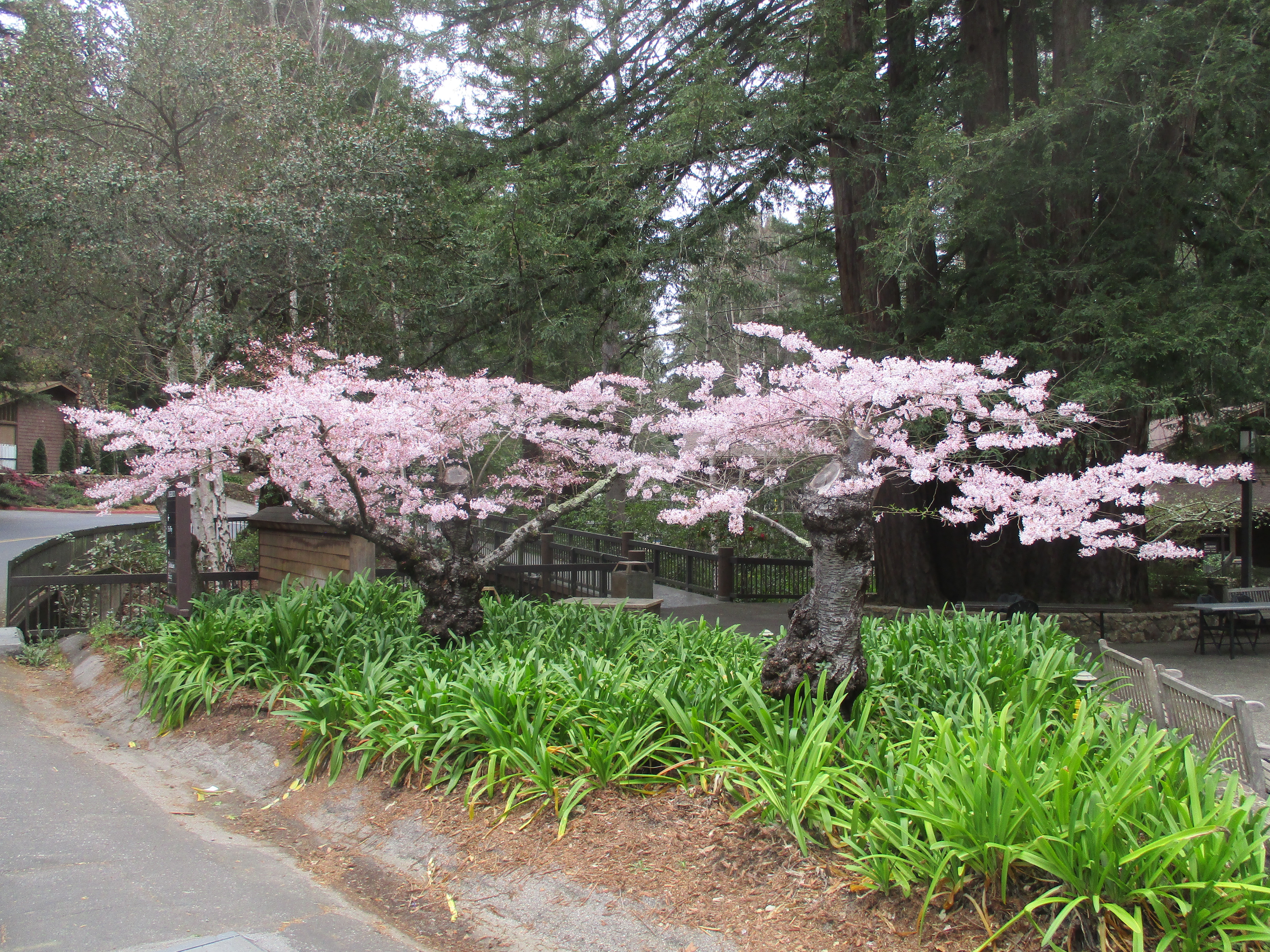
This is the third spring that I got picture of this pair of flowering cherry trees in bloom. I took several pictures last year, ranging from closeup pictures of the flowers, to pictures taken from a distance like the picture above. Fewer pictures were taken during the previous spring of 2018, before these trees were groomed of copious necrosis. Sadly, this picture will be one of the last.

The trees will be cut down this year. They stayed just long enough to bloom this one last season, but will not likely be here much longer. They are deteriorating at such a rate that if I were to prune the necrosis away after bloom, there would not be much remaining. The tree to the right in this picture would be only a rotten stump with a few limber twigs protruding from the top.

Structural integrity has been so compromised by decay that, even without the weight of all the limbs that have been pruned back during the past many years, the trunks could easily break off at the ground. When I remove them, I will likely just push the tree to the right over without cutting it first. If there were any branches left, a kid could knock it over by trying to climb it.

As much as I would prefer for these trees to last much longer, I want to install their replacements as soon as possible. Planting them this spring would give them all summer to disperse roots and grow a little bit before blooming next spring. I know they will not be much to look at for a few years, but many years from now, they might be as spectacular as these two originals were.

Regardless, it will be a saddening task to cut down these distinguished trees.

Seasonal Pruning Is Precisely That

00219thumb
Some trees get pruned after bloom.

Seasonal pruning is just as the terminology implies, seasonal. It might seem as if it all happens in winter. Most of it begins after cooling autumn weather initiates dormancy. Most of it is completed before warming spring weather stimulates vascular activity and resumption of growth. That is why most seasonal pruning is referred to simply as winter pruning. Winter really is best for most of it.

However, most is not all. Plants that are damaged by frost should not be pruned immediately. Because pruning removes insulating vegetation, and stimulates new growth that is more sensitive to frost, such pruning is delayed until after the threat of subsequent frost. Birches and perhaps maples are popularly pruned in late summer or autumn because they bleed so much if pruned in winter.

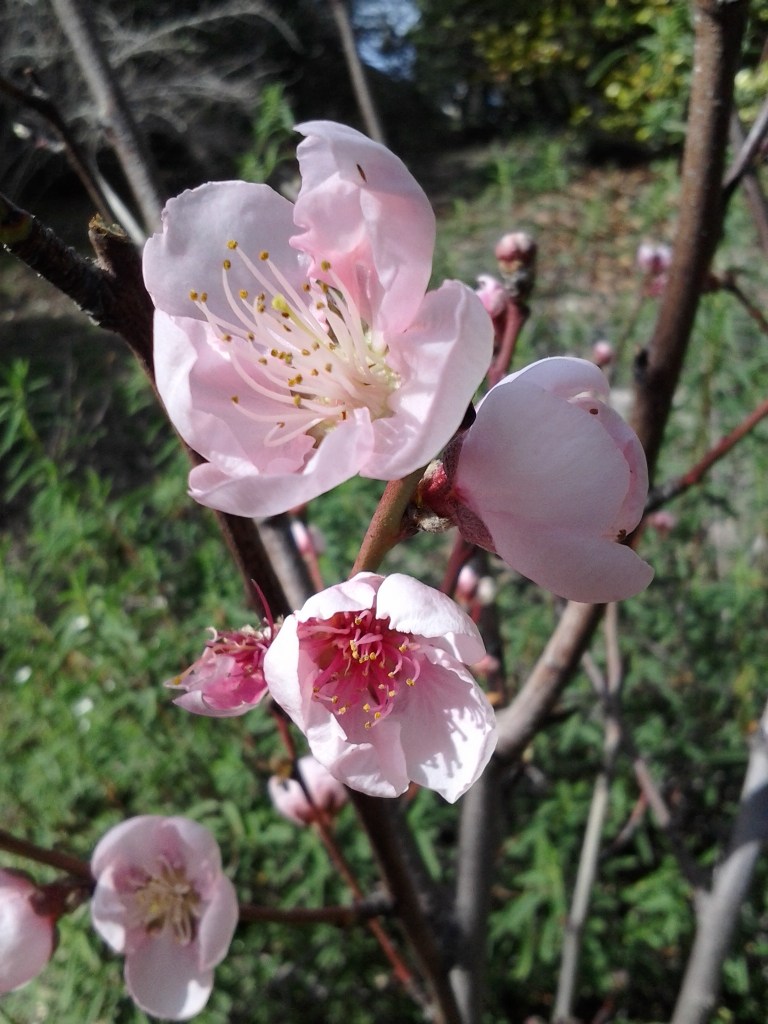
Flowering cherry, plum, peach, crabapple and quince do not need the same sort of pruning that their fruiting counterparts rely on. Their exquisite bloom is the priority, rather than fruit. Pruning prior to bloom could diminish their potential. They can instead be pruned immediately after bloom, as new growth is emerging, or later in summer after soft new growth has become a bit more resilient.

Lilac and forsythia should likewise be pruned after spring bloom, but more aggressively than the flowering fruitless ‘fruit’ trees. If not pruned enough, they will produce fewer canes through summer to bloom the following spring. Older and gnarlier canes should be cut to the ground to favor younger and less branched canes. Old Oregon grape and Heavenly bamboo canes can be culled too.

Redtwig dogwood and cultivars of willow that are pollarded or coppiced for their colorful twigs can be pruned later too. There is no need to deprive them of their primary assets prematurely. They should be pruned as winter ends though, before their buds start to pop. Pussy willow is an exception that gets harvested after buds have fuzzily popped, but before new growth begins to develop.

Evergreen plants can be pruned late in winter, just before new growth develops to replace what gets pruned away.

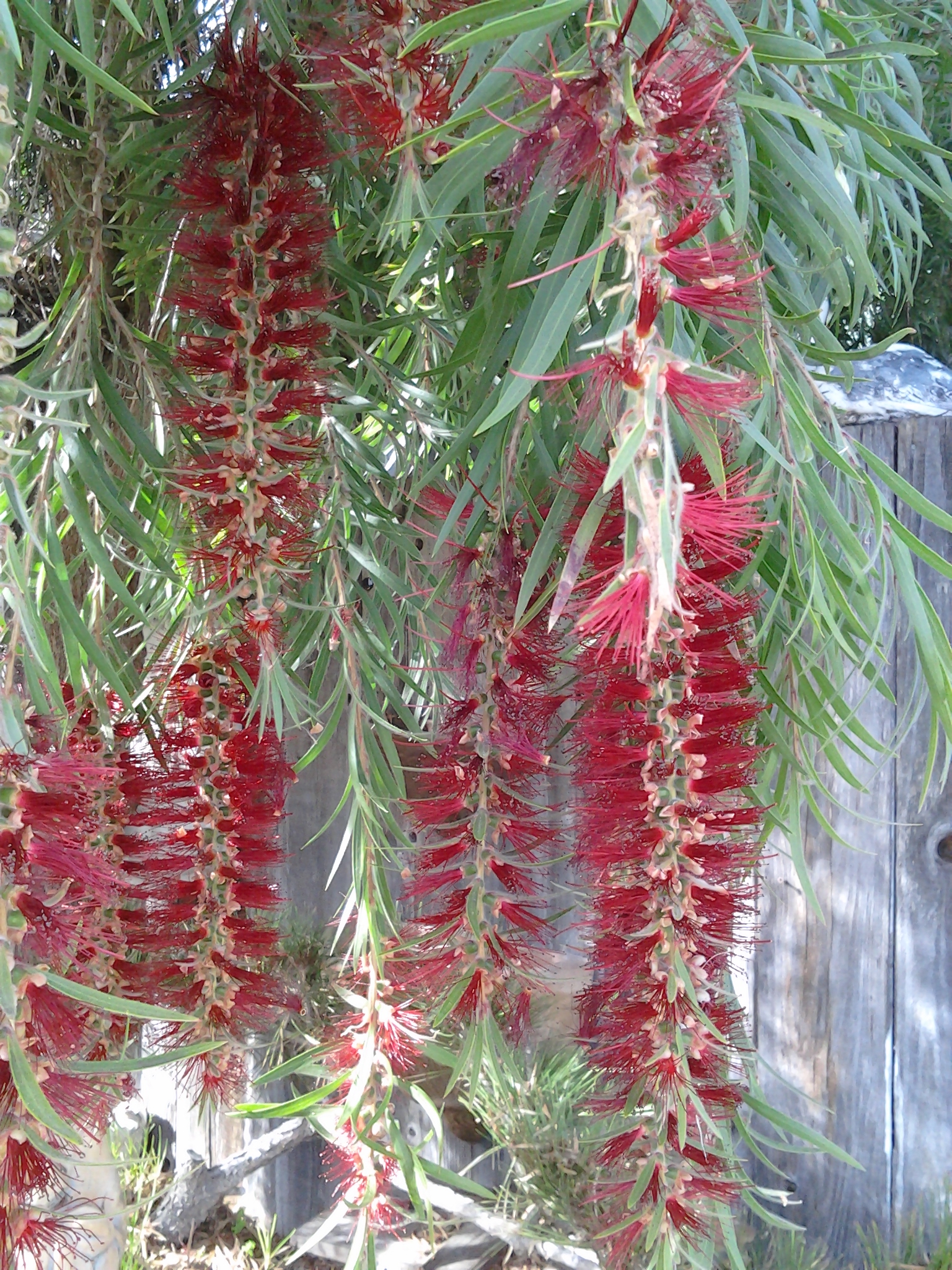
Weeping Bottlebrush

50128
Weeping bottlebrush blooms whenever it likes.

It is no wonder that it takes many years to get to fifteen feet tall, and may never get more than twenty feet tall. Weeping bottlebrush, Callistemon viminalis, may grow less than a foot a year, but seems to hang downward two feet. Because the stems are sculptural, and the bark has an appealingly rough texture, most weeping bottlebrush trees are grown with multiple trunks. The brick red bottlebrush flowers that bloom sporadically at any time of the year are more abundant early in summer. Established plants bloom more colorfully with a bit of water, but can probably survive quite a while without it. The evergreen leaves are narrow and mostly less than three inches long. Weeping bottlebrush needs good sun exposure.

Knife-Leaf Wattle

41231++
This wattle sports texture with color.

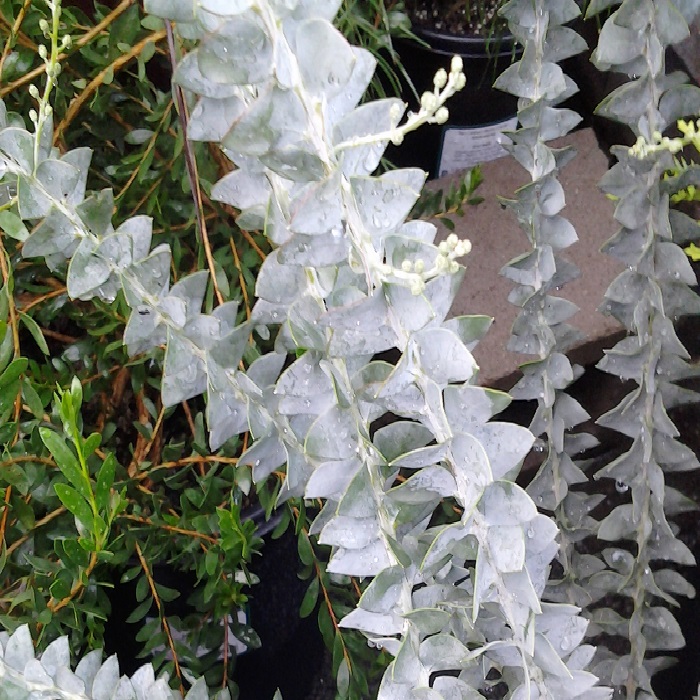
Even without the bright yellow staminate flowers (fuzzy with prominent stamens) that bloom in late summer or autumn, the grayish foliage of knife-leaf wattle, Acacia cultriformis, is still striking. It contrasts nicely with dark green foliage of pines, redwood and ivy. What seems to be small triangular leaves are actually ‘phyllodes’, which are modified petioles (leaf stalks) of vestigial leaves. They are about half an inch to an inch long, and neatly arranged on stiff stems.

Mature trees do not get much more than ten feet tall, and grow slowly enough to be kept even shorter. They can tolerate a bit of shade from larger trees. However, they bloom more profusely with better exposure. If the pollen is not a problem, the flowers are nice for cutting. So is the foliage, which is complimentary to many other cut flowers. Like almost all acacias, knife-leaf acacia does not require much water once established.

Workday

P90728Without prior notice, I was informed on Friday morning of a workday on Saturday morning at Felton Presbyterian Church. That was yesterday. Since there was no time to get other chores done in advance, I was an hour late. Considering that we only work for four hours between eight and noon, one hour is rather significant. I felt compelled to attend regardless. A few friends who are parishioners of Felton Presbyterian Church appreciate it.
The difficulty of not attending is that there are several other volunteers who do attend, and they all have very different ideas, or no idea at all, about how to accomplish what needs to be done in the landscape. It is amazing how much damage can be done with a few light duty power tools and too much undirected ambition. Even when I am there, it is difficult to convince the others that I know more about horticulture than all of them combined.
For the past several years, I had been pruning a flowering crabapple tree to renovate the branch structure that was mutilated by someone with loppers and power hedge shears. Yes, hedge shears. I had pruned the tree for clearance above a parking lot on one side, and a patio on the other, but with low branches in between to partly obscure the view of parked cars from the patio. Bloom was spectacular, and not compromised by the pruning.
Then I missed a workday. Even though the flowering crabapple tree did not need to be pruned at that time, someone lopped away the lower limbs indiscriminately, and then sheared the top! There were mutilated stubs all over the new exterior of the canopy. Much of the blooming stems for the following season were removed. It was very disappointing to see all of my effort wasted so pointlessly. Now, I need to start the whole process over.
However, when I got there today, a planter box below the crabapple tree was being dismantled and removed. I could not work in the area, so must return to start the process of renovating the crabapple tree. Realistically, it should be done while the tree is dormant in winter, even if it compromises bloom for the following spring somewhat. The tree is so gnarly and congested now that it is unlikely that anyone would notice a few less blossoms.
As frustrating as it can be, we actually get quite a bit done. These lily-of-the-Nile in the picture above were one of our projects many years ago. They were recycled from a garden in Aptos from which they needed to be removed. We split, groomed and plugged them. Most were promptly removed and discarded by someone else who did not realize that we had just installed them. But hey, at least these few survived and continue to bloom.

Pink Trumpet Tree

P90615K

This is why I do not often use pictures that my colleague, Brent Green, sends to me. He frequently tells me what I should feature in my gardening column, and sends me what he considers to be good pictures for such topics. This picture would have been good for writing about the sky over Los Angeles, or the neighbors’ driveway, since those are two of the most prominent features here. Where did all the smog go?

Chimneys in Los Angeles seem silly to me. Even if the weather got cool enough for a fire in a fireplace, there is no firewood to burn. The chimney to the far right certainly seems to be original to the house, but how did it survive all the earthquakes since the house was built, probably in the 1940s or 1950s? There have been a few moderate earthquakes since then.

Those signs that warn potential criminals of non-existent home security systems are even sillier, and just cluttering otherwise nice landscapes. There is nothing official looking about them. There are bins of them for sale in the local big box stores. Shouldn’t we all assume that since the home on the left is in Los Angeles, that it is outfitted with home security system that is more impressive than that silly, irrelevant and unwelcoming sign?

I would guess that what Brent really wanted to send a picture of was the big pink trumpet tree, Tabebuia heterophylla. After all, it does happen to be sort of in the middle of the picture. It really was spectacular while blooming late last winter. However, even if Brent had sent a good picture of it, I would not have featured it. Most of those who read my gardening column are not within regions where pink trumpet tree blooms like this.