 Winter is the best time for major pruning of most plants. They do not mind it so much while they are dormant. However, there are exceptions. Winter pruning might be a bit too early for a few plants that are grown for their late winter or early spring bloom. It is best to wait until immediately after bloom to prune or trim flowering cherry, flowering plum, flowering crabapple and flowering quince.
Because these trees will be in the process of coming out of dormancy, it is best to prune them just after the blossoms finish, as new foliage is emerging. Some of the new buds will likely be ruined in the process, but there should be plenty to spare. If a few extra stems were left on deciduous fruit trees when they were pruned earlier, they can be taken as cut flowers prior to or while blooming.
Forsythia and Oregon grape should also be pruned after bloom, but with different technique. Oregon grape certainly does not need to be pruned annually, and may only need to be occasionally groomed of deteriorating stems. If and when it gets pruned, the oldest canes should be cut to the ground to favor newer canes. Forsythia canes should be cut to the ground after their second year.
Red twig dogwood and small willows that are grown for the color of their twigs must be pruned aggressively to produce new twigs for next winter; but there is no point in pruning their colorful twigs off while they are at their best. It is better to wait until just before new foliage is about to come out and obscure the twigs. They can be pollarded or coppiced. This applies to pussy willows as well.
Clumping grasses will start to grow soon, so can be shorn of their old foliage from last year that likely started to look rather tired by the end of winter. If left unshorn, new foliage and flower stalks will do just fine, but will come up through the old growth from last year, as the old growth lays down next to it and continue to decay. Once new growth develops, it will be more difficult to remove the old without damaging the new. Clumped grasses will look silly longer if shorn too early.
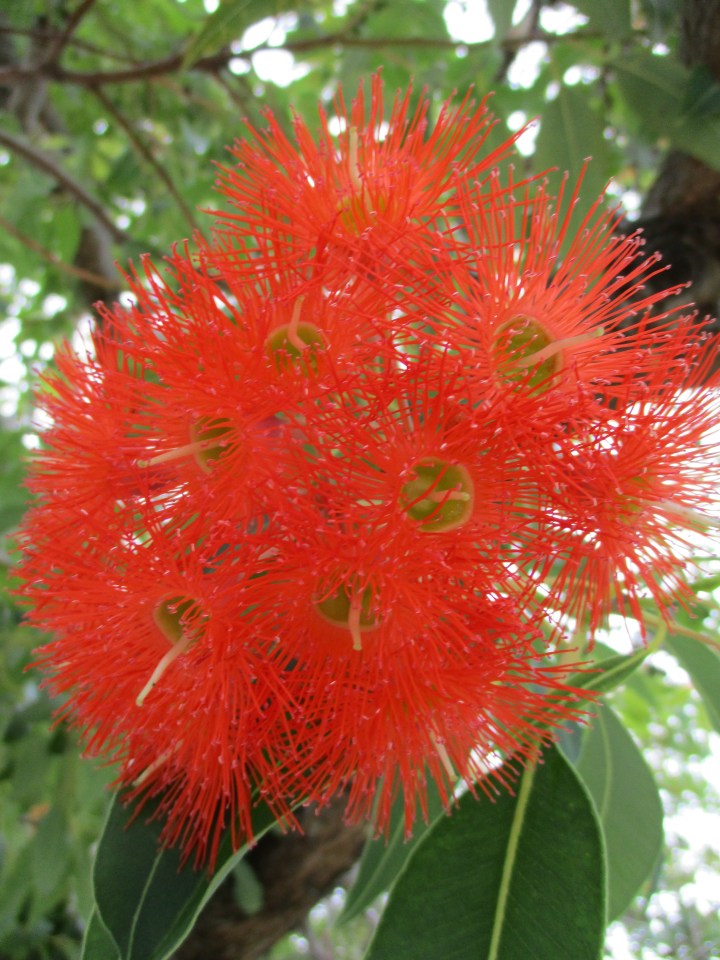 We all know about the bad reputation of eucalypti, especially the notorious blue gum. They are too big, too aggressive, too messy, too structurally deficient, and in groups, they are too combustible. However, there are several eucalypti that are not only appropriate for local home gardens, but because of their resiliency, drought tolerance and adaptability to the local environment, should be more popular than they are.
