Sunday Best – Premature Pigsqueak


As bloom of most other plants decelerates for late autumn and winter, the floral color of common annuals becomes more prominent in the landscapes at work.
1. Viola X wittrockiana, viola blooms with smaller but more profuse flowers than pansy. I am not certain if they are the same species. Also, most of the flowers face one direction.

2. Viola X wittrockiana, pansy blooms with bigger but less profuse flowers which mostly face random directions. We got only two six packs to add to other flowers in a small bed.

3. Viola X wittrockiana, pansy is redundant to the picture above, but is a different color. The plants are so dinky that they are scarcely visible behind their relatively wide flowers.

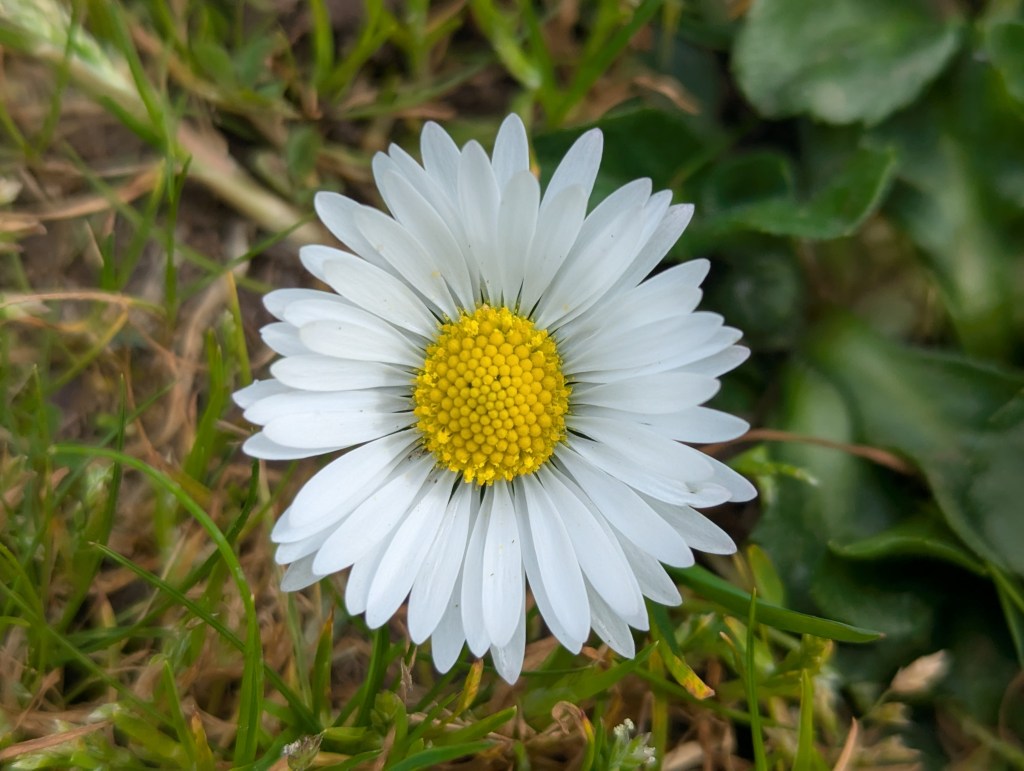
4. Bellis perennis, English daisy ranges in color from this rosy red to white like the color scheme of candy canes. I am fond of it because it is not so overly bred like other annuals.

5. Cyclamen persicum, florist’s or Persian cyclamen is cheapened as an annual. I used to grow mine as cool season perennials. I also grew colors other than simple red and white.

6. Rhody was unconcerned with these common annuals as he surveyed his domain early last Monday, while I burned forest green waste. He is not overly horticulturally oriented.

This is the link for Six on Saturday, for anyone else who would like to participate: https://thepropagatorblog.wordpress.com/2017/09/18/six-on-saturday-a-participant-guide/
Flowers are starting to succumb to cool and rainy weather. So, it is beginning to look like autumn here. Summer is truly over.
1. Pelargonium X hortorum, zonal geranium is finally starting to look somewhat shabby after the recent rains, although several others continue to bloom as if nothing happened.

2. Rosa spp. ‘Iceberg’ rose is probably the last rose to bloom for the season. A few young floral buds are molding before they bloom. The roses get pruned before New Year’s Day.

3. Tagetes patula, French marigold is more seasonable. It is expected to bloom through autumn, and could continue until replacement with warm season annuals during spring.

4. Abutilon X hybridum, flowering maple does not seem to know when to stop blooming for autumn. Its bloom should probably decelerate now that the weather is getting cooler.

5. Rhododendron spp., azalea is even more confused than the ‘Duc de Rohan’ azalea that bloomed not so long ago. It is blooming more abundantly and even later, or not so early.

6. Rhody curls up somewhat tighter while the weather is cool. His fur should get fuzzier, but does not seem to be doing so. He insists on coming to work with me, out in the cold.

This is the link for Six on Saturday, for anyone else who would like to participate: https://thepropagatorblog.wordpress.com/2017/09/18/six-on-saturday-a-participant-guide/
(This article is several years old, so contains outdated information.)
The sixteen acres of gardens of Filoli are spectacular and horticulturally compelling throughout the year. However, the weather through winter, although more pleasant than other places in the world, is not always quite so compelling or conducive to garden tours. At Filoli though, this is not a problem. More than six hundred volunteers and the Filoli staff merely bring the outdoors indoors, by selecting materials from the garden to adorn the interior of the 36,000 square foot Filoli residence for ‘The Wise Old Owl’, the annual fund raising Holiday Traditions Boutique.
While perusing The Wise Old Owl merchandise, guests can enjoy how so much more than flowers can be brought in from the garden to deck out the home. Bare stems, gnarly limbs, evergreen foliage, pine cones, bark and all sorts of bits and pieces of the autumn and winter garden demonstrate the potential for alternatives to traditional cut flowers that we may not even recognize as useful materials in our own gardens. Of course, there will be no shortage of the less abundant flowers that bloom through the season and decoration that are not out of the garden, as well as live music to enhance the display. Regardless of horticultural interest or boutique merchandise, the grand residence at Filoli is worth visiting even on the least eventful day of the year.
There are too many events within the Event to describe here. Guests can visit http://www.filoli.org to plan ahead and make reservations for buffet lunches and evening bistro dining, as well as an elegant Saturday Evening Dinner Party with dancing in the Ballroom. Children six to twelve years of age can enjoy a Children’s Tea on the finale of The Wise Old Owl on December 3.
The Wise Old Owl begins in only a few days on November 25, and continues through December 3. The hours of operation and admission are variable relative to the various events throughout the main Event. Reservations for specific events can be arranged and more information can be found online
Tickets can be purchased online, by fax or by telephoning Filoli weekdays between 9:00 a.m. and 4:00 p.m. At 650 – 364 8300 X 508. Order forms for fax transactions can be downloaded from the website and sent to 650 – 503 2090. Admission is limited; and tickets get exhausted somewhat early. Tickets are neither refundable nor exchangeable. Filoli is located at 86 Canada Road in Woodside (94062).


There are actually a few different flowers known as Queen Anne’s lace. The most common species, Daucus carota, that has naturalized and even become somewhat of a weed in some areas, has two and a half inch broad, flat-topped trusses of delicately minute but abundant flowers, with a single red flower at the center of each truss. Apparently, Queen Anne pricked a finger with a needle while making the lace, leaving a drop of blood. Modern varieties have broader and fluffier trusses, often lacking central red flowers. They are a popular ingredient or fill for mixed bouquets with more colorful flowers.
The biennial foliage of Queen Anne’s lace grows to about three feet tall in the first year, with weedy but intricately lacy leaves. It blooms in summer of the second year. It is very similar to poison hemlock, which is poisonous enough to kill Nero, so should not be allowed to grow in vegetable gardens or where toxicity might be a problem; just in case.

Angel’s trumpet continue to bloom even as the weather cools. Perhaps they will continue until frost. Their floral color is a bit off though, perhaps as a result of the cooler weather. They work out nicely for ‘Six on Saturday’, though. Strangely, not much else is blooming as well as angel’s trumpet is now.
1. Angel’s trumpet probably should not bloom so late, but does not seem to know or care that it is autumn. I was impressed by a previous bloom phase, so will see what this does.

2. This is a more open flower of the same angel’s trumpet as above. Its floral color is the most variable of the cultivars, but has most commonly been more peachy pink than this.

3. This angel’s trumpet flower should be frilly double white. I suppose that it is not so off color. However, it is barely frilly, and lacks double form. I can not complain. It is pretty.

4. This angel’s trumpet flower blooms with the peachy pink color that #2 should exhibit, but should bloom yellow. Again, I can not complain. I just wonder what is going on here.

5. If I remember correctly, this rhododendron is not off color like some angel’s trumpets are but it is very off season. My complaint is that it will not bloom for spring as it should.

6. Rhody might disapprove of all this off color commentary if he were not so thoroughly distracted by someone with goodies. He can not see the same colors as humans anyway.

This is the link for Six on Saturday, for anyone else who would like to participate: https://thepropagatorblog.wordpress.com/2017/09/18/six-on-saturday-a-participant-guide/