See Anemone

Anemone hupehensis

Japanese anemone, Anemone hupehensis, which is now Eriocapitella hupehensis, is one of several species that I had been wanting to grow for a very long time. Like peony, goldenrod, Joe Pye weed, Indian paintbrush, beautyberry and fancy hybrids of clematis, they are prominent features of fancier gardens in other regions. Some of such species do not perform well here. Others are merely unpopular, but might perform well here if they get the chance. I see them all only in pictures, so can not distinguish what their respective situations are. The only anemones that I had ever encountered while young were sea anemones on nearby beaches. In college, I met poppy anemones, which we know merely as anemone, but found that they are not as reliably perennial as they are purported to be. Japanese anemone had been elusive, until I met a very established and perhaps invasive colony of it in an old landscape near Oakland less than fifteen years ago. I figured that if it can be as happy as it was in a relatively coastal climate, it could be happier here with a bit more chill during winter. Until then, I assumed that minimal chill was a limiting factor to their performance here. ‘Honorine Jobert’ seemed to be the epitome of single white Japanese anemone, but I had not seen any white cultivars, even those with double flowers, that were not alluring. Then, I discovered an unidentified cultivar of Japanese anemone on the edge of a rose garden here. It survives as a remnant of a preceding perennial garden, but does not perform well now that redwood roots have become so aggressive. Furthermore, its floral color is unimpressive. It is not white, but is not quite pink either. Heck, it is not even white blushed with pink. I do not know how to describe it. Initially, it seemed to be only slightly pinkish pale gray. Ick! This year, it seems to be slightly more pinkish than it had been, which makes it slightly less disappointing. However, now that I know it is here, I will not try any other Japanese anemone until I at least try to grow this one well. I am confident that if I relocate bits of it to a garden where it does not need to compete with other vegetation, it will bloom with a more appealing shade of pink. I will not mind that it is not white if it does that much. Then, if it can perform well, I will know that I can grow a white cultivar of anemone also. There is no rush though. Although white happens to be my favorite color, and Japanese anemone happens to excel at white, pink can be appealing also. This is my very first Japanese anemone, and regardless of how unimpressive it is now, I am pleased with it.

Out with the new, in with the old

Canna ‘Cannova Mango’

Canna ‘Cannova Mango’ is a relatively recent introduction to the landscapes here. I inadvertently brought it back from Southern California about two and a half years ago, without realizing that it is exactly the sort of modern cultivar that I am not at all keen on. It is new. It is improved. It blooms with a strange but trendy color. The problem is that it performs too well to not be an asset to the landscapes. Because it is so short and compact, it starts blooming early, while old fashioned Canna are still only foliar. Because it replaces older stalks with newer stalks so efficiently, it is rarely without bloom until frost. Other cultivars of the series bloom yellow, lemon (which is implied to be distinct from yellow), orange shades (?), red golden flame (?!), rose, scarlet with bronze foliage or orange with bronze foliage. The tallest are less than five feet tall. Regardless of my disdain for modern cultivars, I do not doubt that all of them perform as impressively as ‘Cannova Mango’. Nonetheless, I prefer the older and formerly common sort. A relatively compact cultivar that stays less than about four feet tall with simple green foliage and billowy but simple red bloom has been relocated through a few landscapes here since the early 1980s. Although not many rhizomes survive, I intend to grow more of it, even if not so much within the landscapes at work. Its bloom begins a bit later, and is neither as profuse nor as continuous as that of ‘Cannova Mango’, but it has history here. Besides, its more relaxed foliar texture and bloom somehow seem to be more compatible with the surrounding forested setting than the almost too refined modern cultivars, with their perfectly compact form, overly profuse bloom, and strangely modern floral color.

Unidentified old fashioned red Canna with green foliage.

Border Carnation

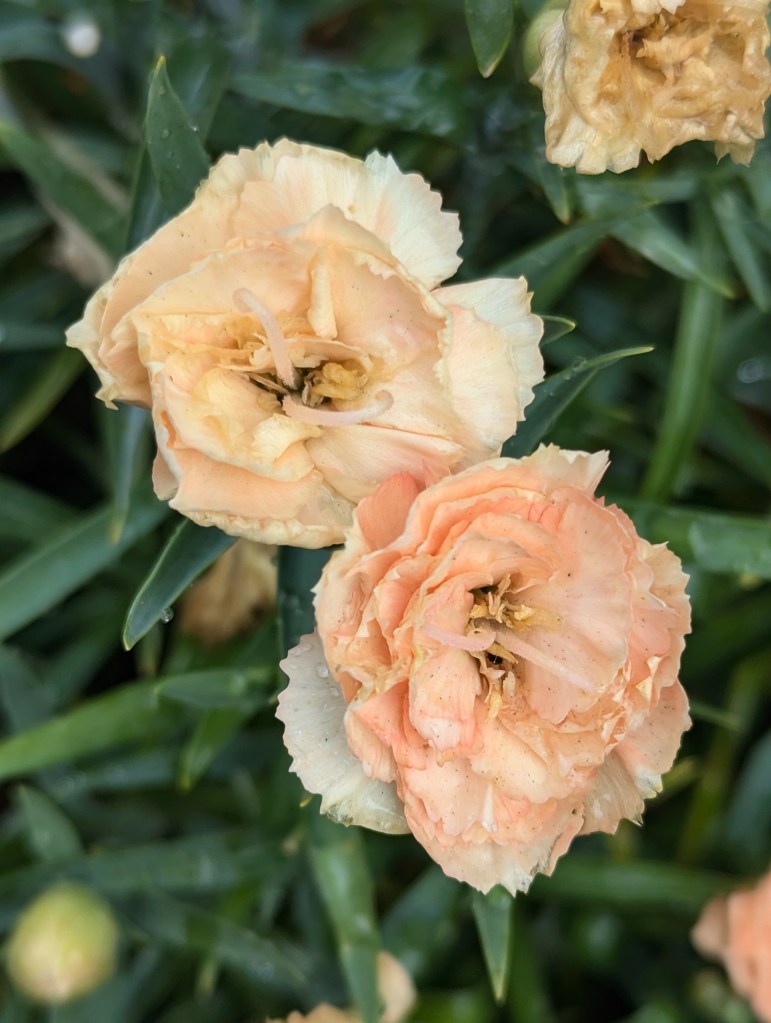
Border carnations stay short and compact.

Florist carnation, Dianthus caryophyllus, is not originally as colorful as it seems. It can be red, pink, pastel yellow, pastel orange or nearly purple. Most for the floriculture industries begin as white though. White carnations are conducive to dying with any color that might be in demand. They are therefore more versatile than those with a different natural color.

Furthermore, their natural floral color range is not as natural as it seems. It is the result of extensive breeding of several species. Consequently, several popular types of carnation lack species designation. This includes a few compact cultivars that are more popular as annuals than cut flowers. Within locally mild climates, they can be short term perennials.

Border carnations grow only a few inches tall and less than a foot wide. Eventually, very old specimens may grow more than a foot tall. Such big specimens are very rare though. Border carnation foliage is glaucous bluish gray. The short and very narrow leaves are in opposing pairs. Flowers are less than two inches wide, with delightfully spicy fragrance of clove.

4:00

Mirabilis jalapa is known more commonly as four o’clock. It is spelled with letters rather than as 4:00 with numbers. This refers to the time in the afternoon when its bloom should be at its best. These pictures were taken prior to nine in the morning though. Apparently, it does not adhere to a strict schedule. I took these pictures because I was so impressed with the performance of these particular specimens. Those with yellow bloom above are so large that I came from across the road to confirm their identity. I do not expect this species to grow so large. They are about as big as small oleander! Those with white and pink bloom below are actually the same plant. The species commonly blooms with flowers of different colors, but such colors are typically not so divergent as clear bright pink and clear white. They are more typically blotched with colors of each other, such as white flowers with a few pink blotches in conjunction with pink flowers with a few white blotches. This species is somewhat naturalized here, but politely so. Although it generates copious seed, it is not migrating very far from where it is established.

Six on Saturday: Firsts

The first and last may potentially suggest that this is an episode of the Red Green Show.

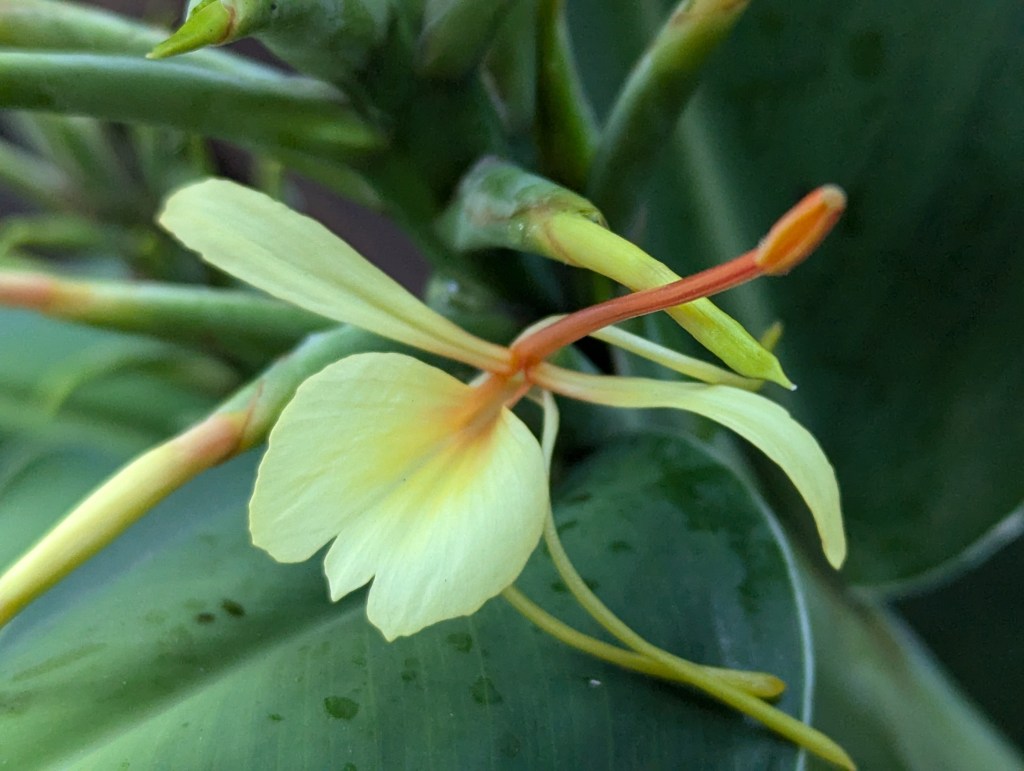
1. Hedychium greenii, red butterfly ginger, which I accidentally took from Brent Green’s garden with a bunch of crowded out Heliconia psittacorum, is now about to bloom here. I was totally unaware that it was here until Brent mentioned that it was no longer there.

2. Hedychium gardnerianum, kahili ginger bloomed during the pandemic, while no one was here to see it. Then, gophers ate it. I canned the remnants, which are blooming now. This is the first of several florets to bloom on the first tall floral spike. It smells like 1986.

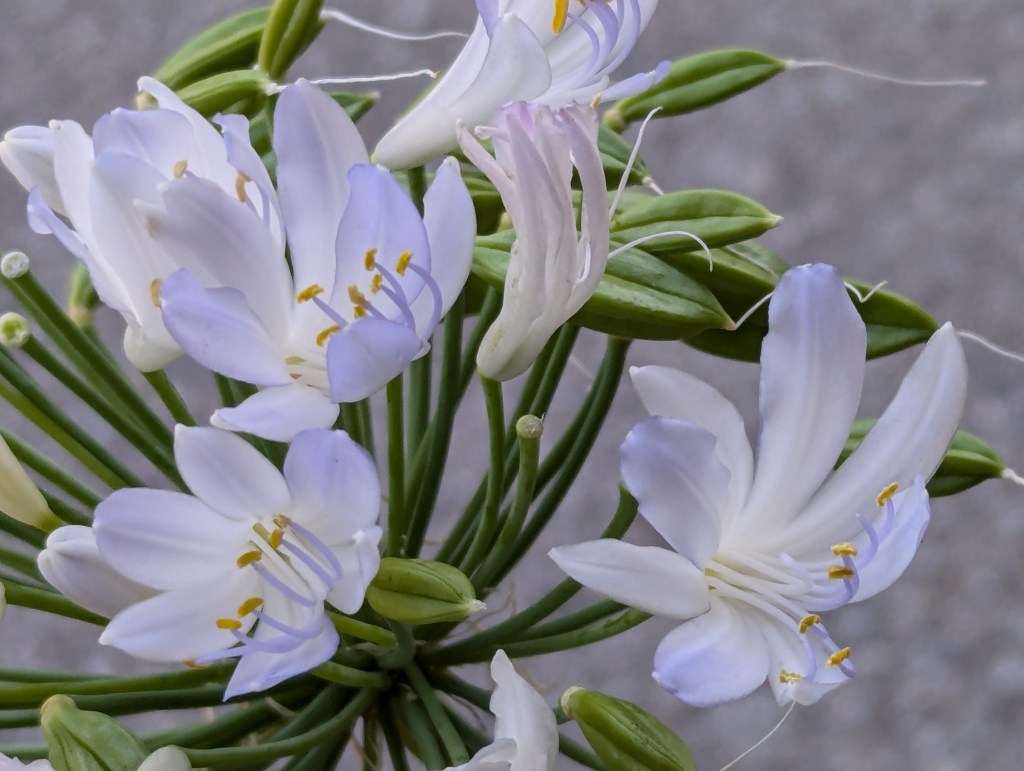
3. Agapanthus orientalis, lily of the Nile suddenly bloomed with this single white umbel within an exclusively blue colony. I removed the offending shoot as bloom began to fade, but found that it is not completely white. I canned it to observe how it blooms next year.

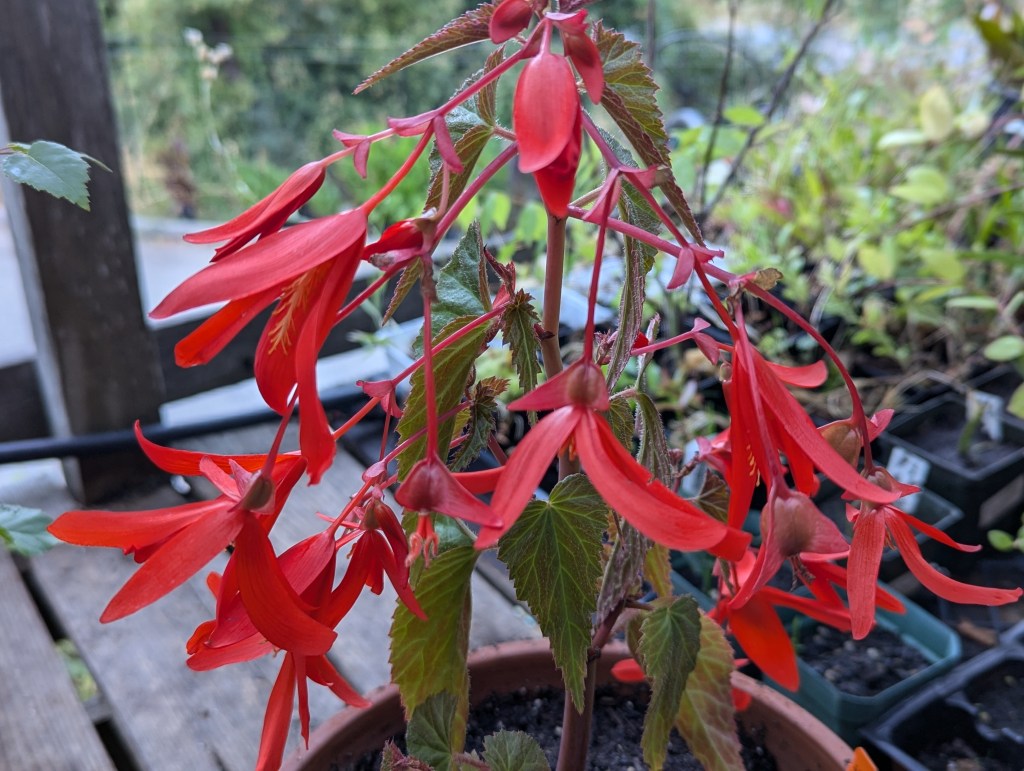
4. Begonia boliviensis ‘Santa Cruz’ begonia was not my idea. Another horticulturist here just procured it from a nursery in Santa Cruz, a few miles away. It is quite happy here in Santa Cruz County. It deserves a more appealing name, such as ‘Los Gatos’ or ‘San Jose’.

5. Canna ‘Cannova Mango’ canna was not my idea either. Brent sent it to me. I am not at all keen on modern cultivars, particularly this color. I nonetheless divided it too much to bloom well. This is its first opportunity to demonstrate how profuse its bloom should be.

6. Canna that was a gift from friends of a friend last winter is now blooming here. I have no idea what cultivar it is, and I do not care. Gifts are always better than nursery surplus from Brent’s projects. It is elegantly tall with simple red bloom and simple green foliage.

This is the link for Six on Saturday, for anyone else who would like to participate: https://thepropagatorblog.wordpress.com/2017/09/18/six-on-saturday-a-participant-guide/

Pollinators Are As Busy As Bees

Flower breeding is not for pollinators.

Flowers bloom for pollination. It is that simple. Most rely on wind to disperse their pollen. They are more abundant than colorful or fragrant. More prominently colorful and fragrant flowers rely on pollinators. Their color and fragrance attract preferred pollinators, such as insects, birds or bats. Such flowers sustain their pollinators with nectar or surplus pollen.

More than pollinators appreciate their diligence. Almost everyone who enjoys gardening enjoys floral color and fragrance. Cultivation of naturally appealing bloom began several thousand years ago. Selection and breeding most likely began relatively soon afterward. Ultimately, during relatively modern history, hybridization began getting too complicated.

Pollinators were not a priority during such processes. Because most ornamental flowers produce no usable fruit, pollinators are unimportant. Because of extensive hybridization, many ornamental flowers are sterile anyway. Floral color, fragrance and various tangible attributes are more important. Modern bloom appeals more to people than to pollinators.

A few modern flowers now confound their original pollinators. Some types of insects can die of exhaustion while trying to ascertain them. These insects may recognize floral color or fragrance but not strange floral structure. A few modern flowers are too frilly for access. Some attract pollinators without providing enough nectar or extra pollen to sustain them.

Several exotic flowers with less or no breeding distract pollinators with their abundance. Lemon bottlebrush blooms very abundantly and is still common within some landscapes. Blue gum eucalyptus is naturalized in parts of California. Both attract monarch butterflies that native species rely on. Native ceanothus must instead rely more on other pollinators.

Furthermore, a few pollinators actually disrupt native ecosystems. Honey bees, although very important to local agriculture, are not native. They arrived in San Jose in 1853, from where they dispersed throughout the West. It is now impossible to assess their influence. Even seemingly beneficial influence is unnatural and therefore ecologically detrimental.

Six on Saturday: P III

P was about a white blooming perennial pea, Lathyrus latifolius, that I recently found to replace what I inadvertently lost earlier. P II was irrelevant to both that and this, but did happen to get a title that incorrectly designates it as a sequel to P, and prevents me from using that title for this Six on Saturday post with three variants of perennial pea and the more typical sort. Perhaps I should not have expended such effort for such a weed. What is worse is that I canned and am now growing copies of the three variants as well as the favored white blooming variant.

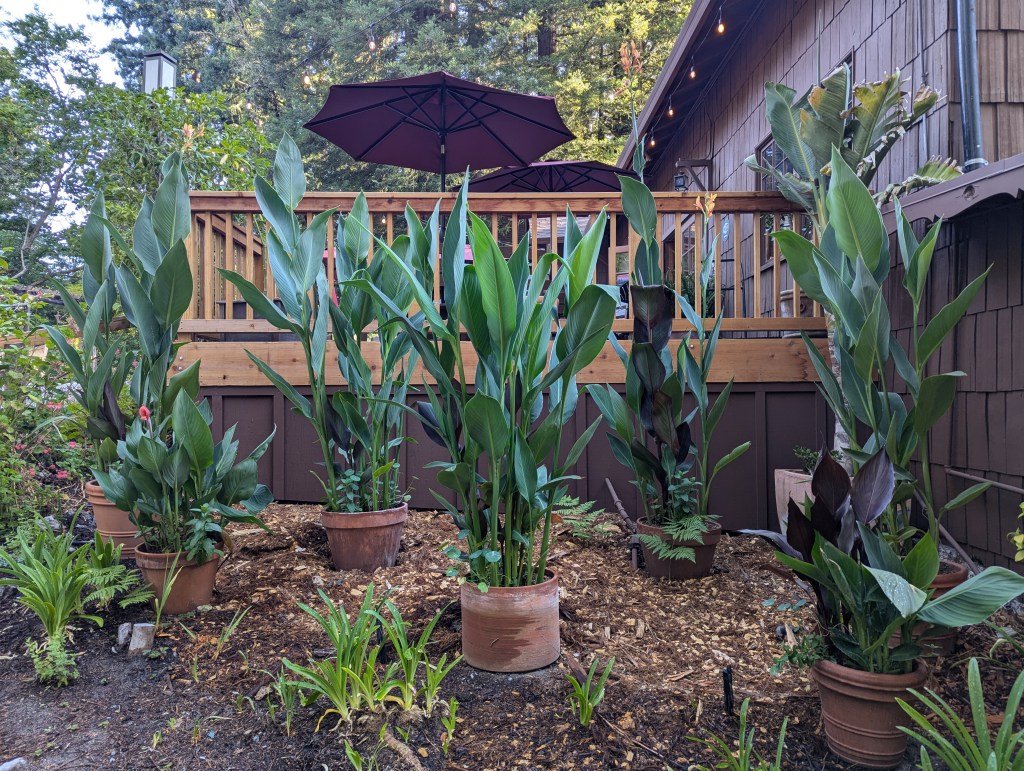
1. Canna are irrelevant to the primary topic, but are too cool to not mention. These were placed here temporarily in random pots until a new landscape gets installed next winter.

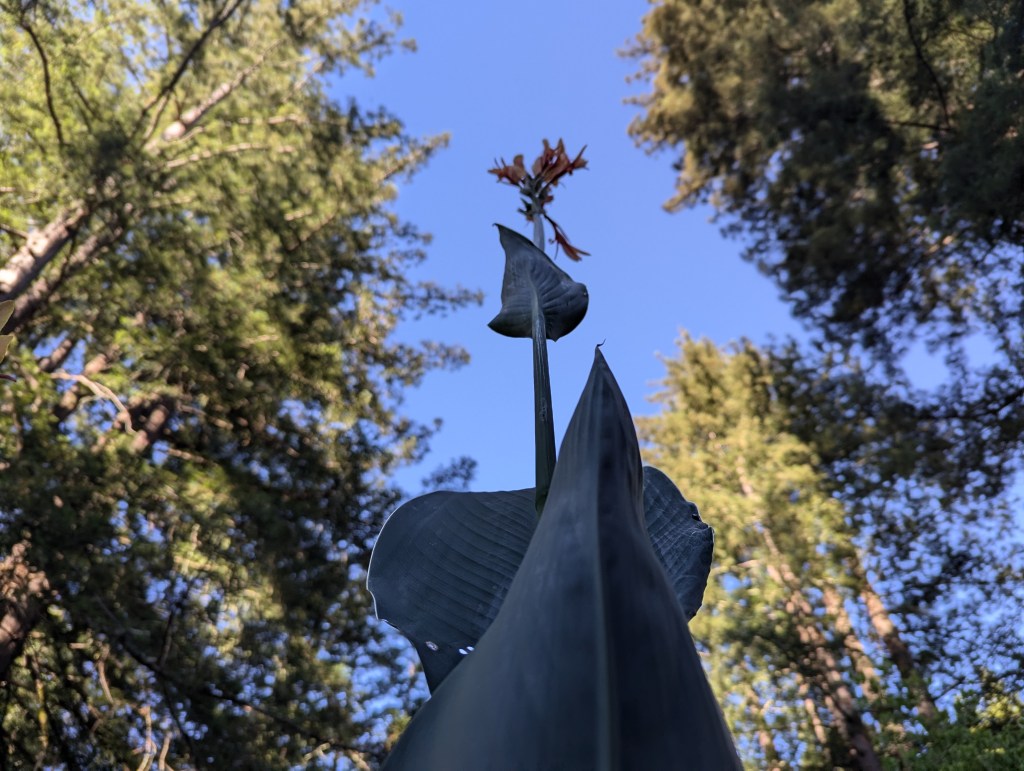
2. Canna musifolia dominates, which is why there is not much bloom. This one stands a bit more than eight feet high in its pot. It might be ‘Omega’ like the compact Oldsmobile.

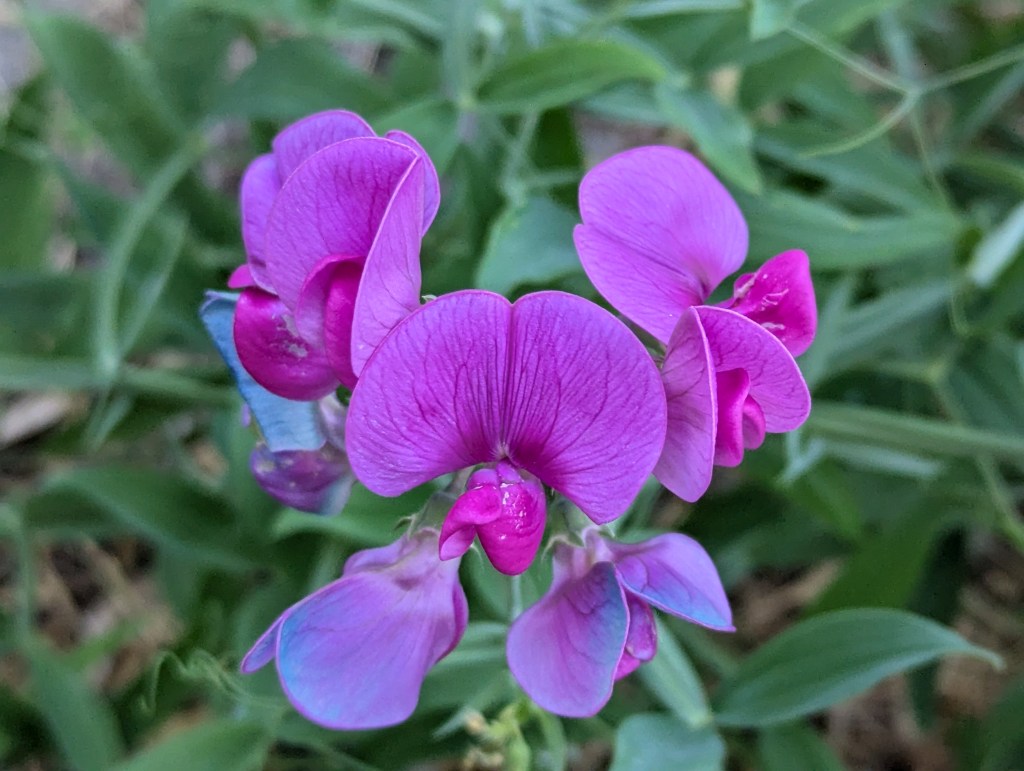
3. Lathyrus latifolius, perennial pea is the primary topic because I found three variants. This one blooms with swirled pink flowers. It is about as rare as those that bloom white.

4. This looks white in this picture but is actually blushed very slightly with pink. I should have gotten a better picture. I dug and canned a copy because I had never seen it before.

5. This is the typical floral color of the species. To me, it looks purplish pink. I am not so proficient with color. Others say it is pinkish purple. It justifies my preference for white.

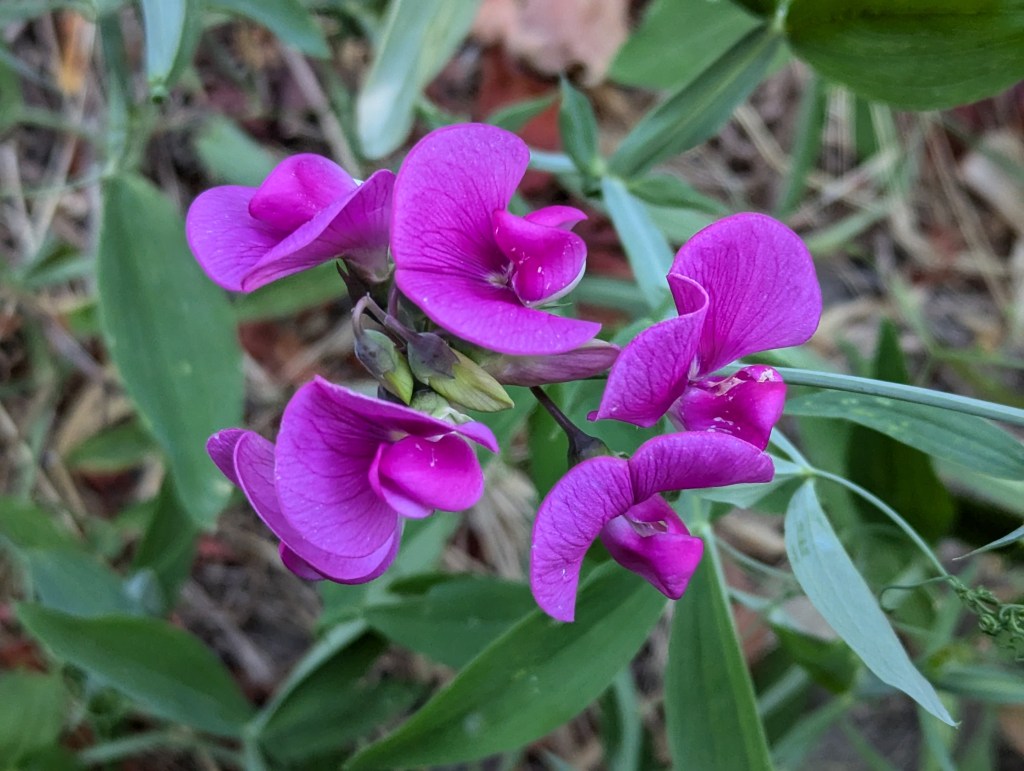
6. Like the picture of the very slightly blushed white flowers, this is not a good picture of flowers that seem to be slightly richer purple than the typical purplish pink. I got a copy.

This is the link for Six on Saturday, for anyone else who would like to participate: https://thepropagatorblog.wordpress.com/2017/09/18/six-on-saturday-a-participant-guide/

Hollyhock

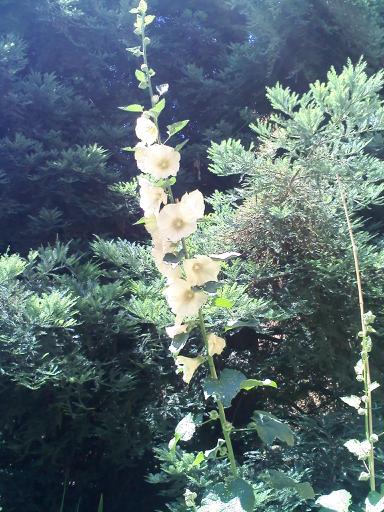
Hollyhock was more popular within Victorian gardens.

Old fashioned hollyhock, Alcea rosea, can be a bit too imposing for small gardens, since their spire like flower stalks can get taller than eight feet. Modern varieties are more proportionate, standing about five or six feet tall. Some are only about two and a half feet tall. Many modern varieties also have fluffier semi-double or double flowers. Those with smaller flowers have denser flower set than old varieties (Flowers are closer together on the stem.).

The three to five inch wide flowers bloom through summer in shades of pink, red, purple, pale yellow, pale orange and white. Removal of spent flower stalks may promote shorter autumn blooms, but also prevents self sowing. Seed can be sown at the end of summer for blooms next year. The coarsely textured and variably lobed basal foliage does not get much wider than two feet. Snails and rust can be problematic.

What Is This IV?!

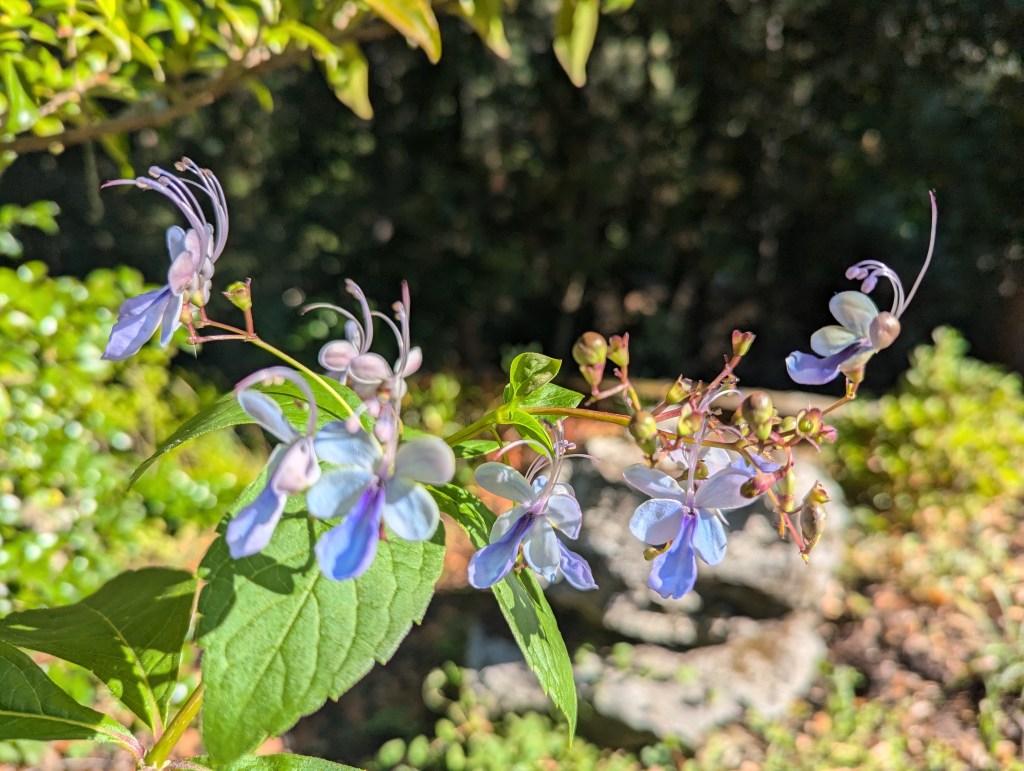
Rotheca myricoides / Clerodendrum myricoides ?

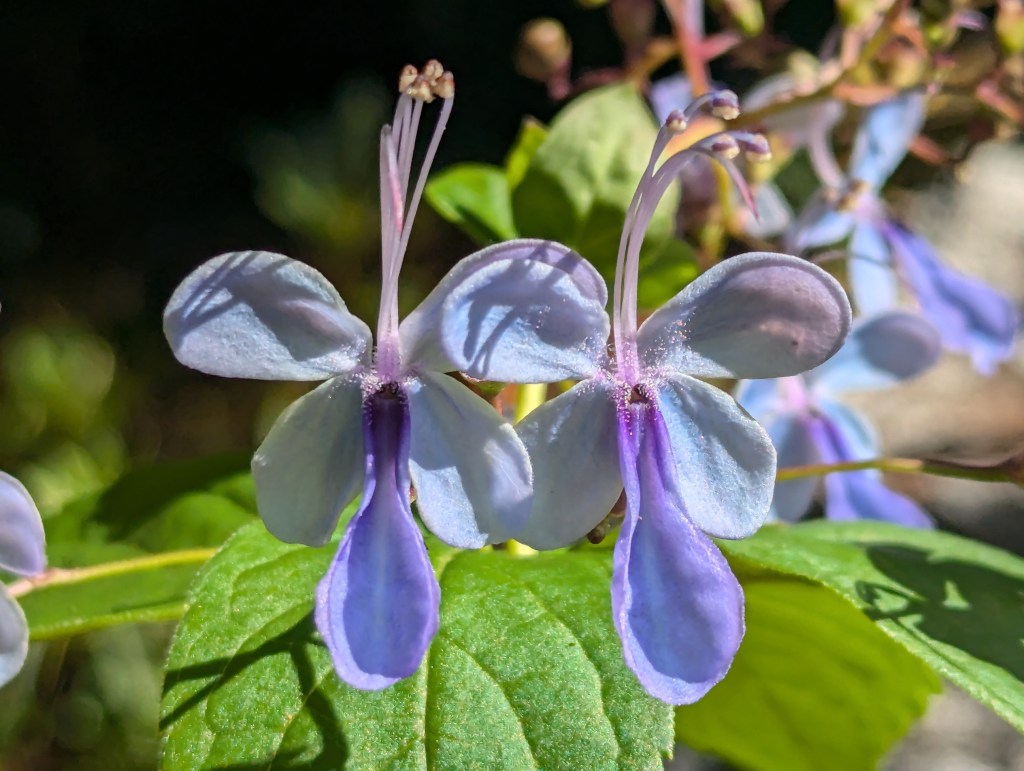
It is not a species of ivy. ‘IV’ is merely its Roman numeric designation as the fourth species that I am unable to identify since I started assigning numeric designations to them. So then, what is it? I suspect that it is likely Rotheca myricoides, which is alternatively known as Clerodendrum myricoides. ‘Ugandense’ is a cultivar name that, in typical modern tradition of botanic nomenclature that violates the simple standards of botanic nomenclature, now seems to be an acceptable species name in conjunction with either genus name. Its common names include butterfly flower, blue butterfly plant and blue butterfly bush, although the latter sounds more like a cultivar of Buddleia. I have not actually confirmed its identity, and I have no idea how it got into one of our landscapes. It grew under the carcass of a Brunfelsia pauciflora, yesterday, today and tomorrow, which did not survive my meager attempt to salvage it from compost. I can only assume that it arrived, most likely as an ungerminated seed, with the now deceased yesterday, today and tomorrow. It initially grew quickly with only two straight canes about four feet tall. I would have pulled it as a weed, but was intrigued by it. It did not grow much this year, but instead took time to branch, and is now taking time to bloom with these few intricate flowers on top. I am now pleased that I did not pull it as a weed. If it really is butterfly flower, it can get a bit taller than it already is. So, because it grew in front of an exemplary sasanqua camellia, I will likely relocate it to a more appropriate situation during its winter dormancy. I am fond enough of its sky blue flowers to propagate a few more copies of it.

The delicate pastel blue flowers are prettier up close.

Six on Saturday: Glad

Butterfly gladiolus will not bloom for a while. Abyssinian gladiolus may not bloom at all. Hybrid gladiolus, though, are already finishing. I got these few pictures while I can, and will likely get pictures of butterfly gladiolus as they bloom later. I am glad to do so. They are my favorite gladiolus. They are more like wildflowers than overly bred hybrids. Also, they are very reliably perennial. I hope that the Abyssinian gladiolus perform also. They are also supposedly reliably perennial, but are not in a very good situation here. I should relocate them, perhaps closer to where the butterfly gladiolus are so happy. The hybrids are earning my appreciation too. I was not aware that they had potential to be perennial.

1. Gladiolus papilio, butterfly gladiolus is my favorite, because it is from Tangly Cottage Gardening, is approved by Skooter, is reliably perennial, and it blooms like a wildflower.

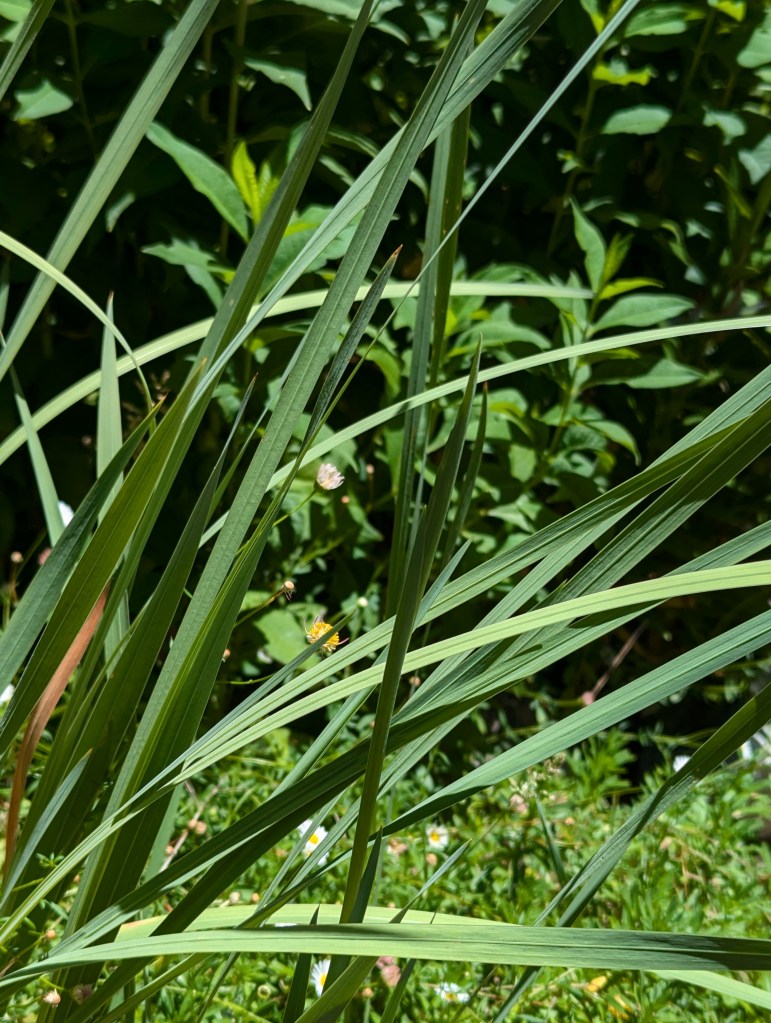
2. Its foliage is rather grassy, which is more compatible with other wildflowers than wide leaves of more garish hybrid gladiolus. The corms multiply and migrate quite efficiently.

3. Gladiolus murielae, Abyssinian gladiolus is my second favorite, even while it is not so much to see. It is a gift from a neighbor. It should bloom for autumn, but I have doubts.

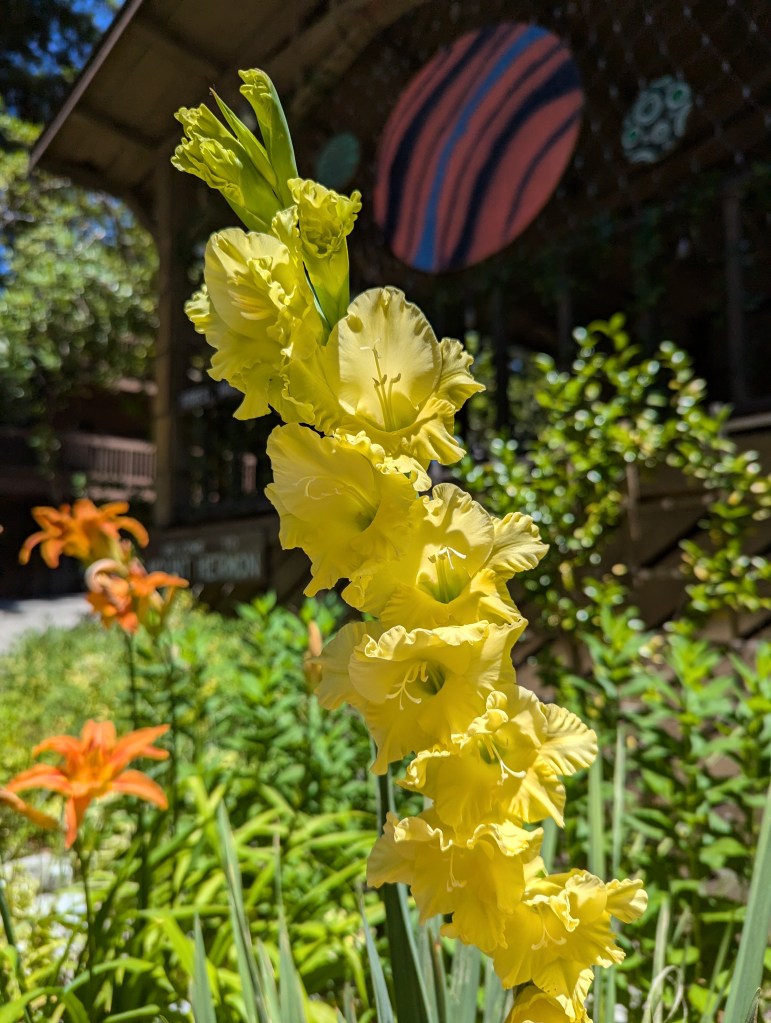
4. Hybrid gladiolus are the most colorful, but are not reliably perennial. However, these and two others have been blooming well here for several years, and actually multiplying.

5. This orange with yellow hybrid gladiolus was one of the first two to bloom again after a few years of producing only foliage. The yellow gladiolus joined them a few years later.

6. This purple hybrid gladiolus is the other of the first pair to resume bloom, although it does not multiply as much as the yellow gladiolus that resumed bloom a few years later.

This is the link for Six on Saturday, for anyone else who would like to participate: https://thepropagatorblog.wordpress.com/2017/09/18/six-on-saturday-a-participant-guide/