Six on Saturday: Strange Times

Some flowers are blooming strangely this year. Well actually, one bloomed strangely last year, and is now blooming normally. Flowers that prefer more winter chill than they can experience here are blooming quite nicely this year, even after less frost than last winter. I can neither make sense of it all, nor complain about it. I mean, it may be strange, but it is strange in a good way. We added a windmill palm that I mentioned two weeks ago to a landscape. I like palms, especially this palm, but I am not sure that I like them here with the redwoods. Palms are strange with redwoods.

1. Trachycarpus fortunei, windmill palm is strange because it is one of only three palms here. Palms and redwoods should not mix. It remains canned, so will be removed as the unseen angel’s trumpet behind it grows. I featured it two weeks ago, before it came here.

2. Hyacinthus orientalis, hyacinth is not so strange either, but it performs strangely well and reliably with only minor chill. Several have been blooming like this for several years.

3. Bergenia crassifolia, pig squeak is blooming strangely late with a strangely light pink floral color. Otherwise, it blooms a bit better now that a sycamore that shaded it is gone.

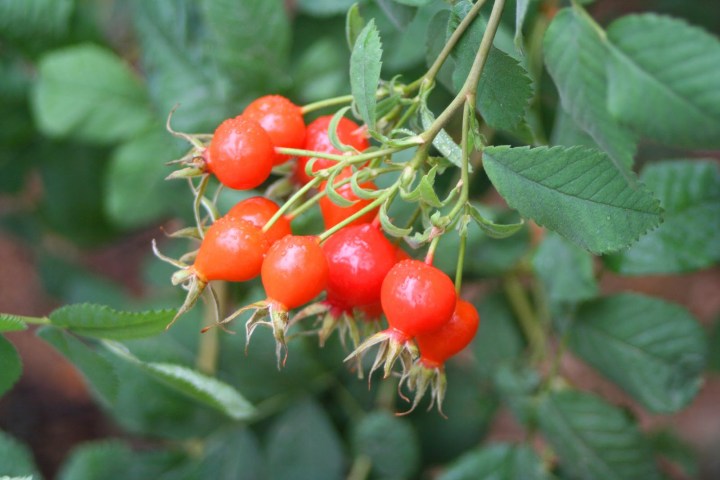
4. Ribes sanguineum, red currant is blooming with a strangely light pink floral color too. It is not much more than white, but is not white. All are this same strangely pallid color.

5. Brugmansia X cubensis ‘Charles Grimaldi’ angel’s trumpet did just the opposite. After blooming strangely pallid peachy orange since spring, it now blooms yellow as it should.

6. Helleborus orientalis, Lenten rose is blooming strangely well this year. Typically, only a few bloom like this. Now, many are. This is one of a uniform colony that is likely feral.

This is the link for Six on Saturday, for anyone else who would like to participate: https://thepropagatorblog.wordpress.com/2017/09/18/six-on-saturday-a-participant-guide/

Six on Saturday: Hello Yellow

White is my favorite color. I sometimes post six pictures of exclusively white flowers for Six on Saturday. Also, I posted six pictures of exclusively red flowers merely to show that I could. I might have tried other colors as well. I do not remember trying yellow though. California bay gave me the idea, although its bloom is rather unimpressive. Silver wattle is much more colorful. So is daffodil. Dandelion is merely a weed; but technically, silver wattle is also. Ultimately, I got four pictures of yellow flowers, a picture of an aberrative beet, and a picture of someone who might qualify as golden retriever light gold, which at least sounds yellow. He can not see most colors anyway.

1. Acacia dealbata, silver wattle is an aggressively naturalized exotic species. It certainly is pretty though. It typically blooms earlier, and maybe by New Year’s Day farther south.

2. Umbellularia californica, California bay does not bloom as prettily. Its flowers are too tiny, too sporadic and too high in its canopy to be prominent, but it blooms nonetheless.

3. Taraxacum officinale, dandelion, like silver wattle, is also an aggressively naturalized exotic species. It infests most lawns, and blooms to toss its seed whenever it wants to.

4. Narcissus pseudonarcissus, daffodil continues to bloom. Several are still budded. If it were not so variable with its bloom schedule from year to year, I would say that it is late.

5. Beta vulgaris, beet should be red, not yellow. ‘Detroit Dark Red’ is best! This seems to taste about the same, but looks like a sick carrot! I loathe carrots! Why do this to a beet?

6. Rhody remains unimpressed. He is no more interested in beets than carrots. He could be more concerned about the first of a few storms that should arrive in only a few hours.

This is the link for Six on Saturday, for anyone else who would like to participate: https://thepropagatorblog.wordpress.com/2017/09/18/six-on-saturday-a-participant-guide/

1986

Since 1986 (or so)

This is no ordinary daffodil. I realize that it looks just like the daffodils that I posted a picture of two Saturdays ago, and it could actually be the same variety, but it is quite distinct. I acquired this particular daffodil in about summer of 1986. It could have been a year or two earlier or later, and might not have been summer. The foliage was not completely shriveled as it should have been during summer, but it lasts longer in the coastal climate that I took it from. I really do not remember when I acquired it, but I know that it was a long time ago, about the summer of 1986.

Although we have not been acquainted for as long as I have been acquainted with my paternal paternal great grandfather’s rhubarb and my maternal maternal great grandmother’s Dalmatian iris, both of which I acquired prior to kindergarten, we have significant mutual history.

I ‘borrowed’ several large clumps of bulbs from an abandoned flower field to the east of my Pa’s home in Montara. The clumps were very overgrown and very crowded, but still in their original rows, as they had been arranged for cut flower production many years prior. Shortly afterward, all of the other bulbs were somehow and seemingly pointlessly removed from the field by an excavator. A monster home was built on the highest part of the field, with a view of the field, which remained completely uncultivated afterward. No one knows how or why all the daffodil bulbs were removed so completely, but none were ever seen again. The naturalized field of daffodils seemed like it would have been an attribute to the home.

Over many years, the bulbs grew at most of the homes that I lived in, until the last few years, after I left the last of them at a former home in town. Then, after bringing a few roses here from my old rose garden at a previous home, I noticed that a few bulbs came with them. I thought that they were fancier daffodils, but now that this one bloomed, it is obvious that they are the familiar daffodils from Montara.

‘Yuletide’

Camellia sasanqua ‘Yuletide’

‘Yuletide’ Camellia sasanqua should bloom for Christmas, as the name implies. It typically does. However, it sometimes blooms early or late. It might be slightly late this year, but has been blooming for quite a while, and was beginning to bloom by Christmas.

It certainly is a delightful red. It seems to me that it can be slightly more reddish, with less of a pink influence, in some situations. Perhaps the bright yellow of the staminate centers cause it to appear as such within certain weather conditions or sunlight exposures. This particular flower may seem to be slightly pinkish as a result of distress. The hedge that it bloomed on had been infested with red spider mite earlier.

This particular cultivar of Camellia sasanqua develops distinctly upright and perhaps ovoid form, and can get quite tall. Most other cultivars develop more irregular or sprawling form, with long and limber stems, and relatively short stature.

I am impressed that this bloom is so resilient to wintry weather. Although much of the foliage is under a wide eave, most of the bloom is not under the eave, so has been exposed to both rain and frost. Apparently, Camellia sasanqua bloom is resilient to frost that is colder than it gets here. Camellia flower blight is common regionally, but mysteriously does not damage many flowers within the landscapes here. White and light pink Camellia japonica flowers are more vulnerable, but even they bloom quite nicely here, with only a few flowers succumbing before they finish bloom, and generally as their cumulative bloom cycle is finishing anyway.

Deer eat any cultivar of any species of Camellia, but avoid camellias here more mysteriously than camellia flower blight. I do not remember ever encountering damage that was caused by deer; and there are many camellias here.

Winter Bloom Might Be Limited (deferred from yesterday)

Some camellia varieties bloom for winter.

Except for flowers that bloom randomly throughout the year, most autumn bloom is done. Much of the formerly spectacular autumn foliar color succumbed to wintry rain and wind. Many colorful winter berries have already gone with migratory birds who consume them. Overwintering birds appreciate what lingers. Fortunately, some winter bloom continues.

Cool season annuals likely provide most winter flowers prior to spring. Ornamental kale generates a foliar display like a pastel version of summer coleus. Snowdrop bulbs bloom only white, but look sharp if other bloom is scarce. A few species contribute winter bloom merely because they lack regard for seasons. African daisy blooms whenever it wants to.

However, winter bloom is not comparable to spring bloom. That is an unfortunate reality. Most species that bloom randomly throughout the year bloom best for spring or summer. Most species that bloom specifically during winter are relatively subdued about doing so. Although pollinators are less active, competition for their pollination services is minimal.

Witch hazel is becoming more popular locally for its fragrant winter bloom on bare stems. Modern cultivars bloom with earthy tones of yellow, orange, red, and burgundy red. They prefer cool wintry weather though. Bloom may be inhibited somewhat within mild coastal climates. Winter jasmine bloom, although limited to only brilliant yellow, is more reliable.

Some species of Mahonia likewise bloom reliably but exclusively bright yellow. They are evergreen instead of deciduous. So is andromeda. Its pendulous ivory white or pale pink blooms are more striking in form than color. Daphne, which likely finished bloom already, is more striking in fragrance than color. Its light pink bloom is mostly obscured by foliage.

Camellias are among the most reliably colorful of winter bloom. Their floral color ranges through all hues between white and red. Floral form and abundance are notably diverse. Some bloom rather sparsely. Various cultivars bloom at various times throughout winter. Sasanqua camellias generally bloom earlier, with relatively smaller but profuse flowers. Camellias unfortunately lack fragrance.

flowering maple

Flowering maple should finish bloom soon.

The identities of the many different garden varieties are vague. Most are likely hybrids. A few might be simple species. Some that seem to be hybrids are really cultivars of simple species. Regardless, most flowering maples collectively qualify as Abutilon X hybridum. If all were hybrids, as their name implies, none would generate viable seed, as some do.

Flowering maple can grow somewhat fast, but tends to be lanky if it does so. It should be a bit fuller with slower growth or minor tip pruning. Several cultivars grow no higher than doorknobs, but others reach first floor eaves. Flowering maple demands regular watering and rich soil. It enjoys humid warmth, but may roast in arid heat with harsh sun exposure.

Bloom is sporadic from late spring until frost. The flowers resemble those of hibiscus, but are no more than three inches broad. Most are pastel tints of yellow, orange or pink, with prominently richer veining. Some are red, burgundy red or creamy white. The light green or variegated foliage may get a bit sparse through winter. Foliar lobes are quite variable, or lacking.

Six on Saturday: Springtime

Flowers bloom throughout the year here. I featured bloom this week to avoid the topic of minor frost damage that I should have protected vulnerable foliage from. Frost is minor here, and does not occur every year, but it occurred here prior to some other regions this year. However, this bloom can imply that it is springtime.

1. Osteospermum X hybrida, African daisy should bloom most for spring, but can bloom randomly whenever it chooses, and often blooms most profusely for summer or autumn.

2. Helichrysum bracteatum, strawflower is my favorite of these six because I remember it as the main cut flower crop to the east of my Pa’s home in Montara through the 1980s.

3. Salvia chiapensis, Chiapas sage is a species that I had never met before last year. They grew well through last summer, and even better with more bloom through this summer.

4. Cestrum fasciculatum ‘Newellii’, bastard jasmine has an interesting name. Of course, it is not really jasmine. It recovered slowly from gopher damage, but blooms nicely now.

5. Rosa, carpet rose is my least favorite of these six because it is so cheap and common. I prefer old fashioned and respectable hybrid tea roses that are such excellent cut flowers.

6. Iris X germanica, bearded iris should bloom for spring. Reblooming types also bloom for autumn. I have no idea what this is, but I sort of doubt that it is a reblooming variety. Earlier, it did not bloom much, so now seems to be blooming late for the first phase this year, rather than blooming again for a second phase within the same year. Furthermore, its simple bloom and slim floral stalks suggest that it is not extensively bred. It might be a simple species that is confused about the seasons here, because this climate is so mild.

This is the link for Six on Saturday, for anyone else who would like to participate: https://thepropagatorblog.wordpress.com/2017/09/18/six-on-saturday-a-participant-guide/

Wise Old Owl (2011)

There is more to cut flowers than flowers.

(This is an old article from 2011, so much of the information within is no longer relevant.)

The sixteen acres of gardens of Filoli are spectacular and horticulturally compelling throughout the year. However, the weather through winter, although more pleasant than other places in the world, is not always quite so compelling or conducive to garden tours. At Filoli though, this is not a problem. More than six hundred volunteers and the Filoli staff merely bring the outdoors indoors, by selecting materials from the garden to adorn the interior of the 36,000 square foot Filoli residence for ‘The Wise Old Owl’, the annual fund raising Holiday Traditions Boutique.

While perusing The Wise Old Owl merchandise, guests can enjoy how so much more than flowers can be brought in from the garden to deck out the home. Bare stems, gnarly limbs, evergreen foliage, pine cones, bark and all sorts of bits and pieces of the autumn and winter garden demonstrate the potential for alternatives to traditional cut flowers that we may not even recognize as useful materials in our own gardens. Of course, there will be no shortage of the less abundant flowers that bloom through the season and decoration that are not out of the garden, as well as live music to enhance the display. Regardless of horticultural interest or boutique merchandise, the grand residence at Filoli is worth visiting even on the least eventful day of the year.

There are too many events within the Event to describe here. Guests can visit http://www.filoli.org to plan ahead and make reservations for buffet lunches and evening bistro dining, as well as an elegant Saturday Evening Dinner Party with dancing in the Ballroom. Children six to twelve years of age can enjoy a Children’s Tea on the finale of The Wise Old Owl on December 3.

The Wise Old Owl begins in only a few days on November 25, and continues through December 3. The hours of operation and admission are variable relative to the various events throughout the main Event. Reservations for specific events can be arranged and more information can be found online

Tickets can be purchased online, by fax or by telephoning Filoli weekdays between 9:00 a.m. and 4:00 p.m. At 650 – 364 8300 X 508. Order forms for fax transactions can be downloaded from the website and sent to 650 – 503 2090. Admission is limited; and tickets get exhausted somewhat early. Tickets are neither refundable nor exchangeable. Filoli is located at 86 Canada Road in Woodside (94062).

Beyond Fresh Cut Flowers

Palm fronds are striking cut foliage.

Most flowers bloom in spring. Many bloom a bit later and though summer. Not nearly so many start to bloom in autumn or though winter. This time of year, there is more to clean up from fading blooms than there are fresh blooms to cut and bring in.

Much of the color in the garden through autumn is provided by colorful foliage or foliage that gets colorful as the weather gets cooler. Later in winter, some plants have colorful bark and stems that gets revealed by winter defoliation. Coral bark Japanese maple, red twig dogwood and some arctic willows have remarkably colorful twigs.

Blooms of a few plants are sometimes cut and recycled after they fade because their dried flowers, flower stems or seed pods are appealing. Hydrangeas are not so attractive as they deteriorate out in the garden, but can be cut and hung upside down to dry to substitute for fresh flowers later. If done quickly, many types hold their color somewhat. Those that do not hold their fresh color may turn an appealing shade of brown.

Queen Anne’s lace can likewise be a nice dried flower, but is not so easy to hide in the garden while it dries. If cut and hung to dry, individual stems should be hung separately, since they bend and are difficult to separate if hung in clusters. Their flat-topped flower trusses curve inward as they dry, so they look nothing like they do fresh.

The rigid flower stems of New Zealand flax are rather sculptural protruding from their softer foliage. These same stems can be cut, plucked of seed pods, and like dried hydrangeas, used as cut flowers when there is not much else to get out of the garden. Ironically, New Zealand flax flowers sometimes get cut before they bloom, since not everyone appreciates their contrast against their own softly textured foliage.

Years ago, New Zealand flax flower stems were actually dried and spray painted! For those daring to try this technique, it also works well with lily -of-the-Nile flowers stems and trusses (plucked of their seed pods), Heavenly bamboo flower stems, and even dried pampas grass blooms. However, pampas grass blooms are deprived of their fluffiness and most appealing quality by spray paint. Bird-of-Paradise leaves twist interestingly as they dry, to provide texture with or without paint.

Fronds (leaves) of some fan palms can provide bold cut foliage. Mediterranean fan palm is difficult to handle because of the nasty teeth on the stalks, but has nice rounded leave that fan out nicely behind other flowers. They can be cut into smaller fans, or even other not so rounded shapes. Windmill palm is much easier to handle, but is a bit larger, so is more likely to need to be trimmed to shape. All are easy to cut with common scissors, and can be dried and spray painted.

There is probably more in the garden to substitute for cut flowers than would be guessed. Useful plant parts can be found in the least expected of places.

Horridculture – Long Stem Rose

I grew a nearly exemplary long stem rose!

Well, I did not exactly do it myself. One of three specimens of ‘Proud Land’ hybrid tea rose that I installed into the rose garden in about 1984 did all the work. I was quite pompous when I found it though. After all, I maintain this particular specimen in a can here until it relocates into another rose garden.

I certainly did not expect such a bloom only a week before November. Although roses can bloom until winter dormancy, the latest are generally on short stems. Increasingly cool weather decelerates formerly vigorous growth.

This particular rose bloomed on a stem that was more than three feet long! It would have been ideal for Miss Piggy of the Muppet Show! Goodness, it could have been too good for Miss Piggy!

‘Proud Land’ hybrid tea rose

The flower might have lacked perfect form, and the foliage might have been slightly blemished, but with such an awesome stem, they were inconsequential. Perhaps I should have stripped the foliage and cut the flower off, in order to most effectively display the near perfection of this most astounding stem!

After cutting it, I removed the thorns and lower foliage, and put it in water outside the lounge at work. According to tradition, unless someone else is presently experiencing marital tension of some sort, the first of the gentlemen with whom I work to find roses there takes them to his wife. This was only a single rose, but was very special. It was gratifying to know that someone with whom I work was about to experience a very special evening, although I gave it no more thought than that.

Then, the gentleman who claimed it mentioned that it was too long, and before I could protest, he cut the stem in half.

the discarded half