Six on Saturday: Late for Summer

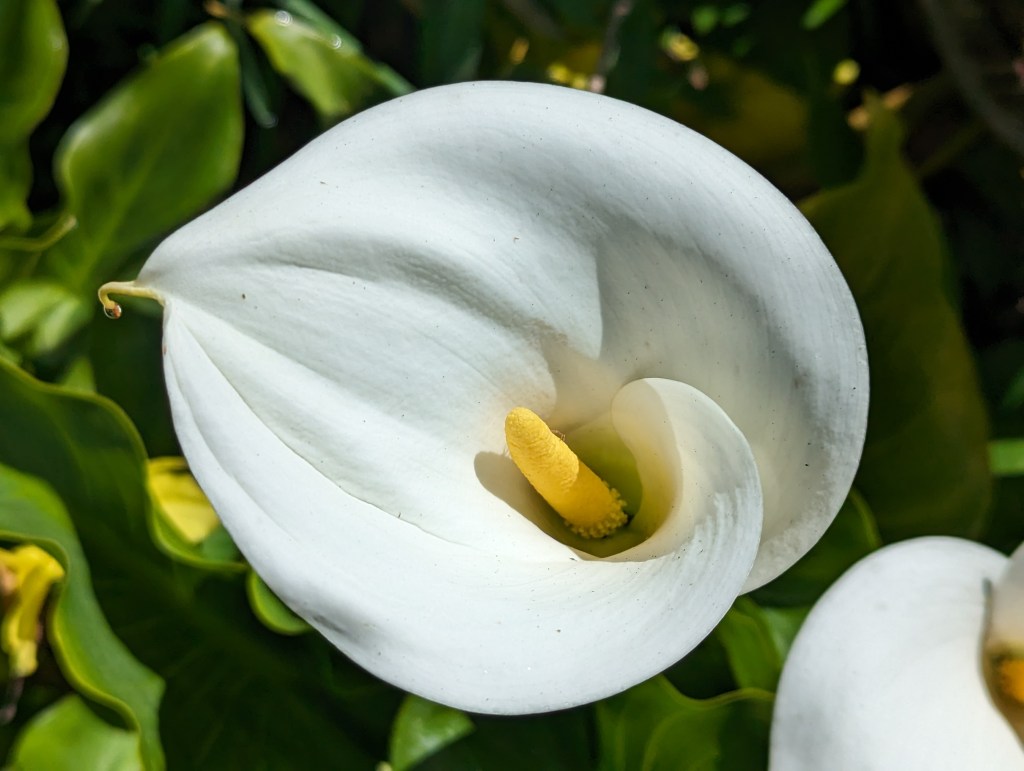
Summer was late this year. This is sounding redundant, so I will not mention last winter again. Nor will I mention last spring or early summer. Now that summer is about a third over, it seems as if it is merely beginning. Lily of the Nile, which never fails to bloom for Independence Day, began to bloom only a few days ago. Bloom is catching up though, or at least trying to. These summer flowers are doing well, and were actually doing well last week, when I was unable to post these pictures because of bad reception. Easter lily was done right after I got these pictures. The preponderance of red here is mere coincidence, but summery.

1. Lilium longiflorum, Easter lily was likely left behind after a wedding in the old Chapel. It lives in a garden across the road now. It is the only of these six that finished blooming.

2. Hydrangea macrophylla, hydrangea is pleasantly pink even without the fertilizer that maintains its pink color. Blue hydrangea faded to lavender without their pH adjustment.

3. Pelargonium hortorum, zonal geranium is quite a bit more prolific in bloom than the old fashioned sorts that I am accustomed to growing. The floral color is impressive also.

4. Gerbera jamesonii, Transvaal daisy is as bright and bold as 1984. However, I still fail to be impressed. It is certainly pretty, but looks like a squirting daisy that a clown wears.

5. Papaver rhoeas, poppy grew from seed that got sown prior to the last torrential storm of last winter. I thought that all the seed got washed away. This was a delightful surprise.

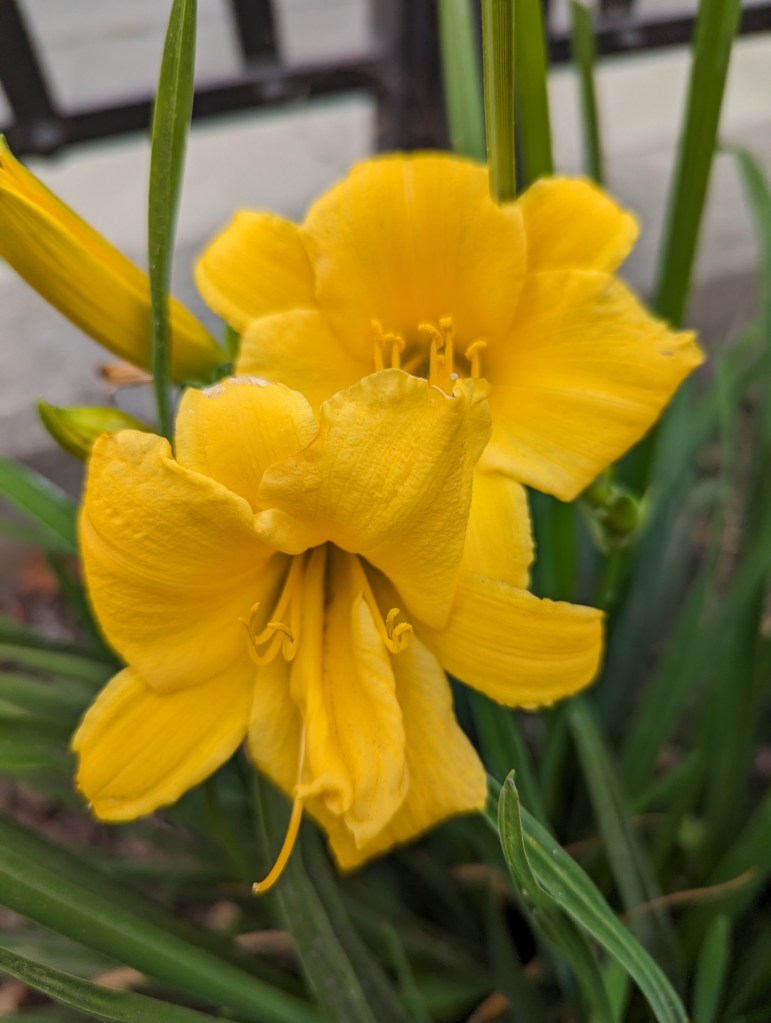
6. Hemerocallis fulva, daylily grows like a weed. We move it from one garden to another as it outgrows its space. This double orange cultivar may be ‘Kwanso’, but I do not know.

This is the link for Six on Saturday, for anyone else who would like to participate: https://thepropagatorblog.wordpress.com/2017/09/18/six-on-saturday-a-participant-guide/

Six on Saturday: Buckeye

Aesculus is not native to Arizona. Buckeye is merely where I vacationed after leaving the Los Angeles region. It is northwest of Phoenix, which is also a genus that is not native to Arizona. It was a hundred degrees daily while I was there, but oddly, never to a hundred and one. My Six are from residential gardens. #2 is of the Plantaginaceae family. #1 and #6 are of the Fabaceae family. The three others are of the Bignoniaceae family. Fabaceae and Bignoniaceae seem to be popular there. #1, #4 and #5 are native species. Carnegiea gigantea, saguaro, which is the State Flower of Arizona, grows wild there. I should have taken pictures of it. The base of a minor specimen is visible to the far right of picture #1.

1. Prosopis glandulosa, honey mesquite was in need of clearance pruning. I brought the bigger stems from the pruning debris back for a colleague who will use it to smoke meat.

2. Russelia equisetiformis, firecracker plant, as the specific epithet describes, resembles equisetum, but with these red and narrowly tubular flowers that exclude interested bees.

3. Jacaranda mimosifolia, jacaranda is one of a few familiar species that I encountered. I am impressed that it is popular and seems to perform well within such an arid climate.

4. Chilopsis linearis, desert willow got my attention because of this floral color that is so unusual for trees. I had previously only encountered it while it was defoliated for winter.

5. Tecoma stans, esperanza, as well as poinciana #6 below, should bloom like this in my garden. Crazy Green Thumbs sent me seed for both last year. Both were terrible failures.

6. Caesalpinia pulcherrima, poinciana, as well as esperanza #5 above, remind me that I should have been more diligent and protective with the seed from Crazy Green Thumbs.

This is the link for Six on Saturday, for anyone else who would like to participate: https://thepropagatorblog.wordpress.com/2017/09/18/six-on-saturday-a-participant-guide/

Six on Saturday: Rhody Obligation

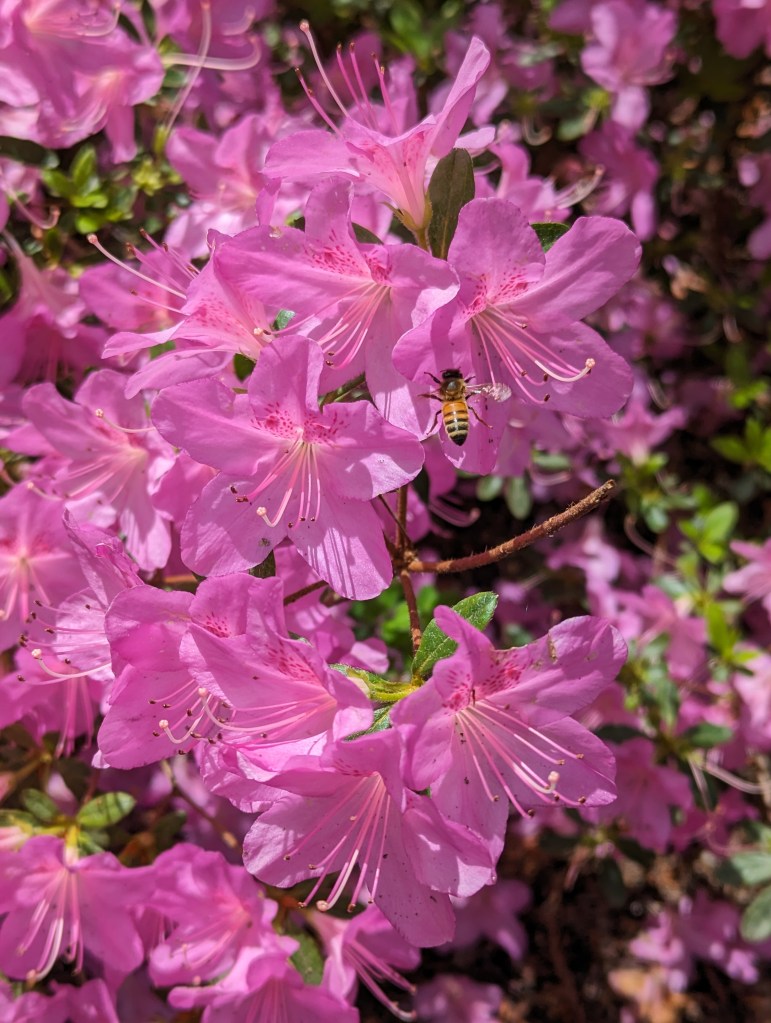
Rhododendrons bloom so spectacularly that I am obligated to share pictures of them for Six on Saturday. I can not share pictures of all of them though. There are too many, and there are also too many pictures of other flowers that bloom at this time of year. As it is, these pictures were delayed because I shared pictures of other flowers earlier. Therefore, these Six will be the first and last pictures of rhododendrons that I will share this season. None of them are of my roommate, Rhody. None of the cultivars are identified. I should share pictures from my vacation next week. I arrived in Los Angeles on Wednesday, and should leave for the Phoenix region on Sunday.

1. Anah Kruschke looks something like this; and this really is more purplish than it looks here. Bloom is so very late that some was still in bud, like those behind these two florets.

2. Floral trusses of this cultivar are huge! The branch structure is also big. The specimen that produced this bloom is more than twenty feet tall. It sags from its own floral weight.

3. Several rhododendrons here are white, but none are pure white. This one is somewhat spotty and blushed with a bit of lavender pink. It brightens its partially shaded situation.

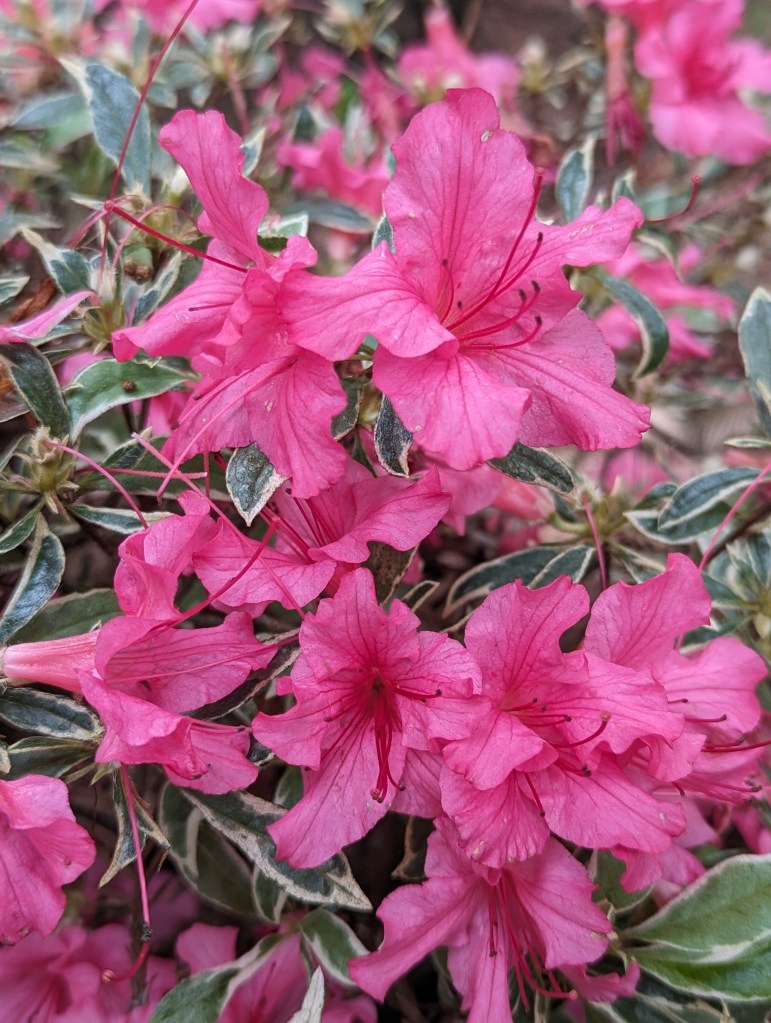
4. Pink is likely the most common color among the rhododendrons here. Rich pink such as this mostly inhabits sunnier situations. Paler pink mostly inhabits shadier situations.

5. White with yellow spots seems to be somewhat whiter than lavender pink blushed and spotty white. A few specimens of this cultivar live here. Its foliage is not very impressive.

6. Red is a splendid color for rhododendrons. Red is not as splendid as lighter colors for shady situations though. That may be why it is uncommon within our shady landscapes.

This is the link for Six on Saturday, for anyone else who would like to participate: https://thepropagatorblog.wordpress.com/2017/09/18/six-on-saturday-a-participant-guide/

Six on Saturday: Bearded Iris

Iris are blooming late but splendidly within the new iris bed. It is gratifying to assemble various bearded iris within their dedicated garden. #1 and #2 do not inhabit the new iris bed yet, but are tempting because they resemble cultivars that I crave. I purchase no iris. Doing so would be an egregious violation of my very discriminating standards. However, if I ever find it, the one cultivar of bearded iris that I would make an exception for is ‘San Jose’.

1. ‘Los Angeles’ looks just like this, although this is not exactly an exemplary specimen. I should get a copy of it, regardless of its identity. Perhaps an expert could identify it later. It was a few days old, but stayed on tables for a luncheon at Felton Presbyterian Church.

2. ‘San Jose’ looks almost like this, but frillier, with less veining of the purplish falls. This blooms in front of the White Raven coffee shop in Felton. I likely will not request a copy.

3. Purple intermediate iris is still the most abundant in the iris bed. It was recycled from a garden in Santa Cruz, where it was a bit too abundant. To me, it seems to be deep blue.

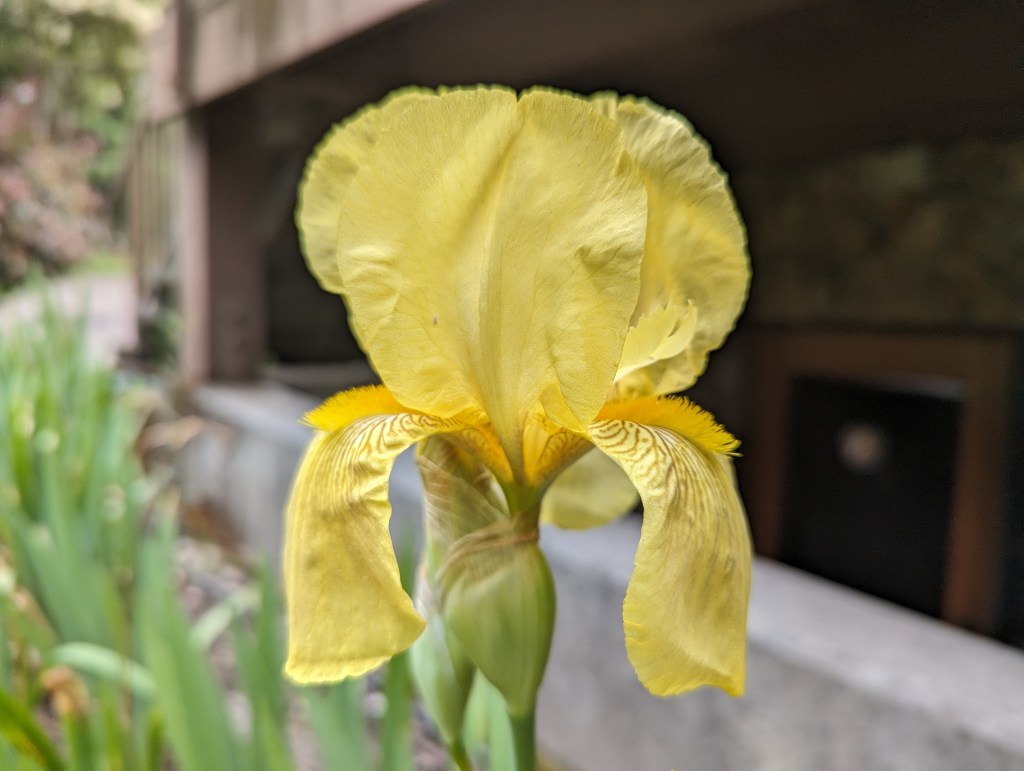
4. Feral yellow iris may not actually be so feral. Now that it inhabits the iris bed, where it is irrigated regularly, it has grown as tall and performs like the tall bearded iris cultivars.

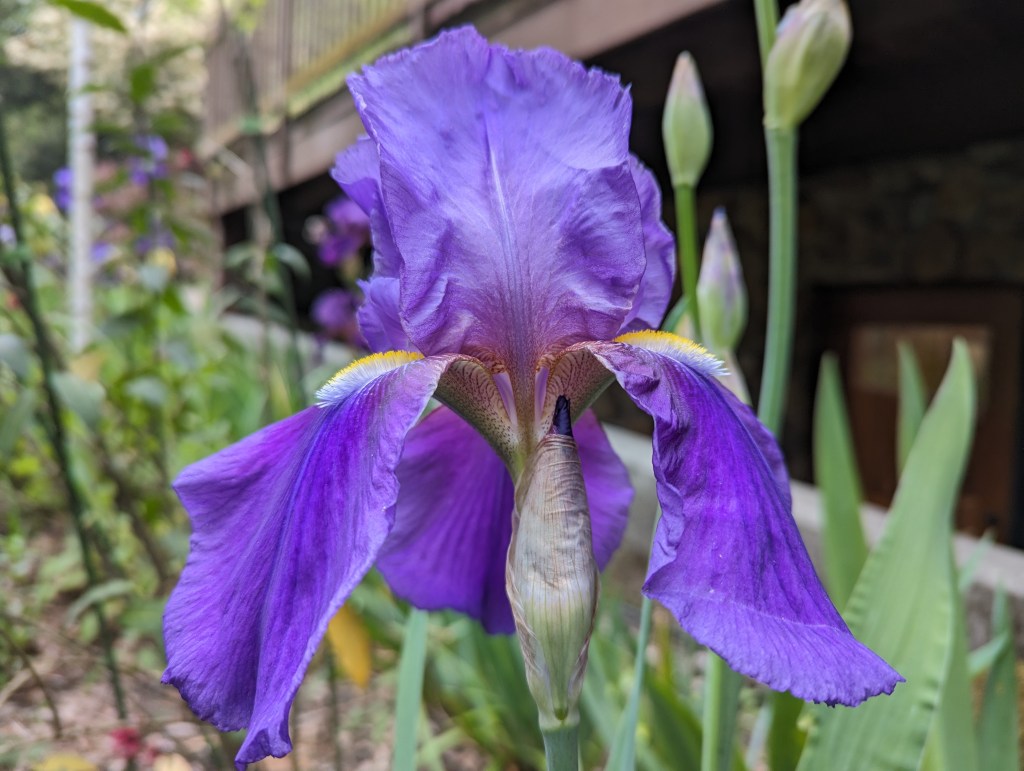
5. Purple tall iris was a gift from a neighboring residential garden. To me, it seems about as blue as the purple intermediate iris. I have been assured that it truly is purple though.

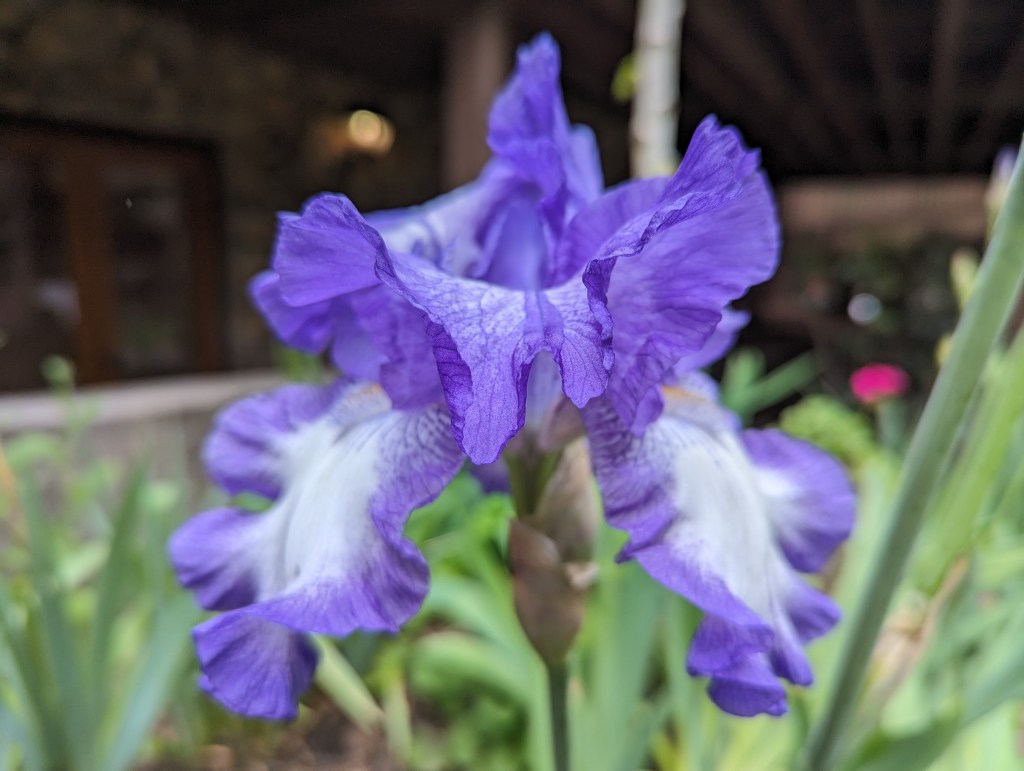
6. Blue and white tall iris was also a gift from the same neighboring residential garden. I am very confident that this really is blue, rather than purple. This is the frilliest cultivar.

This is the link for Six on Saturday, for anyone else who would like to participate: https://thepropagatorblog.wordpress.com/2017/09/18/six-on-saturday-a-participant-guide/


Bloom Is Bountiful For Spring

Many flowers bloom only for spring.

Bloom that was delayed by the unusually wintry winter is making up for lost time. Spring bulbs, flowering cherries and deciduous magnolias were amazing. Wisterias and lilacs continue their pastel display within some climates. More flowers bloom during springtime than at any other time of year. Even roses of summer will begin their performance soon.

Pollination is the priority of all flowers. The majority of flowers exploit wind for pollination. Because they need not attract pollinators, they are neither very colorful nor very fragrant. Colorful and fragrant flowers are the minority that compete for the attention of pollinators. This includes the same colorful and fragrant flowers that are desirable for home gardens.

Whether reliant on wind or pollinators for pollination, flowers adhere to a strict schedule. Some colorful and fragrant flowers want to be receptive while their pollinators are active. However, pollinators are more likely to adjust their schedules to exploit favorite flowers. After all, there is another major incentive for spring bloom. Seed needs time to develop.

Pollination is the priority of all flowers because it is how they generate seed. Some seed develops fast enough to grow into new plants within the same year. Some annuals can actually procreate for a few fast generations annually. Most seed develop slower though. They mature during summer, overwinter, and ultimately grow during the following spring.

For now, garden enthusiasts should enjoy the most abundant bloom of the year. That will not require too much exertion. Fresh fruit of summer will develop later. Some flowers that deteriorate without producing fruit may justify deadheading. This redirects resources for vegetative growth, and eliminates any unwanted seed. Besides, it might be a bit neater.

The most profuse spring flowers generally bloom only once annually. They will not do so again until next spring. Some less profuse bloomers may repeat with later bloom phases through summer. Of course, some flowers bloom within other seasons between summer and even winter. Their individual schedules are appropriate to the climates that they are originally native to.

Nigella

Nigella is more typically blue, but can alternatively bloom white, pink or lavender.

Those who crave blue for the garden probably know nigella, or ‘love-in-a-mist’, Nigella damascena. It blooms in May and June, typically with various shades of pastel blue, or can alternatively bloom pink, lavender or white. The lacy flowers are surrounded by lacier bracts, and suspended on thin stems among delicate pinnately lobed foliage, with very narrow (‘thread-like’) lobes. The plump brown seed capsules that appear over summer after bloom are commonly used as dried flowers. The plants can be half a foot to a foot and a half tall. Although annual, nigella self sows easily, so can grow in the same location for many years if allowed to.

Forcing Early Bloom Even Earlier

Home interior warmth accelerates early bloom.

Some of the earliest of spring flowers are done blooming. More are just beginning. Then, a few early spring flowers barely qualify as early. Their fresh color is especially pleasing after such an atypically wintry winter. Many are delightful cut flowers. A few that bloom on bare deciduous stems are conducive to forcing. Even the earliest bloom could be earlier.

Bare stems are simpler and less wasteful to force to bloom than bulbs and potted plants. Most bulbs and some potted plants do not survive long after forcing. Dormant deciduous plants easily replace a few forceable stems. Forcing such stems is as simple as bringing cut flowers into a home. The difference is that it is premature, immediately prior to bloom.

Flower buds on dormant deciduous stems begin to swell during warming spring weather. Such stems are ready for forcing when these floral buds are about to pop open. Ideally, a bit of floral color should be visible through some of the bud scales. A few flowers may be blooming. Collective bloom accelerates within the warmth of a home interior after cutting.

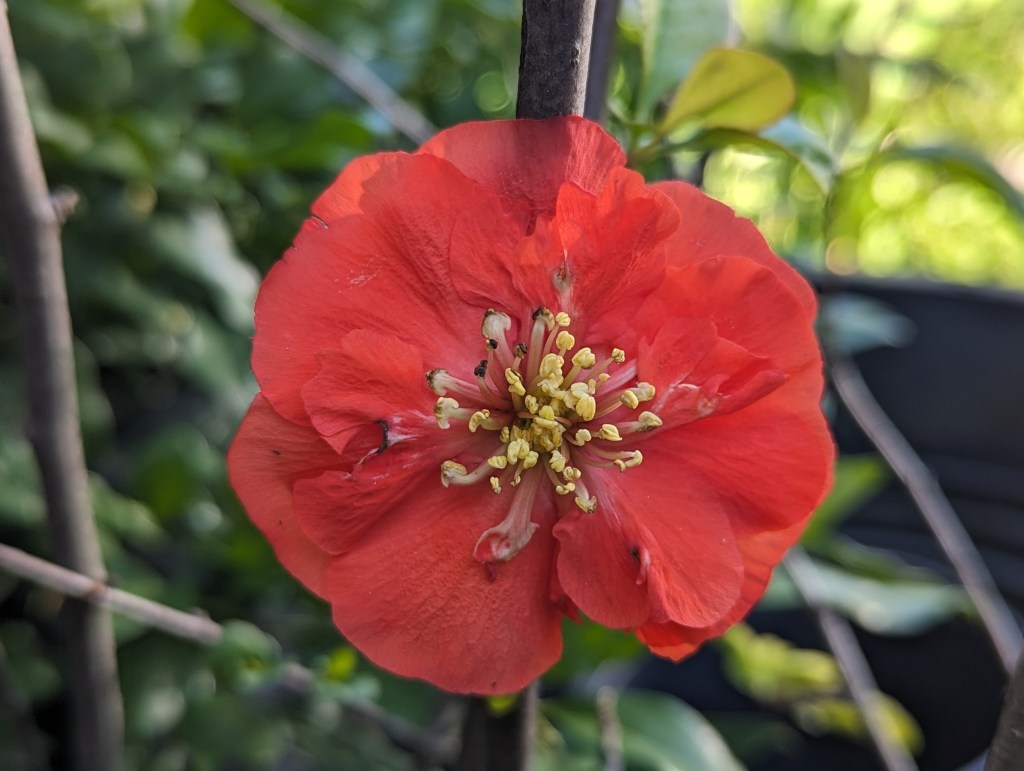
Flowering but fruitless counterparts of popular fruit trees are some of the best for forcing. These include but are not limited to flowering cherry, plum, apricot and other stone fruits. Flowering pomme fruit trees, such as quince, crabapple and pear are almost as popular. Related fruiting stone and pome fruit trees are as conducive to forcing, but not as garish.

Of course, there is nothing wrong with simpler bloom. Some fancy flowering cherry trees bloom with single white flowers like fruiting cherries. However, cutting stems from fruiting trees decreases fruit production. With a bit of planning, dormant pruning can allow a few undesirable stems to remain. These stems are then available for cutting and forcing later.

Witch hazel cultivars are exemplary for forcing, but are done blooming. Flowering quince and forsythia are now finishing within most climates. Redbud, lilac, wisteria and perhaps weigela are still conducive to forcing. Dogwood and deciduous magnolia can perform as well if humidity is not too minimal. So should some acacias, although their fragrance and pollen may be distasteful.

Six on Saturday: Lenten Rose?!

Lenten rose does not perform well here. Perhaps it prefers more of a chill during winter. Perhaps it prefers more humidity. I do not know. Some were added to the landscapes at work sometime in the past, and naturalized. Because no one knows when this happened, it is impossible to know which if any are original, and which are naturalized feral plants. Until recently, only one specimen bloomed unexplainably well annually. Now, after very unusually wintry weather, Lenten rose is performing unusually well. Although not quite as impressive as it is in other climates, we are impressed locally. These pictures are more than a week old, but are still relevant, since the Lenten rose continues to bloom. I do not know what to expect. They never performed like this before.

1. Helleborus argutifolius, Corsican hellebore is the only simple species of Helleborus in the landscapes here. All the others are simple Lenten rose hybrids or their feral progeny.

2. Helleborus X hybridus, Lenten rose typically does not perform well here. The climate is likely too mild. This specimen, which is likely feral, performs unusually well annually.

3. Grayish lavender seems to be the most common color here. Lenten rose is performing unusually well this season. Perhaps they appreciated the unusually cool wintry weather.

4. Darker grayish purple is not as common here. Regardless of this unusually impressive bloom, hellebore are still prettier in pictures from other climates of more wintry winters.

5. White, of course, is my favorite. Only two bloom convincingly white, but the other is a bit spotty and blushed. I might have split a few copies if they typically bloomed this well.

6. Rhody does not cooperate for pictures. If I remember correctly, this picture was taken immediately prior to the picture from last week with his tongue out. It could be cropped.

This is the link for Six on Saturday, for anyone else who would like to participate: https://thepropagatorblog.wordpress.com/2017/09/18/six-on-saturday-a-participant-guide/

Primrose

These sorts of primrose almost seem to be synthetic because of their bright but simple color.

The cartoon shades of red, yellow, blue, purple and nearly orange of primrose, Primula acaulis (or Primula vulgaris) are still partying strong. They do not seem to be aware that, although perennials that could regenerate next autumn, they are likely to be replaced with warm season annuals soon. The cute flat-topped trusses of half inch to inch and a half wide flowers are short, but stand up above the even shorter two to five inch long leaves.

Winter Bloom Might Be Scarce

Some camellia bloom sporadically for winter.

Oregon gardens get to display superior peony bloom for spring and summer. That is one of several advantages of winter chill. Some plant species appreciate a bit more chill than they can get here. It enhances their performance. However, chill also limits winter bloom. Not many plants want to bloom while the weather is cool, and pollinators are less active.

That is one of several advantages of mild winter weather. It allows flowers that bloom for autumn to bloom a bit later. It allows a few of the flowers that bloom for spring to bloom a bit earlier. There is not much time between the last flowers of autumn and the first flowers of spring. Winter bloom is not as important here as where winters are longer and chillier.

Even if less important here, reliable winter bloom might be a bit more challenging. Some plants that bloom for winter in other climates might be hesitant to bloom for winter locally. After all, they prefer to bloom while the weather is cool. Mild chill might be unsatisfactory. Cool season annuals are unpredictable, but are likely the most reliable for winter bloom.

Of the popular cool season annuals, cyclamen is actually perennial. If not removed at the end of its season, it goes dormant for summer, and regenerates for subsequent winters. It does not bloom as profusely as it originally did, but adds color to mixed small perennials or ground covers that do not bloom for winter. Some types of primrose are also perennial.

A few perennials bloom sporadically and randomly throughout the year, including winter. African daisy and euryops daisy typically do not bloom as much as they do during warm weather, but can. Euryops daisy may actually bloom best during winter. Bird of Paradise flowers mature so slowly that those that begin during autumn might finish through winter.

Witch hazel, daphne, heather, mahonia and winter jasmine bloom for winter, but perhaps not as impressively as for other climates. Some camellia bloom abundantly while others bloom sporadically. Bergenia may bloom later here than for other climates. Forsythia and some spring bulbs, especially daffodil, bloom so early that they seem to bloom for winter.