Color Wanes As Summer Ends

Summer blooms will be finishing soon.

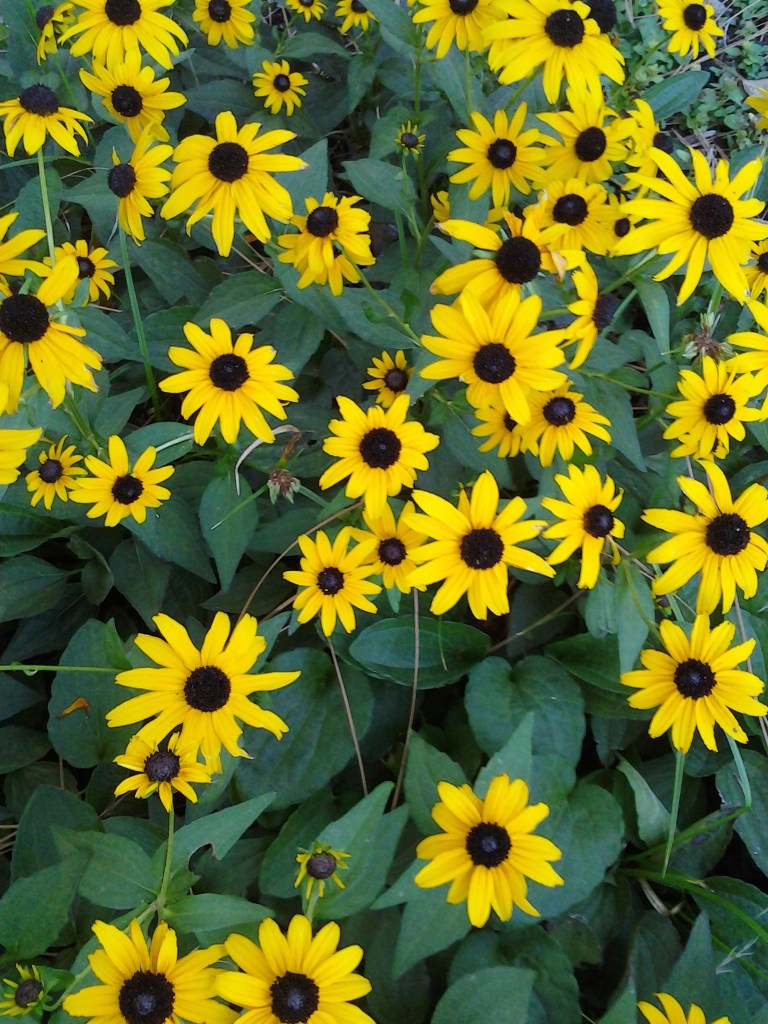
Black-eyed Susan, sunflowers and a few of the late warm season annuals and perennials are still blooming, and a few will continue into autumn. By that time, cool season annuals can move in; and some of the deciduous trees, shrubs and vines that turn color for autumn will be doing so. Realistically though, this can be the leanest time of year for color in the garden. Even some of the foliage that is colorful through spring and summer has faded.

There are certainly plenty of flowers in season now. However, not many are colorful. Honeysuckle vine is pleasantly fragrant as it bloom in random phases until the weather gets cooler, but the flowers are only pale yellowish white. Some melaleuca trees bloom profusely enough to make a mess, but are just as pale, and do not even provide fragrance; although some have pretty light pink flowers. Abelia flowers are pink and abundant, but are really not all that flashy against their bronzy foliage.

Some of the more colorful flowers are not quite as reliable. Princess flower, hibiscus, blue hibiscus and mandevilla certainly can bloom in late summer or autumn, but sometimes bloom earlier than expected, so have nothing left for later. The bright red flowers of blood red trumpet vine are quite impressive, but only if they are not obscured by the accompanying foliage. Some roses bloom in phases as late as the weather will allow, but actually, most are done by now.

Fuchsia and angel’s trumpet likewise bloom in a few phases once they get started, but unlike the many cultivars of roses, they are much more reliable for a late bloom phase. Escallonia blooms late with small but colorful flowers, but only if they have not been shorn in the past few months. Shearing deprives them of the blooming stem tips that they had worked most of the year for.

Butterfly bush, tree mallow, cape plumbago, bee balm and several varieties of sage and salvia are among the most reliable plants for late summer or autumn bloom. Even without multiple bloom phases, they just naturally bloom at the end of their growing season, before winter dormancy.
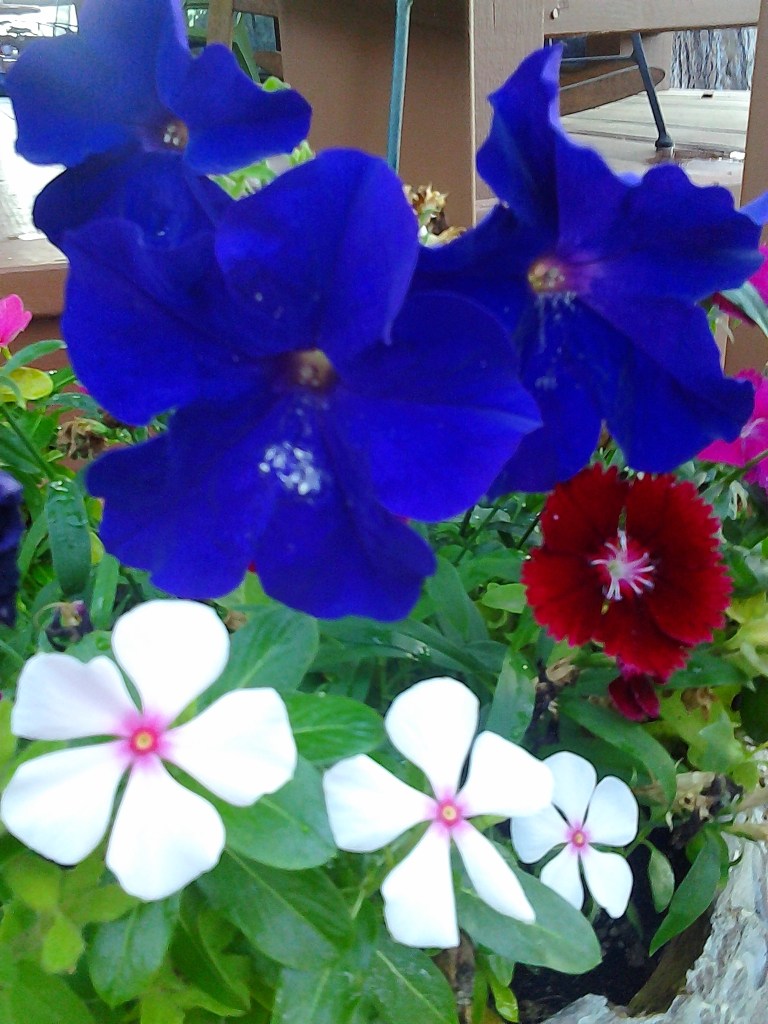
Something Blue

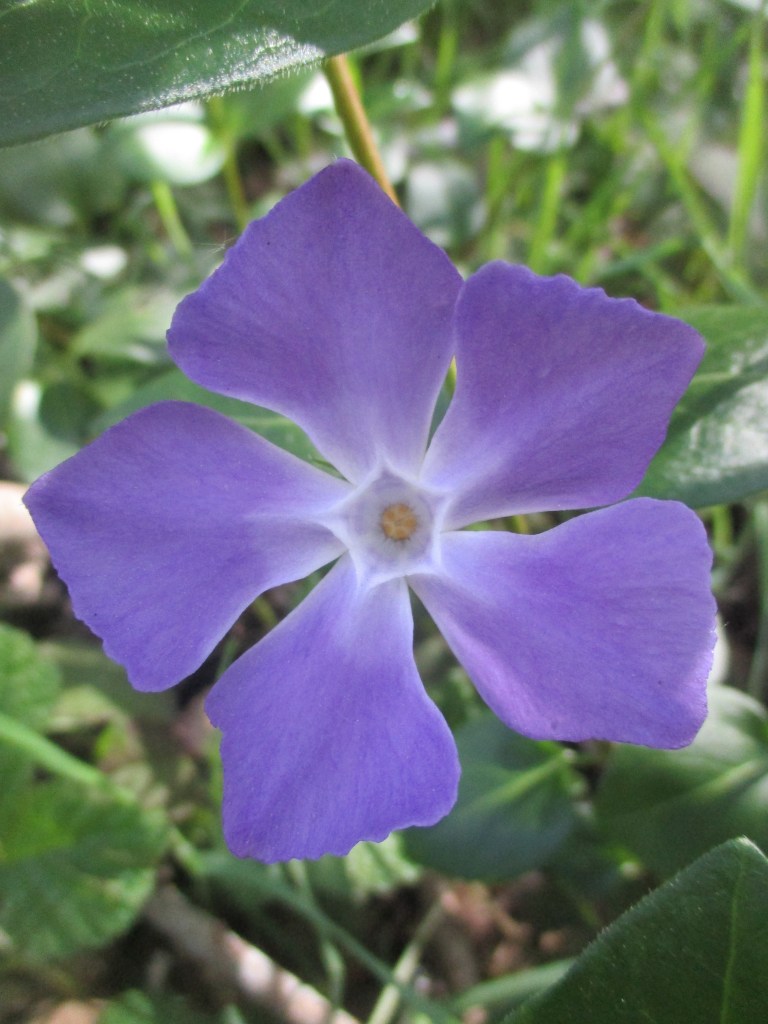
Is periwinkle blue, or slightly purplish?

Blue must be unpopular with the more common of pollinators. After all, colorful flowers are designed to attract some sort of vector to exchange pollen. It seems that most pollinators like yellow. Red and pink (which is actually a tint of red) seem to be more appealing to hummingbirds. Butterflies seem to really like pink and orange. Many flowers that seem to be white actually use infrared to attract bees, or ultraviolet to attract nocturnal moths. Other white flowers rely on wind, which is not discriminating about color.

Of the primary (red, yellow and blue) and secondary (orange, green and purple) colors, the only color that is more uncommon than true blue is green. That is probably only because green flowers do not contrast much against green foliage, so would be harder to find. Many blue flowers, like thyme, lavender, blue potato bush and jacaranda, are closer to purple. Some blue and purple color is probably only incidental, and in conjunction with invisible (to humans) ultraviolet coloration or patterns.

Except for purplish blue jacaranda, there are no substantial trees to bloom blue. Empress tree is flashy, but is even more purplish. However, most ceanothus, including a few that can grow as small trees, are famous for their clear blue bloom. Plumbago, blue hibiscus, echium and rosemary are blue blooming shrubbery. Creeping rosemary is a nice groundcover. Hydrangea has the potential to bloom blue, but often turns purplish or pink because of soil alkalinity. Lilac and wisteria vine can be lavender, pink or white, as well as ice blue.

There are several perennial and annual salvias and lupines that bloom blue. Russian sage, catmint, carpet bugle, campanula, perennial statice and lily-of-the-Nile are some of the other familiar perennials for blue flowers. Delphinium should probably be more familiar. Grape hyacinth and various iris bloom briefly but spectacularly with some of the richest shades of blue. Even though there are not many blue flowers to choose from, there is quite a bit of variety.

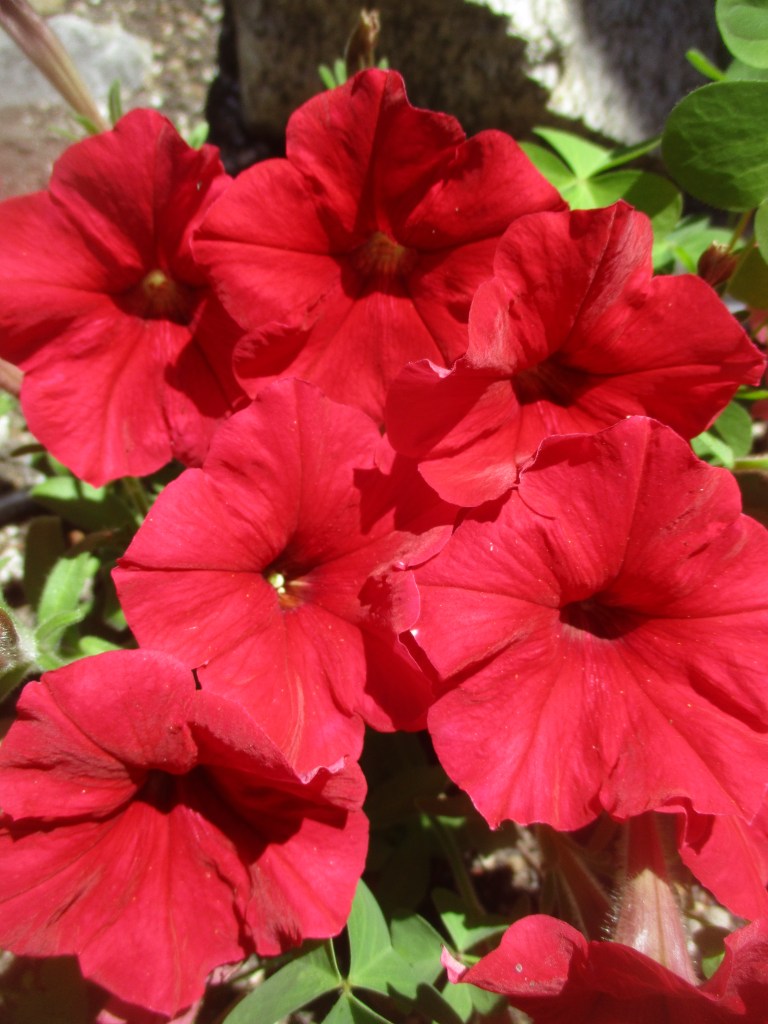
Annual statice, aster, zinnia, bachelor button, nierembergia, nigella, pincushion flower, forget-me-not and cineraria are uncommon annuals that are enjoyed by those who crave blue. Petunia happens to be one of the most popular of warm season annuals that also happens to produce some excellent blues. Later, brightly colored pansy and primrose can be just as flashy as popular cool season annuals.

Summer Annuals Are Grateful For Deadheading

Blooming through summer is serious work.

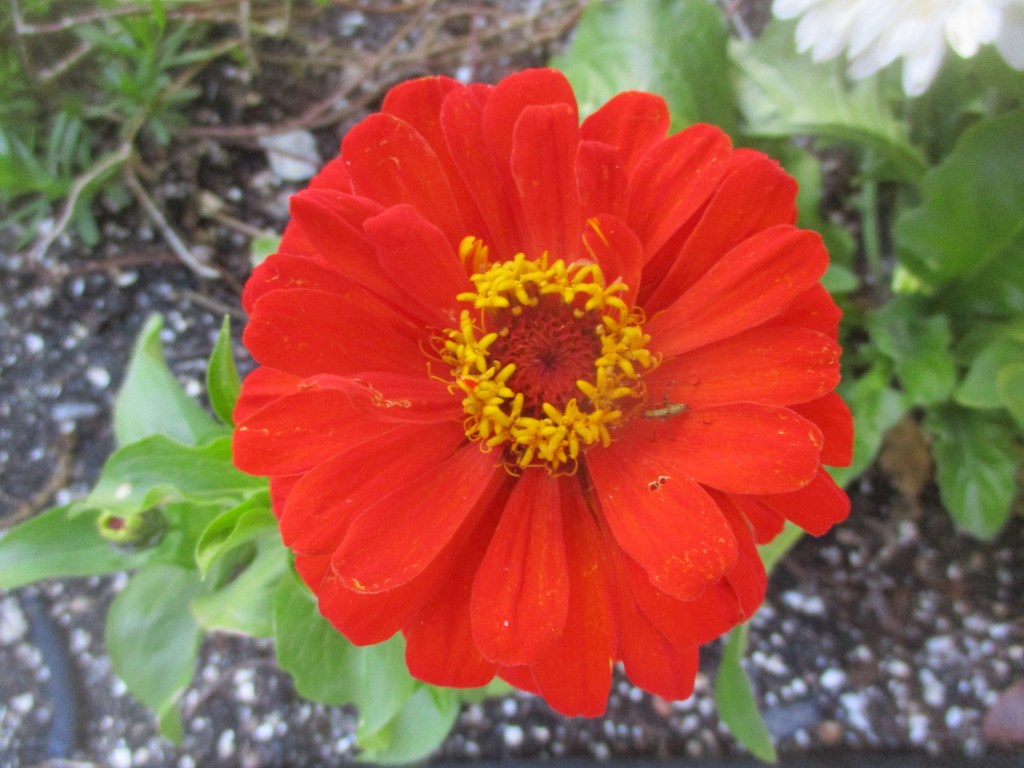
So many of the pretty warm season annuals planted last spring are now at their best. Sweet alyssum, lobelia, verbena, moss rose and busy Lizzy never stop blooming, and only get more colorful as they grow through the season until they get replaced by cool season annuals in autumn. (It is unfortunate that busy Lizzy, which had been a standard warm season annual for so many years has become less available due to disease.) However, French marigold, petunia, floss flower, cosmos, statice, pincushion flower (scabbiosa) and zinnia need a bit of attention to perform as well that long.

These few warm season annuals can get tired of blooming if not ‘deadheaded’ (groomed of deteriorating flowers). Deadheading not only keeps plants looking a bit neater, but also prevents the diversion of resources needed for continued bloom into the generation of seed. As far as these blooming plants are concerned, seeding for the next generation is their priority anyway. As long as they are not allowed to set seed, they will continue to try, by producing more flowers to replace those that fade and get removed without setting seed.

Cosmos, statice and pincushion flower can continue to perform adequately without deadheading. The main advantage of deadheading these annuals is the removal of fading flowers. (There probably will not be much left for cosmos.) Many people actually prefer to leave fading cosmos flowers to disperse their seed for the following year.

Petunia is perhaps one of the more demanding of warm season annuals. It often needs to be clipped back in the middle of the season, right when it is expected to bloom the most. The best way to avoid serious pruning at one time it to keep plants snipped back lightly but continually as they grow, so that they can not develop the awkwardly long and weirdly jointed stems that eventually stop blooming. Short stems that stay close to the roots are the healthiest and most productive.

The various types of cockscomb are odd warm season annuals that become available halfway through summer, just in time to add color if some of the annuals planted earlier in spring are not performing adequately, or are finishing early. Of course, all of the other warm season annuals will still be available in nurseries until it is time for cool season annuals next autumn.

Petunia

Petunias are quintessential warm season annuals.

There are too many varieties of petunia to be familiar with nowadays. The species name is Petunia X hybrida because almost all are hybrids of two primary species, as well as a few others to complicate the situation. The color range of the bloom of these hybrids now lacks only a few colors. (GMO orange petunias are only beginning to become available.) 

Besides an impressively extensive color range, bloom can be spotted, speckled, striped, blotched, haloed or variegated by too many means to list. Flowers can be rather small or as wide as four inches. Some are surprisingly fragrant. Some have frilled double flowers. Stems of cascading types may sprawl wider than three feet while only a few inches high. 

Petunias are warm season annuals that perform from spring until frost. They can survive as perennials for a few years if cut low for winter. Cool season annuals can obscure and shelter them until they resume grown in spring. They prefer rich soil, systematic watering and sunny exposure. Although mostly sterile, some appreciate occasional deadheading. Trimming during summer may promote fluffier growth for lanky stems.

Deadhead To Promote Continued Bloom

Alyssum is too profuse for deadheading.

Deadheading is simply the removal of deteriorating bloom prior to the maturation of seed or fruiting structures. Besides diverting resources, it removes unappealingly deteriorated bloom, as well as unwanted or potentially invasive seed. Deadheading can be delayed if seed from particular flowers is desirable, (although some types are genetically variable).

It was time to deadhead spring bulbs as they finished bloom earlier last spring. Now it is time to deadhead some of the summer bulbs. It eliminates unsightly faded floral stalks of gladiolus, and diverts resources into developing bulbs. It eradicates invasive montbretia seed. For canna, it conserves resources to enhance subsequent bloom through summer. 

It is helpful to deadhead some types of annual bedding plants too. Marigold, zinnia, floss flower, pincushion flower and petunia should bloom better with systematic deadheading. Of course, all will continue to bloom without deadheading, but might be slightly subdued, with fading flowers. Modern sterile varieties that produce no viable seed are less reliant.

Fortunately, there is no need to deadhead alyssum, lobelia, nasturtium, moss rose, busy Lizzie or verbena. Their bloom is so abundant that it constantly overwhelms older bloom. Grooming tiny alyssum and lobelia flowers would otherwise be incredibly tedious. Moss rose, alyssum and nasturtium are pleased to self sow, but revert to simpler feral varieties. 

Some branched types of sunflowers produce several blooms on several separate stems. Others bloom with only a single flower on top of a tall single stem. If deadheaded prior to the maturation of their seed, the stalks of some single sunflowers generate a few smaller axillary flowers by autumn. This technique inhibits seed production, but prolongs bloom.

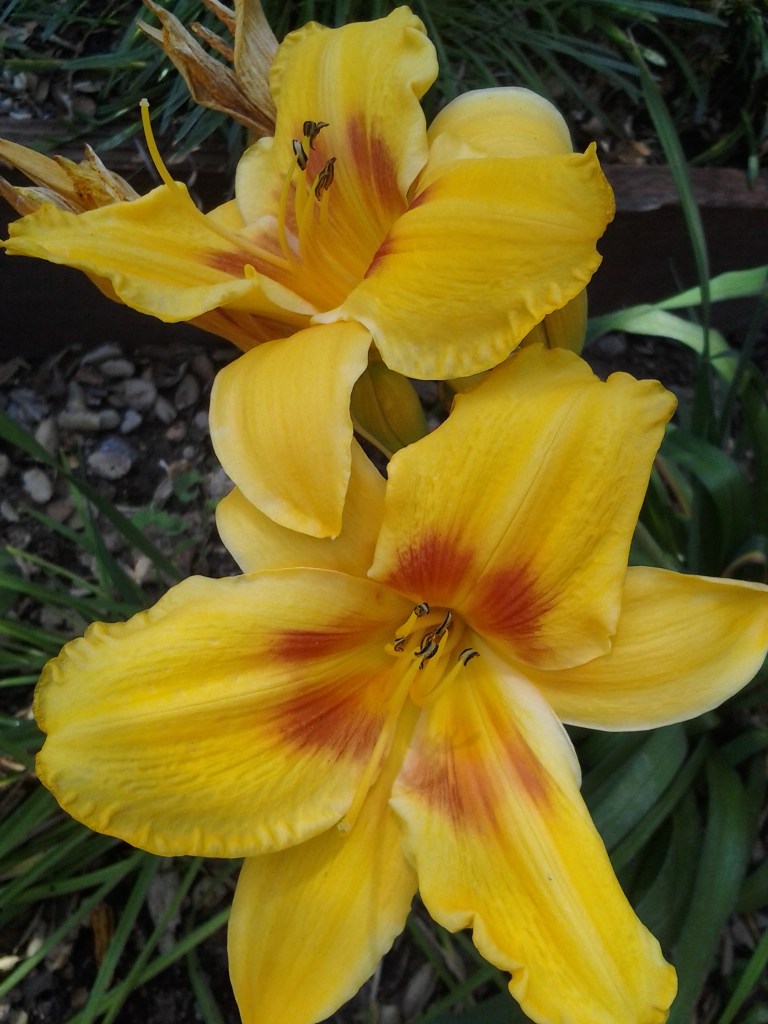
Daylily

These flashy blooms are remarkably easy.

As the name implies, each individual flower of daylily, Hemerocallis, lasts only about a day. They open just after dawn, and wither by dusk. However, bloom last from a week to a month because there are several flowers on several stalks. These flowers take turns blooming, so that a flower that blooms today will likely be replaced by a new flower tomorrow, until bloom finishes. Some daylilies bloom early in spring. Others wait until summer. A few bloom again, as late as early autumn.

Flowers can be almost any color except for blue or white, and typically have a a different color in the throat. The most popular varieties are bright yellow, pastel yellow, orange, pink or rusty red. Purple flowers are not quite as flashy as the color implies. Each flower has six petals, (which are actually three petals and three sepals). Bare stems hold the flowers about two feet high, well above the clumping grassy foliage. Some stay only a foot tall. A few get considerably taller. Plants should be groomed of finished flower stems, and may sometimes want to be groomed of deteriorating foliage. Daylilies known as ‘deciduous’ daylilies shed all foliage by autumn.

Six on Saturday: Plebian

Refined gardens are interesting. They are pretty also. Many are impressively colorful. It is easy to understand why refined gardens are as popular as they are. However, they innately lack quite a bit. Furthermore, they demand more attention that what would naturally grow wild. We are very fortunate here, that the refined components of our landscapes are rather minimal, and must conform to the unrefined components of the surrounding forests. We occasionally add a few new plants, including annuals. Much of what grows here now was once refined, but has gone wild. They are the plebian of horticulture.

1. Zinnia were just recently planted for summer. They are some of the most refined flowers now. There are not many annual bedding plants here, and none live in big beds. These are in a row.

2. Alyssum were planted as summer annuals sometime in the past. These were likely planted about a year ago, and survived through winter. They would likely be white if they grew from seed.

3. Alstroemeria are too aggressively perennial. They were planted intentionally, but overwhelmed the mixed perennial bed they were in. We tried to remove them, but a few continue to bloom.

4. Geranium, or zonal geranium, which is just a rather mundane Pelargonium, was plugged as cuttings and left to go wild. It happens to be one of my favorites because I have always grown it.

5. Calla must have been planted intentionally somewhere and sometime in the distant past, but was dug up and dumped with what became fill dirt here. It now blooms on the side of the road.

6. Poppy, or more specifically, California poppy, which is the Official State flower of California, grows wild, of course. They are some of the least refined flowers now, but also, among the best!

This is the link for Six on Saturday, for anyone else who would like to participate:

https://thepropagatorblog.wordpress.com/2017/09/18/six-on-saturday-a-participant-guide/

Six on Saturday: Jive Turkey

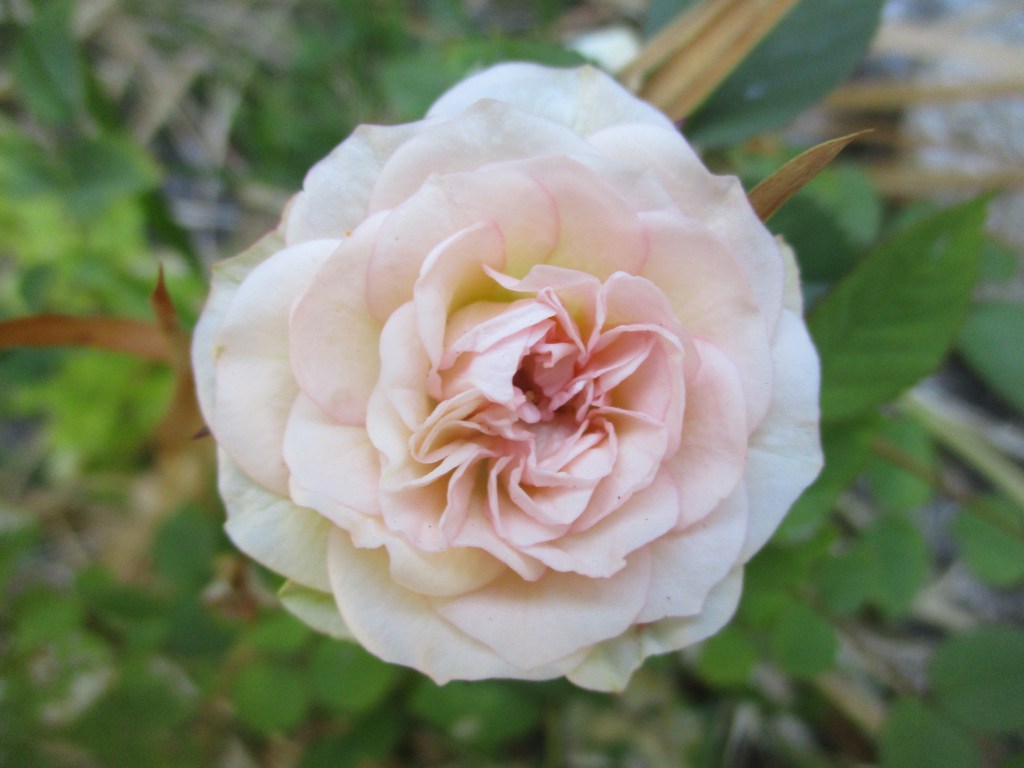
Every once in a while, I accumulate a few random but perhaps interesting pictures that do not conform to a common theme. ‘Six on Saturday’ is an ideal venue to avoid wasting such pictures. I could have gotten six more pictures of rhododendrons like I did last week, but that would have been mundane. I happen to both like and dislike the miniature rose in picture #3, and wanted to show it off. The conjoined roses are just wrong. The removal of the exemplary California lilac was wrong too, but could not be avoided.

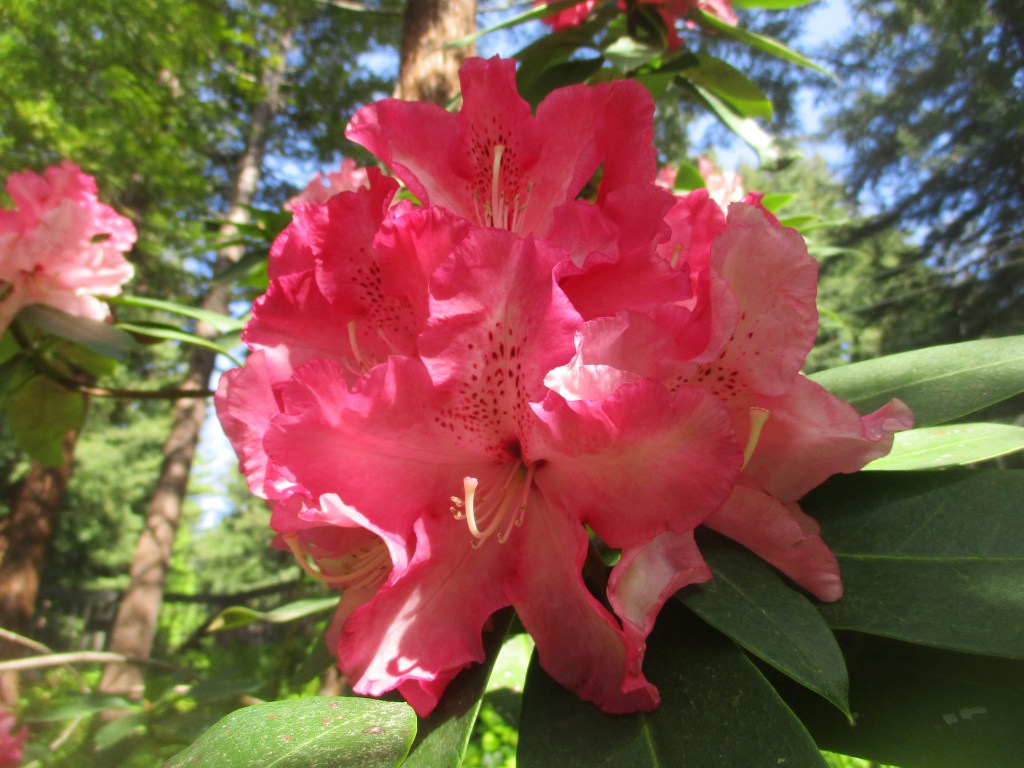
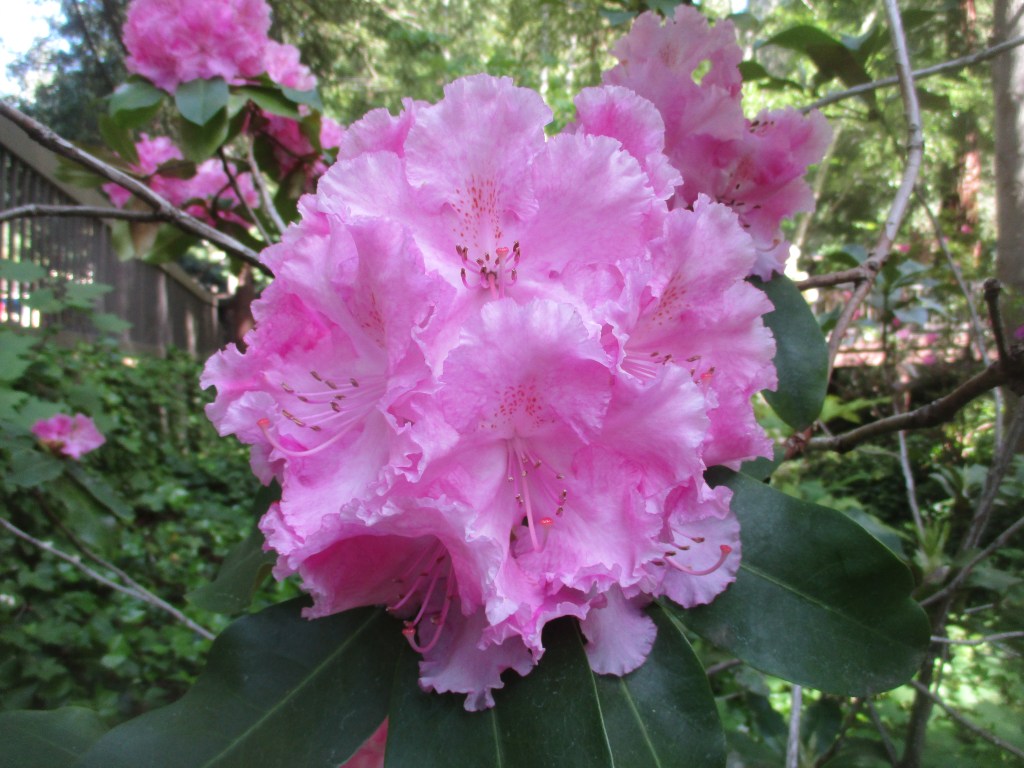
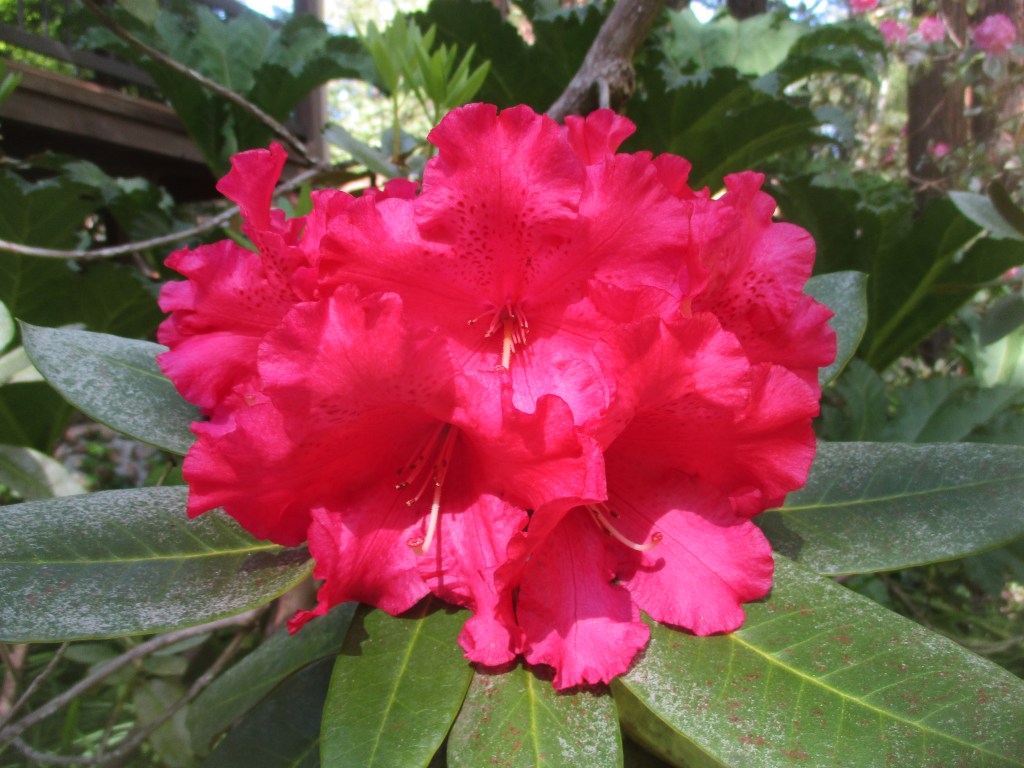
1. Rhododendron are mostly finished with bloom. This pinkish watermelon red bloom was still quite garish when I got this picture about a week and a half ago. A few are still blooming today!

2. Rhododendron are abundant, which is why I share too many pictures of them. I will not do it this season. After the Six last week, and the one above, this yellow blushed white one is the last.

3. Rose blooms on the edge of the most prominent of our landscapes, but we did not plant it. No one know where it came from. We can not remove it because it is likely important to someone. 

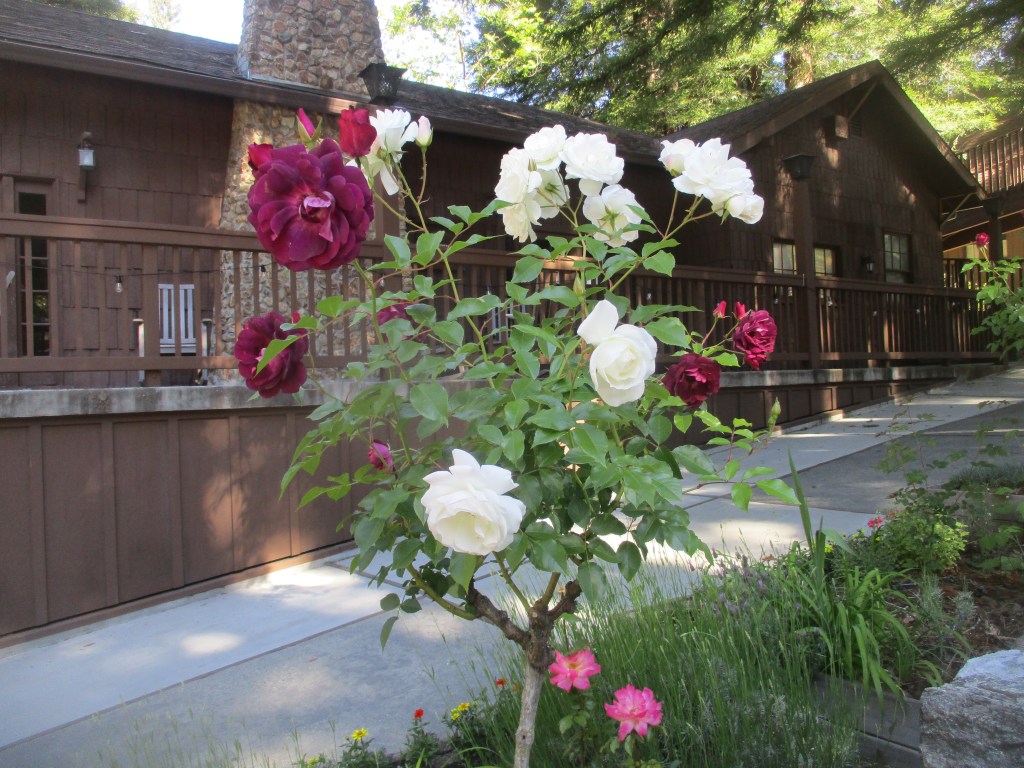
4. Rose aberration that I mentioned two weeks ago blooms just across the road. I believe that these are Iceberg and Burgundy Iceberg grafted together on the same rose standard (tree). Gads!

5. California lilac might be a common Ceanothus thyrsiflorus. This is an exemplary specimen, but grew where it overwhelmed an important star magnolia. It finished bloom, and is gone now.

6. Turkey chicks are just a few of a big herd of a dozen or so! It is a long story. Momma Turkey ran off after a random jogger, and left them staring at me for answers. She fortunately returned.

This is the link for Six on Saturday, for anyone else who would like to participate:

https://thepropagatorblog.wordpress.com/2017/09/18/six-on-saturday-a-participant-guide/

Six on Saturday: Rhody Approved

This is more than Rhody Approved. These are SIX rhodies that I approve of. (I do not know what Rhody thinks because I did not ask.) These pictures were taken early last week. All this bloom is deteriorating now, with only the latest bloom lingering. Most of the rhododendrons here are quite mature. Their identities are unknown. Does it really matter?

1. Trude Webster looks something like this, but should stay lower. The specimen that produced this bloom is more than twenty feet high! It is a lanky tree that bends from the weight of bloom.

2. I have no idea what this is. I am not certain about the identities of any of the rhododendrons here; but this one is different. I really do not know what it even resembles! It certainly is pretty.

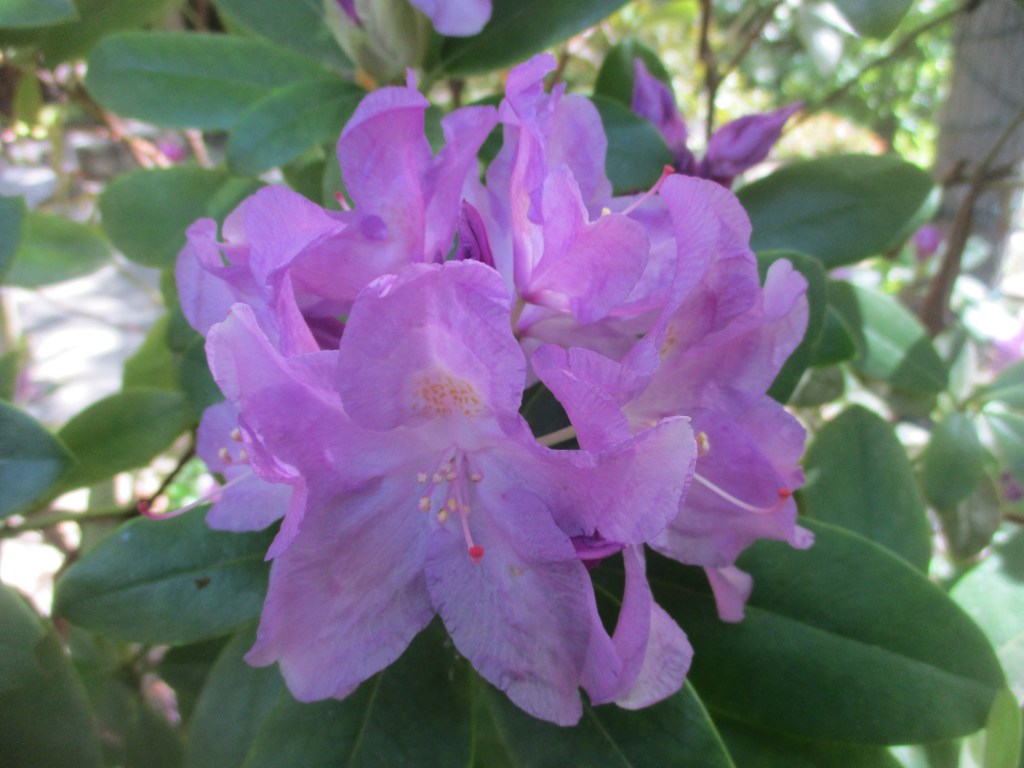
3. Rhododendron ponticum is a simple species of Rhododendron, rather than an extensively bred cultivar. Unlike its progeny, it is somewhat uncommon in cultivation. This just might be one.

4. Anah Kruschke is what I thought this resembled last year. It looks nothing like it now. I suppose that it could be another specimen. Anah Kruschke is common, so must be here somewhere.

5. Taurus is what I designated this one as, although I doubt that it really is. It is a big and sprawling specimen, with the simplest and brightest red bloom. It happens to be one of my favorites.

6. Lord Roberts blooms with rich burgundy red like the velour upholstery of the 1978 Electra I learned to parallel park with. If you can parallel park an Electra, you can parallel park anything. Anyway, I do not know what cultivar this is, but I know it is not actually Lord Roberts. Its foliage is not right. Nonetheless, without a good white rhododendron, this is my favorite of these six.

This is the link for Six on Saturday, for anyone else who would like to participate:

https://thepropagatorblog.wordpress.com/2017/09/18/six-on-saturday-a-participant-guide/

Jupiter’s beard

Jupiter’s beard tolerates only minor shade.

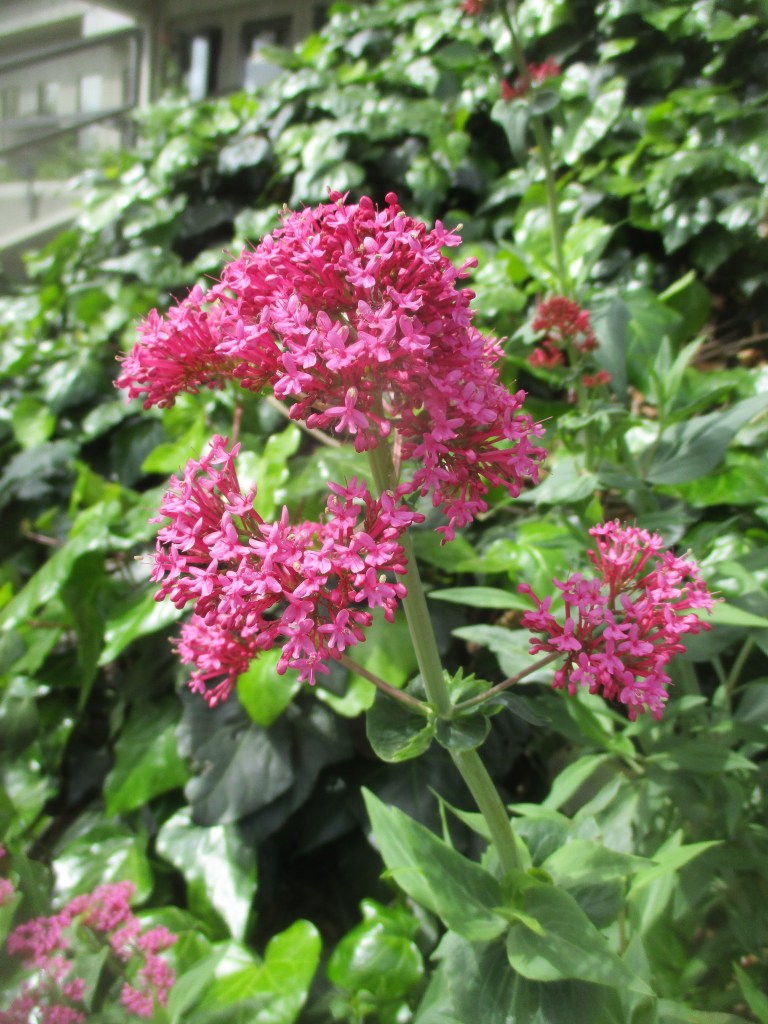
It is rare in nurseries, but common in and near old gardens. Jupiter’s beard, Centranthus ruber, was popular at least a century ago, and is now naturalized. It migrates so liberally, and transplants so easily, that there should be no need to purchase it. Those who grow it in established colonies may be happy to share. Specific cultivars can be elusive though.

Bloom is typically pinkish red, but can be brick red, purplish red, purplish pink, pale pink, or white. Individual flowers are tiny, but abundant, in rather dense and somewhat conical trusses. Bloom begins in spring and becomes more profuse until warm summer weather. A cool situation can inhibit primary bloom, but promote sporadic bloom through summer.

Jupiter’s beard prefers sunny exposure. Although a bit of shade can preserve foliar color and extend sporadic bloom through summer warmth, it compromises profusion of bloom. The slightly rubbery evergreen foliage of bloomed stems deteriorates slowly. Removal of older stems after bloom eliminates shabby growth, and also promotes fresh new growth.