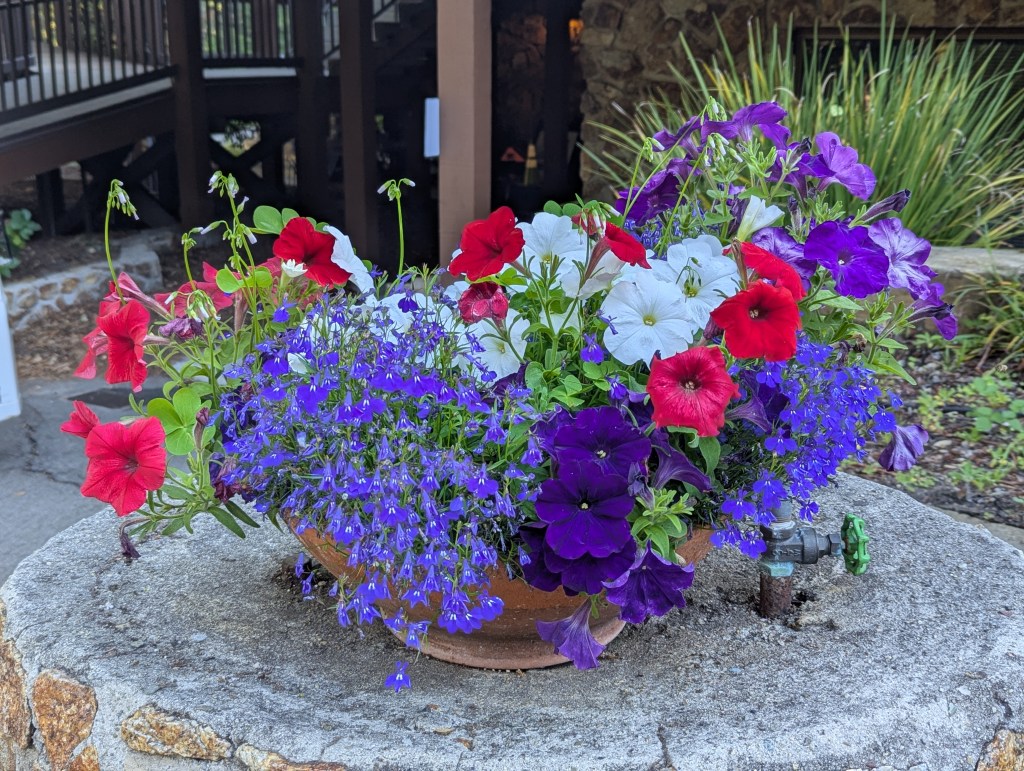
Sunday Best – Color Bowl

This is what some of the flowers and foliage that are normally shown in closeup pictures look like within their respective landscapes. The first three landscapes need some work.
1. Citrus X latifolia ‘Bearss’ lime is almost surrounded by neighboring cape honeysuckle, so it is difficult to distinguish in this picture. Cape honeysuckle should be removed soon.

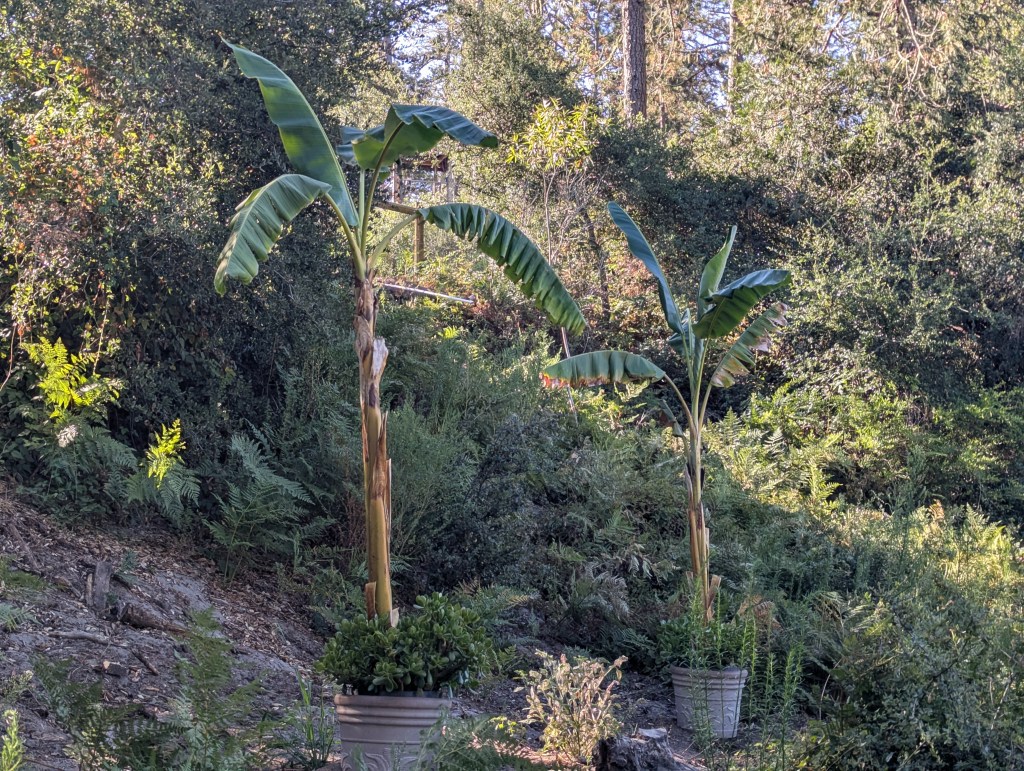
2. Musa acuminata X balbisiana ‘Blue Java’ banana on the left may be ‘Nam Wah’. The other on the right is unidentified. They moved into their landscape before the landscape.
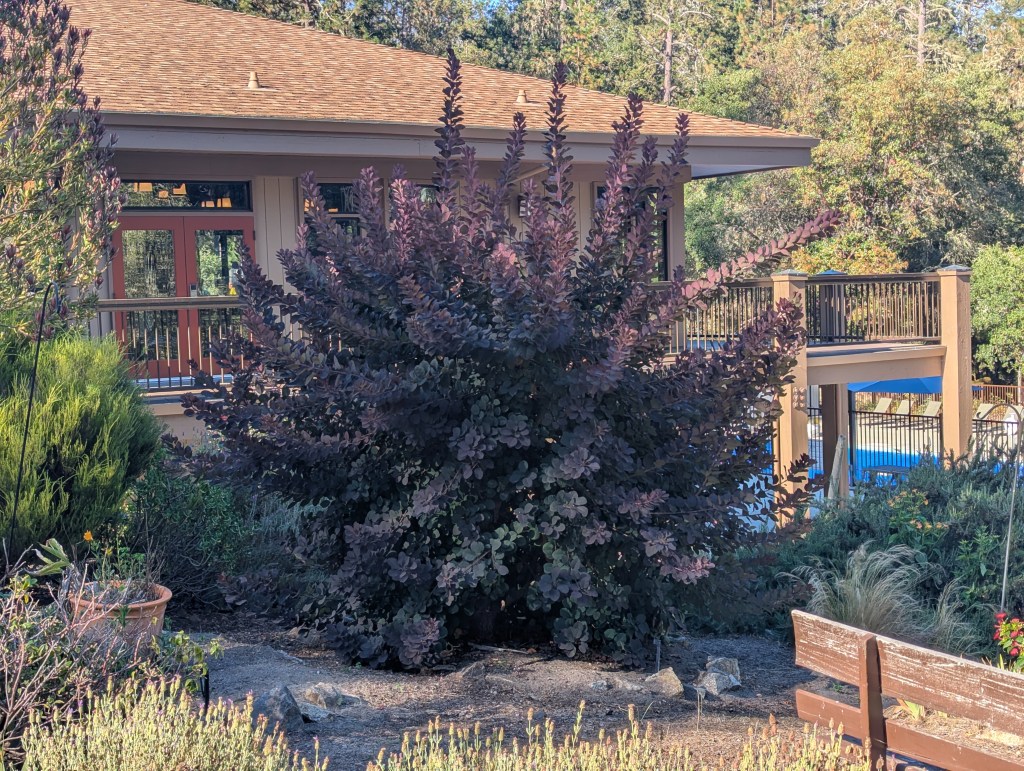
3. Cotinus coggygria ‘Royal Purple’ smokebush is a striking focal point for its somewhat abandoned garden. It draws attention away from the neglect. It gets pollarded in winter.
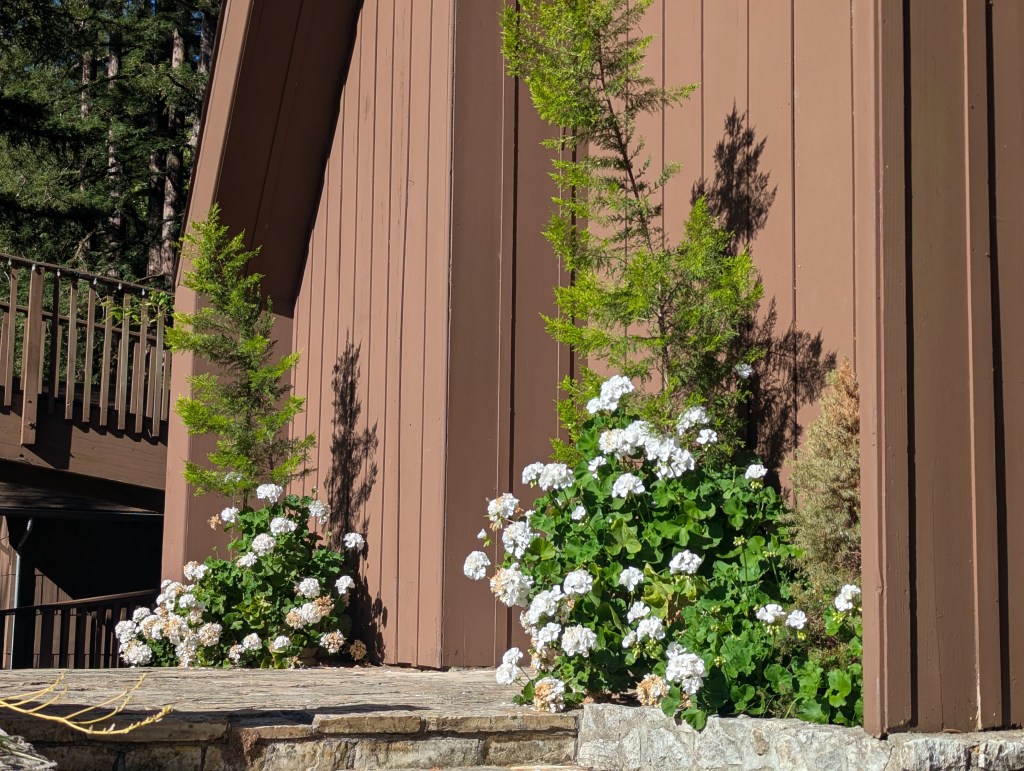
4. Pelargonium hortorum, zonal geranium looks as good within the White Garden as in closeups. This is at the Mount Hermon Memorial Chapel. Its cypress need straightening.
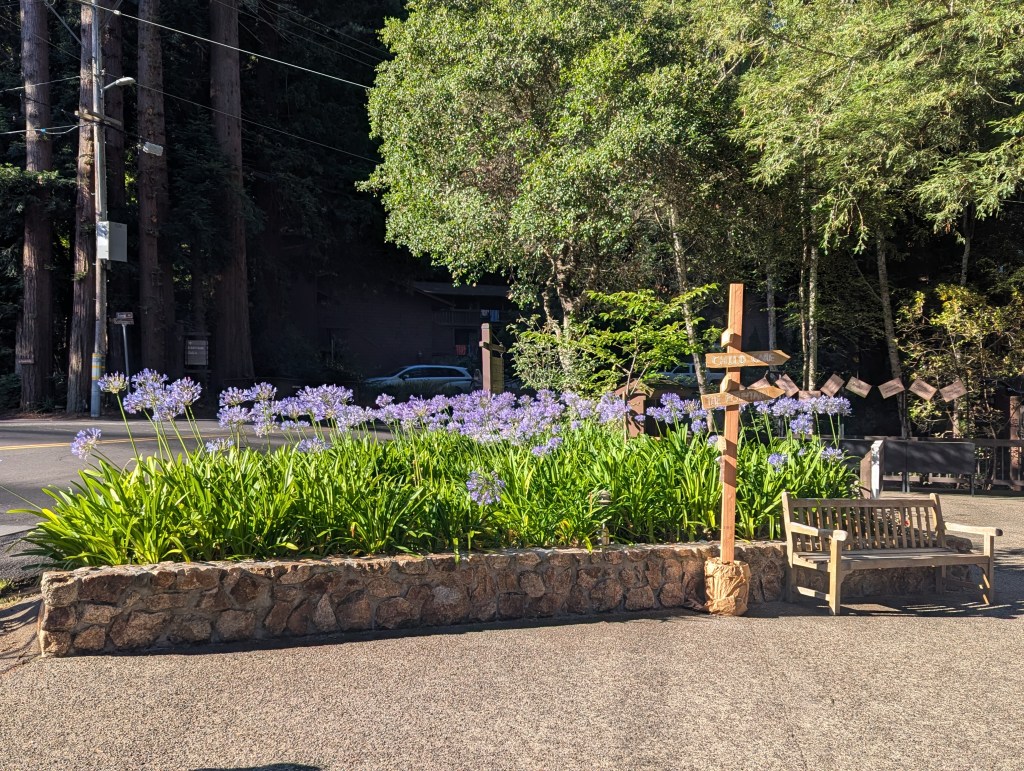
5. Agapanthus orientalis, lily of the Nile is congregated in a large triangular herd on the side of the main road through Mount Hermon. It is blooming quite well for the summer.
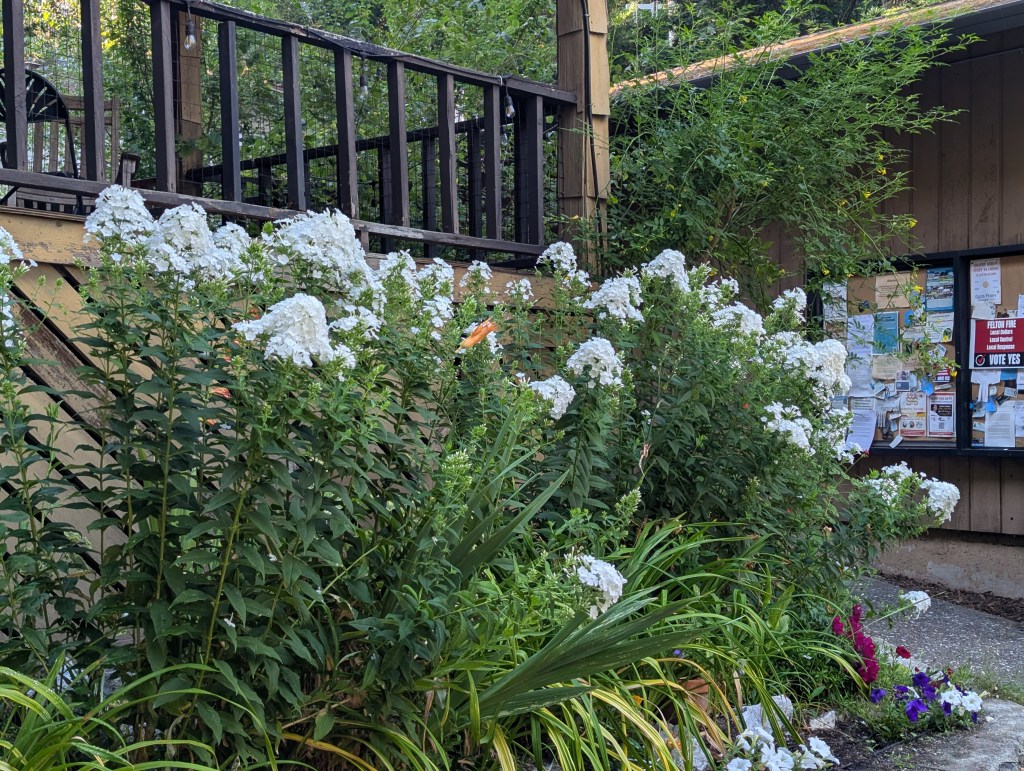
6. Phlox paniculata, garden phlox appeared in this garden a few years ago, and has since become one of the more prominent features here. We have no idea where it came from.
Anyone who would like to participate in this meme should peruse this participant guide for Six on Saturday.
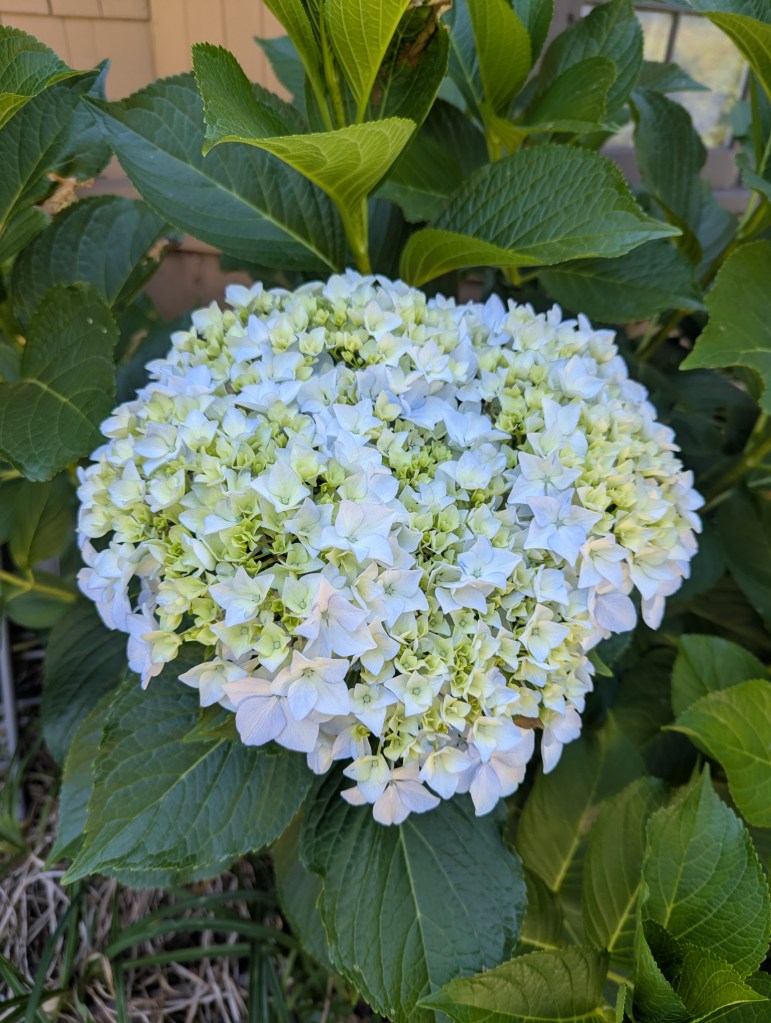
Old fashioned hydrangea, Hydrangea macrophylla, were somewhat predictable. Those that developed color bloomed pink in alkaline soil or blue in acidic soil. White hydrangea only bloomed white. Nowadays, some cultivars bloom better in pink while others bloom better in blue. Pink cultivars in acidic soil or blue cultivars in alkaline soil may be purple.
Floral form has also evolved significantly. Old fashioned hydrangeas bloom with big and rounded trusses of many small flowers. Such trusses are about four to eight inches wide. Some modern cultivars bloom with flatter or conical trusses. Some produce tiny florets in the center with bigger florets around them. All hydrangeas bloom for summer or autumn.
Big hydrangeas can grow about six feet high and wide. Most modern cultivars are more compact. The deciduous foliage is lush. Individual leaves are about six inches long, with serrate edges. Hydrangea perform better after dormant pruning during winter, to remove older canes. Younger canes that grew during the previous season will be more vigorous. Although bulky, hydrangea blooms are delightful as cut flowers. All parts of hydrangea, though, are toxic.

These Six on Saturday lack a theme. They are a mixed bag.
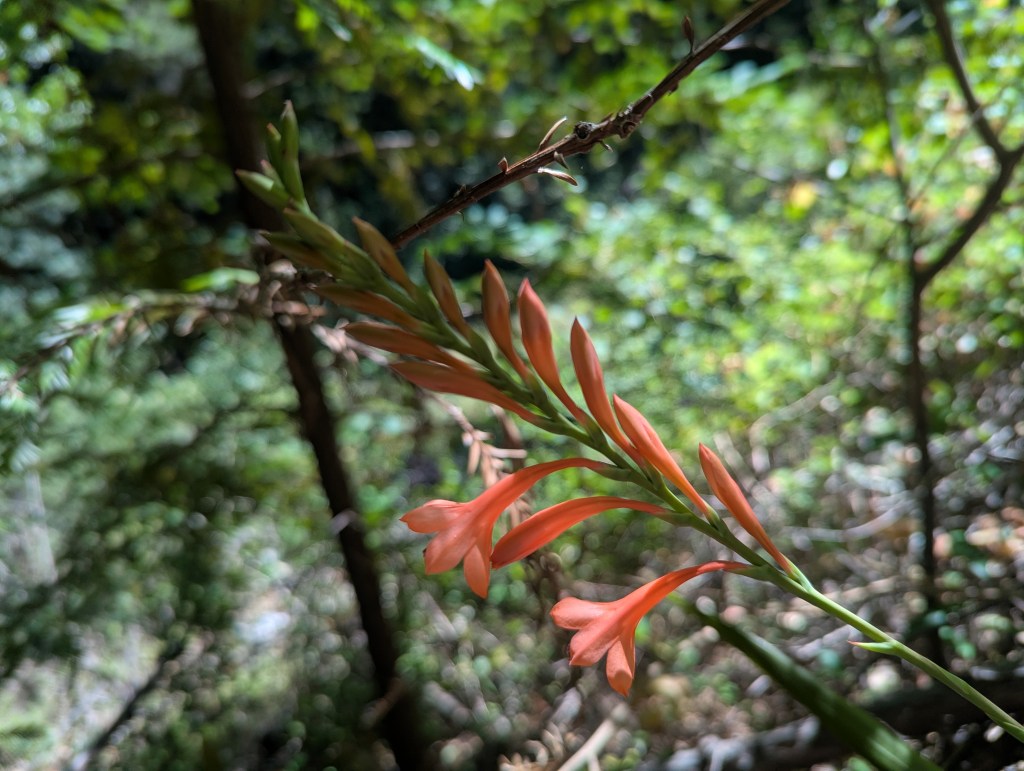
1. Watsonia X pillansii ‘Coral and Hardy’ bugle lily is my first ever! Something dug it out last year before bloom, for no apparent reason. You can probably guess where it is from.
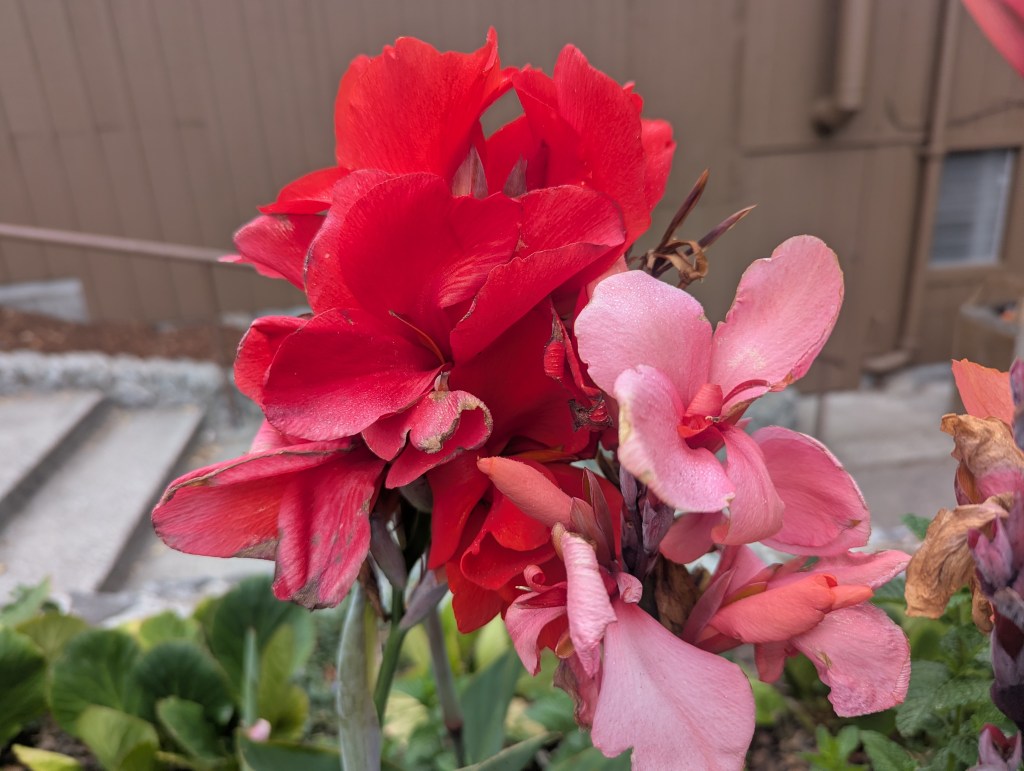
2. Canna X generalis ‘Cannova Mango’ canna on the right seems to have produced a red sport on the left. I do not think that another cultivar mixed with it, but I am not certain.
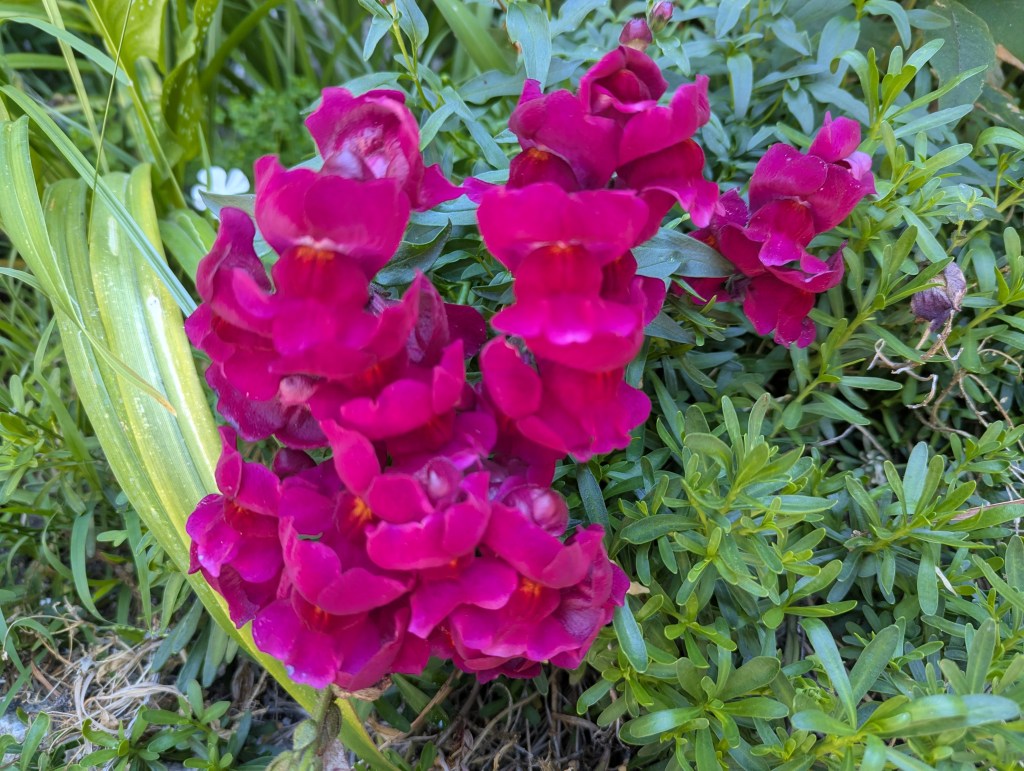
3. Matthiola incana, snapdragon has not been planted here for years because of rust. A few generations of just a few feral plants have grown from seed though. Most are yellow.
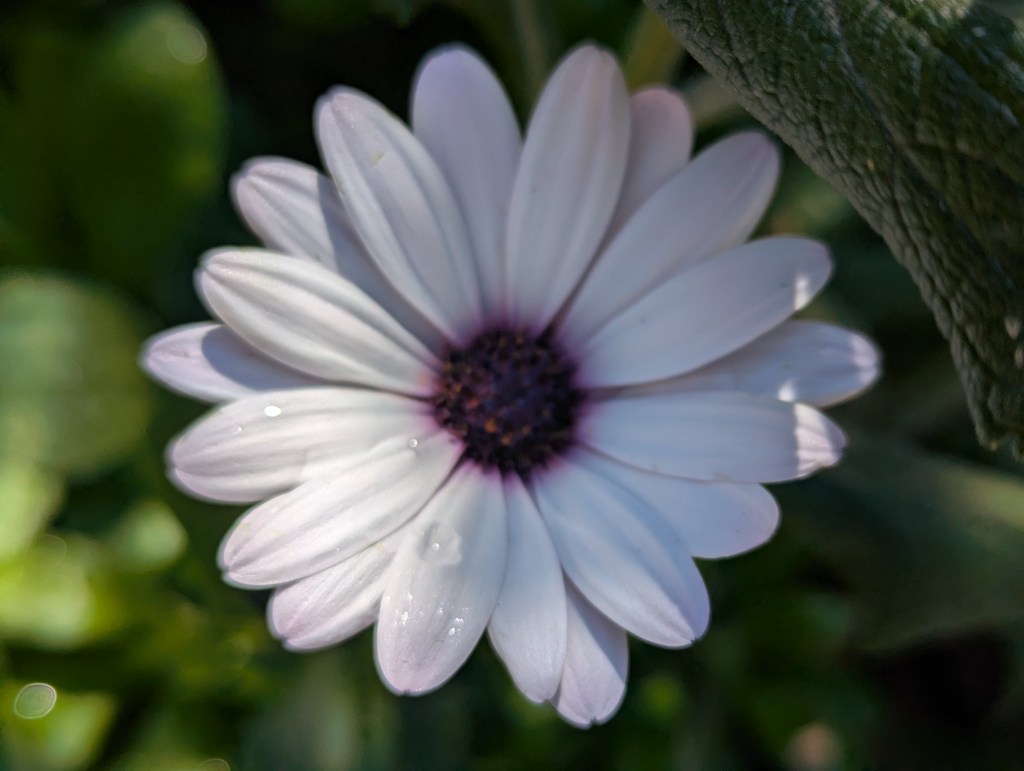
4. Osteospermum fruticosum, trailing African daisy might be feral also. Although some were planted nearby, I do not remember that any were planted in its particular location.
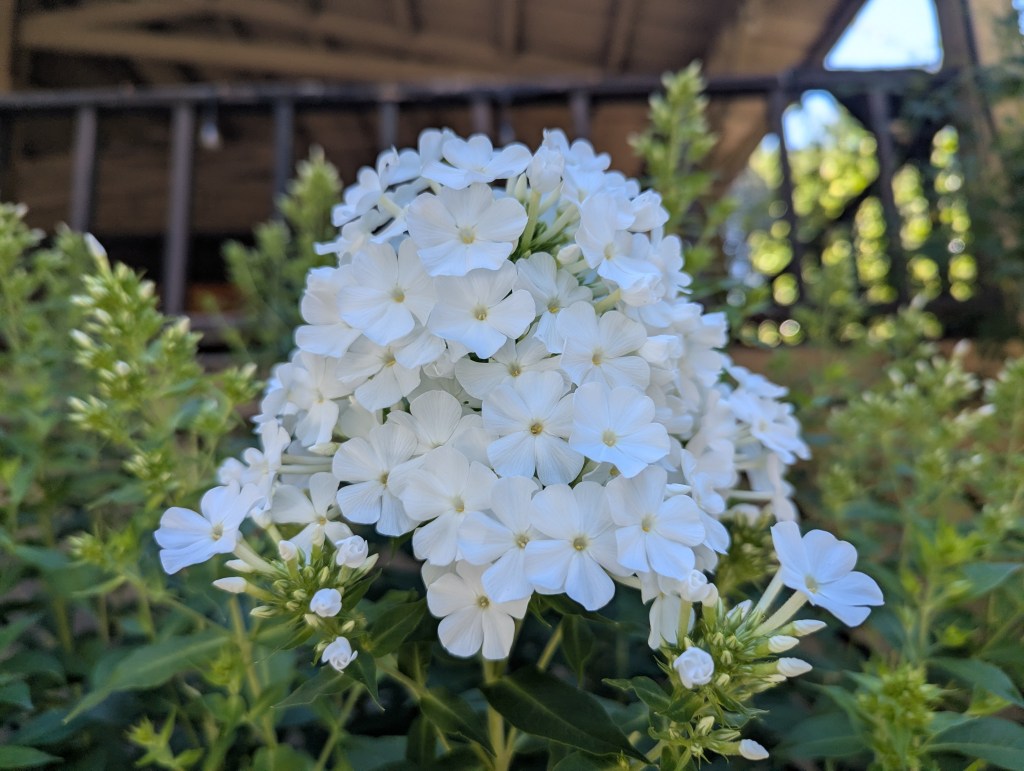
5. Phlox paniculata, garden phlox began as feral, since we do not know how the seed got here, but now that it is here, we cultivate it. Almost all of it is white, but one is lavender.
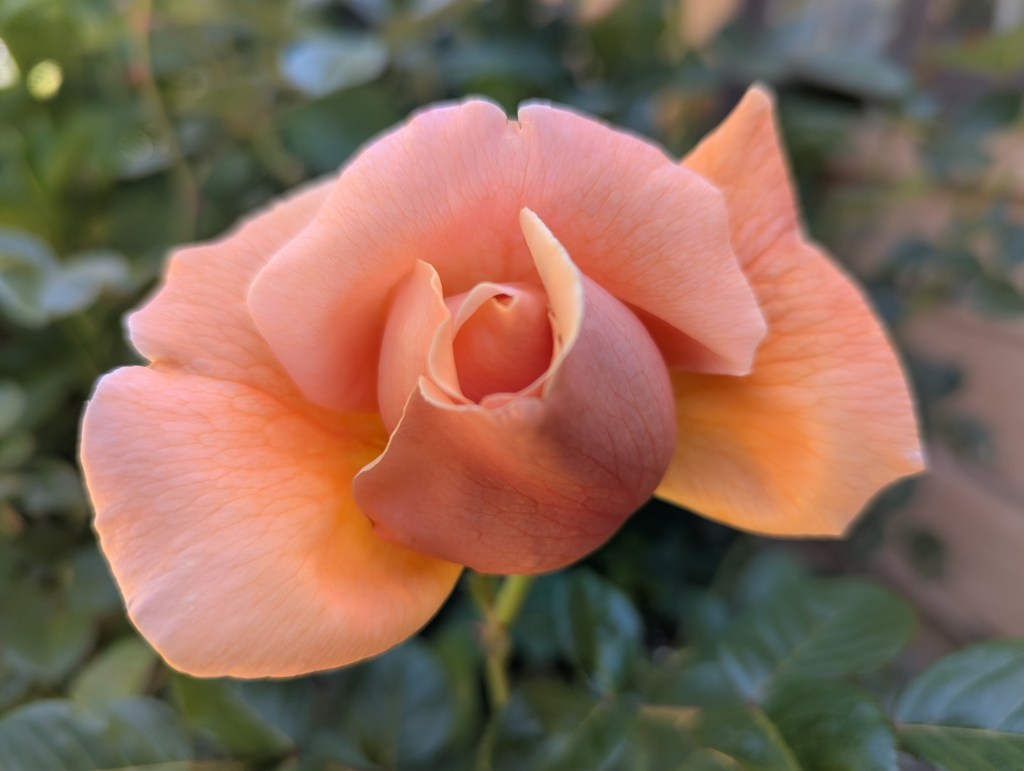
6. Rosa spp., rose is producing some exemplary flowers. I do not know what cultivar this is, but it resembles ‘Seashell’. I suppose its name is unimportant. It is pretty regardless.
Anyone who would like to participate in this meme should peruse this participant guide for Six on Saturday.
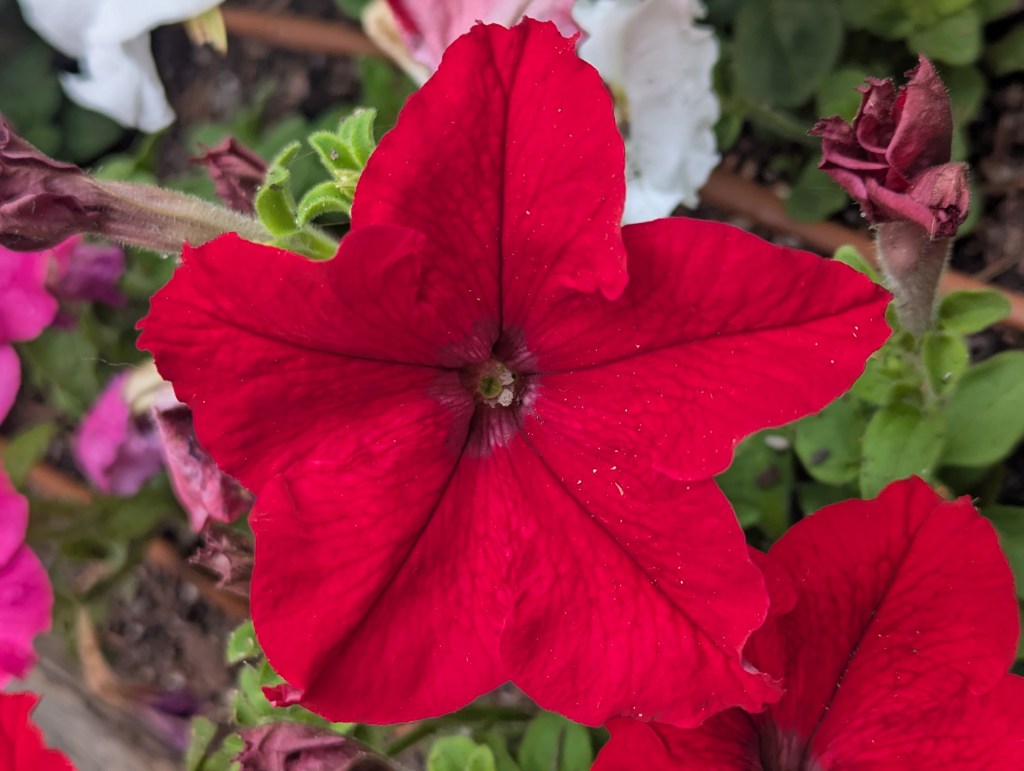
Today, the Fourth of July, is 250th Independence Day, so is also the sestercentennial or semiquincentennial of the United States of America.
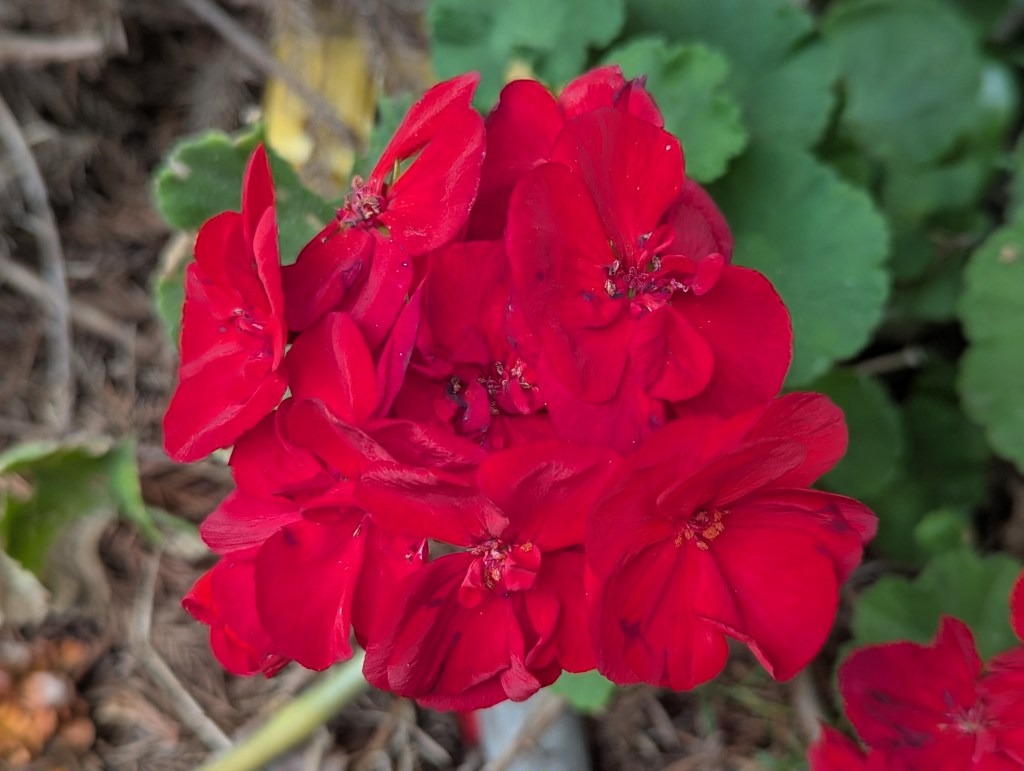
1. Pelargonium X hortorum, zonal geranium provides an ideal red. Other cultivars here bloom white, bright pink and brighter pink. They have been reliably perennial for years.
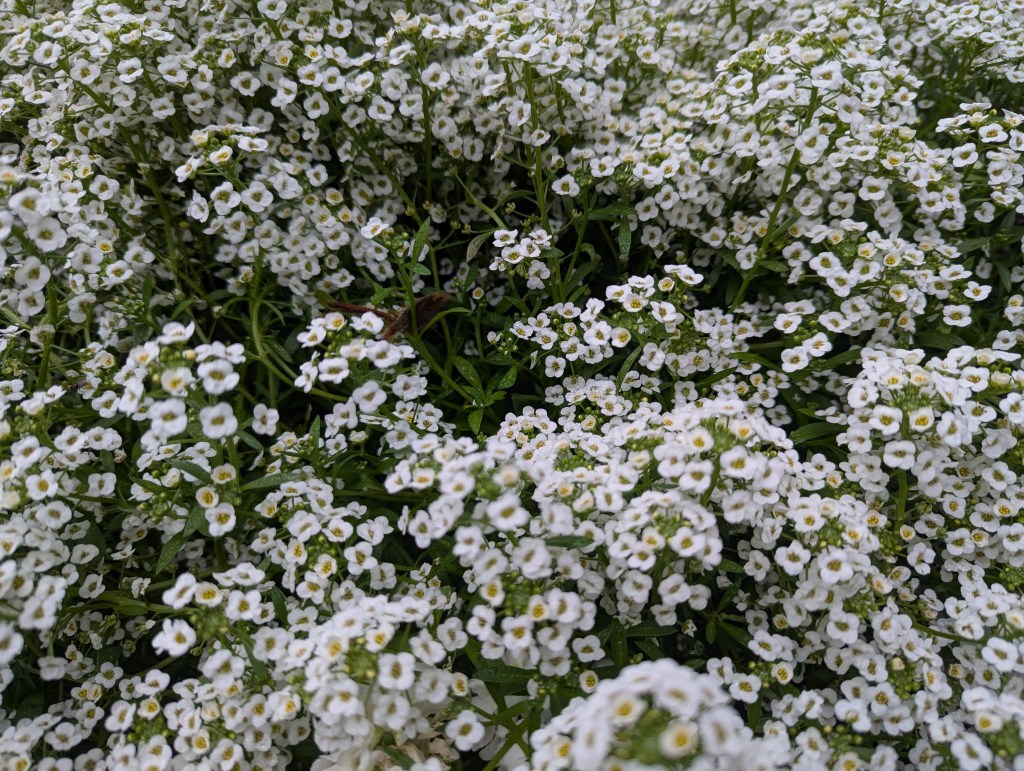
2. Lobularia maritima, alyssum is exclusively white for its particular application within the White Garden. In the past, we had pink and purple alyssum within other landscapes.
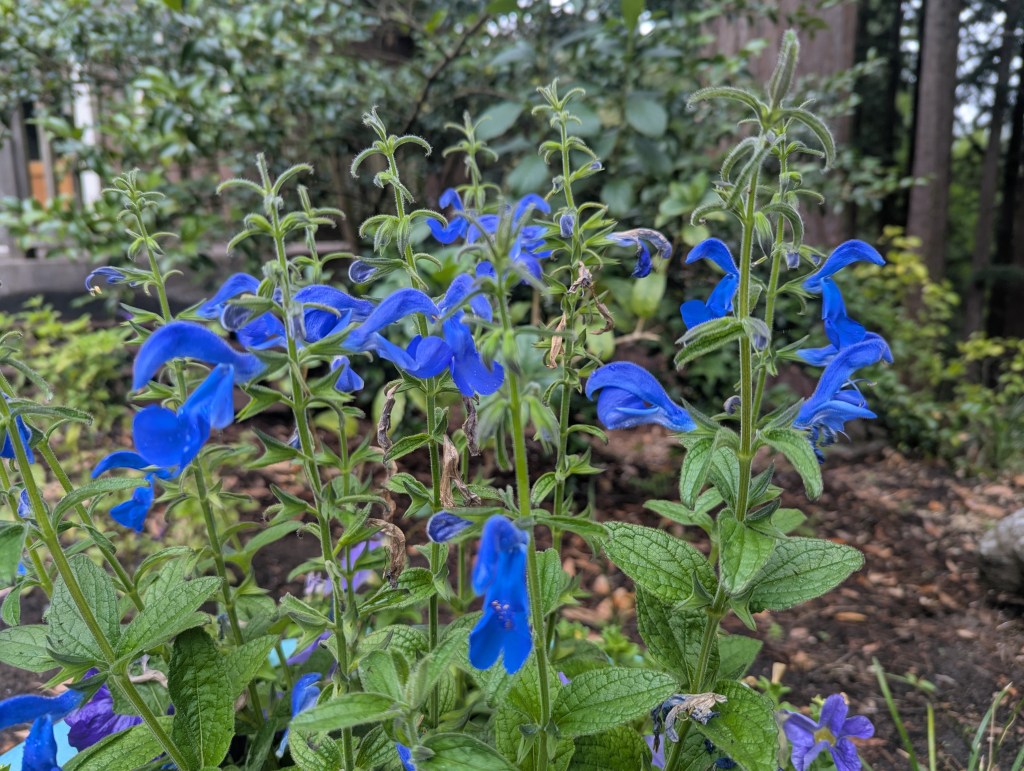
3. Salvia has a name; but it eludes me. It is a new addition to the Blue Bed, which is next door to the White Garden, and not actually as exclusively blue as its designation implies.
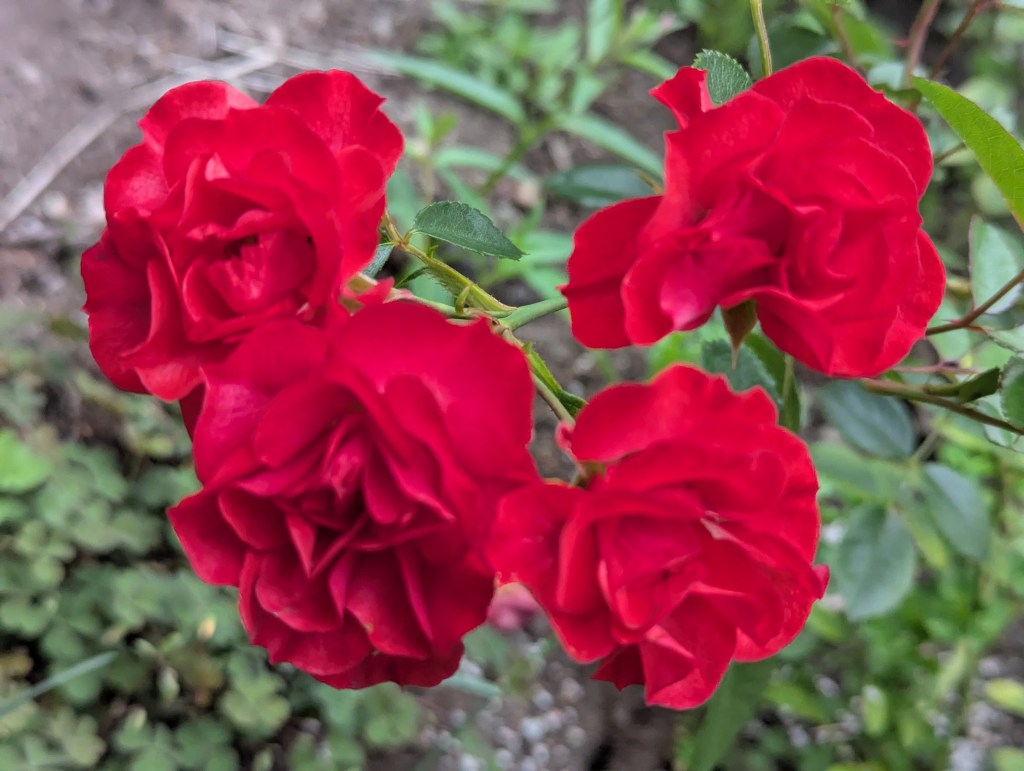
4. Rosa spp., carpet rose is not blooming profusely this year, but is blooming enough for at least this picture. It grows into wickedly thorny thickets that are no fun to work with.
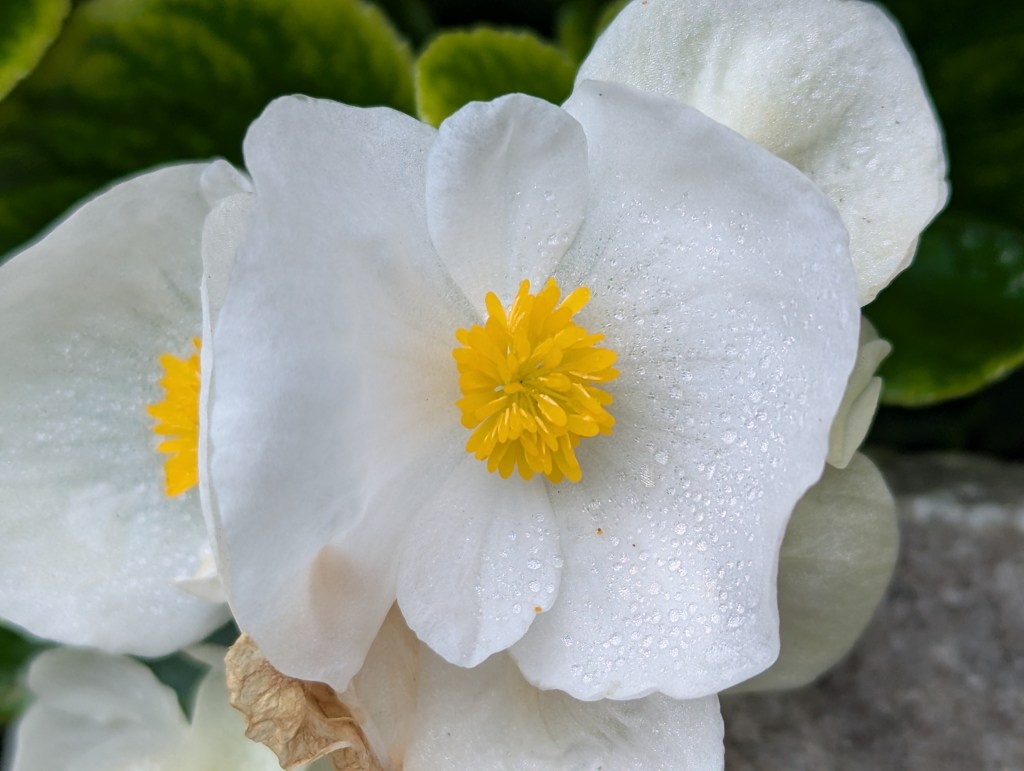
5. Begonia X semperflorens–cultorum, wax begonia lives with the alyssum in the White Garden. It is enjoying improved sun exposure associated with the removal of a few trees.
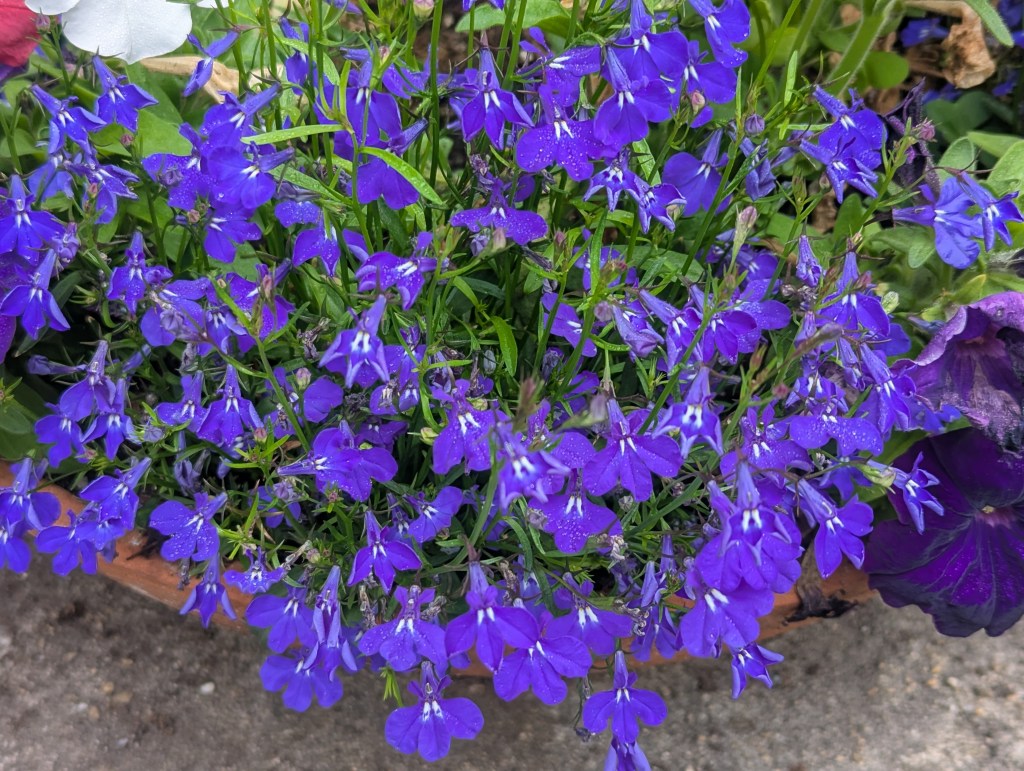
6. Lobelia erinus, lobelia is perched on the edge of a color bowl, but is not yet cascading over. This color bowl also contains red, white and blue petunias, for Independence Day.
Anyone who would like to participate in this meme should peruse this participant guide for Six on Saturday.
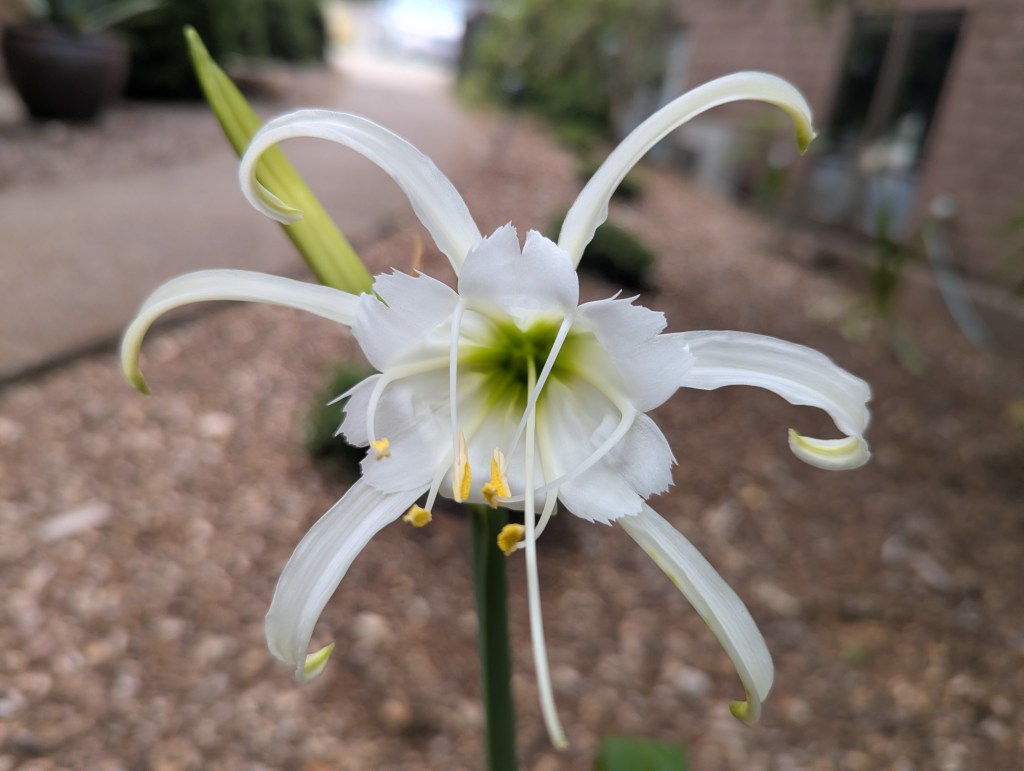
These are a few more flowers that are in bloom now.
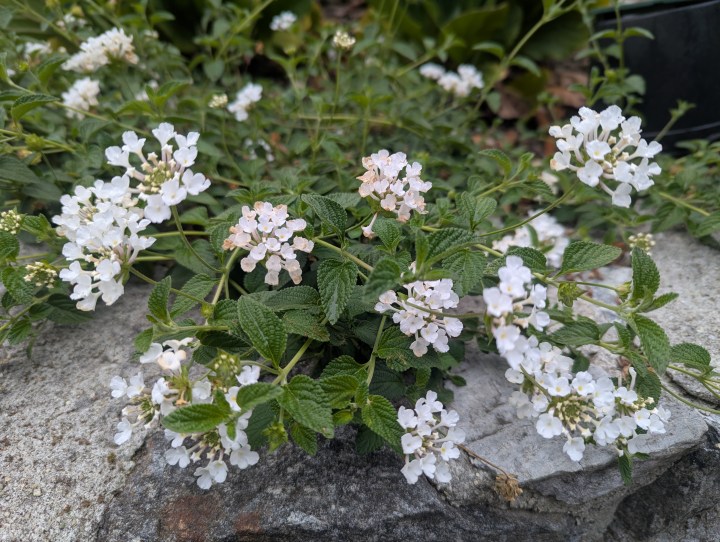
1. Lantana montevidensis, trailing lantana in white sounds better than it looks. White is my favorite color, but I fail to be impressed. Lantana excels at other more vibrant colors.
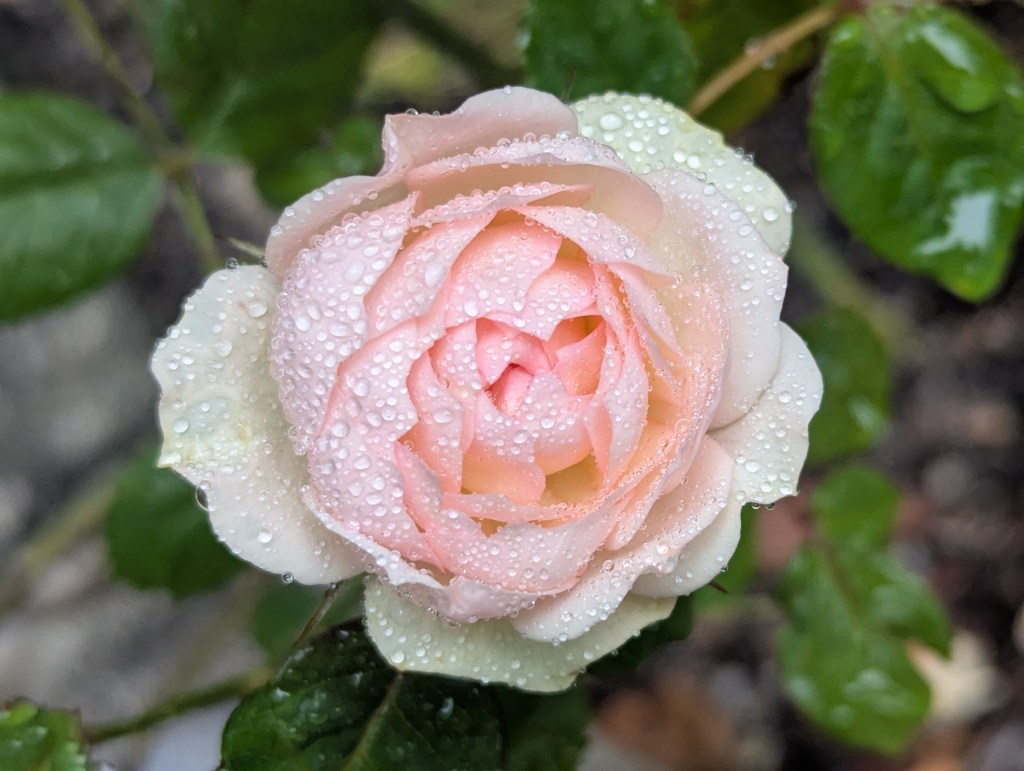
2. Rosa spp., miniature rose is the only miniature rose here. It arrived as a cheap potted mini rose from a supermarket, which had outlived its domestic appeal before rehoming.
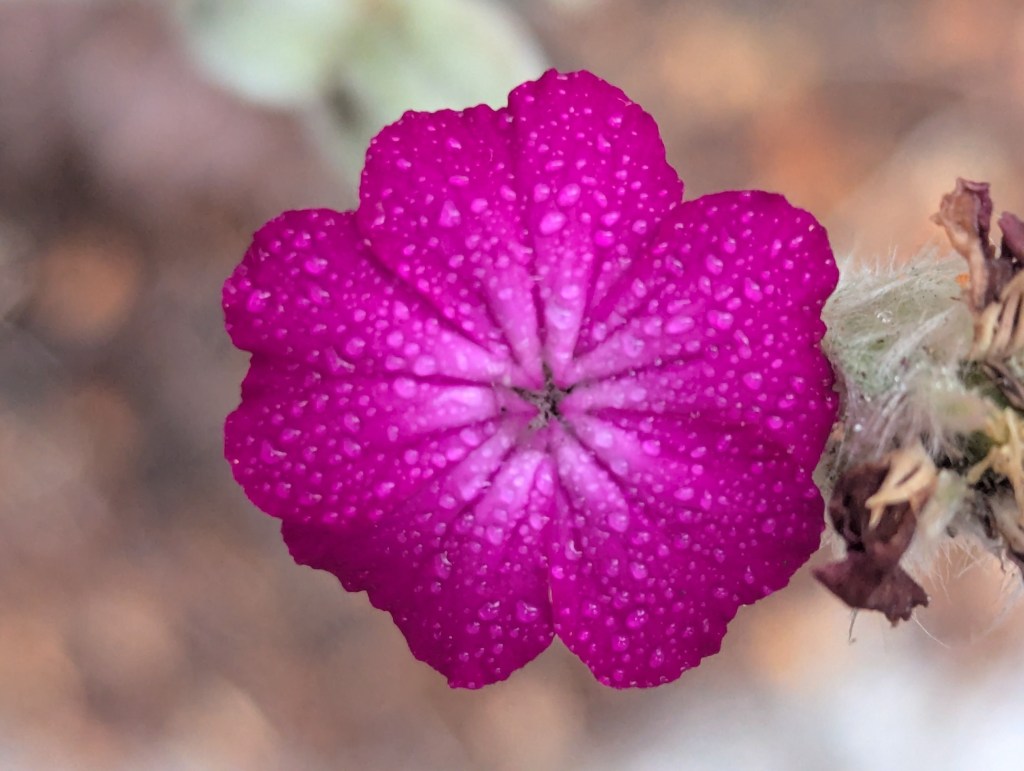
3. Silene coronaria, campion is such a delightful weed that we leave much of it where it appears. Most grows where it is not a problem, although this one is in the White Garden.
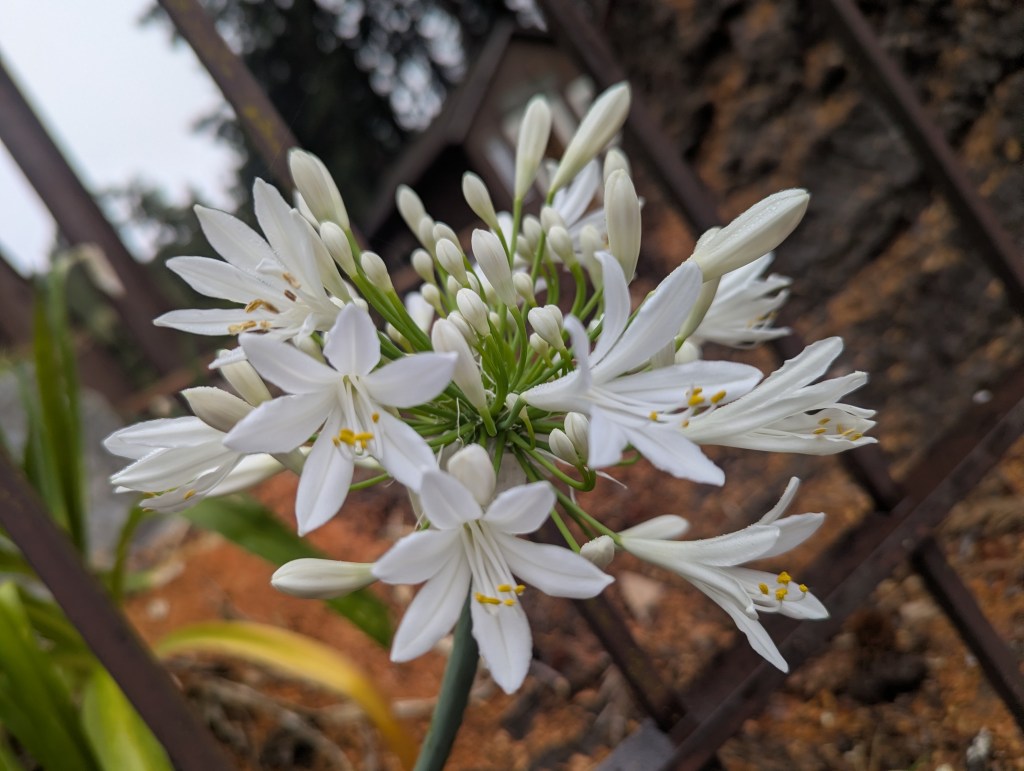
4. Agapanthus orientalis, lily of the Nile in white is special both because there are not so many of them, and also because only a few can bloom in their formerly shaded situation.
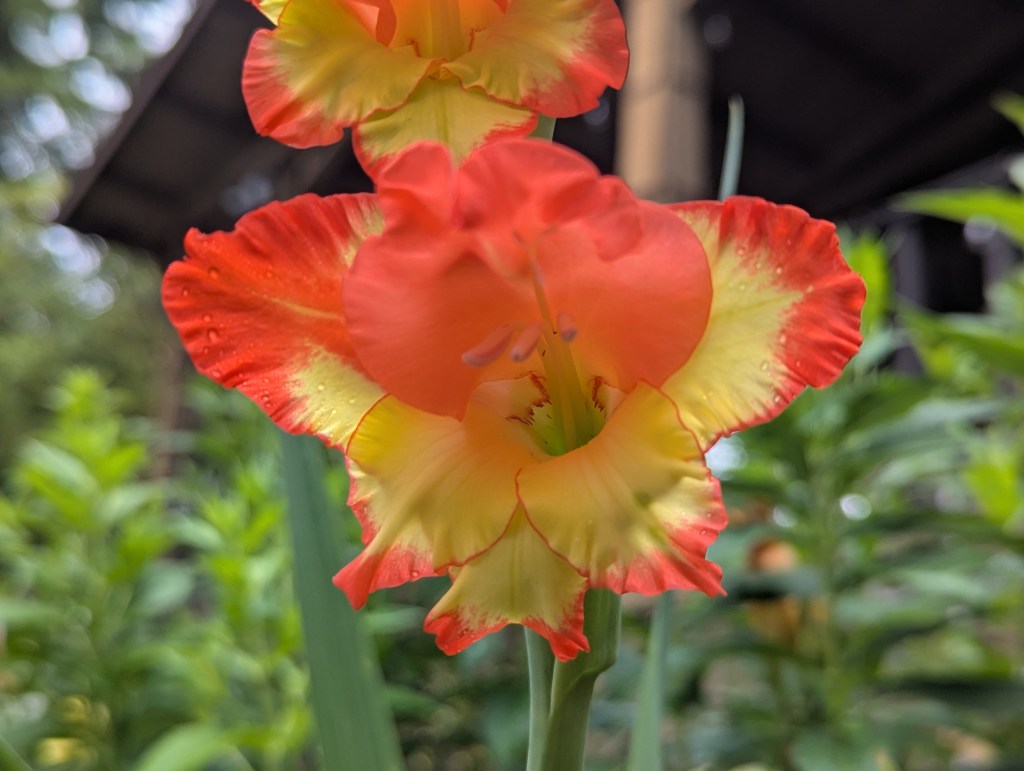
5. Gladiolus X hortulanus, gladiola has been reliably perennial for several years. I would like to know what is so special about their situation that allows them to perform as such.
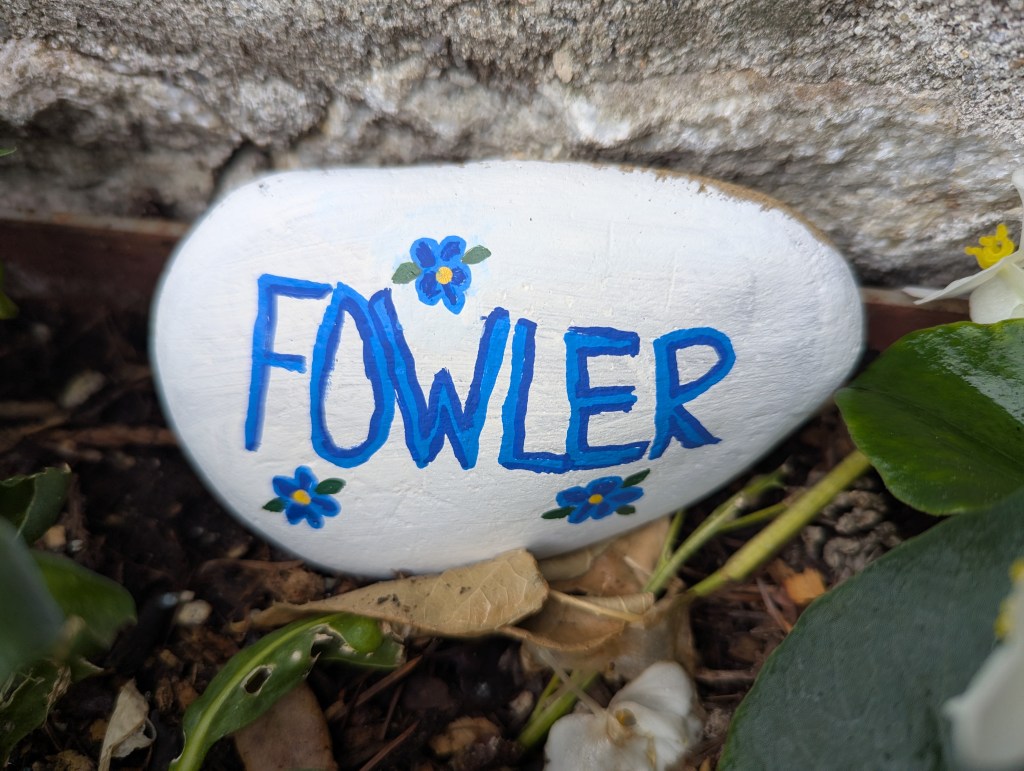
6. This is the first new painted rock that I have found in quite a while, and the first rock I noticed with a spell check glitch. Is this really a glitch, though, or actually from Fowler?
Anyone who would like to participate in this meme should peruse this participant guide for Six on Saturday.

