Sneezeweed

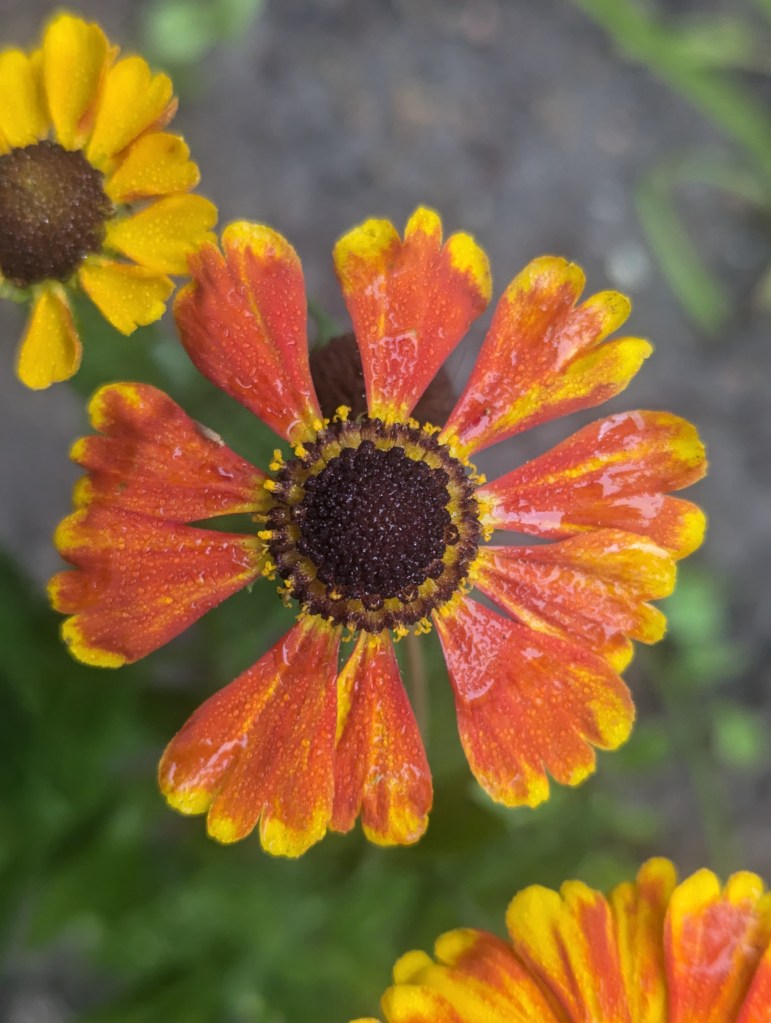
Sneezeweed typically blooms for late summer.

Contrary to its silly name, sneezeweed, Helenium autumnale, does not cause sneezing. Its flowers produce heavy pollen that relies more on pollinators for dispersion than wind. Its vibrant yellow, orange or red floral color attracts all sorts of bees, butterflies and such. Bloom may begin as early as the middle of summer, or continue as late as early autumn.

Sneezeweed is a perennial like black eyed Susan, but with a somewhat shrubbier form. It can grow three or four feet tall without growing any wider than two or three feet. Foliage has a rather fine texture with lanceolate and somewhat serrate leaves. Individual flowers are about two or three inches wide, and delightfully abundant. They are nice cut flowers.

Sneezeweed may self sow, but some cultivars are not true to type. For them, division is a more reliable method of propagation. ‘Pumilum Magnificum’ provides vivid yellow bloom. ‘Chippersfield Orange’ provides vivid orange and yellow flowers. ‘Kupfersprudel’ blooms with a bit more yellow than orange. ‘Bruno’ blooms with deeply rich ruddy brown flowers. ‘Butterpat’ provides rich golden bloom. Several cultivars are compact.

Late Summer Flowers Bloom Now

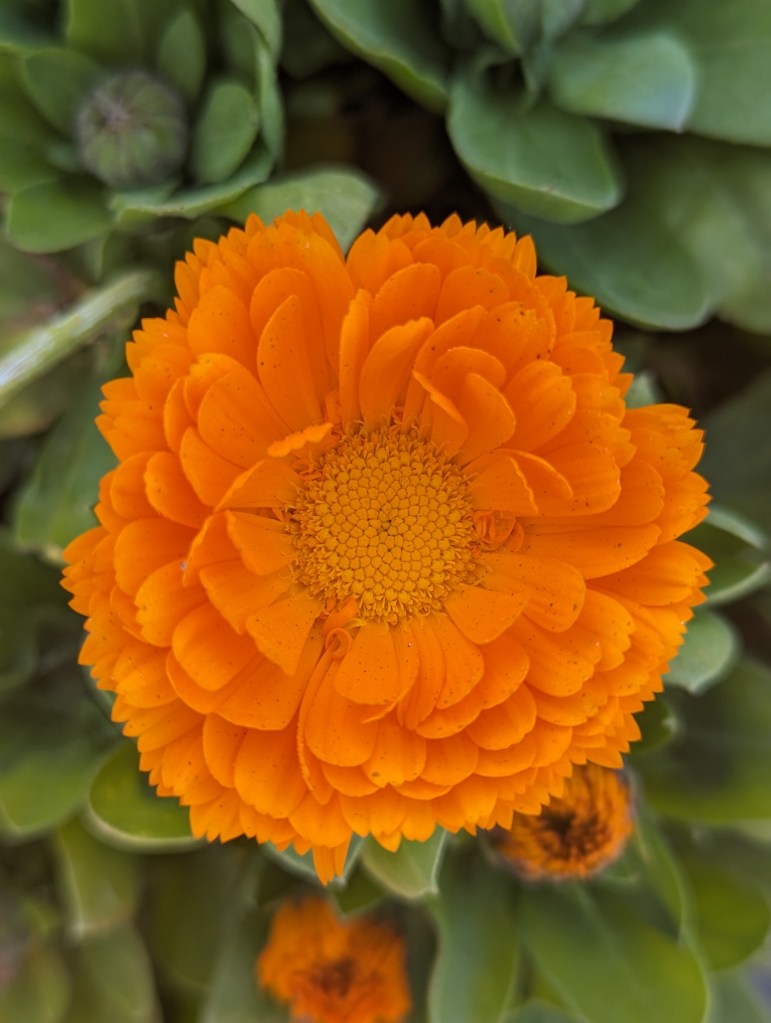
Pot marigold is an autumn annual.

Spring is the season with the most flowers. Winter is generally the season with the least. That is, of course, a generalization. There are plenty of flowers that bloom exclusively for winter color. Plenty more bloom randomly throughout the year, regardless of season. For now, late summer flowers are the most prominently colorful. Autumn flowers will be next.

Realistically, no bloom is random. Even flowers that bloom randomly throughout the year do so only because they can. Such flowers are mostly from mild climates where they can disperse seed at any time. Any pollinators that they rely on are also active throughout the year. Many randomly blooming flowers can effectively conform to more distinct seasons.

Most flowers bloom within a distinct season because it is most convenient for them. Most bloom for spring to maximize the time for their seed to develop before winter. Many of the earliest are tiny but abundant because they rely on wind for pollination. Later flowers can be bigger and more colorful to attract pollinators. Late summer flowers are no exception.

Different flowers have different priorities. Some of the earliest spring bloom needs time to produce seed after bloom. Several late summer flowers conversely need time to develop their blooms. Then, they produce seed relatively quickly before winter. This is why some late summer flowers are bolder but less abundant than spring flowers. They require time.

For example, sunflowers with relatively small blooms may bloom as early as late spring. However, those with bigger and bolder blooms are more familiar as late summer flowers. Such big blooms do not grow quickly, but are ready for their late pollinators nonetheless. They compensate for their lack of abundance with spectacularly grand individual bloom.

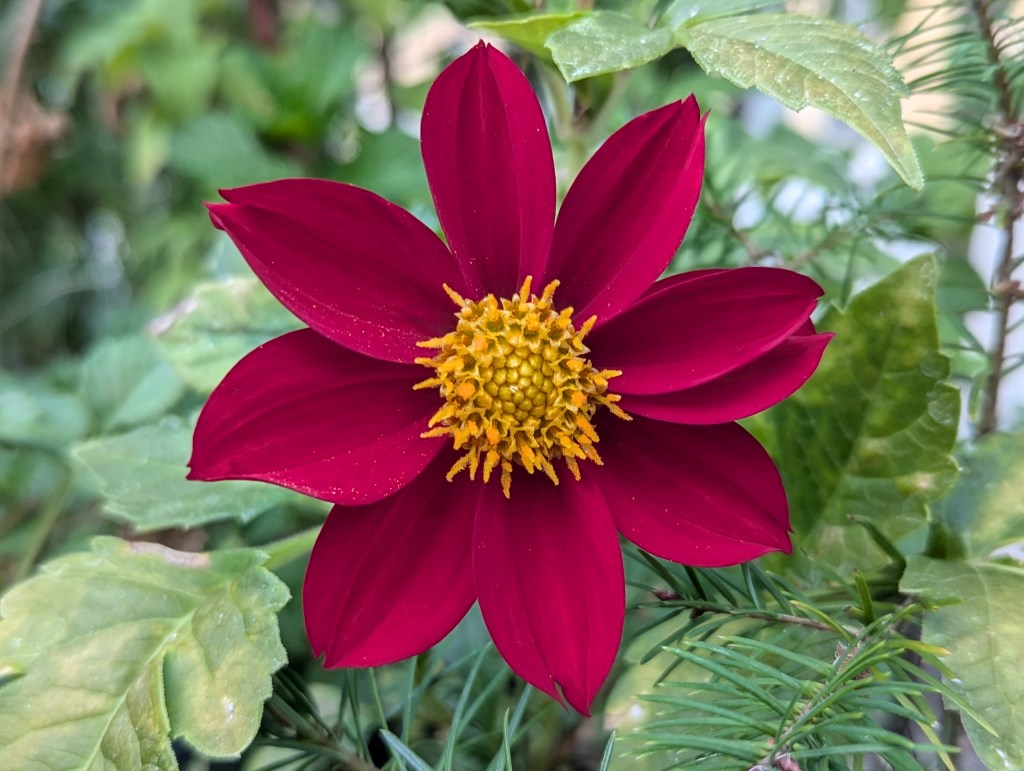
Many late summer flowers happen to be related to sunflowers. They include coneflower, dahlia, zinnia, sneezeweed, aster, and cosmos. Dahlias with larger flowers are later than those with smaller flowers. Marigold and chrysanthemum will become more seasonable later and into autumn. Unrelated canna and various sages are blooming well about now.

Feral Flowers Are Not Wildflowers

Most nasturtium varieties will eventually revert.

Feral flowers are technically not the same as wildflowers. As their designation suggests, wildflowers grow wild. They always have, without intervention. They are naturally native. Their native ranges can fluctuate, but do so naturally as associated ecosystems change. Their status as wildflowers does not change within home gardens or refined landscapes.

Feral flowers are progeny of cultivated flowers. Almost all are exotic, or nonnative. Some are true to type, which means that they are indistinguishable from the originals. However, because of extensive breeding, many revert to a more genetically stable state. Some can naturalize, or perpetuate without intervention. Then, they seem to behave as wildflowers.

For example, most home garden nasturtiums begin as garden varieties. They bloom with particular colors because of their breeding and selection. Their progeny, however, bloom with more natural floral color. After a few generations, they may bloom only basic orange and yellow. Such feral flowers can naturalize within riparian ecosystems like wildflowers.

Because they are not native, naturalized nasturtium are technically not wildflowers. They are merely naturalized feral flowers. Although they are rarely aggressively invasive, they can interfere with natural ecology. They might compete with native species for resources and space. They can sustain organisms that are pathogens to native vegetation species.

California poppy is a genuinely native wildflower. However, a few home garden varieties developed from selection and breeding. Initially, such varieties bloom with unusual floral colors like white, lavender, pink or red. After a few generations, though, their colors revert to their more natural orange. Although wildflowers, they are also technically feral flowers.

Many of the most noxious weeds here escaped from home gardens and naturalized. For example, common pink pampas grass became popular during the Victorian Period. Now, it is quite naturalized and compromising ecosystems throughout the West Coast. Its feral flowers are appealing, but perpetuate infestation. They are surely not native wildflowers. Water hyacinth and yellow flag are other examples.

Six on Saturday: 4:00

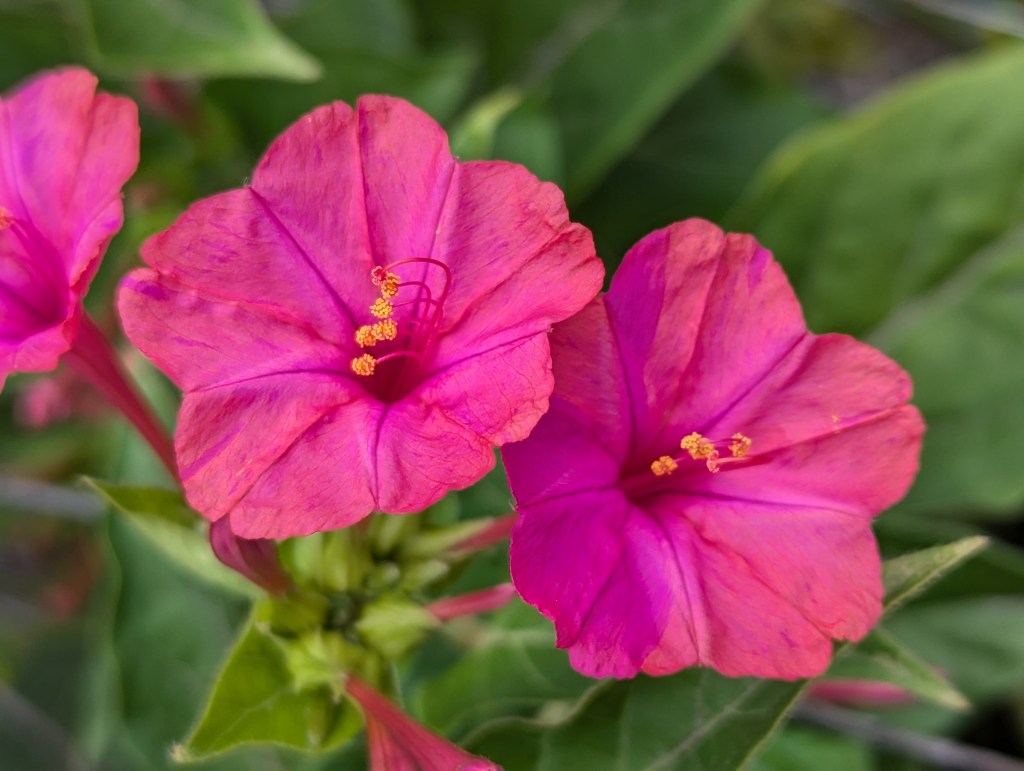
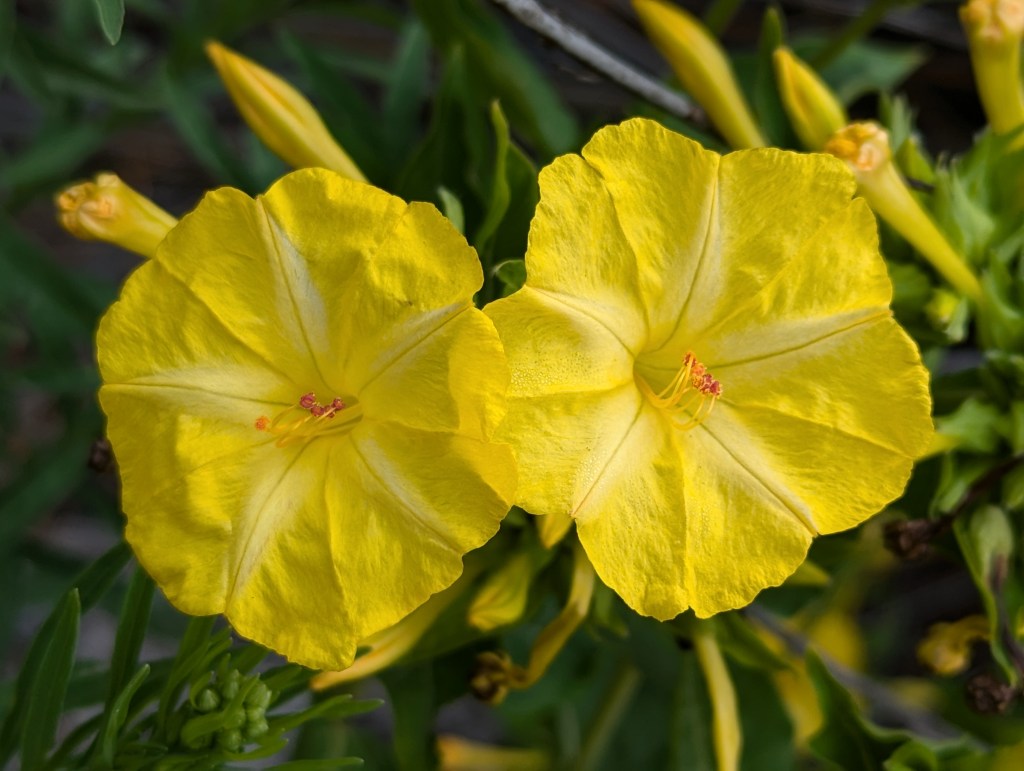
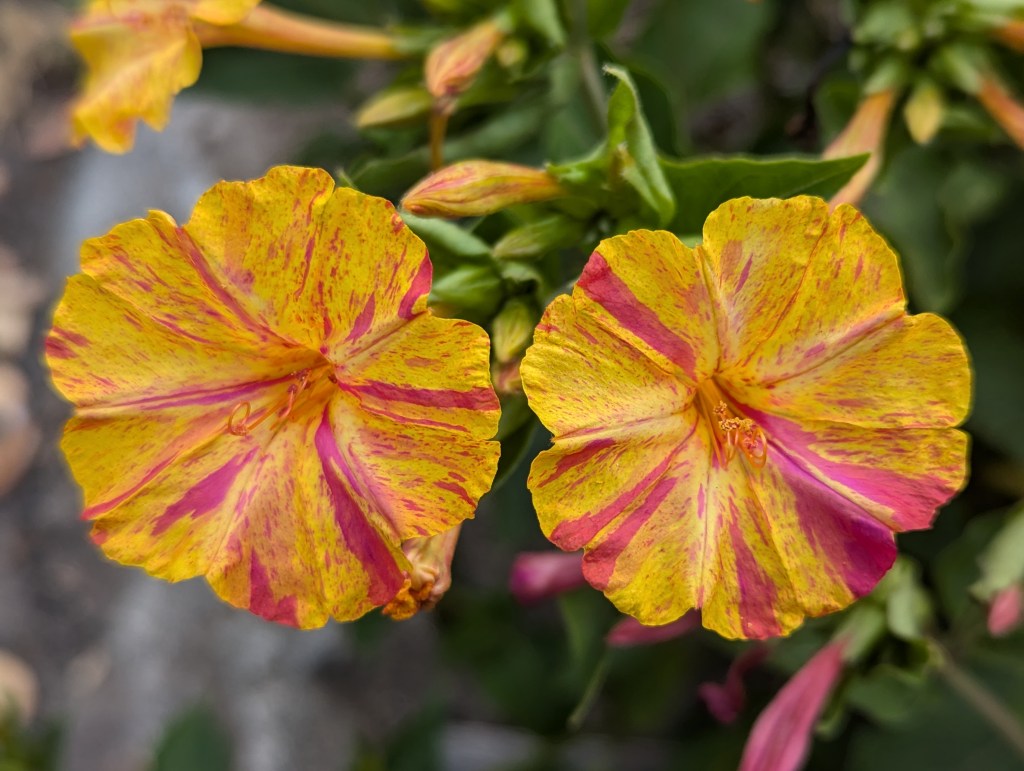
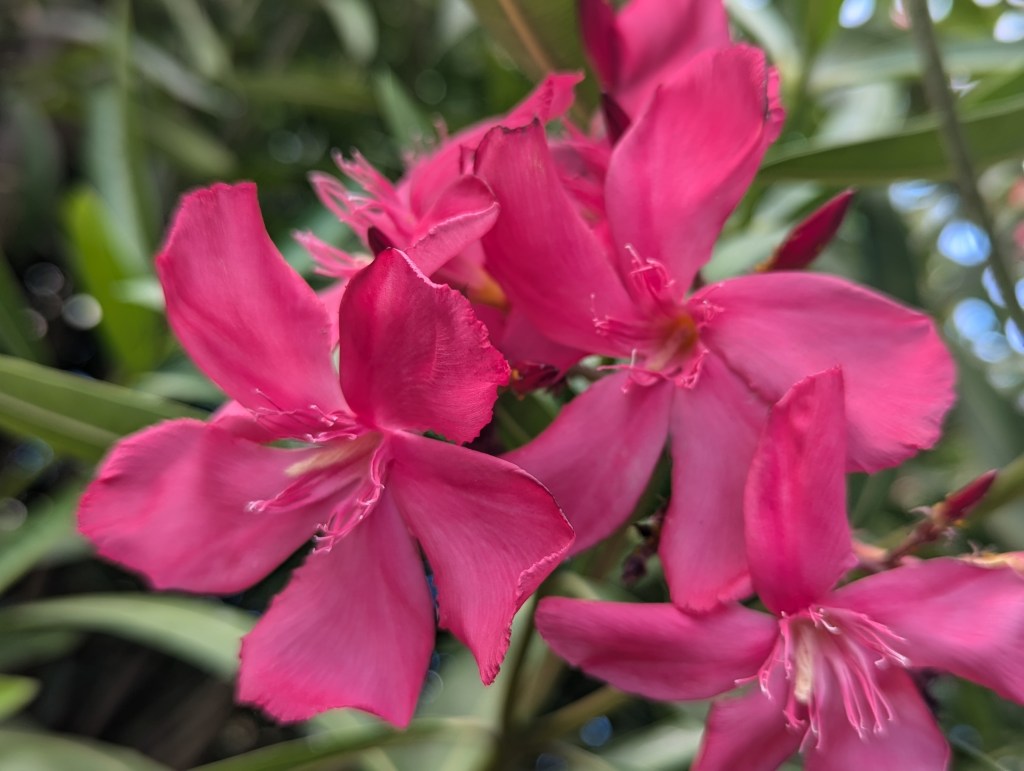
Four o’clock has been unusually pretty in bloom. It self sows almost enough to become a weed, but I am fond of it.

1. Mirabilis jalapa, four o’clock blooms in various shades of pink, including one that can be fragrant about 4:00 and into evening. It alternatively can bloom white, red, magenta, yellow, or with striped combinations of colors. Different colors may bloom on one plant.

2. Mirabilis jalapa, four o’clock does not exhibit very much variation of floral color here, though. This yellow bloom is one of only three variations. I thought that I noticed simple red bloom through previous summers, but can find none now. I would like to find white.

3. Mirabilis jalapa, four o’clock demonstrates what can occur when the two other colors here combine. It is the third of only three variations that I am aware of. From a distance, it seems to be peachy orange. Some of its flowers are just like the first two pictures here.

4. Nerium oleander, oleander that blooms pink mingles with the oleander which blooms white that I posted a picture of three weeks ago. Oleander is so cheap and common here that, even with oleander scorch, it is still the primary shrubbery for freeway landscapes.

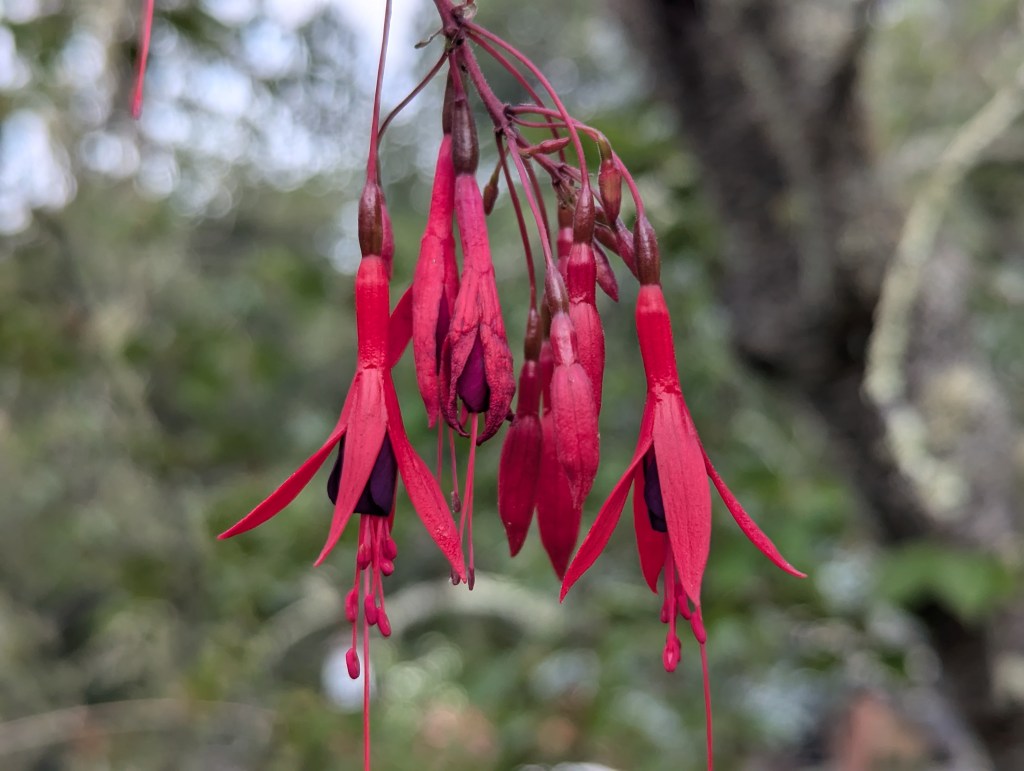
5. Fuchsia magellanica, fuchsia is easy to miss where it is wedged between healthier and prettier hydrangea and canna. I should grow copies of it elsewhere. It would probably be bigger with fuller foliage where it gets more water than the four o’clock and oleander get.

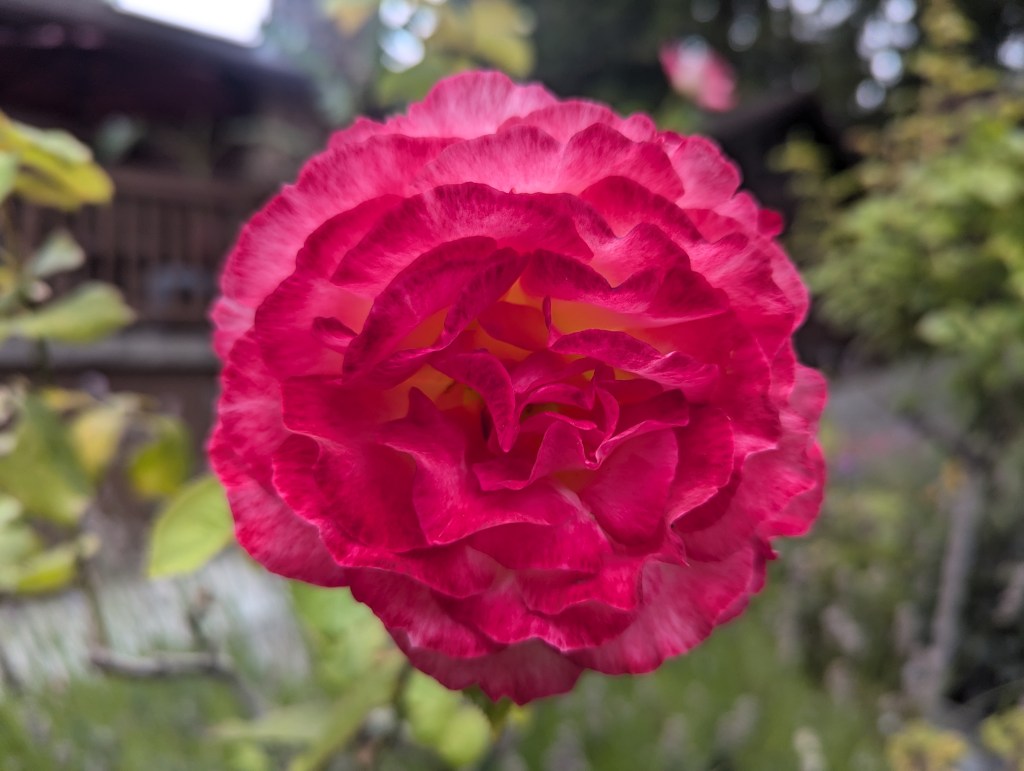
6. Rosa spp., rose is in a rose garden that is nowhere near the four o’clock, oleander and fuchsia, but is too pretty to omit. I believe that it is ‘Double Delight’. It is nicely fragrant. Flowers bloom white with red edges, but fade to mostly pinkish red, just as they should.

This is the link for Six on Saturday, for anyone else who would like to participate: https://thepropagatorblog.wordpress.com/2017/09/18/six-on-saturday-a-participant-guide/
 Passion Vine

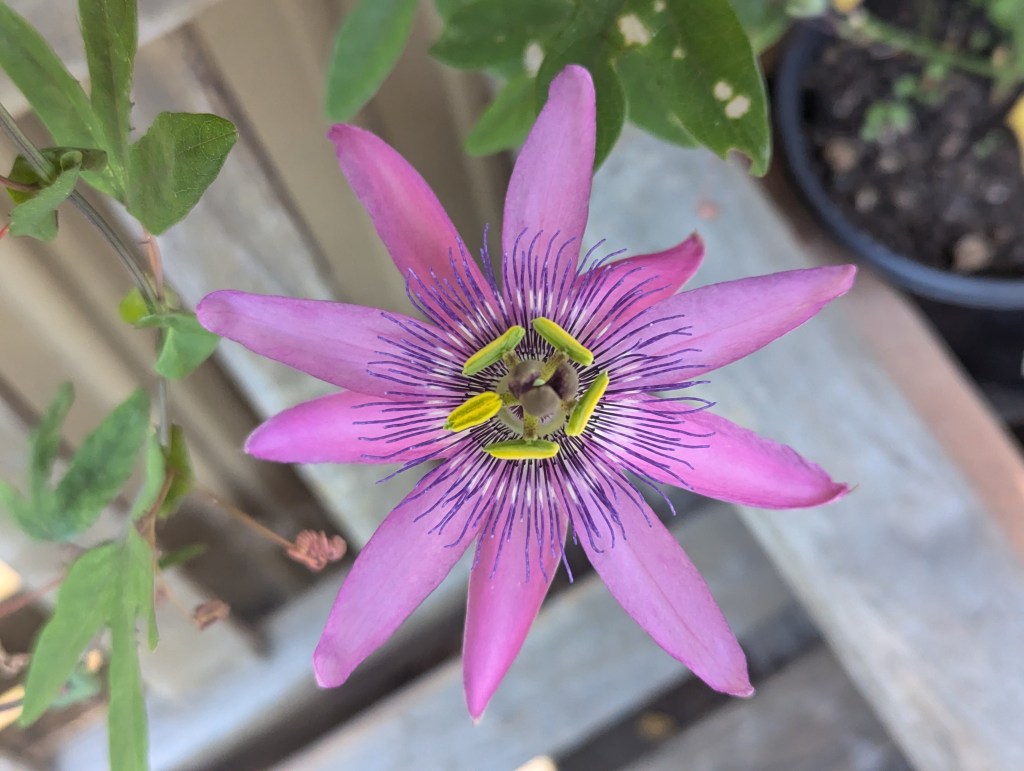
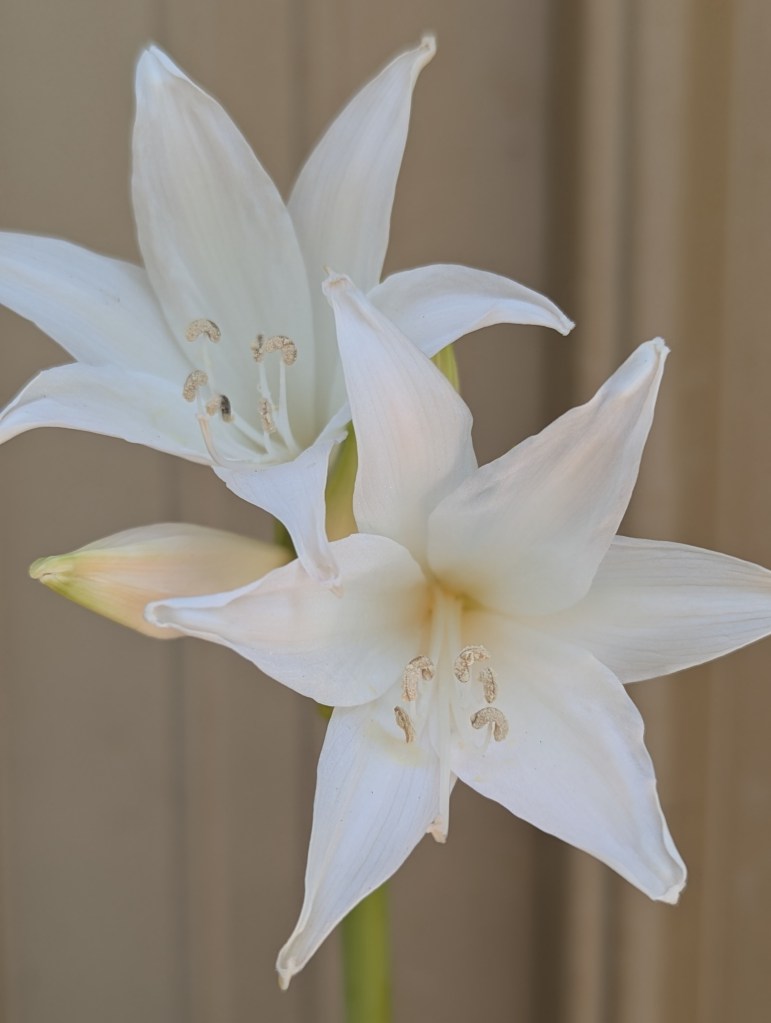
Passion vine has the weirdest flowers.

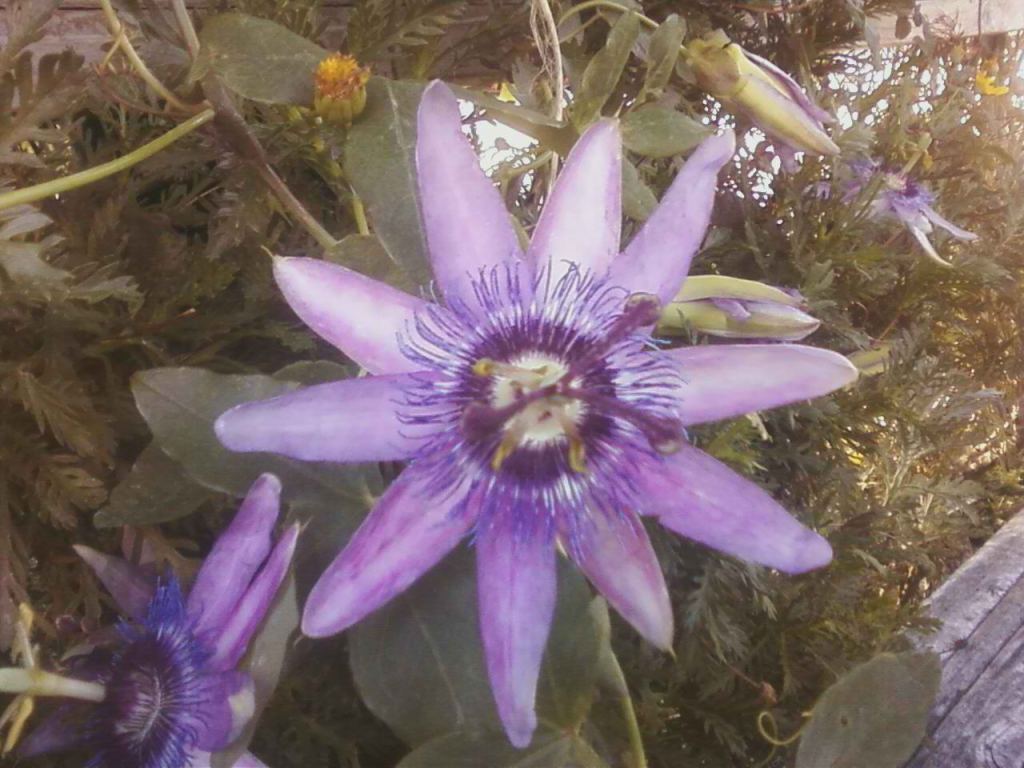
My niece knows the weird flowers of passion vine as ‘flying saucers’ because they look like something from another planet. The most common species, Passiflora X alatocaerulea, has fragrant, four inch wide flowers with slightly pinkish or lavender shaded white outer petals (and sepals) around deep blue or purple halos that surround the alien looking central flower parts. The three inch long leaves have three blunt lobes, and can sometimes be rather yellowish. The rampant vines can climb more than twenty feet, and become shabby and invasive, but may die to the ground when winter gets cold. Other specie have different flower colors. Some produce interesting fruit. Passiflora edule is actually grown more for its small but richly sweet fruit than for flowers.

Six on Saturday: Purple?

Purple is not as easy as white. White is either white or not white. Purple can be bluish or reddish. I am not totally certain if all Six of these are purple or lavender, which is merely pastel purple.

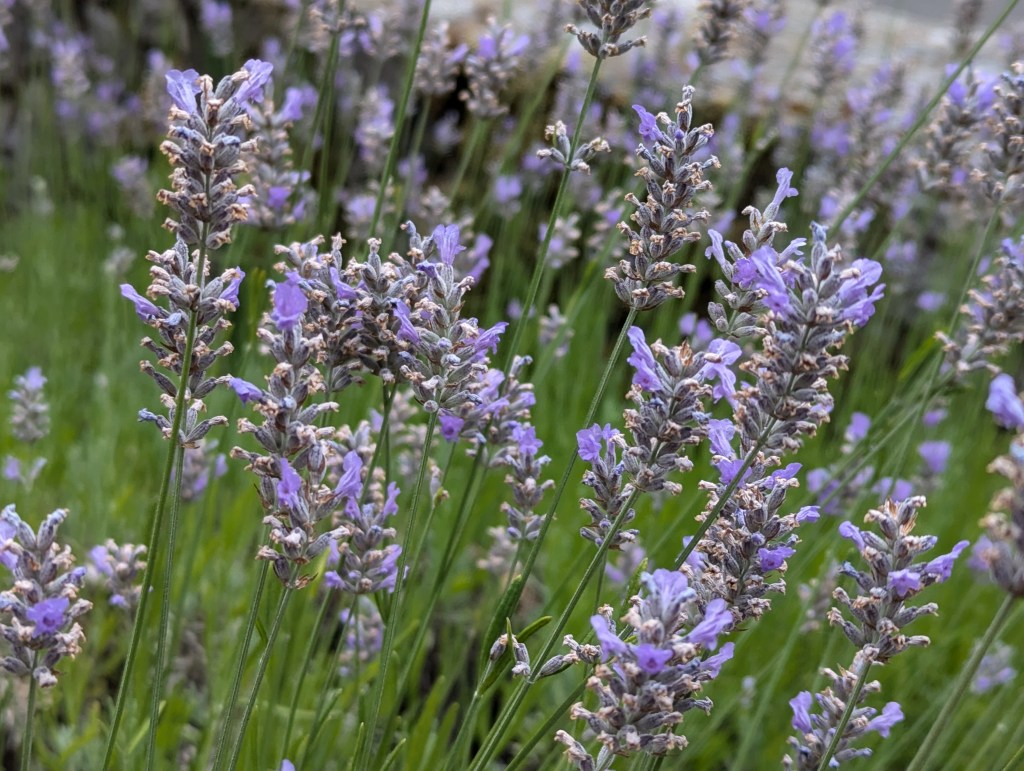
1. Lavandula angustifolia, English lavender blooms, as its name suggests, with lavender floral color, which is really just pastel purple. It looks blue to me, though. I do not know what cultivar this is, but it has survived here longer than lavender should be expected to.

2. Phlox paniculata, garden phlox also blooms lavender, although it looks pink to me. It is a feral progeny of the already feral garden phox with pure white bloom that I posted a picture of last Saturday. Although white is my favorite, I find this odd variant appealing.

3. Lobularia maritima, sweet alyssum also resembles its white counterpart that I posted a picture of last week, but is not a progeny of it. It is a common garden variety, although I do not remember its name. It survived through last winter for another summer season.

4. Lantana montevidensis, trailing lantana survives within a badly neglected landscape. It really is worthy of consideration for other sunny and warm landscapes here. Lantana camara also performs well in an adjacent landscape, and was recently added to another.

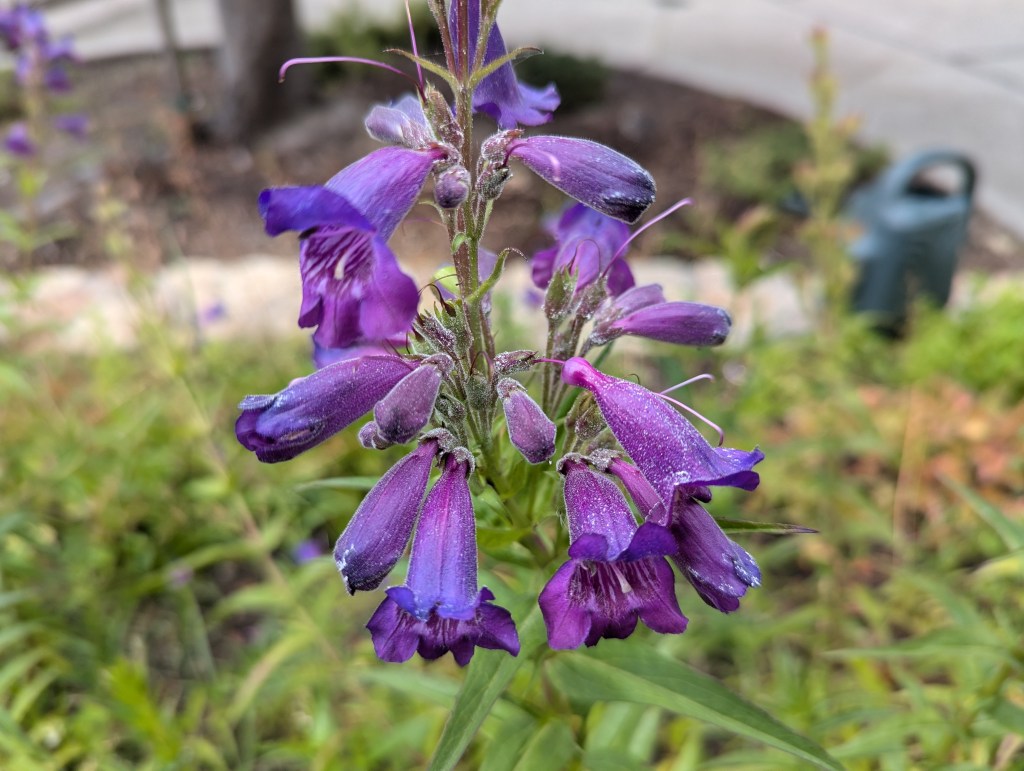
5. Penstemon gloxinioides, beard tongue blooms sparsely for now only because it is new in this particular situation. It grew from several rooted bits that were separated from old specimens as they were cut back last winter. These might produce similar bits next year.

6. Petunia X hybrida, petunia is always reliable for bright color through summer. These have been growing somewhat slowly this year only because the weather has been so mild and even weirdly cool sometimes. Gophers consumed quite a few in a landscape nearby.

This is the link for Six on Saturday, for anyone else who would like to participate: https://thepropagatorblog.wordpress.com/2017/09/18/six-on-saturday-a-participant-guide/
Rock Purslane

The pinkish magenta of rock purslane bloom is almost obnoxiously bright.

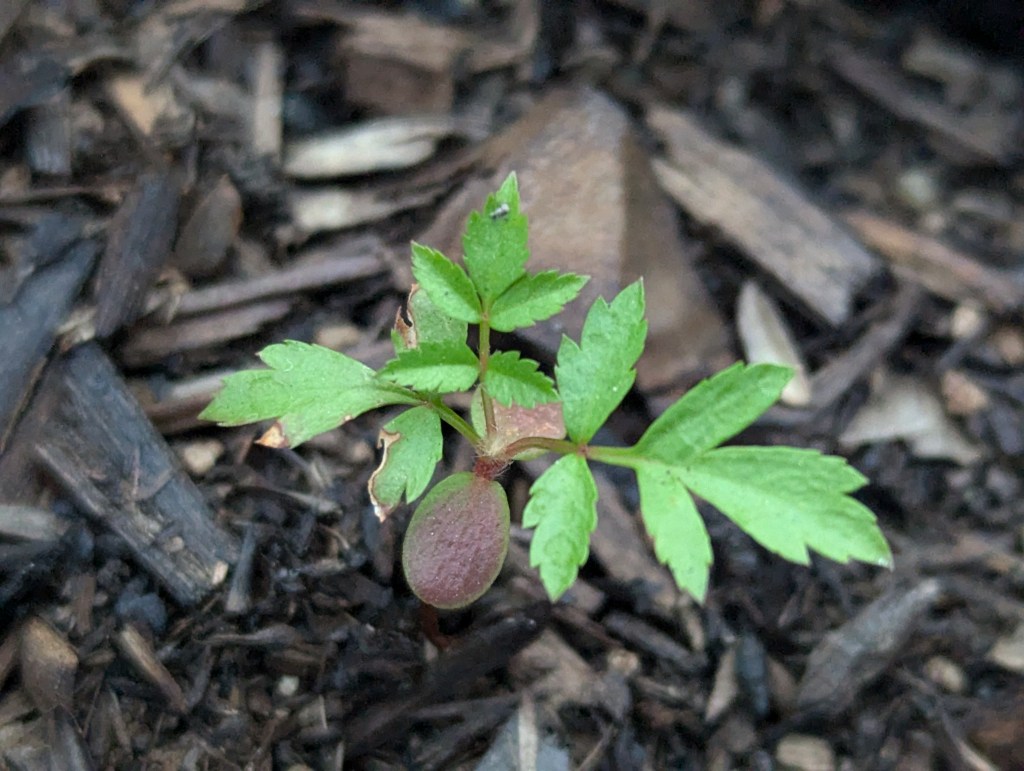
In Santa Cruz and coastal areas down to Los Angeles and San Diego, rock purslane, Calandrinia spectabilis (grandiflora) has been popular for only a few years. It is still somewhat uncommon here in the Santa Clara Valley. Because of the ambiguity of its Latin species name, it is most  commonly known simply by its genus name of Calandrinia.

Moderate watering is best. On the coast, rock purslane only needs water occasionally through the driest summer weather. It should recover readily from winter frost damage. Partial shade is not a problem, but may limit profusion of bloom. Harsh exposure or reflected glare can actually roast the tender succulent foliage.

From about now through autumn, limber, two foot tall stems suspend strikingly bright magenta flowers above the low, grayish evergreen foliage. The fragile leaves are neatly arranged in terminal rosettes. Foliage, stems, flower stalks and all parts are sensitive to traffic, and can even get broken by a cat sneaking through the garden. Broken bits and pieces of stem root very easily to make new plants, though.

Color Selection

There are not many colors that bearded iris can not provide.

If I could select my favorite color for the flowers in the garden, they would all bloom white. There is no more perfect color. White may be bright or pale, but lacks the many shades that other colors have. There is no need to select between deep blue or sky blue, bright yellow or pastel yellow, purple or lavender. White is simply white.

The main problem with white, or any other color, is that no color is the right color for every situation. Also, some flowers are simply not at their best in white. Camellias, oleanders and fruit trees look great in white. However, nearly white marigolds, sunflowers and nasturtiums are interesting oddities that are excellent in the right spot, but are not nearly as flashy as the more traditional bright yellow and orange shades are.

My two favorite geraniums are actually reddish orange and fuchsia pink, and really look horrid in bloom together. They are my favorites nonetheless, because I have been growing them since my sophomore year at Prospect High School! I have taken cuttings with me whenever I relocated since then. I enjoy the garden too much to grow things that I do not enjoy.

Flower colors probably should be compatible with the colors and architecture of associated residences and other buildings, as well as the neighborhood. Yet, we all have different tastes. It is more important to grow flowers with the colors that we enjoy, even if they are not exactly perfect for their particular situations. Fortunately, compatible colors are more likely to also be enjoyable.

White happens to be useful in shaded areas, or with an abundance of deep green, such as wax privet hedges. White brightens an area, even in conjunction with other colors. It also softens richer colors like purple or red.

Darker shades of purple, red and blue should be out in the open, since they can make shaded areas seem even darker. Lighter shades, including lavender and pink, can work almost anywhere. True blue happens to be uncommon among flowers, even though the very common lily of the Nile is typically blue.

Yellow and orange seem at home in sunny spots, and also brighten shaded spots if not overdone. Yellow contrasts with purple. Orange contrasts with blue. Orange marigolds and cobalt blue lobelia might look odd in abundance, but can be striking as a border to a perennial or annual bed. Many of us like a random mix of any color; but too much mix over a large area can look like a garage sale of colors. Black, gray and brown flowers are rare and mostly grown by those of us who really appreciate them; since they look quite odd in the wrong situations. Black hollyhock, pansy and bearded iris are perhaps the best blacks, while other black flowers are not so convincing. Gray iris are still quite rare. Brown sunflowers are becoming more popular.

Six on Saturday: White Again

Giant bird of Paradise may not look so good in its picture, but started the trend for these Six for this Saturday. White is my favorite color.

1. Strelitzia nicolai, giant bird of Paradise did not pose for a good picture, but impresses with its fancy bloom nonetheless. It bloomed nicely last year too, just three months after getting relocated from another garden. It is still canned, so is not even in the ground yet.

2. Nerium oleander, oleander reminds me that, contrary to the mild weather, it really is the middle of summer. This particular oleander was so overgrown and shabby from bad pruning for many years that it was coppiced. It worked so well that we could do it again.

3. Pelargonium X hortorum, zonal geranium is a short term perennial, but provides too many replacement cuttings for extinction. I do not know how long it has been here, but I do enjoy propagating it now, not just because it blooms white, but also because it is easy.

4. Lobularia maritima, sweet alyssum has been here a bit longer than expected also, but is not as perennial as zonal geranium. It was planted as a warm season annual early last summer. Because wax begonia is growing around it, it will not be replaced, but removed.

5. Begonia X semperflorens cultorum, wax begonia has been doing remarkably well now that it has its planter boxes within planter boxes to exclude aggressive redwood roots. It has been growing slowly but surely since last summer, so it now needs no replacements.

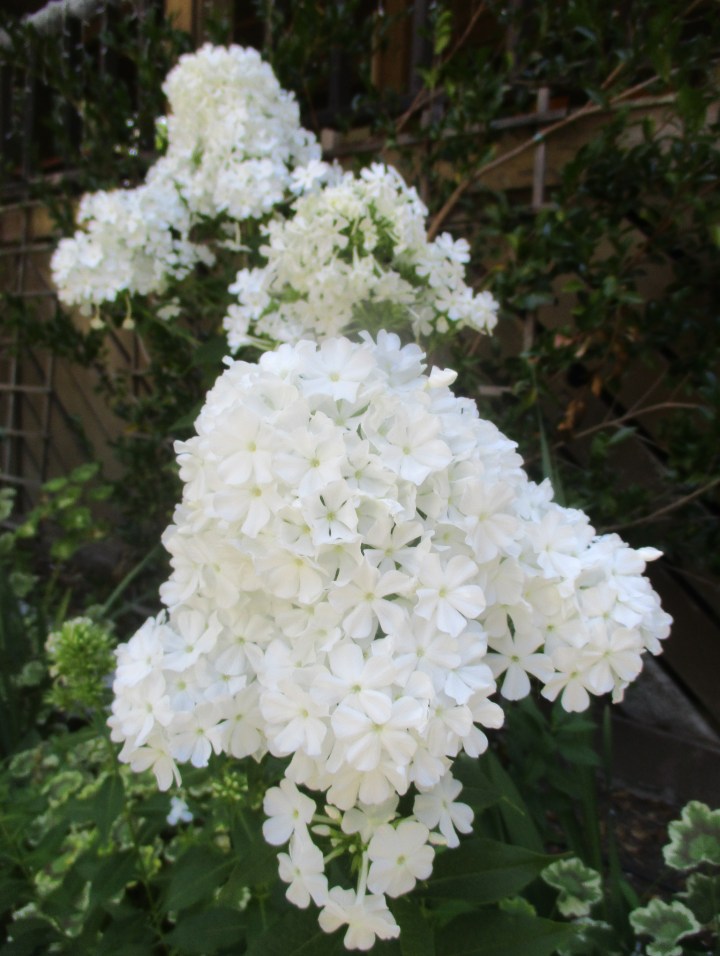
6. Phlox paniculata, garden phlox self sowed from an unknown source several years ago. It continued to self sow with such vigor that we thought it could become invasive. Then, it unexpectedly became docile, and now grows only where it is an asset to the landscape.

This is the link for Six on Saturday, for anyone else who would like to participate: https://thepropagatorblog.wordpress.com/2017/09/18/six-on-saturday-a-participant-guide/