Six on Saturday: Eric

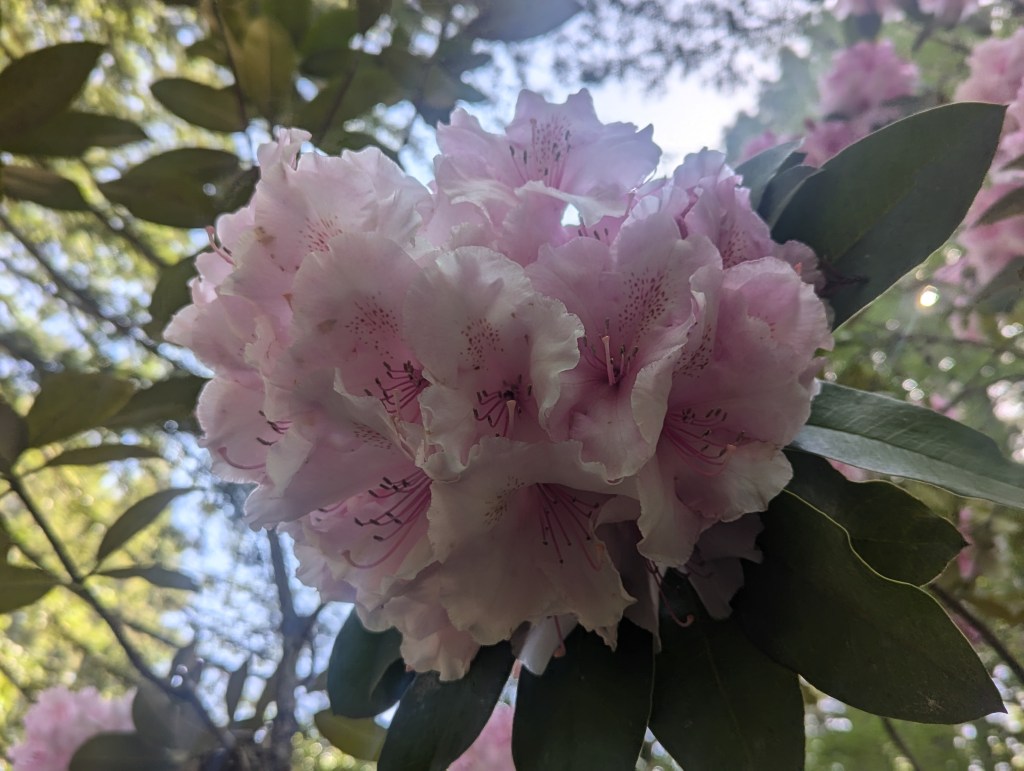
Ericaceae is a prominent family here. Rhododendrons, azaleas and pieris inhabit several of the landscapes. Manzanitas, madrones and, within some situations, huckleberries, are common within the surrounding forests. Even two of my associates, although unrelated to Ericaceae, are named for two members of the family that are popular for landscaping. Half of my Six for this Saturday are azaleas. Just one other is another ericaceous species. Later, I can get better pictures of azaleas as well as rhododendrons. Several impressively large rhododendrons bloom spectacularly in season. Heather would be nice, but is quite rare. I know where abandoned fields of it grew wild, but I have never seen it available in nurseries.

1. Heath is a masculine name. It is of the Erica genus, though; and Erica is the feminine form of Eric. Heather is a similar but feminine name, but is of a different Calluna genus.

2. ‘Coral Bells’ Azalea, like all azaleas, is of the Rhododendron genus, so like heather and heath, is in the Ericaceae family. All of them are also related to madrone and manzanita.

3. Azaleas generally bloom for early spring. These that bloom somewhat too early during the rainy season can get a bit thrashed. They would be prettier if they could delay bloom.

4. Florist azaleas are delightful as fully blooming potted specimens, but generally do not adapt well to landscapes. This specimen is floppy, but otherwise performs impressively.

5. Heather is named for Calluna, which, actually, I have not seen in many years. It grew as a cut flower crop in Montara more than half a century ago. It was abandoned by 1980.

6. Rhody is short, and his name is short for Rhododendron. But of course, he is a terrier, so ignores me regardless of what I call him. He can actually ignore me in four languages!

This is the link for Six on Saturday, for anyone else who would like to participate: https://thepropagatorblog.wordpress.com/2017/09/18/six-on-saturday-a-participant-guide/

Six on Saturday: Saturday of Flowers III

Is exclusive bloom becoming redundant? Well, one of these is actually foliar rather than floral, although it resembles real floral bloom enough to qualify for the title above. Most of these six are annuals.

1. Cyclamen persicum, Persian cyclamen is now a Ghost of Christmas Past that will stay as long as it performs. If it does not mold by the end of the rainy season, it will hibernate by the warmly dry season. It is sadly exploited as an expensively cheap annual perennial.

2. Lobularia maritima, alyssum remains from last summer as a genuinely cheap annual that wants to be a perennial. Although it has potential to perform as a perennial, salvage after winter is less practical than replacement, especially since alyssum is not expensive.

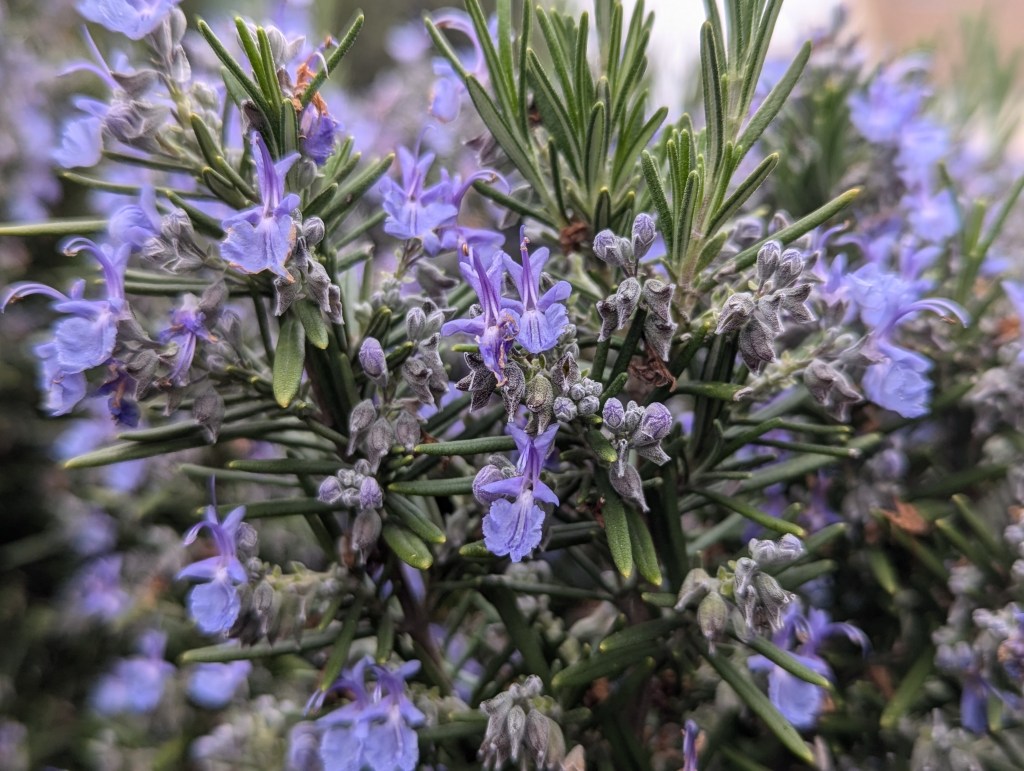
3. Rosmarinus officinalis ‘Prostratus’ creeping rosemary is neither annual nor perennial like the others. It is instead a very prostrate shrub that sprawls as a ground cover. Bloom seems to be continuous, although not as impressive as bloom of annuals and perennials.

4. Viola X wittrockiana, pansy is probably the most popular cool season annual here. It has potential to be perennial, but like alyssum, it is easier to replace when it is in season than salvage after it was not in season. It gets thrashed through the warmth of summer.

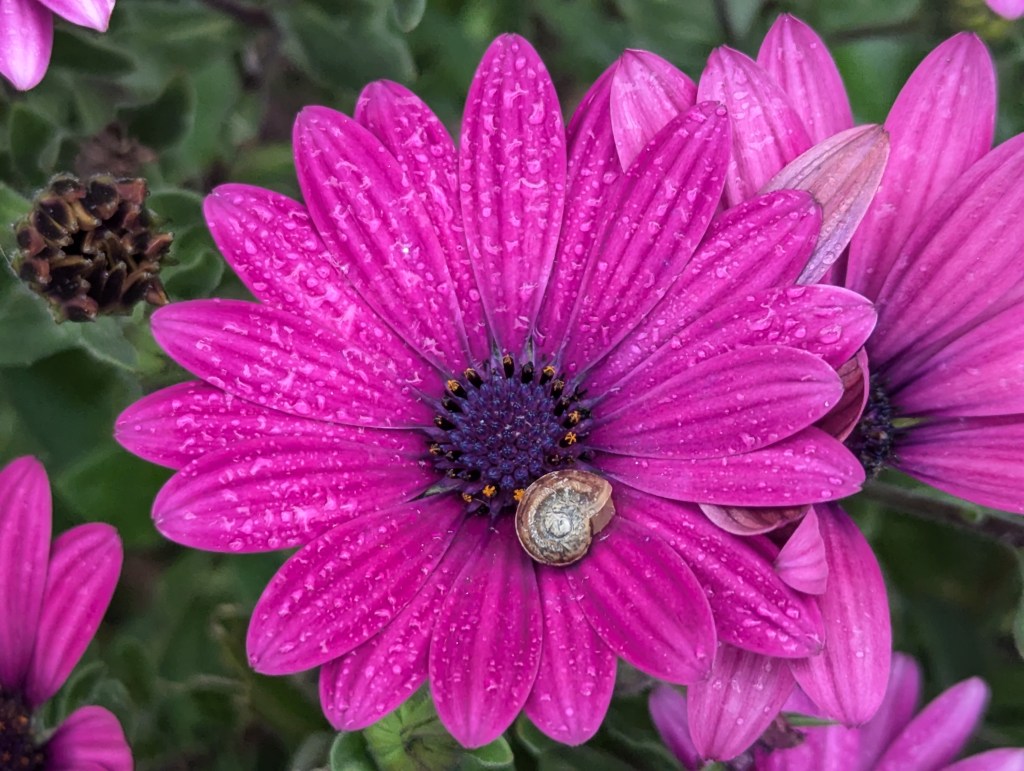
5. Osteospermum ecklonis, African daisy tries to bloom as continuously as rosemary. Its flowers do not last for long while the weather is cool and damp, though, and might mold before they unfurl. Several cultivars with distinct floral colors bloom in the same garden.

6. Brassica oleracea var. acephala, ornamental cabbage is the only one of these six that is foliar rather than floral. Actually, it deteriorates as it eventually blooms with warming summer weather. Yet, it is the biggest and boldest of these six even without floral bloom.

This is the link for Six on Saturday, for anyone else who would like to participate: https://thepropagatorblog.wordpress.com/2017/09/18/six-on-saturday-a-participant-guide/

Winter Flowers Bloom In Season

Some flowers naturally bloom during winter.

Evergreen foliage and colorful berries might be more prominent than flowers about now. They should be. Evergreen foliage is, as implied, evergreen. Colorful berries need to be appealing to wildlife that disperses their seed through winter. Not so many winter flowers bloom, though. Most flowers want their bloom season to be favorable for their pollinators.

Flowers that do not rely on pollinators can bloom whenever they choose to. Yet, because they do not rely on pollinators, most waste no resources on floral color. Flowers are, after all, only colorful to attract pollinators. Therefore, if flowers that need no pollinators bloom now, most are easy to ignore. Flowers that are colorful now can probably justify being so.

Most colorful flowers bloom while their pollinators are most active, during warm weather. Some from cooler climates can bloom now simply because they do not know it is winter. Some from milder climates can bloom now because they do not know how cool winter is. Several winter flowers actually bloom now to exploit pollinators who are active in winter.

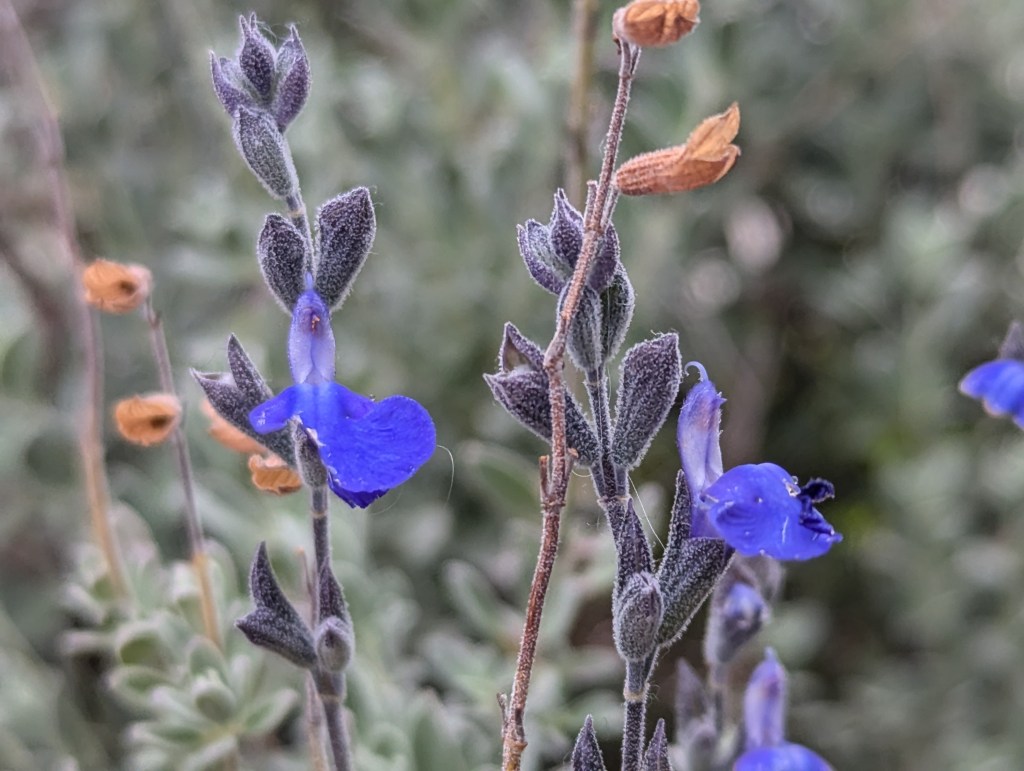
Winter flowers of some species of Salvia appeal very specifically to hummingbirds. Such species are native to regions where hummingbirds overwinter. Their floral colors are the sort that hummingbirds pursue. Their floral structure and nectar favor the eating habits of hummingbirds. They bloom during winter because that is when they expect their guests.

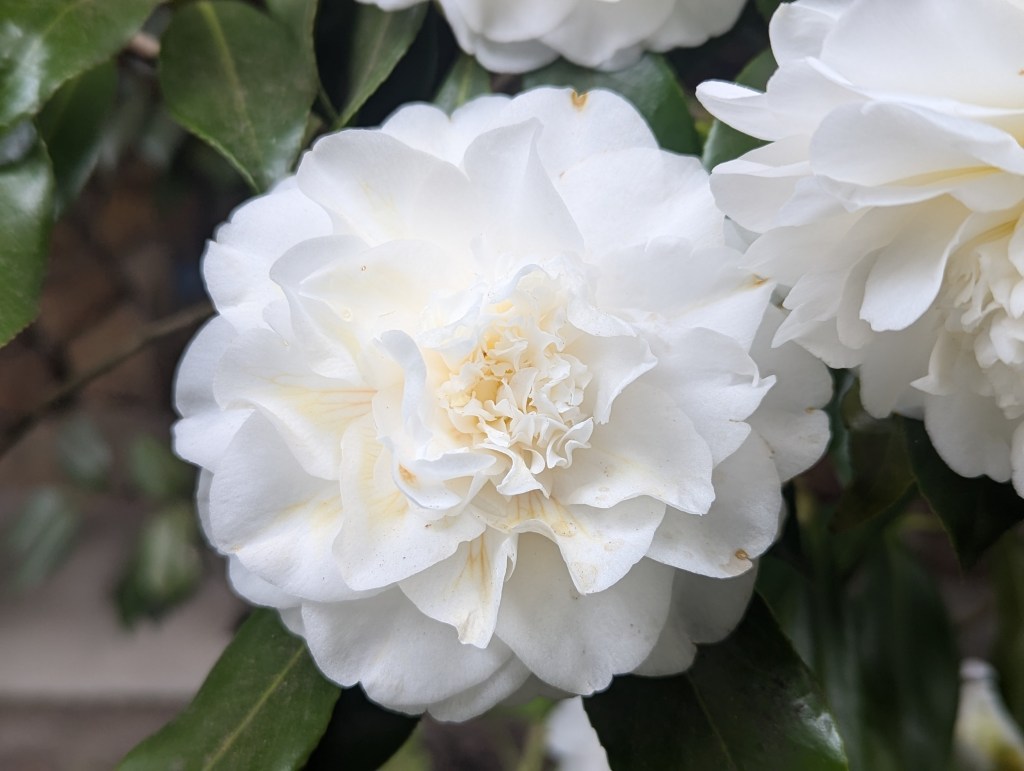
Camellias of various cultivars are among the most popular and reliable of winter flowers. Different cultivars bloom at slightly different times. Witch hazel cultivars can bloom nicely on bare stems where chill is adequate. Winter jasmine requires less chill and blooms as splendidly, but only with yellow. Oregon grape is also limited to yellow, but is evergreen.

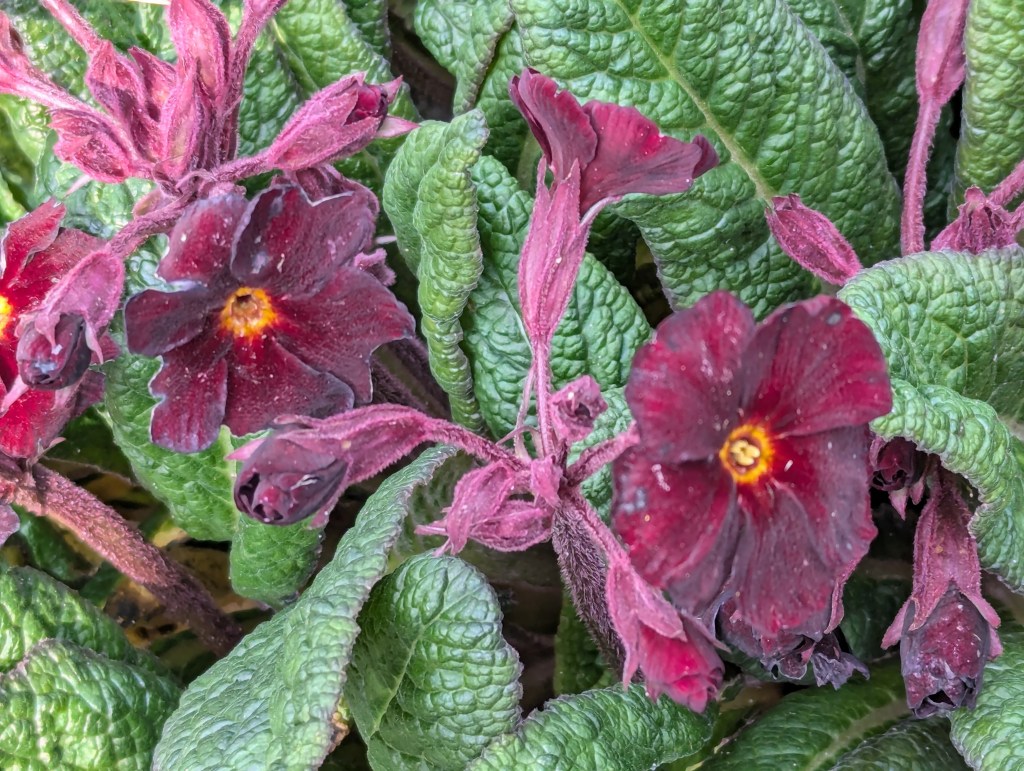
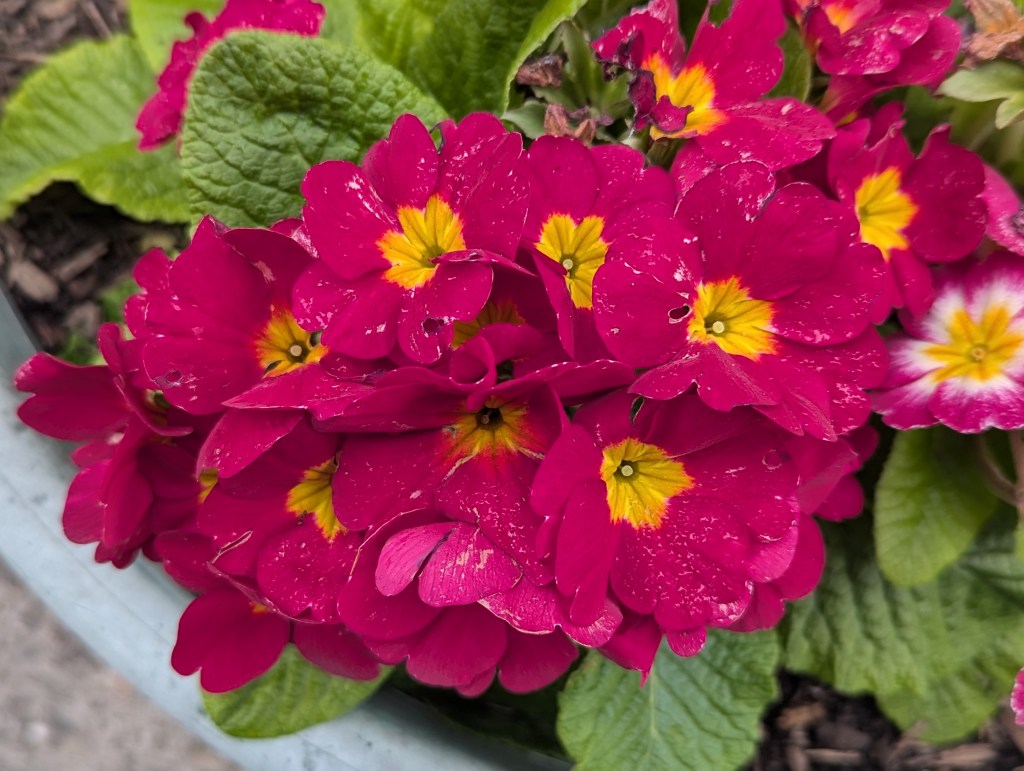
Cool season annuals generally provide the most colorful of winter flowers. Unfortunately, most perform only until warmer spring or summer weather. Pansy, viola and primrose are the most familiar. Primrose becomes popular a bit later, and can continue as a short term perennial. Ornamental kale looks like big winter flowers, but is really big colorful foliage.

Six on Saturday: Another Saturday of Flowers

A Week Of Flowers’ at ‘Words And Herbs’ got me started. It finished two weeks ago, and I did not even participate, but it reminded me that I should exhibit more floral pictures. Although the original project featured any floral pictures from any time of year, these six are all from yesterday, and actually, all are from the same relatively confined landscape. Minor frost that damages some vulnerable species within nearby landscapes is somehow less bothersome within this particular landscape. Elsewhere, some flowers are not quite as fresh. The only other common lantana within another landscape here was already cut back to the ground because its foliage succumbed to frost. It seems to know to postpone regeneration until after frost, but will likely succumb to frost next winter also. Although frost is mild here, it does happen.

1. Lantana camara, lantana was already damaged by mild frost at a lower elevation and less than a mile away. Even while damaged, though, it was still trying to bloom like this.

2. Lantana montevidensis, trailing lantana is purportedly slightly more resilient to frost than common lantana. However, its foliage can become very dark, as if it were damaged.

3. Tecomaria capensis, Cape honeysuckle is overrated. Its orange floral color is nice, but its flowers and floral trusses are too small and too scarce to display the color adequately.

4. Leonotis leonurus, lion’s tail bloom seems to resemble that of Cape honeysuckle, most likely because both attract sunbirds as pollinators where they are native in South Africa.

5. Tulbaghia violacea, society garlic is not among my favorite perennials, but is resilient and undemanding. This specimen has been abandoned for years, but constantly blooms.

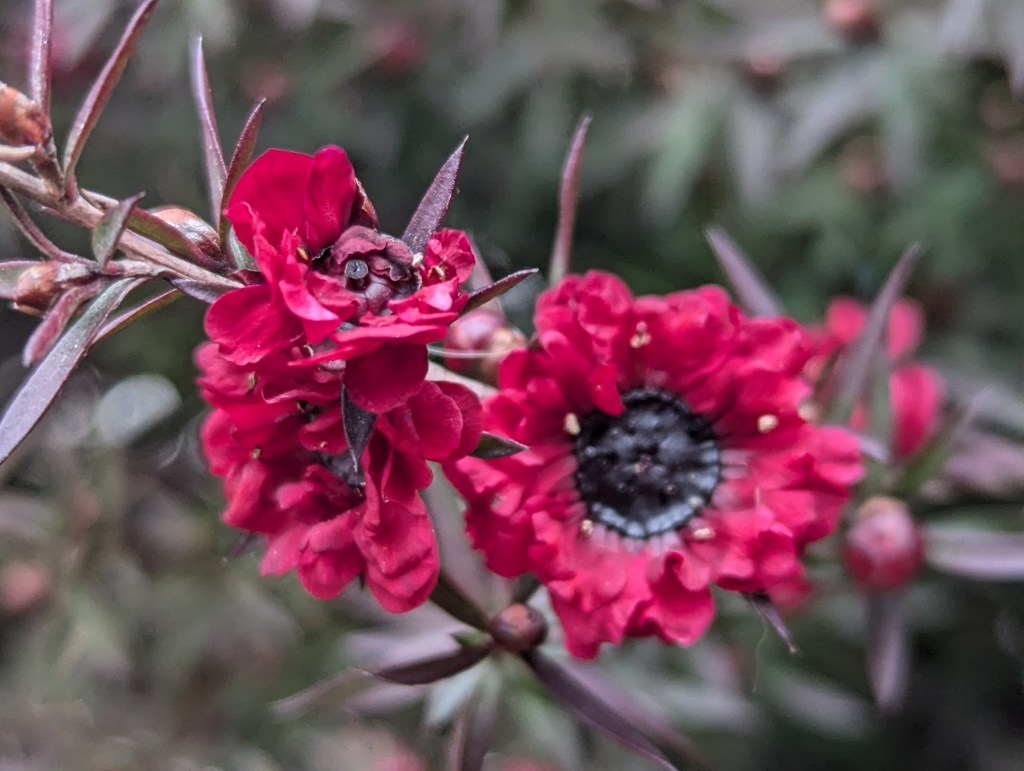
6. Callistemon viminalis ‘Little John’ bottlebrush is now Melaleuca viminalis. I learned it as a cultivar of Callistemon citriodora that is more proportionate to compact gardens.

This is the link for Six on Saturday, for anyone else who would like to participate: https://thepropagatorblog.wordpress.com/2017/09/18/six-on-saturday-a-participant-guide/